Disclosure: Some links in this post are affiliate links. As an Amazon Associate I earn from qualifying purchases, at no extra cost to you. Learn more
Specs are compiled from manufacturer listings and verified buyer reviews and can change over time — please confirm the key details on the product page before buying.
Your audiophile IEM (in-ear monitor) succeeds or fails on two things: whether the seal holds in your ear canal, and whether the tuning suits the music you actually play. The best all-rounder here is the Tipsy M3 — 4.5+ stars across 250+ owners — because it pairs a hybrid driver setup (different driver types working together) with a fit stable enough for a ten-hour session. But the right pair for you depends on if you need stage isolation, gaming spatial cues, or a warm, fatigue-free listen for long desk days.
This guide is built by comparing the manufacturers’ published specifications and the patterns across verified customer reviews, so you get each pick’s real strengths and trade-offs instead of marketing spin.
Below you will find nine wired in-ear monitors grouped by what they do best, from budget-friendly hybrids to a quad-driver flagship. Each entry explains the driver count, the fit reality, and the honest trade-off — so you can match a pair to your ears and your playlist with confidence, and pick the right audiophile IEM the first time.
Top Picks

How To Choose The Best Audiophile IEM
An in-ear monitor (IEM) is a small speaker that sits inside your ear canal, and it works best only when it seals. That seal is what blocks outside noise and keeps the bass from leaking away. Most buyer frustration with a wired IEM traces back to a poor fit, not a bad driver. So start there, then worry about driver counts and tuning curves.
Match the driver setup to the sound you want
A dynamic driver is a single moving diaphragm that handles bass weight; a balanced armature (BA) is a tiny driver that handles detail in the mids and highs. A hybrid pairs both, and that is what most of these picks use. More drivers do not automatically mean better sound — the crossover network that splits frequencies between them does the real work. If clean bass is your priority, look at how the bass driver is described; if vocals and detail are, look at the mids and treble tuning.
Get the seal and tip fit right first
Every pick here ships with multiple tip sizes, and a few ship silicone and foam sets. Foam gives a deeper seal but wears out and needs replacing; silicone lasts longer but can slide if the nozzle has no lip to grip it. Shell size also matters. A compact, rounded shell sits flush in smaller ears, while a large protruding housing can feel bulky even when the contact area is comfortable. If you have small canals, note the nozzle width before you buy.
Check whether your source can drive them
Impedance (measured in ohms) and sensitivity (in decibels) tell you how hard a pair is to drive. Low impedance with high sensitivity runs loud and clean straight from a phone or a cheap adapter. High impedance or low sensitivity may need a small DAC/amp to reach full volume and bass punch. If you plan to run balanced, look for a 4.4mm cable option.
Buy a detachable cable
Every IEM here uses a detachable cable — either a 2-pin or an MMCX connector. A detachable cable is the difference between a repair and a throwaway when the cord eventually fails. It also lets you upgrade to a better cable later, which some owners say changes the sound noticeably.
Side-by-Side Comparison
| Model | Best For | Driver Setup | Connector / Cable | Rated | Amazon |
|---|---|---|---|---|---|
| Tipsy M3 Professional IEM★ Best Overall | All-round stage and studio use | 2BA + 1DD hybrid | Detachable 0.78mm 2-pin | 4.5+ / 5 | Amazon |
| Daybreak Triplicate-HybridDetail Specialist | Detail and treble extension | 1DD + 2BA + 2mPT | Detachable 2-pin, 3.5/4.4mm | 4.0+ / 5 | Amazon |
| HiFiGo AFUL ExplorerSmooth Operator | Relaxed listening and long sessions | 1DD + 2BA hybrid | Detachable, 3.5mm / 4.4mm | 4.5+ / 5 | Amazon |
| FIIO FH7S | Balanced bass and build | 1DD + 4BA hybrid | Detachable, 3.5/4.4mm plug | 4.0+ / 5 | Amazon |
| Shure SE846 Gen 2 | Pro monitoring and isolation | Quad balanced armature | Detachable 3.5mm | 4.0+ / 5 | Amazon |
| Linsoul Kiwi Ears Quartet | Fun, bass-heavy listening | 2DD + 2BA hybrid | Detachable 2-pin | 4.0+ / 5 | Amazon |
| Final A4000 | Wide soundstage on a budget | Single dynamic driver | Detachable 2-pin | 4.0+ / 5 | Amazon |
| Linsoul SIMGOT EM6L | Gaming and detail | 1DD + 4BA hybrid | Detachable 2-pin | 3.5+ / 5 | Amazon |
| Sennheiser IE 200 | Neutral, EQ-friendly reference | 7mm single dynamic | Detachable MMCX | 4.0+ / 5 | Amazon |
Detailed Reviews
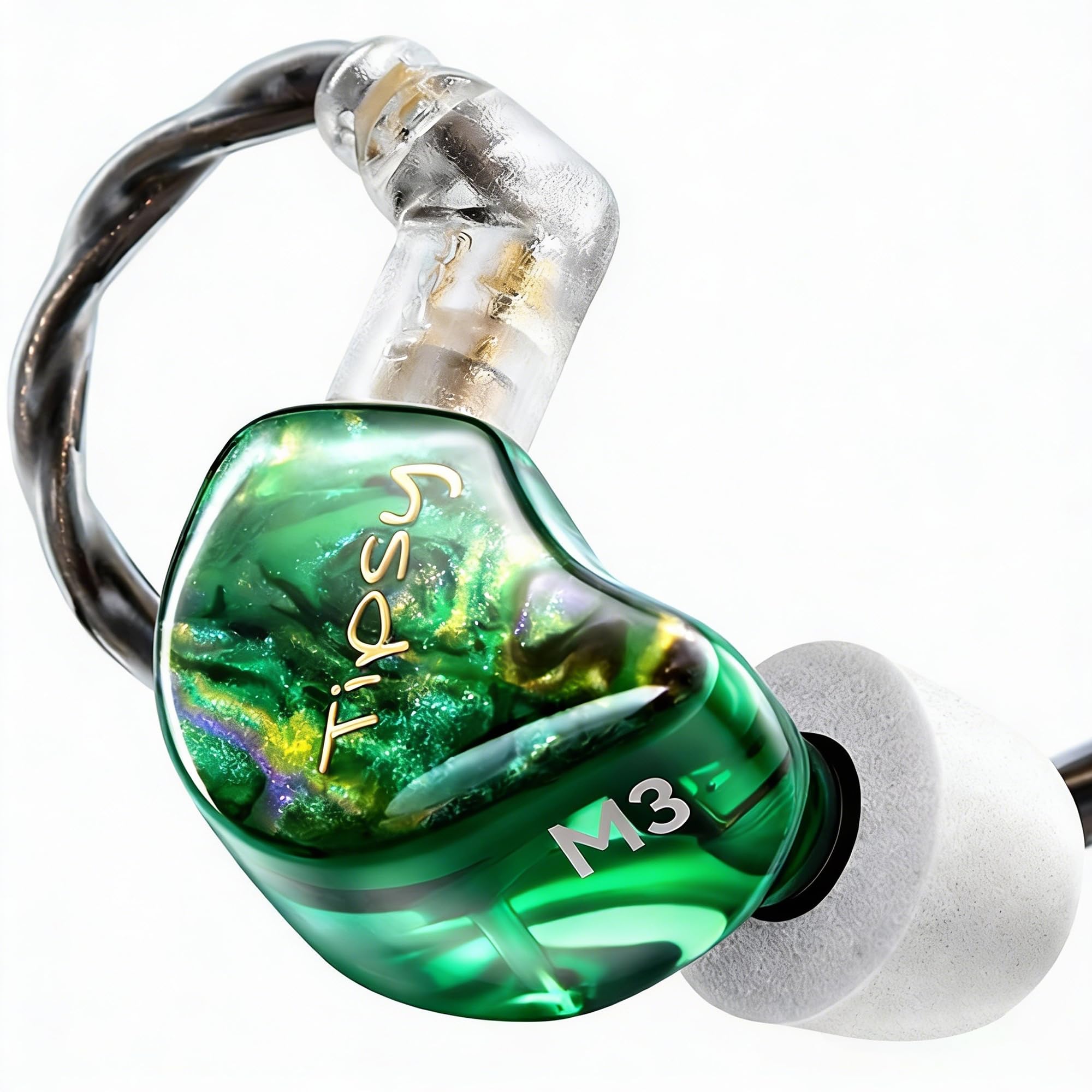
1. Tipsy M3 Professional IEM for Musicians
Our pick — 4.5+★ from 250+ verified ratings; the strongest balance of quality and price.
Three separate frequency tubes and a fit stable enough for a ten-hour session.
If you play or mix live, the number to care about is 36dB — that is the passive noise isolation the M3 claims (PNC means passive noise cancellation, or sound blocked by the seal alone, no electronics). On a loud stage that seal is what lets you hear your own mix instead of the drummer next to you. The hybrid engine pairs a 9.2mm titanium-plated dynamic driver for bass with two custom balanced armatures for mids and highs.
What wins people over is how cleanly the layers separate. The Acoustic-Runway design gives bass, mids and highs their own physical tubes, which cuts the frequency overlap that makes busy tracks sound congested. A church drummer credits the seal with “perfect stage noise isolation,” and a gamer reports pinpoint footstep and gunshot separation. The gem-grade resin shell is hand-polished over 100 times so you can see the tubes inside.
The catch: the foam tips need frequent replacing, and the bass wants a little amplification to hit its full thud. Straight from a phone it stays controlled rather than heavy. The shell is built from scans of 20,000+ ears, so it should sit flush, but ears vary and some singers had to swap tips to dial in the seal.
Where the M3 earns its place
- 36dB passive isolation blocks a stage or a loud room
- Three independent tubes keep bass, mids and highs cleanly separated
- Light resin housing with no fatigue across a ten-hour session
- Ships with a high-purity silver-plated copper cable and four tip sets
- Gamers report clear directional audio for distance and footsteps
What to plan around
- Foam tips wear out and need replacing
- Bass reaches full punch best with a little amp behind it
- No inline mic — this is a monitoring tool, not a call headset
Built for: stage players, studio mixers and gamers who want isolation and detail from one pair.
Think twice if: you want a phone-only bass monster or need a mic for calls.
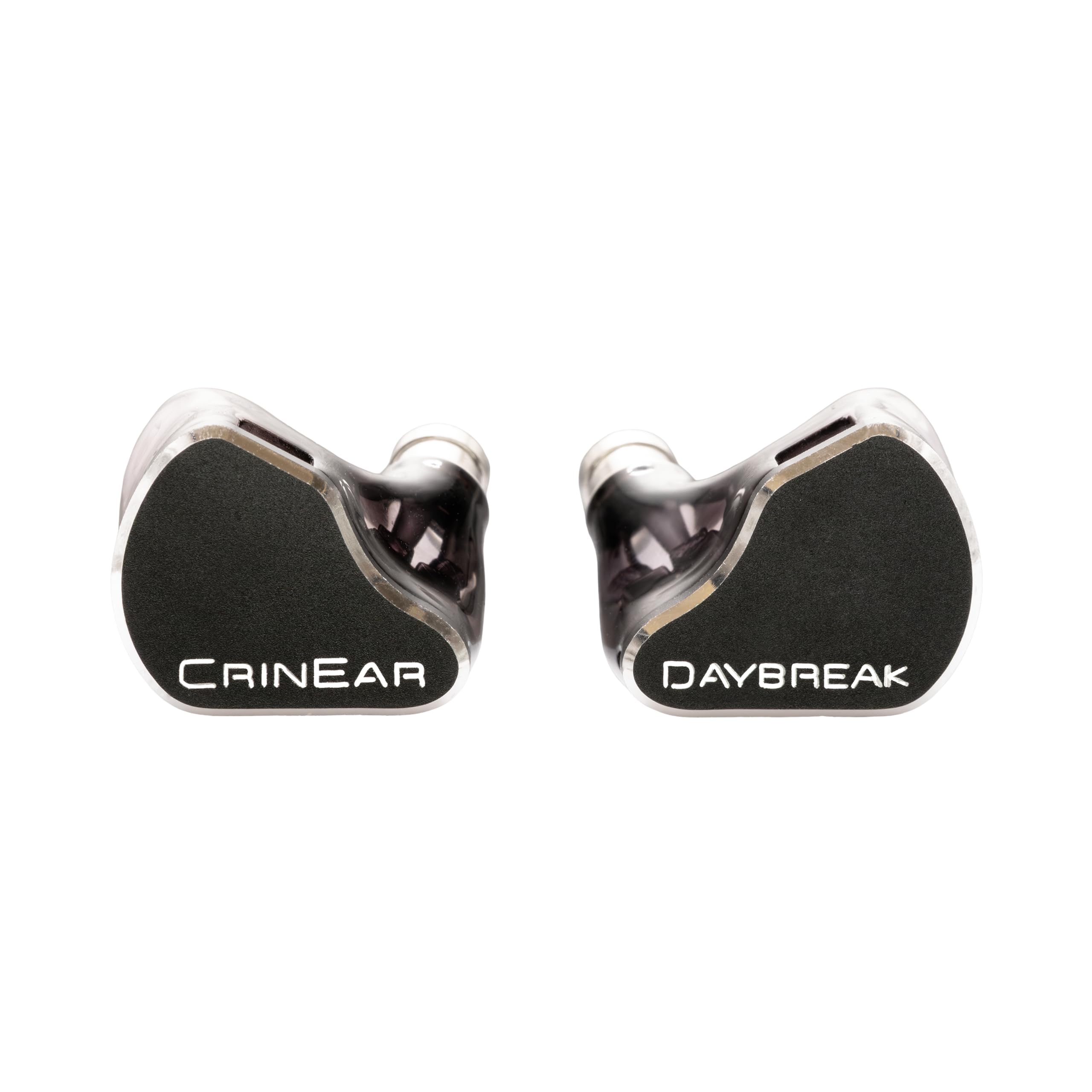
2. Daybreak Triplicate-Hybrid In-Ear Headphones
Five drivers, two of them micro-planar tweeters, working through a three-way crossover.
Some hybrids here stop at three drivers. The Daybreak runs a 1DD + 2BA + 2mPT setup — one dynamic for bass, two balanced armatures for mids, and two micro-planar tweeters (tiny flat drivers for the top end) for the highs. It all crosses over in a 3-way network so each driver handles a slice of the frequency range. That design is why the treble feels easy rather than bright.
The tuning is the reason this pick stands out. A reviewer who compared it against the Truthear Hexa calls it a direct upgrade with more bass, and owners praise a tight low end with real sub-rumble under natural mids. It ships with both a 3.5mm and a 4.4mm connector so you can swap to balanced in seconds, and the interchangeable 2-pin cable means you are not locked to one cord.
Be realistic about quality control on the early batches — faceplate detachment and loose 2-pin retention were real, and the resin casing is bulky. The good news is the support side: a buyer got a free replacement roughly six months after purchase, and newer units come with more secure fittings and wide-bore tips. Fit splits opinion, with some loving the memory-foam seat and others finding the shells a touch big.
The treble story: the micro-planar tweeters give you that smooth, extended top end without the sibilant sting some bright BA sets carry.
The version to watch: early QC is the honest risk; later units are the safer bet, so check the batch before you commit.
Reach for this if: you want the most treble detail in this group and own a balanced-capable source.
Look elsewhere if: you need a slim shell for small ears or want zero batch risk.
3. HiFiGo AFUL Explorer Hybrid In-Ear Monitors
The warm, fatigue-free pair you can wear for a six-hour desk stretch.
Here is the spec that decides your source: 26Ω impedance and 108dB sensitivity. Those numbers mean the Explorer is easy to drive — a phone, an adapter or a Bluetooth receiver can push it to full, clean volume without a dedicated DAC. It spans a 10Hz–30kHz range with one dynamic driver for bass and two custom balanced armatures for the mids and treble.
The tuning is deliberately relaxed. Bass is controlled and textured rather than booming, male vocals keep a natural timbre, and the treble leans slightly dark so nothing stings after an hour. A ten-year audio hobbyist calls it the best price-to-performance set he has owned, and another wore it six hours straight with a natural, form-fitted feel. RLC frequency division and 3D pressure balancing are what keep it smooth and easy on the ear.
The one real gripe is the nozzle: it has no lip, so tips slide off around 75% of the time when you pull the IEMs out, and there is no earwax mesh filter to catch buildup. SpinFit CP100 tips hold best, and the maker advises cleaning the mesh regularly. Swapping to a wider tip like the Dunu S&S widens the stage and adds clarity.
Comfort that lasts: small, light shells plus that low-impedance tuning make it the pick for all-day listening without ear fatigue.
Tip discipline required: budget for a set of grippier tips, because the stock ones will not stay put long-term.
Best fit for: long listening sessions, acoustic practice and anyone driving straight from a phone.
Not for you if: you crave aggressive, bright treble or refuse to change stock tips.
4. FIIO FH7S 1DD+4BA Hybrid IEM Earbuds

A 13.6mm bass driver and four Knowles armatures inside an all-metal shell.
FIIO starts with a single number on the bass side: a 13.6mm dynamic driver with a second-generation DLC diaphragm (a hard carbon coating that keeps the cone stiff and quick). Four custom Knowles balanced armatures cover the mids and highs. The patented S.TURBO design guides sound through a turbine-shaped tube to deepen the bass, and the semi-open back lets air escape so the stage sounds larger.
Owners describe it as perfectly balanced — rich bass that does not swamp the vocals, with treble that stays non-fatiguing. A listener with fifteen years of IEM experience ranks its build and audio above everything he has owned, and another says the sub-bass never feels weak. It is efficient enough to drive through a 4.4mm balanced output, and it ships with FIIO’s own HS18 silicone tips, whose wide opening reduces high-frequency loss.
Two honest notes. It wants roughly 20 hours of break-in before it settles, and it is heavy — the all-metal body has real heft, which is a plus for durability and a minus for joggers. Also, the bass can run heavy with non-stock tips, so stay with the included set. For a hybrid with four armatures, it holds its tuning better than the warmer Explorer above when you push volume.
Build meets bass: the all-metal housing and braided cable feel like pro gear, and the S.TURBO tube gives drums genuine thunder.
Weight is the trade: that metal shell is heavy, so it suits desk and stage use more than a run.
Suits: buyers who want a premium-feeling bass set for gaming and music at a desk or a stage.
skip it if: you need a featherweight for the gym or expect instant out-of-box tuning.
5. Shure SE846 Gen 2 Sound Isolating Earphones

Four balanced armatures and swap-in filters that re-tune the whole signature.
This is the flagship of the group, and its party piece is flexibility. Four precision balanced armatures handle highs, mids and extended lows, and interchangeable filters let you switch between balanced, warm, bright and extended profiles in seconds. That means you can re-voice the same pair for a bright studio mix or a warmer listen instead of buying two sets. The detachable 3.5mm cable runs over the ear for stability during long sessions.
Gigging players describe a jump over cheaper models that is worth the climb. One calls them “studio-speaker quality plus subwoofer bass” and says they replaced his KRK monitors; a gamer rates the triple-flange isolation well above the Sennheiser IE600. The aluminum body makes it the most maintainable set here — some buyers report running theirs for years of live work.
Know what you are buying: this is a premium set, and one honest gripe is that the step up over the Aonic 5s does not feel big enough to justify the full outlay for every buyer. It also wants real power to shine — owners get the best results running it balanced through an outboard DAC or amp. Short version: the hardware is superb, but the value only lands if you will use those filters and that isolation.
The four-filter advantage: no other pick here lets you hardware-swap the tuning mid-session, which is huge for stage and gaming use.
Power-hungry flagship: budget for a small amp to hear it at its best, and weigh the premium against the gains you actually need.
Choose this if: you gig, mix or game and want the most isolation and the most tuning control in this list.
Hold off if: you want a simple plug-and-play set or are upgrading from near-flagship gear.
6. Linsoul Kiwi Ears Quartet 2DD+2BA Hybrid

Twin 10mm titanium bass drivers with switches that let you dial the punch yourself.
The Quartet is the bass-first pick, and the engineering backs the claim. Two 10mm titanium diaphragms run through separate magnetic circuits and are phase-aligned so their sound waves do not cancel out — the result is sub-bass that hits tighter and deeper than a single woofer. A pair of custom balanced armatures handles the mids and treble, and the crossover keeps a flat midrange between 350Hz and 1kHz so the bass does not smear the vocals.
The switchable tuning is the fun part. Two switches let you flip between a neutral and a bassier sound, and most owners leave both up for maximum punch. Bass fans call it a budget bass champion that holds its own against pricier sets. Comfort earns steady agreement — the protruding housing still seats comfortably, and the oval tips suit a lot of ears.
Plan for two trade-offs. The stock tips draw complaints, and most owners swap to grippier ones like the 7Hz Zero:2 set. The long-term story centers on the clear coat, which some find cracks over time and one owner had crack from a short drop — treat the resin shell gently. The cable feels cheap but stays low-noise and non-tangling until it eventually fails, and it is replaceable.
Why bass lovers rate it
- Double 10mm titanium drivers dig deep on sub-bass
- Two switches let you choose neutral or extra thump
- Flat mids keep vocals clear over the bass
- Comfortable seat for long sessions
Where it asks for patience
- Stock tips need replacing for a secure fit
- Resin clear coat rewards careful handling
- Detachable cable feels cheap, though it is replaceable
Made for: listeners who want a fun, bass-forward set and do not mind swapping tips.
Look past it if: you need a critical flat reference or want to handle a shell roughly.
7. Final A4000 Single-Driver IEM Earphones

One 6mm driver that throws an impressively wide, airy aural picture.
The Final A4000 is a reminder that driver count is not destiny. A single 6mm dynamic driver delivers the sound, yet the sheer width of its stage is the reason buyers chase it. It borrows design cues from Final’s premium models to create an open, airy spread that most budget sets cannot reach, and the mids carry a warmth that makes instruments feel present.
The tuning is deliberate. It runs a bright-leaning signature with fast, punchy bass that sits slightly back, so clarity and imaging take the lead. A drummer says the seal quiets the world, and others describe a soundstage so wide it rarely feels intimate. For smaller ears, the narrow nozzle is a real bonus — one buyer calls it the perfect fit for small canals with no visible wear over time.
Two honest cautions. It is a music set first — owners caution that competitive gaming is not its strength, because layered sounds can mesh together and up-down direction gets harder to read. And a small number of units have shown a left-channel distortion that Final resolves under warranty, so buy from a seller that backs the guarantee.
The stage trick: a single 6mm driver pulling off a wide, airy soundstage is exactly the value Final fans rave about.
Not a competitive set: if you live in ranked FPS lobbies, this is the one pick here that struggles with positional cues.
Great for: music lovers and small-eared listeners chasing a wide stage without spending flagship money.
Skip if: competitive gaming is your main reason to buy.
8. Linsoul SIMGOT EM6L 1DD + 4BA Hybrid

Five drivers tuned to a reference curve, aimed squarely at gaming and detail.
An 8mm high-polymer dynamic driver handles the lows while two sets of balanced armatures cover the mids and highs — four armatures in total. SIMGOT tunes it to the H-2019 target curve, a well-known reference that balances bass, mids and treble and puts a premium on accurate imaging. That is why gamers report strong footstep tracking and sim racers say they can tell road surfaces and engine load apart.
The sound is the reason to consider it: a bright, airy top end with clear vocals and enough controlled bass to keep things musical. Owners rank the price-to-performance high and one calls the soundstage the best balanced one heard in an IEM. The 3D-printed resin housing cuts standing waves, and the CNC-machined faceplate gives it a glossy, premium look.
The hard truth is around durability and fit. The nozzle mesh and nozzle have come loose on multiple units — some during cleaning — and owners fix it with a dab of glue, while large ear canals struggle to get a shallow nozzle to seal. Eartips pop off easily until you fit grippier ones like the DUNU set. The glossy finish also shows fingerprints. Get the fit right and the sound is excellent; go in expecting to manage the nozzles.
What the sound gets right
- H-2019 tuning gives accurate imaging for gaming
- Bright, airy treble with clear, non-fatiguing vocals
- Balanced bass keeps music musical, not muddy
- Light, comfortable universal shape for long sessions
What owners manage
- Nozzle and mesh can detach, especially during cleaning
- Shallow nozzle makes a seal hard for large canals
- Stock tips slip off; aftermarket tips needed
Fits: gamers and detail chasers willing to fit aftermarket tips and treat the nozzles with care.
Wrong choice if: you want a set-and-forget build you never have to fuss over.
9. Sennheiser IE 200 In-Ear Wired Audiophile Headphones

A 7mm driver and two bass positions for listeners who tune their own sound.
The IE 200 is the neutral starting point of this list. A single 7mm TrueResponse transducer (the driver that makes sound) is built to precise tolerances so pairs match closely, and the dual bass-tuning design gives you two ear-tip mounting positions — one for tighter, controlled bass and one for a warmer, fuller low end. Think of it as a blank canvas: the flat response is intentional, designed to be shaped with an equalizer rather than colored from the start.
Owners who put in the tuning effort are rewarded. One calls it the most comfortable IEM he owns, with a seal that never creeps even while eating, and another compares it to full-size headphones once EQ’d. The braided cable uses MMCX connectors, so it is replaceable and upgradeable, and the flexible earhooks plus silicone and memory-foam tips let you dial in the fit.
Set expectations honestly. This is not a plug-and-play bass cannon; from the start it sounds flat, and a couple of buyers find it thin until they reseat the tips farther down the stem. The stock cable is thin, tangles easily and is microphonic (it picks up rubbing noise). It is also the most EQ-dependent pick here — shine it up with a good source and tuning, and it sings.
The neutral canvas: a precisely matched 7mm driver and two bass positions make this the tinkerer’s pick.
Effort required: expect to tune it and reseat the tips — the flat signature is a feature for some, a letdown for others.
Ideal for: listeners with a DAC and an EQ who want a neutral base and the most comfortable seal here.
Not ideal if: you want big out-of-box bass or a rugged cable right from the start.
Know the Specs
Driver Count And Crossover
A driver count like “1DD + 4BA” tells you how many speakers sit in each shell — one dynamic driver plus four balanced armatures. More drivers can separate frequencies better, but only if the crossover (the circuit that splits sound between them) is tuned well. That is why a single-driver set like the Final A4000 can still throw a wide stage. Read the driver mix as a clue to the sound, not a score.
Impedance And Sensitivity
Impedance (in ohms) and sensitivity (in decibels) tell you how hard a pair is to drive. Low impedance with high sensitivity, like the AFUL Explorer at 26Ω and 108dB, runs loud and clean off a phone. Higher-demand sets benefit from a small DAC or amp to reach full volume and bass punch. If you want to run balanced, check for a 4.4mm cable option.
Connectors: 2-Pin vs MMCX
Both connector types let you swap or replace the cable, which is the key to long-term ownership. A 2-pin uses two tiny prongs that push in; MMCX uses a snap-in coaxial fitting like the Sennheiser IE 200. Neither is better in use — just know which one your pair takes before you shop for an upgrade cable.
Fit, Nozzle And Tips
The seal is decided by the nozzle and the tip. A nozzle with a lip holds tips securely; a smooth nozzle like the AFUL Explorer’s lets them slide off. Foam tips seal deeper but wear out, while silicone lasts longer. Shell size matters too: a compact rounded housing suits small ears, while a large protruding shell can feel bulky even when comfortable.
Common Questions
What is an audiophile IEM and how is it different from normal earbuds?
Does a higher driver count mean better sound?
Will these IEMs work with just my phone or do I need a DAC?
Can I replace the cable if it breaks?
Why do my eartips keep falling off?
Are these IEMs good for gaming and hearing footsteps?
Is a balanced 4.4mm cable worth using?
How long will a resin-shell IEM last?
Do I need foam tips or are silicone tips fine?
Will these block out noise on a stage or a train?
The Bottom Line
For most listeners, the audiophile iem that earns the top spot is the Tipsy M3 because it pairs clean three-way separation with a 36dB isolation fit that holds through a long session, and the crowd confirms it with 4.5+ stars across 250+ owners. If treble detail is your priority, reach for the Daybreak and its micro-planar tweeters (small drivers that handle high frequencies). And for gigging or gaming where you want the most isolation and the most tuning control, the Shure SE846 Gen 2 with its four swappable filters is the one to reach for.
How we choose
We do not accept paid placement. Every pick is matched to a real buyer and a real use-case; we do not hands-on test units.
Sources
Specifications: manufacturer listings and product documentation. Review insights: verified customer reviews, as of October 2026. Pricing: not shown on this page (it changes often); check the current price via the retailer link.
As an Amazon Associate, Aappliancez earns from qualifying purchases. This does not affect which products we feature.