Disclosure: Some links in this post are affiliate links. As an Amazon Associate I earn from qualifying purchases, at no extra cost to you. Learn more
Specs are compiled from manufacturer listings and verified buyer reviews and can change over time — please confirm the key details on the product page before buying.
Shin splints make every step hurt, so the shoe you choose matters more than any stretch or ice routine. You want a pair that softens the landing under your arch and heel, then keeps your foot from rolling inward on push-off. Every shoe below pairs impact-absorbing cushioning with a frame that limits inward roll. The crowd favorite of the group, the ASICS Gel-Cumulus 27, holds 4.5+ stars across 900+ ratings — and it earns that spot for a simple reason: generous cushioning without the mushy, unstable feel that can make shin pain worse.
This guide is built by comparing the manufacturers’ published specifications and the patterns across verified customer reviews, so you get each pick’s real strengths and trade-offs instead of marketing spin.
Below you will find what actually absorbs impact, where each shoe fits a specific foot type, and how much cushion is really enough for your daily miles. These are the strongest athletic shoes for shin splints worth comparing before you spend a dollar on a new pair.
Top Picks
How To Choose The Best Athletic Shoes for Shin Splints
Shin splints usually come from too much impact and too little support rolled into one, so you want two things at once. You want a shoe that absorbs the landing, then stops your foot from collapsing inward as you push off. Miss either one and even deep cushioning will not quiet the ache.
Look at the heel and midsole before anything else
Athletic shoes buffer impact through a foam midsole, the thick layer between your foot and the outsole. On the picks below you will see names like FF BLAST PLUS, Fresh Foam X, PWRRUN, and PureGEL. The brand name matters less than the foam’s thickness and softness. What matters is the heel stack: a higher, softer heel takes the first hit when your foot lands. A rearfoot stability piece then keeps that softness from turning into a wobble.
Stability matters more than you think
Overpronation, where your foot rolls inward on push-off, is a common shin-splint trigger. Stability shoes use a firmer frame around the arch and heel to guide the foot through that roll. The Gel-Kayano 32 uses ASICS’s 4D GUIDANCE SYSTEM, a support frame built around the arch. The Brooks Adrenaline GTS 25 uses a similar stability approach. If your shin pain sits on the inside of the leg, choose a stability shoe over a cushioned neutral pair.
Get the width right, or the stability frame cannot do its job
Toe room is what keeps your foot from pushing into the shoe’s edges and throwing your stride off. A wide toe box and a snug heel can coexist. Several picks here come in wide and extra-wide. If your feet swell by the end of the day, that option is worth taking seriously.
Side-by-Side Comparison
| Model | Best For | Stability System | Midsole Foam | Weight | Amazon |
|---|---|---|---|---|---|
| ASICS Men’s Gel-Cumulus 27★ Best Overall | Shin-splint relief with max cushion | PureGEL heel, FF BLAST PLUS | FF BLAST PLUS + FluidRide | — | Amazon |
| ASICS Women’s Gel-Kayano 32Best for Overpronation | Overpronation with arch support | 4D GUIDANCE SYSTEM | FF BLAST PLUS | 1.44 pounds | Amazon |
| Brooks Men’s Adrenaline GTS 25Best for Shin-Splint Runners | Shin-splint runners needing support | Heel/arch support frame | Brooks cushion foam | 1.5 pounds | Amazon |
| New Balance Women’s Fresh Foam X 880 V14 | Wide feet, long walks | Structured supportive upper | Fresh Foam X | 1.5 pounds | Amazon |
| Saucony Women’s Omni 20 | Mild pronation on a budget | Arch/heel support | PWRRUN foam | 3 pounds | Amazon |
| Brooks Women’s Trace 4 | Everyday walking and HIIT | Neutral, grounded feel | Brooks cushion | 1.5 pounds | Amazon |
| ASICS Women’s Gel-Cumulus 27 | Cushioning for wide toe boxes | PureGEL heel, FF BLAST PLUS | FF BLAST PLUS + FluidRide | 1.44 pounds | Amazon |
| Saucony Women’s Endorphin Shift 3 | All-day cushion and plantar pain | Deep midsole cradle | PWRRUN | 3 pounds | Amazon |
| ASICS Men’s Gel-Kayano 32 | Adaptive stability, high mileage | 4D GUIDANCE SYSTEM | FF BLAST PLUS | 1.44 pounds | Amazon |
Detailed Reviews
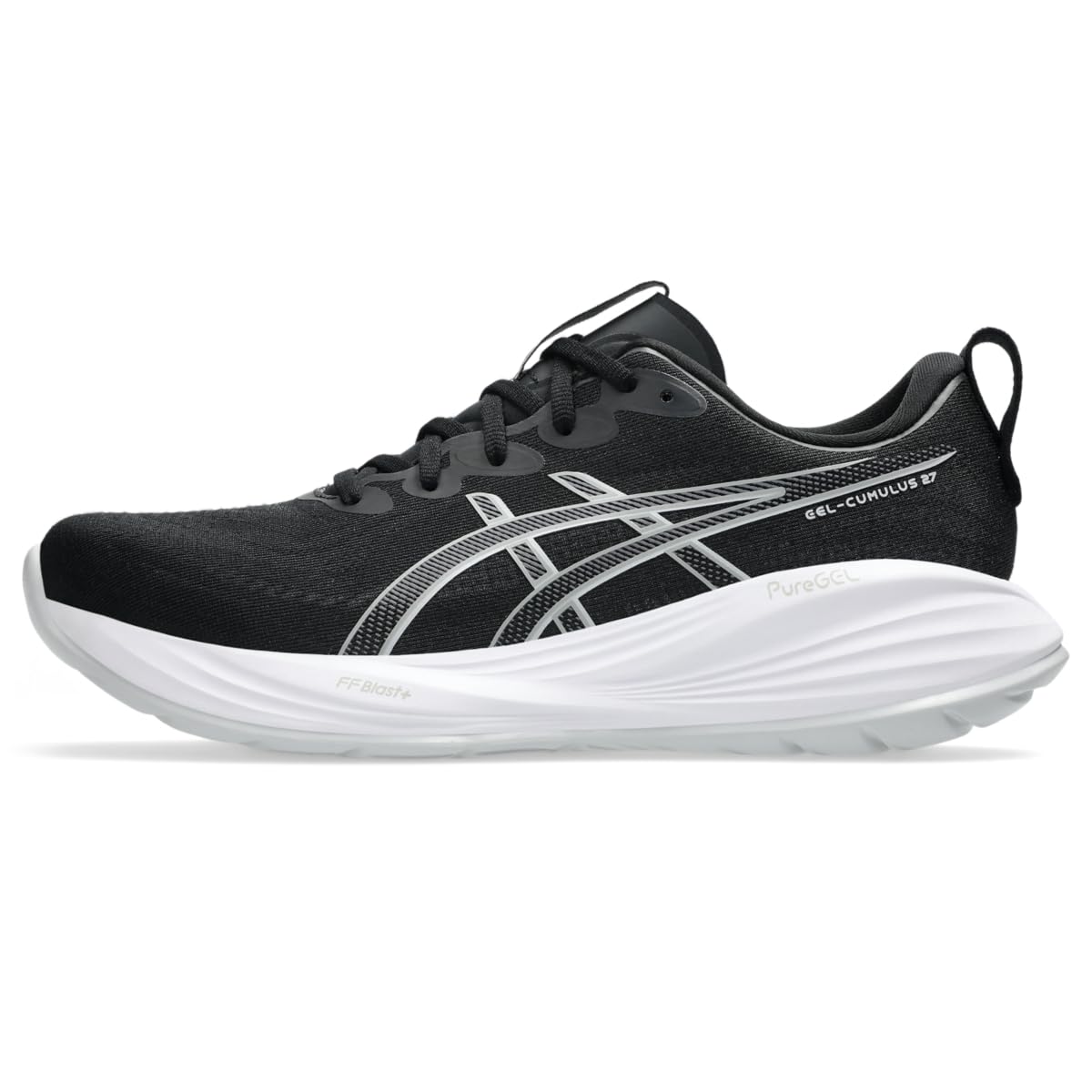
1. ASICS Men’s Gel-Cumulus 27 Running Shoes
Our pick — 4.5+★ from 900+ verified ratings; the strongest balance of quality and price.
The cushion-first pick that softens the landing before your shins ever feel it.
The Gel-Cumulus 27 answers the shin-splint question with a simple two-part recipe. A layer of PureGEL sits in the heel to absorb impact, and the FF BLAST PLUS foam midsole spreads the rest of that force across the whole foot. Add a FluidRide outsole underneath and you get a landing that feels quiet rather than jarring. For someone whose shins flare up on pavement, that heel cushion is the first thing that matters.
What earns this shoe its top spot is how it holds up for real daily wear. Nurses and warehouse staff have leaned on the wide version for 8–10 hour shifts standing on thin carpet over concrete, and it broke in well within a week for them. Owners in the review pages describe it as “a great jogging shoe” with plenty of cushion and breathability. The toe room is generous too, which is why buyers chasing a wider fit prefer the extra-wide option over the Gel-Contend 9.
The honest trade-off is the outsole. Some owners find the foam tread wears well into the few-hundred-mile range, while others report it giving up earlier on hard outdoor surfaces. That makes this a great indoor walker, gym shoe, and daily trainer, and a less ideal choice if you grind out long runs on asphalt every single day. The extra static electricity on a treadmill is a small, genuinely odd note from the review pages — not a reason to skip it if the rest fits.
What cushions the shin
- PureGEL heel plus FF BLAST PLUS foam absorb landing impact where shin pain starts
- Generous toe room and true-to-size fit keep the wide-foot crowd happy
- Breaks in within about a week, so you are not limping through a stiff first month
Where it gives way
- Foam tread durability divides owners — light outdoor use fine, hard asphalt wear faster
- Thin tongue and tightness across high arches for some feet
Reach for this if: you want a plush, stable daily trainer for walking, gym sessions, and short jogs while your shins settle down.
Worth a second look: if you log serious mileage on pavement, plan on the tread wearing sooner than a rubber outsole.
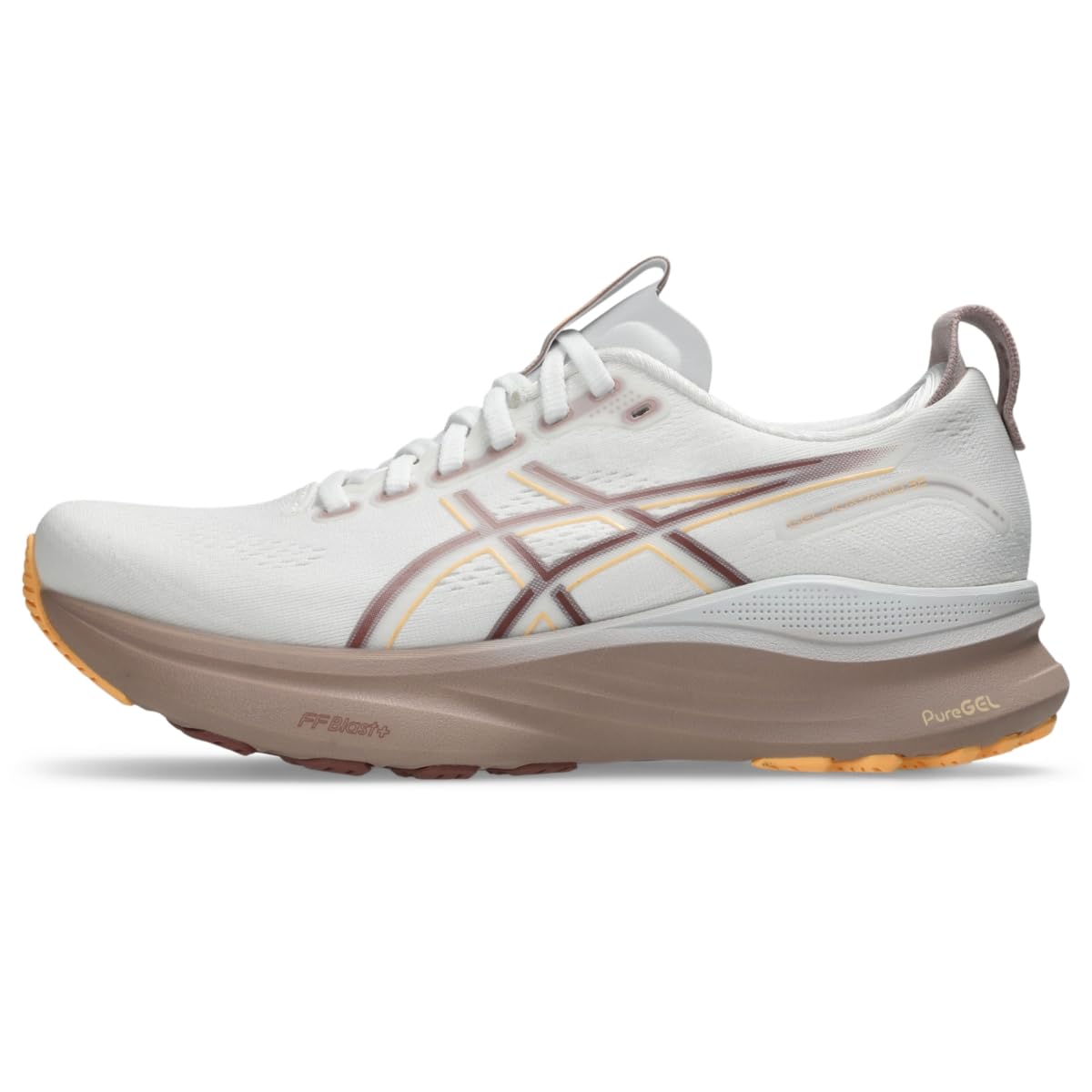
2. ASICS Women’s Gel-Kayano 32 Running Shoes
Built to catch the inward roll, so your shins stop doing overtime on every stride.
If your foot rolls inward, a soft shoe alone can make the problem worse. The Gel-Kayano 32 pairs that softness with the 4D GUIDANCE SYSTEM, a support frame around the arch that helps keep your stride balanced from heel-strike to toe-off. A higher midsole stack and lighter FF BLAST PLUS foam sit on top of it, so you get a smoother ride without a heavy feel underfoot.
That arch stability is what most owners come back for. The fit lands where you expect it — the upper mesh and reinforced tongue wing hold the foot snugly enough for a secure stride. The weight of 1.44 pounds keeps it light enough for real distance work, and the PureGEL under the heel cushions the landing. For anyone with wobbly ankles or a foot that caves in, this is the stability pick of the group.
The honest catch is fit width. This is not the shoe for a bunion that needs breathing room — the same snugness that holds your foot in place can pinch across a wider forefoot, so buyers with that shape should go up in width. It is also a stability design, not a featherweight, so a runner chasing the lightest possible shoe will feel the difference. Weigh those two points honestly against how much arch support you actually need.
If your foot rolls inward on push-off (overpronation) and you want stability without a heavy, dead feel, this holds up. It gives more support than the neutral Cumulus and the Brooks Trace 4 alike, and it stays cushioned enough for three-to-four-mile daily runs.
Who this is built for: runners whose shins flare from an inward roll need the arch guidance more than pure softness, and this shoe delivers it with a snug, supportive fit.
Short verdict: buy it if your foot rolls inward and you want stability that still feels cushioned all day.
Think twice: if you have a bunion or a very wide forefoot, size up in width before committing.
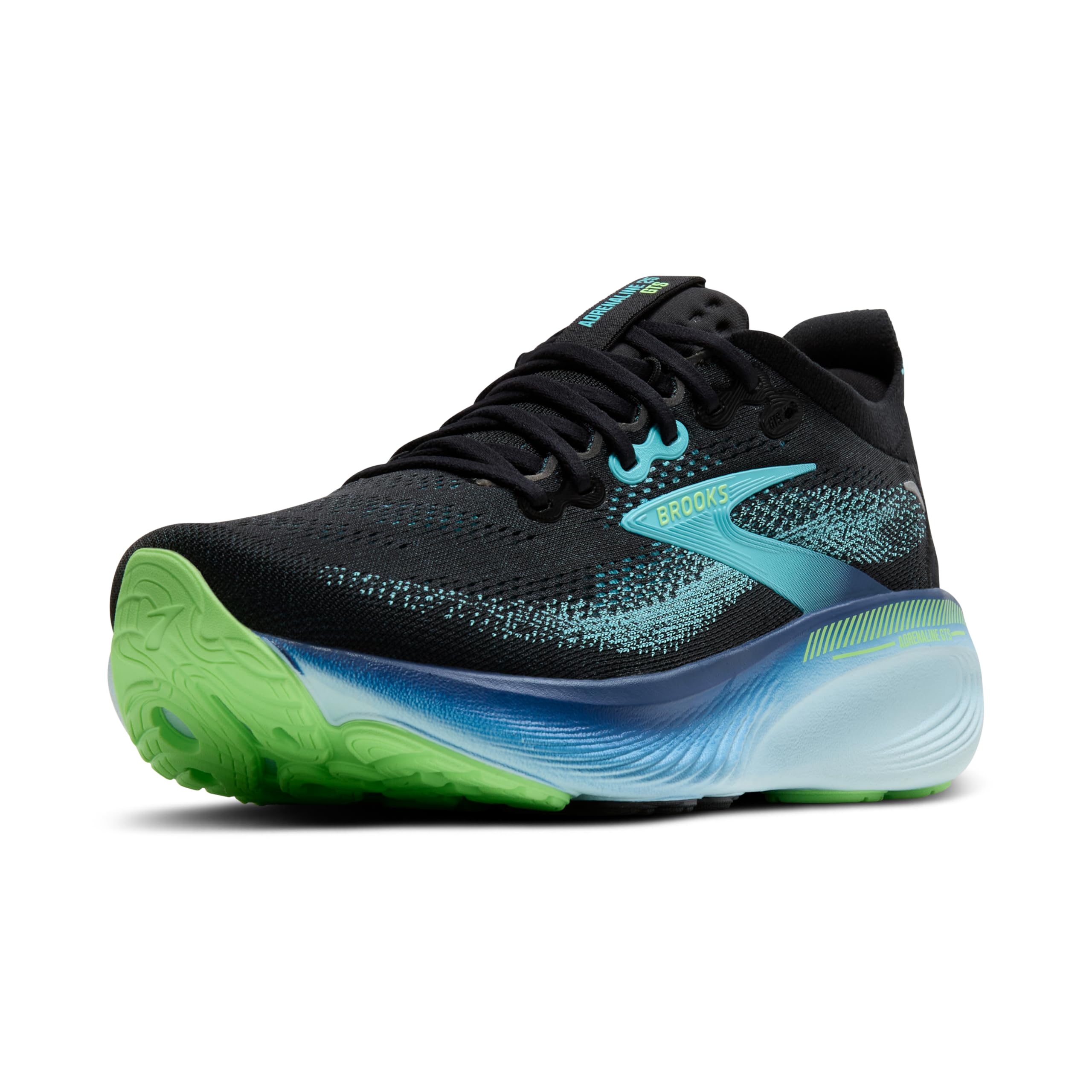
3. Brooks Men’s Adrenaline GTS 25 Running Shoe
A stability trainer that one shin-splint runner calls a standout after a 5K.
What makes the Adrenaline GTS 25 stand out for shin pain is the balance between flexible and firm. The cushioning gives on landing, but the shoe does not collapse into a squishy wobble. For a runner whose shins are the limiting factor, that is exactly the feel worth hunting for. Runners who logged a 5K at about 7 mph in these reported no shin pain during or after the run, and only minimal soreness the next day.
The comfort holds up beyond the run, too. Buyers wear it all day without their feet getting tired, and the wide forefoot adds a grounded, stable base for standing shifts. One 5’11”, 180-pound runner put 300 miles on a pair over six months of five-mile runs three times a week on paved trails and roads, with no knee or ankle pain. If your pain pattern is inside-the-leg and your runs are steady and repetitive, this is arguably the sharpest tool in the review set.
Sizing is the one thing to plan for. Several owners find it runs small, with a runner who normally wears 9.5 to 10 in another brand needing a 10 wide here. Order up half a size rather than fighting the snugness. The shoe also has a firm, supportive character rather than a plush pillow feel — great for stability, less of a cloud if you want maximum cushion.
On weight, the Adrenaline comes in at 1.5 pounds, right next to the ASICS Gel-Kayano 32 at 1.44 pounds. Both are in the same league — neither is the lightest shoe here, and neither feels heavy for its support.
Where it wins
- Stability frame draws a line against inward roll while the midsole stays soft
- Wide forefoot and heel support make it a grounded shoe for long standing days
- 300-mile user log with no knee or ankle complaints
What to watch
- Runs small for many buyers — plan to size up half a size
- Firm, controlled feel rather than a plush pillow ride
Pick it when: your shins complain on steady pavement runs and you want a stable, supportive shoe that doubles as a work shoe.
Size-up note: order half a size larger than your usual to avoid a tight fit.
4. New Balance Women’s Fresh Foam X 880 V14

A roomy toe box that lets your foot splay out and take pressure off the stride.
Wide feet and shin pain tend to travel together, because a foot crammed into too-narrow a shoe alters how you land. The Fresh Foam X 880 V14 is built around a structured, supportive upper and a wide toe box, so your foot has the room to move naturally inside the shoe. That matters more than most people realize when the goal is absorbing impact cleanly rather than landing on a cramped foot.
The comfort is real and durable. One buyer walked 15-plus miles a day in the extra-wide version with no blisters. Others wear them all day with no foot or knee pain, and the shoe is recommended by in-store gait scans for overpronation without needing a rigid insert. That gut check — will a wide toe box and steady support agree with my arch — is what makes this a practical pick for anyone whose current shoes pinch.
The catch is the ankle cut, which sits low. A low-cut collar can rub or let debris in, and for anyone whose shin soreness sits higher up the leg it offers less lateral locking. If that is your pattern, pair it with a lift of the issue elsewhere — the Brooks Adrenaline’s heel support is a better fit for that specific problem.
For general walking, daily errands, and getting your muscles used to time on feet again, the 880 lands a durable, cushioning all-purpose option that a wide foot can wear for hours without regret.
Best for: wide or extra-wide feet that have been fighting tight shoes and want to walk without pressure points.
Know this: the low ankle collar suits casual walks more than high-mileage running.
5. Saucony Women’s Omni 20

Stability support priced so you can keep two pairs rotating without regret.
The Omni 20 makes the stability case on a shoestring, and its fans are remarkably loyal. One owner has worn the Omni line for 14 years, calling Saucony a “soft sock” of a fit and praising the arch support as feeling custom-made. The shoe holds a stable, cushioned platform that suits mild pronation without feeling like a plank. For a starter pair while you figure out what your shins actually need, that is a smart, low-risk place to begin.
Owners are also clear about the feel. The PWRRUN cushioning is supportive rather than plush, and several note it takes a break-in before the toe box stops pinching. Sizing runs small too — several owners needed to size up to a wide. Treat the first few weeks as the adjustment period, then this becomes a reliable everyday trainer.
Where it asks you to be patient is the forefoot. Some owners found it stiff right from the start and ended up using it for indoor workouts with an added insert rather than long outdoor runs. If you want instant softness or a lot of forefoot cushioning out of the gate, this is not the shoe. If you want a solid stability base you can afford to beat up, it delivers.
Plain read: this is the pair to buy when you want arch support and a stable ride without committing to a premium price — and you do not mind breaking it in.
Buy it if: you want a dependable stability shoe for walks, gym days, and mild pronation, and you are happy to work through the break-in.
Look elsewhere if: you want a pillow-soft forefoot from the very first run.
6. Brooks Women’s Trace 4 Neutral Running Shoe
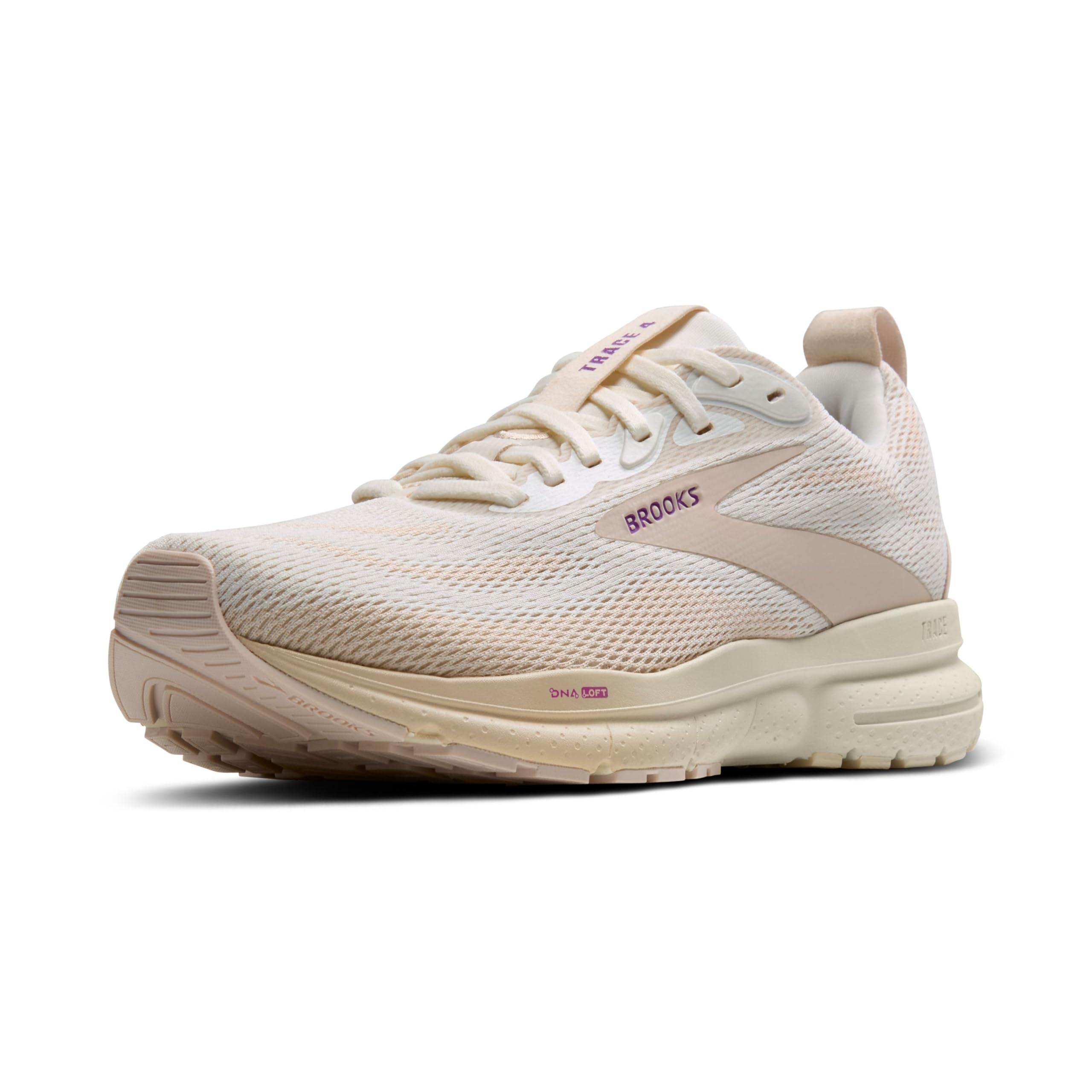
The quiet trainer that feels stable and grounded on a long day on your feet.
For shin pain that comes from simply being on your feet all day rather than hard running, the Trace 4 makes an honest everyday case. It is a neutral shoe, meaning it does not try to correct your stride, and it delivers a grounded, stable platform underfoot. Buyers report wearing it comfortably for 10-hour standing days, and the materials feel higher quality than the price tier suggests.
Its support suits mixed activity. Owners put it through HIIT, step aerobics, and boot camp classes without it feeling clunky, and it handles a normal walking day with ease. If your shins hurt mostly from general time on your feet rather than sharp turns or speedwork, that stable feel is the part that counts.
The honest note is the cushioning, which some owners find plentiful and others find thin. Several owners mention very little cushion in the sole. That means it is not a plush recovery shoe — it is a firm, stable trainer. The toe box also runs wide, to the point where a narrow foot may notice a loose fit. If you like a snugger shoe, look at the Gel-Kayano’s shape instead.
Where this outshines the neutral peers is value on a stable, all-purpose platform you can wear straight from the box — no break-in needed and no real adjustment period to speak of.
The case for it
- Stable, grounded feel makes long standing days easier on the feet
- Comfortable right from the start for HIIT and aerobics classes
- Wide width available for a roomier fit
The fine print
- Cushioning splits opinion — some find the sole thin
- Toe box runs wide, which can feel loose for a narrow foot
Suits you if: your shin aches come from long standing days and mixed workouts, not hard pavement mileage.
Pause if: you want deep, pillow-like cushion underfoot — this is a firmer ride.
7. ASICS Women’s Gel-Cumulus 27 Running Shoes
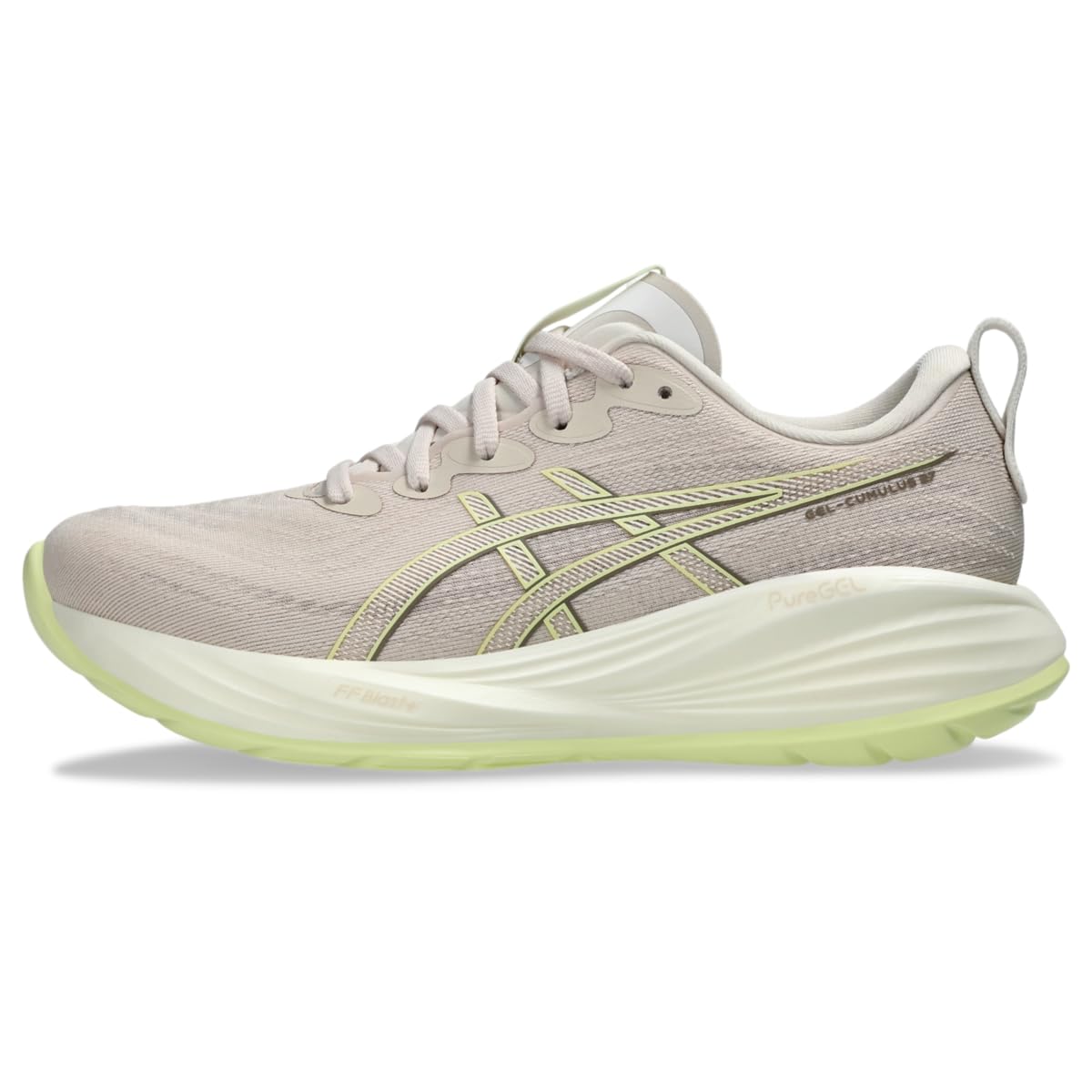
The women’s cut of the crowd-favorite cushion shoe, with room up front.
The women’s Gel-Cumulus 27 carries the same PureGEL heel and FF BLAST PLUS midsole combination as the men’s version at the top of this list — the same shock absorption that takes the sting out of a landing. What sets this one apart for many feet is the toe bed. Owners who need a larger front compartment specifically praise it, noting it helps with hammer toes and a wider front of the foot. If your shin issue started after switching to a tighter shoe, the extra room here can be the correction you needed.
The ride is comfortable enough for real distance. Reviewers report three-to-four-mile daily runs in them without issue, and one describes the feel as “walking on cushion, cloud foam.” The heel stays narrow and secure while the toe widens, a shape that suits a lot of wider feet. At 1.44 pounds, it stays light on your foot, and the removable insole fits a custom orthotic (a molded insert) if you already use one.
Two trade-offs are worth knowing. Some owners find the cushioning or the overall feel does not match what they expected from the name — cushioning feedback is genuinely mixed. And the arch support is more modest than the stability shoes here, so if you pronate strongly, the Gel-Kayano or the Adrenaline would serve you better. The light green colorway is also a love-it-or-not detail, not a functional concern.
Why it stands out: a light, cushioned women’s trainer with a roomy toe box — a strong pick for hammer toes and wider forefeet looking for impact relief.
Go for this if: you need a roomy toe box with light cushioning for daily walking or short runs.
Better elsewhere: if you need firm, corrective arch support, this is the lighter-support option.
8. Saucony Women’s Endorphin Shift 3 Shoes

A tall, sink-in midsole that turns a punishing walk into something close to vacation.
The Endorphin Shift 3 goes all in on cushion. A higher stack of PWRRUN foam and a deeper midsole cradle let your heel settle into the shoe rather than bounce off it. For shin pain that flares from repeated impact on hard ground, that sink-in feel is the goal, and this shoe delivers a lot of it. Owners describe it as extra cushioning that took the pain out of their walks entirely.
It is comfortable enough to live in, too. Buyers wear it all day without foot pain, fold it into long-distance walking, and find it suits both running and daily use. The mesh upper is breathable, the heel is padded, and it accommodates orthotics. It is also genuinely light on the foot, which makes a tall cushion shoe wearable for hours without dragging.
Sizing is the catch. The fit is mixed — some owners find the toe box roomy, others find it narrow and snug, and at least one long-time Saucony buyer found a pair far tighter than the same size they always wear. If you are between sizes or have a wide forefoot, try going up. The upper cut also rubbed a toe for some owners, so verify the heel and toe clearance before a long day out.
Great match: if you want the most cushion underfoot for long walks and all-day comfort.
Watch the fit: sizing runs inconsistent for some owners — check the return policy before you commit to long distances.
9. ASICS Men’s Gel-Kayano 32 Running Shoes

The high-mileage stability shoe that keeps flat feet cruising without insoles.
The men’s Gel-Kayano 32 is the stability flagship of this group, and its cushion-to-support balance is what earns it a place here. The 4D GUIDANCE SYSTEM frames the arch to control inward roll, while FF BLAST PLUS foam and a PureGEL heel unit soften the landing. According to ASICS, that rearfoot PureGEL delivers cushioning about 65% softer than their standard GEL — a manufacturer claim, but the plush feel it describes matches the ride.
For flat feet the case is strong. One owner with flat feet walks 10 to 15 miles a day in them and finishes with little soreness or ache, no insoles required, and calls the arch support fantastic. Others use them for running, walking, and long days on their feet. If your shins hurt because your arches need support, that is the exact scenario this shoe is built for.
The honest counterpoint is durability. ASICS owners consistently note the tread fading around the 250-mile mark on pavement, with some experiencing toe mesh wear over time. The flip side is that treadmill and trail use extend the life. It is also a premium-tier stability shoe, so it costs more of a commitment than the budget picks here.
Set against the women’s Gel-Kayano 32, the geometry is nearly identical — the dimensions differ by a hair, and this version weighs 1.44 pounds, right where the women’s model sits. The 4D GUIDANCE SYSTEM (a set of support features that guide your foot through each step) is the same, so the choice between them depends on fit and color, not support level.
Why it earns its keep: adaptive stability, plush heel cushioning, and a light build for a stability shoe — strong for flat feet and long walks without insoles.
The pick for you: flat or low arches, high daily mileage, and a preference for support that feels cushioned rather than stiff.
Fair warning: budget-conscious buyers will find it premium-tier, and the tread life is the thing to monitor.
Know the Specs
Midsole foam and the landing
The midsole is the thick foam layer between your foot and the ground, and it is where shin splints are won or lost. FF BLAST PLUS, Fresh Foam X, and PWRRUN are all names for that impact-absorbing foam. A higher stack means more material to soak up the force of each step. Pair that cushion with a firm heel frame and the shoe stays controlled instead of letting your foot roll in.
Stability systems like 4D GUIDANCE
Stability technology is the firm structure that guides your foot through the inward roll after landing. ASICS’s 4D GUIDANCE SYSTEM wraps the arch in a frame that adapts to your stride. Brooks takes a similar approach in the Adrenaline GTS 25 with a support structure around the heel and arch. These are not inserts, they are built into the shoe itself.
Heel cushioning with PureGEL and rearfoot GEL
The heel takes the first and hardest hit. PureGEL is ASICS’s term for the gel-like cushioning inside the heel of a shoe. It softens the landing so less force travels up your leg toward the shin. A shoe with a dedicated heel cushion like PureGEL is the one to look at when impact, not late-stride roll, is your main complaint.
Toe box and width options
Toe box simply means the front compartment where your toes sit. A roomy toe box lets your foot spread and land without pressure, which keeps your stride natural. Several picks here come in wide or extra-wide, which matters if your feet swell or you have a bunion. A snug heel with a wide toe is the shape most supportive, comfortable shoes aim for.
Common Questions
Will a stability shoe fix my shin splints?
Should I pick a neutral or stability shoe for shin splints?
How much cushion is too much for shin pain?
Do wide toe box shoes help with shin splints?
How many miles before a running shoe stops protecting my shins?
Is cushioning or arch support more important for shin splints?
Can I run a 5K or 10K in these shoes with shin issues?
Do these shoes run true to size?
Are these shoes good for standing all day at work?
How do I know when to replace shoes for shin pain?
The Bottom Line
The clear winner for most people is the ASICS Gel-Cumulus 27, because it puts the most cushion under your foot at a reasonable price and stays light enough for daily wear. If your shins complain mainly from an inward roll, step up to the ASICS Gel-Kayano 32 for its 4D GUIDANCE SYSTEM and PureGEL heel. And if you just need a stable, supportive everyday shoe for long standing days, the Brooks Trace 4 is the comfortable, grounded choice. The Gel-Cumulus backs its spot with 900+ ratings, so the crowd favorite is a low-risk pick.
How we choose
We do not accept paid placement. Every pick is matched to a real buyer and a real use-case; we do not hands-on test units.
Sources
Specifications: manufacturer listings and product documentation. Review insights: verified customer reviews, as of October 2026. Pricing: not shown on this page (it changes often); check the current price via the retailer link.
As an Amazon Associate, Aappliancez earns from qualifying purchases. This does not affect which products we feature.