Disclosure: Some links in this post are affiliate links. As an Amazon Associate I earn from qualifying purchases, at no extra cost to you. Learn more
Specs are compiled from manufacturer listings and verified buyer reviews and can change over time — please confirm the key details on the product page before buying.
If you want the shortest answer: buy the BXI Flashing Roll Tape if your crack is on a roof, a seam, or anything you can reach by hand. Buy a pourable or torch-in filler if the crack is flat on a driveway you drive over. That split decides almost everything, because the wrong format for your surface is the reason most asphalt patches fail before the first winter. This guide walks you through eleven patches and fillers, what each one is actually built for, and where each one falls short.
This guide is built by comparing the manufacturers’ published specifications and the patterns across verified customer reviews, so you get each pick’s real strengths and trade-offs instead of marketing spin.
Some products here are tapes and strips you press or melt in, others are liquids you pour from a jug. Matching the format to the crack shape matters more than brand loyalty. Below you will find the best asphalt patch for your driveway, your roof seam, or your concrete joint, sorted by what each one actually does well.
Top Picks


How To Choose The Best Asphalt Patch
The single biggest mistake people make is buying a filler for the wrong shape of damage. A wide, shallow crack on a flat driveway behaves nothing like a hairline seam on a roof edge, and a product built for one will slide right out of the other. Before you compare brands, work out three things about your repair: how wide the gap is, whether it sits flat or vertical, and how deep it runs.
Match the format to the crack first
Tapes and rubber strips are for seams, joints, and edges you can press down flat. Pourable liquids are for cracks in flat pavement, because they flow into the gap and level themselves. Torch-melt rods and rolls are for people willing to heat the material so it bonds hard into the crack. Each format has a real strength and a real limit, and no single one covers every job on your property.
Width decides whether a filler will even enter
Thin, runny sealants are great for hairline and narrow cracks but drain straight through a wide gap. Thick, sandy fillers hold their shape in bigger gaps but struggle to enter a hairline. Check the crack width against what the product says it fills before you commit, because a mismatch here is the number one cause of a patch that looks fine and then disappears.
Give yourself a dry weather window
Most of these products need a clean, dry surface and a stretch of dry hours after application. Rain arriving too early is a common reason a patch washes out, and cool damp air stretches cure time far beyond the label. Read the cure window and check the forecast before you open the container, not after.
Side-by-Side Comparison
| Model | Best For | Format | Coverage / Size | Cure Time | Amazon |
|---|---|---|---|---|---|
| BXI Flashing Roll Tape★ Best Overall | Roof seams & leaks | Self-adhesive roll | 6 in × 32 ft, 0.06 in thick | Immediate seal | Amazon |
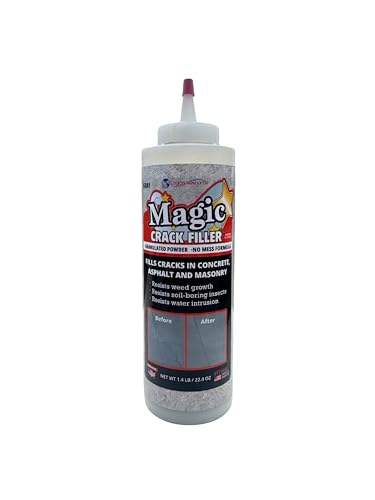
| Magic Crack FillerHairline Specialist | Hairline concrete cracks | Granulated powder, pointed bottle | 1.4 LB (22.4 oz) | — | Amazon |
| Henry Driveway Elastomeric FillerLong-Reach Pick | Long driveway cracks | Pourable liquid | 1 jug | 3–5 days to full cure | Amazon |
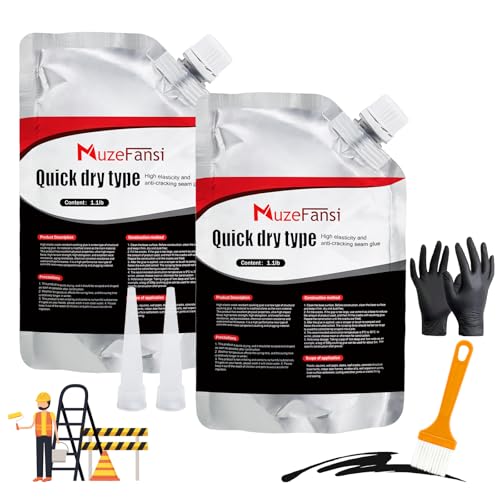
| MuzeFansi Asphalt Crack Filler | Small cracks, tight budget | Gel, caulk gun | 2 pcs, 2.2 LB | 2–3 hr tack-free, 24–48 hr full | Amazon |
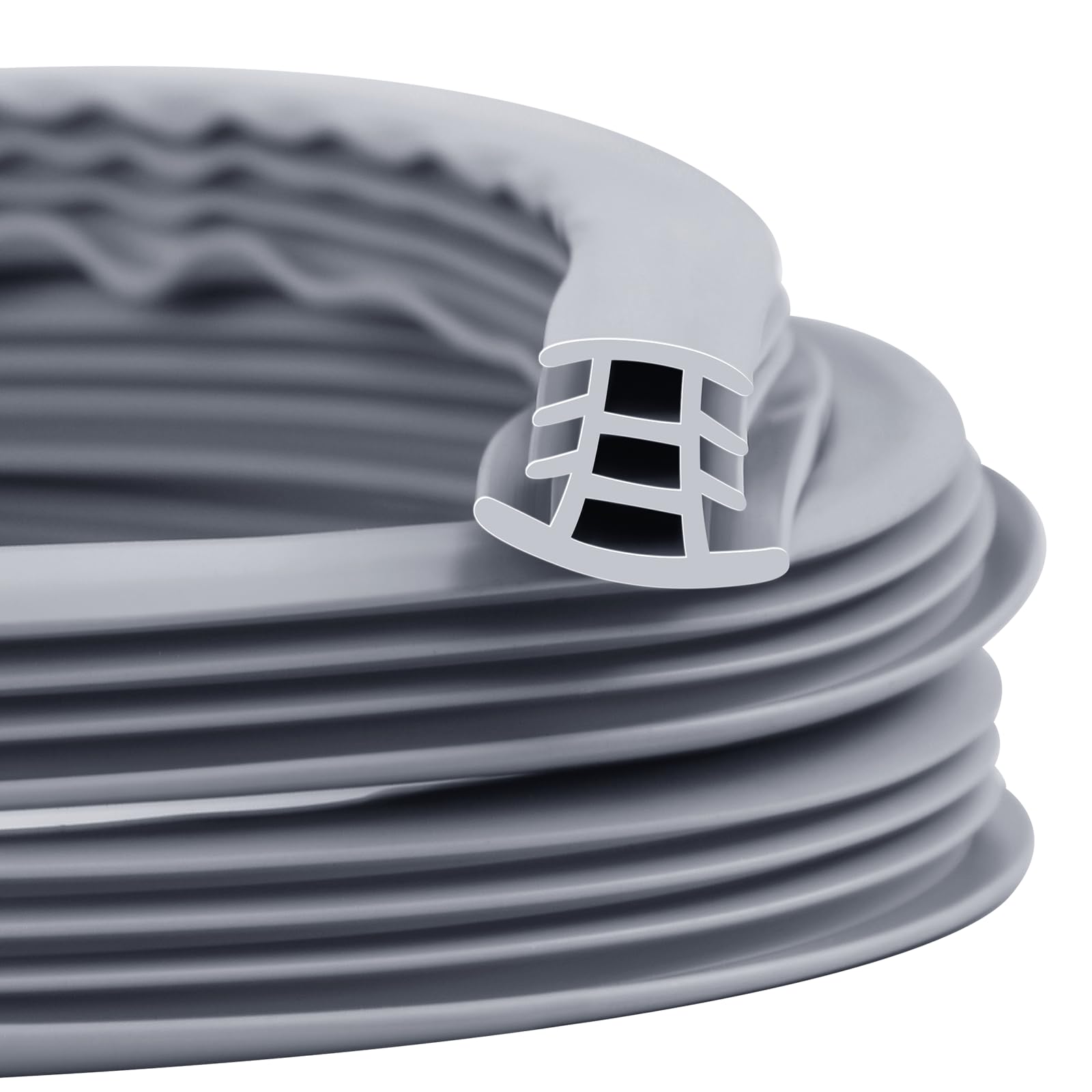
| RTHIEAI EPDM Rubber Strip | Expansion joints | Rubber strip | 10 ft × 3/4 in | No cure needed | Amazon |
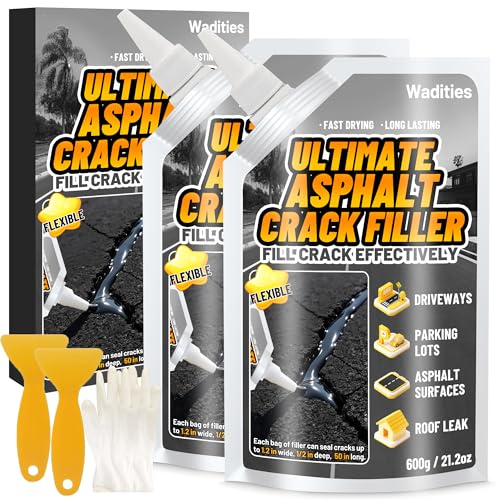
| Wadities Crack Filler | Wide cracks, self-leveling | Liquid, nozzle + scraper | 2 pcs, 2.65 LB | 4–6 hr surface, 24–48 hr full | Amazon |
| Jetcoat Premium Sealant | Big driveway repairs | Pourable liquid | 1 gallon | 24 hr between coats | Amazon |
| Liquid Rubber Self-Leveling Filler | Spider cracks, clean finish | Liquid tube, caulk gun | 10 oz × 2 pack | Tack-free in a couple days | Amazon |
| Sakrete Blacktop Crack Filler | Thick paste for bigger gaps | Paste in jug | 1 gallon | Fast drying | Amazon |
| EWT Hot-Filler II | Commercial joints, torch job | Rubberized asphalt roll | 50 ft × 1.2 in, 3 mm thick | Sets in minutes | Amazon |
| Dalton PLI-STIX | Torch-melt precision work | Thermo-plastic rubber rod | 60 ft (2 pack) | 4 hr full cure | Amazon |
Detailed Reviews
1. BXI Flashing Roll Tape Membrane, 6 inches X 32 Feet
Our pick — 4.5+★ from 800+ verified ratings; the strongest balance of quality and price.
The roll you press down and forget, built for the leaks that keep coming back.
Roof seams, gutter edges, deck joists, RV roofs, chimney flashing — this is the repair you reach for when the leak is above your head and you cannot pour anything into it. The BXI tape is a 6-inch wide by 32-foot long roll of SBS-modified rubberized asphalt (a rubbery asphalt blend) with a silver foil backing on one side. It sticks with no primer and no torch, which means you are working from a ladder with scissors and a utility knife, not a flame.
The temperature range is the part that matters most for outdoor work: 5°F to 158°F, so the roll stays workable in cold weather instead of turning brittle in your hands. It weighs 6 pounds on the roll — that weight is why it feels substantial and why positioning it takes a little care before the adhesive grabs. The foil face is UV-resistant and paintable, so you can coat it to match the roof once it is down. It adheres best to smooth, flat, dry surfaces, and that surface prep is not optional here.
What wins people over is how completely it stops a leak — effectiveness is the runaway praise in this listing, and quality runs right behind it. One buyer sealed a 35-year-old flat roof in about 10 minutes and stayed dry through two years of multi-day storms. Others note the foil backing can separate slightly while unrolling, and that getting the film off the back is fiddly — rubber gloves turn that from annoying into routine. It is built for small, localized leaks, not a whole failing roof.
Where it earns its keep
- 6 in × 32 ft covers a lot of seam and flashing
- No primer or torch — cut, peel, press
- 5°F to 158°F range keeps it usable in cold
- Foil face is UV-resistant and paintable
What to prep for
- Backing film is stubborn; wear rubber gloves
- Adhesion is a recurring complaint on rough or dirty surfaces
- Made for small localized leaks, not full roof replacement
Grab this one if: your problem is a roof seam, gutter edge, or flashing leak that water keeps finding.
Keep looking if: you are filling flat driveway cracks you drive over — a pourable or torch filler suits that far better.
2. Magic Crack Filler Granulated Powder
For skinny cracks on a garage floor you want to vanish, not announce.
If your crack is the thin hairline kind that shows up on a garage floor after one cold winter, this is the tool for that specific job — not a driveway crack you can stick a finger into. It comes as a 1.4 LB bottle of granulated powder in gray, with a pointed tip so you aim the flow rather than smear it around.
What people rave about is how well it disappears into the crack. The thin hairline cracks on a one-year-old garage floor blended into the existing surface and essentially vanished, which is the whole point with a filler this fine. Deep or wide gaps are a different story — they eat through product fast, and pre-filling the bottom with something else first gets you the best result. Work the bottle at a steady angle and the powder settles rather than pools.
The honest catch is color. The gray blends into a light, aged concrete floor nicely, but it is not a direct match for every slab, and on a darker or freshly poured surface the patch will read as a patch. Even so, it holds up — one buyer’s patio patch still looked clean four months after application. Weigh that against the 1.5-pound bottle versus the 6-pound BXI roll above: much lighter to handle, but much less coverage on a wide job.
Made for the fine stuff: pointed-tip granulated powder aimed at hairline and shallow cracks on concrete, masonry, and asphalt, where a runny sealant would just skim the top.
The one thing to know: gray will not match every slab, so expect a visible line on darker or newer concrete even after it cures.
Right for: garage floors and patios with thin cracks you want to look clean again.
Wrong for: deep or wide gaps, where it burns through the bottle too fast to be economical.
3. Henry Driveway Elastomeric Emulsion Crack Filler
A liquid that reaches the bottom of a long crack and stays elastic once it sets.
This one is for the stretched-out cracks that run the length of a driveway and keep reopening. Henry builds it from EPDM rubber (a weather-resistant synthetic rubber) in a pourable liquid form, so once it dries it stays rubbery rather than turning into a brittle plug. That flexibility is the whole reason a long crack does not simply split the filler apart again next season.
The application is straightforward if you have the patience for it. It goes down brown and dries to a glossy black, and the pour is easier with a wider hole cut into the bottle for bigger cracks. The part that trips people up is cure time — it dries to the touch reasonably quickly but takes three to five days to fully set, and deep cracks usually want a second pass because the liquid settles as it dries. Plan a dry stretch of days, because rain inside the first 24 hours can undo the work.
Quality and ease of application are what this product is known for, and the complaints tend to be about the job rather than the filler: it is messy, it can be too thick for a narrow nozzle, and once the bottle is open to air the thin filler can start to skin over, so you shake it as you go. Buy it knowing you are committing a couple of afternoons to a two-car driveway. The 1-gallon jug pairs with the pourable options below rather than the tapes.
What it does well: rubberized emulsion that flexes with movement, so long driveway cracks seal and stay sealed instead of cracking open at the edges.
Where it takes patience: three to five days to full cure, and deep cracks need repeat coats as the liquid settles — this is a weekend project, not a lunch-break fix.
Choose it for: lengthy driveway cracks you plan to reseal seasonally, where elasticity matters more than speed.
Pass it up if: you need a quick one-and-done patch or you cannot guarantee several dry days.
4. MuzeFansi Asphalt Crack Filler, 2 Pcs 2.2 LB
A gel in a caulk gun for small cracks you want handled this afternoon.
This is the entry-level grab for someone with a few small cracks and a caulk gun already in the garage. The MuzeFansi kit is two tubes of 2.2 LB self-leveling gel that flows into gaps and cures into a flat layer, and the stated timing is specific: tack-free in 2 to 3 hours and fully cured in 24 to 48 hours. No mixing, no torch, no fuss — clean the crack, load the tube, apply, smooth.
Where it does its best work is shallow cracks. For those it fills cleanly and the finish looks tidy, and one buyer filled a half-inch wide, half-inch deep hole in three layers with good results. The gel is on the runny side, so a very wide or deep gap drinks it fast — the trick with those is to build it up in passes rather than expecting one full fill.
The fair warning is twofold. First, the “quick dry” label overpromises for some people: the surface can stay wet and transferable well past the stated tack-free window, so do not walk on it until it is genuinely set. Second, it is a small-volume product — for a deep crack you will use the tubes faster than you expect, which is where complaints about running out surface. For a handful of narrow cracks on a patio or walkway, though, it does exactly what it says.
How to get the best out of it: treat it as a top-up filler for shallow gaps, apply in thin layers, and let each layer set before the next.
What catches people out: it is runnier than a paste and the tubes are small, so deep cracks and long spans burn through the kit quickly.
Best fit: a small driveway, walkway, or patio with narrow cracks and a DIY afternoon to spare.
Look elsewhere if: you are tackling a deep or lengthy crack, where you will want a larger jug or a paste instead.
5. RTHIEAI Flexible EPDM Rubber Strip, 10 ft x 3/4 in
Not a crack filler at all — a replacement for the rotting wood between slabs.
This strip solves a different problem from everything else on this list. When the expansion joint between two concrete slabs has crumbled or the wooden spacer has rotted through, you do not want to pour filler into it — you want to press a fresh strip of rubber back in. This is a 10-foot strip of EPDM rubber (a flexible, weather-resistant synthetic rubber) at 3/4 inch wide, and it slot into cracks between 1/2 inch and 1 inch wide. You cut it to length with scissors and press it into the gap.
The fit is what people praise most — it drops into place with no adhesive, and one buyer replaced a full run of old pool decking strips in about an hour of clipping and trimming. Nine-year-old rotted wooden driveway spacers swapped for this strip look clean and stay put under regular foot traffic. Because it is not glued, the depth matters: get the strip sitting flush with the slab surface and it holds; leave it sitting proud and a tire will worry at it.
The trade-off is substance. This is a soft, thin rubber, noticeably more pliable than some branded alternatives, and some people find it on the flimsy side when they first handle it. In a deep joint that softness is fine; in one where the strip sits high, or in a spot taking a lot of turning tires, a firmer strip would serve you better. Match the size to your gap and it does its job cleanly.
What it brings to the joint
- 10 ft length, 3/4 in wide, cut to fit with scissors
- Presses in with no adhesive — instant finished look
- EPDM rubber resists weather and aging
- Fits gaps between 1/2 in and 1 in wide
Where a firmer strip would do better
- Soft and thin compared to some branded strips
- Sits on the surface, not glued down — depth of the gap matters
- Not a crack filler; it will not fill a jagged hole
Reach for it if: your expansion joints are hollowed out and you want a clean rubber insert instead of a poured filler.
Try another route if: you have a genuinely broken crack in the middle of a slab rather than a straight joint line.
6. Wadities High Elasticity Crack Filler, 2.65 LB
Built for the wide cracks that make other fillers shrug and slide away.
When a crack is wide enough that a runny sealant just pools in the bottom, this one is worth a look. Wadities sells it as a high-elasticity liquid rubber in a 2-piece 2.65 LB kit that comes with a putty knife and a couple of interchangeable spout sizes. The elasticity is the point — once it cures it stays pliable instead of hardening into something a freeze can crack and pop out.
The application is a genuine improvement over a caulk gun for people who have been squeezing tubes for years. You inject it with the nozzle, spread it with the supplied scraper, and it levels itself into a flat finish. Surface drying is stated at 4 to 6 hours, full cure at 24 to 48 hours. Rain arriving two strong storms after application did not wash it away or break it down, which is the test that actually matters.
What it is known for is filling wide gaps that other products draw the line at — one buyer reports it filling cracks other brands would not enter, drying in about a day but staying supple. The catch is cure time in cool or shaded spots; when it stays wet for days instead of a few hours, the surface is unusable until it sets, so pick a clearly sunny window and keep the day clear. One package handles roughly one large crack, so size the job before you start.
The real strength: a self-leveling rubber that flows into wide cracks and sets pliable, so freeze-thaw cycles have something flexible to work against instead of a rigid plug.
The honest catch: one package covers about one large crack, and cure time stretches badly in cool or shaded conditions — plan for the sun.
The right call when: your cracks are wide and you want an elastic, self-leveling seal with tools in the box.
Give it a miss if: you need to cover many cracks in one go, where the per-crack coverage runs short.
7. Jetcoat Premium Elastomeric Pourable Crack Sealant, 1 Gallon

A gallon jug for the driveway that needs a serious sweep of cracks sealed in one session.
Jetcoat takes a different approach from the small tube products: this is an 8-pound, 1-gallon jug of polymer-modified, emulsion-based sealant (asphalt mixed into a liquid carrier with flexible plasticizers added). That gallon is built to handle a broad run of cracks across a whole driveway rather than one or two spots. It pours from an included spout and dries black, which is the color you want matching a sealed surface.
The application is what earns the reviews — no big mess, the spout pours straight into the crack, and you can seal seams alongside the cracks in one pass. One user turned a quoted contractor job on a long driveway into a do-it-yourself pour and came out far ahead, with a finish like county road crack filler. There is a self-healing quality the maker points to, and the material is designed to hold in low temperatures without tracking.
The recurring gripe is that in genuinely cold winter regions the material can separate and expose the crack again when the ground shifts, and the one-gallon jug gets awkward to handle once it is partly empty. Pour in two stages rather than overfilling — the maker says the material settles and may need a second application with 24 hours between coats. It is also note it sits between the small 2.2 LB tubes and the heavier torch options: more volume than a tube kit, less fuss than a melt-in job.
Best read on value: a full gallon that covers a big driveway run and seals seams in the same pass, at a cost far below paying a contractor for the same work.
What to watch: it can pull away in hard freeze-thaw country, and the jug is awkward to pour once half-empty.
Go for it if: you have a whole driveway of cracks and want a single pour-and-seal session.
Hold off if: your area grinds through brutal freezes — you may want something with more bite when the ground moves.
8. Liquid Rubber Asphalt Crack Filler 10oz 2-Pack
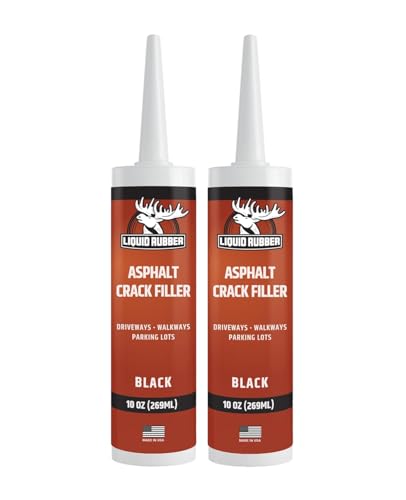
The neat-finish option for spider cracks a hot-crack crew skipped over.
Liquid Rubber’s strength is doing the small, fussy cracks that a professional hot-crack crew rolled past, and doing them tidily. This is a 10-ounce liquid rubber tube in a 2-pack, and the maker quotes coverage at roughly 22 linear feet per tube at a 5/16-inch bead (a bead is a line of sealant about the width of a pencil). It works in damp conditions and temperatures down to 32°F, which is unusual flexibility at the cold edge of the season.
Self-leveling is the whole draw here — it flows out flat and levels itself, so the finished line blends into a sealed surface. It dries tack-free in a couple of days, the color matches a seal coat, and it stays matte rather than glinting in the sun. If you have ever been irritated by a shiny, obvious repair line, that matte finish is a real benefit. Applied with a caulk gun, it settles into the crack and stays there.
Here is the catch you should weigh: the self-leveling formula is thin by design, and in a deep or wide crack it will sink and leave you wanting more. Two tubes cover a limited area, so this is a spider-crack and top-coat product, not a hole-filling one — the maker itself points you to an asphalt patch for cracks over a quarter inch. Warm weather helps; the material flows and bonds best when it is genuinely warm out. Compared with the gallon jug pick above, this is the neat-finish choice, but the coverage is much shorter.
For the fussy cracks: thin self-leveling liquid that flattens into a matte, seal-coat-matching finish and works down to 32°F in damp conditions.
The trade-off: thin enough to sink in deep or wide gaps, so it is a crack-finisher, not a hole-filler, and two tubes cover a modest area.
Pick it when: you want a clean, flat line on small spider cracks and value finish over volume.
Skip it for: deep or wide holes, where the maker steers you to a proper asphalt patch instead.
9. Sakrete Blacktop Crack Filler, 1 Gallon
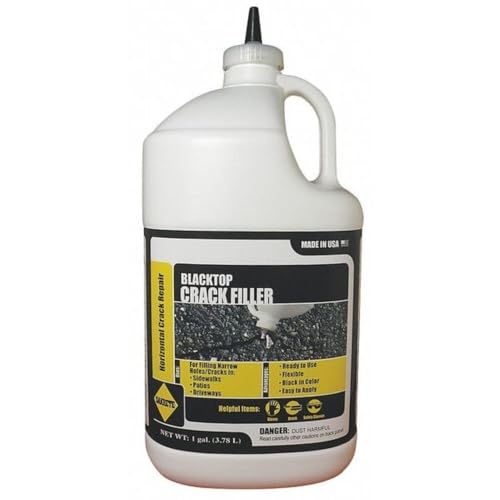
The thick paste that stays where you put it, even on a vertical edge.
Sakrete’s filler is a paste, not a runny liquid, and that consistency is exactly why it earns a spot here. Runny sealants slide downhill; this one holds its shape — it stays in place on vertical edges and built-up shoulders where other fillers sag and run. It is a 1-gallon jug of paste that dries black and hard, and the color holds rather than going brown.
The trade-off to that thickness is application effort. It is viscous, so it will not work into a hairline — figure on cracks of at least 1/8 inch up to about 1/4 inch, where it goes in well and sets fast, and you may be able to drive on it within a day in decent weather. To dispense it you turn the jug upside down and squeeze, which is tiring across a long run of cracks. The payoff is a patch that fills even larger gaps cleanly and holds through rain and hot days.
One more thing worth knowing: because the cured paste is more rigid than the pavement around it, on thin or un-compacted asphalt it can encourage a new crack to open parallel to the repair. It is not a flexing rubber, so treat it as a hard-set patch. That same hardness is why it grips and stays, especially on a thick, built-up edge where softer fillers give up.
Why the paste holds
- Thick paste stays put on vertical and built-up edges
- Dries black and hard, holds color without going brown
- Fills even larger cracks within its stated range
- Sets fast enough to drive over in a day in good weather
What you pay in effort
- Squeezing an upside-down jug tires your hands over a long run
- Too thick for hairline cracks below 1/8 inch
- Rigid when cured — can crack alongside on thin asphalt
Made for: built-up edges, shoulders, and vertical faces where you need a filler that will not run.
Not for: hairline cracks or soft, thinly laid pavement where a flexible filler suits the surface better.
10. EWT Rubberized Asphalt Hot-Filler II, 50 ft Roll
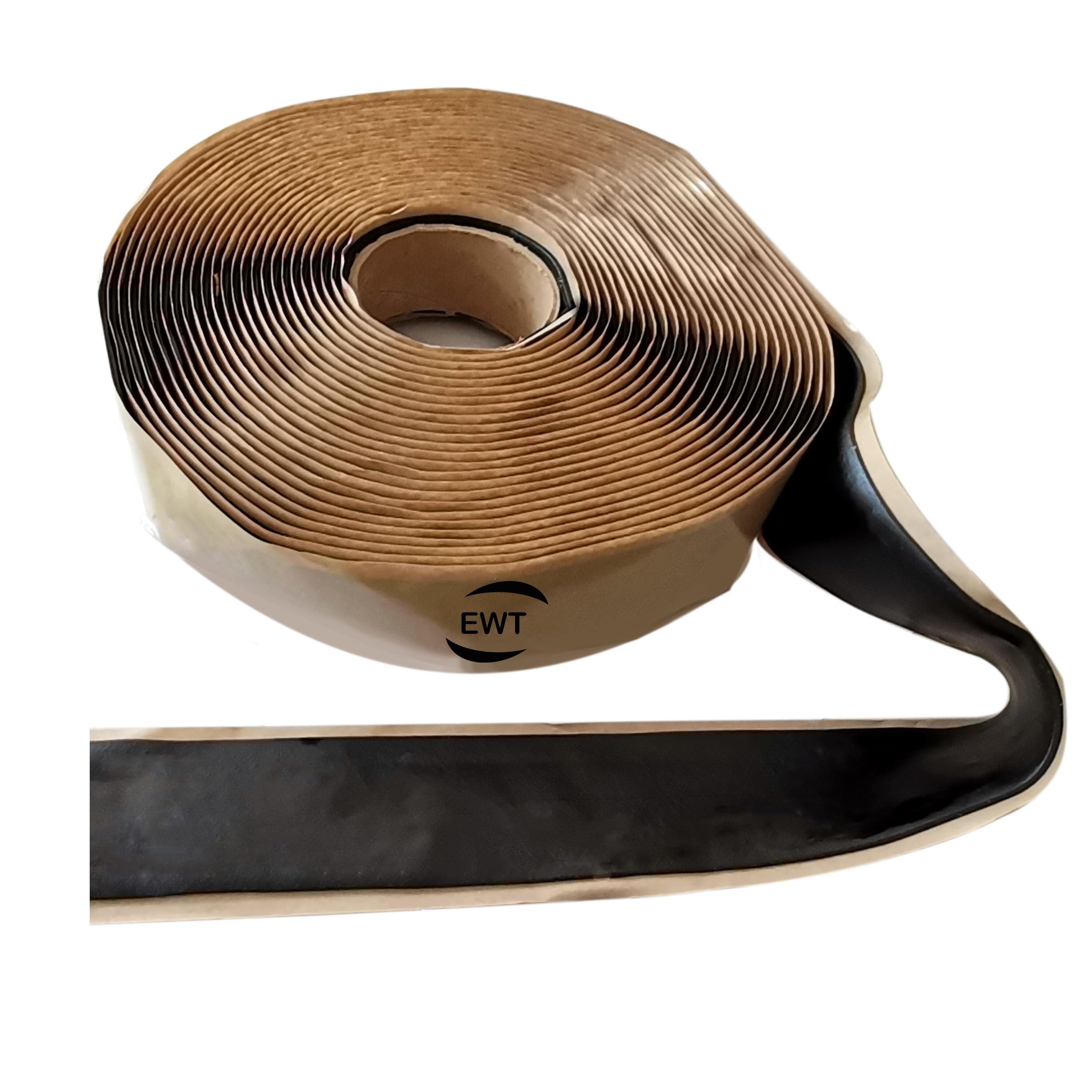
A pro-grade roll you melt into joints with a torch, then seal-coat the same day.
This is the serious repair for parking lots and long driveway joints, and it is meant to be heated. EWT supplies a 50-foot roll of rubberized asphalt at 1.2 inches wide and a full 3 millimeters thick, and you melt it in with a gas torch flame (a heat source that fuses the material into the surface). One nice extra: the moment it is down you can top-coat it with a seal coating, so the whole job closes out in one day instead of waiting for cure.
The 1.2-inch width is generous, and it turns out that matters — for most driveway cracks you will want to cut it down into thinner strips, and chilling it briefly makes that cutting clean with scissors. Once melted, it sets in minutes rather than hours, so you can move on and drive over the repair the same day. At 45°F it still melted well with a weed torch, and a setup like that handles the heating better than a small handheld torch.
The honest downside is bonding. Melting into the crack is not automatic — the material can sit slightly proud of the surface rather than flowing all the way down, so some people find it makes a better joint filler or bond breaker along concrete edges than a deep crack filler. There is also a durability question in hard freezes, where a repaired crack can show itself again. It is best viewed as an excellent joint sealer and a solid shallow-crack repair, not a magic fix for a deep failing seam.
Where it shines: a thick 3 mm roll, torch-melted and seal-coat-ready immediately, for joints and shallow cracks on a large paved surface.
Where to be careful: it can sit above the crack rather than flow deep, and a hard freeze can reopen a repair — best treated as a joint and shallow-crack solution.
The one to hire for: long joints, parking-lot work, and anyone comfortable running a torch who wants to seal-coat the same day.
Think twice if: you have no torch or your cracks are deep — this is not the tool for a quick hand-poured fill.
11. Dalton Enterprises PLI-STIX 60 Ft. Crack Filler (2 Pack)
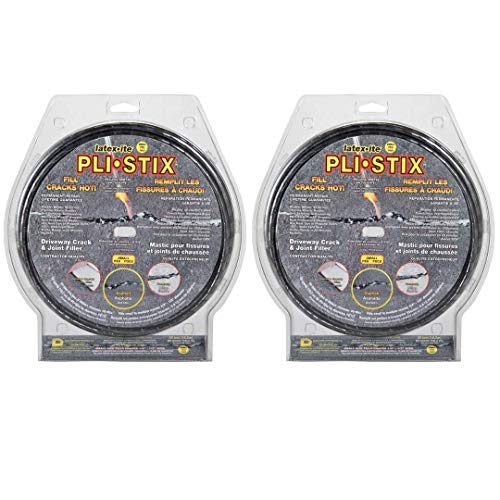
Melt-and-drip control for people who want the filler to land exactly where it should.
PLI-STIX is a thermo-plastic rubber rod you heat with a torch until it drips into the crack, then let it level itself into a watertight seal. That is the opposite of pouring a jug — it is slow, targeted, and precise, which is why it handles multi-direction cracks and awkward angles that a stream of liquid would miss. The 2-pack offers 60 feet of rod and a full-cure time of 4 hours.
Working with it is easier than it sounds once you have the rhythm. It comes wrapped so your hands stay clean, cuts easily with wire cutters, and warms in the sun until it is pliable enough to feed over the crack as you melt it. On a slope, start above the crack so it runs downhill into the gap. It adheres well to both asphalt and concrete, and one buyer using a hand torch just heats and drips it in — and can reheat the same spot later if it opens again.
What it is genuinely good at is seal integrity in small cracks. The 1/4-inch rod handled most cracks well, melted faster than the thicker size, and did not crack after the first winter where acrylic tube fillers had. The work is labor-intensive, though, and one roll came up short of the advertised length. It is also note how it sits against the EWT roll above: PLI-STIX melts in more completely, while the EWT roll suits wider joints better — pick by whether you are chasing cracks or joints.
Precision in a tube: 60 feet of thermo-plastic rod that melts and drips into place, holding up through a winter where acrylic fillers cracked out.
Worth knowing: it is slow, torch-dependent work, and the delivered length can fall a little short of the advertised 60 feet.
For the patient repairer: small to mid-size cracks, multi-direction angles, and anyone who wants a melt-in seal that stays flexible.
Not your pick if: you want to cover a long driveway fast — this asks for time and a torch at every crack.
Know the Specs
Format: Tape, Liquid, or Torch Rod
The format decides what surface the product can even be used on. A self-adhesive tape presses flat onto seams and flashing, so it belongs on roofs, gutter edges, and joints you can reach. A pourable liquid flows into cracks on flat pavement and levels itself. A torch-melt rod or roll needs heat to fuse into the gap and suits joints and shallow cracks. Choosing the format to match the crack shape is the single most important decision you make.
Cure Time and the Weather Window
Cure time is how long the material takes to fully harden, and it changes the job more than any brand difference. A quick-drying formula may still feel wet for hours, and some liquids need several days to fully set. Rain arriving during the cure window can wash a fresh patch out entirely. Check both the stated cure time and the forecast before you open the container, and give yourself a dry stretch long enough for the slowest product in your plan.
Crack Width and Coverage
Every filler has a width range it handles well. Thick pastes hold their shape in wider gaps but will not enter a hairline, while thin self-leveling liquids fill narrow cracks but sink in deep ones. Coverage matters just as much: a small tube covers a short run and a gallon jug covers a whole driveway. Measure your crack width and count your total footage before you buy, or you will run out halfway through.
Flexibility and Freeze-Thaw
Flexibility is what survives winter. A filler that stays rubbery can move with the pavement as it expands and contracts; a rigid filler can crack and let the gap reopen. Products made with rubber — EPDM, rubberized asphalt, thermo-plastic rubber — are built to flex. Where winters are hard, favor the flexible formulas and expect any patch on shifting ground to need a touch-up after a season.
Common Questions
Will a pourable crack filler work on a roof seam?
No — a pourable liquid flows downhill, so on a roof seam or a vertical edge it runs instead of staying in the gap. That kind of repair calls for a self-adhesive flashing tape, which is exactly the job the BXI roll is built for. Match the format to the surface before anything else.
How wide a crack will a pourable sealant actually fill?
It depends on the product, and the label states the range. Thick pastes like the Sakrete filler handle cracks from about 1/8 inch up to roughly 1/4 inch, while thin self-leveling liquids fill narrower cracks but sink in deep or wide ones. Measure your gap first, then read the product’s stated width before you commit.
Can I drive on a fresh asphalt patch the same day?
Sometimes, but only when the product says so and the weather cooperates. A thick paste filler that sets fast may be drive-on within a day, and a torch-melt roll sets in minutes and can be seal-coated the same day. Pourable emulsions often need several dry days, so plan the job around the cure window rather than your schedule.
Why did my crack filler wash out after it rained?
Rain arriving before the material has fully cured is a common reason a patch fails. Some products dissolve or wash away if a heavy rain hits within the first day, and even a filler that is dry to the touch can still be curing underneath. Check the forecast and give yourself a dry stretch long enough for the full cure, not just the surface touch-dry time.
Do I need a torch to use a rubberized asphalt roll?
For a torch-applied product like the EWT roll or the Dalton PLI-STIX rod, yes. Those materials are built to be heated so they melt and fuse into the crack. A large propane or weed torch handles the heating better than a small handheld one. If you do not want to work with a flame, a pourable liquid or a press-in strip is the safer choice.
Is a rubber strip the same as a crack filler?
No. A rubber strip like the RTHIEAI EPDM strip replaces an expansion joint between two slabs — it presses into the gap and sits flush with the surface. It does not flow into a jagged crack or bond to a broken edge. Use it when the old joint or wooden spacer has rotted out, not when you have a split in the middle of a slab.
How long does an asphalt patch usually last?
Lifespan varies with the product, the surface, and how hard the winters are. Some flexible fillers hold through a full winter without cracking, while others soften and pull away when the ground shifts in hard freezes. Expect any patch on shifting pavement to need a touch-up after a season or two, especially in cold climates with heavy freeze-thaw cycles.
Should I pre-fill a deep crack before using a thin sealant?
Often, yes. A deep gap drinks a thin self-leveling liquid and it settles well below the surface. Filling the bottom first with a denser material, then topping it with the thin sealant, gets you a level finish. Some fillers are also applied in multiple thin layers rather than one thick pour, which is the more reliable way to fill a deep crack.
Will a crack filler match the color of my existing pavement?
Not always. Black fillers usually blend best into asphalt and dark concrete, while a gray powder can stand out on a darker or freshly poured slab. Some products dry from brown to black, and some darken further after curing. If a visible line would bother you, favor a filler that dries to match your surface color closely.
Can I use a concrete joint filler on asphalt?
Read the label before you do — some products are formulated for concrete and masonry and list asphalt as only a partial fit, while others are explicitly made for both. The Wadities and Liquid Rubber fillers, for example, list asphalt and concrete among their compatible surfaces. When asphalt is not on the compatible list, pick a product that names it.
Will a pourable crack filler work on a roof seam?
How wide a crack will a pourable sealant actually fill?
Can I drive on a fresh asphalt patch the same day?
Why did my crack filler wash out after it rained?
Do I need a torch to use a rubberized asphalt roll?
Is a rubber strip the same as a crack filler?
How long does an asphalt patch usually last?
Should I pre-fill a deep crack before using a thin sealant?
Will a crack filler match the color of my existing pavement?
Can I use a concrete joint filler on asphalt?
The Bottom Line
For most people the winner is the BXI Flashing Roll Tape, because it stops the leaks water keeps finding on roofs, seams, and flashing with no primer and no torch. If your job is flat driveway cracks and you want a whole-driveway pour, grab the Jetcoat Premium Sealant — a full gallon that seals cracks and seams in one session. And for wide cracks that need a flexible, self-leveling seal with tools included, the Wadities Crack Filler is the one to reach for. Match the format to your crack, pick a dry weather window, and any of these will hold up far longer than a rushed repair.
How we choose
We do not accept paid placement. Every pick is matched to a real buyer and a real use-case; we do not hands-on test units.
Sources
Specifications: manufacturer listings and product documentation. Review insights: verified customer reviews, as of October 2026. Pricing: not shown on this page (it changes often); check the current price via the retailer link.
As an Amazon Associate, Aappliancez earns from qualifying purchases. This does not affect which products we feature.