Disclosure: Some links in this post are affiliate links. As an Amazon Associate I earn from qualifying purchases, at no extra cost to you. Learn more
Specs are compiled from manufacturer listings and verified buyer reviews and can change over time — please confirm the key details on the product page before buying.
If standard glasses slide down your nose, sit on your cheeks, or pinch the sides of your head, the problem is usually the bridge — and a low bridge fit frame is the fix. The picks below are built for higher cheekbones and wider or flatter nose bridges, so you get a frame that stays put through a full day instead of needing a push every ten minutes.
This guide is built by comparing the manufacturers’ published specifications and the patterns across verified customer reviews, so you get each pick’s real strengths and trade-offs instead of marketing spin.
What follows separates the frames that genuinely sit lower on the nose from those that only borrow the label, with measured bridge and arm figures where the maker publishes them. Use it as your shortcut to the right pair of asian fit eyeglasses.
Top Picks


How To Choose The Best Asian Fit Eyeglasses
If your glasses slide down your nose all day, Asian fit eyeglasses fix three things at once. First, the bridge sits lower to match a wider nose bridge. Second, the frame angle keeps the rim off your cheekbones. Third, the temple arms (the side pieces over your ears) stop pressing into the sides of your head. Get those three right and the frame stays put without a push. Get them wrong and you spend the day pushing glass back up.
Start with the bridge measurement, not the frame shape
The bridge is the gap between the lenses that rests on your nose. On a low bridge fit frame it is set up so the glasses sit lower and grip a flatter, wider nose bridge. Ray-Ban publishes an 18 mm bridge on its RB4171F Erika, which tells you how much room the frame gives across the top of the nose. A frame with a narrow bridge on a wide nose bridge is the single biggest cause of sliding, so this number matters more than the lens shape or the colour.
Match the arm length to the width of your head
Temple arms run from the hinge, over your ear, and down behind it. Arms that are too short dig in at the temples; arms that are too long let the frame slide forward. The Erika runs 145 mm arms, a mid-length that suits most adult heads. If your current glasses leave red marks behind your ears, length is the spec to check first.
Decide if you need optical or sun lenses
Some low bridge frames are prescription-ready — the maker calls them Rx-able — so an optician can fit your own lenses into the frame. Others ship as sunglasses with fixed tinted lenses and no prescription path. If you want one frame for everyday wear, look for an Rx-able frame; if you want sun cover on bright days, a fixed tint is fine and often cheaper.
Know which lens type fits your day
Polarized lenses cut glare off water and roads. Gradient lenses are darker at the top and lighter at the bottom, which helps when you glance at a dashboard. Solid lenses give the same tint across the whole lens. Transition lenses clear indoors and darken outdoors. Pick the lens by where the frame spends its time: car, bike, or all day on your face.
Set your expectations on build quality before you order
Low bridge fit frames come at every quality level, and two frames that look alike online can feel very different in the hand. Watch for frames that are described as having bendable or curved temple tips, since that is what keeps the frame hooked behind your ear. Also check what comes in the box: some premium frames arrive with a case and cloth, others ship in a bag.
Side-by-Side Comparison
Every column below uses the same three specs across all seven picks, so you can scan fit, frame material and lens type side by side before you read the full reviews.
| Model | Best For | Bridge / Arm Fit | Frame Build | Lens Type | Amazon |
|---|---|---|---|---|---|
| Ray-Ban RB4171F Erika Low Bridge Fit★ Best Overall | Everyday wear with a wide nose bridge | 18 mm bridge / 145 mm arms | 100% nylon frame, Rx-able lenses | Polarized, gradient and solid options | Amazon |
| Oakley Sylas Low Bridge FitGlare Control | Glare control on bright days | — | Oakley frame with Prizm lenses | Prizm tinted | Amazon |
| Armani Exchange AX3038F | Prescription build on a budget frame | — | Low bridge fit frame, lightweight legs | Prescription-ready frame | Amazon |
| Armani Exchange AX3048F | Durability with a bold shape | — | Strong frame rated for drops and knocks | Accepts ground prescription lenses | Amazon |
| Oakley CMDN Low Bridge Fit | Narrow faces and a wide field of view | — | O-Matter frame, trigger stem arms | Wide field-of-view lens | Amazon |
| Ray-Ban RB2195F Thalia Low Bridge Fit | All-occasion wear with no hair pulling | Low bridge with modified frame angles | Square frame, multiple colourways | Solid, polarized, mirrored or transition | Amazon |
| Ray-Ban RB4441D Low Bridge Fit Oval | Sustainability-minded everyday sun wear | Low-set nose pads, adjusted frame angle | Bio-based frame from renewable materials | Flat lenses, solid tint | Amazon |
Detailed Reviews
1. Ray-Ban RB4171F Erika Low Bridge Fit Round Sunglasses
Our pick — 4.5+★ from 900+ verified ratings; the strongest balance of quality and price.
The one that proves a wide-bridge frame does not have to look clinical.
Start with the number that decides whether this frame stays on your face: the bridge measures 18 mm and the arms measure 145 mm. That bridge gives you room across a wider or flatter nose bridge, and the 145 mm arms are a mid-length that should reach most adult ears without pressing. Round pilot lenses in a 54 mm width finish the fit. Ray-Ban also lists this as an Asian fit design built for higher cheekbones and wider nose bridges.
Fit is what buyers talk about most in the review pages, and appearance runs a close second. That tracks with the frame itself: the oversize round shape reads as a statement without swallowing a smaller face, and the rosy gradient lens option gives you a tint that looks a little warmer than a flat grey. The 100% nylon frame keeps the weight down, and the lenses are prescription-ready, meaning your optician can drop your own prescription in rather than making you buy a second pair.
The honest catch is the lens darkness on the gradient version. That lens is lighter than a full sun lens, so in hard midday glare you may find yourself squinting. The temple material also bends more easily than a stiff acetate arm, so store it in the case rather than loose in a bag. Neither issue stops this being the pick most people should start with. It is the highest-rated frame here at 4.5+ stars from 900+ ratings.
What earns it the top slot
- An 18 mm bridge and 145 mm arms give a measured low-bridge fit you can actually check against your own glasses.
- Prescription-ready lenses mean one frame can carry your own Rx.
- Nylon frame keeps the weight light enough for all-day wear.
- Polarized, gradient and solid lens options cover sunny and hazy days.
Where it asks a little care
- Gradient lenses run lighter than a full sun tint, so hard glare still gets through.
- The temples are bendable and loosen with rough handling.
- It carries fewer total ratings than the budget frames further down, though it holds the highest score here.
Reach for this if: you want one do-everything frame with a bridge number you can verify before ordering.
Look elsewhere if: you need maximum darkness in harsh sun or want stiff, unbending temples.
2. Oakley Sylas Low Bridge Fit Rectangular Sunglasses
Built for the driver who wants glass tint doing the work, not a fashion label.
Oakley’s Prizm lens is the reason to pick this rectangle over a plain tinted frame. Prizm glass is tuned for colour contrast rather than raw darkness, so the world keeps its detail instead of flattening into grey. If your commute is a highway at a low sun angle, that contrast is the difference between seeing brake lights and guessing at them.
What fits well is the shape. The rectangular frame with a low bridge fit suits a flatter nose bridge, and it feels comfortable enough to forget about on a long drive. One buyer did flag that the lenses are not polarized and the eyes are visible through them, which is worth knowing if you want full privacy behind the glass. That is a lens-type point, not a fit problem — the frame itself lands comfortably.
Weigh the trade-off honestly: this is a newer listing with a smaller review base, so you are buying on the strength of the Prizm lens rather than a long track record. If you want a proven crowd favourite, the Erika above has far more owner history. If glare control on bright roads is your priority, this is the sharper tool.
The lens is the pitch: Prizm tint gives you contrast across bright surfaces, and it fits a wider nose bridge without pinching.
Set against it: the glass is not polarized, so it will not cut reflected glare off water or hoods the way a polarized lens does, and your eyes show through the tint.
The sensible buy for: bright-day drivers who want colour contrast over a flat dark tint.
Better skipped by: anyone who needs polarized glass or full eye privacy behind the lens.
3. Armani Exchange AX3038F Eyewear Frames

An optical frame first — this one is meant to carry your prescription, not shade your eyes.
If you need actual eyeglasses rather than sunglasses, this is the frame in the group built for that job. It arrives as a bare frame so your optician grinds and fits your own lenses, and it holds the same 4.5+ star score as the top pick on a smaller review base. Buyers report their optician found the frame easy to fit lenses into, which matters when you hand over a frame you bought online.
The rectangular low bridge shape works well on a wider nose bridge, and the lightweight legs with a curved non-slip finish are the detail that keeps the frame from creeping down. The rest is standard Armani Exchange styling — clean, modern, and easy to pair with work clothes. A five-star report from someone on their second pair of the exact same frame says a lot about how the fit holds up over time.
The one thing to sort before you order is the lens path. Sight unseen, the frame has a flat front, and one unhappy report describes it as lacking the subtle curve most optical frames have. If you are particular about how a frame reads in person, try the shape on before committing. For everyone else, this is the least expensive way into a genuine low bridge optical frame.
The argument for it
- It is a true optical frame, so you fit your own prescription into it.
- The low bridge rectangle is shaped for a wider, flatter nose bridge.
- Curved non-slip legs help hold the frame in place.
- Lightweight enough to wear all day without temple pressure.
Weigh before buying
- It ships as a frame only — lenses are a separate cost and trip.
- The front is flat rather than convex, and one report found the legs slightly loose at the hinge.
- One owner found it cheaper-feeling than the logo suggests.
Right for you if: you need prescription eyeglasses with a low bridge fit and want to bring your own lens.
Wrong call if: you expect finished lenses in the box or want a curved, thicker front.
4. Armani Exchange AX3048F Eyeglass Frames

The frame for the person who has broken a pair before and does not intend to again.
Durability is the headline here. Owners describe frames that survived drops, being sat on, and general rough handling without bending or snapping — the kind of build that matters if your glasses live loose in a bag or get handed to a toddler. It is still a low bridge fit rectangle, so the shape is designed for a wider nose bridge rather than a narrow one.
Two hundred-plus owners have rated this frame, and build quality is the theme that comes through strongest. The lenses are large in the way a lot of people specifically want, and the frame stays light on the face despite feeling solid in the hand. If you already have a set of lenses ground for this exact model, you can drop them straight in and skip the optician trip for the frame swap.
The catch worth knowing: the temples come tight at first. Some people get a headache in the first week until the frame settles or an optician adjusts it. The temple tips also do not bend, and on some faces they run long enough that the frame slides down the nose. That is a fit caveat you can plan for, not a reason to write off the frame — and the colour also reads darker in person than the listing photo suggests.
What makes it worth a look: strength is the thing buyers keep coming back to on this frame, and it holds up to the knocks a daily-wear pair takes.
The fit wrinkle: tight temples at first and rigid temple tips mean some faces need a professional adjustment before it feels right.
Pick it when: longevity matters more to you than a perfect-out-of-the-box fit.
Think twice if: you want a frame that fits comfortably on day one or a lighter colour than it looks online.
5. Oakley CMDN Low Bridge Fit Rectangular Sunglasses

A shield-style frame with the fit tight enough for long, narrow faces.
The CMDN takes Oakley’s shield shape and modernises it with a wide field-of-view lens and a trigger stem arm borrowed from the brand’s Razor Blades history. The result is a big, wrap-around lens that covers more of your peripheral vision than a standard rectangle. On a long narrow face, that coverage is the whole point — the frame tracks the width of the head instead of floating wider than it.
The O-Matter frame is the other half of the story. It is a lightweight plastic compound Oakley uses for durability, so the frame stays comfortable for a full day without the weight of a metal build. Buyers who bought it on a discount keep coming back to the same word — cool — and one notes it works especially well for long narrow faces, which matches the shield shape.
Be realistic about the fit risk. A frame this distinctive either locks onto your face or it does not, and one report found it felt like it might fall off. If your face is on the wider side, this is not the shape for you. For a narrow face that struggles to find a shield that does not swim, it is a strong specialist pick.
Why it earns its spot
- The wide field-of-view lens covers more of your peripheral vision.
- O-Matter construction keeps the frame light for all-day wear.
- The shield shape suits long narrow faces in particular.
- Low bridge fit keeps the frame seated on a flatter nose bridge.
What to watch
- It is a divisive shape — one wearer found it felt insecure on the face.
- Smaller review base than the more established picks.
- A very distinctive look that will not suit conservative workplaces.
Suits you if: you have a long, narrow face and want a shield lens that closes the gap.
Probably not for you if: you want a safe, classic silhouette or have a broader face.
6. Ray-Ban RB2195F Thalia Low Bridge Fit Square Sunglasses
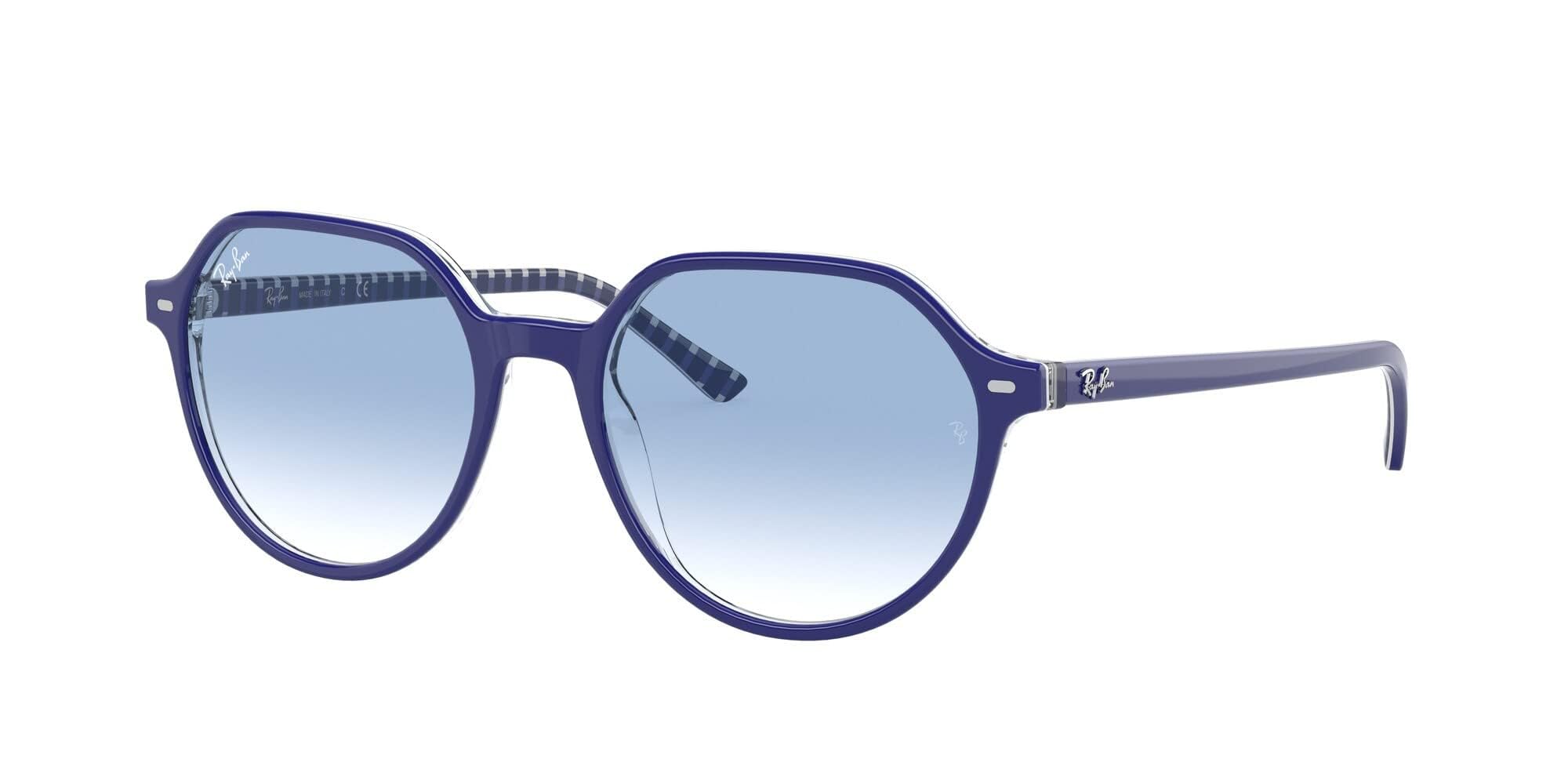
Seventies lines, modern fit, and a temple arm that leaves your hair alone.
Ray-Ban goes further than most by offering the frame across solid, polarized, mirrored and transition lenses, so you can pick glass for a beach holiday or a commute and keep the same shape. Transition glass clears indoors and darkens outside, which is the version to look at if you want one frame for both.
Style is where this frame lives. The groovy square shape is the reason people reach for it — and the arms do not tug hair, a small detail that matters daily if you have longer hair or wear it up. Fit lands well for most faces that suit a square frame, and it stays comfortable across a full day of wear.
The trade-off to know before you commit is the low rating base and the order risk. Some shipments arrive with a damaged outer box, and a small number of orders have arrived with the wrong colour or an item that did not survive transit. Those are shipping and fulfilment issues rather than a frame problem, but they are worth checking the moment the package lands. If the shape is right for your face, the frame itself holds up.
What stands out: modified frame angles and lower nose pads give a real low bridge fit, and the lens menu runs from solid to transition.
The honest caveat: the review base is thin, and a handful of shipments have arrived damaged or in the wrong colour, so inspect the box on arrival.
A good match for: people who want a retro square shape with genuine low bridge geometry and a choice of lens tints.
Consider another pick if: you want a long, proven track record rather than a newer listing.
7. Ray-Ban RB4441D Low Bridge Fit Oval Sunglasses
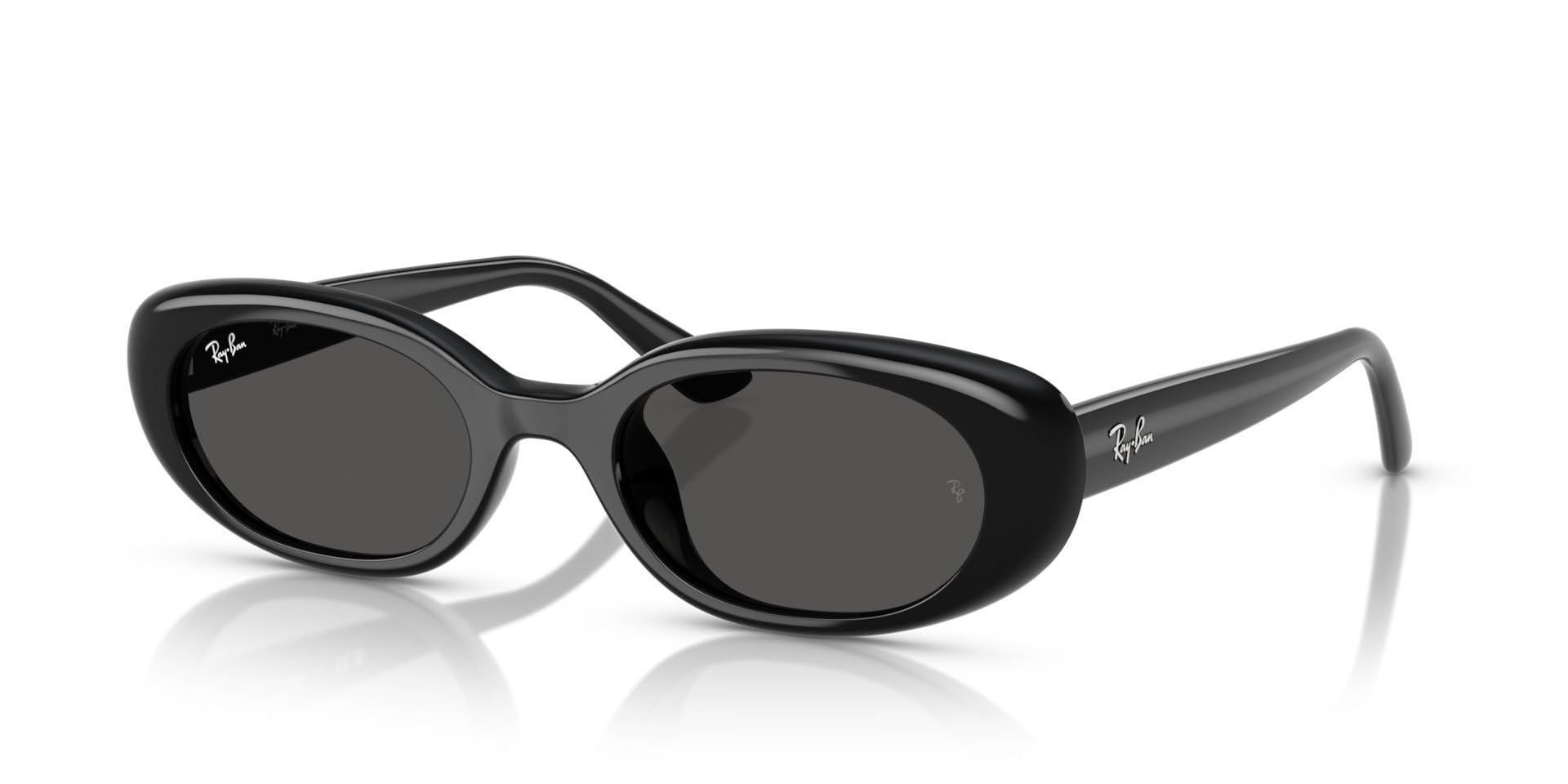
The sustainability pick — a renewable-material frame in a narrow, flat-lens oval.
This is the only frame in the group built from a bio-based material, made from renewable sources as part of Ray-Ban’s sustainability work. The fit side is equally deliberate: the nose pads sit lower and the frame angle is adjusted so the glasses hold a wider, flatter nose bridge. A narrow oval with rounded edges and flat lenses that sit clean against the face finishes the look, and it is light enough to wear for a full day.
The shape is the reason to choose it. It reads sharper and more modern than a standard round frame, and it suits a smaller face without swimming. Style is the positive most owners land on, and the low bridge geometry is the part that keeps it from sliding — a detail that matters if your current glasses creep down the bridge every few minutes.
The thing to weigh honestly is build consistency. The frame is polarizing in the reviews: plenty of owners describe top-notch craftsmanship and clear, sharp lenses, while a smaller set describe a frame that feels flimsy or lighter than expected, and questioned whether the pair was genuine. Check the box and the frame the moment it arrives, and buy from the authorised listing rather than a reseller. That single step protects you from the quality lottery.
Strengths to weigh
- Bio-based frame from renewable materials, the only one in this group.
- Lower nose pads and an adjusted angle give a genuine low bridge hold.
- Narrow oval with flat lenses sits clean against the face.
- Lightweight enough for city, car and a full day outdoors.
Points of caution
- Build feedback is mixed — some find it lighter and less solid than expected.
- A few reports question authenticity, so buy from the authorised seller.
- Visibility through the lenses is not a strong point for low-light driving.
Go for it if: you want a modern oval, a renewable frame, and a lower-set nose pad.
Give it a miss if: you want a heavier, denser build or plan to buy from a third-party reseller.
Know the Specs
Bridge width and why it decides the fit
The bridge is the gap between the lenses that sits on your nose. On a low bridge fit frame, the bridge is set up so the glasses sit lower and rest on a flatter or wider nose bridge. Ray-Ban lists an 18 mm bridge on the RB4171F Erika. If the bridge on your current glasses is narrower than the width of your nose, the frame cannot sit flat — it rests on two points and rocks, which is what sends it sliding. Match the bridge figure to your own glasses and you solve most of the fit problem before you ever try the pair on.
Arm length and the hook behind your ear
The temple arms are the pieces that run over and behind your ear. If they are too short, they press into your head; if they are too long, the frame slides forward. The Erika runs 145 mm arms, a mid-length that suits most adult heads. Some low bridge frames use curved non-slip tips to hold the frame in place; others have tips that cannot be bent. Knowing which kind you are buying tells you whether you can adjust the fit at home or need an optician to do it for you.
Lens types: what each one does for you
Polarized lenses cut reflected glare off water, roads and car hoods. Gradient lenses are darker at the top and lighter at the bottom, which helps when you look down at a dashboard. Solid lenses carry the same tint across the whole lens. Transition lenses clear indoors and darken outside. Each one changes how the frame performs in real life, so pick the lens by where the frame will spend its time, not by what looks best in a product photo.
Frame material and what it means day to day
Nylon frames keep the weight low and hold their shape. O-Matter is a lightweight plastic compound used for durability. Bio-based frames use renewable materials. Curved non-slip legs help the frame grip behind the ear. A stiffer frame takes knocks better; a bendier one may loosen with rough handling. Material decides whether a frame still fits after a year in a bag or starts to sag at the hinge.
Common Questions
What actually makes a frame an Asian fit or low bridge fit?
How do I know my current glasses have the wrong bridge?
Can I put my prescription into a low bridge fit frame?
Is polarized better than non-polarized for driving?
What are transition lenses and are they worth choosing?
Do low bridge frames work on narrow faces?
How long do frame temple arms usually last?
What does O-Matter mean on the Oakley frames?
Why do some premium frames arrive without a case?
Can I bend the temple tips to make a frame fit better?
The Bottom Line
For most people shopping for low bridge frames, the Ray-Ban RB4171F Erika is the clear starting point: an 18 mm bridge and 145 mm arms give you a fit you can actually check, and the lenses are prescription-ready. The Oakley Sylas is the pick if glare control on bright roads is your daily priority, and its Prizm glass is a genuine reason to choose it over a flat tint. If you need true optical frames rather than sunglasses, the Armani Exchange AX3038F gets you a genuine low bridge optical frame with a low bridge shape for a modest outlay. The strongest overall score still sits with the Erika, and its measured bridge figure is the reason it earns the top spot.
How we choose
We do not accept paid placement. Every pick is matched to a real buyer and a real use-case; we do not hands-on test units.
Sources
Specifications: manufacturer listings and product documentation. Review insights: verified customer reviews, as of October 2026. Pricing: not shown on this page (it changes often); check the current price via the retailer link.
As an Amazon Associate, Aappliancez earns from qualifying purchases. This does not affect which products we feature.