Disclosure: Some links in this post are affiliate links. As an Amazon Associate I earn from qualifying purchases, at no extra cost to you. Learn more
Specs are compiled from manufacturer listings and verified buyer reviews and can change over time — please confirm the key details on the product page before buying.
If your eyes feel gritty by mid-afternoon, the drop you choose matters more than how often you reach for it. The short answer: single-use preservative-free vials are the safest bet for sensitive eyes, while a multidose bottle suits anyone who needs drops several times a day. Below you’ll find four picks that cover both styles, plus the one bottle design that splits opinion.
This guide is built by comparing the manufacturers’ published specifications and the patterns across verified customer reviews, so you get each pick’s real strengths and trade-offs instead of marketing spin.
Start with the format, then the formula. The right artificial tears eye drops should match how often you dose and whether your eyes react to preservatives.
Top Picks
How To Choose The Best Artificial Tears Eye Drops
Most people pick the formula first and the format second. Flipping that order saves money and a lot of squinting.
Vial or bottle: pick by how often you dose
A single-use vial (a small sealed tube you open, use, and throw away) keeps the liquid sterile with no preservatives added. That suits anyone who doses once or twice a day. A multidose bottle makes more sense if you are putting drops in five or six times daily, because opening a fresh vial every hour gets wasteful fast.
Preservatives and sensitive eyes
Preservatives keep a bottle safe to reopen, but some eyes sting or redden with them. Every pick on this list is labeled preservative-free, which is the usual starting point for dry, sensitive eyes. If your eyes have reacted badly to a preserved drop before, staying preservative-free removes one variable.
Check the tip before you commit
A formula can be excellent and still go unused if the dropper fights you. Look at whether the tip delivers a clean drop, whether the bottle needs a hard squeeze, and whether it still seals for a bag or pocket. These sound like small things until you are tilting your head back in a parking lot.
Side-by-Side Comparison
| Model | Best For | Format | Preservative-Free | Contact Lens Use | Amazon |
|---|---|---|---|---|---|
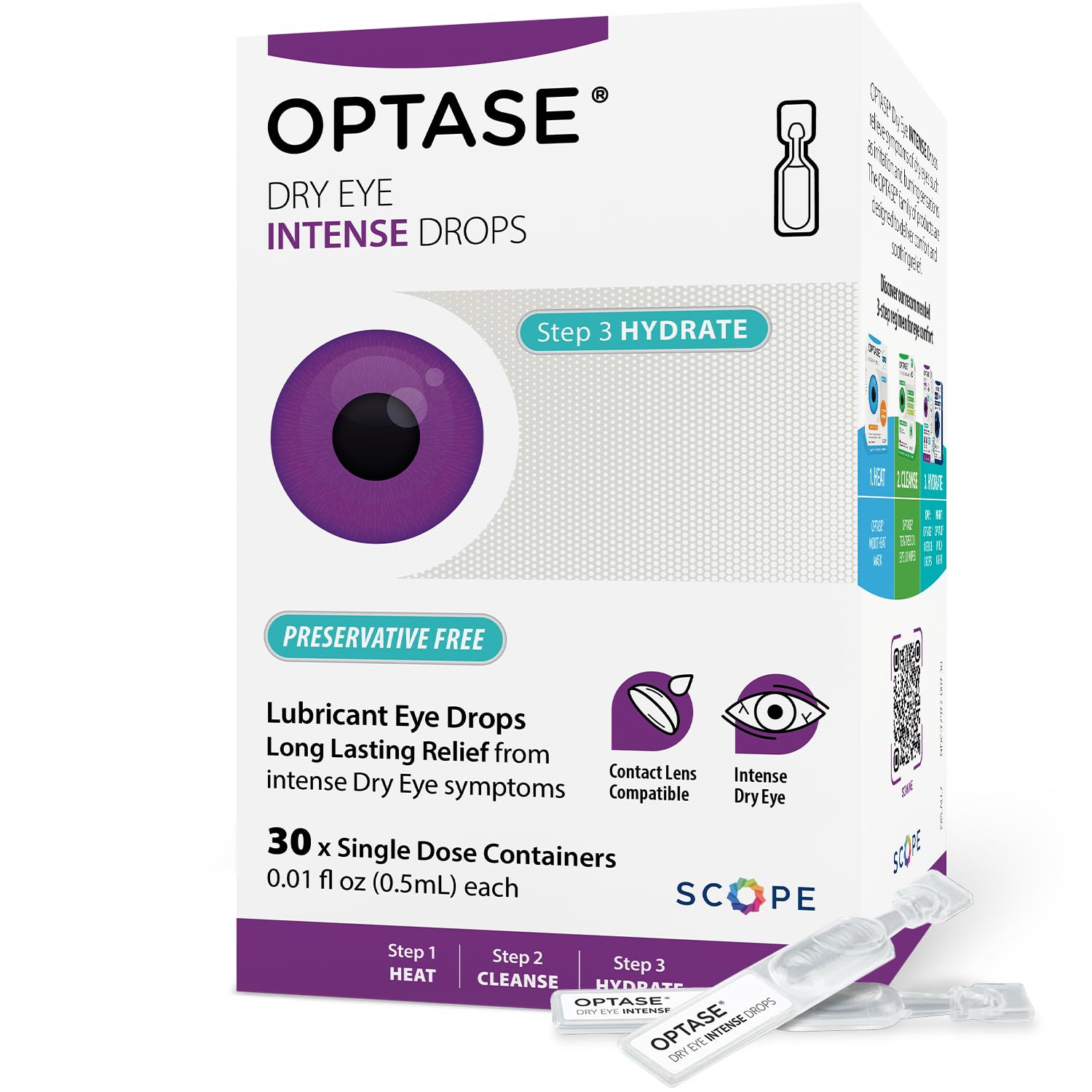
| Optase Dry Eye Intense Drops, 30 Single Dose Vials★ Best Overall | Moderate to severe dryness | 30 single-use vials,.01 fl oz each | Yes | Suitable for most lens types | Amazon |
| REFRESH CLASSIC Preservative-Free Artificial Tears | Mild, everyday dryness | 30 single-use containers | Yes | — | Amazon |
| Optase Allegro Lubricant Eye Drops | Frequent daytime dosing | Multidose bottle, 0.33 fl oz | Yes | Suitable for most lens types | Amazon |
| BLINK Boost Preservative-Free Drops, Pack of 2 | Wind and sun irritation | Two bottles, 0.34 FL Oz each | Yes | Contact lens friendly | Amazon |
Detailed Reviews
1. Optase® Dry Eye Intense Drops, 30 Single Dose Vials
Our pick — 4.5+★ from 1,000+ verified ratings; the strongest balance of quality and price.
Thirty sealed vials of preservative-free relief, built for eyes that need more than a splash.
If your dryness is in the moderate-to-severe range, this is the place to start. The Optase Dry Eye Intense Drops arrive as 30 single dose vials, each holding.01 fl oz of a glycerine-based, water-thin formula. That thinness matters — it spreads across the eye instead of sitting in a blob, and it means the drop disappears rather than leaving a film. The whole tray weighs 2.08 ounces, which is light enough to drop in a bag and forget about.
The honest limit is cost per dose. Thirty vials go fast if you dose several times a day, and value is the one mixed note in the feedback — noticeably more mixed than the praise for effectiveness and moisturizing. Occasional stinging gets mentioned too, mostly when eyes are already irritated before the drop goes in. If your dryness is mild and infrequent, the vial format is more than you need; a bottle will stretch further.
Where it earns its place
- Thin, glycerine-based drop that spreads and clears rather than filming over
- Individual vials keep every dose sterile with no preservatives at all
- Contact lens compatible for most lens types, with only brief blur
- Resealable vial tips let you use one drop and cap the rest
What to weigh first
- Thirty vials run out quickly at a several-times-a-day habit
- Cost per dose is the most contested point in the feedback
- Can sting if you drop it into eyes that are already irritated
The call: Reach for the vials if your dryness is moderate to severe and your eyes have turned red on other brands.
Think twice if: you dose five times a day — a multidose bottle below stretches much further.
2. REFRESH CLASSIC Eye Drops 30 Single-Use Containers

The plain-spoken classic that handles everyday dryness without asking you to think about it.
Screen fatigue is the use case here. If your eyes dry out from staring at a monitor and you want a drop that feels like nothing going in, this is the straightforward answer. REFRESH CLASSIC is preservative-free and formulated to act like your own natural tears, so it is gentle enough to use as often as you need. The pack is 30 single-use containers, and the whole lot weighs just 0.3 ounces — a fraction of the 2.08 ounces the Optase vial tray above puts in your bag. For a purse or a desk drawer, that difference is real.
Soothing is the note that comes through loudest in the feedback, right alongside effectiveness. One buyer recovering from Lasik went through several boxes and said these helped their eyes considerably. Another buyer with intermittent dryness preferred the individual containers precisely because each one stays fresh until opened. A third bought them on an optometrist’s suggestion for a mix of eye issues and found them workable for dry eye. Screen users describe instant relief with no preservative sting.
Here is the fair caveat, and it is a fine-motor one. The little tubules take a steady pinch to open, and one buyer with arthritis in their hands found them fiddly enough to wish the brand still sold bottles. It is a dexterity point, not a formula point. Value lands as a genuine split in this feedback — some call it a strong buy, others less so — so judge it against how many containers you actually burn through in a week.
Why it keeps getting reordered: a straightforward preservative-free formula in containers that stay fresh until you open them, with a soothing feel that suits all-day screen dryness.
The dexterity caveat: those small containers ask for a firm pinch, so hands with limited grip may prefer a bottle format instead.
Pick this one if: you want a dependable everyday drop in a pack light enough to disappear into pocket or purse.
Look elsewhere if: opening small containers is a struggle for your hands.
3. Optase® Allegro Lubricant Eye Drops, 0.33 fl oz
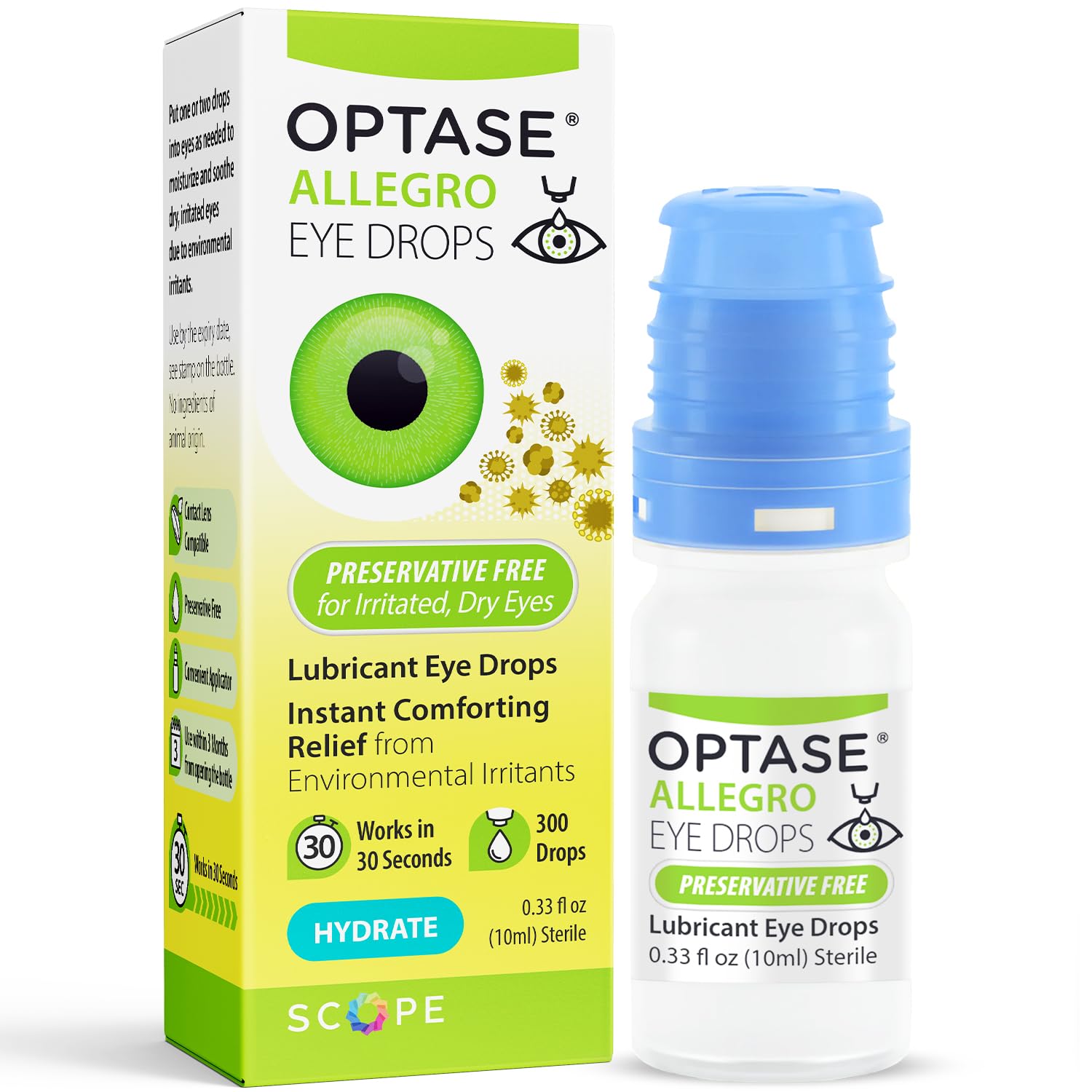
One small bottle that promises up to 300 drops — if you can get the dropper to cooperate.
If you dose several times a day, one bottle saves you money over single vials. This multidose bottle is designed to deliver up to 300 precise drops and to keep the solution sterile for up to 3 months after opening. The formula is a preservative-free HEC blend (HEC is a thickener that mimics your natural tears) that works with your tears and supports a protective barrier against environmental irritants. It is contact lens compatible for most lens types. At 1.2 x 1.2 x 3.5 inches it sits neatly on a desk, and that footprint is far tidier than the 6 x 4 x 4 inches the REFRESH pack above takes up on a shelf.
The relief itself draws strong feedback — soothing is the note people land on most, with effectiveness close behind. One buyer got, in their words, “Big eye relief after a couple of days using the product.” Another buyer, prescribed these and dosing twice daily, called them the best drops they had used. A husband with punishing allergies runs through them on subscription. With lenses in, users report no residue or clouding.
Now the catch, and it is the one thing you should know before ordering. The dropper mechanism is the most-discussed weak point in this product’s feedback — the bottle needs a firm squeeze, the drop can take a moment to arrive, and it sometimes lands beside the eye instead of in it. That also means wasted product, which is where the value complaints come from. One buyer found the first bottle nearly unusable and a replacement working on the first squeeze, so the mechanism is not uniformly bad — but it is the reason this lands third rather than higher.
Suits you if: you want up to 300 drops from one compact bottle and your hands manage a firm squeeze without trouble.
The trade-off: the dropper is fussy, so expect a learning curve and budget for a little waste.
4. BLINK Boost Eye Drops Pack of 2
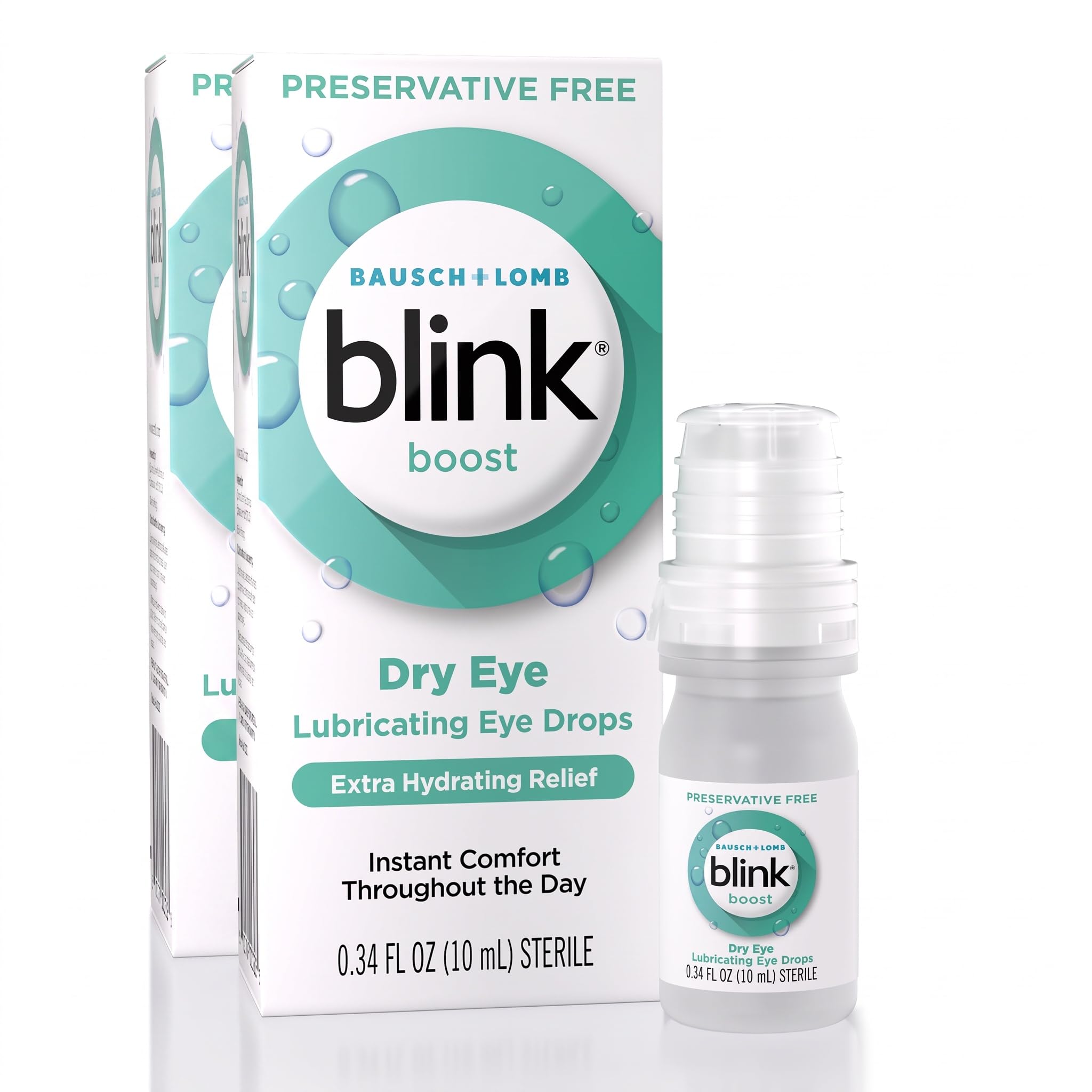
Hyaluronate in a two-bottle pack, aimed squarely at wind, sun, and outdoor grit.
This is the pick for dryness with a cause you can name — a windy walk, bright sun, a gusty commute. The formula is preservative-free and pH balanced to mimic natural tears, and it carries hyaluronan, an electrolyte, and an antioxidant. Hyaluronate is the moisture-binding piece: it helps the drop hold water on the eye rather than run off, which is the difference between relief that lasts a walk and relief that lasts a minute. Two bottles come in the pack, each 0.34 FL Oz, for 1.28 ounces total. It is contact lens friendly and labeled for the temporary relief of burning, irritation, and discomfort from dryness or exposure to wind and sun.
The post-surgery crowd has found it useful. Buyers who used it after cataract surgery found the small bottle easier to handle than hard-to-open plastic tubes. Others say it simply makes occasionally dry eyes feel better, and the refreshing feel comes up again and again — enough that some would use it whether or not a procedure was on the calendar.
You should know about the dispenser before you buy, because it is the recurring complaint. The pinhole is small, so drops can miss the eye or fail to come out at all, and the bottle gives as it empties and traps what is left. Widening the hole would fix the flow but would defeat the point of a preservative-free bottle. The cap also seals loosely, which is worth knowing if this lives in a bag. Feedback here is thin compared to the other three picks, so treat it as an early read rather than a settled verdict.
The formula case: hyaluronate plus an electrolyte and an antioxidant, pH balanced to natural tears, in a pack of two bottles for outdoor-triggered dryness.
The dispenser warning: a small pinhole and a bottle that collapses as it empties can waste product and miss the eye — the clear recurring gripe in its feedback.
Best fit for: outdoor dryness from wind and sun, or anyone who wants a hyaluronate drop in a bottle rather than a vial.
Not ideal if: you need a dispenser that hits the eye first try every time.
Know the Specs
Single-Use Vials vs. Multidose Bottles
A single-use vial is a sealed container you open, dose from, and discard, so no preservatives are needed to keep it safe. A multidose bottle stays open across weeks and relies on a preservative-free dispensing design to stay sterile — the Optase Allegro bottle is specified to hold sterility for up to 3 months. Vials suit low dosing frequency; bottles suit high frequency. That single choice drives most of the cost difference between these picks.
Hyaluronate and HEC: What’s Actually in the Drop
Hyaluronate (also written hyaluronan) is a moisture-binding ingredient — it helps a drop hold water against the eye so relief lasts longer between doses, which is why BLINK Boost leans on it for wind and sun exposure. HEC is a different lubricating agent used in the Optase Allegro formula, where it works with your natural tears to support a protective barrier. Neither is better in the abstract; they simply behave differently on the eye.
Common Questions
Are preservative-free artificial tears better for sensitive eyes?
Can I wear contact lenses while using these drops?
How long does an opened multidose bottle stay usable?
How many drops does a single vial actually give?
Is a vial or a bottle cheaper per dose?
Why do drops sometimes miss my eye from a bottle?
Can I use these after eye surgery?
Do these drops work for dryness caused by wind and sun?
What does hyaluronate do in eye drops?
Can I reuse a single-use vial a second time?
The Bottom Line
For most people, the artificial tears eye drops winner is the Optase Dry Eye Intense Drops — a thin glycerine-based drop in 30 sealed vials that eyes which rejected other brands tend to settle on, with no preservatives to sting. If you dose several times a day and a bottle suits your hands, the Optase Allegro gives you up to 300 drops and up to 3 months of sterility from one compact bottle. And for wind-and-sun dryness, the hyaluronate formula (a moisture-holding ingredient) in BLINK Boost is built for exactly that trigger, two bottles at a time.
Whichever you land on, start with the format that matches your dosing habit. That choice decides whether the drop gets used or sits in a drawer.
How we choose
We do not accept paid placement. Every pick is matched to a real buyer and a real use-case; we do not hands-on test units.
Sources
Specifications: manufacturer listings and product documentation. Review insights: verified customer reviews, as of October 2026. Pricing: not shown on this page (it changes often); check the current price via the retailer link.
As an Amazon Associate, Aappliancez earns from qualifying purchases. This does not affect which products we feature.