Disclosure: Some links in this post are affiliate links. As an Amazon Associate I earn from qualifying purchases, at no extra cost to you. Learn more
Specs are compiled from manufacturer listings and verified buyer reviews and can change over time — please confirm the key details on the product page before buying.
If you are managing diabetes, the sweetener question is not about taste alone. You want a spoonful that will not send your blood sugar climbing, and you want it to actually taste good in your morning coffee. The short answer: pick a sweetener with no glycemic impact and a taste you will keep using daily, then match the format to how you drink and bake. This guide covers five real options, from boxed packets to bulk powder, so you can choose the one that fits your kitchen and your routine.
This guide is built by comparing the manufacturers’ published specifications and the patterns across verified customer reviews, so you get each pick’s real strengths and trade-offs instead of marketing spin.
Some sweeteners dissolve cleanly in hot drinks while others need more stirring or a heavier scoop. Below you will find the practical differences spelled out, along with the one honest catch on each pick, so you can buy the right box the first time. The best artificial sweetener for diabetics is the one you will actually reach for every single morning.
Top Picks

How To Choose The Best Artificial Sweetener for Diabetics
Not every zero-calorie sweetener behaves the same way in your body or in your cup. Before you compare brands, understand the three things that actually decide whether a sweetener works for you: how it affects blood sugar, what it tastes like, and what format you can measure without a fight.
Glycemic impact comes first
A sweetener with no glycemic impact means it does not raise your blood sugar the way table sugar does. Look for language like “no glycemic impact” or “low glycemic index” on the label, and treat that as your first filter. Many buyers managing diabetes pair a sweetener with their own glucose monitoring routine, so read the label and talk to your doctor about how any product fits your plan.
Match the format to your habit
Individually wrapped packets are easy to toss in a bag and impossible to over-pour. A shaker jar gives you a cap for sprinkling or a half for scooping, which suits people who sweeten by eye. Bulk powder is the choice for baking, where you measure by the cup and go through it fast. Pick the format that matches your daily routine: packets for coffee on the go, a tub for baking by the cup.
Think about aftertaste and dissolving
Stevia, saccharin, xylitol, and allulose each leave a different finish on the tongue. Some dissolve instantly in hot coffee; others clump and need a vigorous stir. If you drink mostly cold beverages, a finer powder or a liquid tends to work better. If you bake, choose allulose, which holds its structure and browns when heated.
Side-by-Side Comparison
| Model | Best For | Sweetener Base | Calories | Format | Amazon |
|---|---|---|---|---|---|
| Happy Belly Pink Saccharin★ Best Overall | Everyday coffee and tea | Saccharin | Zero | 1000 packets | Amazon |
| Sweet Nature Birch XylitolNatural Pick | Natural 1-to-1 sugar swap | Birch xylitol | 0g net carbs | 50 packets, 0.21oz | Amazon |
| Morning Pep Allulose | Baking and cooking | Allulose | Zero | 2 lb tub | Amazon |
| SweetLeaf Stevia Shaker | Sprinkle-and-scoop control | Stevia | Zero | 4 oz, 2 pack | Amazon |
| ProCaps Sucress Stevia | Clean-tasting single packets | Stevia leaf extract + glycine | Non-caloric | 100 packets | Amazon |
Detailed Reviews
1. Happy Belly Pink Saccharin Sweetener 1000 Count
Our pick — 4.5+★ from 600+ verified ratings; the strongest balance of quality and price.
The box that quietly replaces your old pink packet without asking you to relearn your coffee.
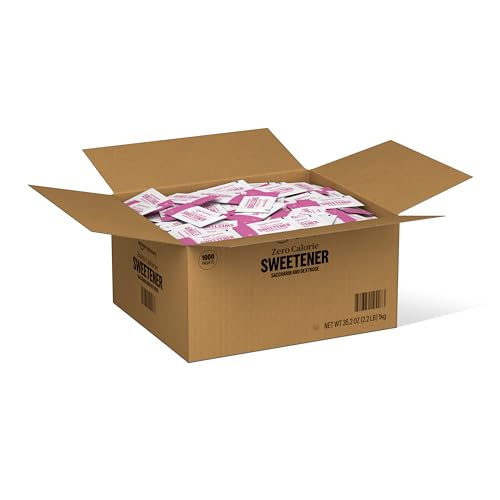
For a diabetic who goes through a few packets a day, the practical value here is volume. You get 1000 individually wrapped packets of saccharin in one 35.2 oz box, so a single purchase covers months of morning coffee and afternoon tea. Saccharin is a zero-calorie sweetener, which means it adds sweetness without the calories of table sugar. If you are counting carbs or tracking calories, that is one less number to juggle at breakfast.
What wins people over is the taste, and it is the reason this one lands at the top of the list. The pink packet flavor profile is familiar enough that regular coffee drinkers cannot tell it apart from the name-brand pink stuff. It dissolves quickly in hot drinks, so you are not left stirring a gritty cloud at the bottom of the mug. Users put it to work in coffee, tea, and even baking, which makes it more flexible than a packet you only trust in one drink.
The honest catch is that saccharin is not for every palate. Some people pick up a metallic edge that stevia or allulose does not have, and no sweetener wins everyone. Also worth knowing: this was previously sold as Sugarly Sweet, and the maker states the formulation, size, and quality are the same, so an old favorite buyer will recognize the result. For a crowd of one who just wants their coffee to taste right, the price-to-volume math is the draw.
What earns the top spot
- 1000 packets in one box — months of daily coffee without reordering
- Zero calories and a familiar pink-packet taste that regulars do not blink at
- Dissolves fast in hot drinks, so no gritty residue in the mug
- Holds up in baking as well as coffee and tea
Where it asks a little of you
- Saccharin carries a slight metallic note that some palates notice
- Not the choice for anyone who wants a naturally derived base like stevia or allulose
Reach for this if: you drink coffee or tea daily and want a familiar pink-packet taste without counting carbs.
Look elsewhere if: you want a plant-derived sweetener rather than saccharin.
2. Sweet Nature Birch Bark Xylitol Sweetener 50-Pack
A birch-derived sweetener that measures spoon for spoon like sugar, so old recipes still work.
For anyone who cooks by the cup and does not want to rethink every recipe, this is the easy swap. Sweet Nature’s birch xylitol uses a 1-to-1 conversion ratio, meaning you measure teaspoon for teaspoon or cup for cup with no adjustments. It is crafted without corn-based ingredients and has a low glycemic index, about 40 percent fewer calories than table sugar, and 0g net carbs per serving. That combination makes it a fit for keto, paleo, and low-carb routines as well as diabetic diets, and it dissolves easily in coffee and tea.
What people praise most is the taste, and plenty of xylitol converts say it tastes like sugar with no aftertaste at all. It works in hot and cold preparations, from smoothies and oatmeal to sauces and baked desserts, and it is widely recognized as tooth friendly for supporting oral health throughout the day. If you usually reach for a spoon of white sugar in your coffee, this is the closest match in a low-carb form.
Two things to know before you buy. First, this is a granulated sweetener, not a powdered one, so it looks like sugar rather than a fine dust and may need a little more stirring to fully dissolve. Second, xylitol is toxic to pets — store it securely away from dogs and animals, full stop. Some owners also find it slightly less sweet than sugar, so a heavier spoon might be needed, and a few reported packets arriving open in transit. The safe handling and small sweetness gap are the trade-offs for a natural, tooth-friendly option.
Why cooks like it: the 1-to-1 ratio and clean dissolve mean no special conversion math and no clumping in a mug.
The side worth knowing: it is best kept in a sealed container far from pets, and sweet-tooth coffee drinkers may need a touch more than they expect.
Best for: bakers and coffee drinkers who want a natural, low-glycemic sugar stand-in that measures exactly like the real thing.
Not for: households with dogs where a pet could reach an open box.
3. Morning Pep Allulose Sweetener 2 lb
The sweetener that browns and bulks like sugar, which is exactly what a diabetic baker has been missing.
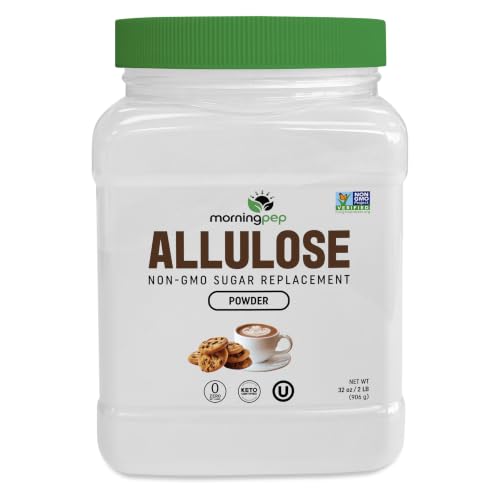
Here is the difference that matters for anyone who bakes: allulose behaves like real sugar in the oven. It maintains its structure when heated, so cookies, sauces, and cakes come out with authentic texture instead of the flat chew most sugar-free swaps produce. That is why this 2 lb tub earns a spot even though it pours a little differently than a packet. It is also 100% pure allulose with no added erythritol, bulking agents, or fillers, and it is Non-GMO Project Verified, Keto Certified, and OU Kosher Certified.
The diabetic angle is the real headline. Allulose is described as having no glycemic impact, which means it does not raise blood sugar the way table sugar does, and the maker notes it is derived from foods like figs and raisins rather than being a fully synthetic product. It has zero calories, and it blends easily into coffee, tea, smoothies, and baking recipes. If you have tried stevia and found it too sharp or licorice-like, allulose tastes closer to sugar with no chemical finish.
One honest note: allulose is not quite as sweet as sugar spoon for spoon. The review pages sum it up: “Initially disappointed: 2 spoons in 16 oz coffee gave little sweetness; 3 spoons was right.” That means your first cup might taste weak until you learn your own ratio, and the tub — at 5 x 2 x 8 inches and 2 pounds — takes up real shelf space. The reward for that adjustment is a clean, sugar-like taste that works in recipes where other substitutes fall flat.
The case for the tub
- Allulose holds structure when heated, so baked goods keep real texture
- 100% pure with no erythritol, fillers, or bulking agents
- Zero calories and no glycemic impact, aimed squarely at diabetic and keto diets
- Blends easily into coffee, tea, smoothies, and sauces
The adjustments to expect
- Less sweet than sugar spoon for spoon, so you may need more at first
- A 2 lb tub needs cabinet or pantry room rather than a handbag pocket
Pick this one when: you bake for a diabetic household and want a stand-in that browns and bulks like the real thing.
Think twice if: you sweeten by the packet on the go, since a scoop from a tub is not travel-friendly.
4. SweetLeaf Stevia Powder Shaker Jar 4 Oz 2 Pack
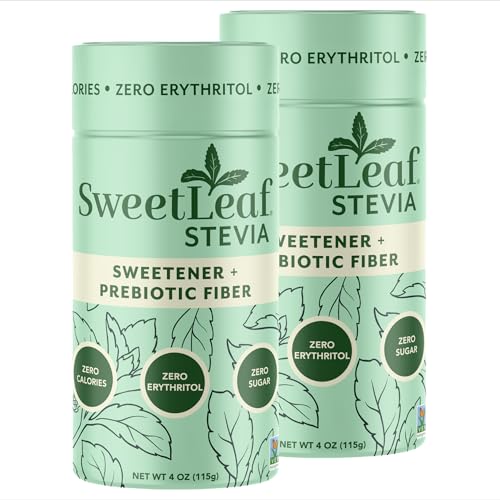
One cap shakes, the other scoops, so you decide exactly how sweet your coffee gets.
Most stevia arrives in tiny packets you tear open with your teeth. This one gives you a shaker jar with a cap that is half for shaking and half for scooping, which means you control the pour instead of guessing at a packet. A small amount goes a long way, so the 2-pack of 4 oz jars stretches far and is described by its fans as about one-third the cost of pure Stevia. For a diabetic who sweetens several cups a day, that concentration is the whole point.
Taste is what the stevia crowd raves about, and this one is all-natural from the Stevia plant with no artificial ingredients. The maker lists it as keto friendly with zero calories and zero carbs, sweetened only by the stevia plant. It found its way into coffee, smoothies, and baking, and the powder format makes it easy to sprinkle into a smoothie or spoon into a mixing bowl.
Two practical notes. First, this powder is very concentrated, so start with less than you think you need — too much and you get the licorice-like bitterness that turns people off stevia. Second, it needs vigorous stirring to avoid clumping, especially in cold drinks, so it is better in hot coffee than in a chilled smoothie. It is also not the cheapest way to buy sweetener by volume, but a little genuinely goes a long way.
The control angle: the half-shake, half-scoop cap is the feature that earns this jar its place, giving you fine-tuned sweetness without tearing packets.
Start small: this is a concentrated stevia powder, so your first attempt should be a light shake, then taste before adding more.
Matches well with: daily coffee and tea drinkers who like to dial sweetness up or down by the shake.
Skip the smoothie test if: you hate clumping — this powder wants hot liquid and a good stir.
5. Andrew Lessman ProCaps Sucress Stevia Sweetener 100 Packets

A stevia packet built around the stevia leaf and nothing else, for people who read every label.
If you have ever flipped a sweetener box over and found maltodextrin, dextrose, or silica on the ingredient list, this one is worth a look. Sucress pairs non-GMO proprietary stevia leaf extract with the amino acid glycine, and it contains no added sugars, carbs, milk, gluten, soy, yeast, corn, wheat, sodium, salt, fat, cholesterol, color, or preservatives. The packets are sized for one cup of tea or coffee, and the clean taste is what makes this one stand out. The stevia contributes zero calories, and the added glycine is the only other ingredient.
Non-GMO stevia leaf extract is the base, and the maker is proud of a manufacturing process that avoids binders, fillers, lubricants, stabilizers, flowing agents, and artificial colors. ProCaps formulates and manufactures its own products in Henderson, Nevada, runs on 100% solar power with a Zero Carbon Footprint, and uses bottles made from 100% recyclable post-consumer resin. For a label reader, the ingredient list and the Nevada manufacturing details both count.
The honest limit is that stevia still tastes like stevia to some people. A share of drinkers finds that a half packet in a coffee turns bitter, which is the common stevia complaint rather than a flaw unique to this product. And because it is a premium packet format, the cost per cup runs higher than a bulk tub. If clean-label stevia is what you want, this is a serious pick; if you want maximum sweetness for the least cost per cup, a bulk option beats it.
Why label readers choose it: single-ingredient focus — stevia leaf extract plus glycine — with no fillers, binders, or artificial colors.
The stevia caveat: some palates still catch a bitter edge in stevia, so taste a half packet before committing a full one.
The clean-label choice: for anyone who wants a stevia packet with no maltodextrin or filler ingredients.
Cost check: the premium packet format means a higher outlay per cup than a bulk bag.
Know the Specs
Glycemic impact
Glycemic impact is how much a food or drink pushes your blood sugar up after you consume it. Sweeteners described as having no glycemic impact or a low glycemic index do not raise blood sugar the way table sugar does, which is why they are the first thing to check on the label if you are managing diabetes. Look for that phrasing spelled out clearly rather than inferring it from a low calorie count.
Calories and net carbs
Calories tell you the energy the sweetener adds, while net carbs tell you how much of it counts toward a low-carb daily total. A zero-calorie sweetener adds no energy, and a product labeling itself 0g net carbs fits a keto or low-carb plan more cleanly than one that does not. These two numbers together decide whether a sweetener works in your diet far better than any single figure alone.
Format and conversion ratio
Format is how the sweetener arrives — packets, a shaker jar, or a bulk tub — and it decides how you measure. A 1-to-1 conversion ratio means a teaspoon of sweetener replaces a teaspoon of sugar with no recipe math, which matters when you bake or cook by the cup. Packets suit travel and coffee; bulk suits baking. Match the format to your daily habit: packets for travel, bulk tubs for baking.
Base ingredient
The base is what the sweetener is actually made from: saccharin, birch xylitol, allulose, or stevia leaf extract. Each has a distinct taste profile and finish, so the base is a fair way to predict whether you will like the result. Stevia can carry a mild licorice note, xylitol is described as close to sugar, and allulose behaves like sugar when heated.
Common Questions
Which artificial sweetener is safest for diabetics?
Does allulose raise blood sugar?
Can xylitol be used by diabetics?
Does stevia leave an aftertaste?
Is saccharin safe for daily coffee?
How many teaspoons of sweetener equal one teaspoon of sugar?
Can diabetics bake with artificial sweetener?
Which sweetener is easiest to use in cold drinks?
Is xylitol safe around pets?
Are zero-calorie sweeteners keto friendly?
The Bottom Line
If you want a straightforward daily sweetener with no carb math and a familiar pink-packet taste, the Happy Belly Zero Calorie Pink Saccharin Sweetener is the one to start with. If you prefer a naturally derived sweetness and want to bake real recipes without adjustment, the Morning Pep Allulose handles the oven better than anything else on this list, while the Sweet Nature Birch Xylitol gives you a natural 1-to-1 sugar swap for coffee and cooking. If control is your priority, the SweetLeaf Stevia Shaker Jar lets you adjust sweetness by the shake. Pick the one that matches how you actually drink and cook, so it stays in daily rotation.
How we choose
We do not accept paid placement. Every pick is matched to a real buyer and a real use-case; we do not hands-on test units.
Sources
Specifications: manufacturer listings and product documentation. Review insights: verified customer reviews, as of October 2026. Pricing: not shown on this page (it changes often); check the current price via the retailer link.
As an Amazon Associate, Aappliancez earns from qualifying purchases. This does not affect which products we feature.