Disclosure: Some links in this post are affiliate links. As an Amazon Associate I earn from qualifying purchases, at no extra cost to you. Learn more
Specs are compiled from manufacturer listings and verified buyer reviews and can change over time — please confirm the key details on the product page before buying.
If your forearms bruise and tear from ordinary jobs — pruning roses, hauling boxes, mowing, bumping a doorframe — the fix is physical padding and cut-resistant fabric worn right on the arm. That is exactly what this shortlist covers: five arm protectors that wrap the wrist-to-elbow zone so thin, fragile skin is not the first thing that hits anything.
This guide is built by comparing the manufacturers’ published specifications and the patterns across verified customer reviews, so you get each pick’s real strengths and trade-offs instead of marketing spin.
Some people need impact padding against bruising, others need a cut- and thorn-proof layer, and a different group needs steady compression after surgery. This guide sorts them by what each one physically does, so you can pick the arm protectors for thin skin and bruising that matches your own arms and your own daily tasks.
Top Picks

How To Choose The Best Arm Protectors for Thin Skin and Bruising
Start by naming the exact thing that harms your arms. A bruise comes from a blunt bump, while a tear or a cut comes from something sharp or thorny. Those two problems need two different kinds of sleeve, and buying the wrong one is the most common mistake in this category.
Blunt impact versus sharp contact
For bruising, you want actual padding sitting between your skin and the surface — foam or cotton that compresses on contact. For thorns, wire, and metal edges, you want a tightly woven cut-resistant fabric, rated with an ANSI cut level (a standardized score for how much slicing force the material survives before a blade gets through).
A sleeve with a high cut rating is not automatically a good bruise guard. Sleeves with thick padding are not automatically thorn-proof. Read which one the listing is actually built for.
Getting the fit right so it stays in place
Measure from your wrist bone to the crease of your elbow, then pick the size that covers that span. Most pull-on guards depend on compression or an adjustable strap to sit still, so a loose fit means constant re-pulling.
If you are between sizes, going up is usually the safer call for a padding sleeve, since a squeeze that is too tight is uncomfortable for long wear and hard to pull on and off.
Compression sleeves are a different job
Sleeves labeled 20-30 mmHg are medical-style graduated compression, meaning the pressure is firmest at the top of the arm and eases as it travels down. They are for swelling and post-surgical support, not for stopping a thorn.
Work out which task fills your day most, then choose the sleeve built for it. Two good sleeves for opposite jobs is normal in this category.
Side-by-Side Comparison
| Model | Best For | Protection Type | Pieces | Fabric / Material | Amazon |
|---|---|---|---|---|---|
| Schwer 9in ANSI A9 Arm Sleeves PM915★ Best Overall | Thorns, wire, sharp debris | ANSI A9 cut / Level 5 puncture | 1 | HPPE, Canvas | Amazon |
| Sedroc Elite Forearm Guards Padded Sleeves PairBruise Defense | Everyday bumping and bruising | Padded impact foam | 2 | Padded cotton over foam | Amazon |
| Hiball Lymphedema Compression Arm Sleeve Gauntlet | Swelling and post-surgery support | 20-30 mmHg graduated compression | 1 | 75% Nylon, 25% Spandex | Amazon |
| Ailaka Medical Compression Arm Sleeves 1 Pair | All-day compression in a pair | 20-30 mmHg graduated compression | 2 | 78% Nylon, 22% Spandex | Amazon |
| Padded Arm Guards Sleeves Pair | Hand plus forearm impact cover | Top and bottom impact pads | 2 | Cotton | Amazon |
Detailed Reviews
1. Schwer 9in ANSI A9 Arm Sleeves PM915
Our pick — over 4.5★ from 150+ verified ratings; the strongest balance of quality and price.
The arm guard that takes thorns, wire, and metal edges head-on without fraying.
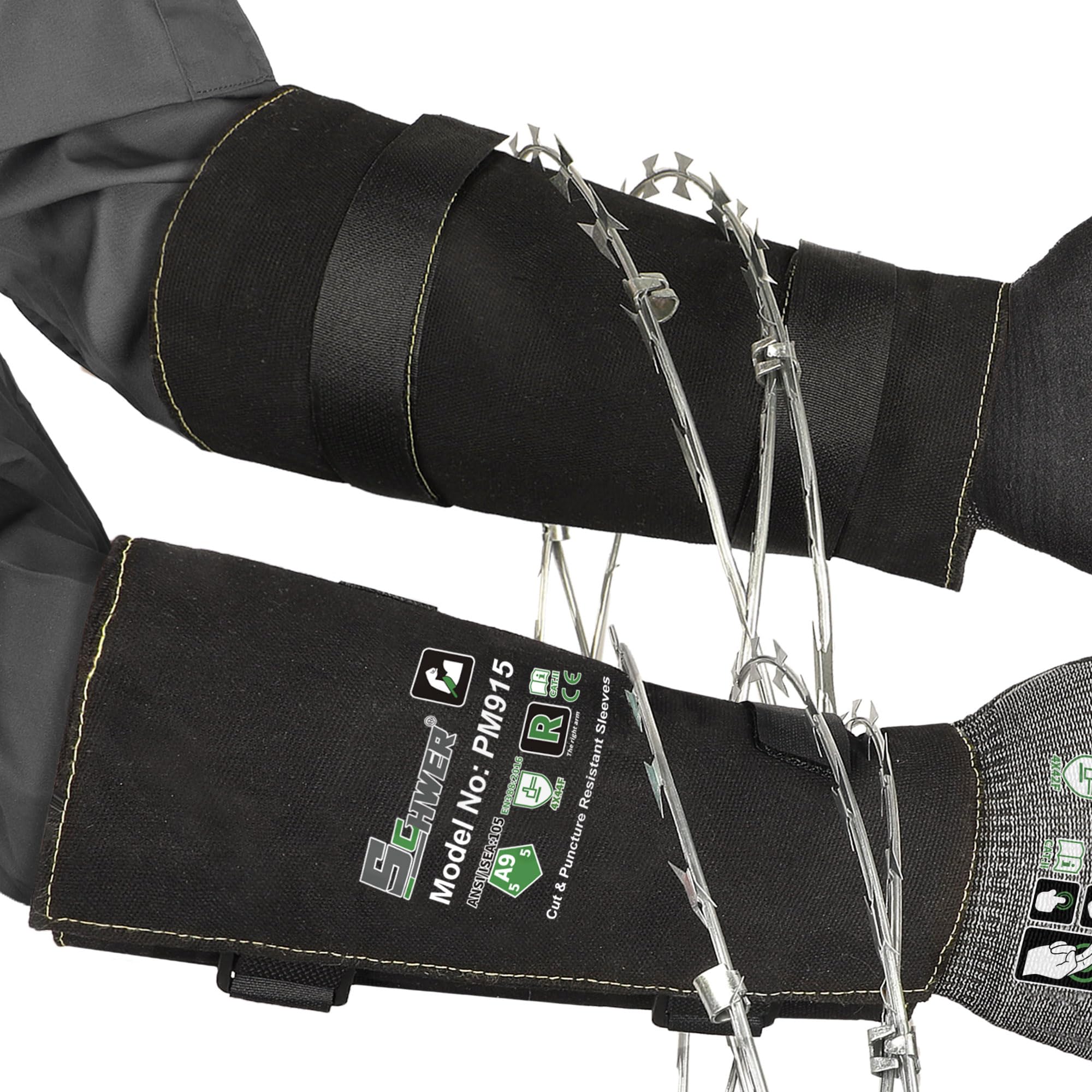
If your thinning skin fails against anything sharper than a doorframe — rose canes, mesquite thorns, rusty wire on a fence line, brush along a trail — this is the sleeve built for that specific hazard. The fabric is HPPE and canvas, and HPPE is a high-strength polyethylene fiber used in cut-resistant gloves; the sleeve carries an ANSI A9 cut rating, the top end of the standardized cut-resistance scale, plus Puncture Level 5.
It is sold as a single item, not a pair, so order two if you want both arms covered. Weight is not published, and the fit is managed by an expandable hook-and-loop closure — two straps per arm, according to buyers report: “Schwer arm sleeves: thick canvas, 2 velcro straps/arm, thorn-proof, comfortable in heat, chainsaw/chipper-safe.” Trim the excess strap so it does not snag.
Owners describe it as comfortable in heat and long enough to cover more forearm than some knit alternatives. It is an occasional-use item, meant for demanding tasks rather than all-day wear. The maker notes plainly that puncture resistance is not the same as needlestick resistance, so do not test it with needles. If you need padding against a blunt bump instead of a blade, the Sedroc below does that job better.
Where it wins
- ANSI A9 cut resistance with Level 5 puncture protection
- HPPE and canvas construction that holds up to thorns and wire
- Adjustable hook-and-loop straps adapt to most adult forearm sizes
- Comfortable in heat on long outdoor jobs
Where it gives
- Sold as one piece, so you need to buy two for both arms
- A few wearers find it slips down the arm over time
- Not built for blunt bruising — that needs padding, not cut resistance
Best for: anyone facing thorns, wire, splinters, or sharp debris across the whole forearm.
Think twice if: your problem is bruising from blunt bumps rather than cuts.
2. Sedroc Elite Forearm Guards Padded Sleeves Pair
Cushioned cotton padding that sits between your forearm and anything you bump into.
This pair is the blunt-impact answer. Padding made of foam wrapped in padded cotton runs wrist to elbow, and because you get two guards in the pack, both arms are covered in one order. The weight is 2.4 ounces for the Sedroc pair, compared with 1.41 ounces for the Hiball sleeve — noticeably more material on your arm, which is exactly what you want when the goal is cushioning rather than compression.
The design is a compression-style pull-on: no straps to adjust, just a sleeve that hugs the arm and forms to it with use. It is machine washable and sweat absorbing, so it stays fresh through repeated work sessions. Owners single out the padding again and again, and the fit holds through long work sessions.
The pitch is simple and the owner experiences back it up. One owner who empties trailers at the dump reported no bruising at all, and a blood-thinner user wears them to avoid getting “banged up.” One buyer sums it up: “No more bruising and no more torn skins.” Sweat-heavy sessions are the one thing to watch, since foam padding holds warmth on a hot day. For the money, it is the straightforward bruise-prevention buy.
Why it earns the spot: full wrist-to-elbow foam padding in a washable cotton sleeve, sold as a two-pack, with the fit holding through long work sessions.
The catch: it is a soft pad, not armor — it cushions a bump but will not stop a blade or a thorn.
Reach for this if: your arms bruise or tear from ordinary knocks, lifting, or yard work and you want both arms padded for one order.
Look elsewhere if: you need certified cut resistance for sharp work.
3. Hiball Lymphedema Compression Arm Sleeve Gauntlet

A full-length graduated compression sleeve that reaches from the palm to the upper arm.
This is not a bruise pad — it is a compression garment, and it works on a completely different problem: swelling and post-surgical support. The rating is 20-30 mmHg, which means the pressure is firmest at the bicep and eases as it travels down toward the thumb. The fabric is 75% nylon and 25% spandex, which gives it enough stretch to pull on and enough memory to hold its shape.
The design detail worth knowing is the gauntlet: the cuff is extra long, covering palm, wrist, forearm, elbow, and upper arm in one piece, with dotted silicone bands at the top to stop the cuff sliding during movement. If those dots irritate skin, the top band flips over to sit smooth, which also keeps it from tightening like a tourniquet. Sizing is the recurring friction point — the sleeve runs small, and going up one size is the common advice across the reviews.
Buyers managing lymphedema after lymph node removal report the swelling stays down, including on flights and through humid summer heat. It is silky and easy on and off once you have the right size. It won’t shield you from a thorn or a bump, so pair it with a padded guard if your skin also tears easily.
Who it’s built for: people managing swelling or recovering from surgery who need graduated pressure from palm to bicep in a single continuous sleeve.
Size before you buy: the sleeve runs small, so measure the upper arm first and size up.
Suits you if: you want steady 20-30 mmHg compression with full palm-to-bicep coverage and a slip-resistant top band.
skip it if: your goal is impact padding or cut protection.
4. Ailaka Medical Compression Arm Sleeves 1 Pair

Two graduated compression sleeves in one order, with silicone dots to keep them riding high.
Where the Hiball ships as a single sleeve, this Ailaka pack gives you a pair, both rated at the same 20-30 mmHg graduated compression. The fabric blend is 78% nylon and 22% spandex, a touch more nylon than the Hiball, and it is latex free — note if a rubber allergy has ever been a problem with other arm wear.
Each sleeve wraps the wrist, forearm, elbow, biceps, and triceps, and silicone dots on the top cuff keep it from creeping down during walking, golf, cycling, or garden work. Reviewers praise the fabric’s build quality most, followed by how well the compression holds up.
The honest tension is sizing. The fit gets mixed reactions — snug in the right way for many wearers, but reported as much too tight by others, and the silicone grip dots have caused skin irritation for a few people sensitive to silicone. Measure carefully against the size chart and lean toward the larger size if you land between two. A burn survivor who normally wears custom-made sleeves reported these fit just as well.
The value read: a two-sleeve pack at the same 20-30 mmHg rating as single-sleeve competitors, latex free and built to stay up with silicone dots.
Measure first: sizing runs tight, and the silicone dots bother sensitive skin, so check the chart before you commit.
Best match for: anyone who wants graduated compression on both arms from one pack and needs a latex-free fabric.
Not the one if: you have silicone-sensitive skin or need a padded guard against bruising.
5. Padded Arm Guards Sleeves Pair

Padding on both sides of the arm, plus hand coverage most guards leave out.
Most padded sleeves shield one side of the forearm. This pair covers the hand and forearm and puts pads on both the top and the bottom, which is why it holds up against gardening bruises and light contact work alike. The cotton body is abrasion resistant, machine washable, and sweat absorbing, and it is listed for everything from football and martial arts to construction and yard work.
The foam is the talking point. Owners mention the padding wraps all the way around the arm rather than sitting on one face, and it is dense enough to blunt strikes and stop the bruising from regular yard work. The pads reach from elbow to hand, so a swinging weed trimmer or a low branch meets cushioning, not skin.
One alignment note: because the sleeve has a shaped elbow opening, that hole has to sit correctly over the elbow or the guard shifts while you move, which owners describe as distracting rather than damaging. Pull it into place before you start and it stays comfortable. For arms that bruise from both sides and need hand cover too, this is the most complete padded option here.
The standout detail: top and bottom padding plus hand coverage in a cotton sleeve — more surface covered than a single-sided guard.
Small habit to build: line the elbow opening up before you start, or the guard works its way out of position as you move.
Reach for this if: you want full hand-to-elbow padding that cushions both sides of the arm and can handle contact activity too.
Consider an alternative if: you specifically need certified cut or puncture resistance.
Know the Specs
ANSI Cut Level vs Puncture Level
An ANSI cut level is a standardized score for how much slicing force a fabric survives before a blade breaks through. Higher letters mean more cut resistance, and the Schwer sleeve carries the ANSI A9 designation, the highest on the scale, plus Puncture Level 5 for pointed objects like splinters and metal edges. The maker states plainly that puncture resistance is not needlestick protection, so this rating covers thorns, wire, and glass rather than hypodermic needles. If you are judging sleeves by a single number, the cut level is the one that matters for thorn work.
mmHg Compression Ratings
mmHg stands for millimeters of mercury, the pressure unit used to describe medical compression garments. A rating of 20-30 mmHg means the sleeve applies pressure in that range, and graduated compression makes it firmest at the top of the arm and lighter toward the hand, which is how both the Hiball and Ailaka sleeves are built. That is a different job from cut or impact protection entirely — it addresses swelling and post-surgical support rather than guarding against thorns or bumps. If your arms bruise rather than swell, a padded guard is the better match.
Common Questions
What is the best arm protector for skin that tears easily?
Will a padded sleeve actually stop bruising from blood thinners?
How do I measure my arm for the right sleeve size?
What does 20-30 mmHg mean on a compression arm sleeve?
Are cut-resistant sleeves good for bruising?
Can I wear an arm protector all day?
Which arm protector works for gardening and yard work?
Can I machine wash padded arm guards?
Do I need two sleeves or is one enough?
What is the difference between padded bruising guards and compression arm sleeves?
The Bottom Line
For most people shopping for the best arm protectors for thin skin and bruising, the answer depends on whether your hazard is sharp or blunt. If it is sharp — thorns, wire, metal edges, splinters — the Schwer 9in ANSI A9 sleeve is the strongest option, with the highest cut and puncture ratings in the group. If it is blunt — box-hauling, yard work, bumping into things with arms that bruise from anything — the Sedroc Elite padded pair gives you full forearm padding on both arms in one order, which is why it is the pick for bruise-prone skin that tears. And if your arms swell or you are recovering after surgery, the Hiball 20-30 mmHg compression sleeve is the one built for that job, with the Ailaka pair as the two-sleeve alternative. Whichever you choose, size up if you land between two sizes, and line up the elbow opening before you start work.
How we choose
We do not accept paid placement. Every pick is matched to a real buyer and a real use-case; we do not hands-on test units.
Sources
Specifications: manufacturer listings and product documentation. Review insights: verified customer reviews, as of October 2026. Pricing: not shown on this page (it changes often); check the current price via the retailer link.
As an Amazon Associate, Aappliancez earns from qualifying purchases. This does not affect which products we feature.