Disclosure: Some links in this post are affiliate links. As an Amazon Associate I earn from qualifying purchases, at no extra cost to you. Learn more
Specs are compiled from manufacturer listings and verified buyer reviews and can change over time — please confirm the key details on the product page before buying.
If your elbow aches every time you lift a coffee cup, grip a racket, or click a mouse, the right strap can take pressure off the sore tendon without locking your whole arm in place. The five picks below split into two jobs: a narrow strap that presses into the tendon just below the elbow, and a compression sleeve that wraps the whole joint. For the sharp, pinpoint pain of tennis elbow, the strap is usually the better first pick because it targets the sore spot and leaves your forearm free to move.
This guide is built by comparing the manufacturers’ published specifications and the patterns across verified customer reviews, so you get each pick’s real strengths and trade-offs instead of marketing spin.
Your forearm measurement decides almost everything here, so grab a tape measure before you read on. Below you will find the sizing ranges, the materials, and the honest limits of each brace so you can match one to your arm and your daily routine, which is the whole point of a careful search for the best arm band for tendonitis.
Top Picks

How To Choose The Best Arm Band for Tendonitis
Tendonitis in the elbow almost always hurts at one small spot just below the joint, where the forearm tendon attaches to the bone. The brace that helps most presses on that spot rather than squeezing the entire arm. That single idea — pressure on the spot, not the whole arm — should guide everything else you decide.
Measure your forearm, not your elbow
Wrap a soft tape around your upper forearm, roughly two inches below the crease of the elbow, and write the number down. A strap listed as one size fits most only works inside its stated range — the Mueller strap covers 10 to 14 inches, while the BraceAbility band tops out around a 15-inch forearm circumference. If you fall outside that window, size up or pick a sleeve with real size options instead of forcing a one-size strap.
Strap versus sleeve
A narrow strap is the classic choice for tendonitis because it concentrates pressure on the sore tendon and leaves your hand and wrist free. A compression sleeve wraps the whole forearm and spreads gentle pressure over a wider area, which some people prefer for all-day wear or for sleeping. Neither wins in every case: the strap suits sharp, localized pain, and the sleeve suits a broader, dull ache.
Closure type and adjustability
Hook-and-loop closures let you loosen or tighten in seconds, which matters when swelling changes through the day. A D-ring closure can be tightened one-handed, a real advantage if your grip is weak. Consider how easy the closure is to work with the hand on your sore arm — a strap you cannot adjust is a strap you will stop wearing.
Side-by-Side Comparison
| Model | Best For | Type | Fit Range | Weight | Amazon |
|---|---|---|---|---|---|
| Mueller Tennis Elbow Support★ Best Overall | Sharp, localized tendon pain | Strap with gel pad | 10″–14″ forearm | 2.56 oz | Amazon |
| FUTURO Performance Comfort Elbow SupportMost Adjustable | Adjustable pressure day to night | Sleeve with 2 straps | Adjustable | 0.16 oz | Amazon |
| BraceAbility Epicondylitis Brace | One-handed tightening | Strap with D-ring | Up to 15″ forearm | — | Amazon |
| Comfcube Elbow Ice Pack | Cold therapy between wear sessions | Slip-on ice wrap | One size | 1.61 lb | Amazon |
| Zensah Compression Elbow Sleeve | Full-arm compression with flip cuff | Compression sleeve | S 7″–9″ / M 9″–11″ / L 11″+ | 2.08 oz | Amazon |
Detailed Reviews
1. Mueller Tennis Elbow Support, One Size Fits Most (Pack of 1)
Our pick — 4.0+★ from 850+ verified ratings; the strongest balance of quality and price.
Two and a half ounces of strap that puts pressure exactly where tendonitis hurts.
The Mueller strap weighs 2.56 ounces and slides onto your upper forearm, then tightens with a hook-and-loop closure until the pressure feels right. A built-in gel pad sits over the sore tendon — the soft cushion absorbs the pressure instead of digging a hard edge into your skin. It fits forearms from 10 to 14 inches and works on either the left or right arm. At 2.56 ounces it is 16 times the weight of the FUTURO sleeve below, which sounds like a lot until you realize that heft is what makes the pad feel solid rather than flimsy.
What wins people over is the build quality, and the effectiveness is right behind it. The double-knit fabric wicks moisture so the strap does not turn slick during a match or a shift on the factory line. Being able to wear it while you sleep is a genuine bonus for anyone whose elbow aches at rest. The strap is not a cure and does not claim to be — the honest reality is that it manages pressure while it is on your arm.
The catch is comfort over long stretches. Past roughly three hours of continuous wear the gel pad starts to press in the wrong spot and needs repositioning, so plan to slide it back into place a few times a session. The printed instructions are thin, and getting the tension right takes some trial and error. If your forearm measures outside that 10-to-14-inch window, this one will not sit right.
What earns its keep
- Gel pad cushions the sore tendon instead of pressing a hard edge into it
- 2.56 ounces stays put during sport and work
- Moisture-wicking double-knit fabric resists sweat buildup
- Fits either arm and covers a 10″–14″ forearm range
Where it asks patience
- Gel pad drifts after a few hours and needs repositioning
- Instructions are unclear about correct tension
- Will not suit a forearm outside the stated size range
The strong buy: Localized elbow tendonitis that flares during tennis, golf, painting, or repetitive lifting — this is the pick to start with.
Think twice: If you need support for a whole workday without touching it, a sleeve that spreads pressure may sit easier.
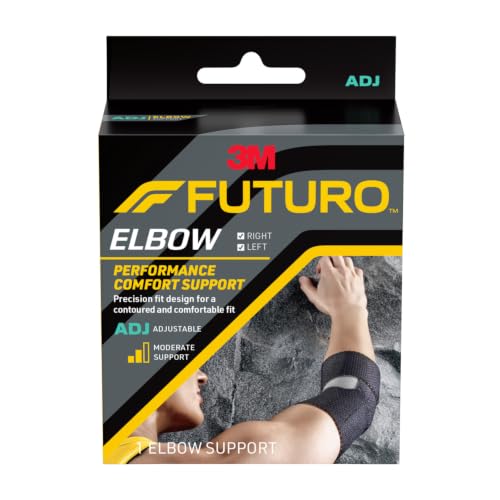
2. FUTURO Performance Comfort Elbow Support
An elastic sleeve with two straps you can dial from light to firm in seconds.
Where the Mueller strap presses one spot, the FUTURO wraps the forearm in an elastic sleeve and then lets you dial the tension with two adjustable velcro straps. That is the real difference — you get a band of compression you can tighten for a workout and loosen for a movie on the couch. The breathable material lets air circulate so your skin stays dry underneath. It can be worn on either elbow, and at 0.16 ounces it is the lightest brace on this list by a wide margin compared with the 2.56-ounce Mueller.
Fans of this design describe how the sleeve flexes the elbow slightly inward and lets you set the bend to ease tendon pressure. Sleeping in it is comfortable for many people, and the adjustable velcro lets you go tight for lifting days and gentle for recovery days. Rock climbers and weight lifters with mild tendonitis report it keeps pain at bay once they settle into the right tension.
One honest limit: this is moderate support, so it protects and takes the edge off rather than delivering a sharp targeted squeeze. If you expect it to feel like a strap bearing down on one spot, it will read as too gentle. The first few days can also feel odd while your arm adapts to the pressure, which settles down with consistent wear.
Why it fits an active week: The two-strap design lets you change pressure without taking the brace off, and the breathable sleeve keeps sweat from building up during climbing, lifting, or a long day at a desk.
The honest trade-off: It is a support sleeve, not a targeted strap — the pressure spreads out instead of focusing on one sore spot, so it suits a broader ache better than a pinpoint pain.
Reach for this if: You want one brace that morphs from tight during training to loose in the evening, and you like a breathable sleeve over a fixed strap.
Look elsewhere if: Your tendonitis is a single sharp point that only a concentrated strap can reach.
3. BraceAbility Epicondylitis Brace

A slim strap with a D-ring you can cinch one-handed, even with a weak grip.
Tightening a strap with one hand is fiddly at the best of times, and nearly impossible when the arm doing the work is the sore one. The BraceAbility band solves that with a strong fastener strap plus a D-ring — you pull the loose end through the ring and anchor it, so the other arm does the adjusting. An embedded compression tube runs inside the band and presses on the forearm to take stress off the tendon. It fits arm circumferences up to 15 inches measured around the widest part of the forearm, and the slim profile sits quietly under a sleeve.
Quality is what people single out most, with ease of use next. The band is light and does not stop your arm from swinging during golf, tennis, racquetball, weightlifting, or baseball. Plumbers, painters, cooks, and carpenters like it for the same reason — it protects the tendon without getting in the way of the job. Firewood splitters dealing with lateral epicondylitis describe it as the brace that keeps them comfortable while working.
The thing to know before you buy is the surface material. The hard, unbendable circular pad runs firmer than a gel pad, so long wear can feel bulky, and the rough velcro-like outer material has been known to irritate bare skin — a thin sleeve or a felt lining underneath fixes it. It is hand wash only, and the nylon wears over repeated washing. Also note for anyone with limited hand strength: routing the strap through the D-ring takes some dexterity.
The one-handed angle: The D-ring closure is the standout feature — it lets you set tension with your good arm and keeps the strap where you put it during sport.
What to plan for: The firm pad and rough nylon want a layer of cloth between them and your skin, and the band needs hand washing to hold up.
Best matched to: Active tendonitis you want to keep working through — the slim strap stays out of the way from the court to the jobsite.
Worth a second thought: Sensitive skin or a preference for soft gel wants a lining, and very large forearms push past the 15-inch limit.
4. Comfcube Elbow Ice Pack for Tennis Elbow
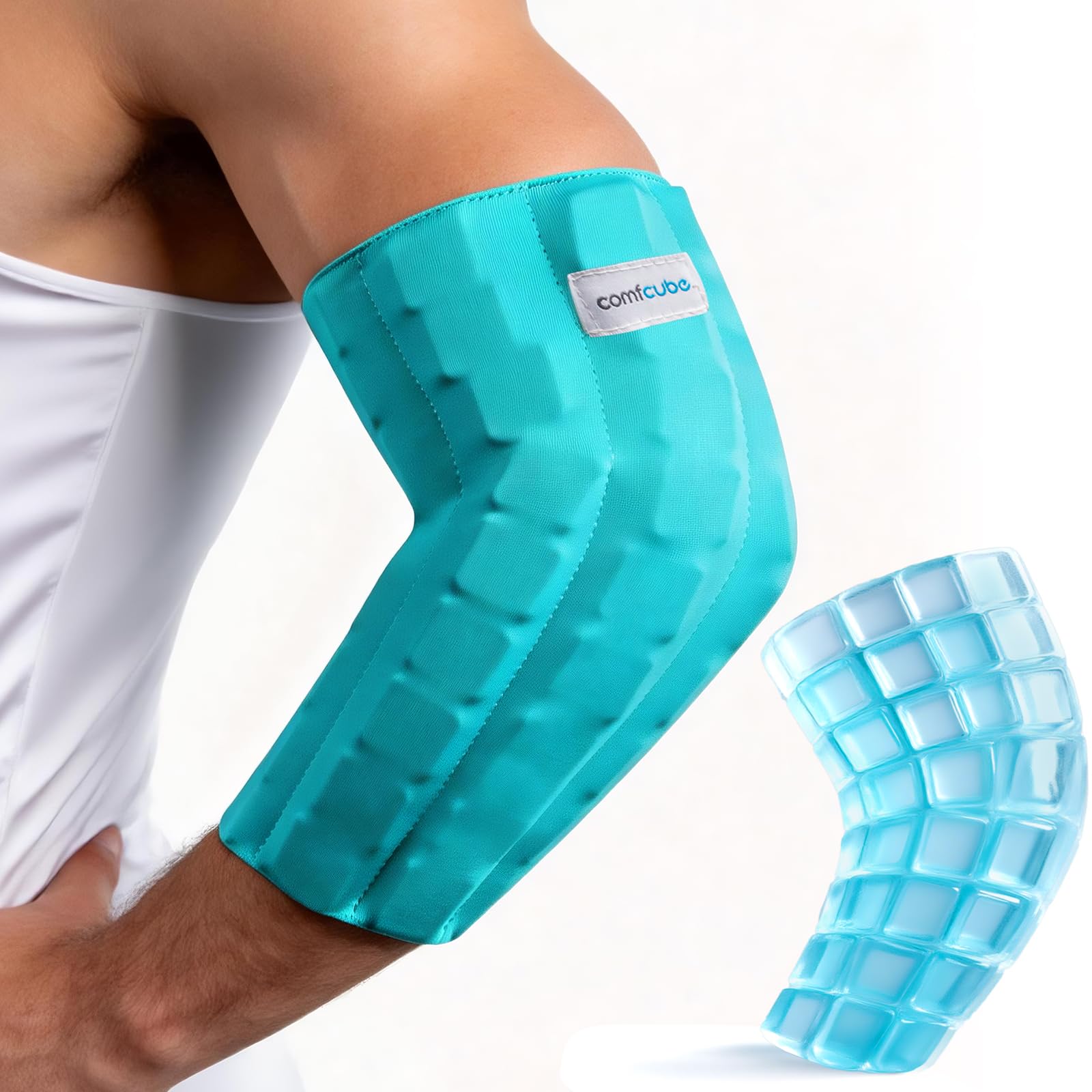
Not a brace at all — a slip-on sleeve that wraps your elbow in cold for recovery days.
This one does a different job from the straps above. Instead of compressing the tendon, the Comfcube slips on like a sleeve and wraps the whole elbow-to-forearm area in cold, with individual ice cubes built into the fabric so the chill spreads evenly. The maker says it stays cold for up to 2 hours, which suits longer recovery sessions rather than a quick ten-minute chill. The 360° wrap holds the cold against the joint on every side, and the soft fabric lets your arm move while you wear it. It is the heaviest item here at 1.61 pounds, but that weight is frozen coolant doing the work.
The slip-on design is genuinely easy — no awkward band to thread and no inserts to wrestle into place. You pull it on in seconds and go. It handles tendonitis, tennis elbow, golfers arm, and post-workout soreness around the elbow, wrist, forearm, or calf. The maker is careful to say to apply it for no more than 20 minutes at a time and to check your skin during use.
Two honest caveats. Cold retention is the most debated point — some sessions hold the chill for the full 2 hours, others go merely cool well before that, so treat the 2-hour figure as the best case. And the fit is built for a typical arm; a large man’s elbow can feel snug, and the ice squares shift around on some arms. You also need freezer space to keep it ready.
Where it shines
- Slip-on design goes on in seconds with no wrapping or inserts
- 360° wrap cools the whole joint, not just one side
- Individual ice cubes spread the cold evenly and stay flexible
- Soft fabric lets you move your arm while it is on
Set expectations
- Cold may fade well before the stated 2 hours on some sessions
- May feel snug on very large arms
- Ice squares can bunch and shift out of place
Companion piece for: Anyone running a wear-and-recover routine who wants consistent cold on the elbow after training or a long shift.
Not a replacement for: A strap or sleeve — this cools the joint but does not press on the tendon the way the braces above do.
5. Zensah Compression Elbow Sleeve
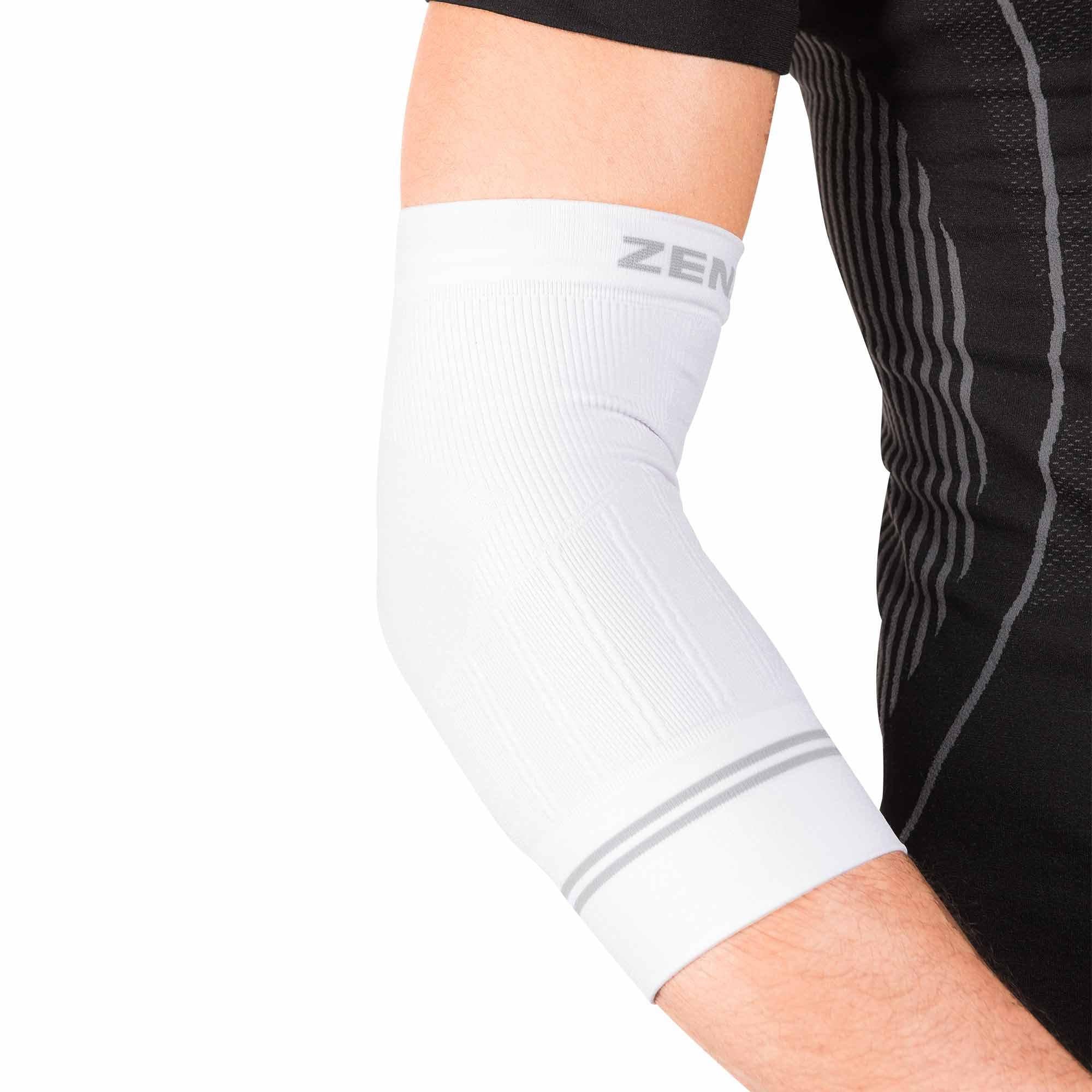
A full-arm compression sleeve with a foldable cuff that adds pressure on demand.
The Zensah is the most sleeve-like pick here, and it brings a feature the others lack: a flip cuff at the bottom you can fold over for extra compression when the tendon needs more. The sleeve compresses the whole upper forearm at once, and it is built in three unisex sizes — small for 7 to 9 inch forearms, medium for 9 to 11 inches, and large for 11 inches and up. The fabric wicks sweat so it does not get heavy mid-match, and a no-slip cuff keeps it from sliding down during play.
Endurance is where this one earns its place. Heavy bench pressers report little to no pain during lifting once warmed up. It packs small and compresses more compactly than a padded band, which is why one wearer took it through a three-day canoe trip without arm trouble. The chevron ribbing in the fabric presses gently on the sore tendons as you move.
Sizing is the whole story with a sleeve, and this one runs tight. The largest size can feel uncomfortably snug on a larger arm or on a woman with a wider forearm, and the fit loosens over the first days of wear as the elastic relaxes. That means it gives solid support at first but settles into lighter, everyday compression over time. Measure carefully — the size chart is the difference between a sleeve that helps and one you send back.
The cuff advantage: That foldable bottom cuff is the standout — fold it over for a firm squeeze on a bad day, leave it flat on a good one.
The sizing warning: The largest size still runs tight, so anyone on the bigger side of the chart should size up or expect a firm, close fit.
Ideal for: Golfers and tennis players with a forearm that matches the size chart and who want breathable, all-over compression with an adjustable cuff.
Better to skip: If your forearm sits near a size boundary or you have a large build — the fit tightens fast and the elastic loosens with wear.
Know the Specs
Forearm circumference and fit range
Every helpful brace depends on matching your arm. A strap listed for 10 to 14 inches or up to 15 inches only works inside that window. Measure around your upper forearm about two inches below the elbow crease with the arm relaxed, then compare the number to the fit range listed for that brace. A sleeve with named sizes (small, medium, large) follows the same idea but splits the range into bands rather than a single stretch limit.
Gel pad versus compression tube
The padded part is what presses into the tendon, and its shape changes how it feels. A gel pad is soft and spreads pressure over a small area, which many people find gentler for long wear but which can drift out of position. A firm compression tube digs in more directly and holds its place better, but it can feel bulky or rough against bare skin. Neither is right for everyone; match the pad to how sensitive your skin is.
Common Questions
How do I measure my forearm to pick the right size?
Is a strap better than a compression sleeve for tendonitis?
Can I sleep in an elbow brace for tendonitis?
How long can I keep a tendon strap on at once?
Does a compression band cure tennis elbow?
Will a one-size strap fit a larger arm?
Do I use a cold wrap and a brace together?
Can an elbow brace help golfer’s elbow as well as tennis elbow?
How should I wash a compression elbow band?
What if the brace is uncomfortable after the first few days?
The Bottom Line
The crowd favorite here is the Mueller Tennis Elbow Support, and it earns first place on the strength of its gel pad and its ability to press one spot on the tendon — 4.0+ stars across 800+ owner reviews backs that up. That rating beats the other straps and sleeves on this list, even though the BraceAbility band carries more reviews. If you want to change pressure all day without taking the brace off, the FUTURO sleeve is the one to grab. And for the days after training when the joint needs cold, the Comfcube ice wrap rounds out a sensible recovery routine.
How we choose
We do not accept paid placement. Every pick is matched to a real buyer and a real use-case; we do not hands-on test units.
Sources
Specifications: manufacturer listings and product documentation. Review insights: verified customer reviews, as of October 2026. Pricing: not shown on this page (it changes often); check the current price via the retailer link.
As an Amazon Associate, Aappliancez earns from qualifying purchases. This does not affect which products we feature.