Disclosure: Some links in this post are affiliate links. As an Amazon Associate I earn from qualifying purchases, at no extra cost to you. Learn more
Specs are compiled from manufacturer listings and verified buyer reviews and can change over time — please confirm the key details on the product page before buying.
If you have glaucoma, picking an allergy tablet is not a casual aisle decision. Many oral antihistamines can dry your eyes and blur your vision, and some carry warnings that matter when your optic nerve is already under pressure. So the safest starting point is a once-daily pill your eye doctor has cleared, paired with a targeted allergy eye drop that calms the itch without touching the rest of your body. Below you’ll find the five options worth considering, sorted by how well they fit that plan.
This guide is built by comparing the manufacturers’ published specifications and the patterns across verified customer reviews, so you get each pick’s real strengths and trade-offs instead of marketing spin.
Every pick here is an over-the-counter product with a clearly listed active ingredient, so you can read the label and match it to what your eye care professional already knows about your glaucoma. Choosing an antihistamine for glaucoma patients starts with knowing which ingredient you can tolerate.
Top Picks
How To Choose The Best Antihistamine for Glaucoma Patients
“Antihistamine” here means two different products: a swallowed tablet that acts on your whole body, and a drop placed directly in the eye. One is a tablet you swallow that works on your whole body. The other is a drop you put straight into your eye. For glaucoma, that distinction is the whole ballgame, because a pill reaches every part of you while a drop stays mostly where you put it.
Start with the active ingredient, not the brand
Cetirizine, loratadine, and olopatadine are the three active ingredients across these five picks. Cetirizine and loratadine are oral tablets sold under many brand and store names, and the label strength is what actually matters. Olopatadine is the eye-drop ingredient here, and it is applied directly to the itchy surface rather than swallowed.
Understand the drying question
Oral antihistamines are known to dry out mucous membranes, and your eyes are part of that picture. Dry eyes can feel gritty and can make vision feel less sharp. If your eyes already run dry, that is the single biggest reason to talk to your eye doctor before you start a daily tablet. A topical drop sidesteps most of that because it does not circulate through your body the same way.
Match the dosing to your day
Every oral option here is built around once-daily dosing, which keeps the routine simple. The eye drop is also once-daily and is described as working in minutes and lasting up to 16 hours. If your worst symptom is itchy eyes rather than a runny nose, the drop deserves a serious look. If sneezing and congestion are the main event, an oral tablet covers more ground.
Check the age guidance and the label
The cetirizine and loratadine products here are labeled for adults and children six years and over. The 5 mg cetirizine bottle allows one tablet for mild days or two for more severe ones, which is a flexibility the 10 mg products do not offer. Read the drug facts panel on whatever you buy and follow the printed dosing rather than guessing.
Side-by-Side Comparison
| Model | Best For | Active Ingredient | Strength | Form | Amazon |
|---|---|---|---|---|---|
| Zyrtec 24-Hour Allergy Relief, 10 mg, 75 Ct★ Best Overall | All-day oral relief | Cetirizine HCl | 10 mg | Tablet | Amazon |
| GoodSense Cetirizine HCl 10 mg, 365 CountBest Value | Bulk everyday supply | Cetirizine HCl | 10 mg | Tablet | Amazon |
| Bausch+Lomb Advanced Eye Relief Drops | Itchy eyes only | Olopatadine HCl | 0.2% | Eye drops | Amazon |
| Ohm 24 Hour Loratadine 10 mg, 300 Count | Non-drowsy daily control | Loratadine | 10 mg | Tablet | Amazon |
| Zyrtec 24-Hour Allergy Relief, 5 mg, 35 ct | Flexible mild-day dosing | Cetirizine HCl | 5 mg | Tablet | Amazon |
Detailed Reviews
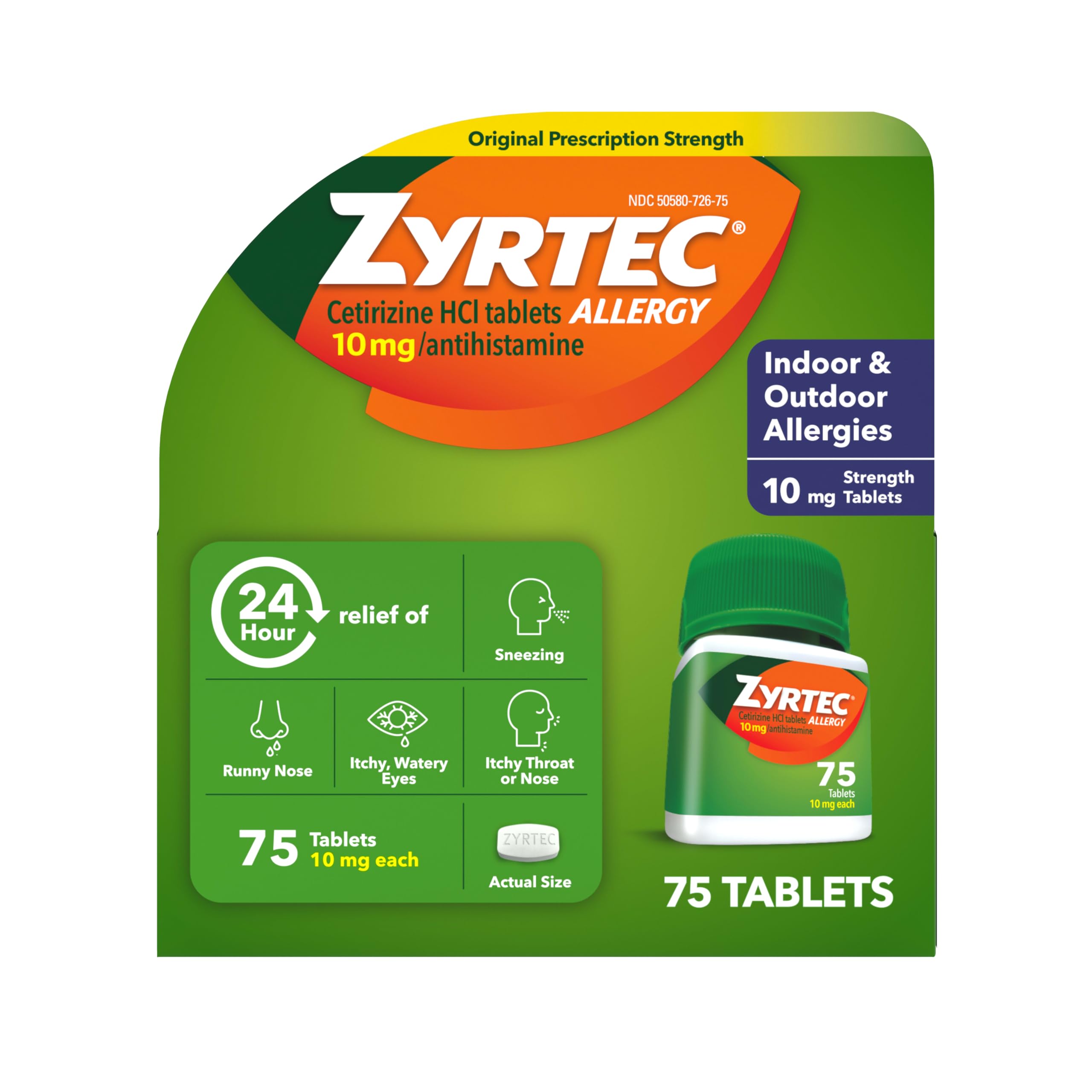
1. Zyrtec 24-Hour Allergy Relief Tablets 10 mg 75 Ct
Our pick — 4.5+★ from 1,000+ verified ratings; the strongest balance of quality and price.
The name-brand cetirizine that starts working at hour one and holds a full day.
These are the tablets you reach for when you want the most widely recognized cetirizine on the shelf and you do not want to think about the label. Each tablet carries 10 mg of cetirizine HCl — cetirizine is the antihistamine ingredient that blocks the histamine your body releases when pollen or pet dander hits — and the maker says it starts working at hour 1. The stated target is more than 200 different indoor and outdoor allergens, which covers the dusty house, the dog, and the blooming tree on the same walk. It is labeled for adults and children 6 years and older.
Reviewers focus on whether the 10 mg cetirizine actually clears their symptoms, and most say it does. The complaints cluster around drowsiness, and that is worth taking seriously if you have glaucoma. Some people feel sleepy on cetirizine and some feel nothing at all — the label itself flags it as a possibility, so plan your first dose for a day when you are not driving anywhere unfamiliar. The duration also draws a split response; the product is built around a full day and night of relief, yet not everyone feels it stretch that far.
You get 75 tablets in a bottle that weighs 1.45 ounces, so it fits easily in a bathroom cabinet or a travel bag. As one owner put it: “YES it works for my allergies and also for my Chihuahuas who were both sneezing.” The 75-tablet bottle suits a household where several people take cetirizine daily; dosing a pet is a question for your vet, not something to copy from a review. If your eyes are the main problem rather than your nose, the Bausch+Lomb drops below target the itch directly with far less whole-body involvement.
What earns it the top slot
- 10 mg cetirizine HCl blocks histamine for the full symptom list: sneezing, runny nose, itchy watery eyes, and itching of nose or throat
- Starts working at hour 1, so you are not waiting out a slow build
- Labeled for adults and children 6 years and over
- Small, easy-to-swallow tablet with a 1.45-ounce bottle
Where it asks you to be careful
- Drowsiness is the most-discussed trade-off — cetirizine can make some people sleepy
- A 10 mg fixed dose gives you no room to step down on a mild day
- Dry mouth and dry eyes are the classic oral antihistamine concern for glaucoma
Reach for this if: you want the best-known oral cetirizine at a solid daily strength and your eye doctor has already cleared cetirizine for you.
Look elsewhere if: your eyes are the only thing itching — a topical drop gets there without the drowsiness question.
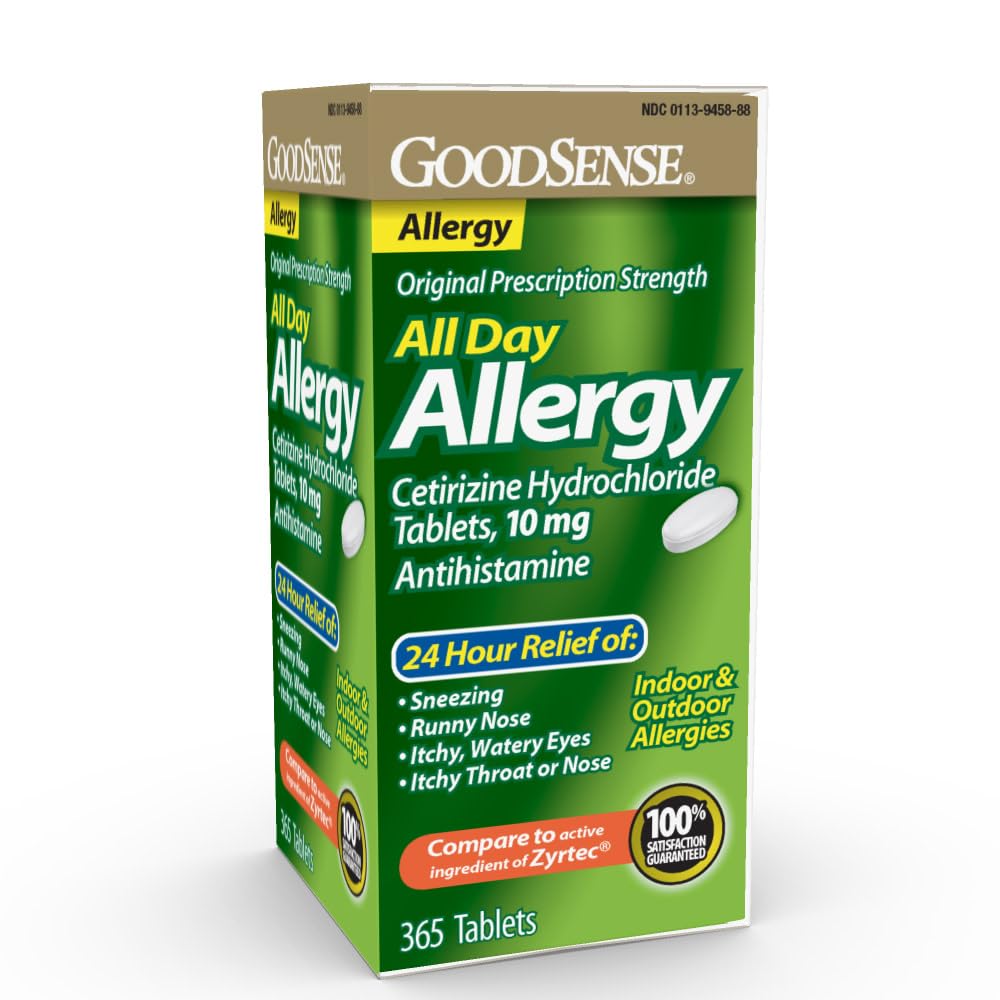
2. GoodSense Allergy Relief Cetirizine HCl 10 mg Tablets 365 Count
A full year of cetirizine in one bottle, with the identical active ingredient to the brand name.
The number that decides this one is 365. You get a full year of daily tablets in a single bottle that weighs 3.46 ounces, against the 5 mg Zyrtec bottle’s 1.13 ounces — the GoodSense bottle is the heavier of the two because it holds a year’s supply rather than 35 tablets. It also carries more tablets than the Ohm loratadine bottle, 365 count against 300. The active ingredient is cetirizine hydrochloride (the same antihistamine as Zyrtec) at original prescription strength, which the label says matches the brand-name version, and the tablets are gluten free.
Its height is 2 inches against the Bausch+Lomb drop box at 1.06 inches, so the bottle stands a little taller in the cabinet. What buyers value most here is plainly the value — a year’s supply that replaces repeated smaller purchases — and the reviews keep circling back to the same point: same ingredient, far less to spend. The condensed feedback from long-term users reads like “Works as good as the expensive products,” and that sentiment runs through the whole listing. One owner described wearing contact lenses without reaching for drops during a three-year run on it, which speaks to how the drying effect felt for that person specifically.
Here is the honest catch. If a 10 mg cetirizine makes you drowsy, you are holding a year of tablets you may not want to finish. Splitting a tablet is one way around it — half a 10 mg pill is a 5 mg dose — but that is a conversation with your eye doctor, not something to assume. Buy this when cetirizine at full strength already works for you and you want to stop repurchasing. If you want the ability to step the dose up or down without breaking tablets, the 5 mg Zyrtec bottle below is built for exactly that.
The supply math: 365 tablets at original prescription strength means one bottle covers a full year of once-daily dosing, which removes the monthly rebuy and the monthly label-reading.
The glaucoma note: cetirizine is an oral antihistamine, so the drying question applies here the same as any other cetirizine tablet. Confirm the ingredient with your eye care professional before you commit to a year.
Who it beats: the smaller name-brand bottles, on supply volume per purchase and on the fact that the active ingredient is listed as identical.
Who should pass: anyone who has not yet confirmed cetirizine agrees with them — do not stockpile a year before you know.
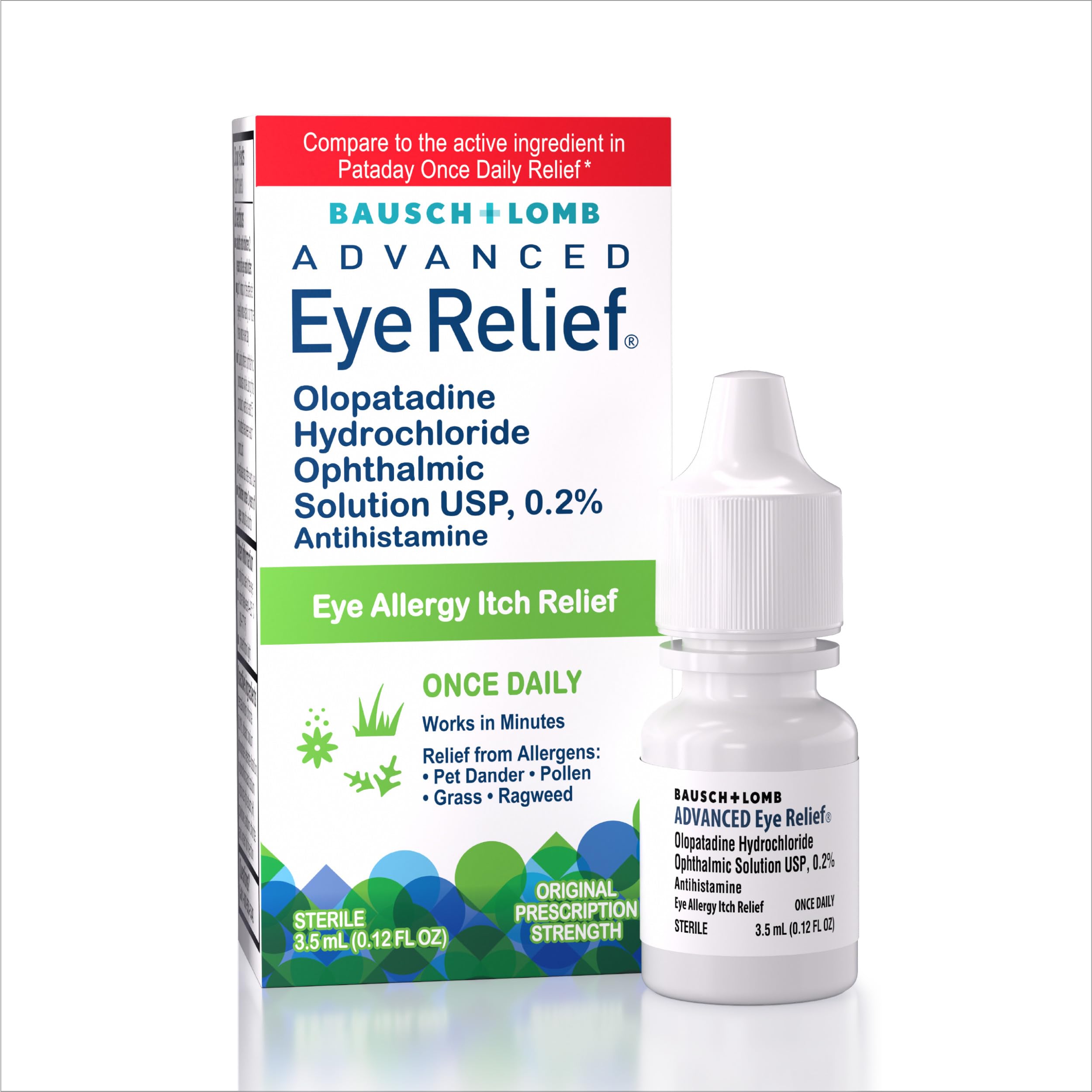
3. Bausch+Lomb Advanced Eye Relief Eye Drops 0.12 Fl oz
A once-daily drop that goes straight to the itch instead of through your whole body.
For anyone whose glaucoma makes them nervous about swallowing a daily antihistamine, this is the pick that changes the shape of the problem. The active ingredient is olopatadine hydrochloride at 0.2%, an antihistamine delivered as an eye drop rather than a tablet. You place it in the eye once a day, it starts working in minutes, and the maker states it relieves allergy eye itch for up to 16 hours. It targets the allergens that actually reach your eyes: pollen, pet dander, grass, and ragweed.
Because olopatadine 0.2% is placed in the eye rather than swallowed, it avoids the whole-body drying effect that makes oral antihistamines a concern with glaucoma. A drop does not travel through your bloodstream the way a swallowed cetirizine or loratadine does, so the whole-body drying effect that makes oral antihistamines a question mark is not the same conversation. It is still a medicine and still needs your eye doctor’s sign-off — nothing here replaces that — but the mechanism is different in a way that matters to you.
Two honest points. The first is bottle size: at 0.12 fluid ounces and 0.1 ounces in weight, this is a very small bottle, and the dimensions bear that out — 3.5 inches long, 1.61 inches wide, and 1.06 inches tall against the Zyrtec 75-count bottle at 4.7 inches long and 4.31 inches wide. Some buyers find it smaller than they expected. The second is that it treats eyes only, so if your nose is running too, this will not touch it. What wins people over is how quickly the itch quiets down, and it has earned loyalty from people who had tried thicker prescription-style drops and preferred this one. “It relieves the itchy eyes literally in just a few minutes,” goes the common note, from people who had been using far more involved eye care.
The case for a drop: targeted relief at the source of the itch, once a day, with a stated working window of up to 16 hours from a single application.
Mind the bottle: 0.12 fluid ounces is small, so read the printed dose and do not over-apply hoping to stretch it — the label sets the schedule.
Built for: itchy, watery, allergy-driven eyes as the primary complaint, especially where an oral tablet feels like too much whole-body involvement.
Not the whole answer if: sneezing and a runny nose are also part of your season — that is a job for an oral tablet.
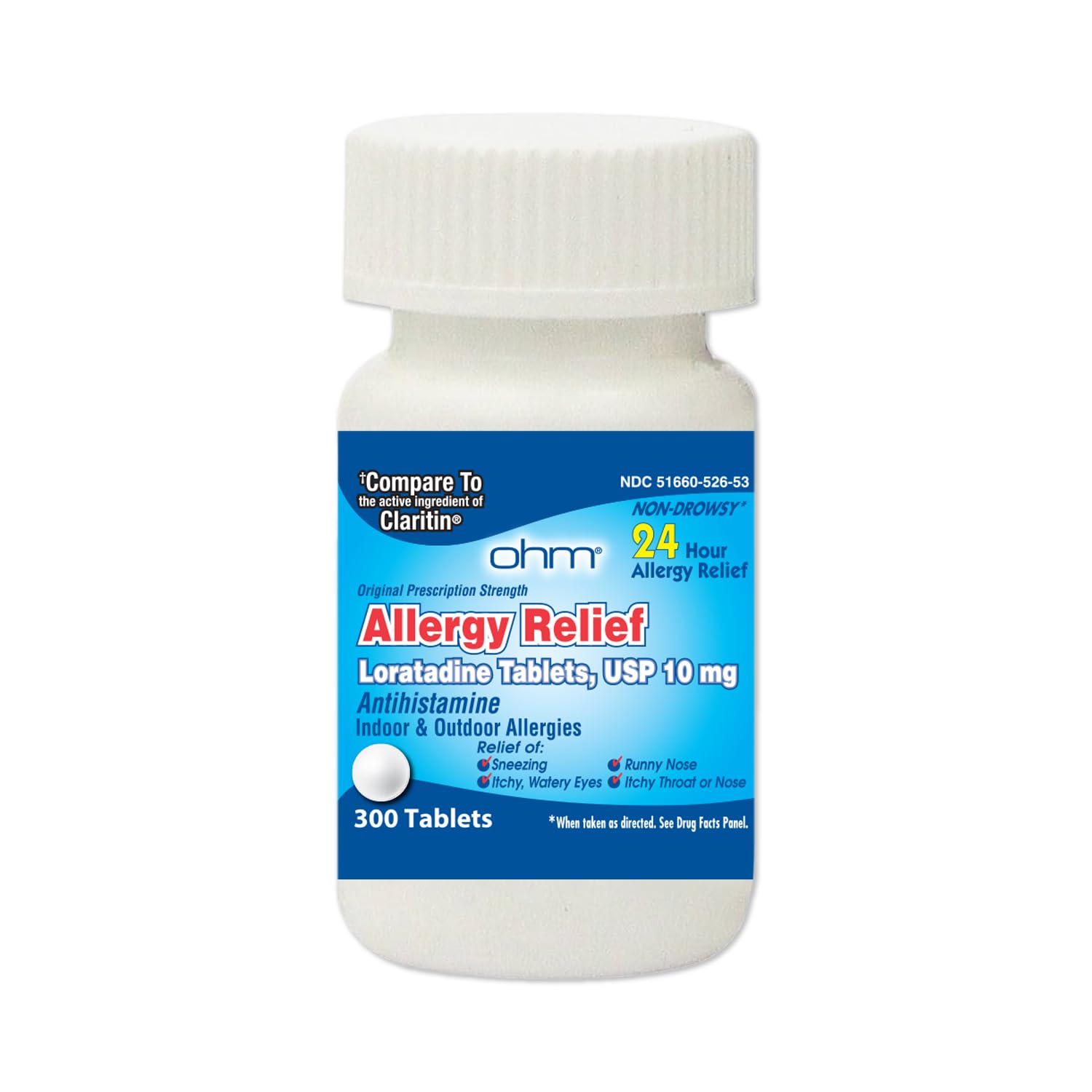
4. Ohm 24 Hour Loratadine Allergy Relief Tablets 10mg 300 Count
The loratadine route, framed by the label itself as non-drowsy and built for daily control.
Loratadine is a different antihistamine from cetirizine, and the difference is the reason this bottle belongs on the list. The product is explicitly formulated to be non-drowsy, which is the exact concern that makes cetirizine a question mark for some people. You take one 10 mg tablet daily, it is labeled for adults and children 6 years and over, and the maker states it holds for 24 hours. It relieves runny nose, sneezing, and itchy watery eyes from both indoor triggers like pet dander and outdoor ones like grass and tree pollen.
One 10 mg tablet every 24 hours makes this a daily maintenance pill rather than something you take after symptoms flare. One recurring note is about timing — a person who takes it every night described it controlling allergies for a full 24 hours, while a dissenting voice felt the effect peaked a few hours after the dose and did not stretch the whole day. Your own response is the only way to know which camp you land in.
The non-drowsy label holds only at the labeled dose: the bottle warns that exceeding one tablet in 24 hours may cause drowsiness. Stick to one tablet in 24 hours. If you are the kind of person who wants a tablet that lets you step down on a mild day, the 5 mg Zyrtec bottle offers that flexibility and this one does not. But if you want a single fixed daily pill and a large supply, this covers the ground cleanly.
Why the bottle earns its place
- Formulated to be non-drowsy, which sidesteps the biggest cetirizine concern
- 300 tablets at 10 mg each, labeled for once-daily use
- Covers sneezing, runny nose, and itchy watery eyes from indoor and outdoor triggers
Read before you dose
- The label warns that exceeding the recommended amount may cause drowsiness
- Fixed 10 mg strength with no lower-dose option
- Some users find the effect peaks mid-day rather than holding a full 24 hours
Pick this when: cetirizine leaves you foggy and you want a labeled non-drowsy once-daily tablet in a large supply.
Think twice if: you want adjustable dosing — this tablet is one strength and one schedule, no splitting guidance offered.
5. Zyrtec 24-Hour Allergy Relief Tablets 5 mg 35 ct
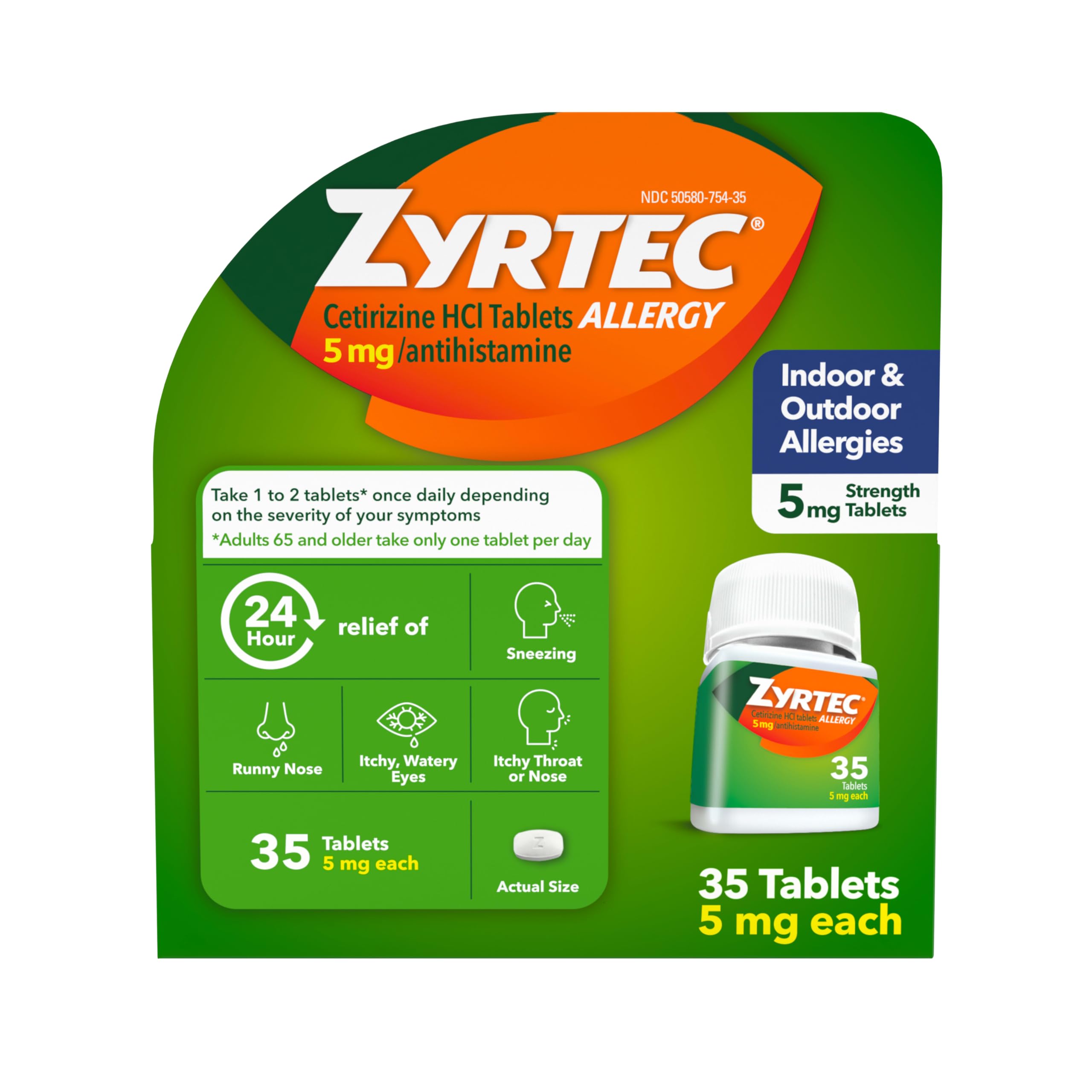
Half-strength cetirizine you can double on a bad day and keep at one on a mild one.
Most antihistamines give you one strength and no choices. This bottle gives you a dial. Each tablet is 5 mg of cetirizine HCl, and the label sets out two paths: one tablet for mild allergy days, two tablets for more severe ones, all on a once-daily schedule. For someone whose eye doctor wants the lowest effective dose on a drying medication, that flexibility is the whole reason to pick this bottle over the 10 mg versions above. It is labeled for ages 6 and up.
The 35-count bottle is the smallest of the oral options here, at 1.13 ounces, and the format is built for portability — the maker describes it as fitting purses, backpacks, and medicine cabinets. The trigger list is broad: dust, mold, and pet dander indoors, plus tree pollen, weeds, and grasses outdoors. It relieves the standard roster of runny nose, sneezing, itchy watery eyes, and itching of the nose or throat.
The reviews split on exactly the thing that makes it special. People who love the 5 mg dose appreciate the gentleness, while others find it inadequate and want the full 10 mg. The 5 mg tablet simply suits lighter responders, while people used to a full 10 mg cetirizine find it too weak. The other thing that comes up is drowsiness — one reviewer notes it “will make you drowsy and dried out your sinuses,” which is the same cetirizine warning that applies across the family. For glaucoma specifically, that drying note is the one to raise with your eye care professional before you settle in. If you already know 10 mg is your level, the 75-count bottle is the more economical path to the same ingredient.
The dosing dial: 5 mg per tablet means one for mild days and two for worse ones, keeping the schedule once daily without breaking pills in half.
The honest limit: 35 tablets is a short runway for a daily habit, and the 5 mg strength will feel too light if you are used to a full 10 mg cetirizine.
Matches you best when: you want the lowest cetirizine dose that works, with room to raise it on a rough day.
Better to choose another: if a daily supply matters more than dosing flexibility — the 365-count bottle is the opposite end of that trade.
Know the Specs
Active Ingredient and Strength
The active ingredient is the medicine doing the work, and the milligram number beside it is how much of that medicine sits in each tablet or drop. Cetirizine and loratadine are oral ingredients commonly found at 10 mg, while this Zyrtec line also offers a 5 mg tablet for lower-dose days. Olopatadine is the eye-drop ingredient and appears here at 0.2%. Reading the active ingredient first tells you what you are actually taking, regardless of the brand printed above it.
Once-Daily Dosing and Duration
Duration is how long a dose is expected to hold. These oral products are labeled around 24 hours, which is why one tablet a day is the standard instructions. The eye drop is different — the maker states it starts in minutes and relieves itch for up to 16 hours from a once-daily application. Duration matters because it sets your routine: a 24-hour tablet is a morning habit, while a 16-hour drop may leave a window you want to plan around.
Drowsiness and Dryness
Drowsiness is the most talked-about side effect across oral antihistamines, and cetirizine is the ingredient where it shows up most in feedback. Loratadine is labeled non-drowsy, though its own label warns that exceeding the dose may cause drowsiness. Dryness is the second consideration, and it matters more when you have glaucoma because dry eyes can affect comfort and clarity. A topical eye drop is the option that keeps the medicine local to the eye rather than circulating through you.
Count, Size, and Portability
The tablet count on the bottle tells you how long the supply lasts at one a day, and it ranges widely here — from 35 tablets up to 365. Bottle weight and dimensions hint at portability: the 35-count bottle is built to slip into a purse, while the 365-count bottle is a cabinet fixture. The eye drop bottle is the smallest of all at 0.12 fluid ounces, so it travels easily but empties faster than a tablet supply. Match the count to if you want a travel companion or a year-long supply.
Common Questions
Are oral antihistamines safe if I have glaucoma?
Is a cetirizine tablet or an olopatadine eye drop better for itchy eyes?
Does Zyrtec make you drowsy?
What is the difference between cetirizine and loratadine?
Can I split a 10 mg cetirizine tablet to get a 5 mg dose?
How long does one bottle of allergy tablets last?
Are these allergy tablets suitable for children?
Can I use allergy eye drops while wearing contact lenses?
Will these antihistamines help with indoor allergies like dust and pet dander?
Is the 5 mg Zyrtec strong enough compared with the 10 mg version?
The Bottom Line
For most people working around glaucoma, the safest shape of a plan is a once-daily oral tablet your eye doctor has approved, backed by a targeted drop for the days your eyes itch. On that plan, the Zyrtec 24-Hour 10 mg Tablets are the strongest single pick — the most recognized cetirizine, a stated hour-1 start, and a full symptom list in one small tablet. If you want to keep a whole year in the cabinet and stop repurchasing, the GoodSense 365 Count covers a daily habit with the same active ingredient. And if the itch is the main event, the Bausch+Lomb Advanced Eye Relief drops put the medicine where the problem is and leave the rest of your body out of it.
Nothing here replaces a conversation with your eye care professional about which active ingredient your glaucoma can tolerate. Bring the label, name the ingredient, and let them make the call. Naming the active ingredient to your eye doctor is the step that decides whether any of these five picks is right for you.
How we choose
We do not accept paid placement. Every pick is matched to a real buyer and a real use-case; we do not hands-on test units.
Sources
Specifications: manufacturer listings and product documentation. Review insights: verified customer reviews, as of October 2026. Pricing: not shown on this page (it changes often); check the current price via the retailer link.
As an Amazon Associate, Aappliancez earns from qualifying purchases. This does not affect which products we feature.