Disclosure: Some links in this post are affiliate links. As an Amazon Associate I earn from qualifying purchases, at no extra cost to you. Learn more
Specs are compiled from manufacturer listings and verified buyer reviews and can change over time — please confirm the key details on the product page before buying.
If you want the short answer: the pick most people should start with is the Antiseptic Powder 4oz 114g, because it is the highest-rated option here and a single jar lasts through a whole season of scrapes. A powder antibiotic does one job that ointments cannot — it dries the wound surface instead of sealing it under a wet film, so a bandage stays put and a scab forms instead of a soggy mess. This guide covers four real options, what each one is actually good at, and which one fits your first aid drawer.
This guide is built by comparing the manufacturers’ published specifications and the patterns across verified customer reviews, so you get each pick’s real strengths and trade-offs instead of marketing spin.
Some wounds want a dry powder and some want a protective ointment, so the right pick depends on the injury and where you keep your kit. Below you will find the antibiotic powder for wounds picks worth your shelf space.
Top Picks

How To Choose The Best Antibiotic Powder for Wounds
Start with the wound, not the product. A powder is the better shape of first aid for a scrape that is oozing, a shaving nick, or a pet’s torn skin, because it pulls moisture off the surface instead of trapping it. An ointment is the better shape for a dry crack or a burn that needs a moist barrier. Know which one you are dealing with before you buy anything.
Powder, ointment, or both
The whole reason to pick a powder is the dry finish. It lets a bandage sit flat against the skin without sliding off, and it lets a scab form without staying soft and weepy. A triple-antibiotic ointment does the opposite — it keeps the surface coated and moist. Plenty of households keep one of each and choose by the injury, which is why the 60-count packet box earns a place on this list even though it is an ointment.
Read the ingredient panel
Powdered first aid products are built on different actives. Some use sulfur along with bacitracin zinc and polymyxin B sulfate. Others are a plain antiseptic powder. Neither is automatically better — but you should know which you are putting on your skin. If someone in your house has reacted to a specific ingredient before, check the label first, and ask a pharmacist if you are unsure.
Match the container to where you keep it
A shaker jar lives in the medicine cabinet. A bottle lives in the workshop or the barn. Individual foil packets live in the glovebox, the diaper bag, and the go-bag, because they cannot spill and they never dry out. Think about the three places you actually get hurt, and buy the container that survives those places.
Topical means topical
Every product here is for minor surface wounds — small cuts, scrapes, and burns. None of them is a substitute for medical care. A deep puncture, a wound that will not stop bleeding, spreading redness, or a cut that looks infected needs a doctor, not a powder. Use these for the everyday stuff and see a professional for anything that worries you.
Side-by-Side Comparison
| Model | Best For | Form | Container | Net Weight | Amazon |
|---|---|---|---|---|---|
| Antiseptic Powder 4oz 114g★ Best Overall | Everyday household first aid | Antiseptic powder | Jar | 4 ounces (114 g) | Amazon |
| POLVOS DE SULPHA Antibiotic Powder 7.5g 2-Pack | Travel and emergency kits | Medicated sulfa powder | 2 single packs | 1.45 ounces (packaged) | Amazon |
| First Aid Only 12-700 Triple Antibiotic Packets, 60 Count | Refilling kits and go-bags | Triple antibiotic ointment | 60 single-dose packets | 1.31 ounces | Amazon |
| 2 X Banocin Antibiotic Powder | Home and pet wound care | Antibiotic powder | Bottle | 10 g | Amazon |
Detailed Reviews
1. Antiseptic Powder 4oz 114g
Our pick — over 4.5★ from 800+ verified ratings; the strongest balance of quality and price.
The four-ounce jar that keeps a whole household stocked for a long stretch
Four ounces is a lot of powder. Measured against the 1.31-ounce First Aid Only box here, this jar holds far more product in one container, and that gap is the entire reason it lands first. You buy it once, it sits in the cabinet, and you are not re-ordering every few weeks.
It is a straight antiseptic powder, not a triple-antibiotic blend, so the job is simple — dry the surface and keep the area clean. What wins people over is that it does exactly what the jar says, and it holds up for routine daily use rather than being a one-injury specialty item.
Buyers describe the scent as light and clean rather than sharp — “the fragrance is light and clean with a typical antiseptic smell,” one review sums it up, noting it fades quickly instead of lingering. That matters if you are treating a child’s knee or a pet’s paw, because a powder you dread smelling is a powder you stop reaching for. The honest catch: because this is an antiseptic rather than an antibiotic blend, it is a general-purpose dry dressing, not a targeted antibiotic formula. If you specifically want a medicated antibiotic powder, look at the sulfa option below.
What It Gets Right
- 4 ounces in one jar goes a long way for household first aid
- Fine consistency shakes out evenly for a clean, even dusting
- Mild, fast-fading scent makes it easy to reach for daily
Where It Falls Short
- It is an antiseptic powder, not a medicated antibiotic blend
- An open jar is less portable than sealed single-dose packs
Reach for this if: you want one dependable jar in the bathroom cabinet for everyday scrapes, nicks, and grazes.
Look elsewhere if: you need a powder that packs flat in a hiking pouch or diaper bag — the sealed single packs travel better.
2. POLVOS DE SULPHA Antibiotic Powder 7.5g 2-Pack
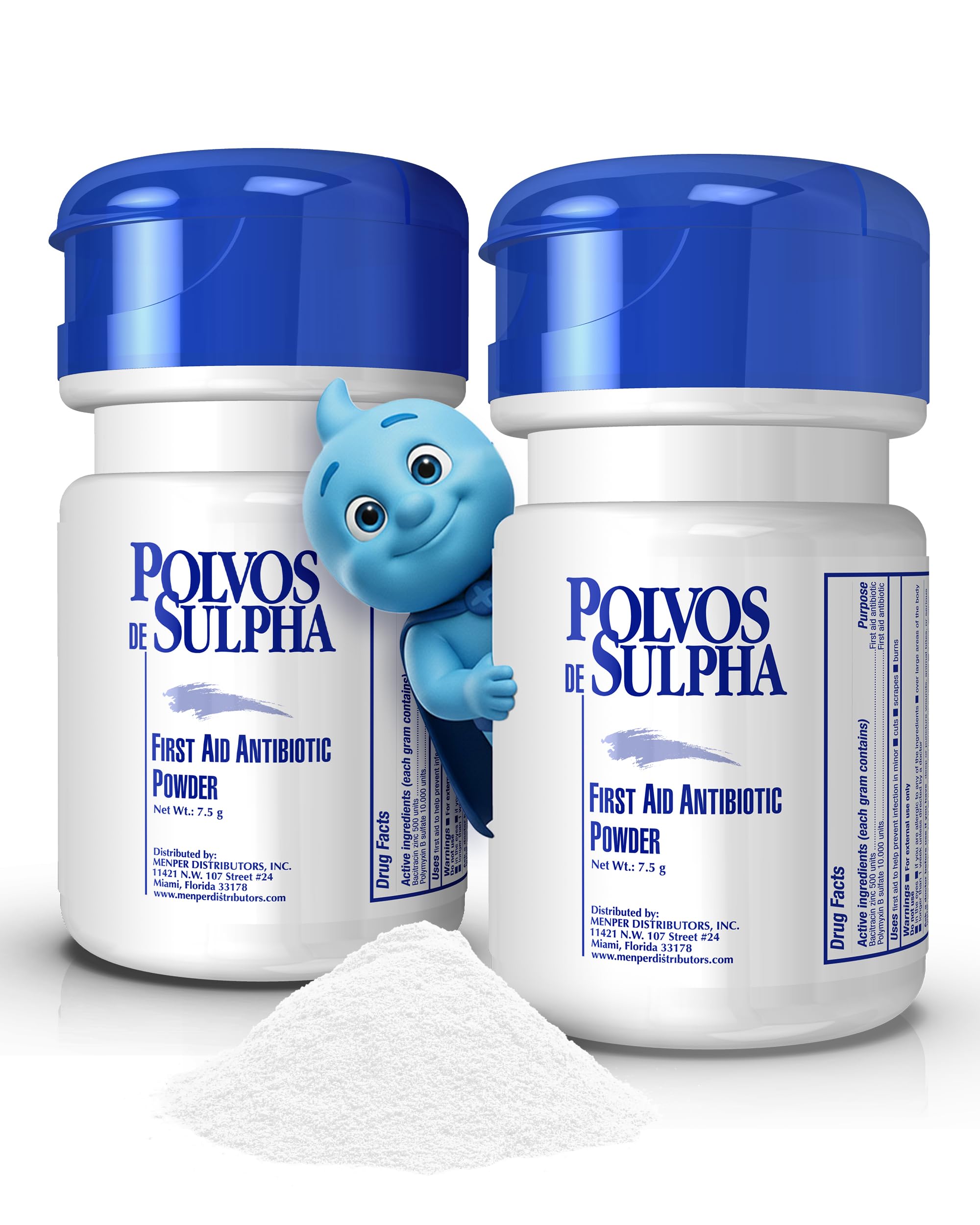
The two-pack that disappears into a first aid pouch without taking up space
This is the medicated option of the group — sulfur powder alongside bacitracin zinc and polymyxin B sulfate, three ingredients long used in topical first aid. That is a different job from the plain antiseptic jar above. You are getting a formula built specifically for minor cuts, scrapes, and burns rather than a general drying powder.
The application is where it separates itself from ointments. It goes on as a fine dust with no greasy film, so you cover the area with minimal touching of the wound, and the bandage stays dry enough to actually stay on. The review pages describe it doing real work — buyers report that it dries blood, forms a protective barrier on small cuts, and wears off over days of bathing instead of needing to be scrubbed.
The trade-off is size for the money. Two 7.5 g packs are compact, which is exactly the point for a glovebox or a hiking pack, but the value question is genuinely split — some buyers call it a fair deal while others find it small for what it costs. At 1.45 ounces packaged, know that you are buying convenience and a specific formula, not bulk. The 4-ounce jar is the better value play if volume is what you want.
Best suited to: anyone building a car kit, a tackle box, or an outdoor first aid pouch who wants a sealed antibiotic powder that cannot spill.
The honest caveat: the packs are small and the value verdict is mixed, so treat this as a portable formula pick rather than a stock-up buy.
Worth it when: portability and a sealed, sulfur-based antibiotic formula matter more to you than getting the most grams per purchase.
Skip the 2-pack if: you are stocking a home cabinet and want one big container — a bulk jar will stretch further.
3. First Aid Only 12-700 Triple Antibiotic Ointment Packets 60 Count
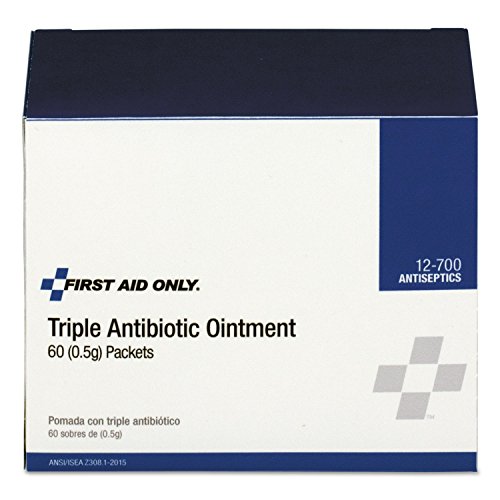
Sixty single-dose packs that turn any bag into a stocked first aid kit
You get 60 individual packets here, which is a fundamentally different buy from a single jar. Compare the count directly: 60 individually wrapped antibiotic doses versus the single 10 g bottle below, and the point is obvious — this is the refill box, not the everyday-use pick. Each packet is one clean application with nothing to re-seal, nothing to contaminate, and nothing to dry out.
It is a triple antibiotic ointment rather than a powder, so it does the opposite job — it keeps the surface coated and moist, which is exactly what you want on a dry crack or something heading under a bandage for a long stretch. The quality here is what earns the most praise from owners, and people consistently describe the quantity and easy single-dose format as the reason it goes into everything from a go-bag to a car kit to a diaper bag.
Unlike the powder picks above, though, an ointment keeps the wound surface wet, and some people prefer a dry finish — if scab formation is what you want, the powders are the better shape.
Why It Belongs in a Kit
- 60 single-dose packets refill multiple kits at once
- Nothing to re-seal — grab one, apply, done
- Stays put in a glovebox, purse, or diaper bag
What to Know First
- It is an ointment, so it keeps the wound surface wet rather than drying it
- Not a powder — a different tool from everything else on this list
Buy this if: you are building or restocking multiple first aid kits and want one box to cover all of them.
Hold off if: you specifically want a drying powder finish for oozing scrapes — this goes the opposite direction.
4. 2 X Banocin Antibiotic Powder – Infected Cuts Wounds T

A no-sting powder people reach for on animals as often as on themselves
Two 10 g bottles of poured powder, which makes this the one you keep on a shelf and shake out by feel. The review pages describe it working well where you would least expect — owners mention that it stops bleeding fast, does not sting, and dries cat skin sores without a bandage on top.
That last detail is the real selling point: a powder antibiotic instead of a gooey mess, one buyer puts it, noting it does the job without putting a band-aid over it. That is why reviewers call it the go-to powder for scabs, skin irritations, and everyday infected cuts. It is not marketed as strictly a human product, which is also why pet owners keep it around.
The catch is real and worth knowing before you buy. It is a colored powder, and one review notes the yellow dye oxidizes orange and stains white fur — worth flagging if your pet has a light coat. It is also a smaller bottle than the 4-ounce jar above, so if you need a large household supply, that is the volume pick. This one is about the no-sting feel and the multi-purpose use, not about sheer quantity.
What makes it stand out: the formula is used on people and animals alike,.
Worth noting: the yellow-orange dye can stain light-colored fur, so position it carefully on pets with white coats.
Grab it if: you want a no-sting powder that works on human cuts and animal skin problems from one bottle.
Think twice if: you need enough powder to last a large household — the 4-ounce jar stretches further.
Know the Specs
Powder vs Ointment Form
The form of the product decides how it behaves on skin. A powder dries the surface, which is the right move for an oozing scrape or a shaving nick — the wound forms a scab and the bandage stays put. An ointment like the First Aid Only packets keeps the surface moist, which suits a dry crack, a burn, or a wound that will sit under a dressing for hours. Neither is better in the abstract; match the form to the injury.
Container and Application
Where you keep the product decides which container works. A shaker jar is fine on a bathroom shelf but will clump and spill in a backpack. A sealed single-dose packet goes anywhere and stays sterile until you open it. A bottle lives in a workshop or a tack room and gets poured rather than dusted. Count what you actually need — 60 packets refill several kits, while one jar covers one household.
Common Questions
What is an antibiotic wound powder and how is it different from an ointment?
Can I use antibiotic powder on my pet’s wounds?
Is a powder better than a cream for an oozing scrape?
How much powder goes on a small cut?
Does an antibiotic powder sting when you apply it?
How long does a 4-ounce jar of wound powder last?
Can I put antibiotic powder under a bandaid?
Is sulfa powder the same as triple antibiotic ointment?
Should I keep a powder and an ointment in my first aid kit?
When should I see a doctor instead of using wound powder at home?
The Bottom Line
If you want one pick and want it settled, the Antiseptic Powder 4oz 114g is the one to put in the cabinet — the highest-rated pick here at 4.7 stars across 800+ ratings, and its four-ounce jar covers a household for months. If portability is what you need, the POLVOS DE SULPHA 7.5 g 2-Pack travels without spilling. And if you are stocking kits for a car, a purse, or a go-bag, the First Aid Only 60-count packets refill them all from one box. Whichever you pick, keep it for minor wounds and see a doctor for anything serious.
How we choose
We do not accept paid placement. Every pick is matched to a real buyer and a real use-case; we do not hands-on test units.
Sources
Specifications: manufacturer listings and product documentation. Review insights: verified customer reviews, as of October 2026. Pricing: not shown on this page (it changes often); check the current price via the retailer link.
As an Amazon Associate, Aappliancez earns from qualifying purchases. This does not affect which products we feature.