Disclosure: Some links in this post are affiliate links. As an Amazon Associate I earn from qualifying purchases, at no extra cost to you. Learn more
Specs are compiled from manufacturer listings and verified buyer reviews and can change over time — please confirm the key details on the product page before buying.
If your bathroom, kitchen, or patio tiles turn into an ice rink the second they get wet, the fix is simpler than ripping out the floor. An anti-slip coating for tiles chemically or physically changes the surface so wet feet grip instead of slide. The trick is matching the type to your tile: a penetrating treatment that micro-etches ceramic does nothing on polished marble, and a topical coating that grips marble is wasted on unsealed ceramic. Below you’ll find seven real options sorted by what they actually do well, so you can match the product to your tile material and coverage needs.
This guide is built by comparing the manufacturers’ published specifications and the patterns across verified customer reviews, so you get each pick’s real strengths and trade-offs instead of marketing spin.
You’ll see the difference between penetrating treatments that micro-etch the tile and topical coatings that add a textured layer on top, plus the coverage math that decides how many bottles you need. By the end you’ll know which anti-slip coating for tiles fits your surface and your budget.
Top Picks

How To Choose The Best Anti-Slip Coating for Tiles
Two products on this list can look identical in a bottle and behave completely differently under your feet. One soaks into the tile and micro-etches it; the other sits on top and adds a gritty layer. Which camp a product belongs to decides how it feels underfoot, how long it lasts, and which tiles it can safely touch.
Penetrating treatment versus topical coating
A penetrating treatment (sometimes called a micro-etch) reacts with the tile surface itself to create tiny roughness you can’t see. It leaves no film, so the tile keeps its exact look. A topical coating does the opposite — it builds a textured layer on top of the tile, which you can often feel as a fine sandpaper-like grit. Coatings tend to feel grippier underfoot but can peel or wear in high-traffic spots; penetrating treatments vanish into the tile but depend entirely on the tile being unsealed and absorbent.
Match the product to your tile material
Ceramic, porcelain, quarry, slate, and unsealed concrete all accept penetrating treatments well. Polished marble, sealed stone, glazed tiles, vinyl, laminate, and painted surfaces usually reject them. If your floor is glossy and sealed, a topical coating is often the only route — and if it’s polished marble, check the manufacturer’s list of approved surfaces before you buy anything at all.
Read the coverage number before you order
Coverage is quoted in square feet per bottle, and it varies hugely across this list — from a few dozen square feet up to several hundred. Measure your floor area first, then divide by the stated coverage. A single bathroom floor is usually one bottle; a whole ground floor or a commercial space can swallow several. Buying short leaves high-traffic zones untreated, and those bare patches are exactly where slip risk lingers.
Plan for reapplication
Nothing here is permanent. Penetrating treatments typically fade over months to a couple of years depending on traffic and what you clean with; coatings wear at the edges and in the busiest walk zones first. Factor the reapply cycle into your choice — a bigger bottle that covers more area per dollar often wins over a small one you’ll rebuy twice.
Side-by-Side Comparison
| Model | Best For | Coverage | Form | Indoor / Outdoor | Amazon |
|---|---|---|---|---|---|
| Miracle Sealants 511 Anti-Slip Floor Treatment★ Best Overall | Broad tile and stone floors | Up to 750 sq ft per quart | Liquid | Indoor and outdoor | Amazon |
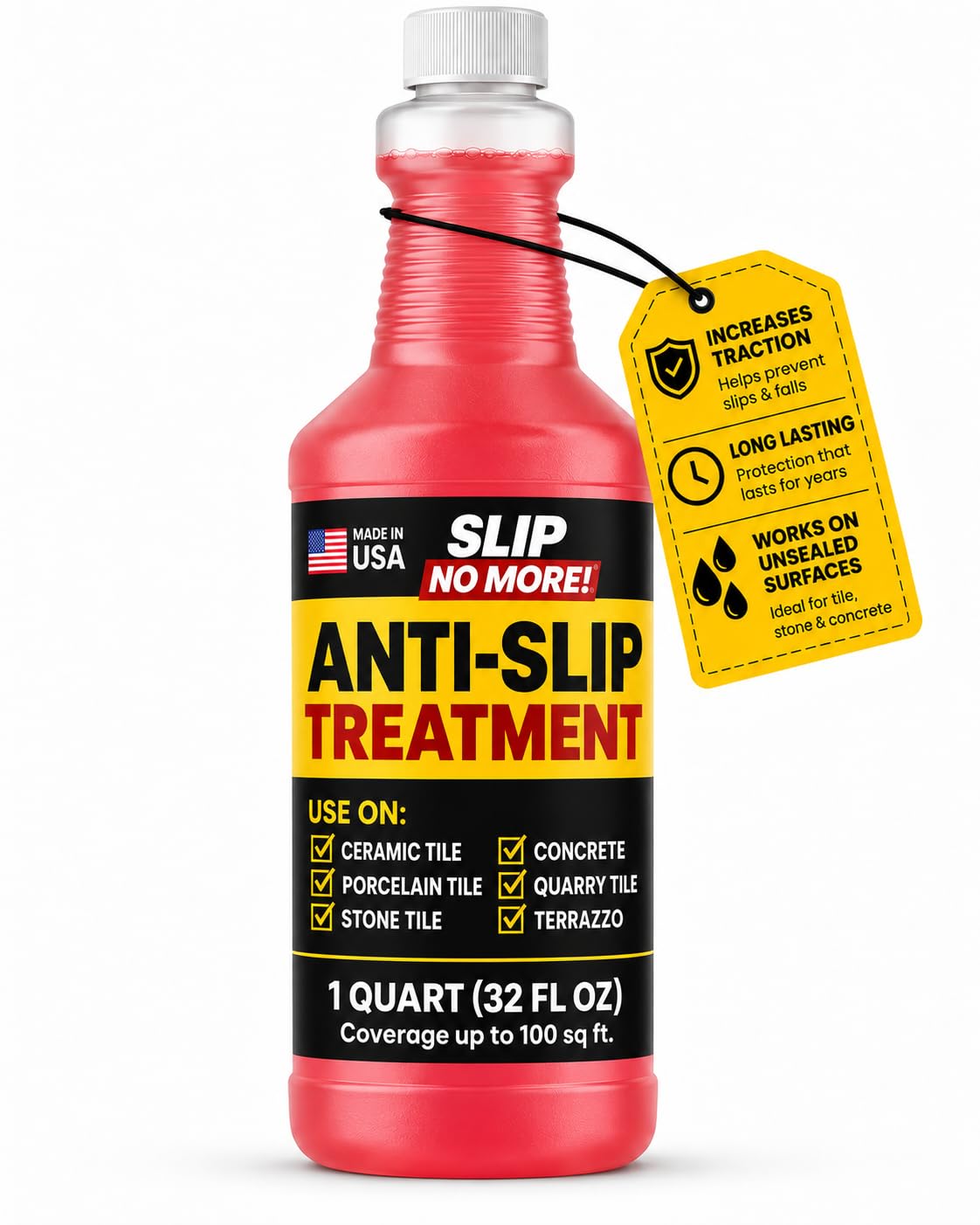
| Anti Slip Tile Treatment (Quart)Best for Wet Zones | High-risk wet zones and ramps | Up to 100 sq ft per quart | Liquid | Indoor and outdoor | Amazon |
| SlipDoctors Bathtub & Shower Kit | Tubs and tiled showers | One standard tub or shower per 1 oz bottle | Spray | Indoor | Amazon |
| Tub Grip Anti-Slip Bath & Shower Coating (2 Bottles) | Fiberglass and acrylic tubs | Two-bottle pack for tubs and showers | Liquid | Indoor | Amazon |
| Trip Guard Clear Textured Anti Slip Floor Coating | Steps, decks, and pool surrounds | 75–100 sq ft | Liquid | Indoor and outdoor | Amazon |
| SlipDoctors Anti-Slip Spray | Small and irregular wet surfaces | — | Epoxy aerosol | Indoor and outdoor | Amazon |
| Super Safe Grip Anti-Slip Floor Treatment | Large open tiled and concrete floors | 400 sq ft per gallon | Liquid | Indoor and outdoor | Amazon |
Detailed Reviews
1. Miracle Sealants 511 Anti-Slip Floor Treatment
Our pick — 4.0+★ from 550+ verified ratings; the strongest balance of quality and price.
The one-quart fix that makes a whole floor grip — wet or dry.
Start with the number that decides the purchase: one quart of this clear liquid treats up to 750 square feet. That is the widest stated coverage on this list, so a single bottle handles a large bathroom, a kitchen, and a hallway without a second order. It goes on as a liquid and dries clear, which is why it suits granite, travertine, ceramic, marble, natural stone, grout, limestone, and concrete — and stays put outdoors too, since the formula resists weather and staining. It is also cleared for use around food areas, so kitchen floors are fair game.
What wins people over is simply how well it works. Owners describe a bathroom floor that had become a genuine hazard turning completely non-slippery. One reviewer noted that after a coat applied years ago, the floor is still staying strong — cheaper and easier than a retile, they said. A separate owner story on a tattoo shop floor is just as telling. Three bottles went down across 1600 square feet of marble, and the result was excellent grip that stayed non-sticky with a matte finish, applied by simple roll-on and wiped clean, ready the next day.
The catch is durability on the busiest patches. A handful of owners found it wearing off after about two weeks in high-traffic areas like a main kitchen passage, and one owner called the odor strong enough to need good ventilation. Size that honestly: most people on this page got months or years of grip, so the two-week fade is the exception rather than the rule — but if your floor sees heavy foot traffic, expect to top up the worn zones. Also keep in mind this is a coating, not an acid etch, so it won’t rescue glossy polished marble or a heavily sealed tile that has no texture to grip.
Where It Wins
- Up to 750 sq ft per quart — the largest stated coverage here, beating the quart-size Anti Slip Tile Treatment at 100 sq ft
- Dries clear with no film, so patterned tiles keep their look
- Approved for a wide surface list and safe around food areas
- One applicator reported grip still holding years after the first coat
Where It Struggles
- High-traffic zones can wear back after roughly two weeks
- Strong smell during application needs ventilation
- Not a substitute for acid etching on polished or sealed stone
Reach for this if: your tile is unsealed ceramic, porcelain, or natural stone and you want the most floor per bottle.
Look elsewhere if: your floor is polished marble or heavy sealed stone, where it has nothing to bite into.
2. Anti Slip Tile Treatment (Quart) Non-Slip Floor Treatment
Bathroom, balcony, pool deck — this one is built for floors that live wet.
If your worry list includes a bathroom floor, an outdoor patio, a balcony, a kitchen surface, a pool deck, or a staircase, this quart was designed with those exact spots in mind. It handles ceramic and porcelain tiles, terrazzo, quarry, slate, brick, travertine, and unsealed concrete, plus marble and granite. The standout number is speed: the treatment completes in four to 14 minutes, and once neutralized and rinsed the floor is ready to use right away. As the manufacturer puts it, “In just four to 14 minutes, the treatment is complete, and once neutralized and rinsed, your floor is ready for use.”
It also carries formal testing behind it, exceeding requirements of ANSI A326.3, ANSI/NFSI B101.3, ANSI A137.1, and applicable ADA accessibility standards — that is the standards triangle specifically written around wet-floor slip resistance. Owners confirm the practical side: on porch tile it applied with no fumes, was immediately less slick when wet, and left no gritty or tacky feel. On shower floors, the texture is described as barely noticeable on the surface, invisible to look at, but noticeably grippier underfoot — ideal for a senior-at-home setup. A commercial pizza shop used it on porcelain floors and reported the dishwashing area staying safe with no reapplication needed yet.
The honest trade-off is lifespan under harsh cleaning. It fades after months of Lysol-style cleaning, and the manufacturer itself suggests you may need to reapply twice yearly. Coverage is also tighter than the top pick: one quart treats up to 100 square feet, while a gallon covers up to 400 — so a large floor needs more than one bottle. It’s also off-limits on highly polished tiles, wood, glass, metal, painted surfaces, and vinyl, VCT, or laminate.
Coverage reality check: at up to 100 square feet per quart, this bottle handles a single bathroom or a modest porch, not a whole ground floor — the Miracle Sealants quart claims up to 750 square feet, so plan your quantity accordingly.
Where it earns its keep: nothing else here states a four-to-14-minute completion window with a ready-to-use floor immediately after rinsing.
The short verdict: the fast, fume-free option for a bathroom, shower surround, or patio tiled in ceramic, porcelain, or natural stone.
Give it a miss if: your tiles are highly polished or you’re treating wood, glass, metal, vinyl, VCT, or laminate.
3. SlipDoctors Bathtub & Shower Kit
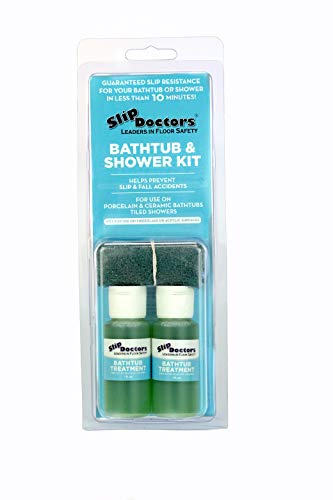
Ten minutes from slippery tub to barefoot-safe, with no drying wait at all.
For a single bathtub or tiled shower, the kit format is what makes this one easy to recommend. It arrives with everything for the job: an applicator, a glove, and two 1 oz bottles of treatment, and each bottle covers one standard-size bathtub or shower. There is no dry time — the kit takes 10 minutes to apply and your tub is usable immediately afterward. During treatment, micro-treads are created on the surface that add grip without changing the tub’s look, and the formula cleans up with a general household cleaner and a soft bristle brush afterward.
Owners describe the process in almost identical beats: scrub the tub with Bar Keepers Friend, rinse, dry, cover the drain, sponge on one bottle in about six minutes, then rinse. What’s left is an invisible, rubberized no-slip finish rather than an abrasive pad — and the second bottle stays aside for the next round. The kit works where bath mats fail, specifically on small tiles, and one owner who treated a refurbished glossy tub noted the result was subtle: it stripped the gloss to a matte finish for better grip without looking applied.
Two things to plan around. First, this is for ceramic and porcelain only — it is explicitly not for fiberglass or acrylic tubs, so check your tub material before buying. Second, the lifespan claim of “years” has been tested by owners at closer to nine months between applications on a tiled shower, so treat a yearly top-up as realistic. The recurring positive is that it does not leave a gritty or tacky feel, which is exactly what you want under bare feet in the shower.
Why It Works for Bathrooms
- No dry time — tub is ready to use right after the 10-minute application
- Creates invisible micro-treads rather than a gritty surface
- Two bottles included, one per standard tub or shower
- Cleans with a standard household cleaner and a soft brush
Before You Buy
- Not for fiberglass or acrylic tubs — ceramic and porcelain only
- Real-world longevity landed nearer nine months than “years”
- Thorough pre-cleaning is essential for the treatment to bond
Best matched to: a ceramic or porcelain tub or tiled shower where you want usable-immediately grip for bare feet.
Rule it out if: your tub is fiberglass or acrylic, or you want a permanent one-and-done fix.
4. Tub Grip Anti-Slip Bath & Shower Coating (2 Bottles)

The one that takes on fiberglass and acrylic when most treatments won’t.
Here’s the gap this product fills: the SlipDoctors tub kit above explicitly rules out fiberglass and acrylic, but Tub Grip specifies those materials alongside ceramic and porcelain. If your slippery tub or shower base is fiberglass or acrylic, this is the pick built for it. The coating is applied with the included roller to create an anti-skid surface that works in both wet and dry conditions, and it ships as a two-bottle pack suited to larger or multiple tubs and shower floors.
Owners back the concept with real numbers. One rolled it onto a large ADA roll-in shower with the tiny roller — two coats, ten minutes total — and got a clear, satin-sheen finish with a sandy texture described as grippy but not scratchy, drying fast with a little solvent smell and barely visible afterward. Another replaced a five-year-old safety tape strip and reported the grip was excellent and not gritty, feeling like a new surface. A third had tried eight different mats on a textured shower basin before this, used less than one bottle on a four-by-six shower, and got a light, soft sandy feel that held up for nine months with no color change on a white basin.
The honest catch is durability and repeat cost. The manufacturer states grip holds up to two years before reapplication and backs properly installed products with a two-year warranty, but owner experience is splintered on value: one long-term user found it wearing and dirty after two years, removed and reapplied it, then decided it was too expensive for that lifespan. Others note the surfaced texture does eventually matter if it peels in a high-wear spot. Applied well to a clean, scuffed surface, though, this is the most fiberglass-friendly option on the list.
The material open up: fiberglass, acrylic, ceramic, and porcelain are all listed as compatible, so it covers the tub types the ceramic-only kit cannot touch.
Prepare properly: owners who got the best results scuffed the surface with 220-grit, degreased with alcohol, then applied two coats — the prep is what holds the grip in place.
Made for: fiberglass and acrylic tubs and shower bases where other treatments are off-limits.
Plan on replacing it: a full two-year life is the best case — high-traffic tubs may need redoing sooner.
5. Trip Guard Clear Anti Slip Floor Coating

One clear coat that grips and seals the surface at the same time.
Most products here do one job. Trip Guard does two: this clear liquid is both an anti-slip coating and a sealer, and it covers concrete, brick, masonry, porcelain, metal, fiberglass, acrylic, tile, stone, pavement, and painted surfaces. It rolls on with a foam roller, dries in two hours with low odor, and the 32 oz quart covers up to 75 to 100 square feet. Indoors or outdoors, it’s designed for steps, walkways, patios, pool decks, laundry rooms, garages, commercial kitchens, gyms, and any other spot where water meets flooring.
It also comes with real standards language: the maker cites ANSI A137.1, the product standard that sets a 0.42 DCOF requirement for ceramic tile; ANSI A326.3, the broader DCOF testing standard across hard-surface flooring; and ANSI B101.3, the walkway safety evaluation standard with risk-based action thresholds for wet floors. Coverage in practice matches the label — one owner used about four ounces to cover 16 square feet on a porcelain shower floor, applied in two coats with a four-inch foam roller and an overnight dry between. Another applied it with a brush to a ceramic bathroom floor after a fall and found it easy, slightly visible at first, then fading to invisible while staying non-slip.
The trade-off to know is that it reduces slippage without being a total solution, and a few owners find the per-bottle value steep relative to coverage. It finishes with a low-gloss, fine texture rather than a smooth clear look, so if you want your surface to read as perfectly untouched, expect a slight change in sheen. Still, for outdoor steps and decks where you want sealing and grip from a single product, it’s the most flexible pick here.
The right call for: steps, walkways, decks, and garage or commercial floors that need sealing and non-slip grip in one coat.
Not the one for: anyone wanting a pure invisible finish — the low-gloss textured look is part of the deal.
6. SlipDoctors Anti-Slip Spray
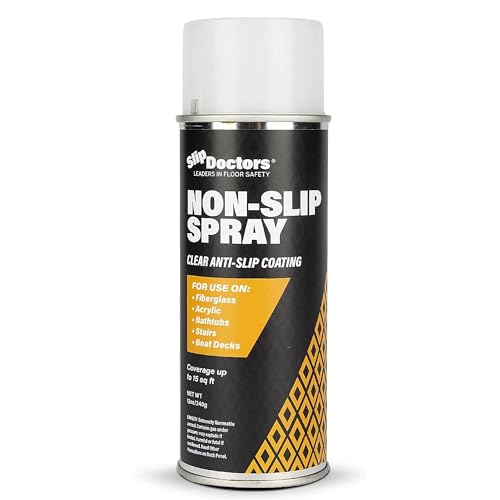
For the small, awkward surfaces a roller and a quart bottle can’t reach.
Not every slippery spot is a floor. This clear epoxy aerosol is aimed at small or irregularly shaped surfaces where a pour-on treatment makes no sense — step treads, corners, curve-edged shower trays, boat decks, and trailer steps. It works on fiberglass, acrylic, prepared wood, concrete, metal, tile, and porcelain or ceramic, for both residential and commercial use. The formula is completely clear, won’t change the look of the surface, and is barefoot friendly, lead-free, and resistant to chemicals, gas, and oil.
What’s reportedly reliable is its function on fiberglass tubs. Owners say it’s easy to spray on and gives a solid non-slip surface, with one reporting it works better than anti-slip strips for the same footprint. It’s described as a fast, no-fuss way to add traction to a specific slippery patch rather than the whole room. For surfaces where a coating needs to cling to a curved or vertical area and won’t sit flat for a brush or roller, a spray gets coverage an ordinary liquid can’t.
The flip side is durability and smell. Owner reports divide on how long it holds — some say it grips well, while a handful note it peeling off within about a week of application. The bigger consistent complaint is odor: it’s the strongest-smelling product on this list, with owner sentiment on the smell landing firmly negative. If you use it, ventilate hard and work in a well-ventilated space. It also ships in an 11 oz can, so for whole-floor coverage a quart or gallon product will go much further.
Where the spray wins: it’s the only aerosol here, which makes it the practical pick for a curved shower tray or a boat step where a roller physically can’t grip.
The airborne tax: epoxy spray means real fumes — plan for ventilation and expect the surface to need touching up sooner than a rolled-on coating.
Choose it for: small, curved, or awkward surfaces — tub edges, step treads, boat and trailer steps.
Think twice if: you’re treating an entire floor, or you don’t have a way to ventilate the room well.
7. Super Safe Grip Anti-Slip Floor Treatment

A full gallon that treats 400 square feet without leaving a visible film.
When the job is a whole ground floor, a commercial restroom, or a large outdoor walkway, this gallon is the coverage play. It covers 400 square feet and leaves no visible coating or film, so tile, stone, and concrete keep their natural look while gaining grip. It’s a penetrating treatment — it works by micro-etching the surface to add traction, not by adding a layer — and it’s effective on ceramic tile, porcelain tile, concrete, and other mineral-based surfaces. Application is DIY-simple: pour, spread, and rinse, no special tools needed, and the treatment works in minutes. It’s unscented, which separates it from the strongly scented picks.
The surface list covers bathrooms, pool decks, kitchens, and entryways, and the maker recommends reapplying every two years for best results. Buyers report it doing exactly its job in the field — one user applied it to ADA-rated porcelain sidewalk tile and travertine shower tile and found both noticeably less slippery when wet while the surface only dulled its sheen slightly. Another treated pool tile and a front walkway and found it made the surface non-slip with an easy application.
The recurring gripe here is residue. It can leave a haze on the surface, and some owners mention areas going slippery again, with cleaning performance getting mixed marks. If you need flawless clarity and easy wipe-down, this needs care during the rinse stage — the finish is only as even as your thoroughness. It’s also not recommended for sealed or polished stone, so check the surface before you commit.
For Big Floors
- 400 square feet from one unscented gallon — the widest coverage on the list
- Leaves no visible film on tile, stone, or concrete
- Pour, spread, rinse — no special tools required
- Works in minutes with a two-year reapply recommendation
Watch Out For
- Can leave a haze if not rinsed thoroughly
- Some spots can regain slipperiness over time
- Not recommended for sealed or polished stone
Best for: large open floors — bathrooms, pool surrounds, patios, and commercial spaces where coverage and an invisible finish matter most.
Do the rinse properly if: you want no haze and even grip across the whole surface.
Know the Specs
Coverage per bottle
This is the number that sets how many units you buy. It’s listed in square feet — the area one bottle will treat. The spread across this list is wide: a quart can claim up to 750 square feet, while another quart is stated at up to 100 square feet, and a gallon covers up to 400. Measure your floor, then divide. Buying short leaves high-traffic zones untreated, and that uneven coverage is exactly where slip risk lingers.
DCOF and wet-floor slip ratings
DCOF stands for Dynamic Coefficient of Friction — a measured number describing how much a tile resists a slipping foot when it’s wet. Two of the products here cite formal ANSI standards built around this figure, including the 0.42 DCOF requirement for ceramic tile, plus walkway safety thresholds. Higher wet-grip numbers mean a safer surface. It’s why products designed for wet zones advertise their standard compliance rather than just saying “non-slip.”
Penetrating treatment versus coating
A penetrating treatment micro-etches the tile itself and leaves no film — the floor looks and feels original but grips more. A coating adds a textured layer on top, which is often more noticeably grippy but can wear or peel at the busiest edges. If you want invisible, a penetrating treatment is your bet. If you want an unmistakable texture underfoot, a coating delivers it.
Reapplication cycle
Every product here fades eventually, and the stated window varies by cleaning habits and foot traffic. Some treatments claim effectiveness for over two years when maintained, others recommend reapplying twice a year, and the coatings wear at the high-traffic zones first. Just as important: what you clean with matters. Strong chemical cleaners speed up the fade, while simple rinsing and gentle products extend it.
Common Questions
Will anti-slip treatment work on my polished porcelain or marble tile?
How many bottles do I need for my bathroom floor?
Is a penetrating treatment better than a coating?
How long does anti-slip coating last on tiles?
Can I use anti-slip treatment on a fiberglass or acrylic tub?
Does anti-slip treatment change how my tile looks?
Is it safe around food preparation areas and pets?
What is DCOF and why does it matter for wet floors?
Will the strong smell from these products go away?
Can I apply anti-slip coating over an existing sealer or wax?
The Bottom Line
For most people treating tiles, the anti-slip coating for tiles winner is the Miracle Sealants 511 Anti-Slip Floor Treatment because it covers up to 750 square feet from a single quart, works on the widest range of tile and stone, and leaves the floor looking untouched — and it holds a 4.0+ star rating from more owner reviews than any other pick here. If your priority is a wet bathroom, balcony, or pool deck done in minutes, the Anti Slip Tile Treatment finishes in four to 14 minutes and is your pick. And for a large open floor that needs an invisible finish across 400 square feet, the Super Safe Grip gallon is the one to reach for. Whichever you choose, start with a small test patch on a hidden corner — it confirms the product grips your specific tile before you treat the whole floor.
How we choose
We do not accept paid placement. Every pick is matched to a real buyer and a real use-case; we do not hands-on test units.
Sources
Specifications: manufacturer listings and product documentation. Review insights: verified customer reviews, as of October 2026. Pricing: not shown on this page (it changes often); check the current price via the retailer link.
As an Amazon Associate, Aappliancez earns from qualifying purchases. This does not affect which products we feature.