Disclosure: Some links in this post are affiliate links. As an Amazon Associate I earn from qualifying purchases, at no extra cost to you. Learn more
Specs are compiled from manufacturer listings and verified buyer reviews and can change over time — please confirm the key details on the product page before buying.
If your toenails have turned thick, yellow, or cloudy, you already know the routine: socks in summer, closed shoes at the pool, and a drawer full of half-used bottles that promised a cure. The confusing part is that these products do very different jobs. Some fight the fungus itself. Some soften the damaged nail so a treatment can actually reach it. Some simply make the nail look better while you wait for new growth. This guide sorts out which is which, so you can pick the bottle that matches what your nail actually needs right now.
This guide is built by comparing the manufacturers’ published specifications and the patterns across verified customer reviews, so you get each pick’s real strengths and trade-offs instead of marketing spin.
The single biggest thing to understand before you buy is that nail fungus lives under the nail plate, not on top of it. That one fact explains why some treatments take months of twice-daily brushing and why the strongest-selling pick here works differently from the rest. Below you will find the best anti-fungal nail polish options compared on formula, applicator, and how much patience each one demands.
Top Picks


How To Choose The Best Anti-Fungal Nail Polish
Fungus Fighting Versus Nail Appearance
Products built around tea tree oil and undecylenic acid (a fatty acid that has long been used in nail and skin formulas) go after the fungus itself. Products built around urea and lactic acid work the other way: they break down and soften the thickened, damaged part of the nail so spores and debris can be cleared out and new nail can come through clean. Neither approach is wrong — they just solve different halves of the same problem, and some people use both at different times of day.
The Applicator Decides Whether You Stick With It
You will be applying this twice a day, often for months, so how the liquid comes out of the bottle matters more than most buyers expect. A brush lets you paint the nail, the cuticle, and the surrounding skin in one pass. A squeeze tube is compact but can be slow to dispense. A precision tip puts a controlled drop exactly where you want it without touching the rest of your toe.
Consistency Beats Strength
A toenail grows slowly, so a damaged one has to be fully replaced before you see a clean result. That is measured in months, not days. Any formula you can tolerate twice a day for that long will beat a harsher one you abandon in week three.
Side-by-Side Comparison
| Model | Best For | Primary Active Approach | Size | Applicator | Amazon |
|---|---|---|---|---|---|
| Thursday Plantation Tea Tree Antifungal Solution for Nails★ Best Overall | Direct fungus fighting with a clean, pleasant routine | Tea tree oil and undecylenic acid | 10 ml | Brush | Amazon |
| Dr. Scholl’s Fungal Nail Revitalizer LiquidFast Appearance Fix | Improving how a discolored nail looks, fast | Urea, shea butter, coconut oil | 10 ml | Squeeze tube | Amazon |
| LONDONTOWN lakur Nail Polish, Blue Shades | Covering a discolored nail in a real color | Florium Complex botanicals | 1.76 ounces | Pro-contour brush | Amazon |
| Dr’s Remedy Enriched Nail Polish | Strengthening and restoring nails between treatments | Biotin, tea-tree oil, garlic bulb extract | 0.35 ounces | Standard polish brush | Amazon |
| Kerasal Fungal Nail Renewal | Thinning and smoothing a thick, rough nail | Urea and lactic acid | 0.33 oz | Precision applicator tip | Amazon |
Detailed Reviews
1. Thursday Plantation Tea Tree Antifungal Solution
Our pick — over 4.5★ from 400+ verified ratings; the strongest balance of quality and price.
The brush-on tea tree bottle that makes a twice-daily routine feel like painting your nails
If you want one bottle that goes straight at the fungus without a harsh chemical smell, this is the one to start with. It is a 10 ml solution built on tea tree oil and undecylenic acid, and the consistency is deliberately thicker than water. That viscosity is the point: it holds the oil against the nail long enough to soak in rather than running off your toe and onto the floor.
What wins people over is how well it actually performs. Effectiveness is the thing owners talk about far more than anything else, and the reports describe visible change in a matter of days rather than weeks. Applying it is closer to nail polish than medicine — a thin layer brushed over the nail twice a day is the whole routine. It also smells pleasant, which matters once you are applying it twice a day for months.
The catch is that this is a routine, not a one-and-done. Improvement shows up fast, but a fully clear nail means waiting for the damaged one to grow out. One buyer’s account of the timeline puts it at about 2.5 months for a toenail to nearly fully heal. That same account is worth repeating for how you use it: “Took 2.5 months for toenail to nearly fully heal; consistency key; trim/file nails regularly for penetration; apply to nail, cuticle, and surrounding skin on three sides.” Dry-down speed is the one thing buyers split on. Some want it to set faster, others have no issue, so treat drying time as a preference rather than a flaw. At 1.6 ounces on the scale, the bottle is compact enough to live in a bathroom drawer.
What earns it the top spot
- Tea tree oil plus undecylenic acid targets the fungus itself rather than just masking the look of the nail
- The thicker, polish-like consistency holds the oil on the nail long enough to absorb
- The brush reaches the nail, cuticle, and surrounding skin on three sides in one pass
- Pleasant scent makes a twice-daily habit far easier to keep
Where it asks for patience
- You have to file and soak before applying for the oil to penetrate
- A fully clear nail depends on new growth, so plan on months
- Dry-down time splits opinion — some want it to set faster
Think twice if: you want something you can apply occasionally and forget — this rewards the person who shows up daily.
2. Dr. Scholl’s Fungal Nail Revitalizer Liquid, 10 ml
The one that makes a discolored nail look better while the slow work happens underneath
Dr. Scholl’s takes a different route to the same destination. Instead of a tea tree formula aimed at the fungus, this 10 ml liquid leans on urea, shea butter, and coconut oil. That trio is meant to lighten, smooth, and moisturize a nail that fungus has already roughed up. The box claims visible improvement in nail appearance in just 2 days, and that fast cosmetic lift is the reason to pick it.
It is also the safest pick for pairing. Buyers describe running it alongside tea tree or oregano oil at a different time of day, and it doubles as a refill for Dr. Scholl’s Fungal Nail Revitalizer Light-Activated Therapy device, so the bottle earns its place even if you already own the LED kit. One long-running account of a 30-year problem describes the full method: “30-year toenail fungus killed using Dr Scholl’s LED kit. Method: file nail (180 grit), apply liquid, LED 7 min 2x/day. Took ~10 months for full growth. Consistency key; infected nail peels off.” That is the honest scale of a stubborn case — months, not days.
Now the part you should know before buying. Effectiveness is the most-discussed topic on this listing and the verdict is genuinely split — plenty of buyers see real change, and plenty say it does not deliver what the label implies. One blunt three-star note puts it plainly: it makes toenails “look brighter” rather than curing anything. That matches the formula: this is an appearance product, and if a cure is what you want, it is not the right bottle for that job. The applicator is the recurring complaint — the tube dispenses slowly and takes effort to get the liquid out.
Where it fits: a nail that is discolored, rough, and embarrassing to look at right now, and you want the visible part improved quickly.
Best matched to: someone who wants their nail to look presentable while a longer treatment plan runs in the background.
Skip the expectation of: a single bottle solving the fungus underneath — that part takes a different formula and a lot of months.
3. LONDONTOWN lakur Nail Polish, Blue Shades
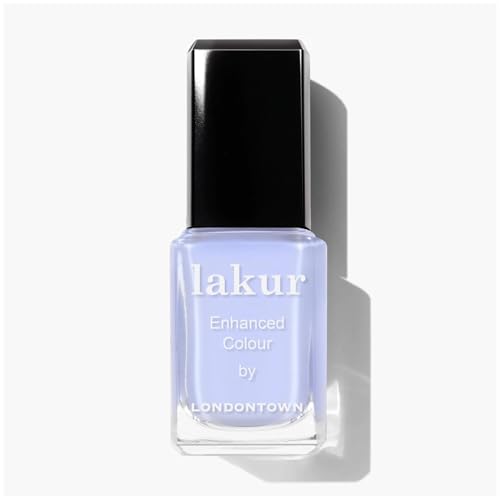
The polish that hides a discolored nail behind a color people actually compliment
Sometimes the honest answer for a damaged nail is coverage, and this is the polish to reach for when you want that. The LONDONTOWN bottle is a real 1.76-ounce polish — more than five times the volume of the Dr’s Remedy bottle further down this list. It has a self-leveling formula and a pro-contour brush that together take the streakiness out of a home manicure. Color is what everyone talks about here, and by a wide margin.
The formula matters for nails in recovery too. It is built on a botanicals-and-antioxidant-flower-oils blend the brand calls Florium Complex, and it is described as 21+ free — no phthalates, parabens, silicones, or gluten, and vegan and cruelty-free. For someone who has just spent months treating a nail, that ingredient list is the reason to choose this over a standard drugstore color. The pool blue comes out opaque and gets deeper with a second coat, and it removes easily when you are ready to switch.
Longevity is where expectations need setting. Some buyers get well over a week with no chipping. Others see it start to wear within days. One account of a no-prep, one-coat test sums up the good end: “I do NO nail prep. Just 1 coat of this polish lasted me about a week without chipping.” The brand’s own guidance is to reapply a top coat every 3-4 days to hold the color. Follow that and you are working with the formula instead of against it. Coverage, drying time, and brush size all draw a mix of opinions, so treat the finish as something you dial in with a base and top coat rather than straight out of the bottle.
The practical read: this is a cosmetic polish with a gentler ingredient list, not a fungus treatment — buy it to cover and to wear, and keep your treatment separate.
Who it is for: anyone who wants an opaque, compliment-getting color over a nail that is still growing out its damage.
Who should pass: a buyer hoping a colored polish alone will clear the fungus underneath — it will hide it beautifully, and that is all.
4. Dr’s Remedy Enriched Nail Polish PERCEPTIVE Periwinkle
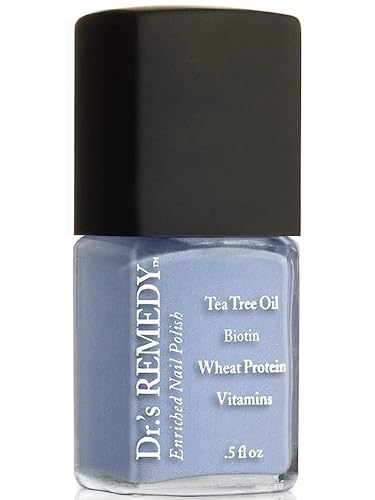
A treatment-minded color that lets a recovering nail breathe while it looks better
Here is the polish for the person who wants color and nail care in the same bottle. The Dr’s Remedy formula carries biotin, tea-tree oil, garlic bulb extract, lavender oil, wheat protein, vitamin E, and vitamin C, and it is described as 24-free — a long list of ingredients the brand left out. The idea is a color that strengthens and supports the nail instead of coating it in a heavy film, and it is the bottle here that best straddles the line between treatment and cosmetic.
The design is deliberately light. At 0.35 ounces this is the smallest polish on the list — roughly a fifth the weight of the 1.76-ounce LONDONTOWN bottle and substantially more compact at 7 x 3 x 3 inches versus that bottle’s 2.9 x 1.2 x 1.2 inches. So it takes up very little drawer space and is easy to travel with. In practice buyers get up to two weeks of wear before chipping, and the finish applies smoothly and keeps nails looking fresh. It also layers without trouble over anti-fungal cuticle oils and tea tree products, which matters if you are treating and coloring at the same time. Owners describe nails that look semi-normal again after use — a real morale difference when you have been staring at a discolored nail for months.
Two things to weigh. The first is how thin the formula runs. For solid coverage you will want 2-3 coats, and one familiar complaint is that it chips more easily than a standard polish, though it also reapplies without stripping everything off first. The second is cost, which is the most common gripe on this listing. On the plus side, doctor-formulated is not just a label here. Buyers describe a foot doctor recommending this polish for a stubborn, discolored nail, and credit it with letting the toe breathe where regular polish felt smothering.
A nail-health pick first: biotin and tea-tree oil in a 24-free base, sized for a small drawer and built to sit comfortably alongside an anti-fungal routine.
The honest trade-off: thin coverage that rewards a base coat and a second or third layer, at the highest cost per bottle of the polishes here.
Pick it when: nail condition matters as much to you as the shade, and you want a polish that works with your treatment instead of against it.
Look elsewhere when: you want one thick coat out the door — this one is built for layering.
5. Kerasal Fungal Nail Renewal
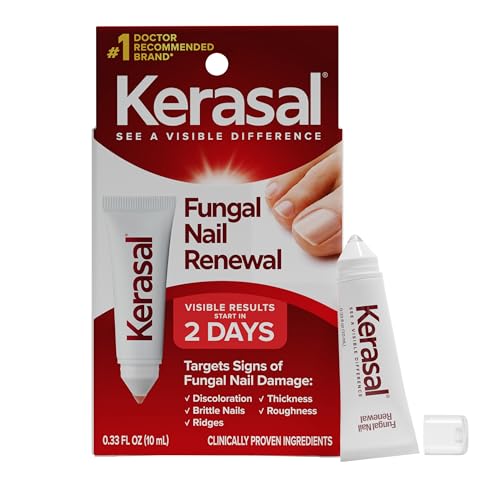
If your nail has gone thick, ridged, and yellow, this is the bottle doing the job the others cannot. Kerasal is a.33-ounce gel built on urea and lactic acid — two ingredients that exfoliate, hydrate, and smooth as they work. The brand calls it a dermatologist-developed formula used by over 10 million people since 2010. Its real strength is mechanical: it softens hard, damaged nail so spores and debris can be cleared and a clean nail can come through underneath.
The applicator is where this one separates from every other pick on the list. A precision tip delivers a targeted drop exactly where you want it, which keeps the gel off the skin around the toe and makes it genuinely mess-free. Anyone who has fought with a slow squeeze tube or a brush that overloads will appreciate how controlled it is. The gel also goes to work fast. Buyers describe noticeable improvement in days, and one account of a long-neglected thick yellow toenail reports it clearing even with use every 2-3 days, with the yellow areas turning cloudy white and then clear.
Now the part that is easy to miss. Kerasal does not kill fungus itself — it opens the nail up so a fungus-fighting product can get in and do that job. Missing that distinction is the most common reason people say it “didn’t work,” when the gel actually did exactly what it was made to do. Used alone, you are doing half the job; paired with a tea tree or anti-fungal product, you are doing both. It also asks for patience — a full cure runs months to a year, and no results show up in just a few days.
What it is built for: breaking down thick, ridged, discolored nail — urea and lactic acid at work, delivered by a precision tip that keeps the gel exactly where it belongs.
What it is not: a fungus killer. It is the teammate, not the striker.
Bring it home if: your nail is thick and rough, and you want it thinned and smoothed so a treatment can actually reach the problem.
Do not expect from it alone: a cleared nail — pair it with a fungus-fighting formula and give it months.
Know the Specs
Tea Tree Oil and Undecylenic Acid
These are the fungus-fighting ingredients. Tea tree oil is a plant oil with a long history in skin and nail care, and undecylenic acid is a fatty acid used in nail formulas. Together they go after the fungus living under and around the nail. When you see these named on a bottle, you are looking at a treatment rather than a cosmetic. The catch is that they need contact time, which is why a thicker, polish-like consistency — the kind that clings to the nail instead of running off — matters as much as the ingredients themselves.
Urea and Lactic Acid
This pair does the opposite job. Urea and lactic acid gently break down and soften thickened, damaged nail so it can be exfoliated away and new nail can grow through cleaner. They also hydrate, which helps with roughness and ridges. A product with these is not attacking the fungus — it is clearing the runway so a fungus-fighting formula can reach it. That is why some people use one in the morning and the other at night, and why a urea-based bottle can claim it improves the look and feel of a nail without claiming to cure anything.
Common Questions
Can I use a colored polish like LONDONTOWN or Dr’s Remedy while treating a fungal nail?
Is tea tree oil or urea the better choice for a fungus under the nail?
How long before I see a clear nail?
Do I need to file my nail before applying treatment?
Can Dr. Scholl’s liquid be used on its own without the LED kit?
Is it safe to paint over an infected nail with regular polish?
What should I do if the treatment stops working after a few weeks?
How do I stop the fungus from spreading to my other nails?
Does a thickened nail mean the treatment isn’t working?
Is it worth continuing a treatment once the nail looks clear?
The Bottom Line
For most people, the best anti-fungal nail polish is the Thursday Plantation Tea Tree Antifungal Solution for Nails, because it goes after the fungus directly and the brush makes a twice-daily routine something you will actually keep up. If your nail has gone thick and rough, add the Kerasal Fungal Nail Renewal first so a treatment can reach the problem. And if what you really want is a nail that looks good in sandals while it grows out, the LONDONTOWN lakur Nail Polish covers it in a color owners cannot stop talking about.
How we choose
We do not accept paid placement. Every pick is matched to a real buyer and a real use-case; we do not hands-on test units.
Sources
Specifications: manufacturer listings and product documentation. Review insights: verified customer reviews, as of October 2026. Pricing: not shown on this page (it changes often); check the current price via the retailer link.
As an Amazon Associate, Aappliancez earns from qualifying purchases. This does not affect which products we feature.