Disclosure: Some links in this post are affiliate links. As an Amazon Associate I earn from qualifying purchases, at no extra cost to you. Learn more
Specs are compiled from manufacturer listings and verified buyer reviews and can change over time — please confirm the key details on the product page before buying.
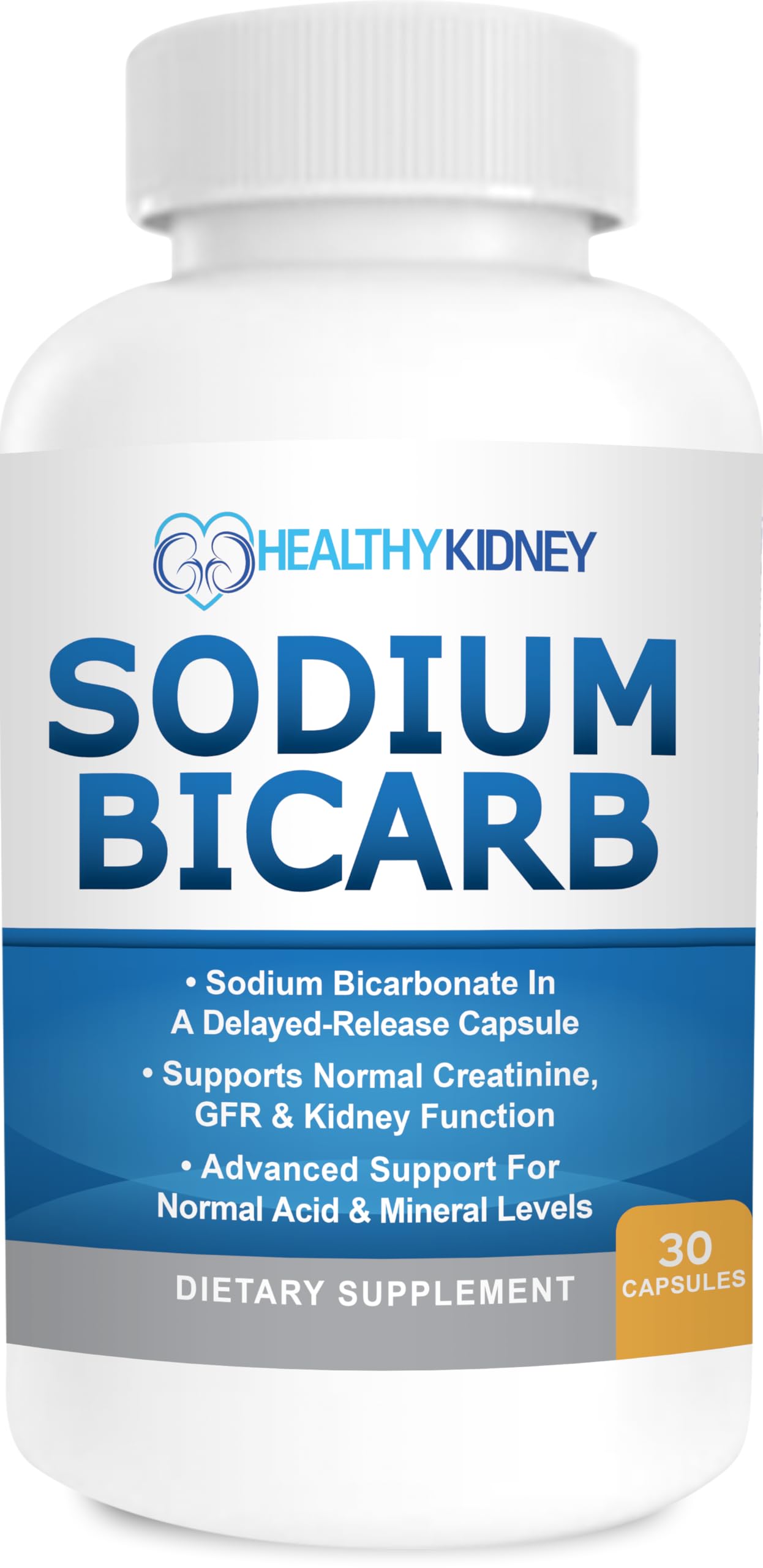
If your stomach burns after meals and chalky chewables wear off in twenty minutes, here is the short answer: a delayed-release sodium bicarbonate capsule is the smartest everyday pick for gastritis-style acid. Each capsule buffers acid at 650 mg and shields the dose from your stomach on the way down. The other four picks solve different problems — fast chewable relief, travel-sized packets, a longer-acting acid controller, and a botanical blend — and each one earns its place for a specific kind of buyer.
This guide is built by comparing the manufacturers’ published specifications and the patterns across verified customer reviews, so you get each pick’s real strengths and trade-offs instead of marketing spin.
Gastritis changes what you should look for in an antacid, because you are not chasing one heartburn episode — you are managing a stomach lining that stays irritated. That is why the picks below split into fast neutralizers and longer-acting options, and why the guide below on the antacid for gastritis covers dose, form, and how each one actually behaves in your stomach.
Top Picks

How To Choose The Best Antacid for Gastritis
With gastritis, the goal is not to kill one flare-up — it is to keep acid from sitting against an already irritated stomach lining. That single fact reshapes every choice you make on the shelf. A tablet that neutralizes acid for fifteen minutes helps a random slice of pizza. It does far less for a stomach that is sore all week.
Start with the active ingredient, not the flavor
The label tells you what job the pill does. Sodium bicarbonate is a straight acid neutralizer — it buffers the acid already in your stomach, which is why it acts quickly. Bismuth subsalicylate coats the stomach with a protective layer, which is a different kind of help for an irritated lining. Famotidine works on acid production rather than acid already there, so it is taken ahead of the problem instead of after it. Match the ingredient to what your stomach is actually doing.
Read the milligram dose and the form together
One swallow of a 650 mg sodium bicarbonate tablet gives you a real dose of buffering power. A chewable bismuth subsalicylate tablet at 262 mg is a smaller dose, so you take several of them. Neither is better in the abstract — but the dose per tablet tells you how many you will go through in a day. That number decides whether a box lasts a week or a month.
Decide where the bottle lives
Gastritis relief happens at home after dinner and at 2 a.m. when you wake up burning. If the tablets stay in a kitchen cabinet, a big box is fine. If you want them in a work bag, a purse, or a first-aid kit, single-dose packets and small bottles win on portability alone. Buy for the place you will actually reach for it.
Know what a chewable costs you in texture
Chewables dissolve in your mouth, which makes them fast and portable but puts the texture front and center. Some are smooth and mild. Others are described as slimy or sticky on the teeth. If you have a low tolerance for chalk or gumminess, a capsule you swallow with water sidesteps the whole issue.
Side-by-Side Comparison
| Model | Best For | Active Ingredient & Dose | Form | Count | Amazon |
|---|---|---|---|---|---|
| Sodium Bicarbonate 650 Mg Delayed Release★ Best Overall | Everyday buffering at home | Sodium bicarbonate 650 mg | Delayed-release capsule | 30 capsules | Amazon |
| Graxcell Sodium Bicarbonate USP 650mgFastest Relief | Fast relief from severe heartburn | Sodium bicarbonate 650 mg (10 Grains) | Tablet | 100 count | Amazon |
| Medique Med Diotame Chew Tabs | Travel and first-aid kits | Bismuth subsalicylate 262 mg | Chewable tablet | 50 per box | Amazon |
| Kirkland Signature Maximum Strength Acid Controller | Preventing overnight acid attacks | Famotidine 20 mg | Tablet | 170 tablets | Amazon |
| Nature’s Sunshine Stomach Comfort | Gentle botanical soothing | Slippery elm, ginger, papaya, licorice, calcium, alginic acid blend | Chewable tablet | 60 tablets | Amazon |
Detailed Reviews
1. Sodium Bicarbonate 650 Mg Tablets – Delayed Release
Our pick — 4.5+★ from 850+ verified ratings; the strongest balance of quality and price.
The one that shields its dose from your stomach acid instead of dissolving on contact.
Gastritis is the case where a coating earns its keep. Each capsule carries 650 mg of sodium bicarbonate (a straight acid neutralizer — baking soda, in pill form). The delayed-release shell is designed to carry that dose past the stomach’s acid rather than release it all at once on the way down. For a stomach lining that is already sore, that controlled arrival is the whole point.
What wins people over is the build quality of the capsule itself — easily the most-praised trait in the feedback, with effectiveness close behind. Swallowability comes up repeatedly too, and that is not a small thing when you are taking something daily: this is a capsule you get down with a sip of water, no chewing, no chalk, no aftertaste. It is made in an FDA-registered facility under cGMP standards, and the bottle includes a user guide. The brand was started by someone managing excess acid themselves, which explains why the dosing guidance is more thorough than most.
Now the honest catch, and it is the one worth knowing before you commit. At 30 capsules a bottle, a daily habit empties it quickly, and value for money is the one mixed note in the feedback — some find the per-capsule cost steep compared with a plain box of tablets. There is also the framing: this product is positioned around kidney support and acid/alkaline balance, so if you want a pill marketed squarely as a gastritis antacid, the label will read a step to the side of that. The capsules themselves are what matter, and they deliver.
What earns it the top slot
- 650 mg of sodium bicarbonate in every capsule — a full, single-swallow dose of acid buffering.
- Delayed-release shell keeps the dose intact past stomach acid instead of dumping it at once.
- Capsule form skips the chalk and grit entirely — easy to swallow with water, morning or night.
- Made in an FDA-registered facility to cGMP standards, with a user guide included.
Where it asks you to compromise
- Only 30 capsules per bottle — a daily routine runs out fast.
- The per-capsule cost draws mixed feelings; a box of tablets stretches further for less.
- Label language leans kidney and alkaline support, not gastritis specifically.
Reach for this if: you want one capsule that buffers acid without chalk, grit, or a chewed-up aftertaste, and you are fine restocking more often.
Look elsewhere if: you want the lowest cost per dose and do not mind swallowing a plain tablet — the Graxcell box below gives you far more tablets for the same job.
2. Graxcell Sodium Bicarbonate Tablets USP 650mg
One hundred 650 mg tablets in a bottle small enough to live in a desk drawer.
Severe heartburn is what this one is built to answer. Each tablet holds 650 mg of sodium bicarbonate at USP grade — the same 650 mg dose the top pick carries, but in a plain tablet you dissolve rather than a coated capsule. Pharmaceutical-grade means it is made to a published purity standard, and the count is the real headline here: 100 tablets means a bottle that keeps going instead of running dry in a month. The bottle itself sits at just 3.62 x 1.73 x 1.61 inches, so it tucks into a drawer or a bag without ceremony.
Effectiveness is the trait people talk about most, and the acid-reflux crowd is who it lands with. Buyers describe it handling severe heartburn and post-overeating upset, and several note they prefer it to the pink chewables and to stirring baking soda into a glass of water — the tablet just tastes better and travels better. One reviewer’s line that sticks: “Works for severe heartburn.” That is the use case in one sentence.
The catch here is dissolution, and it is a real one. The tablets are slow to break down in water, and the harshest feedback in the pile comes from exactly that — a glass left standing with barely any of the tablet dissolved. Quality and value both draw split opinions across the reviews, with some calling it excellent and others feeling shortchanged. If you are the type who wants a tablet to vanish in seconds, this one will test your patience; give it time and a little stirring and it does its job.
Where the money goes: 100 tablets at 650 mg each is the volume play in this lineup — you are buying a long supply of buffering power rather than a small bottle of capsules. For a stomach that flares often, that math matters more than packaging.
The patience tax: plan on waiting for the tablet to dissolve. It is not a chewable and it is not instant, so keep a glass of water nearby and let it work.
Best fit: frequent heartburn sufferers who want a big bottle of 650 mg tablets and do not mind waiting on dissolution.
Not the one for: anyone who needs a tablet to disappear on contact — the chewables below break down faster in the mouth.
3. Medique Med Diotame Chew Tabs 50/Bx

The box that lives in your carry-on and your first-aid kit, one dose at a time.
This is a different tool from the bicarbonate tablets, and that difference is the point. Each chewable tablet carries 262 mg of bismuth subsalicylate — the ingredient that coats an irritated stomach with a protective layer rather than simply neutralizing acid. For gastritis, that coating action is genuinely useful on a rough day. The box holds 50 tablets, and they come in single-dose packets, which is why buyers mention portability so often in the feedback.
Effectiveness is the most-praised trait by a wide margin, with value for money a close second. The most useful detail from the feedback is about size and timing: the tablets are roughly nickel-sized, two to a pouch. You can either chew them or let them dissolve slowly in your mouth — the slow route takes 20+ minutes. Buyers report gurgling and stomach discomfort easing within 20 to 30 minutes.
One quirk worth knowing before you buy: bismuth can leave a dark tint, and the practical advice from long-term users is to brush your teeth afterward so you are not walking around with residue between them. It is not a flaw, just the nature of the ingredient. The other thing to plan around is the box size — at 4.25 x 3 x 3.75 inches, it is meant for a cabinet or a kit, not a pocket. The individual packets are the pocket-sized part.
The coating advantage: bismuth subsalicylate at 262 mg protects as it soothes, which is a different kind of help than straight acid neutralization. On a gastritis flare, that layer can matter.
Pack it, do not pocket it: the box is a cabinet-sized 4.25 x 3 x 3.75 inches. Take a few packets with you and leave the rest at home.
Choose this for: travel, work bags, and first-aid kits — the single-dose packets are the most portable format in this lineup.
Pass if: you want a single daily capsule with no chewing and no teeth-brushing follow-up.
4. Kirkland Signature Maximum Strength Acid Controller

Not a neutralizer — an acid controller you take ahead of the burn, with 170 tablets to back it up.
Here is where the ingredient changes jobs. Famotidine at 20 mg does not buffer acid that is already there; it works on acid production. That is why the label says both “relieves heartburn” and “prevents heartburn.” For gastritis that wakes you at night, that preventive angle is the reason to keep a bottle on the nightstand. You get 170 tablets in the pack, so this is a long-haul supply rather than a short bottle.
Quality is the trait that dominates the feedback by an enormous margin, with effectiveness right behind it — this is the pick that reads like a settled, well-understood product rather than a novelty. The clearest pattern in the reviews is brand equivalence: owners mention it does the same job as the name-brand acid controller for far less. One put it plainly — “Work same as name brand Pepcid.” The other recurring theme is severity. Long-time reflux sufferers say famotidine worked when a prescription proton-pump inhibitor did not, and that symptoms return when they stop — a maintenance tool, not a one-off fix.
The honest limit: this is not a fast-acting antacid. If you are already burning, a neutralizer like the bicarbonate tablets above will answer sooner. Famotidine is the one you take on a schedule or ahead of a trigger meal, and it asks for that discipline. It is also a maximum-strength 20 mg dose, so if you are on other medications or managing a condition, that is a conversation for your doctor rather than a label read.
Why it holds its spot
- 20 mg famotidine works on acid production, so it can head off heartburn rather than just chase it.
- 170 tablets per pack — a supply that lasts, not a bottle you restock monthly.
- Buyers consistently report it matches the name brand in effect.
- Holds up for people with long-standing, severe reflux who need daily cover.
The trade-offs to weigh
- Not a rapid neutralizer — it will not fix heartburn that has already started as fast as a bicarbonate tablet.
- Works best taken on a schedule, which takes more planning than reaching for a chewable.
- At 20 mg maximum strength, check with your doctor if you take other medications.
Pick this when: the burn arrives on a schedule — overnight, after certain meals — and you want to prevent it rather than chase it.
Keep looking if: you need relief in the next five minutes; that is a neutralizer’s job, not this one’s.
5. Nature’s Sunshine Stomach Comfort, 60 Chewable Tablets
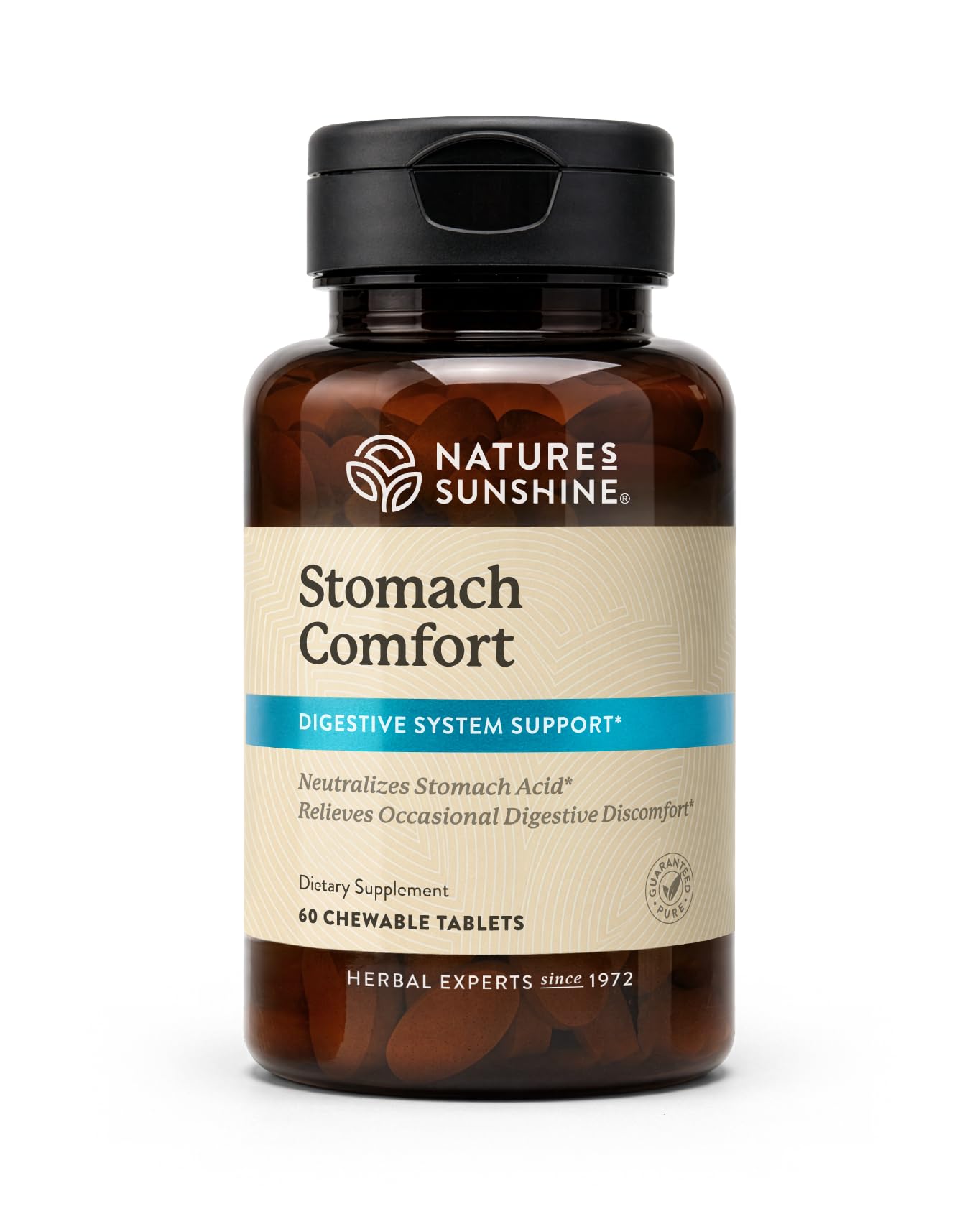
Slippery elm, ginger, papaya, licorice, calcium, and alginic acid in one chewable.
If you would rather soothe a stomach than hammer it with a single chemical, this is the pick. The formula blends six ingredients — slippery elm, ginger, papaya, licorice, calcium, and alginic acid — and the label positions it as both an acid neutralizer and a soother for occasional digestive discomfort. Sixty chewable tablets come in the bottle, and they are meant to melt in your mouth rather than be swallowed whole.
Effectiveness and stomach comfort are the two things people talk about most, and the pattern is consistent: it works, and it works quickly. Customers note the tablets melt on the tongue with a mild taste, no harsh aftertaste, and near-immediate relief. Reviewers also mention reaching for it when standard chewables have not worked. As one put it: “It helps neutralize stomach acid, and just in general, if your stomach feels yucky, this is a good product.”
Texture is where this one splits opinion, and you should go in knowing it. Taste and texture draw mixed feedback — some describe the tablets as pleasant and almost gummy, others as slimy. There is also a stickiness to the teeth that comes up often, and the general verdict on that is: annoying, but forgivable if it settles your stomach. If you cannot stand a gummy texture in your mouth, a capsule is the cleaner route.
The blend is the draw: six ingredients working together, with the calcium and alginic acid doing the neutralizing and the botanicals doing the soothing. It is a different approach from a single-ingredient tablet.
Go in expecting sticky: these melt and cling a little. Buyers overall accept the trade for how well it calms a churning stomach.
Worth it for: anyone who wants a chewable botanical blend that acts fast and tastes mild, and who does not mind a gummy texture.
Think twice if: sticky residue on your teeth would bother you more than the relief is worth.
Know the Specs
Active Ingredient and Dose
The milligram number next to the ingredient name is the amount in a single tablet or capsule, and it tells you how much buffering power one swallow carries. Sodium bicarbonate at 650 mg is a full neutralizer dose. Bismuth subsalicylate at 262 mg is a smaller dose you take several of, and it coats rather than just neutralizes. Famotidine at 20 mg works on acid production instead of acid already present. Match the ingredient to the problem — already burning versus trying to prevent the burn — before you compare counts.
Delayed Release vs Plain Tablet vs Chewable
The form decides when and where the dose lands. A delayed-release capsule is built to carry its contents past the stomach’s acid before releasing, which suits a stomach lining that is already irritated. A plain tablet dissolves in water and acts quickly once it breaks down. A chewable dissolves in your mouth, which is the fastest and most portable route but puts the texture front and center. None is universally better — the right form is the one you will actually take at the moment you need it.
Common Questions
Is a sodium bicarbonate antacid safe to take every day for gastritis?
What is the difference between sodium bicarbonate and famotidine for gastritis?
Why do the Graxcell tablets take so long to dissolve?
Can I chew bismuth subsalicylate tablets instead of swallowing them?
Which antacid works fastest when gastritis flares up?
Do I need a prescription for famotidine 20 mg?
Is the Nature’s Sunshine blend safe during pregnancy for heartburn?
How many tablets are in a box of Medique Med Diotame?
Will a delayed-release capsule work better than a plain tablet for gastritis?
Can I take sodium bicarbonate with other antacids?
The Bottom Line
The winner for most people managing gastritis is the Sodium Bicarbonate 650 Mg Delayed Release. The coated capsule carries a full 650 mg dose past your stomach acid instead of dumping it on contact, and it does that without chalk or grit. If heartburn is severe and frequent and you want a long supply, the Graxcell Sodium Bicarbonate Tablets give you 100 tablets of the same 650 mg strength. For overnight acid that arrives on schedule, the Kirkland Signature Acid Controller is the preventive pick. If you want a chewable that travels, the Medique Diotame box with its single-dose packets is the one to pack.
How we choose
We do not accept paid placement. Every pick is matched to a real buyer and a real use-case; we do not hands-on test units.
Sources
Specifications: manufacturer listings and product documentation. Review insights: verified customer reviews, as of October 2026. Pricing: not shown on this page (it changes often); check the current price via the retailer link.
As an Amazon Associate, Aappliancez earns from qualifying purchases. This does not affect which products we feature.