Disclosure: Some links in this post are affiliate links. As an Amazon Associate I earn from qualifying purchases, at no extra cost to you. Learn more
Specs are compiled from manufacturer listings and verified buyer reviews and can change over time — please confirm the key details on the product page before buying.
Here is the thing most people get wrong about ants and roaches: spraying the ones you can see barely dents the population hiding behind your cabinets. For most homes, the hardest-working pick is a gel bait — the advion 383920 — because roaches carry it back to the nest and wipe out the colony instead of dying one at a time on your floor. If you would rather have a can in hand for a fast direct hit, an aerosol spray still earns its place in the cupboard. This guide sorts the difference plainly, without the label noise.
This guide is built by comparing the manufacturers’ published specifications and the patterns across verified customer reviews, so you get each pick’s real strengths and trade-offs instead of marketing spin.
You will see which formulas kill on contact, which ones keep working for weeks, and which leave a mess behind. Below, the best ant and roach killer picks are matched to how you actually plan to use them.
Top Picks

How To Choose The Best Ant and Roach Killer
Your first decision is not a brand — it is a format. A gel bait and an aerosol spray solve two different problems, and buying the wrong one is why people end up re-spraying the same kitchen every week.
Gel bait vs. contact spray
A gel bait is a food-like poison you place in small dabs along roach or ant trails. Bugs eat it and carry it back to the nest, so the colony keeps dying after you stop. A contact spray kills what the mist touches, then keeps working only as long as its residual layer survives. If you have a nest behind the fridge, only the bait reaches it.
Read the active ingredients and the residual window
Every aerosol can lists its active ingredients by percentage on the label — that number tells you how strong the knockdown is. The residual window is the separate claim about how long it keeps killing after it dries. A spray rated to keep killing for weeks is doing a different job than one that only works on contact.
Match the formula to your household
If you have pets or small children, look hard at the label wording on what it is formulated to be safe around when used as directed. Scent matters too: an unscented or low-odor spray is easier to live with in a small kitchen, while a plant-based spray may carry a lemongrass smell that some people like and others do not. Apply baits and sprays in cracks, behind appliances, and along wall-to-counter seams, not in open walking areas.
Side-by-Side Comparison
| Model | Best For | Format | Volume / Size | Standout Feature | Amazon |
|---|---|---|---|---|---|
| advion 383920 4 Tubes and 4 Plungers★ Best Overall | Wiping out a full roach colony | Gel bait | 1.06 fl oz | 4 tubes + 4 plungers | Amazon |
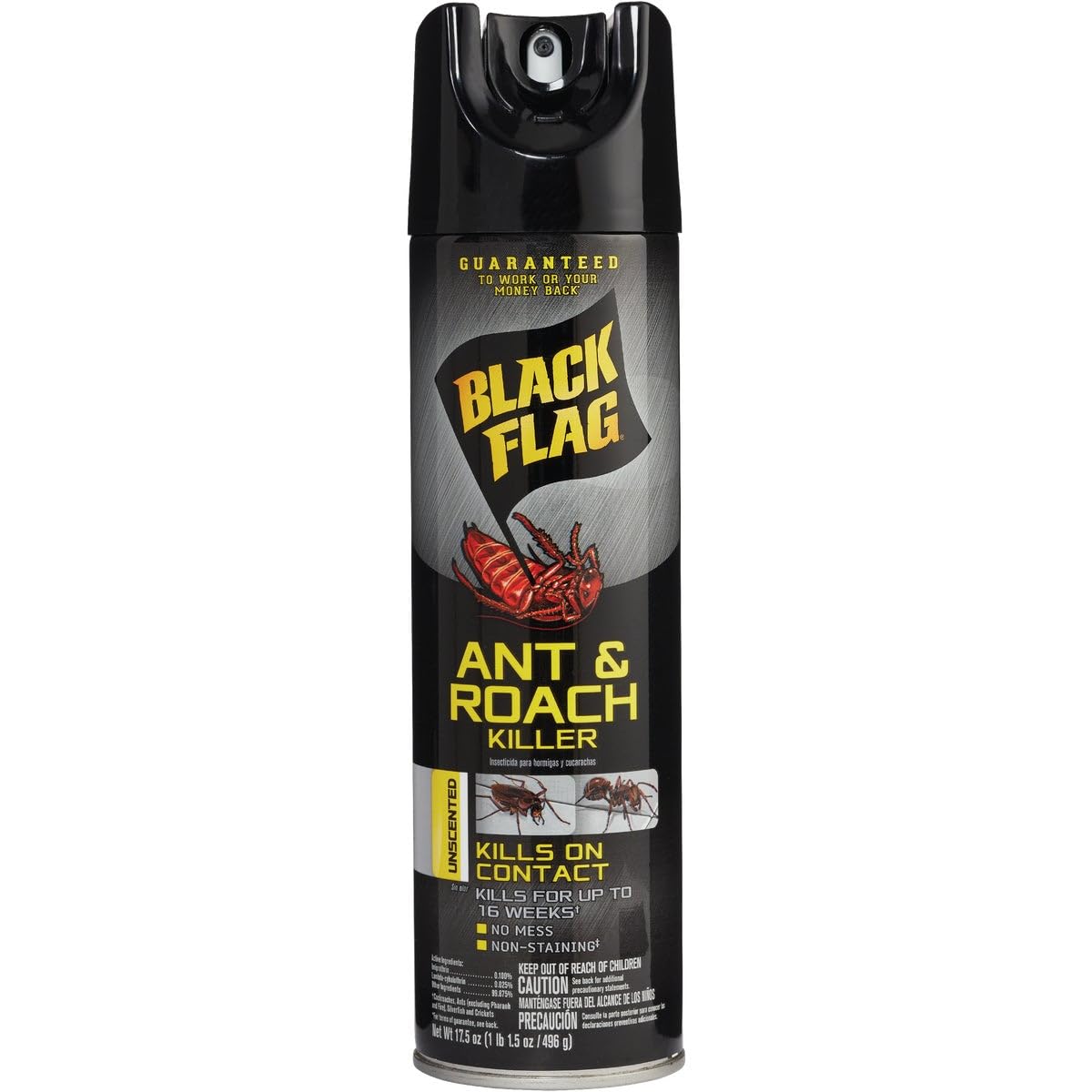
| Black Flag Ant and Roach Killer 17.5 OuncesBest Value Spray | Fast contact kills at a low cost | Aerosol spray | 17 fl oz | Unscented, non-staining | Amazon |
| Raid Ant & Roach Killer Spray, Lavender | Residual protection between sprays | Aerosol spray | 12 oz | Keeps killing up to 13 weeks | Amazon |
| Combat Ant Killing Gel (Pack of 2) | Killing an entire ant colony | Gel bait | 1.9 oz | Child-resistant syringe | Amazon |
| Wondercide Ant & Roach Aerosol Spray, 2-Pack | Pet- and family-conscious homes | Plant-powered aerosol | 10 oz (2-pack) | Essential-oil formula | Amazon |
Detailed Reviews
1. advion 383920 Cockroach
Our pick — 4.5+★ from 64,500+ verified ratings; the strongest balance of quality and price.
The bait that sends roaches home to poison the whole nest.
If you want the one pick that ends a roach problem instead of just thinning the crowd, start with this gel. Each syringe delivers a food-grade attractant you dab into cracks and behind appliances, where roaches feed and then carry the poison back to the colony. Four tubes and four plungers come in the box, so one order gets you through multiple re-applications across a kitchen or a workshop.
What makes the dose go far is the liquid volume — 1.06 fluid ounces is a small figure until you realize it is spread in dots, not poured. Set beside it the Black Flag aerosol’s 17 fluid ounces and the gap is stark: 1.06 vs 17 fluid ounces. Two formats, two jobs — the can covers more surface fast, but the gel reaches places a mist cannot. Because roaches actively eat the bait and drag it back, the kill carries on after your one application session. Buyers report watching the colony collapse within days: “After 48 hours using only two injections in a small 2-bedroom apartment, infestation gone.”
The honest caveat is speed. Gel is not instant — it works on the bait-taking cycle, so a few roaches may still be moving for the first day or two, and very heavy infestations sometimes want a follow-up dab once the babies hatch. Keep it away from children and pets, and place it in cracks, behind appliances, and along wall-to-counter seams. Used that way, it does the job a weekly spray never quite finishes.
What earns it the top spot
- Reaches the nest, not just the roaches in view.
- Four tubes and four plungers cover repeat applications.
- Works on German and larger roach species indoors.
- Dots go a long way — 1.06 fl oz spreads across many bait points.
Where it needs patience
- Not an instant knockdown — expect a day or two of activity.
- Requires careful placement away from kids and pets.
Reach for this if: you have roaches in the kitchen or behind appliances and want the colony dead, not just the stragglers.
skip it if: you need a bug in front of you dropped this second — grab a spray instead.
2. Black Flag Ant and Roach Killer 17.5 Ounces
The budget can that drops what it touches and leaves a barrier behind.
For a quick hit on a line of ants crossing the counter, this is the can to grab. It sprays unscented and it is non-staining, so you can treat baseboards and window frames without worrying about a mark on the paint. The label promises it keeps killing German cockroaches for up to three months, which is the difference between a one-and-done spray and something that keeps working in the background.
Effectiveness is the whole story here — that is what wins people over, and it is why a plain unscented can competes with fancier formulas. The direct-hit performance holds up to real use: “Very effective. Kills ants quickly and it must leave some kind of residue or barrier because you don’t see ants again for a long, long time.” It also reaches beyond ants — the same spray handles spiders and other listed bugs around a porch or garage. At 17 fluid ounces and 1.4 pounds, it is a fuller can than the Raid’s 12 ounces, so you get more passes per canister for surface treatment.
The catch worth knowing: the label calls it unscented, but confined indoor spaces can still pick up a smell strong enough that a few people find it overpowering, and some note they need a slightly heavier dose to finish certain bugs. Use it in ventilated areas and spray where bugs walk, not where you do.
Why it competes: unscented, non-staining, and rated to keep killing German roaches for up to three months — a lot of coverage out of one can.
The trade-off: indoor fumes can be sharp in a closed room, and heavier bugs may want a second pass.
The smart buy if: you want a low-cost, no-fuss spray for ants, spiders, and roaches around the house.
Not the one for: a nest behind the wall — that calls for a bait, not a mist.
3. Raid Ant & Roach Killer Spray 12 Ounce
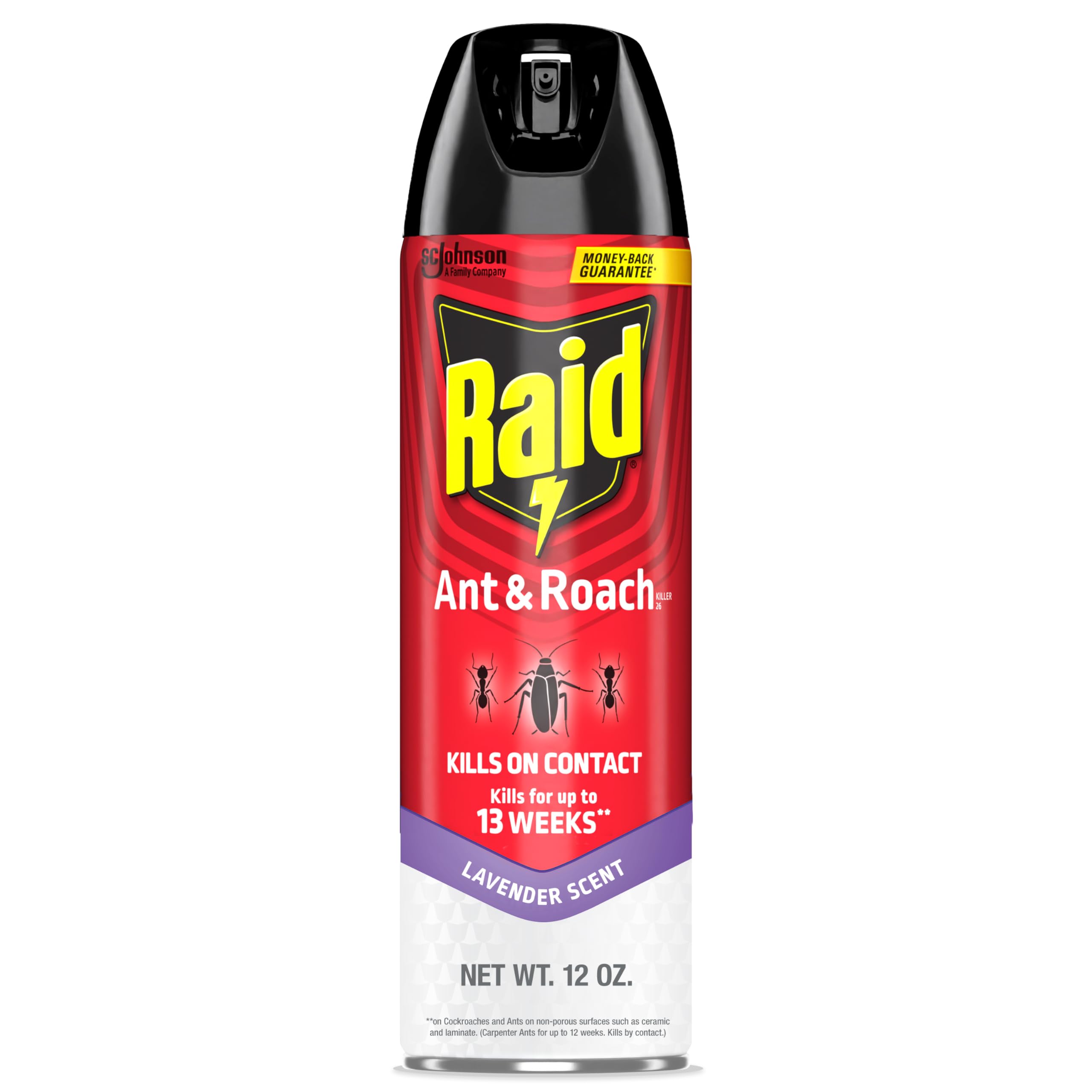
One spray that keeps working on hard surfaces long after it dries.
The number that sells this one is the residual window: it keeps killing roaches and carpenter ants for up to 13 weeks on treated surfaces. That means one careful pass along the baseboards can defend a room for a full season, with a re-treat every 13 weeks as needed. It kills a wide roster of listed bugs too, from waterbugs and silverfish to crickets, earwigs, and household spiders.
The other thing that lands is the scent — the lavender version reads as pleasant rather than chemical, so a kitchen does not smell like a lab afterward. Owners describe a satisfyingly decisive kill: “I use it to spot kill if I see any of them running around. You spray them once and they keel over. Very effective and worth the price. The smell is not intrusive like the original product.” For an ant problem specifically, it has a habit of settling the whole trail in one application, with buyers reporting it handled the job a hired exterminator kept revisiting.
Where it falls short: the can is 12 ounces, smaller than the Black Flag’s 17 fluid ounces, so if you are treating a whole house you will be reaching for a second can sooner. Value is the other fair caveat — some find it runs pricier than a basic spray, which you are paying for in that 13-week residual. Treat surfaces where bugs travel, not open floor, and it earns its keep.
The real draw: up to 13 weeks of residual killing on one application, plus a lavender scent that does not announce itself.
What to weigh: a smaller 12-ounce can and a price that leans higher than the basics.
Choose it when: you want set-and-revisit protection along baseboards and frames rather than a daily chase.
Look elsewhere for: a colony behind the cabinets — that is bait territory.
4. Combat Ant Killing Gel 27grams (Pack of 2)

A child-resistant syringe for ants that wipe out their own nest.
When the line of ants keeps coming back no matter how often you wipe the counter, the answer is a bait that travels. This ready-to-use gel comes in a child-resistant syringe you dial out in small spots along the trail, and it is built to deliver fast control of ants within 3 to 5 days. The high water content is what gets ants feeding quickly, so it starts killing within the hour.
Killing the colony is where this earns its spot — that is the trait the review pages circle again and again. The gel fights longer than a quick surface spray because the ants keep taking it back to the nest. Its pack-of-2 size is modest next to the advion’s four tubes, 1.9 ounces vs 4.24 ounces, so you are trading total volume for a compact, child-resistant applicator that is easy to store. One drop pattern along a trail is all it takes.
Two honest notes. The gel can dry out if left sitting, so you may need to refresh a dab that has gone hard. A rare review mentions a messy pile of dead ants where they died, and sweet baits sometimes attract better in some seasons than others. Set it near the trail, leave it undisturbed for hours, and let the ants do the carrying.
Its strength: child-resistant syringe, ready to use, and designed to wipe out the whole ant colony within 3 to 5 days.
Its limit: dabs can dry out and need refreshing, and the pack is smaller than larger multi-tube sets.
Reach for this if: ants are marching a fixed trail indoors and you want the nest gone, not just the workers.
pass on it if: you need a broad-area spray for multiple bug types at once.
5. Wondercide – Ant & Roach Aerosol Spray – 10 oz 2-Pack

The essential-oil can for homes where pets and kids rule the floor.
If you reach for plant-based cleaners over the harsh stuff, this is the can that matches your shelf. It kills on contact for a fast knockdown of ants and roaches, and the label lists over 20 household bugs, including spiders, fleas, carpet beetles, earwigs, silverfish, and stink bugs. The formula uses essential oil of lemongrass and geraniol, with no artificial colors or fragrances, and it is formulated to be safe around pets and family when used as directed.
The pet-safe angle is a big part of why people choose it, and it does not give up killing power to get there. One longtime rural user reports dropping 1,000 ants in under a minute. You get a 2-pack of 10-ounce cans, so you have a backup ready when the first runs low. Point, spray to kill, then wipe the bugs away — and treat cracks, baseboards, and around pipes and appliances.
The one thing to plan for is residue. The spray is oily, it can be slippery on hard floors, and it is best kept to places people and pets do not walk. The nozzle also has a habit of clogging partway through a can, and the fragrance is strong enough that a few find it more noticeable than expected. Apply with that in mind and this plant-powered option holds up well against the conventional cans.
What stands out: a plant-powered formula with essential-oil actives, rated for over 20 household bugs and formulated to be safe around pets and family when used as directed.
The honest caveat: an oily film that is slippery on hard floors, plus a nozzle that can clog partway through.
Best for: households that want a pet-conscious, plant-based spray and do not mind wiping up a little oil afterward.
Think twice if: you need a clean, no-residue finish on open floors — keep this to cracks and edges.
Know the Specs
Active ingredients and percentage
Every can or gel lists its active ingredients by name and often by percentage on the label. That figure tells you how concentrated the poison is — which is the honest way to compare a basic spray against a stronger one. The Black Flag, for example, lists 0.1% imiprothrin and 0.025% lambda-cyhalothrin. Read this alongside the format, because a concentrated dab of gel behaves very differently from a thin mist of spray.
Residual action
Residual action is how long a product keeps killing after it dries or is applied, not just at the moment of the spray. It is the number behind claims like “keeps killing for weeks.” A longer residual means fewer repeat applications on treated surfaces, while a contact-only product does its work and stops. Match it to how often you are willing to re-treat a room.
Volume and count
Aerosol volume in fluid ounces tells you how many passes one can gives you across baseboards and frames. Gel volume tells you how many bait points a tube covers. These are not the same kind of number, so compare like with like — cans against cans, gels against gels — rather than assuming a bigger figure always means more killing power.
Formulation and household safety
Look for whether a product is unscented, scented, or plant-powered, and read the exact “safe around pets and family when used as directed” wording on the label. Scent and residue matter as much as killing power in a small kitchen. Apply everything in cracks, behind appliances, and along seams, keep baits away from children and pets, and ventilate when you spray indoors.
Common Questions
Should I use a gel bait or a spray for roaches?
How long does a roach spray keep killing after it dries?
How fast will a roach gel bait actually work?
Are these products safe around pets and children?
Why do ants come back after I spray them?
How much gel bait do I need for a small apartment?
Is a larger can always the better buy?
What is the difference between an unscented and a plant-powered spray?
Where should I place bait and spray for the best results?
Do gel baits go bad or dry out?
The Bottom Line
For most homes, the winning move on the ant and roach killer front is the advion 383920 gel, because it does what a spray cannot — it reaches the nest and kills the colony instead of the bugs in view. If you want a fast, budget-friendly can for contact kills around the house, the Black Flag unscented spray is the easy grab. And when long-lasting protection on treated surfaces is what you are after, the Raid lavender spray is the one to reach for, with its up-to-13-week residual doing the quiet work between applications. Pick your format first — bait for the nest, spray for what you see — and the right can or tube follows.
How we choose
We do not accept paid placement. Every pick is matched to a real buyer and a real use-case; we do not hands-on test units.
Sources
Specifications: manufacturer listings and product documentation. Review insights: verified customer reviews, as of October 2026. Pricing: not shown on this page (it changes often); check the current price via the retailer link.
As an Amazon Associate, Aappliancez earns from qualifying purchases. This does not affect which products we feature.