Disclosure: Some links in this post are affiliate links. As an Amazon Associate I earn from qualifying purchases, at no extra cost to you. Learn more
Specs are compiled from manufacturer listings and verified buyer reviews and can change over time — please confirm the key details on the product page before buying.
If your ankle keeps rolling inward when you run, cut, or land, you need a brace that resists that specific direction of motion — not just a snug sock with a strap. Overpronation pushes the foot inward and downward, and the braces that help most are the ones built with figure-8 strapping, side stays, or guards that hold the joint against that roll. Below are seven picks that do exactly that, sorted by what each one is actually good at.
This guide is built by comparing the manufacturers’ published specifications and the patterns across verified customer reviews, so you get each pick’s real strengths and trade-offs instead of marketing spin.
You will see which braces slip into cleats, which ones wrap the whole joint, and which ones ask you to size carefully. Each pick below explains the strapping system in plain words, so you can match it to your sport and your shoe. Here is what actually separates the best ankle brace for overpronation from the rest of the shelf.
Top Picks
How To Choose The Best Ankle Brace for Overpronation
Overpronation means your foot rolls inward and your arch flattens as you land. The brace that helps has to push back against that inward roll without locking your whole foot flat. That is why the strapping pattern matters more than the thickness of the padding. Here is what to weigh before you pick.
Look for figure-8 strapping or side stays
Figure-8 straps wrap under the arch and cross over the top of the foot, which mimics the tape job an athletic trainer would do to hold the ankle against rolling. Side stays are stiff strips on the inner and outer walls of the brace that add a physical wall against the roll. A brace with both gives you the most resistance to that inward motion. A plain sleeve with no straps gives you compression and not much else.
Decide whether the brace has to fit inside a shoe
If you play a court or field sport, the brace has to slide into a cleat or sneaker, and a bulky one will not. Low-profile designs are built for that. If you are wearing it in a work boot or around the house, a thicker brace with more padding can be the more comfortable choice. Check the shoe question before anything else, because a great brace that will not fit your shoe is money spent on nothing.
Pick your closure type for how fast you need to get it on
Full lace-up braces give a snug, adjustable fit but take time to thread and tighten. Speed-lace designs use velcro tabs and pull straps so you can put them on in seconds. Pull-on sleeves are the fastest of all but offer the least adjustability. If you are taping up before every practice, a speed-lace or pull-on saves you time. If you want the most adjustable fit, a full lace-up is worth the extra minute.
Size to your measurement, not your shoe size alone
Most of these braces come in specific left and right versions and in small through extra-large. If your measurement falls between two sizes, the makers here generally say to take the larger one. A brace that is too small will cut circulation and feel tight at the bottom of the foot. A brace that is too large will slide and lose the support you bought it for.
Side-by-Side Comparison
These three specs are the ones that change how a brace feels and how it fits your shoe, so scan this row by row before reading the full reviews.
| Model | Best For | Closure Type | Material | Item Weight | Amazon |
|---|---|---|---|---|---|
| Zamst A2-DX★ Best Overall | High ankle sprains and chronic instability | Pull On | Nylon | 5.44 ounces | Amazon |
| Ultra 360 Lace-UpBest for Recovery | Court sports and injury recovery | Lace-Up | Nylon | 0.16 kg | Amazon |
| DonJoy Stabilizing Speed Pro | Fast on and off for demanding athletes | Hook & Loop, Lace-Up | Nylon | 0.17 kg | Amazon |
| Med Spec ASO | Everyday sprain recovery and stability | Lace-Up | Nylon | — | Amazon |
| Active Ankle AS1 Pro | Volleyball and flexible support | Lace-Up | Neoprene | 6.72 ounces | Amazon |
| ARYSE IFAST | Sock-like fit that slips into any shoe | Lace-Up | Thermoplastic polyurethane, neoprene, lycra, nylon | 0.12 kg | Amazon |
| McDavid Bio-Logix | All-day wear and construction work | — | Neoprene, nylon, plastic, spandex | 0.2 kg | Amazon |
Detailed Reviews
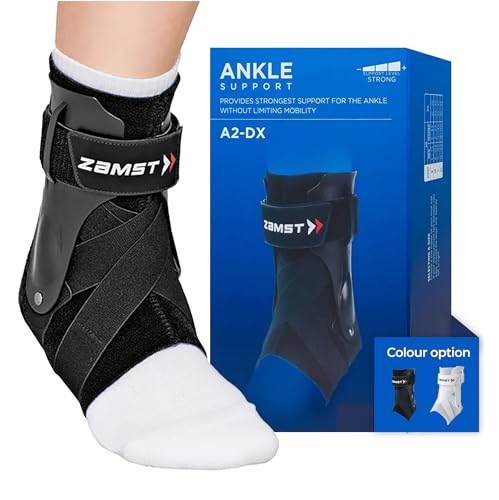
1. Zamst A2-DX Sports Ankle Brace with Protective Guards
Our pick — 4.5+★ from 1,000+ verified ratings; the strongest balance of quality and price.
The brace built to stop the joint from rolling at all, with guards on both sides.
The Zamst A2-DX is the top pick because its whole design attacks the inward roll directly. It uses a connected plantar strap and a cross strap that pull upward from the heel in a stirrup action, which is the motion that pushes back against overpronation. On top of that, protective guards sit on both sides of the joint to add a physical wall against the roll. The support is what wins people over most, with the stability it adds close behind.
What it does well is hold the joint against a roll while still letting your ankle move up and down naturally, which is why it suits basketball, volleyball, lacrosse, and football. The materials are thin nylon, polyester, and elastane kept low-profile with good ventilation, so it stays breathable across a full game. One owner wore it for three years and rated the quality excellent, crediting it with ankle support and stability. It comes in left and right versions from small through extra-large, and the maker says to take the larger size if your measurement lands between two.
The honest catch is the fit and the effort. Several people find it takes practice to learn the strapping, and a common gripe is that it will not slide inside most shoes. The comfort is mixed too, with some wearers happy and others not. So if you need something that drops into a tight cleat, look at the lace-up options below. If protection against a hard roll is the priority, this is the one.
Where it pulls ahead
- Stirrup-action plantar and cross straps pull up from the heel to resist the roll.
- Protective guards on both sides add a physical barrier against rolling.
- Allows natural up-and-down ankle motion instead of locking the joint flat.
- Thin, ventilated nylon, polyester, and elastane keep it breathable through play.
The trade-offs
- The strapping takes practice to learn to tighten correctly.
- Does not fit inside most shoes, so it suits court wear more than tight cleats.
- Comfort divides opinion among wearers.
Made for: athletes with chronic instability or a high ankle sprain who want the strongest anti-roll support and can wear it without a tight shoe.
Think twice if: you need the brace to sit inside a snug cleat, where the fit gets tight.
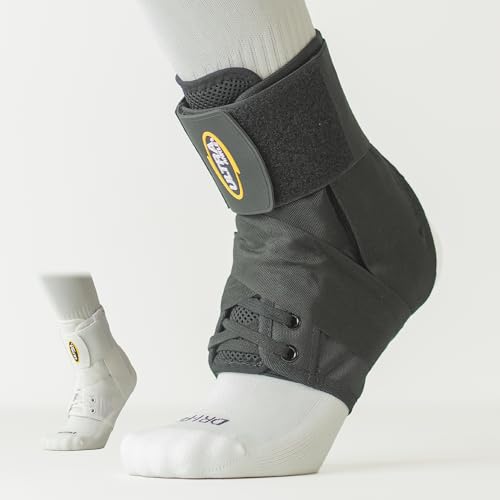
2. Ultra 360 Lace-Up Ankle Brace
A lace-up brace that copies a trainer’s tape job and slips into a court shoe.
For recovery and return-to-sport, the Ultra 360 leans on a figure-8 strap system that mimics a professional athletic trainer’s tape job. The straps wrap under the arch and cross over the foot, so they pull against the inward roll from more than one angle. The lace-up closure adds multiple adjustment points so you can dial the compression where you need it. It weighs 0.16 kg, just under the DonJoy below at 0.17 kg, which keeps it easy to pull on.
What earns this brace its place is the support it gives a returning ankle. As owners put it: “My volleyball player feels more secure about the ankle after an injury that gave re-rolling it a greater chance.” It was developed with a certified athletic trainer, and the lace-up design is the reason it fits into most sneakers and cleats. One family bought a pair for volleyball and found the support came without restricting movement through practices and games.
The recurring gripe is bulk. Some wearers find it too thick to fit comfortably into their shoes, and a few say a borderline size that they bought smaller ended up too tight. The lace tension matters here: too tight and your foot aches, too loose and you lose the support. So size up if you are between sizes, and check your shoe clearance before you commit. For a shoe-friendly recovery brace, though, the support is the reason people keep buying it.
What people notice: the figure-8 straps do the work of an athletic tape job without the tape, and the brace fits inside most sneakers and cleats.
Where it strains: it runs bulky for some shoes, and getting the lace tension right takes a few tries.
Reach for this if: you are coming back from a sprain and want a shoe-friendly brace with strapping that resists a re-roll.
Check your shoe first if: you wear a narrow or snug cleat, where the bulk can crowd your foot.
3. DonJoy Stabilizing Speed Pro Ankle Support Brace

Skips the re-lacing hassle with velcro tabs you can slap on in seconds.
The DonJoy Speed Pro is for the athlete who hates threading laces before every practice. It uses velcro lace tabs — four laces on each heavy-duty tab — so you pull and fasten rather than re-lace. Figure-8 side straps and a wide top velcro cuff then secure the ankle against a roll. Removable articulated medial and lateral stays add a stiff wall on both sides for extra stability. It is built from 800D ballistic nylon with a reinforced eyelet area for durability.
The full circumferential elastic strap secures all the strapping and adds compression across the tibia and fibula, which is the shin area above the ankle. For an owner in soccer, it gave strong support without restricting movement after a re-rolled sprain, with a note that it takes maneuvering under a cleat to avoid rubbing.
Fit is the honest weak spot, and the data calls it out as the most common complaint. One owner found the sizing chart off — a men’s 9 landed in a medium rather than the extra-small the chart suggested. Others report the plastic D-rings create pressure points and the lacing stability strip warped after 3–5 months of 40+ hour weeks. It also rubs in a tall 6-inch work boot, where a low-cut shoe suits it better. Treat the sizing chart as a starting point and size up if you are on the line.
Why athletes like it
- Velcro lace tabs let you put it on in seconds instead of re-lacing.
- Figure-8 side straps and a wide top cuff hold the ankle against a roll.
- Removable medial and lateral stays add a stiff wall of stability.
- 800D ballistic nylon and a reinforced eyelet area hold up to hard wear.
What to watch
- The sizing chart can steer you wrong, so measure carefully.
- Plastic D-rings can press into the ankle for some wearers.
- Rubs in a tall work boot; a low-cut shoe suits it better.
Pick it when: you want strong anti-roll support and the fastest on-and-off of any lace design here.
Look elsewhere if: you wear tall boots or need a fit that runs true without careful measuring.
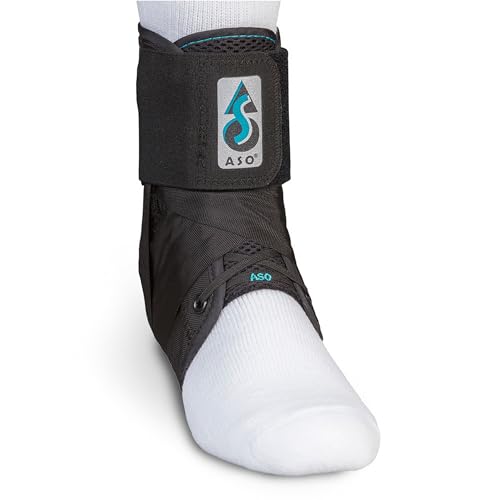
4. Med Spec ASO Ankle Stabilizer Lace Up Ankle Brace
The lace-up workhorse that trainers reach for when an ankle needs steady support.
The ASO Ankle Stabilizer is the brace a lot of people already know by name, and build quality is the thing it is best known for. Its figure-8 straps limit painful twists, and the nylon resists stretch so the support holds its shape over time. CoolFlex padding and a tongue keep it comfortable against the skin for all-day wear. It fits inside most shoes, which is why it shows up in basketball, volleyball, soccer, and running alike.
This is a bilateral brace — it works on the left or right foot — so you do not have to buy two different models. Buyers report it steadies the ankle and eases pain without stopping them from walking normally. It offers less support than a full athletic tape job, and one wearer found the midfoot-to-calf coverage thin. Still, the balance of stability and mobility is why it gets worn day after day, and the adjustable straps let you tighten it where the ankle feels loose.
The trade-off is the heel opening. If you have an Achilles problem, the top of that heel opening can press into the tendon and hurt more than the ankle within a couple of days. Loosening the side straps eases that pressure but drops some stability. A smaller size also runs too small for some. If your issue sits at the Achilles rather than the ankle, weigh that before you buy. Otherwise this is about as reliable as a lace-up gets.
Why it stays popular: the figure-8 straps and stretch-resistant nylon give steady support, and the padding keeps it wearable all day.
The one caveat: the heel opening can press on the Achilles for wearers with tendon trouble.
Best for: everyday sprain recovery and stability in a shoe you already own, on either foot.
skip it if: your main problem is an Achilles tendon, where the heel opening can rub.
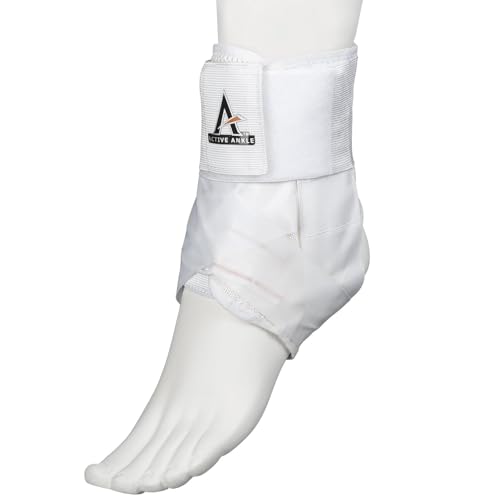
5. Active Ankle AS1 Pro Lace Up Ankle Brace
A flexible lace-up that holds a roll without feeling like a cast.
The AS1 Pro is for the player who wants protection but still needs to move. It uses a pro-fit design that trims excess material at the forefoot and opens up a wider, more comfortable heel hole to cut down on rubbing. Non-slip silicone printing on the sole keeps the straps where you put them through volleyball, basketball, and tennis. The figure-8 and circumferential straps stabilize the brace, and the non-stretch vertical straps imitate the basket-weave and heel-lock taping a trainer would do.
Material quality is what stands out most on this brace, with support right behind it. Neoprene gives it a bit of spring, and one parent who tried other semi-rigid braces came back to this one: the family found it more flexible and easier to fit into their daughter’s shoes. An owner who was skeptical about a treadmill ankle problem ended up giving it five stars and would buy it again. It weighs 6.72 ounces, so it is the heaviest lace-up here — worth knowing if weight in the shoe matters to you.
Getting it on takes a read of the directions the first couple of times; after that it goes on quickly. The criss-cross straps can loosen and shift out of place over a session, so retighten them as you go. The fit runs a little either way, snug for some and big for others, so check the size range against your foot. For a brace you want to move freely in, the flexibility is the sell.
The case for it
- Non-stretch vertical straps copy a trainer’s basket-weave and heel-lock taping.
- Non-slip silicone on the sole keeps the straps from sliding during play.
- A wider heel hole and trimmed forefoot cut down on rubbing.
- More flexible than a rigid brace, so your foot still moves.
The honest limits
- The criss-cross straps can loosen and shift during a session.
- Fit runs a little big for some and snug for others.
- Learning the lacing takes a couple of tries at first.
Choose this if: you want a lace-up that resists the roll but still lets your ankle flex through jumps and cuts.
Not for you if: you want a rigid wall of support or a fit that lands the same for every foot.
6. ARYSE IFAST Ankle Brace
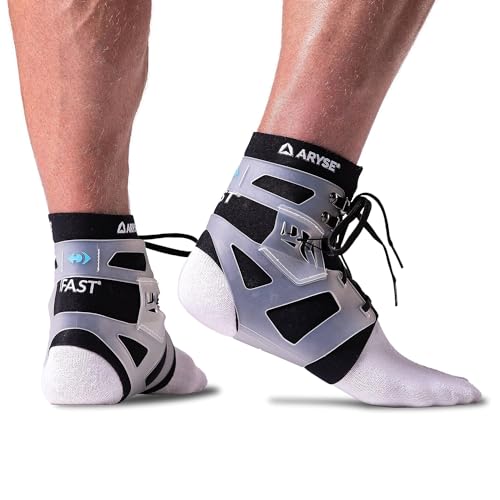
The lightest one here — slides on like a sock and disappears into a shoe.
At 0.12 kg, the ARYSE IFAST is the lightest brace on this list by a clear margin. It is built as an alternative to traditional lace-up braces, slipping on and molding to the foot’s shape instead of needing to be threaded and tightened. You do not have to size up your shoes for it, which is the point for people who want support without a bulky footprint. The material mix of thermoplastic polyurethane, neoprene, lycra, and nylon is designed to mirror the ankle joint’s own structure.
Where it wins is convenience and low profile. It fits into almost all athletic footwear, and the design lets you adjust the support and stabilization to your liking. Owners who play high-intensity sports after a serious foot injury have called it the best of the braces they tried, with good range of motion and no pain during play. It is hand wash only, so keep that in mind for upkeep.
The honest weakness is durability and support. A few owners mention the neoprene insert unraveling after a couple of wears, and one wearer found the rivet top lace holes pressed into the skin and hurt. Some find a softer compression useful underneath it rather than relying on it alone for heavy support. So it suits the player who wants a barely-there brace with adjustable hold, not the one who needs the strongest wall against a roll.
What it nails: a sock-like slip-on at 0.12 kg that fits inside almost any shoe without upsizing.
What to know: a handful of buyers hit unraveling neoprene, and the rivet lace holes can press into the ankle.
Good for: players who want a low-bulk brace they can pull on and wear in any shoe.
Less suited to: anyone who needs the strongest possible anti-roll support or long-term heavy use.
7. McDavid Bio-Logix Ankle Brace
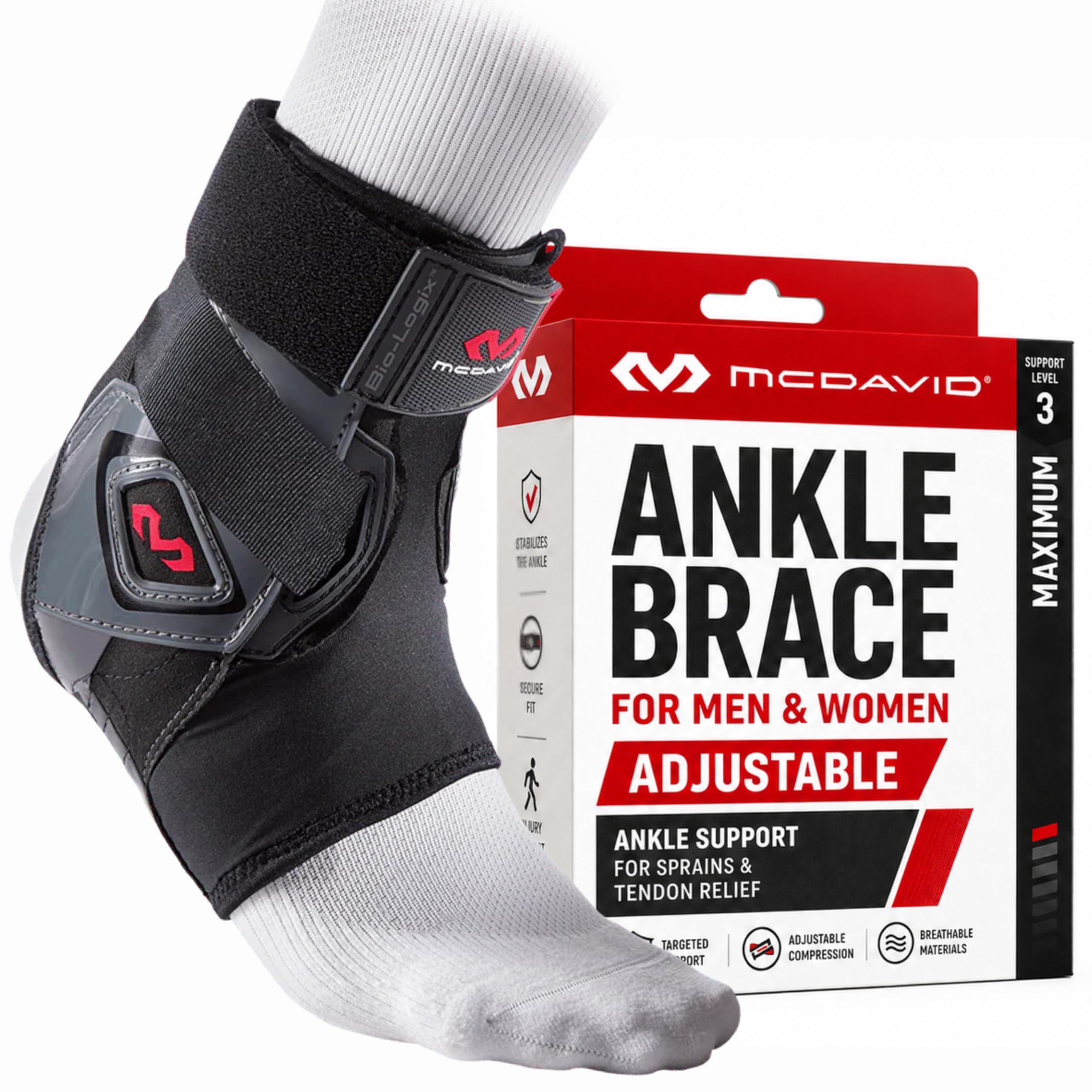
Built around a hinge and memory foam, made for wearing through a long workday.
The McDavid Bio-Logix takes a different approach from the lace-ups. It uses a flex-link hinge design to support the ankle while moving with the body, plus a stretchy elastic ankle wrap you can adjust. Memory foam padding rings the ankle joint and multiple anchor straps let you tighten it to your liking. Quality is the thing it is best known for, and the support for a rolled ankle rates close behind. It is made for moderate ankle instability and conditions, including Achilles tendon trouble.
Where this brace earns its keep is all-day wear. A construction worker wearing it after a broken talus bone climbed ladders daily and said it kept the ankle from aching by day’s end, calling it comfy and unobtrusive. The contoured splints with neoprene padding give a snug, supportive shape that helps on stairs and sprains alike. It comes in specific left or right versions and is built for men and women, including teen athletes.
The catch is the fit at the bottom of the foot. The brace is thick, so it is hard to get into some shoes and you may need a half size up. A tight small size can cut circulation, and one wearer felt a hard nub under the foot that made walking painful. The maker says to size up if your measurement sits at the top of the range. If you can wear it in a roomier shoe, it is a comfortable, supportive brace for the day.
Why it suits long days
- Flex-link hinge supports the ankle while letting it move with the body.
- Memory foam padding and multiple anchor straps give a dialed-in, adjustable fit.
- Built to handle moderate instability, including Achilles tendon trouble.
- Comes in specific left or right versions for men and women.
The catches
- Thick build makes it hard to fit into some shoes.
- A tight small size can cut circulation at the bottom of the foot.
- Size up if your measurement is near the top of the range.
Reach for this if: you need support for a long workday or recovery period and have a roomier shoe to wear it in.
Think twice if: you need a low-profile brace to sit inside a fitted athletic shoe.
Know the Specs
These are the four specs that decide whether a brace helps your overpronation and whether you will actually wear it. Here is what each one means in plain words.
Figure-8 Strapping
A figure-8 strap wraps under the arch and crosses over the top of the foot in a loop shaped like the number eight. That pattern pulls the ankle against rolling in both directions. It is the same idea as a trainer’s athletic tape job, but built into the brace so you can re-tighten it. When you see figure-8 straps, expect support that resists a twist rather than just squeezing the joint.
Lace-Up vs. Pull-On Closure
Closure is how the brace fastens. Lace-up designs thread through eyelets and let you dial the compression precisely, but they take longer to put on. Speed-lace versions use velcro tabs so you can fasten in seconds. Pull-on sleeves slide on like a sock for the fastest fit but offer the least adjustment. Choose based on how much time you want to spend each practice and how precisely you need the fit.
Side Stays and Guards
Stays are stiff strips of plastic built into the sides of the brace. Guards are shells that sit over the ankle bones. Both add a physical wall against the inward roll, on top of the strap tension. Removable stays let you take them out if they press on your ankle bone. If your ankle rolls hard, a brace with stays or guards on both sides gives you more resistance than straps alone.
Low Profile and Item Weight
Low profile means the brace is thin enough to slide inside a shoe without crowding your foot. Item weight is the brace’s own weight in ounces or kilograms, and lighter braces feel less like an anchor in your shoe. Low profile and light weight often go together, but not always. The heavier a brace gets, the more padding and structure it usually has, which can mean more support but less shoe room.
Common Questions
Does an ankle brace help with overpronation?
Will a lace-up ankle brace fit inside my cleats?
Should I size up or down if my measurement is between two sizes?
What is the difference between a figure-8 strap and a plain compression sleeve?
How long should an ankle brace last with regular use?
Can I wear an ankle brace on either foot?
Is a rigid brace better than a flexible one for overpronation?
Do these ankle braces work for Achilles tendon problems?
The Bottom Line
For most players fighting an inward roll, the ankle brace for overpronation winner is the Zamst A2-DX because its stirrup-action straps and side guards are built specifically to stop the joint from rolling, and it holds the crowd favorite spot at 4.5+ stars across 1,100+ owners. If you need a brace that slips into a cleat for recovery, grab the Ultra 360 Lace-Up. And for all-day wear through a long workday, the McDavid Bio-Logix is the one to reach for.
How we choose
We do not accept paid placement. Every pick is matched to a real buyer and a real use-case; we do not hands-on test units.
Sources
Specifications: manufacturer listings and product documentation. Review insights: verified customer reviews, as of October 2026. Pricing: not shown on this page (it changes often); check the current price via the retailer link.
As an Amazon Associate, Aappliancez earns from qualifying purchases. This does not affect which products we feature.