Disclosure: Some links in this post are affiliate links. As an Amazon Associate I earn from qualifying purchases, at no extra cost to you. Learn more
Specs are compiled from manufacturer listings and verified buyer reviews and can change over time — please confirm the key details on the product page before buying.
Your ankle rolls, you hear the pop, and six weeks of your season disappear in a second. The brace that actually prevents that is the one built to stop sideways roll without freezing your foot in place — and the Zamst A2-DX does exactly that, which is why it leads this list. Every pick below is judged on one thing: whether it holds your joint steady during cutting and landing, and whether it still fits inside your shoe afterward.
This guide is built by comparing the manufacturers’ published specifications and the patterns across verified customer reviews, so you get each pick’s real strengths and trade-offs instead of marketing spin.
You will see the difference between a rigid guard, a figure-8 strap system, and a plain compression sleeve — and which one belongs on your foot. Read on for the picks that hold up when you plant and cut, chosen for the ankle brace for athletes crowd.
Top Picks

How To Choose The Best Ankle Brace for Athletes
Buying an ankle brace is really a two-part question: how much sideways roll do you need blocked, and how much room is left in your shoe after the brace goes on? Get those two answers right and the rest is detail. Get them wrong and you end up with a brace that either cannot fit in your cleats or does not stop the roll that hurt you last season.
Guard, straps, or sleeve — pick your protection level
The highest level of protection comes from a brace with rigid side guards, because plastic or TPU panels physically block the ankle from rolling over. The Zamst A2-DX and the DonJoy POD both use this approach. A middle step is the lace-up or figure-8 design, where straps pull up from the heel and mimic an athletic trainer’s tape job. The lightest level is a compression sleeve like the Bauerfeind, which steadies a weak ankle but does not stop a hard roll.
Will it actually fit in your shoe?
This is the question most buyers forget, and the one they regret. A brace with rigid guards adds real bulk around the heel and sides, so it can crowd a snug basketball shoe. Low-profile designs slide into most shoes but give up some blocking power. If you play in tight cleats, weigh fit as heavily as you weigh support.
Left, right, or either foot
Some braces are cut specifically for the left or right foot, which gives a snugger, more anatomically correct fit. The Zamst A2-DX is sold that way. Others, like the Mueller The One, fit both ankles. If you are buying a pair for two feet, check which design you are ordering before you commit.
Know your size before you click buy
An ankle brace that is too small is uncomfortable and one that is too large slides and gives no support. Measure your foot and follow the maker’s chart, and when in doubt on a borderline measurement, size up. A brace only works when it is snug enough to hold, not so tight it cuts circulation.
Side-by-Side Comparison
| Model | Best For | Support Style | Closure | Weight | Amazon |
|---|---|---|---|---|---|
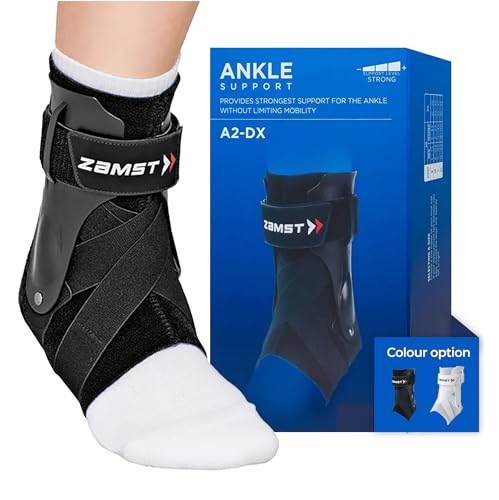
| Zamst A2-DX Sports Ankle Brace★ Best Overall | High ankle sprains and chronic instability | Guards + cross strap | Pull On | 5.44 ounces | Amazon |
| DonJoy Performance PODBest for Roll Prevention | Roll prevention in tennis and pickleball | Molded TPU shell | Hook & Loop | — | Amazon |
| Ultra 360 Lace-Up | Recovery and jump-heavy sports | Figure-8 straps + lace-up | Lace-Up | 0.06 kg | Amazon |
| Mueller The One | Everyday sprain support, either foot | Figure-8 strapping + speed lace | Adjustable | 0.14 kg | Amazon |
| McDavid Phantom | Quick on/off in tight shoes | Flex-support stays + wraps | Lace-free rear entry | 0.05 kg | Amazon |
| Bauerfeind Sports Ankle Support Dynamic | Compression for a mostly healthy ankle | Compression knit sleeve | Pull On | 0.03 kg | Amazon |
| Ankle Brace with Removable Side Splints | Budget triple-lock support | Cross straps + removable splints | Hook & Loop | 0.19 kg | Amazon |
Detailed Reviews
1. Zamst A2-DX Sports Ankle Brace with Protective Guards
Our pick — 4.5+★ from 1,000+ verified ratings; the strongest balance of quality and price.
The brace built to block the sideways roll that ends seasons.
If you have already rolled your ankle hard — the kind of high sprain that keeps a basketball or volleyball player out for weeks — this is the brace to start with. It puts a pair of protective side guards against your ankle and pulls a cross strap up from the heel in a stirrup motion. That combination is what stops the joint from rolling over during a hard landing or a quick cut.
The A2-DX is built with an awareness of something most braces ignore: your ankle sits differently on the inside and the outside. It comes in specific left and right versions with their own width on each side, so the fit is snug without being restrictive. At 5.44 ounces it adds little to your foot, and the thin, ventilated nylon, polyester and elastane construction keeps it breathable during sweaty gym sessions. The material and rivets allow natural up-and-down movement while the lateral support stays locked.
This is the crowd favorite here — 4.5+ stars across 1,100+ owners — and what wins them over most is the sheer support, especially for high ankles and chronic instability. Buyers report three years of use and still counting. The honest catch: getting it on takes some practice, and it can be tough to work inside a tight shoe. Younger athletes may need a hand tightening it the first few times. The maker also advises that if your measurement lands between two sizes, take the larger one.
What carries a hard landing
- Protective side guards hold the joint steady against roll.
- Cross strap and plantar strap pull up from the heel for stirrup-style support.
- 5.44 ounces with ventilated nylon, polyester and elastane.
- Left/right-specific sizing gives a snug, non-restrictive fit.
Where it pushes back
- Takes practice to put on and tighten correctly.
- Can crowd a tight shoe, so check your cleat room.
- Athletes still learning may need help with the first few wears.
Reach for this if: you need serious blocking power for high sprains or a chronically unstable ankle in basketball, tennis, football or volleyball.
Think twice if: you play in snug shoes and need a brace you can pull on in seconds.
2. DonJoy Performance POD ANKLE SUPPORT
Rigid shell, soft lining, and no laces to fumble with.
Here is the brace for the tennis or pickleball player who keeps catching an edge and rolling. It wears a molded TPU shell — a hard plastic outer cup that adapts to the shape of your foot and blocks the roll — over a super soft EVA underlayer that keeps the plastic from digging in. The DonJoy measures 9.25 x 5.7 x 3.75 inches, a slightly longer size than the 10.24 x 5.31 x 2.95 inches of the Zamst above, which gives it a different footprint around the heel.
What people rave about is stability. The brace is engineered to boost your natural range of motion, then engage where it matters, so you are not walking around in a locked boot. Put it on and off is quick thanks to the hook-and-loop closure — no laces at all. The soft EVA lining inside the shell makes long sessions easier on the skin than a bare plastic cup.
The trade-off is mostly about room. Owners repeatedly note that it can run too large for some athletic shoes, especially around the heel, and that swelling during a session forces you to loosen the strap. A few wish the side support climbed higher. Still, owners mention the velcro holding up over years, and it remains a favorite for players who want protection without laces.
Where it shines: roll-blocking is the whole point here, and the rigid shell delivers it without the fuss of laces.
The friction point: bulk and shoe fit — this is a brace to try with your actual game shoes before trusting it in a match.
Best for: tennis and pickleball players nursing a worn ligament who want a quick, lace-free brace.
Skip if: your shoe is already snug at the heel and you cannot spare the room.
3. Ultra 360 Lace-Up Ankle Brace
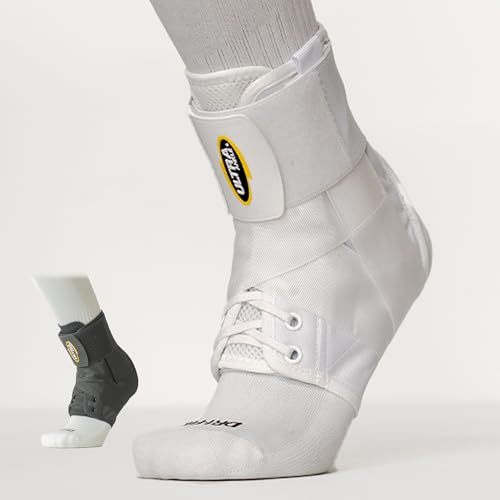
Taping-job stability in a lace-up you can retie yourself.
For volleyball and basketball players who land on other people’s feet, this is the closest thing to having a trainer tape your ankle before every game. The figure-8 straps pull across the joint the way athletic tape would, and the lace-up front lets you dial in compression rather than hoping one size fits. It is a real stabilizer for cutting and jumping, not just a sleeve.
It weighs a mere 0.06 kg, which explains why the people who love it call it lightweight but heavy-duty when worn properly. The strapping earns the most praise — it is what most owners single out as the reason they trust it after a sprain. It holds up through a full season, and players who lace up for practice and games week after week say it earns its price.
The recurring gripe is shoe fit. The brace is thicker than a sleeve, so it simply will not slide into some players’ shoes, and a few find it bulky. The other thing to plan for is the lace tension: tight enough to hold, but too tight and the bottom of your foot suffers. If you are between sizes, sizing down to reduce bulk can backfire and make it uncomfortable — the safer bet is to match your shoe size and adjust the laces.
Why athletes keep it: the figure-8 strapping mimics a taped ankle, and it holds up through practices and games.
Be ready for: it needs shoe room and a properly snug lace job — this is not a slip-on.
Pick this if: you play jump-heavy sports and want taped-ankle support you control yourself.
Look elsewhere if: your cleats are already tight and you need the thinnest profile possible.
4. Mueller Sports Medicine The One Ankle Brace
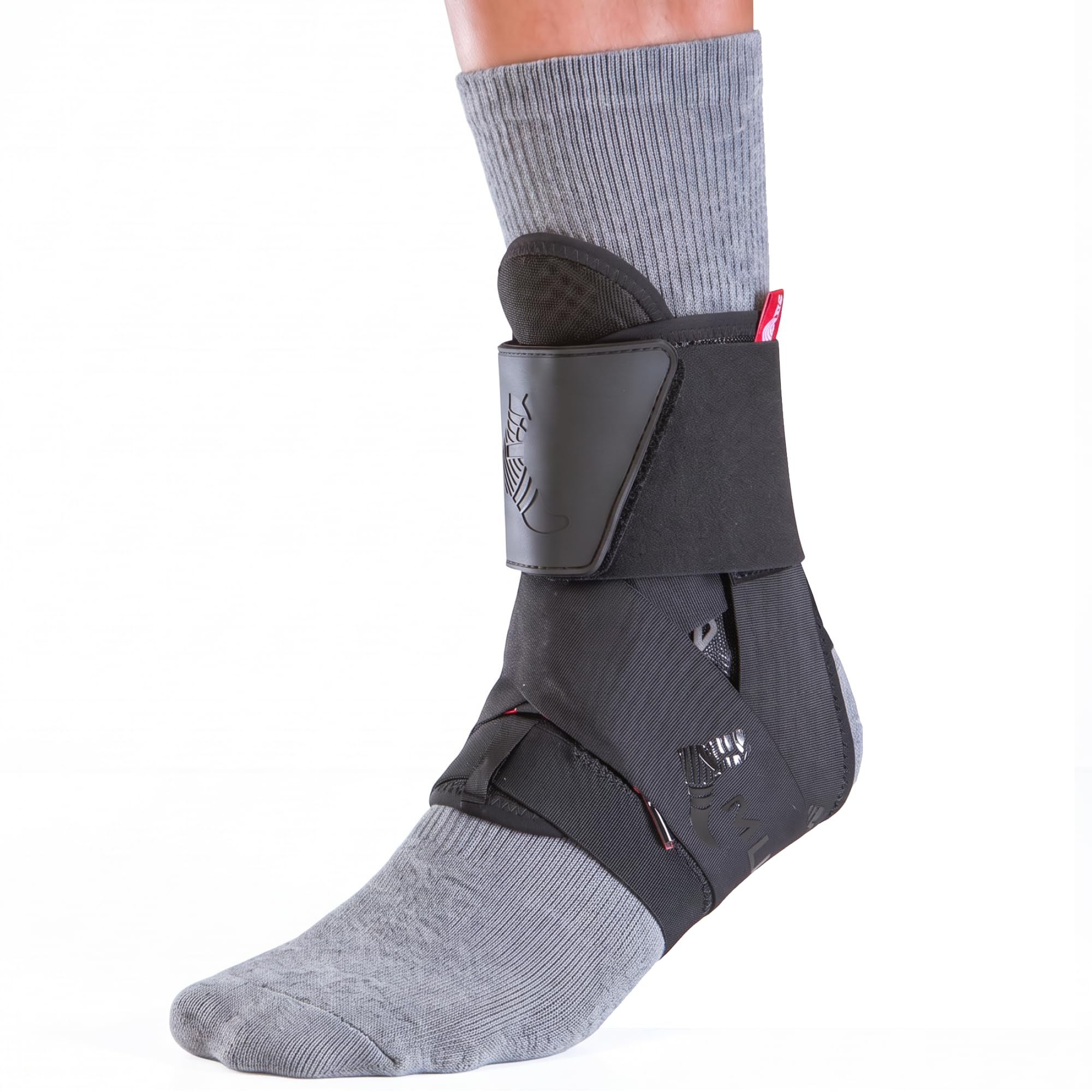
A figure-8 system that slides on and stays put, either foot.
This one is for the multi-sport athlete coming back from a sprain who wants support they can slip on quickly. The One uses a figure-8 strapping system with an integrated speed-lacing setup — fewer eyelets and flat laces — so it goes on and off faster than a traditional lace-up. A grip coating helps it stay put during play, and it fits both right and left ankles.
Sizing runs to Men’s shoe 7-9, Women’s shoe 8-10, and Euro 40-42, so check that before ordering. What owners like best is the supportiveness, and they appreciate that it holds you steady without restricting movement — one basketball, volleyball and softball player moves freely with it on. It also lets you walk close to normally while a sprain heals.
The honest catch is the forefoot elastic. It can feel binding when your ankle is swollen, and the brace takes a bit of time to lace up and sits fairly thick in a shoe. Some find the velcro straps have no fixed point and snag the brace material. If your shoe size lands on the edge of the range, confirm your foot length before committing.
The strong point: a speed-lace figure-8 that supports without locking you stiff, and it works on either ankle.
Worth knowing: the forefoot elastic runs snug, so swollen ankles may want it looser.
Good fit for: athletes in the 7-9 men’s or 8-10 women’s range who want fast on/off recovery support.
Consider another pick if: you have a wide or swollen forefoot that needs extra slack.
5. McDavid Phantom Ankle Brace
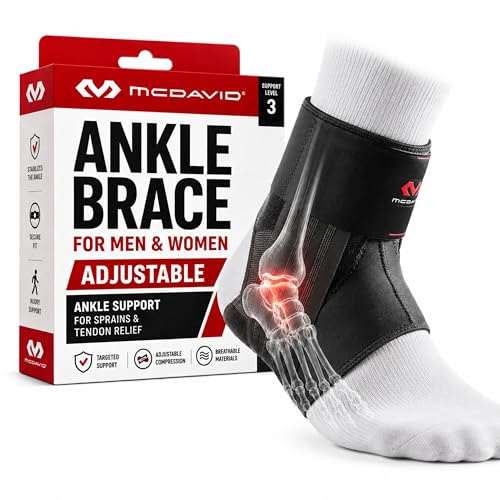
Rear-entry, lace-free, and inside your shoe in seconds.
For the athlete who hates fiddling with laces in a locker room, the McDavid Phantom slides on from the back and cinches with non-slip straps. It is built for both left and right ankles, so one design covers both feet. It works as a soccer, football, basketball or volleyball brace where you want compression and moderate protection without a bulky lace-up.
The appeal is speed and comfort. Owners call it their go-to in-shoe brace and note it is far easier to use than a traditional lace-up while offering nearly the same support as a figure-8. It is light at 0.05 kg with a low-profile build and non-slip straps that keep it seated. The polyester and nylon construction is durable, and the flex-support stays give it some backbone.
Be realistic about the protection level: it is less stable than a full lace-up brace, so on truly uneven ground you may want something heavier. There is also a wear concern — the plastic side stabilizers can eventually push through the fabric after long use, which caused trouble for one runner. At 1.1 inches thick, it still adds some material inside a snug shoe, so try it with your game footwear.
Why quick matters
- Rear-entry lace-free design goes on in seconds.
- Fits either left or right ankle.
- Light at 0.05 kg with a low-profile build.
- Non-slip straps keep it seated during activity.
Trade-offs to weigh
- Less stable than a full lace-up brace.
- Plastic stays can wear through fabric over long use.
- 1.1 inches thick adds some shoe room.
Go with it if: you want moderate protection you can pull on fast between practices.
Leave it if: you need maximum roll-blocking for a badly unstable ankle.
6. Bauerfeind Sports Ankle Support Dynamic
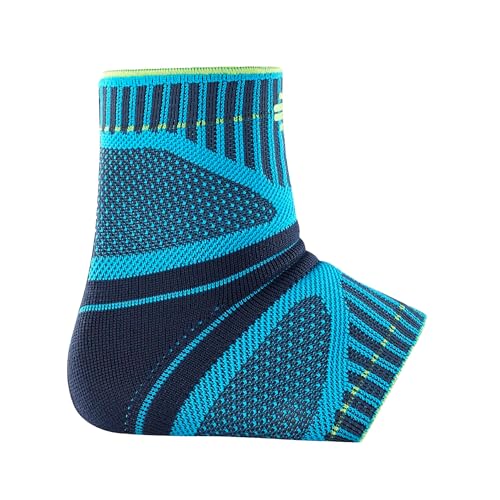
A featherweight knit sleeve for a strong, mostly healthy ankle.
This is not a roll-blocker and it is not trying to be. It is a slim compression sleeve for the athlete whose ankle is basically sound and who wants steadying compression and a better feel for where the foot is during movement. It weighs just 0.03 kg and slips on, so it disappears under most athletic footwear.
The 3D AirKnit fabric is the story: a light, airy knit that the maker says is more durable and flexible than neoprene, and it is machine washable while holding its stretch. The maker also says the compression is built to improve proprioception — your sense of where the ankle sits in space — rather than limit motion. For the person with a weak ankle who wants to keep moving freely, support is exactly what this sleeve is praised for, and it fits well when sized right.
Be clear-eyed about what a sleeve can and cannot do. It will not replace a rigid brace that blocks lateral movement, and the fit and compression draw mixed views — some find the same size too tight, and it runs tight around the foot. Some wearers skip socks because the extra layer adds pressure. This is the pick for a healthy or nearly healed ankle, not a fresh severe sprain.
What makes it distinct: German-made 3D AirKnit compression that steadies a weak ankle without a hard shell.
The limit: it will not stop a hard roll — pair it with a rigid brace for that.
Right choice if: your ankle is healthy or nearly recovered and you want light compression under your shoes.
Not your brace if: you have a severe sprain that needs rigid side support.
7. Ankle Brace for Men Women with Removable Side Splints
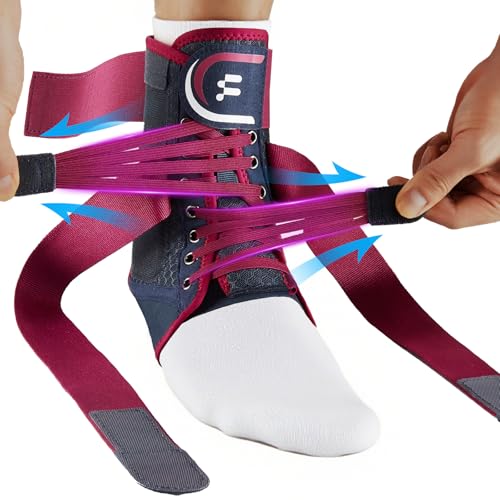
A value option that layers compression, splints, and cross straps.
On paper this Fitomo brace packs a lot in for a budget-friendly pick: a triple-lock system that combines a top compression strap, two removable side stabilizers, and cross straps. The figure-8 straps let you dial in how tight you want it, and the splints come out when you want a more flexible feel for everyday wear. It is a polyester-and-nylon build with hook-and-loop closure, and it is meant to stay put during basketball and workouts.
The removable splints are the clever part — leave them in for rigidity during recovery or sport, take them out when you just want light support around the house. It is also described as low-profile enough for most shoes. For the athlete testing the waters on a first brace, that flexibility is appealing. Be aware, though, that this is a design where the details matter a lot, and the fit and fastening need to be right for it to work.
Here is where buyers have hit trouble. Several report that the hook-and-loop fasteners lost their grip too soon, and one noted the velcro closure on a unit was falling apart within a short span. Others found the sizing ran off — a small fitting like a medium, with excess strap fabric on wide feet — and that it can feel awkward to put on. The honest read: this is the choice if you want to try a triple-lock design without committing much, but check the sizing and fastening carefully on arrival and treat the velcro gently.
The draw: removable side splints, cross straps and figure-8 adjustment in one budget-friendly brace.
The caveat: sizing and fastener durability are inconsistent, so verify fit early.
Worth a look if: you want to experiment with a triple-lock support design on a budget.
Hold off if: you need a proven fit and long-lasting fasteners right out of the gate.
Know the Specs
Support style: guards vs. straps vs. sleeve
A rigid guard is a hard plastic or TPU panel that physically stops your ankle from rolling over — the highest protection, and the bulkiest. A figure-8 or lace-up strap system pulls across the joint like tape, giving strong support with more flexibility. A compression sleeve adds steadying pressure but does not block a hard roll. Match the style to how unstable your ankle really is.
Closure type: pull-on, lace-up, or hook-and-loop
Pull-on sleeves slide on like a sock and are the fastest and lowest-profile. Lace-up designs give the most adjustable, taped-like hold but take time to put on. Hook-and-loop (velcro) straps land in between — quick to adjust, but the fasteners need cleaning and care to keep their grip. Left/right-specific cuts fit snugger than a one-size design that covers either foot.
Weight and shoe fit
Brace weight is measured in grams or ounces, and light braces are easier to wear all game — the Bauerfeind is 0.03 kg, the Ultra 360 is 0.06 kg. But low weight is not the same as a low profile. A brace with rigid guards or thick shells adds bulk around the heel and sides, so check it against your actual game shoe before trusting it in a match.
Materials and care
Braces use breathable synthetics like nylon, polyester, elastane, knit fabric, and TPU or EVA for hard shells and soft liners. Ventilated knits breathe better and dry faster during sweaty sessions. Most braces here call for hand washing — machine washing can break down the fasteners and stretch the fit. Check the maker’s care instructions before your first wear.
Common Questions
Will a rigid ankle brace fit inside basketball shoes?
Is a lace-up brace better than a compression sleeve?
Should I buy a left/right-specific brace or one that fits either foot?
How do I size an ankle brace correctly?
Can an ankle brace prevent a sprain or a break?
How long do the velcro fasteners last?
Should I wear socks with a compression sleeve?
Is a lace-free brace as supportive as a lace-up?
Can I use an ankle brace for sports other than basketball and volleyball?
How do I clean and care for my ankle brace?
The Bottom Line
For most athletes, the ankle brace for athletes winner is the Zamst A2-DX because its protective side guards and heel-pulled cross strap block the roll that causes high sprains and chronic instability — and it has the feedback to back it up, sitting at 4.5+ stars from 1,100+ owners. If you want lace-free roll prevention for tennis or pickleball, the DonJoy POD is the one. And for fast, taping-like support you control yourself, the Ultra 360 lace-up is the satisfying pick. Whichever you choose, check the fit inside your game shoe first — the best brace stays on your foot and inside your shoe at the same time.
How we choose
We do not accept paid placement. Every pick is matched to a real buyer and a real use-case; we do not hands-on test units.
Sources
Specifications: manufacturer listings and product documentation. Review insights: verified customer reviews, as of October 2026. Pricing: not shown on this page (it changes often); check the current price via the retailer link.
As an Amazon Associate, Aappliancez earns from qualifying purchases. This does not affect which products we feature.