Disclosure: Some links in this post are affiliate links. As an Amazon Associate I earn from qualifying purchases, at no extra cost to you. Learn more
Specs are compiled from manufacturer listings and verified buyer reviews and can change over time — please confirm the key details on the product page before buying.
If your pontoon keeps drifting off the sandbar while everyone else stays put, the anchor is the problem — not your knot. A pontoon is a giant flat sail, so it catches wind and current that a deep-V hull shrugs off. That is why a heavy fluke that bites into sand or mud beats a lighter anchor that just skids across the bottom. Below are seven anchors and anchor kits that actually hold a pontoon, sorted by what each one does best.
This guide is built by comparing the manufacturers’ published specifications and the patterns across verified customer reviews, so you get each pick’s real strengths and trade-offs instead of marketing spin.
Three things decide whether your pontoon stays put: how heavy the anchor is, how much chain sits in front of it, and whether the flukes (the pointed blades that dig into the bottom) can bite. The picks below cover all three, from a 5-pound screw-in sand anchor to an electric winch that lifts a 35-pound anchor at the push of a button, so you can find the anchors for pontoons that fits your lake and your back.
Top Picks

How To Choose The Best Anchors for Pontoons
A pontoon boat has more surface area above the water than almost any other boat its length, so wind pushes it around like a kite. Whatever anchor you pick has to bite and hold against that push, not just sit on the bottom. Here are the four things that decide whether you stay put or drift into the next cove.
Anchor weight and your boat’s size rating
Every anchor comes with a boat-size range, and that range is the fastest way to filter the list. A 13-pound fluke anchor rated for 20 to 32-foot boats covers most pontoons, while an 8-pound fluke rated for 12 to 22-foot boats fits smaller ‘toons. Going heavier than your rating gives you a bigger margin on a windy day, but it also means more weight to haul up by hand.
Why chain in front of the anchor does the real work
Chain is what keeps the pull on your anchor flat along the bottom instead of lifting the flukes up. A short length of chain is the difference between an anchor that digs in and one that skips. In current, 6 to 8 feet of chain holds a fluke flat better than adding 5 pounds of anchor weight.
Fluke, box, or screw-in, by bottom type
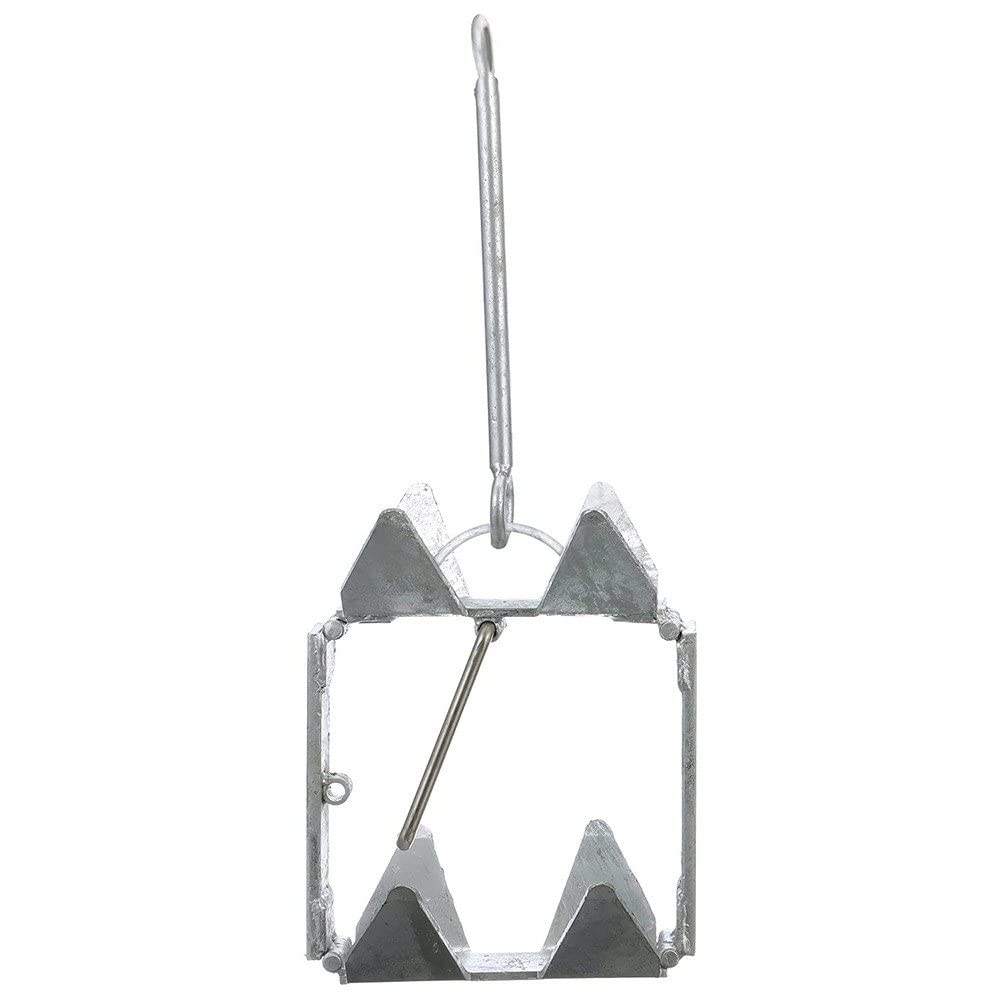
Fluke anchors dig into sand and mud and fold flat for storage, which is why they dominate pontoon kits. Box anchors open like a square cage and set in almost any bottom, including rock and silt. Screw-in sand anchors twist into shallow sandbars and hold with mechanical grip instead of weight, which makes them the lightest option on this list.
Manual pull versus an electric winch
Hauling mud-caked rope hand over hand is the part pontoon owners dread most. If you anchor often or your anchor runs heavy, a 12-volt winch that raises and lowers by button keeps wet line out of the boat and off your hands.
Side-by-Side Comparison
| Model | Best For | Anchor Weight | Boat Size Rating | Bottom Type | Amazon |
|---|---|---|---|---|---|
| Extreme Max 3006.6652 BoatTector Cube Anchor★ Best Overall | Holding in shifting wind and tide | 19 lbs | 18’–30′ offshore boats, cabin cruisers to 24′ | Sand, mud, silt, rock | Amazon |
| Seachoice Fold-and-Hold AnchorBest For Small Craft | Personal watercraft and small boats | 13 lbs | Personal watercraft (maker-rated) | Any bottom surface | Amazon |
| MARINE SYSTEM Anchor Kit | Budget all-in-one kit for smaller pontoons | 8 lbs | 12–22 FT | Sand, mud, rock, river current | Amazon |
| Young Marine Fluke Anchor Kit | Mid-size pontoons needing heavier bite | 10 lbs | 16–26 FT | Sand, mud, river current | Amazon |
| SandShark Supersport 3.0 Shallow Water Anchor | Sandbar and shallow-water hanging out | 5 lbs | Boats up to 24 feet and jet skis | Sand and shallow water | Amazon |
| Better Boat Heavy Duty Fluke Anchor Kit | Any pontoon that needs a complete ready-to-rig kit | 13 lbs | 20–32 FT | Sand and mud; salt or fresh water | Amazon |
| Camco TRAC Outdoors Pontoon 35-G3 Anchor Winch | One-button raising and lowering | Up to 35 lb capacity (anchor not included) | Pontoon (maker-rated) | Whatever anchor you pair with it | Amazon |
Detailed Reviews
1. Extreme Max 3006.6652 BoatTector Zinc-Plated Cube Anchor
Our pick — 4.5+★ from 700+ verified ratings; the strongest balance of quality and price.
The box anchor that resets itself every time the wind swings around.
Most anchors only hold in one direction. Turn the boat with the wind and the flukes lift, which is where the drifting starts. This box-style anchor is built differently: the 19-pound cage design sets and holds almost immediately, and it adjusts its own positioning when the wind or current changes direction. For a pontoon that swings on its lines all afternoon, that self-correcting behavior is the whole reason it earns the top spot.
Stability is what wins people over here. The same grip that holds a 24-foot pontoon steady in strong current and waves also keeps it planted through a summer squall. Buyers report it holding a 20-foot pontoon through a thunderstorm microburst with boat-traffic waves rolling past. That matches its crowd rating: 4.5+ stars across 700+ ratings, the most reviewed anchor on this list.
Storage is the quiet bonus. Open dimensions run 15 by 12 by 8 inches, and it collapses to 22.25 by 8 by 4.5 inches, which means it slides under a bow seat instead of rattling around the deck. The catch is the latch. Several owners find it hard to work, and the folding action takes a firm hand — treat the mechanism gently and you won’t fight it. It is also the heaviest anchor here at 19 pounds, so pulling it up by hand takes some muscle.
What It Does Best
- Self-adjusting box design repositions through wind and current changes
- Holds in sand, mud, silt, and 12-inch shallow rock bottom
- Collapses to 22.25 x 8 x 4.5 inches for under-seat storage
- Zinc-plated finish for freshwater use
- Grade 8 alloy steel construction
What To Plan Around
- 19 pounds of anchor to haul up by hand
- The folding latch takes a firm, deliberate hand
- Zinc plating is a freshwater finish, not a saltwater one
Reach for this if: you anchor a 18–30 ft pontoon or deck boat in shifting wind and want an anchor that resets itself without you re-dropping it.
Look elsewhere if: you moor in saltwater all season — the zinc-plated finish is aimed at freshwater, and the heavy box is a lot to pull by hand every afternoon.
2. Seachoice Hot-Dipped Galvanized Steel Fold-and-Hold Anchor
A folding 13-pounder that sets on contact and stows almost anywhere.
Drop it, feel it bite, done — that is the pitch of a fold-and-hold anchor, and this 13-pound version is the anchor Seachoice builds for personal watercraft and small boats. The weight is the working part: heavy enough to drive the flukes down the moment it hits bottom, light enough that pulling it back up over the rail isn’t a chore. It sets quickly across any bottom surface, which is the sort of no-fuss performance you want when you are alone at the wheel.
Build quality is what carries this pick. The hot-dipped galvanized steel (steel dipped in molten zinc so it resists rust) holds up far better than a sprayed or plated finish, so it survives season after season of wet storage. It also folds flat to 8 by 19 by 6 inches, so it tucks into a locker or under a seat — tighter spots than a rigid box anchor fits. Owners anchor through 15 mph winds and chop without losing position, and the galvanized flukes keep their grip on muddy and sandy bottoms season after season.
Honest caveat: the locking mechanism is the recurring gripe, with some buyers finding the fold latch fiddly to set and release. That is a small slice of a 4.5+ star product, and it is mostly a matter of learning the motion. If you anchor from a pontoon in deeper water rather than skimming the shallows on a PWC, a heavier anchor with a longer chain is the safer call.
Worth the extra ounces: the hot-dipped galvanizing is the real upgrade over entry anchors — it means the steel stays intact across seasons instead of flaking like thin plating does.
Where it falls short: the folding latch asks for a deliberate hand. Get the sequence wrong and the flukes don’t lock open, so practice it once on the dock before you trust it in open water.
The verdict: a straightforward pick for jet ski, tender, and small-boat duty where you want a 13-pound anchor that folds flat and doesn’t corrode after one season.
Skip this one if: you need to hold a full-size pontoon in open water — this one is sized and marketed for personal watercraft, not 24-foot ‘toons.
3. MARINE SYSTEM Anchor Kit Fluke Anchor
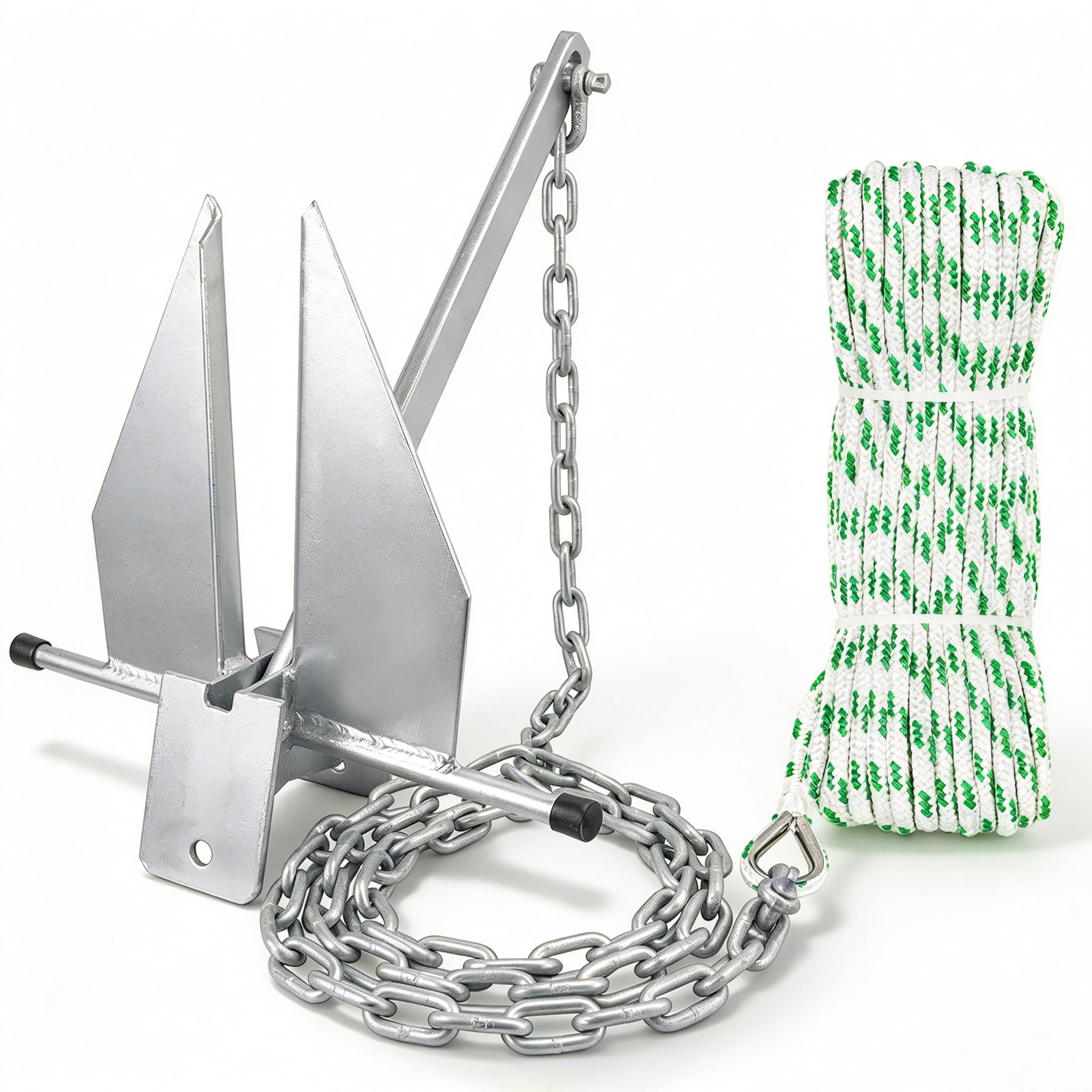
The one-box kit that gets a small pontoon anchored the day it arrives.
Everything you need to anchor shows up in one package here: the 8-pound hot-dipped galvanized fluke anchor, 6.5 feet of 1/4-inch chain, 75 feet of 3/8-inch nylon rope, and two 5/16-inch shackles. The fluke itself measures 19.75 by 14.5 by 4.5 inches and is rated for boats from 12 to 22 feet. Nothing is sold separately, and nothing needs a trip back to the marina store.
The chain is the detail that separates this kit from a bare anchor. That 6.5 feet of chain does the work of keeping the pull flat along the bottom — which is why the anchor digs in just right and stops the drift. Owners mention the 8-pound fluke digging in just right to stop their pontoon from drifting. The 75-foot rope also covers a wide range of depths without splicing an extension on the bow cleat.
Compared with the Young Marine kit on this list, this one is built for a smaller boat: a 12 to 22-foot rating against the Young Marine’s 16 to 26-foot range, with a thinner chain too, 1/4-inch against 5/16-inch. On a 20-foot Suntracker-style pontoon fishing in a rippling current, that 8-pound anchor plus chain holds the line without a dock or tree to tie off. The one thing missing is a bag — the chain and rope arrive loose, so you need a locker to store them.
Best Of
- Complete kit: anchor, chain, rope, and shackles in one box
- 75 feet of nylon rope and 6.5 feet of chain for stability
- Holds on sand, mud, and rocky bottoms in river current
- Matched components that connect without extra parts
The Trade-Off
- 8-pound anchor is sized for smaller boats, not big pontoons
- Thinner 1/4-inch chain than the heavier kits on this list
- No carry bag, so loose rope and chain need their own storage
Go with this kit: for a 12–22 ft pontoon where you want one box to cover anchor, chain, rope, and shackles without hunting down parts.
Pass if: your pontoon runs larger than 22 feet or you want a thick chain in front of the anchor — the bigger kits in this list are built for that job.
4. Young Marine Galvanized Fluke Style Anchor Kit
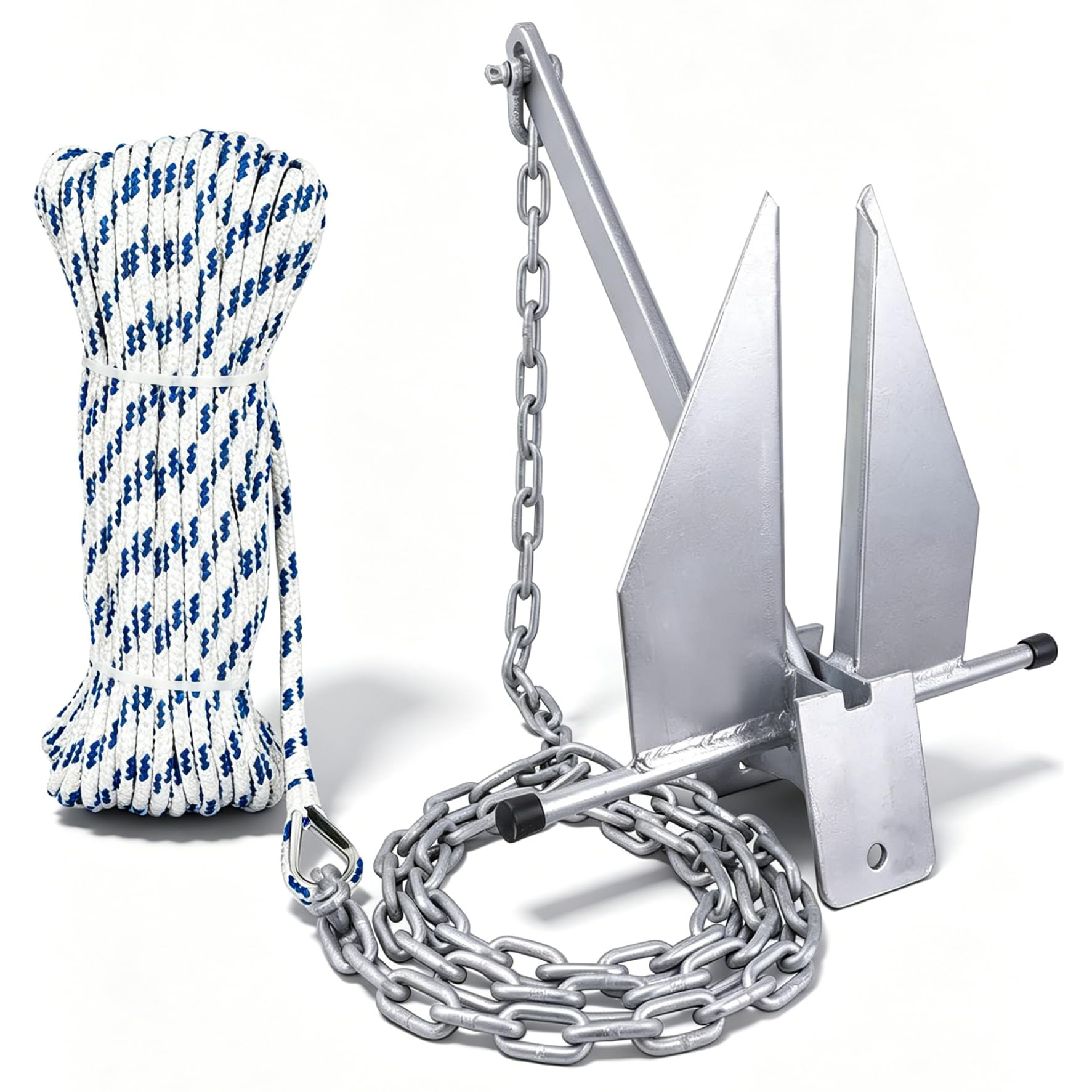
A 10-pound fluke kit sized dead-center for mid-size pontoons.
Two pounds of anchor and a heavier chain do a lot for a pontoon that keeps drifting. This kit pairs a 10-pound hot-dipped galvanized fluke anchor — rated for boats 16 to 26 feet and measuring 21.75 by 15.25 by 5.27 inches — with 6.5 feet of 5/16-inch chain. Compare that chain to the 1/4-inch link on the MARINE SYSTEM kit, and you can see where the extra bite comes from. Five sixteenths against one quarter inch is the sort of difference that holds the fluke flat when the wind picks up.
Like the MARINE SYSTEM set, this one ships complete: 75 feet of 3/8-inch high-grade nylon rope with a stainless steel thimble (a metal loop that stops the rope from fraying), two 5/16-inch shackles (the metal links that join rope to anchor), and a one-year warranty. It also rates for a bigger boat — 16 to 26 feet against 12 to 22 feet. One buyer reports it dug in so deep that freeing it took 15 minutes. That is the honest trade-off of a fluke that sets hard: pulling it free takes a firm tug, especially from a bow-mounted cleat.
The fit question is the one to think through before you buy. Some owners love that the folded fluke slides into a bow compartment; a few find the cross bar too wide for tighter lockers like the Yamaha AR195’s. The chain arrives uncoated, so it can scuff decals if you let it drag across the gel coat. Neither is a deal-breaker, but both are worth measuring against your own storage before you commit.
What seals it: the 5/16-inch chain and 10-pound fluke work together to bite hard in river current and rarely let go, and the price lands it in the balance for a mid-size pontoon setup.
Measure first: the cross bar width matters — check it against your bow locker before you order, and keep the chain off painted surfaces to avoid scuffs.
The right call for: pontoons in the 16–26 ft range that want a heavier chain and a 10-pound fluke without stepping up to the largest kit on this list.
Think twice if: your bow locker is tight — the wide cross bar needs room, and the uncoated chain wants careful handling around decals.
5. SandShark Supersport 3.0 Shallow Water Anchor

The five-pound screw-in that bites sand at the sandbar, no chain required.
Every other anchor on this list uses weight or flukes. This one twists. The patented screw-anchor design acts like a giant screw you drive 12 to 18 inches into the sand, so it holds with mechanical grip instead of bulk. At just 5 pounds and made from corrosion-resistant aluminum and nylon, it is by far the lightest way to park a pontoon at a shallow sandbar. Step into the shallows, twist, clip the bungee, and you are anchored — no chain, no long rode, no second person.
Easy setup is what people talk about most after the build. It telescopes from 29 to 48 inches so you can match the depth you are actually standing in, then collapses back to 29 inches for compact storage in the padded case. Owners also pair it with shock-absorbing rope and use a second one to hold a SeaDoo in place with the anchor stored in the front trunk. The neat trick is that it comes out as fast as it goes in — perfect for a pontoon that hops between sandbars all day.
The honest trade-off is where it works. Stability and durability come up mixed — some owners hold boats firmly through wakes and current, while reports of breaking after one use do surface, so match it to light-duty shallow use rather than open-water storms. It is pitched for boats up to 24 feet and jet skis in salt or fresh water, and the two-year manufacturer warranty covers defects. For a pontoon that anchors over deep mud or rock instead of sand, a fluke anchor is still the right tool.
Where It Shines
- 5-pound screw-in design twists into sand for mechanical hold
- Sets solo in shallow water without heavy lifting
- Telescopes 29″ to 48″ to match water depth
- Collapses to 29 inches and ships with a padded storage case
- Corrosion-resistant aluminum and nylon for salt or fresh water
The Reality Check
- Needs a sand bottom — it can’t grip mud, rock, or grass
- Durability comes up mixed, with some reports of early breakage
- Built for shallow water, not open-water storm anchoring
Best matched with: a pontoon that hangs out at sandbars and shallow coves where you can step into the water and twist the anchor in by hand.
Wrong tool for: deep mud, rocky bottoms, or storm anchoring — it needs sand to bite and is designed for calm, shallow conditions.
6. Boat Anchor Kit with Rope and Chain

The heaviest rode here: 100 feet of rope and 8 feet of chain in one rig ready box.
When the wind stacks up and the anchor drags, the bow ends up on the rocks. The fix is a bigger anchor and a longer rode. This kit is built around a 13-pound fluke rated for 20 to 32-foot boats, the widest coverage on the list. It includes 8 feet of 5/16-inch galvanized chain and 100 feet of 3/8-inch nylon rope with a stainless steel thimble, plus two bow shackles. Every connection is made inside the box, so it rigs in one session.
The chain length is the standout — 8 feet against the 6.5 feet in both the MARINE SYSTEM and Young Marine kits. That extra chain keeps the pull flat on the bottom in a higher sea state, which is why customers note holding a 21-foot pontoon in 8 to 10 feet of water through higher winds. The rope’s 100 feet also gives you room to anchor in deeper spots without coming up short on scope. The hot-dip galvanizing is the other upgrade: it resists rust in salt and fresh water far better than the thin zinc plating on bargain anchors.
You get a pre-drilled recovery hole in the crown, so if the fluke snags a rock or root you can rig a retrieval line and pull it free from the opposite direction instead of cutting loose. The size range also comes in 8.5-pound for 15 to 24-foot boats and 5-pound for boats under 15 feet, which makes it a family of kits rather than a single size. Watch for one small thing: the U-bolts aren’t fully circular, so a couple of buyers add zip ties on the clevises for security. Nothing that stops it working — just a detail to know.
Why it wins the bigger-boat crowd: the 8-foot chain and 100-foot rope give a 20–32 ft pontoon real scope (enough line angle to hold) and a flat pull, and the pre-drilled recovery hole lets you free an anchor that would otherwise be lost to a snag.
The nit to know: the U-bolts aren’t perfect circles, so a zip tie on the clevis is a common owner fix. It is a small thing, and the rest of the kit holds up.
Worth it for: a full-size pontoon that needs the longest rode on this list and a heavier fluke to match, in salt or fresh water.
Look past it if: you want a lighter rig for a small boat — the 8.5-pound and 5-pound versions of this same kit cover that ground instead.
7. Camco TRAC Outdoors Pontoon 35-G3 Electric Boat Anchor Winch
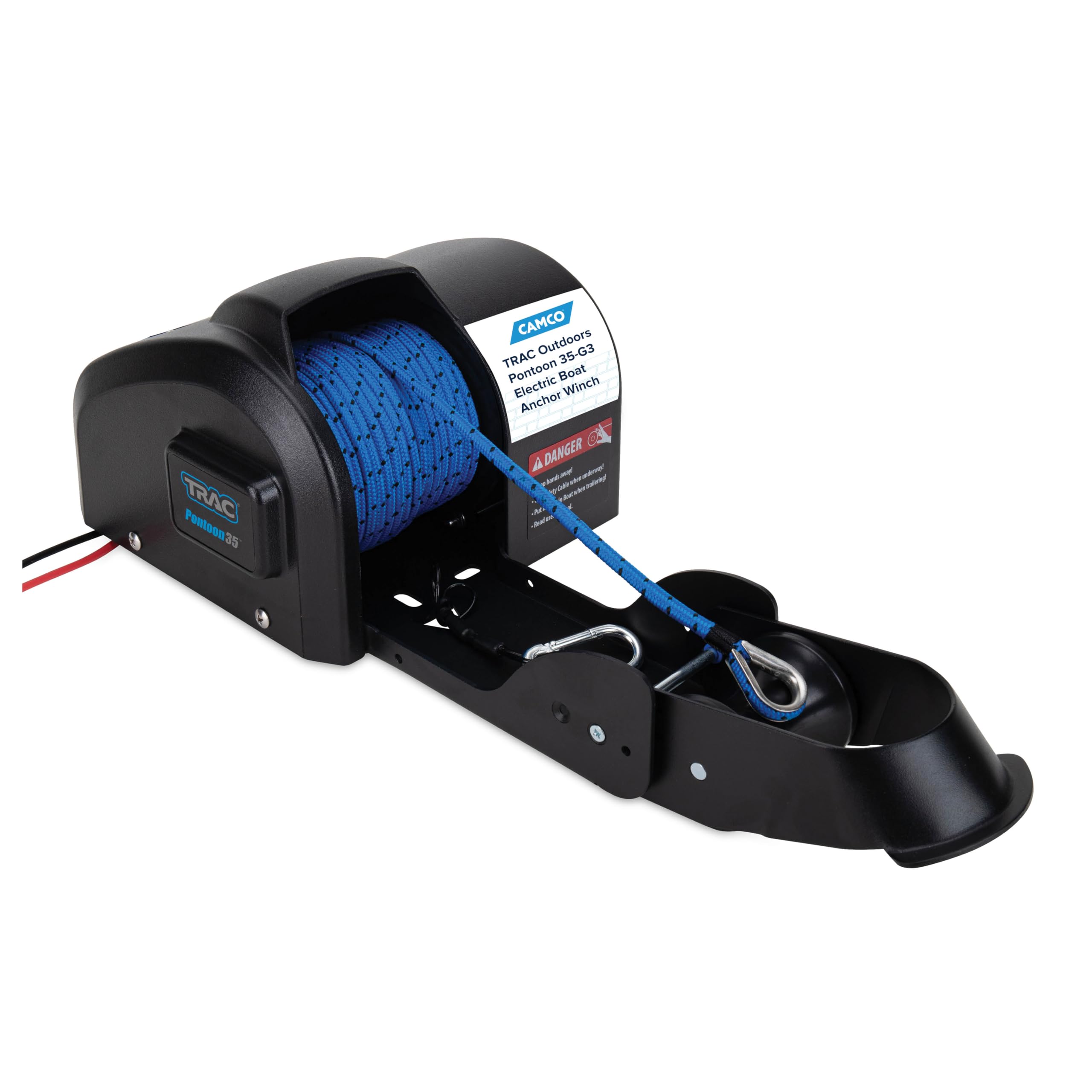
Haul a 35-pound anchor up by button press and keep the mud off your deck.
If your least favorite part of anchoring is the pull, this replaces it. The 35-G3 mounts to the pontoon and raises or lowers the anchor with a sealed membrane UP/DOWN switch, so you never haul wet, muddy rope by hand again. The 12-volt DC all-steel gear motor is geared to sip battery power, and the whole unit weighs 14 pounds with a one-year warranty. It comes with 100 feet of 3/16-inch pre-wound double-braid rope, a roller, a circuit breaker, marine-grade battery wire, and the hardware to bolt it down.
The real proof is what it lifts. Owners run it on a 22-foot pontoon with a 20-pound anchor and report it pulls up without strain. One owner winched up a 12-foot, 15-inch-diameter fallen log snagged by the flukes without stalling. Folding the anchor off the bow also keeps wet line out of the boat — the anchor hangs over the edge instead of dragging across the deck, so you end the day with a cleaner, drier ‘toon.
Go in with eyes open on two things. First, the anchor itself is not included — you buy that separately, and the 35-pound capacity means any of the fluke anchors on this list fits. Second, longevity is mixed: the unit holds up for seasons of weekend use for some, while a few reviewers point out the spool slipping or an early failure, so treat it as a tool to service rather than install once and forget. Mounting it means drilling into the deck, so plan the location carefully before you commit.
The Case For Button Anchoring
- Raises and lowers with a sealed membrane UP/DOWN switch
- 12-volt DC all-steel gear motor designed for low battery draw
- 35-pound anchor capacity covers any anchor on this list
- Includes 100 feet of pre-wound double-braid rope and roller
- Keeps wet, muddy line out of the boat
The Honest Catch
- Anchor sold separately, so budget for one along with the winch
- Longevity is mixed, with occasional spool or early-failure reports
- Mounting requires drilling into the deck
Made for: pontoon owners who anchor often and want to stop hauling wet rope — the up/down buttons do the work, and the 35-pound capacity handles a heavy anchor.
Not for: boats where you can’t drill the deck, or anyone wanting a hands-off, maintenance-free unit — this one earns its keep with occasional service.
Know the Specs
Anchor Weight and Boat-Size Rating
The anchor weight is the number stamped on the box, and the boat-size rating is the range the maker says it covers. A 13-pound fluke anchor rated for 20 to 32-foot boats is your baseline for a full-size pontoon; a 10-pounder rated for 16 to 26 feet covers mid-size ‘toons; an 8-pounder for 12 to 22 feet suits smaller ones. Bigger boats and windier water push you toward the heavier end of the rating. Note that some listings pair a metric weight with an imperial anchor weight, so check the size range rather than the label alone.
Rode: Chain, Rope, and Scope
Rode is the whole tether — the chain and the rope together. The chain length matters most because chain is what keeps the pull flat on the bottom so the flukes dig instead of lifting. On this list chain runs from 6.5 to 8 feet, and rope runs from 75 to 100 feet. More rope lets you anchor deeper and lay out more scope, which is the ratio of rope to water depth. Shorter, thicker chain in front of the anchor is the cheap upgrade that stops drifting before you reach for a heavier anchor.
Common Questions
How much anchor weight does a pontoon actually need?
Why does chain matter more than anchor weight?
Will an 8-pound fluke anchor hold a 20-foot pontoon?
What is the difference between a fluke anchor and a box anchor?
Can I use a SandShark sand anchor on a pontoon in deep water?
How much rope should I let out when anchoring a pontoon?
Do I need an electric winch to anchor a pontoon?
How long does an anchor chain and rope kit last?
Can I anchor a pontoon at a sandbar in saltwater?
What should I do if my pontoon anchor drags in wind?
The Bottom Line
For most pontoons, the anchors for pontoons winner is the Extreme Max BoatTector Cube Anchor, because its self-adjusting box design keeps holding when the wind swings your boat around — the one behavior that stops the drift for good. If you want a complete kit with a heavier chain and a wider boat-size rating, grab the Better Boat Heavy Duty Fluke Anchor Kit, which packs 8 feet of chain and 100 feet of rope in one box. And for sandbar days where you’d rather twist an anchor into the shallows by hand, the SandShark Supersport 3.0 is the one to reach for. Whichever you pick, add chain in front of the fluke and you will spend the afternoon anchored instead of drifting.
How we choose
We do not accept paid placement. Every pick is matched to a real buyer and a real use-case; we do not hands-on test units.
Sources
Specifications: manufacturer listings and product documentation. Review insights: verified customer reviews, as of October 2026. Pricing: not shown on this page (it changes often); check the current price via the retailer link.
As an Amazon Associate, Aappliancez earns from qualifying purchases. This does not affect which products we feature.