Disclosure: Some links in this post are affiliate links. As an Amazon Associate I earn from qualifying purchases, at no extra cost to you. Learn more
Specs are compiled from manufacturer listings and verified buyer reviews and can change over time — please confirm the key details on the product page before buying.
If you have ever pressed a cheap stethoscope to a patient’s chest and heard only your own heartbeat and hallway noise, you already know why people search for an amplified stethoscope. A good one makes quiet heart sounds and faint lung crackles audible without you straining. The picks below run from traditional acoustic scopes with oversized chestpieces to a true digital model with active noise cancellation (electronics that cancel background room noise). Nine real options follow, and each one is matched to your ears, your shift, and your budget.
This guide is built by comparing the manufacturers’ published specifications and the patterns across verified customer reviews, so you get each pick’s real strengths and trade-offs instead of marketing spin.
Everything here is sorted by chestpiece design, tubing, and how each one handles background noise. The goal: hear more of the body and less of the room, whether you are a student on your first rotation or a nurse with 20 years on the floor.
Top Picks


How To Choose The Best Amplified Stethoscope
The single biggest mistake first-time buyers make is assuming “amplified” always means “battery-powered.” It does not. Many of the best amplified stethoscopes in this list are pure acoustic tools that get their volume from a larger chestpiece, a tighter ear seal, and tubing that does not leak sound. Knowing which type you need is what decides the purchase.
Acoustic amplification versus digital amplification
Acoustic scopes boost what reaches your ears by design: a bigger, tensioned diaphragm picks up more vibration, and dual-lumen tubing (two separate sound paths inside one tube) stops the two sides from rubbing and creating noise. Digital models, like the Littmann CORE, add electronics on top — it lists up to 40x amplification at peak frequency versus analog mode, plus active noise cancellation that reduces background sound. Digital is the pick when you have real hearing loss or work in a genuinely loud room.
The chestpiece shape decides what you hear
A diaphragm (the flat disc) is built for higher-pitched sounds like heart murmurs and breath sounds. A bell (the cup side) is built for low-pitched sounds like certain heart tones. Some scopes are “tunable,” meaning you press lightly for low frequencies and firmly for high frequencies on one side. Convertible models let you swap a pediatric diaphragm or an open bell onto the same head — handy if you see kids and adults on the same shift.
Tubing, weight, and ear tips
Thick, flexible tubing dampens outside noise better than thin tubing, which is why cardiology-grade scopes tend to feel heavier. That weight is a trade-off: better sound isolation, but more pressure on your neck over a long shift. Soft sealing ear tips that match your ear canal are not a small detail — a poor seal leaks sound and makes even a great chestpiece sound ordinary.
Side-by-Side Comparison
| Model | Best For | Chestpiece | Tubing / Length | Listed Weight | Amazon |
|---|---|---|---|---|---|
| 3M Littmann Master Cardiology 2163★ Best Overall | Clear heart and lung sounds | Single-sided, stainless steel | Dual-lumen, 27″ | 80 g | Amazon |
| Steelman EngineEARDiagnostic Tool | Finding mechanical noises | Aluminum probe | Flexible gooseneck | 3 pounds | Amazon |
| ADC Adscope 602EMS Ready | EMS and road noise | Dual-head, surgical stainless steel | Dual-channel, 27″ | 7.52 ounces | Amazon |
| Kila Tunable Bell Cardiology | Ward work with pediatric patients | Dual-head, stainless steel | Silicone, 30″ | 6.7 ounces | Amazon |
| Kila Tunable Single Head | Hospitalists who want distance | Single-head, stainless steel | Silicone, 30″ | 14.4 ounces | Amazon |
| ADC Adscope 601 | Convertible adult and pediatric use | Convertible, stainless steel | Dual-channel, 27″ | 7.6 ounces | Amazon |
| MDF ProCardial Core MDF797DD | Dual adult-pediatric cardiology | Dual head, stainless steel | Dual-lumen | 6.4 ounces | Amazon |
| Welch Allyn Harvey DLX 5079-326 | True bell and diaphragm work | Double-head, chrome-plated brass | Dual lumen | 1.1 pounds | Amazon |
| 3M Littmann CORE 8480 | Hearing difficulty and loud rooms | Tunable dual-sided, stainless steel | Latex-free, kink-resistant, 27″ | 87 g | Amazon |
Detailed Reviews
1. 3M Littmann Master Cardiology 2163
Our pick — 4.5+★ from 6,000+ verified ratings; the strongest balance of quality and price.
The gold-standard acoustic scope that makes murmurs loud enough to stop second-guessing.
Start with the spec that decides everything else: 3M calls this the highest acoustics in its mechanical stethoscope line, and the chestpiece is a single-sided stainless steel head with a 27-inch dual-lumen tube. Dual-lumen means two separate sound channels live inside one tube, so the sides never rub together and you never hear that faint scratchy interference. What reaches your ears is body sound, not tube friction.
The weight is note — 80 g in total, which makes it one of the lighter cardiology scopes here and easy to keep around your neck through a long shift. The headset is angled to line up with your ear canals, which matters more than people realize: a straight, poor-fitting eartube leaks sound and undoes a good chestpiece. What wins people over most is the overall build quality, with the sound itself a close second. Nurses on the floor who borrow it reportedly can’t believe how much more they hear, and the same scope keeps showing up in busy ERs for picking out decreased bowel sounds and heart murmurs.
Here is the honest catch: this is a single-sided head, so it is not a convertible bell-and-diaphragm design like the Adscope 601 or the Harvey DLX. If you specifically want a true open bell for low-pitched tones, look there. And the tubing is notably tacky — it grabs lint and hair, which some owners find unhygienic enough to return it. For sheer volume on heart and lung sounds, though, the crowd favorite holds 4.5+ stars across 6,000+ owners, and the praise for its quality outnumbers any other point by a wide margin.
What earns the top spot
- Highest acoustics in the Littmann mechanical line, per the maker
- Dual-lumen tubing removes the rubbing noise of two separate tubes
- Angled eartubes align with your ear canals for a real seal
- 80 g total weight keeps it light around the neck
What to know before you buy
- Single-sided head — no true open bell
- Tacky tubing attracts lint and hair
- Made for murmurs and crackles, not just routine vitals
Go for it if: you want the loudest, clearest traditional scope for heart and lung assessments and don’t need a convertible bell.
Think twice if: you want a swappable pediatric bell or a true low-frequency bell side — the Adscope 601 covers that.
2. Steelman EngineEAR Auto Diagnostic Stethoscope
An engine ear, not a chestpiece — it hunts bad bearings instead of heart murmurs.
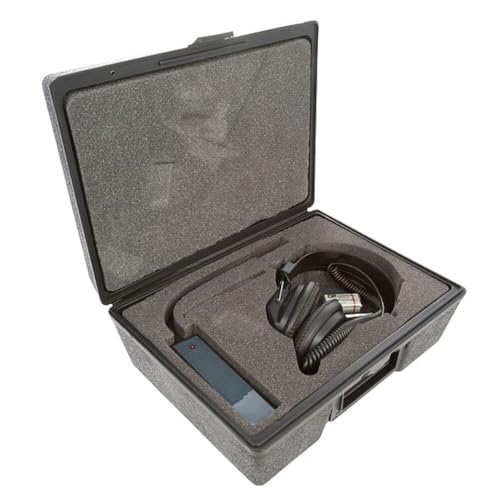
This one belongs to a different job entirely. It is a mechanical-diagnostic tool built to pinpoint trouble noises in cars, trucks, and heavy machinery, with a solid aluminum probe that transfers sound and a bendable gooseneck shaft so you can reach tight, hard-to-get spots. The over-ear mono headphones completely cover your ears to help block background sound. The probe and microphone are non-conductive and rubber-booted, so you can probe sensitive electronics without damaging them.
One master technician calls it a tool he can’t live without, and the funniest review line is that owning one in a shop means every other tech comes over asking you to listen to their noises. It picks up every noise once you learn the drill: start at low volume and turn it up slowly. The amplification range is wide enough that a hearing-impaired user reported it working well, and the headphones block ambient engine noise. Set against the traditional mechanic stethoscope, it is the far more capable tool.
The trade-offs are real and worth stating plainly. A few note the volume control is fiddly to dial in, and the included headphones are the weak link — one buyer had to buy a second set of noise-canceling headphones because the supplied pair felt cheap. Sizing is also shop-grade: the whole thing weighs 3 pounds and spans 13.75 by 10.25 inches, so it lives in a toolbox, not a scrub pocket. For a failing pump or a bad bearing, this is the right tool; for a heart, it is the wrong one.
Where it shines: the bendable gooseneck and solid aluminum probe get sound out of places a hand can’t reach, and the quality of the build is the point buyers come back to.
The honest limit: the supplied headphones divide opinion enough that you may budget for your own pair, and the volume control takes practice.
Reach for this if: you’re a tech or DIYer tracking noises in engines, pumps, or machinery and want a proper over-ear listening tool.
Look elsewhere if: you need a clinical scope for patients — this is a shop tool first.
3. ADC Adscope 602 Traditional Dual-Head Cardiology Stethoscope
The scope that wins ambulance tests because road noise never makes it through.
For anyone working on the road, the defining feature here is outside-noise rejection, and the Adscope 602 was built for it. The dual-head chestpiece is machined from surgical stainless steel and paired with an ultra-sensitive diaphragm for high frequencies and an extra-deep bell for low. It runs 27 inches long at 7.52 ounces, and each unit is individually acoustic tested in the USA. The cardiology headset runs dual-channel phthalate-free tubing.
What gives this pick its reputation is a story from the field: six EMS members ran a head-to-head comparison at a tractor pull and in road tests, and they picked this scope unanimously. In their words, buyers report it delivers the best lung-sound amplification “without extra road-noise artifact” — meaning the engine noise stays outside and the breath sounds come through. One long-time user compared it to a 30-year-old Adscope 603 and found this model on par with scopes that cost twice as much. It is a genuine workhorse for the money.
The fair warning is weight. A few owners find it heavier than expected, and it has a shorter tube than some cardiology models — that shorter tube actually helps sound, but it does mean less reach. Compare it to the Littmann Master above and you trade some of that premium smoothness for a dual-head design and a lower price. Both are excellent; this one leans harder into rugged duty.
The EMS case
- Dual-head design with a true deep bell for low frequencies
- Individually acoustic tested in the USA
- Dual-channel phthalate-free tubing
- Complimentary refurbishment and free parts forever
The honest counters
- Heavier than some buyers expect
- Shorter tube than a few cardiology rivals
Best fit: EMS crews and medics who need lung sounds to cut through engine and road noise.
Consider another pick if: neck weight is your main concern — the lighter Littmann Master is easier to wear all day.
4. Kila Tunable Bell Cardiology Stethoscope, Silicone Tube

A tunable dual-head scope that lets a single press switch from low to high tones.
The frequency-modulation chestpiece is what defines this pick. Press lightly and it works like a bell for low-pitched sounds; press firmly and it behaves like a diaphragm for high-pitched ones — no swapping heads, no second side to remember. The diaphragm is oversized and made of carbon fiber, which the maker says keeps it responsive across a wide frequency range. The headset is anatomically contoured stainless steel with elastic-cushioned ear tips for an airtight seal, and the tubing is flexible 30-inch medical-grade silicone.
Build quality is the theme that runs through the feedback, and the silicone tube is a real advantage over the tackier tubes some rivals use — it stays comfortable and doesn’t grab lint. An ICU nurse who has tried several high-end Littmanns calls this one just as good if not better. A vet tech comparing it to a Littmann Cardio IV notes clear, pronounced sound and a balanced chestpiece that doesn’t feel cheap. Parents of a child with congenital heart disease found the clarity a big step up from cheap hospital-issued scopes that carry too much interference. The maker backs it with a five-year support and piece-replacement promise.
One practical bonus: the 6.7-ounce build comes in colors that stand out on a crowded ward, which a few owners value for keeping pediatric patients calm and for making the scope harder to walk off with. The one recurring wish is simply more color variety — a black-only buyer was the least thrilled. Weigh that against the price-to-performance ratio and it is a strong mid-range buy.
The sleeper strength: the pressure-tunable chestpiece gives you bell and diaphragm modes without fumbling, and the silicone tube keeps the whole thing comfortable on long rounds.
The one hesitation: color selection is limited, and picky ears may still want the premium feel of a Littmann or MDF.
Pick this when: you want one flexible scope that handles cardiac, pulmonary, and abdominal listening with a comfortable tube and a bright color option.
Skip if: you insist on a true separate bell and the widest color menu — the Harvey DLX or MDF ProCardial answers that.
5. Kila Tunable Single Head Cardiology Stethoscope, BlkBlk
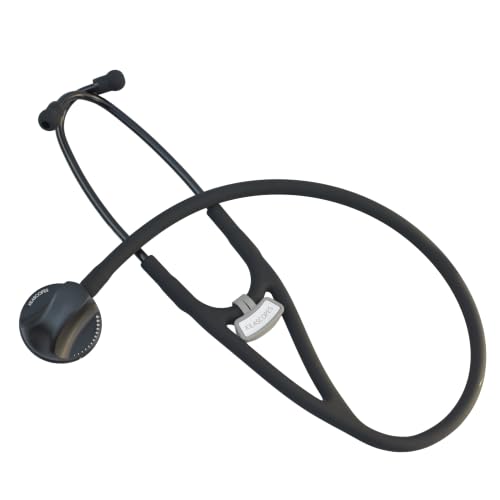
A single-head design that cuts signal loss and stretches out for safer patient distance.
The logic behind this single-head scope is worth understanding: one chestpiece means no dual-head mechanism swapping sound between components, so the maker says it preserves fidelity by keeping the acoustic path simple. It runs the same frequency-modulation system — pressure for low tones, harder pressure for high — on an oversized carbon fiber diaphragm. The stainless steel headset is contoured with elastic-cushioned ear tips, and the silicone tube is a long 30 inches.
That length is the feature that matters most to a certain buyer. A hospitalist specifically chose it for the 32-inch reach so they could keep a safer distance from patients while still getting clear heart and lung sound. A vet tech comparing it to a Littmann Cardio IV found the sound clear and pronounced, the matte tubing flexible and comfortable, and the chestpiece balanced enough that it doesn’t feel cheap. The quality of the build is what the feedback keeps returning to.
The trade-off: the listed weight of 14.4 ounces makes it heavier than most of the scopes here, and a couple of owners find the color options loud — bright neon orange is not for everyone. If you want a black workhorse with long reach and don’t need a swappable pediatric head, this is a focused, well-made pick. If you rotate between adults and children, the dual-head version above is the better single buy.
Good match for: hospitalists and clinicians who want extra tube length for distance and a simple, single-head chestpiece.
Less ideal if: you need to switch to a pediatric diaphragm or prefer a lighter neck feel.
6. ADC Adscope 601 Convertible Cardiology Stethoscope

One chestpiece that converts from an adult diaphragm to a pediatric head to an open bell.
Convertibility is the whole reason to pick this one. The stainless steel chestpiece ships with a fixed adult diaphragm and a threaded pediatric diaphragm, and you can swap the pediatric head off to open up a bell for low-frequency sounds. Its adjustable frequency design (AFD) uses light pressure for low frequencies and firm pressure for high frequencies, so you’re always in control of which sounds you’re pulling in. It measures 27 inches and 7.6 ounces, with dual-channel phthalate-free tubing and a 20-year calibration warranty plus a three-year system warranty.
Compare it to the Littmann Master above and the split is clear: the Master is a single-sided powerhouse for pure volume, while this scope trades a little acoustic edge for the ability to become a different tool in seconds. A paramedic with hearing difficulty found it virtually indistinguishable from a Littmann Cardiology III — same ear piece seal, heavy bell, dual head for kids, thicker tubing. A PA student who ran a side-by-side against the same Littmann heard identical audio and tubing. Owners also rate the value highly, which is why this is the pick when you want premium sound without the flagship premium.
The catch is weight and a small maintenance quirk. At 7.6 ounces it feels heavy in the chestpiece, and because the pediatric head is threaded, some owners find the eartips work loose over time — one used thread-locker to keep them put. The lifetime warranty on parts softens the risk considerably. If you want a scope that adapts to every patient you meet, this is the most flexible one on the list.
Why it earns its place: you get adult, pediatric, and bell coverage from one purchase, backed by a lifetime parts warranty and US acoustic testing.
What to expect: a heavier chestpiece and threaded parts that may need occasional re-tightening.
Worth it for: students, ER staff, and anyone seeing adults and children who wants a convertible scope without the flagship price.
Not for you if: you want the lightest possible neck wear or have no need for a pediatric head.
7. MDF Instruments ProCardial Core MDF797DD

The rose-gold cardiology scope that makes breath, heart, and bowel sounds easier to pull apart.
MDF’s selling point is the build: handcrafted since 1971, a lifetime warranty, and a free-parts-for-life program, all with latex-free materials. The ProCardial Core is a dual-head cardiology scope with a convertible pediatric diaphragm, and it runs dual-lumen tubing so each ear gets its own sound channel. The headset is pre-angled at 15 degrees for a precise fit, and the dual-leaf spring construction is listed as offering twice the durability of a single leaf. The stainless steel and silicone body comes in at just 6.4 ounces — light for the class.
Buyers mention quality most, followed closely by the sound. A 20-year physician rates it against a Littmann Cardiology and credits the thicker tubing and steel-instead-of-aluminum build for the louder, clearer sound. Another buyer rated it two to three points louder and clearer than a Littmann Classic II on a ten-point scale. A Labor-and-Delivery nurse likes that the interchangeable heads screw on and store on a belt clip — so you can switch between adult and pediatric on the fly. The appearance draws comments too; the rose-gold finish is a genuine stand-out.
Honesty check: this is one of the heavier-feeling scopes despite the low listed weight, and durability is the one area where feedback splits — there are reports of an earpiece snapping and a tubing split after a few years. The ergonomics also ask a little of you; a couple of owners note the angled headset needs a slight head tilt to seat the ears. It is a small adjustment, not a flaw, and the free-parts program covers the long haul. Try it through the return window if you’re unsure.
Where it delivers
- Dual-head cardiology design with a convertible pediatric diaphragm
- Pre-angled 15-degree headset for a precise fit
- Dual-leaf spring construction for extra durability
- Free-parts-for-life warranty
Where to be careful
- Durability reports are mixed on earpieces and tubing
- Headset angle may require a slight head tilt
Choose this if: you want a cardiology-grade dual-head scope with a pediatric option, a lifetime parts program, and a finish that turns heads.
Pick another if: you want the longest track record on durability above all — the Harvey DLX is built to be rebuilt instead.
8. Welch Allyn Harvey DLX Adult Cardiology Stethoscope

A true bell-and-diaphragm classic built to be rebuilt, not replaced.
The Harvey DLX is a full-range cardiology and pulmonology scope with a double-head chestpiece — a flat diaphragm on one side and a true bell on the other, not a tunable substitute. The heavy chrome-plated brass head and rotatable binaural are the reasons it feels substantial, and the interchangeable comfort-sealing ear tips let you dial in fit. A pediatric chestpiece is available separately, and the whole thing runs on dual-lumen tubing.
what separates it is the design: it is fully modular, so every component can be replaced as it wears. A long-time user reports the scope lasts about ten years before the tubing fails, with earpieces wearing out in five to eight years — and every part is replaceable. A hospitalist prefers the acoustics here over a Littmann Cardiology, specifically because the true bell makes a real difference on low-pitched sounds. It is a heavy headpiece, but the weight actually helps you apply the bell correctly.
Two things to expect. First, it takes getting used to: the ear tubes are snug and need adjusting to sit right, and the chestpieces occasionally loosen a touch. Second, order with care — one buyer received a unit missing the two extra ear buds and spare diaphragm that normally come in the box, so confirm the contents on arrival. If you only take blood pressure and never chase murmurs, this is more instrument than you need. If you do, it is one of the last scopes you’ll need to buy.
The quiet luxury: a genuine bell for low frequencies and a modular build where every wearing part can be replaced — this thing is meant to age well.
The honest friction: snug ear tubes need a little adjusting, and it is overkill for basic vitals.
Made for: cardiology-minded clinicians who rely on a true bell and want a scope with replaceable parts and a long service life.
Better to pass if: you mainly do routine vitals or want lightweight neck comfort — a single-head acoustic scope does that job.
9. 3M Littmann CORE Digital Stethoscope 8480

The one that actually amplifies — up to 40x plus active noise cancellation and a waveform app.
If you came here for true electronic amplification, this is the pick. The CORE connects to Eko software on a smart device to visualize, record, and share heart sound waveforms, and it delivers up to 40x amplification at peak frequency compared with its own analog mode. Active noise cancellation reduces unwanted background sound, and you can toggle between analog and amplified listening modes without trading scopes. The chestpiece is a tunable, dual-sided stainless steel head with an open or closed bell, and the 27-inch tubing is latex-free and kink-resistant.
The scenarios it wins are specific: reduced hearing due to fluid buildup, a loud ER, or a classroom that never gets quiet. Those buyers describe a night-and-day difference over a basic scope — clear amplification, easy heart and lung pickup, and noise cancellation that holds up in busy settings. Colleagues tend to follow: the reviewer who raved about it says many coworkers bought one after seeing it work. It works on both adult and pediatric patients, and the black chestpiece finish is a clean, understated look.
Now the honest part. Value, battery life, and connectivity all draw mixed feedback — some find it doesn’t stay charged, and the app features can feel like more than you need. Several also had to learn to dial in a gradual volume instead of a jump from quiet to loud. At 87 g it stays light around your neck, and the package includes the digital stethoscope, chestpiece, tube, stem, and headset. If you need the most amplification you can get and can accept a battery in the loop, this is the choice; if you want zero charging and a lower tier price, a strong acoustic scope still does serious work.
Why it stands out
- Up to 40x amplification at peak frequency vs. analog mode
- Active noise cancellation for loud environments
- In-app sound wave visualization, recording, and sharing
- Tunable dual-sided stainless steel chestpiece, 87 g
What to weigh
- Battery life draws mixed reports; some find it won’t hold a charge
- Features require a smart device and, for some, a subscription
- Volume steps feel abrupt to a few users
Right for you if: you have hearing difficulty or work somewhere loud and want the strongest, most controllable amplification available.
Not for you if: you want a scope with no battery to manage and prefer acoustic simplicity.
Know the Specs
Dual-lumen tubing
Dual-lumen means two separate sound channels run inside the body of one tube, so the two sides never touch. The visible benefit is less of the scratchy rubbing noise that traditional double tubing creates, which keeps faint heart and lung sounds clean. It is standard on cardiology-grade scopes like the Littmann Master and the MDF ProCardial.
Tunable versus fixed frequency
A tunable chestpiece changes which sounds it favors based on how hard you press it — light for low frequencies, firm for high. A fixed design splits the work between a dedicated diaphragm and a true bell, as on the Harvey DLX. Neither is better outright; tunable is faster, fixed gives some clinicians exactly the tone they trust.
Amplification and noise cancellation
Digital scopes add electronics: the Littmann CORE lists up to 40x amplification at peak frequency versus its own analog mode, plus active noise cancellation that reduces background sound. That electronic boost is the only true “amplified” option in the group — the rest get their volume from chestpiece size, dual-lumen design, and a tight ear seal.
Ear tips and seal
Soft sealing ear tips that fit your ear canal are what turn a good chestpiece into a good stethoscope. A loose seal leaks sound, which is why a premium scope can sound ordinary with the wrong tips. Snap-on silicone tips, like the Adsoft Plus style, and an angled headset help you get an airtight fit quickly.
Common Questions
What makes a stethoscope “amplified”?
Do I need a digital stethoscope for hearing loss?
Is a tunable diaphragm as good as a true bell?
How long do stethoscope tubes and earpieces last?
Will a heavier stethoscope sound better?
Can a stethoscope work for both adults and children?
How do I get a good ear seal?
Is an engine stethoscope the same as a medical stethoscope?
What should I check on arrival when buying a cardiology scope?
Does a subscription come with the digital stethoscope?
The Bottom Line
For most people shopping for the Best Amplified Stethoscope, the winner is the 3M Littmann Master Cardiology 2163. It pairs the highest acoustics in Littmann’s mechanical line with dual-lumen tubing (two sound channels in one tube) and a light 80 g build — and the crowd agrees, holding 4.5+ stars. If you want a convertible scope that handles adult and pediatric patients, grab the ADC Adscope 601. And for genuine electronic amplification and noise cancellation in a loud room, the 3M Littmann CORE is the one to reach for.
How we choose
We do not accept paid placement. Every pick is matched to a real buyer and a real use-case; we do not hands-on test units.
Sources
Specifications: manufacturer listings and product documentation. Review insights: verified customer reviews, as of October 2026. Pricing: not shown on this page (it changes often); check the current price via the retailer link.
As an Amazon Associate, Aappliancez earns from qualifying purchases. This does not affect which products we feature.