Disclosure: Some links in this post are affiliate links. As an Amazon Associate I earn from qualifying purchases, at no extra cost to you. Learn more
Specs are compiled from manufacturer listings and verified buyer reviews and can change over time — please confirm the key details on the product page before buying.
If you want boots built on American soil that a cobbler can repair instead of replace, start with the Kenetrek Men’s Mountain Extreme 400. It pairs a tall 10-inch upper with 400-gram Thinsulate insulation (a synthetic fill that traps body heat) for cold, rocky hunts. The Danner Acadia 8″ is the duty-grade workhorse a cobbler can rebuild, and the Belleville 550 ST is the budget entry point that still carries an American-made stamp.
This guide is built by comparing the manufacturers’ published specifications and the patterns across verified customer reviews, so you get each pick’s real strengths and trade-offs instead of marketing spin.
What separates a genuinely good pair from a lookalike is where it was made and whether it can be resoled — two things most listings hide in the fine print. That is the whole filter behind this guide to the best American Made Hiking Boots for real trail and work use.
Top Picks
How To Choose The Best American Made Hiking Boots
The whole point of buying American made hiking boots is that you get a pair you can keep for years instead of a season. That only works if the boot is built to be repaired, so the first thing to check is whether the sole and upper are stitched and glued in a way a cobbler can take apart and rebuild. A boot that cannot be resoled is a disposable boot, no matter whose flag is on the box.
Start with construction, not color
Look for stitchdown construction — that is a method where the upper is sewn and cemented to the midsole, creating a wider, flatter platform under your foot. The wider platform gives you more stability when you are standing on a ladder rung or crossing loose scree. It also means the boot can be pulled apart and rebuilt later, which is why stitchdown pairs like the Danner Acadia can be sent back to the maker for rework instead of being tossed.
Match upper height to your terrain
Upper height is measured in inches and tells you how much ankle the boot wraps. A 5-inch boot like the Danner Mountain Light II feels lighter and moves more freely. An 8-inch boot like the Belleville 550 ST adds real ankle support for uneven ground and heavy loads. A 10-inch boot like the Kenetrek Mountain Extreme 400 covers the most ankle and works best when you are carrying weight on steep, rocky ground.
Decide on insulation before you fall in love with a boot
Insulation is measured in grams of Thinsulate, and it sets the temperature range you can hike in. The Kenetrek Mountain Extreme 400 uses 400-gram Thinsulate for late-season cold, while an uninsulated boot like the Kenetrek Mountain Extreme Non-Insulated breathes better in summer heat. Buy for the season you actually hike in, not the one in the catalog photo.
Know what “Made in USA” and “Berry Compliant” each promise
Berry Compliant is a specific sourcing standard the U.S. military uses, and a boot that carries it meets domestic-content requirements down to the raw materials. The Danner Acadia 8″ and the Belleville 550 ST both carry that standard. A plain “Made in USA” tag is narrower, so read the listing carefully if domestic sourcing is your main reason for buying.
Side-by-Side Comparison
| Model | Best For | Shaft Height | Insulation | Outsole | Amazon |
|---|---|---|---|---|---|
| Kenetrek Mountain Extreme 400★ Best Overall | Cold-weather hunting and late-season alpine trips | 10″ | 400g Thinsulate | K-Talon | Amazon |
| Danner Mountain Light II 5″Recraftable Classic | Classic three-season trail hiking | 5″ | None listed | Vibram | Amazon |
| MILLET Bouthan Gore-TexRain-Ready Trail Pick | Everyday mountain trails with rain protection | High upper | — | Vibram | Amazon |
| Belleville 550 ST 8″ | Hot-weather duty and work use | 8″ | — | Aggressive-tread rubber | Amazon |
| JIM GREEN African Ranger | Barefoot-style walking and wide-toe comfort | Ankle | None | Thin flexible sole | Amazon |
| Danner Logger 917 6″ | Wet, technical trails with a leather upper | 6″ | — | Vibram 917 | Amazon |
| ASOLO TPS 520 GV Evo | Backpacking with a loaded pack | — | — | — | Amazon |
| Danner Acadia 8″ | Duty and first-responder use on hard surfaces | 8″ | — | Vibram Kletterlift | Amazon |
| Kenetrek Mountain Extreme Non-Insulated | Warm-weather backpacking and side-hilling | 10″ | None | K-Talon | Amazon |
Detailed Reviews
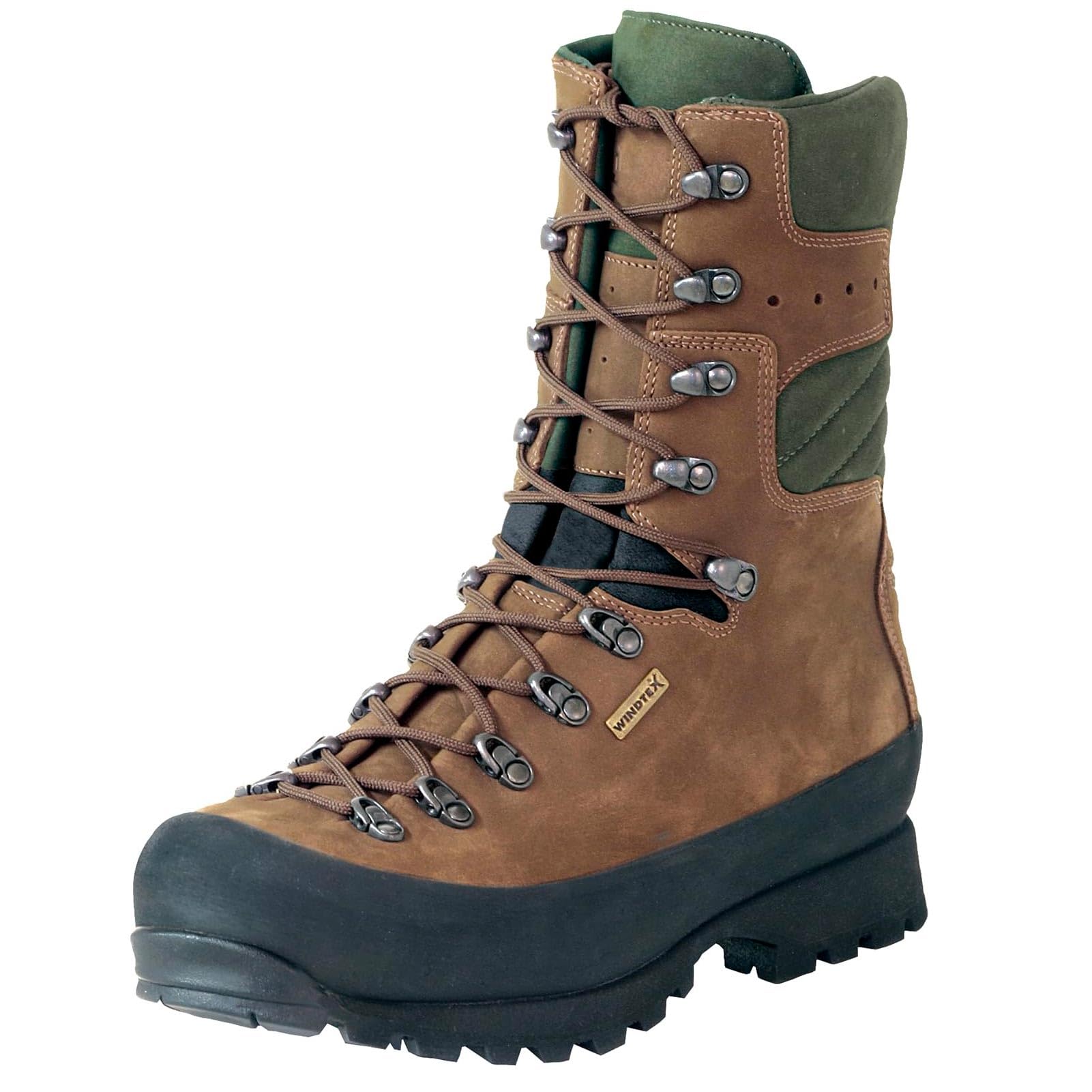
1. Kenetrek Men’s Mountain Extreme 400 Insulated Hiking Boots
Our pick — 4.5+★ from 350+ verified ratings; the strongest balance of quality and price.
The cold-weather mountain boot that swallows a full day of elk hunting without a blister.
If your season runs into cold mornings, late October snow, and long days of side-hilling with weight on your back, this is the boot to build your kit around. The 10-inch upper is the tallest in this group — it stands two full inches higher than the 5-inch Danner Mountain Light II, which translates to more ankle to brace against when the ground rolls underfoot. Kenetrek pairs that taller shaft with 400-gram Thinsulate insulation, enough warmth for shoulder-season and late-season trips without turning your feet into a swamp on the climb out.
The shoe underneath the leather is no decoration either. A K-Talon outsole bites into shale and frost-heaved rock, and the 7mm nylon midsole gives the boot a stiff backbone that resists twisting when you are stepping across a talus field. Reinforced double and triple stitching sits in the high-wear zones, and anti-corrosion hardware means the lace hooks will not rust out after a few wet seasons. Kenetrek’s own break-in guidance ships with the boot, which is a sign the maker expects you to treat this as a long-term purchase rather than a disposable one.
On the trail, a roomy toe box stops your toes from jamming on the descent, and buyers confirm a genuine sensation of taking them off and hating it. As one review page puts it, these should have been the boots bought “30 years ago.” The honest trade-off is the break-in: owners describe it as gradual, becoming comfortable over time the way an old pair of tennis shoes does. Kenetrek also asks you to wax them, and specifically says to avoid mink oil. The other thing to weigh is grip on wet wood — the same outsole that holds firm on rock can be slippery on damp decks and algae-covered bridges, so watch your footing at the trailhead.
Where it separates from the pack
- 400-gram Thinsulate makes late-autumn and early-winter trips genuinely warm — the 5-inch Danner Mountain Light II carries no listed insulation, so this is the boot you want once the mercury drops.
- The 10-inch upper is a full 5 inches taller than the 5-inch Mountain Light II, giving you more ankle to lean into on side-hills and heavy packs.
- Stitch-reinforced high-wear zones and rust-resistant hardware mean the wear points are the ones the maker planned for.
What to know before you commit
- Break-in is gradual and the maker ships specific wax instructions — you are signing up for a relationship, not a quick unboxing.
- Wet wood is its weak surface; damp decks and algae-covered bridges are where you slow down.
- The 400-gram insulation will run too warm for mid-summer desert or long hot-weather hikes.
Reach for this if: your hiking season overlaps with cold mornings, high country, and days that end in snow or mud.
Look elsewhere if: you hike mostly in triple-digit summer heat or you want a boot that feels broken in on day one.
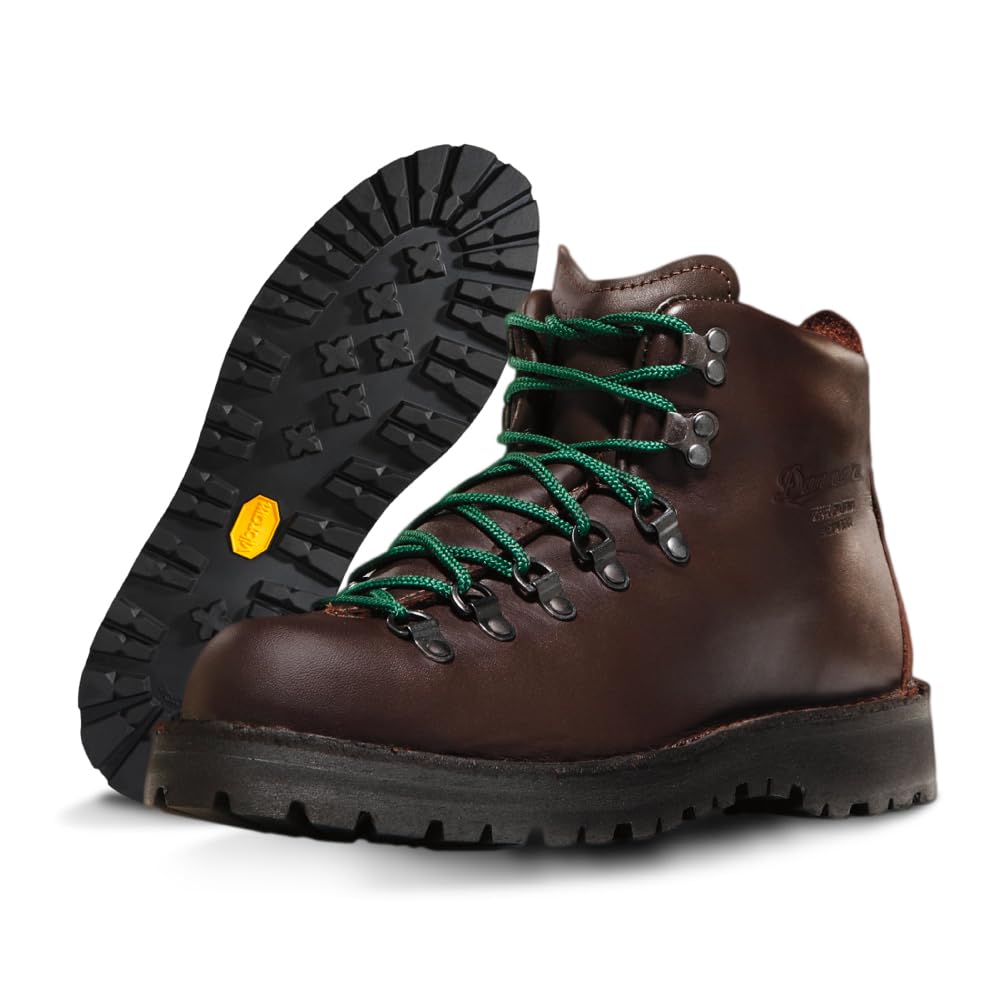
2. Danner Mountain Light II 5″ Gore-Tex Hiking Boots
A short-shaft classic that trades ankle coverage for a fast, light step on the trail.
Picture the hiker who wants a leather boot they can wear daily — to the trailhead, through town, on weekend scrambles — and who intends to still be wearing it years from now. That reader should start here. The 5-inch upper is the shortest in this lineup, a full 5 inches shorter than the Kenetrek Mountain Extreme 400, and that difference is felt immediately: less wrap around the ankle, more freedom through the step. A waterproof Gore-Tex lining keeps rain out while letting sweat vapor escape, and the deep-lugged Vibram sole handles wet rock and scrambles with real confidence.
The construction is where Danner stakes its reputation. Stitchdown build makes the boot resoleable and recraftable, meaning the leather and the sole can be taken apart and rebuilt instead of being retired together. Owners describe that long game clearly: after 9 months and 400 miles on the trail, the boot is still described as the most comfortable they have ever worn, with minimal wear and an expected five-year service life. That number is worth repeating — 400 miles in and holding, with the same buyer putting the boots at a run of half a decade. High-grade leather and a durable build are the twin strengths that come up again and again in the review pages.
Now the honest part. The Mountain Light II runs large, and the fit is the most-discussed trait on these boots — some find it great from the start, others find it narrow and pinching at the achilles. If you have a narrow heel, this is the boot where the heel cup can start cutting, and the sizing advice is to expect a serious break-in measured in miles, not hours. Buyers report blisters over the first stretch of trail before the boot gives. Once it does, though, the leather molds to your foot and the boot starts to feel like it was made for you. Buy a half size down from your sneaker size and budget real time for the break-in.
Sizing reality check: the most consistent buyer note is to size down — 9.5 to 9, 10.5 to 10, and so on. The boot runs large by about half a size, and the included insole is thin enough that many owners swap in a supportive aftermarket footbed, which changes the fit again.
The five-year math: a boot that survives 400 documentable trail miles and then gets rebuilt is a boot you keep buying once and not again. That is the case for paying for the leather and the stitchdown build upfront.
Best for the daily-wear hiker: you want one pair of leather boots that do trail, town, and everything between.
Not the pick if: you need real ankle support for heavy packs — the 5-inch shaft leaves more ankle exposed than the 8-inch and 10-inch boots here.
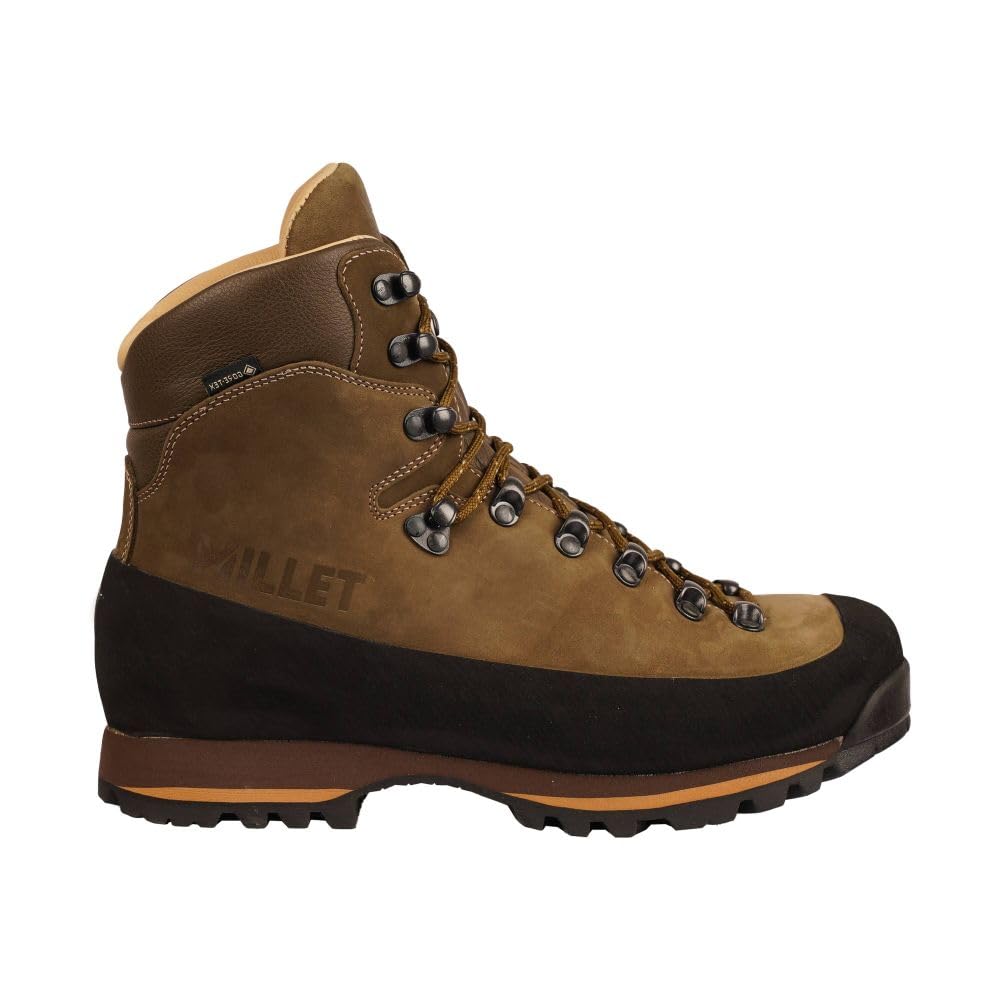
3. MILLET Bouthan Gore-Tex Men’s Hiking Shoes
The mountain shoe that wraps the ankle high and shuts the weather out at the door.
If your hikes are day-length mountain trails where rain is a real threat and you want the protection of a high upper without the full height of a backpacking boot, the Bouthan is worth a serious look. Millet builds it around a waterproof Gore-Tex membrane that keeps external moisture on the outside while a perforated, breathable leather lining works to stop condensation building inside. The high upper stands for stability on switchbacks, and the integral rubber coating around the base of the boot is a physical bumper against rock scrape and scuff.
Underfoot the shoe uses a Vibram outsole for traction and abrasion resistance, paired with an EVA midsole for cushioning on long descents. A stone guard protects the front of the foot from kicked-up rock, which matters more than most buyers realize until they feel a sharp edge catch the top of their toes on a rocky descent. The Nubuck leather upper gives the shoe a traditional look, and the lace-up tightening is designed to lock the foot back into the heel so you get support without slop.
The trade-off with a membrane shoe like this is that the liner that keeps water out also holds warmth in, so on a hot, exposed summer climb your feet will run warmer than they would in a fully unlined leather boot. The higher upper also takes more ankle to fill, which some hikers love on technical ground and others find restrictive on flat, fast trails. If your hiking skews toward wet, cool mountain days with rocky footing, the trade is worth it. If you mostly walk dry, flat paths in the heat, a lower, less sealed shoe will breathe better.
Pick this one for: wet, cool mountain trails where ankle stability and a real waterproof barrier are non-negotiable.
Give it a miss if: you hike in sustained heat or want maximum breathability above all else.
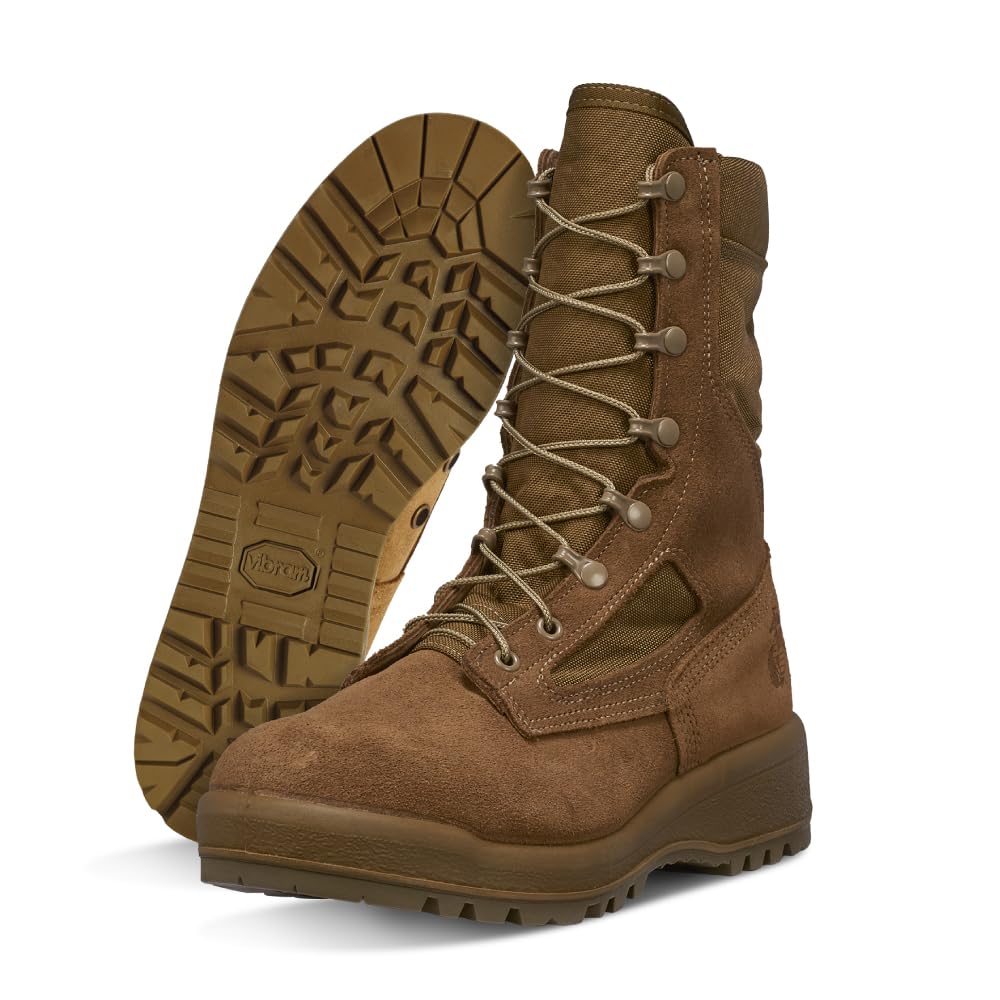
4. Belleville 550 ST 8″ Military Tactical Boots
An American-made workhorse with a steel toe, built for hot ground and hard duty.
This is the value pick for anyone who wants genuine American manufacturing and heavy-duty construction without paying premium-tier money. The 550 ST stands at 8 inches, four inches taller than the Danner Mountain Light II and shorter than the 10-inch Kenetrek boots, and it packs in a steel toe, a cushioned midsole to cut fatigue, and aggressive tread for traction on both urban pavement and rough trail. Berry compliance (a rule that military gear must be made in the USA) satisfies military-grade sourcing standards, so if domestic origin is the whole reason you are shopping, this boot delivers it at the entry level of the group.
The people who buy this boot are using it hard. One reviewer has been wearing theirs for two years on concrete and metal as a sheet metal worker and reports no break-in at all, straight to comfortable. A pair worn daily in heavy rain kept feet dry — the boots are water-resistant rather than marketed as fully waterproof, and the owners reporting back found that only full submersion finally soaks through. The steel toe has a documented save: one buyer credits it with protecting their foot from heavy falling stones. If your work day involves a hot, hard surface and a foot that does not get a break, the 550 ST is built for exactly that life.
Two things to know before you buy. First, sizing runs big — the most repeated advice from owners is to size down a half size or a full size (11 to 10.5, 9.5 to 8.5EE, and so on), so measure carefully. Second, the factory insole is thin and gets swapped out almost immediately by most owners; budget for an aftermarket footbed in your decision. The outsole is where the honest caution lives: some owners mention the Vibram sole cracking in sustained winter ice and snow, and one notes the sole aging quickly when exposed to freezing conditions. For hot-weather and warm-climate duty it is a long-lived boot; if you are on ice and snow regularly, expect the sole to be the first part to give.
Sizing warning: the most consistent owner note is to go a half size or full size down from your street shoe. Multiple buyers have landed on a perfect fit that way; a few who did not have reported pressure on the sides of the big toe.
Cold-weather caveat: the sole is the weak point in freezing conditions, and some owners have seen cracking in heavy winter use. Warm-weather and temperate duty is where it lives its best life.
The pick for hard-use crews: tradespeople, contractors, and anyone standing on hot, hard ground all day who wants a genuine American-made boot at an entry-level position.
Choose differently if: your work is mostly on ice and snow, or you want an outsole specifically built for sustained freezing temperatures.
5. JIM GREEN Barefoot African Ranger Boots

A flexible, wide-toe leather boot that lets your foot move like it was designed to.
The Jim Green African Ranger is for the hiker who has been fighting the shape of standard hiking boots and wants their toes to finally spread out. The toe box is the defining feature here — plenty of room up front for your big toe and pinkie toe to sit flat without being squeezed against the sides. The boots flex and bend the way your foot actually does, and the thin sole lets you feel the ground beneath you on technical steps and rough trail. If you have ever been told to buy a wide size and still come home with pinched toes, this is the boot to try.
The leather is full-grain (the top layer of the hide, the strongest part) and water resistant, and review pages fill with owners who say the boot looks as good as it works — the appearance is what gets mentioned most after the fit, and compliments on the trail are a running theme. Owners describe them as working across a surprisingly broad range: driving, outdoor work, weekend trails, everyday wear. The ground feel is what makes them stand out in the category: they truly feel like walking barefoot, and that barefoot sensation is the whole point of the design.
Here is what you give up versus a stiffer boot like the Kenetrek Mountain Extreme 400. There is no shank under your arch and no rigid ankle support — by design. On steep, loaded, rocky descents you will want your foot to work harder than it would in a backpacking boot, and if you are carrying a heavy pack on technical ground you will notice the difference. The break-in is also the most disputed trait on this boot, with some owners reporting it quick and others finding it takes real time. The leather does come around once you put miles in, but plan for a gradual first stretch rather than instant comfort.
What makes it stand out
- A genuinely generous toe box that lets the big toe and pinkie toe spread without pinching against the sides.
- Thin, flexible sole and a full-grain leather upper that bends and twists the way your foot does.
- Water-resistant full-grain leather that earns unsolicited compliments for how it looks.
What to plan around
- No shank or rigid ankle support — heavy packs on steep, rocky ground ask more of your foot than a stiff boot would.
- Break-in varies significantly from owner to owner, so do not plan on instant comfort.
- The thin sole means sharp, jagged rock is more felt underfoot, which some hikers love and others find tiring.
Made for you if: you have been fighting narrow hiking boots your whole outdoor life and want your toes to finally move.
Not the one if: you carry a heavy pack over technical ground and want a stiff ankle wrap and shank underfoot.
6. Danner Logger 917 6″ Waterproof Hiking Boots for Men
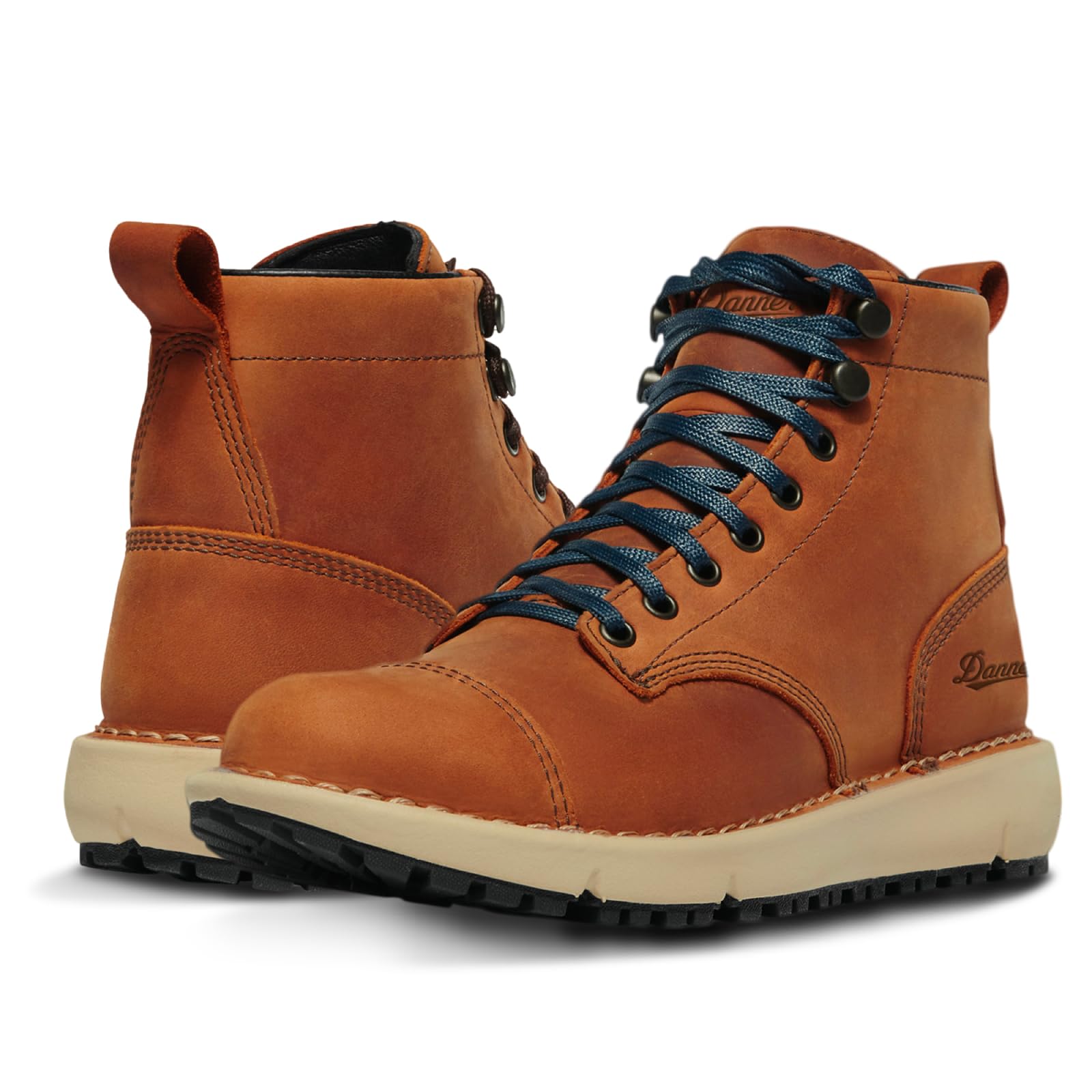
A leather logger built for sloppy miles — breathable waterproofing and a wide, stable platform.
This is the pick for the hiker who wants a full-grain leather boot but does not want to roast their feet getting it. The Logger 917 uses a breathable Gore-Tex liner to lock water out while letting heat and sweat escape, and the full-grain leather upper does the durability work on the outside. The 6-inch shaft splits the difference between the shorter Danner Mountain Light II and the taller Belleville 550 ST, giving you real ankle wrap without the height of a full backpacking boot. Stitchdown construction gives it the wider, more stable platform that Danner builds into its heritage models.
Under the boot, the midsole is a rubberized EVA unit (a foam cushion that absorbs impact) built for durability and long-mileage comfort, and the outsole uses an XS Trek rubber compound designed to balance traction with wet-surface grip. If you hike in the Pacific Northwest or anywhere rain is the weather default, the wet-surface behavior of that outsole is the trait you want to pay attention to. Buyers specifically call out how the boot holds up under all weather conditions and how it avoids leg fatigue on long days — that last point is the killer reason to pick it over a lighter shoe on a long, loaded trail.
Where the Logger 917 asks patience is the fit and the flex. Buyers describe the boot as fitting well from the start with a minimal break-in, which is unusual for a leather logger, but the stiffness of the boot is the most debated trait — some owners find the flex point nice for support on descents, others describe the boot as exceedingly stiff, especially in the first weeks. If you want a boot that feels like a sneaker on day one, this is not the one. If you want a leather boot that stays stable under a heavy pack and comes around over a few weeks, the trade is worth it.
The wet-trail edge: the XS Trek rubber compound on the Vibram 917 outsole is the specific feature aimed at wet-ground performance, and the boot’s Gore-Tex liner keeps the interior dry while still letting vapor out. That is the combination that makes it a strong Pacific Northwest answer.
Honest stiffness note: the stiffness of the leather logger is a dividing line with buyers, and if you need maximum flex from day one, this is not the boot that gives it. Plan on a break-in measured in a few weeks of regular wear.
Best fit for: wet, cool trails where you want a leather boot that stays stable under load and breathes enough to keep sweat down.
Skip if: you want a soft, sneaker-like boot from the first wear — the leather takes real time to flex.
7. ASOLO TPS 520 GV Evo Backpacking Boots
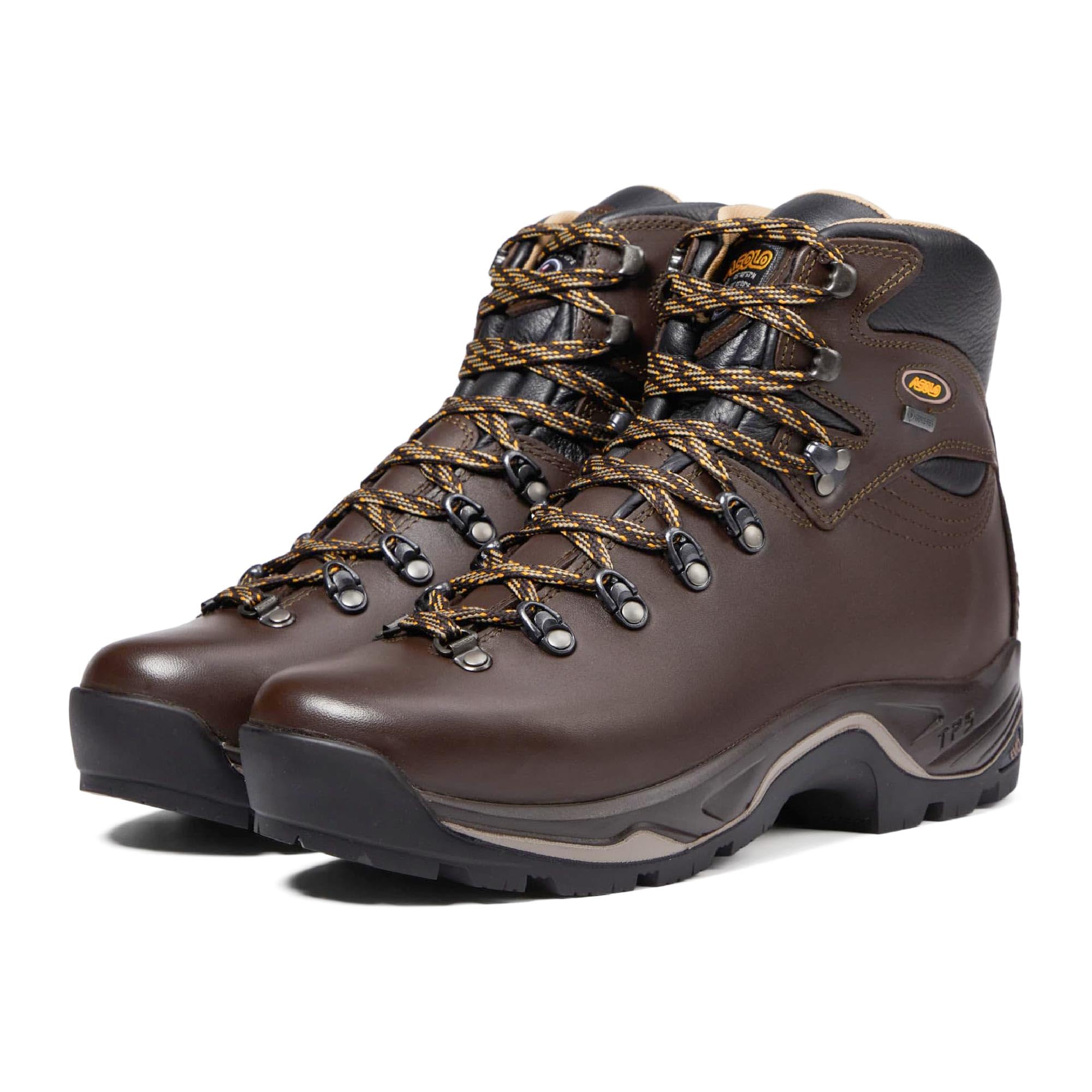
A leather backpacking boot for long, loaded days where comfort and durability have to share the load.
If your hikes are big-mileage trips with a loaded pack and you want a leather boot that rides comfortably under weight, the Asolo TPS 520 GV Evo is built for exactly that. The upper is leather with a water-resistant and breathable build, which is the standard recipe for a backpacking boot that holds up across changing weather. Round-toe design and the leather construction put the boot in the traditional backpacking category rather than the light hiker category, which means it is designed to carry serious loads over rough terrain without flexing away from your foot.
The people who own this boot are focused on the two traits that matter most on a long trip. Comfort is what they talk about most often, and durability is a close second. Buyers describe the boots as comfortable on long days and tough enough to stand up to all weather elements, which is the combination a backpacker is actually paying for — a boot that does not fight your feet at mile 12 and does not fall apart at season three. The construction is built to keep you moving through rain, mud, and rocky ground without the boot becoming the limiting factor on your day.
The honest watch-out with this one is price positioning inside the premium tier — the value-for-money verdict from buyers is mixed, meaning some feel the boot fully earns its place and others wish the entry were lower. That is the standard split on a hand-built leather backpacking boot. If your priority is a leather boot that will carry a heavy pack comfortably for years and you accept paying premium for that, the Asolo lands. If you are looking for a budget leather hiker, the Belleville 550 ST is the more sensible place to start and you give up the backpacking-boot construction to get there.
Pick it for: loaded, multi-day backpacking where a leather upper, durable build, and long-mileage comfort matter more than saving weight.
Look elsewhere if: you want premium leather construction at value pricing — this boot’s whole identity is in the premium tier.
8. Danner Men’s Acadia 8″ Boot

The 8-inch duty boot that uniformed professionals and hard-use crews keep coming back to.
Picture a police officer, a firefighter, or an EMS tech standing on hard floors for 12 hours at a stretch, needing one boot that shines for inspection and stays comfortable enough to forget about. That person is the Acadia’s target and its most devoted buyer. The 8-inch shaft gives real ankle support — three inches taller than the Danner Mountain Light II — while three pounds of full-grain polishable leather and Cordura do the durability work. A 100% waterproof Gore-Tex liner keeps water out and moisture moving out, and Berry compliance means the boot meets domestic-sourcing standards down to the raw materials, so buying it funds American jobs at every step of the build.
The construction is where the Acadia shows its pedigree. Handcrafted stitchdown build gives the boot a wider, more stable platform underfoot, and the Vibram Kletterlift outsole is both oil- and slip-resistant for real traction on wet tile, polished concrete, and pavement. Better still, the boot is resolable and recraftable, which means when the sole goes, you do not throw the boot away — you send it in and it comes back. Buyers have documented running the same pair for years with basic care, sending them in for recrafting, and getting them back into service. That is the whole case for the price of the leather and the build.
Two things to size up before you order. First, the Acadia runs large and narrow — the consistent owner advice is to size down half a size or a full size from your normal and go up a width, with one owner describing landing on a 10.5 wide after a size 11 sneaker. Second, if you need an orthotic or added support, plan on going a full width wider because the boot does not include a removable insole. The boot is heavy — one owner calls it snug and slightly clunky for running but comfortable for a full 10-to-16-hour shift, which is the right sizing of the caveat. There is no side zip on this model, which is the most common wish-list item from the field.
Sizing wisdom from owners: the Acadia runs large and narrow, and the smart play is to size down and go up a width. If you wear orthotics or want a replacement footbed, add a full width to your number.
The five-year math: because the boot is resolable and recraftable through Danner, one pair can serve you through multiple sole cycles instead of being retired the first time the tread wears flat.
The pick for duty and heavy standing: uniformed professionals, security, and hard-use crews who need one boot to last multiple sole cycles and shine for inspection.
Not for: ultralight hikers who want a low-ounce trail shoe — the Acadia’s job is durability and support, and its weight reflects that.
9. Kenetrek Men’s Mountain Extreme Non-Insulated Hiking Boots
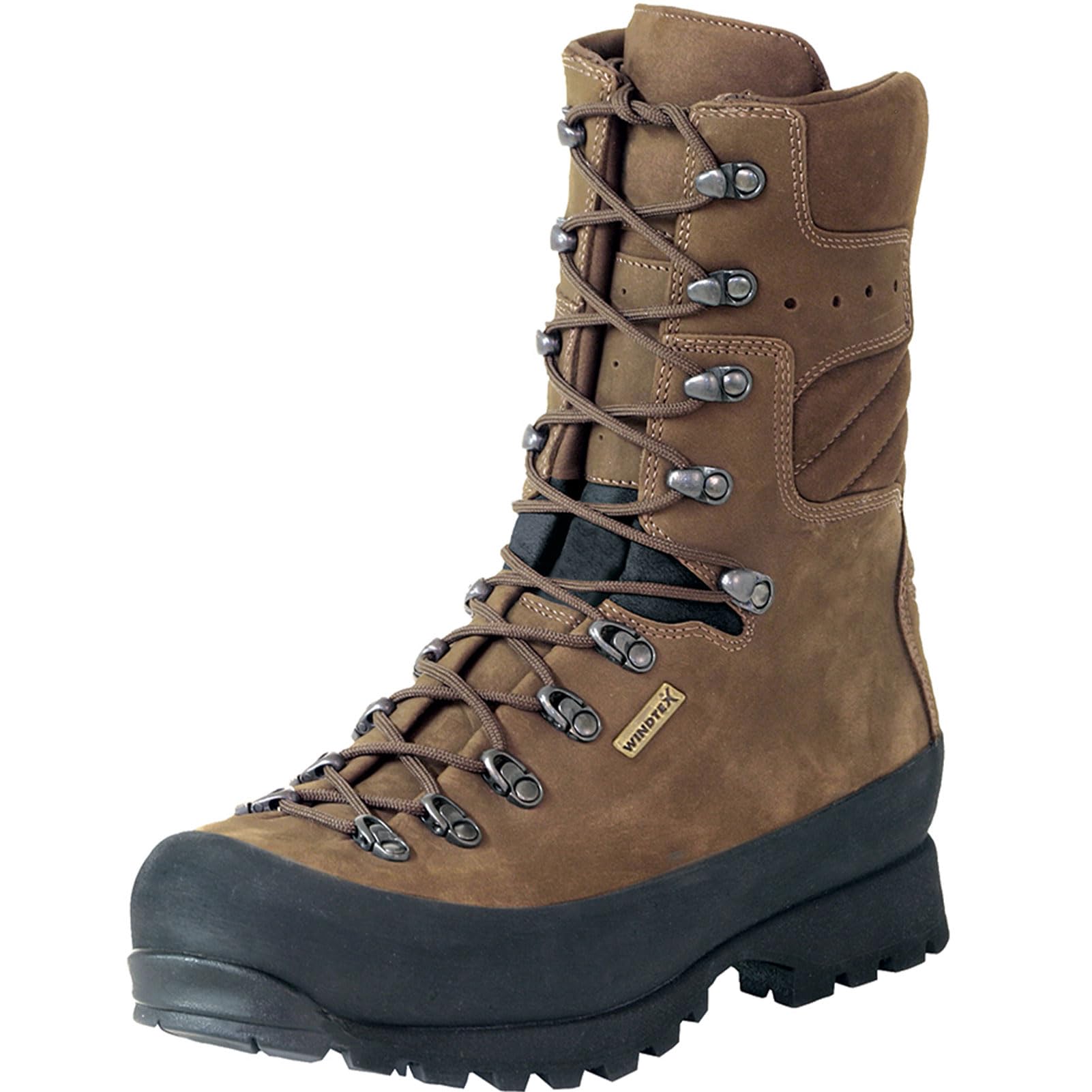
Same tall Kenetrek backbone, no insulation — for hikers who run hot on the mountain.
This is the summer twin of the Mountain Extreme 400 at the top of this list. It carries the same 10-inch shaft height, the same K-Talon outsole, the same reinforced high-wear stitching, the same 7mm nylon midsole, and the same anti-corrosion hardware. What it drops is the 400-gram Thinsulate insulation, and that single change resets the whole use case. Where the 400 is aimed at cold-morning elk season and late-autumn snow, this boot is built for warm-weather backpacking, side-hilling, and summer mountain work where ventilation beats warmth.
The traits owners describe are the ones that make a Kenetrek worth owning in warm weather: uppers that hold up extremely well over seasons of use, waterproofing that keeps you dry in wet creek crossings, and ankle support that is particularly good for cutting across steep side-hills with a load on. The 2-pound build keeps the boot lighter than its insulated sibling, which on a long hot climb is the difference between fresh legs and dragging ones. For backpackers who have been looking at the Mountain Extreme family but worried about sweating through summer hikes in the insulated version, this is the model that solves that.
Two honest trade-offs to know. First, the fit and comfort reviews are mixed — some owners find them snug from the start and others find them needing real break-in, so buy your measured size and expect a short adjustment window. Second, the price sits in the premium tier, and while long-term owners describe them as worth every dollar, buyers who are looking for budget American-made options should look at the Belleville 550 ST instead. If your calendar is mostly warm-weather trips and you want a tall, stiff mountain boot, this is the right shape. If your season runs cold, step up to the insulated 400 at the top of this list.
Choose this one if: you hike and backpack in warm-weather mountain country and want the tall Kenetrek chassis without the heat of insulation.
Step to the insulated 400 instead if: your trips run through cold mornings, snow, or late-autumn highs below freezing.
Know the Specs
Shaft height in inches
Shaft height is the measurement from the sole to the top of the upper, and it tells you how much ankle the boot wraps. A 5-inch boot leaves more ankle free and feels lighter and faster on smooth trail. An 8-inch boot adds real ankle bracing for uneven ground and loaded packs. A 10-inch boot wraps the most ankle and works best on steep, rocky ground. Buy the height that matches the terrain you actually hike, not the tallest one on the shelf.
Insulation weight in grams of Thinsulate
Insulation is measured in grams of Thinsulate, and higher numbers mean warmer boots. A 400-gram Thinsulate boot is designed for cold-weather trips and late-season hunts. An uninsulated boot breathes freely for warm-weather hiking but gives you no warmth on a cold morning. The same maker will often offer both — like the Kenetrek Mountain Extreme line, where the 400 is insulated and the Non-Insulated is not. Read the model name carefully; the number is the entire difference.
Waterproof membrane versus water resistance
A waterproof membrane like Gore-Tex seals the boot against external moisture while letting sweat vapor escape, so your feet stay dry from both directions. Water-resistant leather sheds rain and light moisture but will not hold up to a stream crossing or full submersion. If you hike in wet country, a membrane matters. If you hike mostly dry and cool, water-resistant leather breathes better and dries faster. Check the listing wording — “waterproof” and “water-resistant” are not the same claim.
Stitchdown construction and resoleability
Stitchdown construction sews and cements the upper to the midsole, creating a wider and more stable platform underfoot. The construction also makes the boot resoleable and recraftable, meaning a cobbler or the original maker can replace the sole and rebuild the boot instead of retiring it. A boot built this way can serve you through multiple sole cycles. A boot built without it usually gets thrown away the first time the tread wears flat.
Common Questions
What does Berry Compliant mean on an American made hiking boot?
Should I size up or down in American made hiking boots?
Can hiking boots with stitchdown construction be resoled?
Is 400-gram Thinsulate too warm for summer hiking?
Does a waterproof Gore-Tex liner make a hiking boot too hot?
How long does the sole last on a Belleville 550 ST?
What is the difference between the Kenetrek Mountain Extreme 400 and the Non-Insulated model?
Are American made hiking boots worth buying over imported boots?
What size Danner Acadia should I order if I wear orthotics?
Is the JIM GREEN African Ranger good for backpacking with a heavy load?
Which American made hiking boots are best for people with wide feet?
Do these hiking boots need leather treatment or waterproofing products?
The Bottom Line
For most hikers shopping the american made hiking boots space, the clear starting point is the Kenetrek Men’s Mountain Extreme 400 — the 10-inch upper, 400-gram Thinsulate, and K-Talon outsole make it the strongest cold-weather mountain boot in this group. If your hikes are warm-weather and you want the same tall, stiff Kenetrek chassis without the heat, step to the Kenetrek Men’s Mountain Extreme Non-Insulated. And for hard-use work and uniform duty where American sourcing and recraftability matter most, the Danner Men’s Acadia 8″ is the boot to reach for — Berry Compliant, resolable, and built to be rebuilt instead of tossed. One final note if you are still deciding: the boots that sell to the most owners on this list — the Danner Mountain Light II, the Danner Acadia, and the Belleville 550 ST — are all still earning fresh five-star notes today, which is the honest signal that stitchdown construction and re-craftable leather are worth the higher upfront position.
How we choose
We do not accept paid placement. Every pick is matched to a real buyer and a real use-case; we do not hands-on test units.
Sources
Specifications: manufacturer listings and product documentation. Review insights: verified customer reviews, as of October 2026. Pricing: not shown on this page (it changes often); check the current price via the retailer link.
As an Amazon Associate, Aappliancez earns from qualifying purchases. This does not affect which products we feature.