Disclosure: Some links in this post are affiliate links. As an Amazon Associate I earn from qualifying purchases, at no extra cost to you. Learn more
Specs are compiled from manufacturer listings and verified buyer reviews and can change over time — please confirm the key details on the product page before buying.
Buying your first drone is mostly a decision about how much you want to fight the machine. The picks below are all under 249 grams, which means you can fly them without FAA registration in the United States, and they all bring GPS so the drone can come back to you on its own instead of drifting off over a treeline. If you want the shortest answer: the Potensic ATOM LT is the one most beginners should buy, because it pairs two 3000mAh batteries with a genuinely stable GPS system — rated 4.0+ stars across 100+ owner reviews.
This guide is built by comparing the manufacturers’ published specifications and the patterns across verified customer reviews, so you get each pick’s real strengths and trade-offs instead of marketing spin.
A 249g drone is light enough to fold into a jacket pocket, but the light weight also means wind pushes it around, and that is where most starter drones get lost. This guide covers what each spec actually means in the air so you can pick with confidence when shopping for the best amateur drone.
Top Picks


How To Choose The Best Amateur Drone
The biggest mistake first-time buyers make is treating the camera label as the headline. On a budget drone, the camera is the part you will replace in your head every single flight. What actually determines whether you come home with footage or a lost drone is how well it holds position and how reliably it comes back.
Why 249 grams is the number you notice first
Drones that take off at under 249g fall below the weight line that triggers FAA registration requirements in the US. That means no registration number on the shell and no remote ID module. Several of the picks here sit at exactly 249g, which keeps you on the right side of that line — but also means there is no headroom, so adding a payload or a bigger battery takes you over.
The GPS versus optical flow difference
Optical flow is a downward-facing camera that reads the ground texture to hold position. It works well indoors and close to the ground, and it is what keeps a cheap drone steady in a hover. GPS locks onto satellites instead, which is what allows return-to-home, follow-me and waypoint flight. A drone with both holds far steadier outdoors than one with either alone, and several picks here combine the two.
What brushless motors change in real flight
Brushed motors use physical contact to spin, so they wear out faster. Brushless motors use magnets and no contact, which delivers more thrust, lower noise and a longer service life. In practice this is the difference between a drone that fights a breeze and one that shrugs at it, and it is why every pick in this list names brushless motors.
Plan for real minutes, not advertised ones
Advertised flight time is measured in ideal conditions. Real flight time drops when you fight wind or record video the entire trip. The honest way to plan is to assume roughly three-quarters of whatever the box promises, and to prefer a drone with two or three included batteries over one with a single big one.
Side-by-Side Comparison
| Model | Best For | Take-Off Weight | Batteries / Flight Time | Max Range | Amazon |
|---|---|---|---|---|---|
| Potensic ATOM LT★ Best Overall | Most beginners | 249 g | 2 × 3000mAh / 80 min | 4000 m | Amazon |
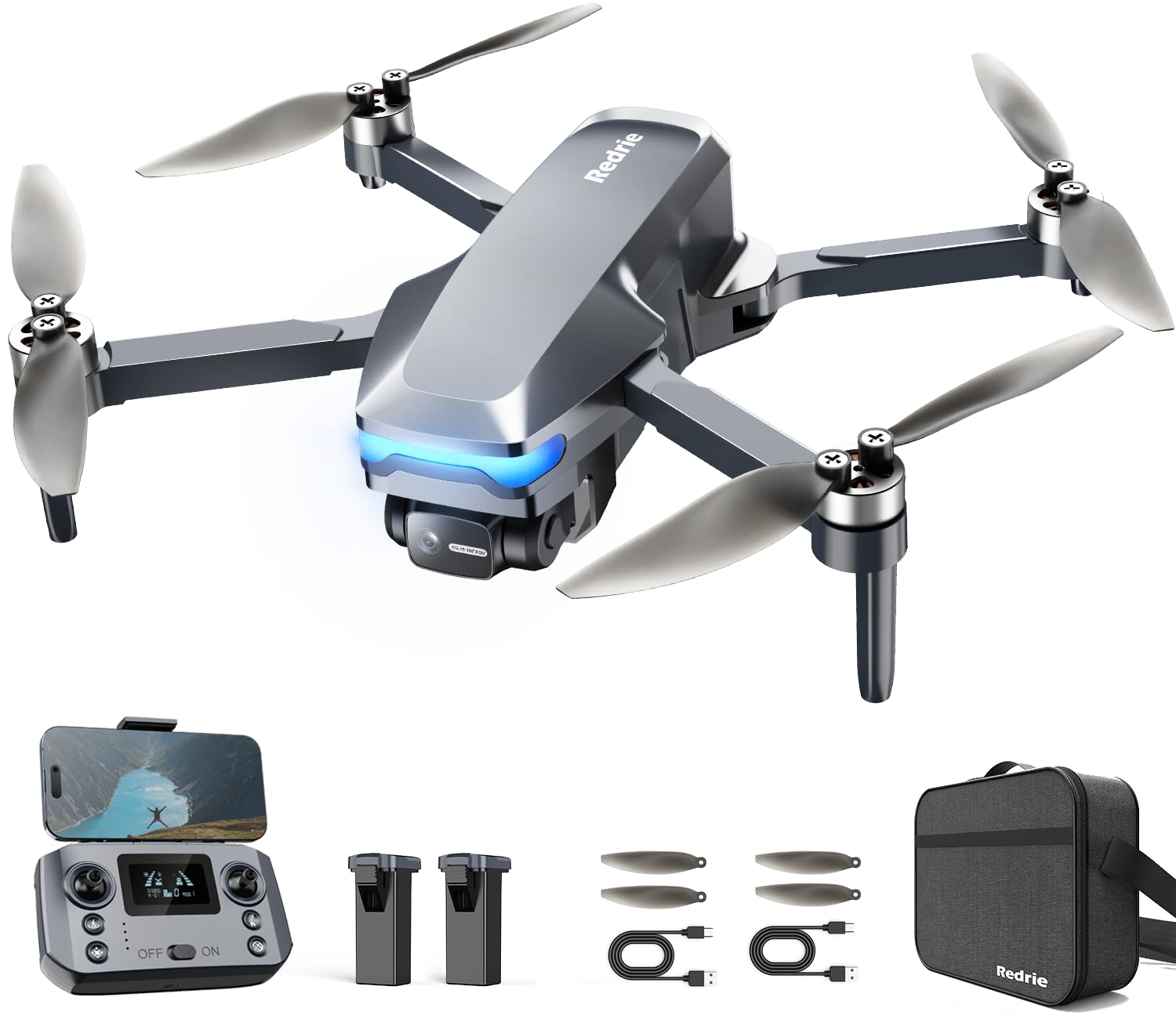
| REDRIE GPS Drone 4KBest Flight Time | Longest total flight | 249 g | 2 × 1800mAh / 45 min | 1640 feet | Amazon |
| WeFone WF30Lightest Pick | Tight-budget beginners | 94 g | 2 batteries / 40 min | 300 m | Amazon |
| CHUBORY 4K Beginner | Longest control range | Under 249 g | 3 batteries / 84 min | 2650 feet | Amazon |
| Oddire Drone 4K | Learning on a budget | — | 2 batteries / — | 1640 feet | Amazon |
| SIMREX G29 | Gifting to a teen | 8 ounces | 2 batteries / 40 min | 2296 feet | Amazon |
| UFLYTOO LA Screen Drone | Flying without a phone | Under 250 g | 2 × 2200mAh / 45 min | — | Amazon |
| REDRIE HK33 | Steadier video | Under 250 g | 2 × 1800mAh / 40-45 min | 500 m | Amazon |
| UranHub G30 | Kids and first-timers | 249 g | 1 × 2300mAh / 31 min | — | Amazon |
Detailed Reviews
1. Potensic ATOM LT GPS Drone Under 249g
Our pick — 4.0+★ from 100+ verified ratings; the strongest balance of quality and price.
The one that lands itself, folds into a pocket and flies on two batteries.
Two 3000mAh batteries give you 40 minutes per charge and 80 minutes total, so you can swap packs and keep flying while the first one cools. That is a bigger battery than the REDRIE GPS Drone 4K carries — 3000mAh against 1800mAh — and it is the main reason this one holds the top spot for a beginner who wants actual air time rather than a single nervous trip.
What wins people over is the flying feel. Owners say its flight feel rivals drones that cost far more, and the KPI that matters is straightforward: ShakeVanish 2.0 stabilization smooths the 2.5K footage, and the 118° field of view means a wide sweep rather than a narrow tunnel of picture. It supports 2560×1440 aerial photos and 2.5K video at 30fps. A Sony sensor sits behind that lens, rare at this price.
GPS comes from four satellite systems — GPS, GLONASS, Galileo and BeiDou — and that is what powers Auto Return Home, Follow Me, Waypoint Fly and Circle Fly. The brushless motor holds steady in Level 5 wind, where cheaper drones start drifting. Folded, the body measures 3.5 x 5.6 x 2.3 inches, which fits a coat pocket.
Here is the honest catch, and it is one worth knowing before you take it up. Several buyers report signal and video dropping near 2,000 feet, not the advertised 13,123, so treat that range as a best case in open, unobstructed ground. The drone also only flies in GPS mode, so you need to start outdoors in an open area and wait for the satellites to lock before takeoff.
Why it earns first place
- Two 3000mAh batteries deliver 40 minutes each and 80 minutes total — double the pack size of the REDRIE pick
- Four-system GNSS (GPS, GLONASS, Galileo, BeiDou) powers Auto Return Home, Follow Me and Waypoint Fly
- Brushless motor holds steady in Level 5 wind conditions
- Folds to 3.5 x 5.6 x 2.3 inches, small enough for a jacket pocket
- 118° field of view with a Sony sensor and 2.5K at 30fps video
What to plan around
- GPS lock takes a moment before takeoff is permitted, so arrive early rather than flying immediately
- Real-world signal has dropped near 2,000 feet, well short of the advertised 13,123 feet
- Needs a fast charger — charging over a phone cable runs to roughly 1 hour 45 minutes
- GPS mode only, so no indoor or hand-launch flying
Buy this one if: you want the longest total flight time here plus the largest battery in the list, and you fly in open ground where you can see it.
Look elsewhere if: you plan to fly indoors or in tight backyards — this drone needs a GPS lock and open sky before it will start.
2. REDRIE GPS Drone with Camera for Adults 4K
Two packs, 45 minutes total, and a camera you adjust from the controller.
Two 1800mAh batteries split 45 minutes of flight between them, so plan on short hops and a swap rather than one long cruise. That is a smaller cell than the Potensic ATOM LT uses — 1800mAh against 3000mAh — and the gap shows up in how often you land.
The camera is the more interesting part. An F2.15 aperture lens at 110° wide captures 4096×3072 photos and 2048×1088 video, and a 90° remote adjuster lets you tilt the angle from the ground without landing. The 5G WiFi link holds a stable first-person video feed up to 985 feet, and the repeater built into the controller stretches signal range to 1640 feet.
GPS here covers Auto Return, Follow, Route Planning and Fly Around, plus an automatic return if the signal drops, the drone goes out of range or the battery runs low. Brushless motors give it wind resistance up to Level 5. Weighing in under 250g means no FAA registration, and the foldable body with a carrying case makes it easy to haul to a field.
The divided picture is real, and you should weigh it. The controls suit a beginner and the GPS lock is fast on a good unit, but a meaningful share of owners describe a drone that moves without touching the controller and loses connection at short distance. As one buyer put it: “It starts moving without touching the controller, and you can’t fly it far without losing connection.” Buy from a seller with a clean return path, and test the hover immediately on arrival.
Where it shines: the 90° remote camera adjustment and the 110° wide lens give you framing control that most starter drones make you land to change — that alone makes this a nicer filming tool than a fixed-lens quadcopter.
The honest caveat: the flight performance is the weak spot, and the reports of uncommanded movement are the pattern to watch rather than a one-off. It is a good drone when the unit is good.
Worth a look if: you want a wide-angle camera you can tilt from the controller and you are comfortable testing a unit within the return window.
Pass if: you want the most predictable first flight — the inconsistency here is a bigger risk than the features are a reward.
3. WeFone WF30 Foldable 4K Camera GPS Drone
At 94 grams it is the lightest here, and the easiest to hand to a kid.
Ninety-four grams is a fraction of the 249g ceiling, and that low weight is exactly why this drone is so forgiving. It survives tree, wall and cinder-block impacts, and owners clear sand from the motors with canned air and spin the rotors free by hand. For a beginner who crashes constantly, that durability matters more than any camera spec.
Two modular batteries give 40 minutes total at 20 minutes each, and brushless motors keep the flight smooth and the noise down. The camera is a 90° electrically adjustable lens at 117° wide, with 5G FPV transmission out to roughly 300 meters. GPS covers one-key return, Follow Me, Waypoint Flight and Point of Interest, and the foldable body ships with a carrying case.
What buyers praise most is how beginner-friendly the whole package is — the one-key takeoff and landing and the headless mode mean you are not memorizing stick combinations before your first flight. The camera, though, is not a true 4K sensor. Expect roughly 15 minutes of real flight per battery rather than the claimed 20, and plan to buy a spare.
The honest read on 4K: the label is generous. The footage that arrives on your phone looks fine in good daylight but does not hold up next to a real 4K camera, and it does not improve much when saved to an SD card.
Second thing to know: the drone broadcasts an open WiFi signal, which means a stranger nearby could in theory connect. That is normal at this price, but worth understanding before you fly it near your home.
Reach for this if: you want the most crash-tolerant drone here and a first flight that does not require studying a manual.
Skip if: you actually care about video quality — the 4K badge is the weakest thing about it.
4. CHUBORY 4K Drone with Camera for Beginners
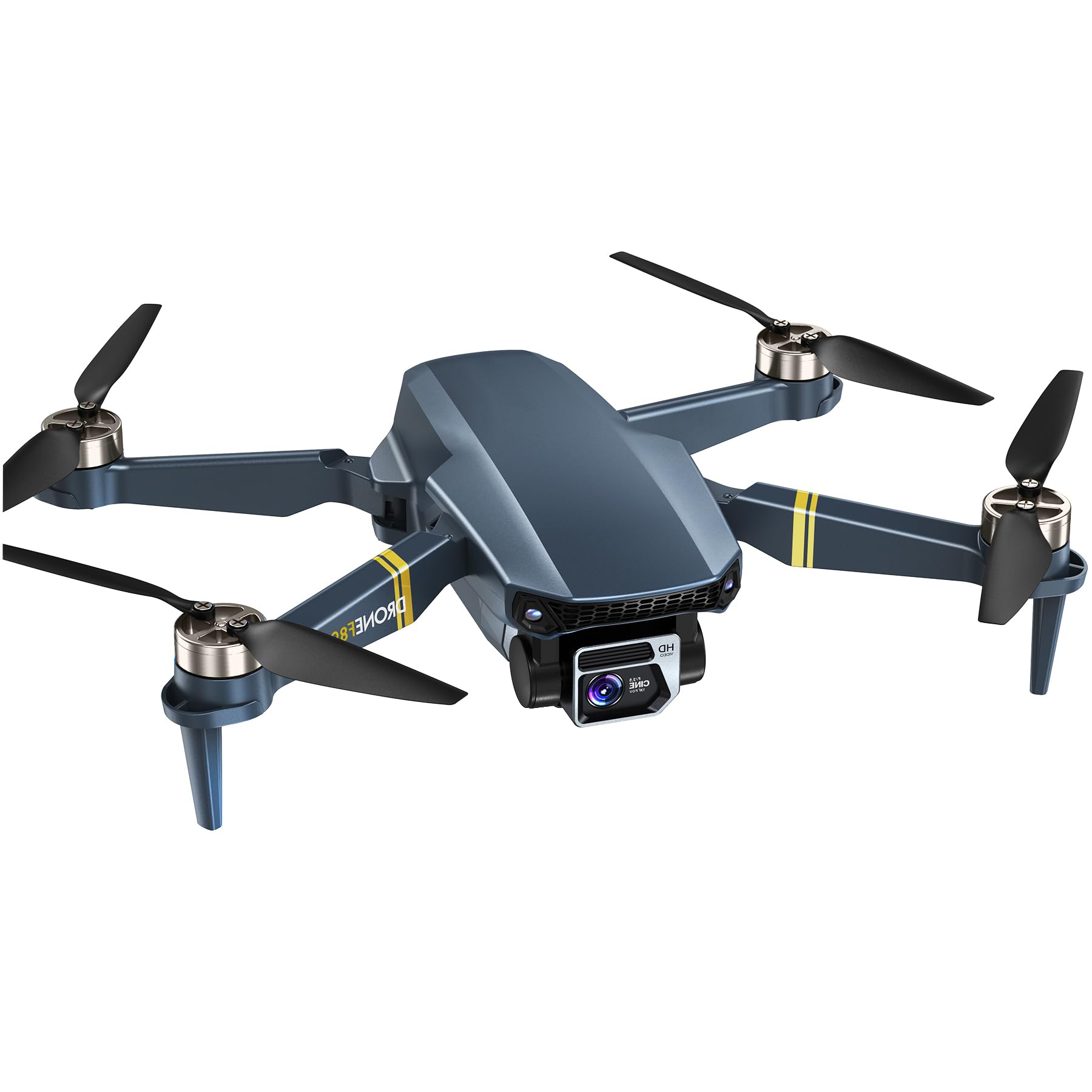
Three batteries, 84 minutes of flying, and a control range that reaches 2,650 feet.
Three upgraded batteries deliver 84 minutes in total, which is the most flight time in this whole list. The alloy brushless motors push harder and run quieter than brushed ones, and the compact foldable body with its carrying case means you can bring all three packs along without a backpack.
Range is the second headline. A 2,650-foot control distance is far beyond what a cheap drone usually manages — many starters top out around 250 feet. The camera side is a 120° wide-angle 4K front lens, plus a switchable bottom optical flow camera so you can look at the ground beneath you. Add altitude hold, one-key takeoff and landing, gesture selfie and trajectory flight, and it covers far more ground than the price tier suggests.
The caution here is about consistency rather than features. This drone has the largest owner base in the guide, and a portion of them describe a unit that fell out of the sky with a fresh battery. Others describe video that buffers past about 150 feet even though the control link holds much farther. The reality is that the video feed is the first thing to fail, not the control signal.
The arguments for it
- 84 minutes total across three included batteries — the longest total here
- 2,650-foot control range, roughly ten times a typical budget quadcopter
- Switchable bottom optical flow camera lets you see the ground under the drone
- 120° wide-angle 4K front camera captures broad landscape shots in one frame
Where it can let you down
- Video feed buffers past roughly 150 feet even while the control link holds
- Return-to-home ignores obstacles, so it can fly into a tree on the way back
- Bottom camera resolution is lower than the front camera
- Mixed reliability reports mean testing right away matters
Best matched to: a flyer who wants maximum air time and range and treats the video feed as a bonus rather than the point.
Think twice if: you want predictable returns — the return-to-home path has no obstacle sensing.
5. Oddire Drone with 4K Camera
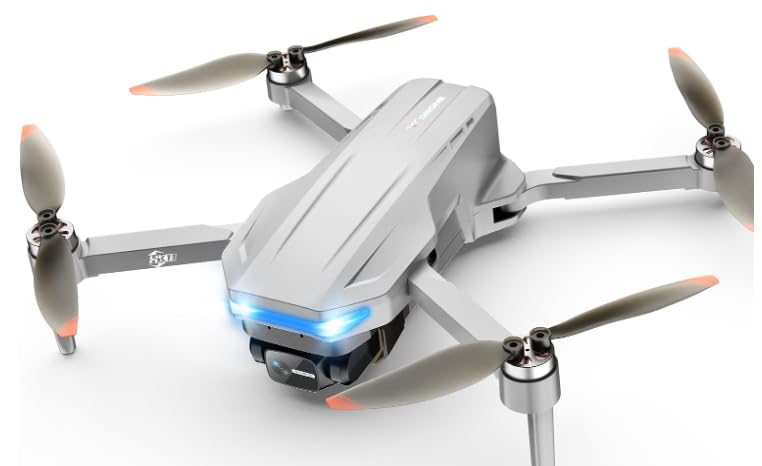
The cheapest way into GPS hover, with a camera that surprises people.
Twelve-point-three megapixels of still resolution is the number that sets this one apart from the crowd of 8MP starter drones. The camera captures 4K video in MP4 format, and the CMOS sensor handles daylight scenes well enough that owners describe the photo and video quality as the best part of the drone.
The GPS hover is the thing that keeps it in the air reliably, and it is stable though less precise than a DJI system. Return-to-home lands within 3 or 4 feet of the takeoff point. There is no gimbal, which means video is shaky and photos are the stronger output, and it handles wind resistance decently but should stay grounded on high KP days when the geomagnetic activity upsets the compass.
Two batteries are included, and the controller charges over USB-C, which means one cable covers both the drone and the remote. Range runs to 1,640 feet. It is a small body that fits in the included travel bag.
The honest limit: real flight time runs around 12 minutes for some owners rather than what the box states, and a minority report constant drifting and delayed control response. The app can be finicky — the X Drone app fails to connect on some Android phones while the X Drone Go app works — so try both if the first one will not pair.
Why it works as a learner: the combination of GPS hover, return-to-home and a light body means the drone tends to stay where you put it, which is the exact skill a beginner is trying to build before spending more.
The real trade-off: no gimbal means shaky video. Buy it for photos and for learning, not for cinematic footage.
Pick it up when: you want to learn on a GPS drone before committing to a bigger purchase, and photos matter more than video.
Look elsewhere if: smooth video is the goal — without a gimbal, the footage will wobble.
6. SIMREX G29 GPS Drone with Camera

Built for the gift box, with a map to find it if it lands far away.
The Find My Drone feature is the reason to pick this one for a teen or a first-time pilot. If the drone lands somewhere out of sight, the app shows its position on a map, which is the safety net that makes a parent comfortable handing one over. GPS Auto Return works from a single click or automatically when the signal drops.
A 90° electrically adjustable camera captures 4K photos and HD video, and the 5G WiFi FPV feed reaches up to 2,296 feet outdoors in unobstructed conditions. Optical flow and altitude hold keep the hover steady, and brushless motors cut the noise and resist wind. Two batteries deliver 40 minutes total.
Intelligent flight modes round it out — Follow Me, Waypoint Flight, Circle Around and Gesture Control, which lets you trigger a selfie without touching the phone. Headless Mode makes the controls line up with the stick direction you push rather than the drone’s nose, which is the feature that saves most beginners from confusion in the first hour.
One thing to be clear about: the 90° adjustment is on the camera, not a gimbal, and the 4K figure is the label rather than a sensor spec. The functionality side is split — some units work exactly as advertised and some arrive with a dead motor — so buy from a seller with a clean replacement policy and test it before gifting.
The gifting case: Find My Drone plus Auto Return plus Headless Mode is the exact combination of features that turns a scary first flight into a manageable one, and that matters more for a teen gift than camera specs.
What to watch: the body is small and light, and it flies outdoors only — this is a park-and-field drone, not an indoor toy.
The right buy for: a gift where you want the recipient to have a map-based safety net if the drone wanders off.
Not for: anyone flying indoors or in a small yard, since it needs open outdoor space.
7. UFLYTOO LA GPS Drone with 4.5 Inch Controller Screen

A 4.5-inch screen built into the controller, so your phone stays in your pocket.
Every other drone here asks you to mount a phone and run an app. This one puts a 4.5-inch screen directly on the controller, which removes the pairing step, the app store, the cable and the dying phone battery in one move.
Two 2200mAh batteries give 45 minutes total, and brushless motors deliver the speed and stability to fight wind. A carrying case is included, and the drone flies under 250g without FAA registration. The screen is not touchable, but for live view and controls it does the job without a second device.
Where it earns its spot is in the pairing with beginners. No phone means no mid-flight app crash, and the GPS return-to-home worked cleanly enough that owners describe it as reliable. The 4K footage is clear in good conditions.
The big caveat is the screen in daylight. It washes out in direct sun without a hood, which makes it hard to keep visual line of sight while also watching the screen. The buttons also require some study — hold durations and mode switches are not self-explanatory — so read the manual before the first flight rather than during it.
What it fixes for beginners
- Built-in 4.5-inch screen removes the phone pairing step entirely
- Two 2200mAh batteries cover 45 minutes of total flight
- Brushless motors add wind resistance and speed
- Under 250g means no FAA registration required
The honest edges
- The screen is not touchable and becomes hard to read in direct sun without a hood
- Button functions take real study — hold times and mode switches are not obvious
- Running the screen drains the controller faster than a phone-based setup
- Build materials match the price tier rather than exceeding it
The one to choose if: you want the simplest possible setup with no phone involved, and you fly in the early morning or evening rather than high noon.
Reconsider if: you fly in bright midday sun — you will want a hood, and even then the screen is a challenge.
8. REDRIE HK33 Foldable Beginner Drone
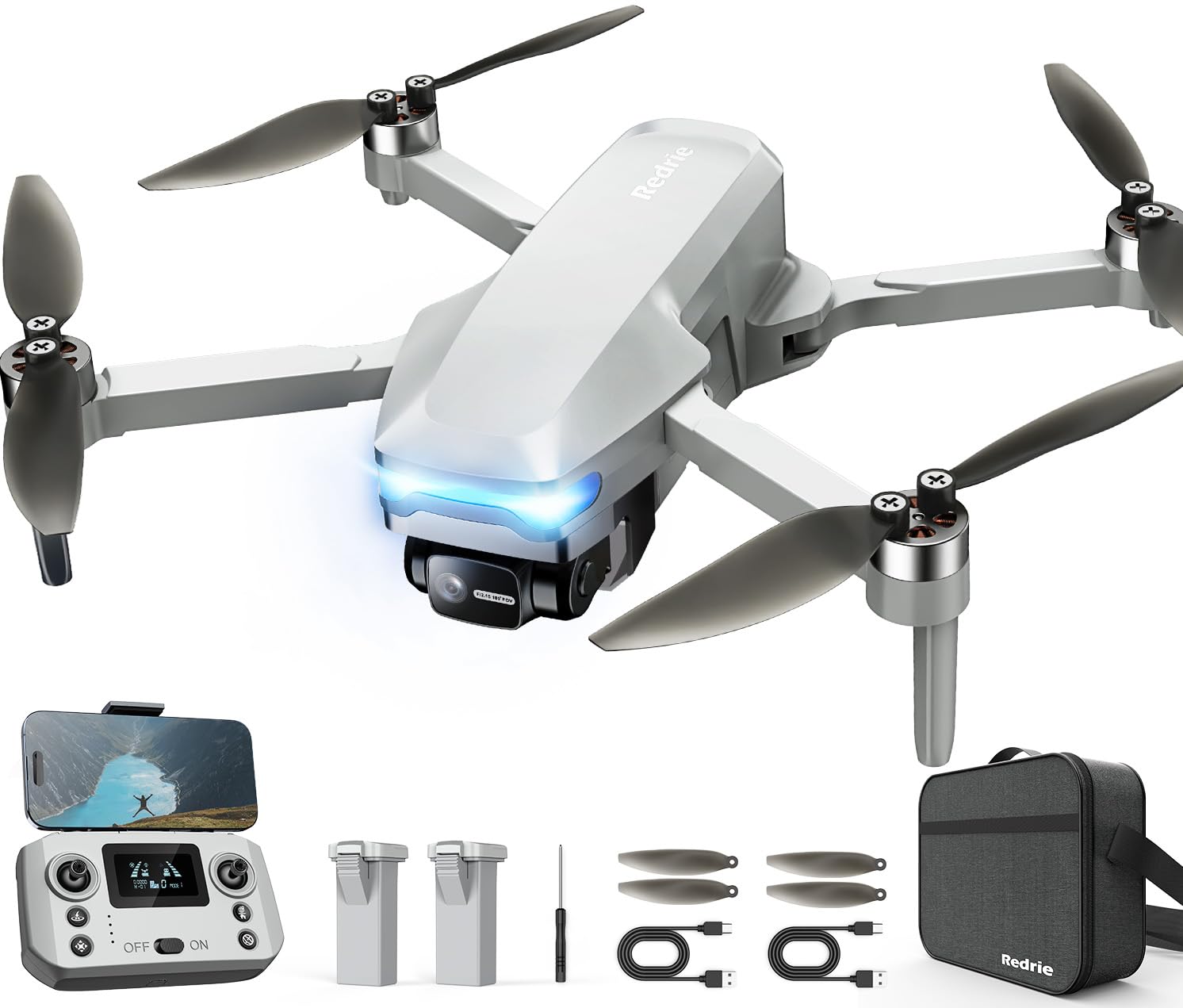
The only pick here with a two-axis gimbal, which changes what your video looks like.
A 2-axis gimbal is the single feature that separates this drone from everything cheaper in the list. Most starter drones have no gimbal at all, so their video wobbles with every gust. A gimbal physically stabilizes the camera against the drone’s movement, and with an F2.15 aperture and 110° wide lens, this one captures 4096×3072 photos and 2048×1088 video that actually holds still.
The 90° remote-controlled angle adjuster lets you switch between horizontal and vertical framing from the ground, which is more useful than it sounds for landscape versus portrait shots. Brushless motors keep it stable in Level 5 winds. Two 1800mAh batteries give 40 to 45 minutes total, and a real-time battery indicator on the remote or app tells you when to land before you have to guess.
GPS covers Auto Return, Follow, Route Planning and Fly Around, and the drone returns home when it loses signal, flies out of range or runs low on battery. At under 250g no registration is required, and the foldable body with a carrying case travels easily.
The stability of the footage and the stability of the drone itself are different questions. Owners mention the gimbal keeps the image smooth, but the airframe drifts in wind and quick turns, and it is not precise. A few units have shown up with quality problems — a loose gimbal wire, a battery that will not charge, motors that keep spinning after landing — so a careful unboxing test is worth the ten minutes.
The standout: a two-axis gimbal at this level is genuinely uncommon, and it is the difference between footage you would show someone and footage you delete.
The nit that matters: the batteries come off warm after a flight, which is normal for a compact drone but worth knowing if you fly back to back.
This is your pick if: video quality is the whole point and you want gimbal-stabilized footage rather than handheld-looking clips.
Look past it if: you need wind-proof precision — the gimbal smooths the camera, not the airframe.
9. UranHub G30 Drone with 4K UHD Camera
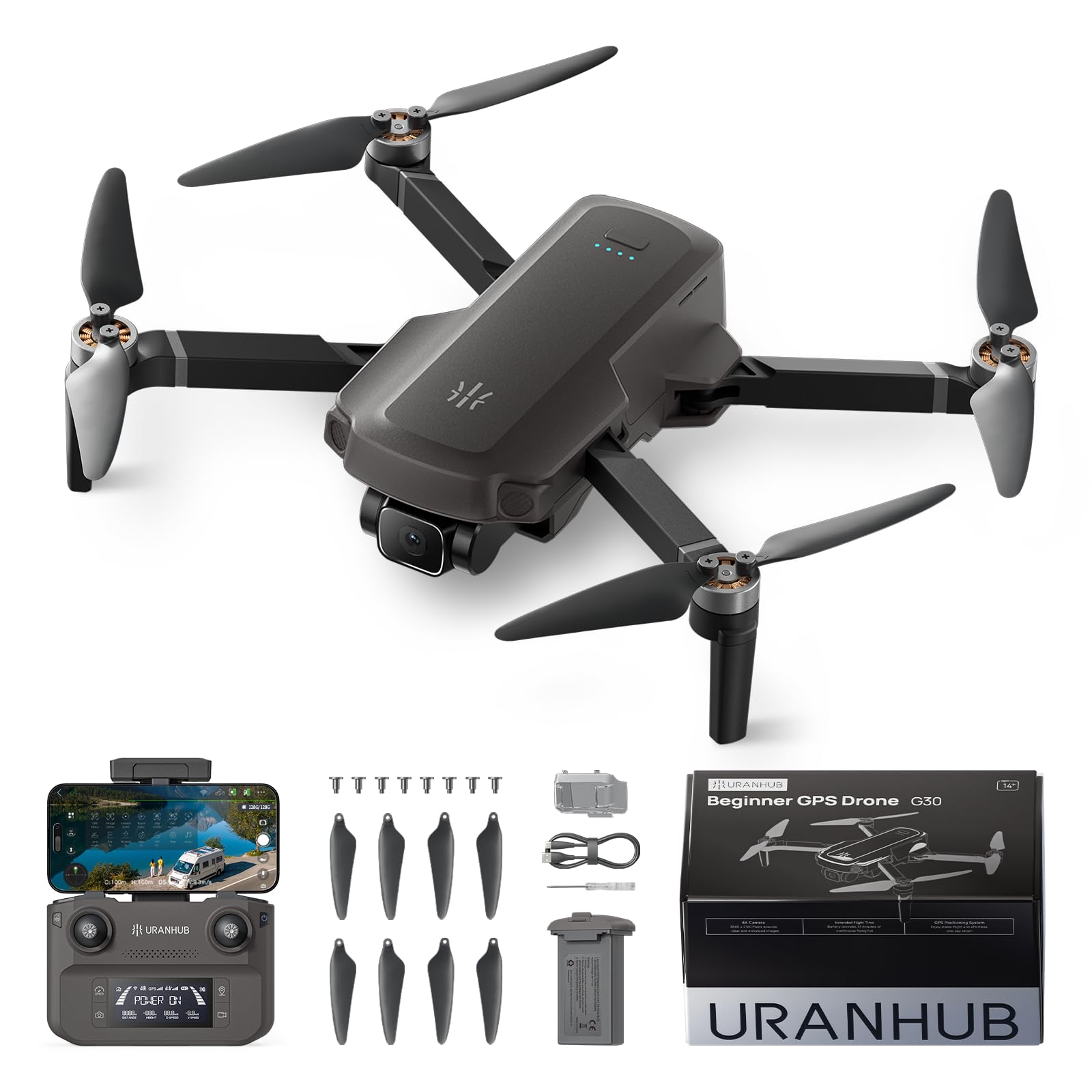
A 12MP Sony sensor and a beginner mode aimed squarely at kids and first flights.
The 12MP Sony CMOS sensor delivers 3840 x 2160 resolution, which is the most pixels on any camera in the bottom half of this list. A 90° adjustable lens and 5G FPV transmission make it usable for hobbyists rather than just kids. The beginner mode, optical flow positioning and one-click landing do the actual work of keeping a first-timer in the air.
A single 2300mAh battery covers 31 minutes, with smart low-battery alerts and overcharge protection built into the power system. Brushless motors add lifespan and wind resistance, and altitude hold with ground sensing keeps the hover stable. Beginner Mode limits the throttle range while the drone eases into position, which is exactly what you want before handing the controller to a child.
What buyers praise most is simply how well it suits that beginner role. It survives crashes, replacement parts are reasonably priced, and the phone syncs easily. Advanced modes like Far Fly, Interest Point, Route Rule and Rocket Fly give it room to grow once you are past the basics.
The thing to know before you fly it is that 249g is very light. One fair report describes losing the drone in roughly 8 mph wind at 50 feet within seconds when the camera was off and the line of sight was unclear. Fly it low, fly with the camera on, and stay in open space. Battery life is also the most-mentioned weak spot in this drone’s negative pile, so do not count on the 31-minute figure in wind.
The family angle: Beginner Mode plus GPS return plus one-click landing makes this the drone you can hand to a kid without a five-minute briefing.
The honest weight warning: at 249g it catches wind easily, so it needs open ground and a calm day to stay predictable.
The one for families: a kid-safe first drone with a genuinely capable 12MP sensor and a beginner mode that limits the damage.
Not for: windy days or tight backyards — a light body and open sky are non-negotiable here.
Know the Specs
Take-off weight in grams
Weight is the spec that decides whether you file paperwork. Drones under 249g in the US sit below the FAA registration threshold, which is why nearly every pick here sits at that number or just under it. The 249g ceiling also tells you how much wind the drone will fight — a 94g body catches a breeze far more easily than a 249g one, so the lighter drone is easier to crash but harder to control outdoors.
Battery capacity in mAh
The mAh figure tells you how much energy the pack holds, and the minutes-per-battery figure tells you what that yields in the air. A 3000mAh battery delivers a longer flight per pack than an 1800mAh one. Two smaller batteries can beat one large battery in total air time, and having spares means you swap and continue rather than waiting for a recharge.
Return-to-home and GPS
GPS return-to-home is the single feature that saves an amateur from losing the drone. It fires automatically when the signal drops, the drone leaves range or the battery gets low. Optical flow is the secondary system that holds position near the ground where satellite signals are weak. A drone with both is far more predictable in a hover than one with either alone.
Wide-angle lenses and gimbals
A wide lens captures more scene in one frame — 110° and 118° figures here mean a broad landscape rather than a narrow window. A gimbal is different from a wide lens: it physically stabilizes the camera to cancel out the drone’s movement. A drone with a gimbal produces smooth footage; a drone without one produces sway, and no amount of wide angle fixes that.
Common Questions
Do I need to register an amateur drone under 249g?
Will a cheap drone really come back to me when the battery gets low?
Is 4K on an amateur drone actually 4K?
How far can I actually fly before the video feed cuts out?
What is a gimbal and do I need one?
Do I need a smartphone to fly these drones?
What does brushless motor actually mean for how long the drone lasts?
How long does a battery really last compared to the advertised minutes?
Can these drones fly indoors or in a small backyard?
Should I buy a drone with two smaller batteries or one larger one?
The Bottom Line
For most beginners buying an amateur drone, the winner is the Potensic ATOM LT because it pairsthe largest batteries in this list — two 3000mAh packs for 80 minutes total — with a four-system GPS setup that brings the drone home on its own. If you want the steadiest footage, grab the REDRIE HK33, the only pick here with a 2-axis gimbal to cancel out the sway. And for flying without a phone mount or an app, the UFLYTOO LA Screen Drone is the one to reach for, with its 4.5-inch screen built straight into the controller.
One thing worth sitting with before you decide: the drones rated highest here are also the ones with the deepest track record of owner experience, and that track record matters more than any single spec on the box. The Potensic ATOM LT holds 4.0+ stars across 100+ ratings and the largest battery in the guide — that combination of a proven airframe and genuine air time is the safest bet for a first purchase. Whichever pick you land on, test the hover in an open field on day one, keep the drone in sight, and let the GPS do the work of bringing it back.
How we choose
We do not accept paid placement. Every pick is matched to a real buyer and a real use-case; we do not hands-on test units.
Sources
Specifications: manufacturer listings and product documentation. Review insights: verified customer reviews, as of October 2026. Pricing: not shown on this page (it changes often); check the current price via the retailer link.
As an Amazon Associate, Aappliancez earns from qualifying purchases. This does not affect which products we feature.