Disclosure: Some links in this post are affiliate links. As an Amazon Associate I earn from qualifying purchases, at no extra cost to you. Learn more
Specs are compiled from manufacturer listings and verified buyer reviews and can change over time — please confirm the key details on the product page before buying.
If you just want the short answer: buy the sweetener whose sweetness actually behaves like sugar in your kitchen, not the one with the boldest label claim. The tricky part is that most sugar substitutes either taste slightly off in hot coffee or bake into a flat, pale cookie. So the real question is which one matches sugar’s taste, dissolves cleanly, and fits how you actually sweeten things every day.
This guide is built by comparing the manufacturers’ published specifications and the patterns across verified customer reviews, so you get each pick’s real strengths and trade-offs instead of marketing spin.
Below you’ll find five sugar replacements ranked by what they genuinely do well, from liquid agave to pure monk fruit powder and stevia. Each pick is matched to a specific kitchen job, so read on to find the alternative sweetener that fits your daily cup and your baking tin.
Top Picks
How To Choose The Best Alternative Sweetener
The wrong sweetener shows up in the first sip. It might taste metallic in coffee, clump into a stubborn lump in cold tea, or turn a batch of cookies pale and flat. Picking well means matching the sweetener’s physical form to the job you need it for, then checking the conversion rate so your recipes don’t swing too sweet or too bland.
Match the form to how you sweeten
Liquid sweeteners like agave nectar pour and dissolve instantly into drinks, which makes them the easiest swap for honey or syrup. Granulated sweeteners scoop and measure like sugar, so they suit baking and anyone who likes a spoon in the jar. Pure extract powders are the most concentrated form — a tiny scoop goes a long way, but they need stirring to dissolve fully in cold liquids.
Check the conversion rate before you bake
Not every substitute swaps one-to-one with sugar. Some are sweeter than sugar, so using the same spoonful oversweetens a recipe. Others are less sweet, so you need extra. Read the brand’s stated conversion — for example, a one-teaspoon-to-one-teaspoon ratio — and follow it the first time you bake, then adjust to taste.
Consider how it behaves in heat
Sugar does two jobs in baking: it sweetens and it browns. Some substitutes brown less, which changes the color and texture of cookies and cakes. If you bake often, look for a sweetener whose taste and texture are closest to sugar, and expect a slightly different result the first time you swap it into a favorite recipe.
Side-by-Side Comparison
| Model | Best For | Form | Size | Conversion | Amazon |
|---|---|---|---|---|---|
| BetterBody Foods Organic Blue Agave Syrup★ Best Overall | Drinks and drizzling | Liquid syrup | 78 fl oz | 1½–2x sweeter than sugar | Amazon |
| Sweet Nature Monk Fruit Sweetener ClassicBest Everyday Swap | Everyday sugar swap | Granulated | 192 oz | 1 tsp = 1 tsp sugar | Amazon |
| Viva Doria Allulose Sweetener | Baking closest to sugar | Granular powder | 32 oz (2 lb) | 1⅓ tsp = 1 tsp sugar | Amazon |
| SweetLeaf Stevia Powder Shaker Jar | On-the-go coffee and tea | Granulated powder | 8 oz (2-pack) | — | Amazon |
| NOW Foods Organic Monk Fruit Extract Powder | Most concentrated sweetening | Pure extract powder | 0.7 oz | — | Amazon |
Detailed Reviews
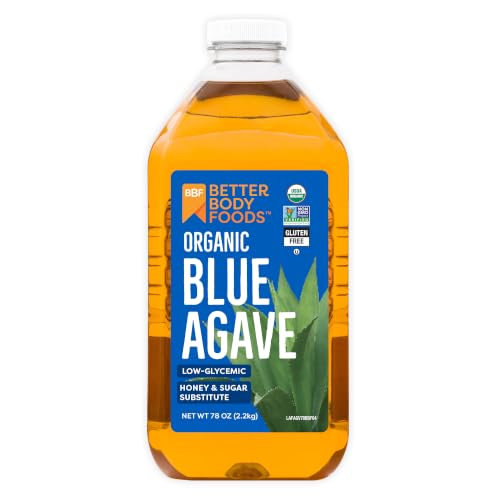
1. BetterBody Foods Organic Blue Agave Syrup 78 Oz
Our pick — 4.5+★ from 1,000+ verified ratings; the strongest balance of quality and price.
The bottle that pours honey-sweet into tea and never tastes synthetic.
If you take your coffee or tea with real sweetness, this is the pick that behaves most like honey. It’s a low-glycemic-index liquid, so it releases more slowly than table sugar and stirs in instantly with no grainy residue at the bottom of the mug. The 78 fluid-ounce bottle is large enough that it doesn’t become a weekly errand.
The conversion is the part to remember: it’s 1½–2 times sweeter than sugar, so a little goes a long way and you use less than you’d pour from a sugar bag. It’s certified USDA organic, non-GMO, kosher, vegan, and gluten-free, so if avoiding processed cane sugar is the whole point for you, the ingredient panel holds up. Buyers report it as “mildest flavor” in a direct tasting against other agave syrups. What wins people over, plainly, is the taste — a honey-like sweetness without the chalky or fake aftertaste people dread in sugar substitutes.
The honest catch is the bottle itself — it uses a pour-style design with a pull-off lid, and one comparison tester flagged that it isn’t spill-safe, so slow and deliberate pouring matters. At 4.9 pounds it’s a substantial bottle to store upright in a cabinet. A few find it heavier than expected to handle. The flavor and the way it dissolves keep it the comfortable all-rounder here.
What earns the top spot
- Honey-like taste with no chalky or artificial edge
- Dissolves easily in both hot and cold drinks
- 1½–2x sweeter than sugar, so you use less per cup
- Certified USDA organic, non-GMO, kosher, vegan, and gluten-free
Where it asks for care
- Pour-style bottle with a pull-off lid isn’t spill-safe
- A 4.9-pound bottle takes up real cabinet space and needs upright storage
- Liquid form isn’t the easiest swap in dry baking recipes
Fit for: daily coffee and tea drinkers who want a natural liquid sweetener that stirs in without grit.
Think twice: dedicated bakers and anyone who wants a spill-proof cap will find the liquid and its bottle awkward.
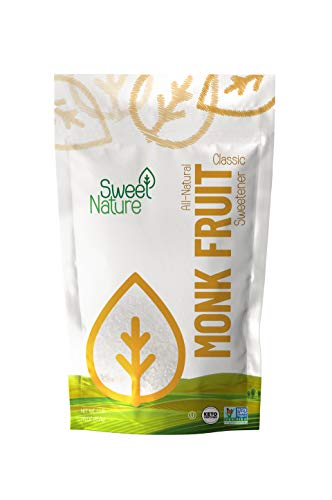
2. Sweet Nature Monk Fruit Sweetener Classic, 16 Oz
Scoop it spoon-for-spoon like sugar and the recipe never changes.
For anyone who’s ruined a batch of cookies by guessing a sugar-free conversion, this is the sane fix. The ratio is spelled out: 1 teaspoon of monk fruit sweetener equals 1 teaspoon of sugar, and 1 cup equals 1 cup. So your sweet tea and your baking tin use the same measurements you already know. It’s granulated, gluten-free, and kosher, with no artificial chemicals or genetically modified ingredients.
The taste is the reason it earns a high place here: buyers put it close to real sugar, and one of them explained it simply. It’s also a zero-glycemic-response sweetener, so it doesn’t spike your blood sugar the way cane sugar can, and it’s built for keto, low-carb, and gluten-free eating. Compared with the smaller stevia and extract picks, this one simply gives you far more sweetener: it’s listed at 192 ounces versus 8 ounces for the stevia two-pack, so you’re refilling far less often.
The fair caveat is what’s inside. Monk fruit is often blended with erythritol — a sugar alcohol used as a bulking agent — and some owners mention this blend leans heavily on it. A few report mild digestive upset. If your stomach is sensitive to sugar alcohols, look at the pure extract instead. For everyone else, the 1:1 ratio and sugar-like taste make it the least fussy swap on the list.
Recipe-friendly by design: the one-to-one cup and teaspoon conversion means no mental math and no guessing mid-bake.
Sensitivity check: if sugar alcohols bother your digestion, choose the pure monk fruit extract pick instead of a blend.
Reach for this if: you cook and bake by the cup and want a spoon-for-spoon replacement that tastes close to sugar.
Look elsewhere if: erythritol blends leave you bloated — a pure extract sidesteps that entirely.
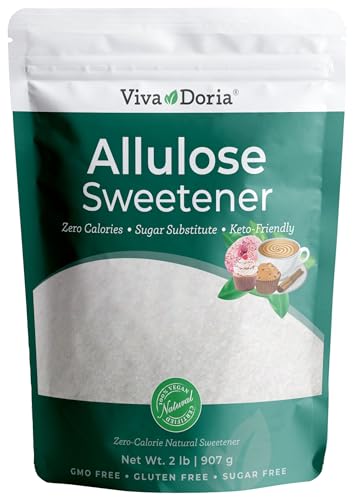
3. Viva Doria Allulose Sweetener, 2 lb
Granular sugar texture with a taste that fools most coffee drinkers.
Bakers should start here. Allulose is a rare sugar that has the same granular texture as standard sugar, so it measures and behaves the way your recipe expects. It’s about 70% as sweet as sugar, so the brand’s own guide is 1⅓ teaspoons allulose to 1 teaspoon sugar. A person who bakes cookies with it one-to-one reports a softer texture and less browning — a slightly different result, but an enjoyable one.
Allulose is the one to watch if erythritol upset your stomach, because it’s a non-erythritol, zero-calorie, low-carb sweetener made from non-GMO ingredients with no artificial flavors, colors, or preservatives. The brand markets it as keto- and diabetic-friendly. Compared with the monk fruit extract, which is a tiny 0.7-ounce bottle, this is a much bigger tub of 2 pounds of granules that scoops like standard sugar, so it’s easier to work with for a full pan of dessert.
The one honest limitation: it’s not as sweet as sugar, so a heavy-sugar coffee drinker who swaps it one-to-one finds the coffee tastes a little flat. The brand cautions that large amounts can cause temporary digestive effects in some people. The fix is easy — use the 1⅓-to-1 ratio and don’t overdo the dose. For anyone who wants their cookies to taste like cookies, allulose is the closest match here.
Why bakers lean this way
- Granular texture behaves like standard sugar in recipes
- Non-erythritol formula for sensitive stomachs
- Zero calories, low-carb, and non-GMO
- Dissolves quickly in liquids
The trade-offs to plan for
- Only about 70% as sweet as sugar, so use the 1⅓-to-1 ratio
- Heavy-sugar coffee drinkers may find it flat at equal amounts
- Large amounts can cause temporary digestive effects in some people
Best for: home bakers who want a granular, non-erythritol sweetener that measures and browns like sugar.
Caveat: measure with the 1⅓-to-1 ratio — eyeballing it leaves drinks noticeably less sweet.
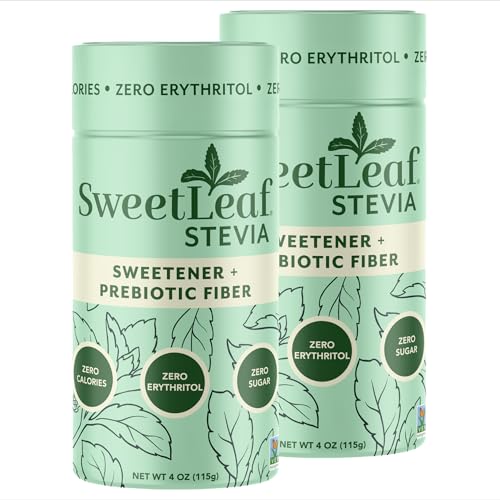
4. SweetLeaf Stevia Powder Shaker Jar, 4 Oz, 2 Pack
A shaker jar that sweetens a whole mug with a few quick shakes.
If you sweeten coffee at your desk or on the road, this is the format that makes stevia convenient. The cap is split — half for shaking, half for scooping — so you can dust sweetness straight into a mug or take a measuring scoop for baking. It’s granulated, zero-calorie, and keto-friendly with no added sugar, and it’s sweetened from the stevia plant rather than artificial sweeteners.
What keeps repeat buyers coming back is the taste and the concentration — a little goes a long way, so the small jar stretches. Stevia is far sweeter than sugar, so you need only a pinch where you might have used a spoonful of sugar. It’s a two-pack of 4-ounce jars, 8 ounces total in a compact footprint, which stacks easily in a drawer. It’s also praised for being just plain stevia with nothing extra added.
The catch that pops up most is dissolving — stevia powder can clump, so it takes a vigorous stir in cold drinks to spread evenly. Hot coffee dissolves it far more readily. It’s also sweeter than sugar, so a heavy hand gives an off taste; start small. If you mostly drink cold drinks, expect a bit of extra stirring. For mug after mug, the shaker lid is the convenience you’ll appreciate.
Convenience winner: the split shake-or-scoop cap turns a plain powder into a counter-ready sweetener for coffee, smoothies, and tea.
The stir factor: stevia’s tendency to clump means cold drinks need real stirring, and its high sweetness rewards a light hand.
Reach for this if: you want to sweeten a hot cup fast and like the shaker-jar format for travel and desk use.
Look elsewhere if: you mainly sweeten iced drinks — clumping makes the cold-stir effort real.
5. NOW Foods Organic Monk Fruit Extract Powder, 0.7 oz
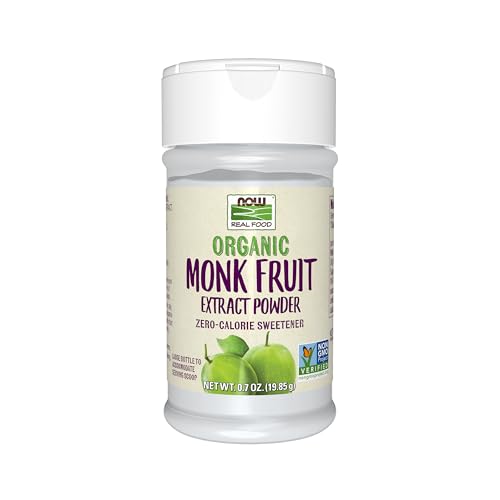
A 0.7-ounce jar of pure extract that outlasts a whole sugar bag.
This is the concentrated option, and the scoop is tiny for a reason. It’s pure monk fruit extract powder with no additional ingredients — no erythritol, no allulose fillers — so the sweetness comes from the fruit alone. The included scoop is all you need: a couple of tiny scoops sweetens a full mug of coffee or tea. It’s non-GMO, USDA organic, gluten-free, vegan, and keto-friendly, with no fillers or common allergens.
A couple of tiny scoops per mug is all it takes, so the jar stretches for months. At 0.7 ounces it’s the smallest jar here, but the concentration means you buy it least often. It’s twice as sweet as some rival monk fruit powders, per a three-brand tasting, and its fine powder doesn’t clump. That makes it the pick for anyone who wants sugar-free sweetening without a bulking agent in the jar.
Two honest points. First, the price is high for 0.7 ounces — you pay for the concentration and the purity, and buyers who try it mostly decide it outlasts the equivalent sugar, but a light user may bristle at the upfront entry. Second, it’s potent enough to overdo: a heavy scoop can leave a slightly metallic mouthfeel. Measure with the tiny scoop, not by eye, and it dissolves cleanly in coffee and tea.
What makes it worth it
- Pure monk fruit extract with no erythritol or allulose fillers
- A tiny couple of scoops sweetens a full mug
- Fine powder that doesn’t clump and dissolves well
- Non-GMO, USDA organic, gluten-free, vegan, and keto-friendly
Where the cost stings
- A very small bottle — use the included scoop to avoid overdosing
- Too much in one go can leave a metallic mouthfeel
- Needs stirring to dissolve in cold liquids
Best for: the purest sugar-free sweetening, with no sugar-alcohol fillers and a scoop that lasts months.
Caveat: measure with the tiny scoop — a little too much turns the sweet note metallic.
Know the Specs
Glycemic index
The glycemic index is a measure of how quickly a food raises your blood sugar compared with pure glucose. A low-glycemic sweetener releases more slowly, which is why agave nectar is marketed as a low-glycemic alternative to processed cane sugar. If watching your blood sugar is the main reason you’re switching, look for a sweetener that names its glycemic index or states “zero glycemic response,” like the monk fruit pick.
Conversion ratio
The conversion ratio tells you how much sweetener equals one spoon of sugar. It matters because some substitutes are far sweeter (agave at 1½–2 times sugar) and some are less sweet (allulose at about 70% as sweet, needing 1⅓ teaspoons per teaspoon of sugar). Using sugar’s measurements with the wrong ratio is why recipes turn out too sweet or too bland. Read the stated ratio once, follow it the first time, then adjust.
Sugar alcohol fillers
Many granulated monk fruit and stevia blends use erythritol — a sugar alcohol — as a bulking agent so the powder scoops like sugar. It keeps the texture convenient, but some people find sugar alcohols cause bloating or digestive upset. If that’s you, the pure extract pick or a non-erythritol allulose avoids the issue. Check the ingredient list when the “monk fruit” or “stevia” name is large but the product scoops like sugar — it’s likely a blend.
Form and dissolvability
Liquid sweeteners dissolve instantly, which makes them ideal for drinks. Granulated powders scoop easily but can clump in cold liquids, so they need real stirring. Pure extract powders are the most concentrated and dissolve best when stirred well. Pick your form by your toughest daily job: hot coffee tolerates almost any sweetener, while an iced drink or a cold smoothie favors liquids and finely milled powders.
Common Questions
Is monk fruit or stevia better for baking?
Why does allulose taste less sweet than sugar?
Can a sugar substitute cause stomach upset?
How much stevia equals a teaspoon of sugar?
Does agave syrup dissolve in cold drinks?
Is a zero-calorie sweetener good for keto?
Why does monk fruit sometimes taste metallic?
Do I need to stir stevia powder into cold drinks?
How is allulose different from erythritol?
Can I use agave syrup as a honey substitute?
The Bottom Line
There’s a straight answer here: buy the alternative sweetener whose form and ratio match your daily habit. For most people, the BetterBody Foods Organic Blue Agave Syrup is the cozy default — a liquid that stirs cleanly into coffee and tea, honey-sweet with no chalky aftertaste, and the crowd favorite with 4.5+ stars across 1,000+ ratings. If you bake by the cup and want a spoon-for-spoon replacement, the Sweet Nature Monk Fruit Sweetener is the one to grab. And for the purest, most concentrated sugar-free sweetening with no fillers, reach for the NOW Foods Organic Monk Fruit Extract Powder — a tiny scoop that outlasts a sugar bag.
How we choose
We do not accept paid placement. Every pick is matched to a real buyer and a real use-case; we do not hands-on test units.
Sources
Specifications: manufacturer listings and product documentation. Review insights: verified customer reviews, as of October 2026. Pricing: not shown on this page (it changes often); check the current price via the retailer link.
As an Amazon Associate, Aappliancez earns from qualifying purchases. This does not affect which products we feature.