Disclosure: Some links in this post are affiliate links. As an Amazon Associate I earn from qualifying purchases, at no extra cost to you. Learn more
Specs are compiled from manufacturer listings and verified buyer reviews and can change over time — please confirm the key details on the product page before buying.
Sinus headache pain is not the same as a regular headache, and the medicine you take for it should not be either. When allergies inflame your nasal passages, the swelling traps pressure behind your cheeks, eyes, and forehead, and that is the throbbing you feel. The right product either calms the allergic reaction itself with an antihistamine, opens the blocked passages with a decongestant, or eases the pain directly. You often need more than one of those jobs done, which is why the picks below are split by what they actually do.
This guide is built by comparing the manufacturers’ published specifications and the patterns across verified customer reviews, so you get each pick’s real strengths and trade-offs instead of marketing spin.
Your sinus headache might come from the allergy itself, or from the pressure it leaves behind — and that decides which medicine works. Below are eleven options split by how they work, plus a plain-English guide to reading labels before you buy. The crowd favorite is the Benadryl Ultratabs, rated 4.8 stars across 32,000+ owners, but the right best allergy medicine for sinus headache depends on whether your problem is the allergy or the pressure.
Top Picks
How To Choose The Best Allergy Medicine for Sinus Headache
Before you grab the first box on the shelf, work out which of the three jobs your symptoms actually need. A sinus headache from allergies usually involves two things at once: the allergic reaction inflaming your nasal lining, and the trapped pressure that builds behind it. Here is how the main ingredient types divide up.
Antihistamines versus decongestants
An antihistamine blocks histamine, the chemical your body releases when it meets pollen, dust, or pet dander, so it goes after the cause of the swelling. Diphenhydramine, sold as Benadryl, is the classic 25 mg tablet, and it is known for making people drowsy — that is not a bug for everyone, since some buyers use it deliberately at night. A decongestant such as phenylephrine works differently: instead of calming the reaction, it shrinks swollen nasal tissue so trapped air and mucus can move. If your sinuses feel blocked but your eyes are not itching, a decongestant is doing more of the work you need.
When a nasal steroid spray beats a tablet
A steroid nasal spray such as fluticasone propionate treats the inflammation right where it sits, inside your nose, rather than sending the drug through your whole body. These sprays are used once or twice daily and are non-drowsy. The trade-off is timing — you may need several days of steady use before you feel the full effect, and dryness inside the nose is a common adjustment. If your sinus pressure comes back every morning during pollen season, a daily spray is often the better daily tool.
Pain relievers and expectorants
Neither an antihistamine nor a decongestant touches a headache directly. Acetaminophen blocks the pain signal, so a 500 mg caplet handles the ache part of a sinus headache on its own. An expectorant, meanwhile, thins thick mucus so you can clear it out instead of feeling like it is stuck in place. Multi-symptom formulas combine a pain reliever, a decongestant, and an expectorant in one softgel, which is convenient but means you cannot adjust the doses individually.
Drowsy or non-drowsy
Read the active ingredient before you assume. Older antihistamines like diphenhydramine cause drowsiness. Second-generation ones — cetirizine, levocetirizine, and fexofenadine — are far less sedating for most people, though individual reactions vary, and cetirizine still makes a minority of people sleepy. If you drive or work with machinery, pick a non-drowsy formula and confirm how it affects you at home first.
Side-by-Side Comparison
| Model | Best For | Active Ingredient | Form | Drowsiness | Amazon |
|---|---|---|---|---|---|
| Benadryl Ultratabs★ Best Overall | Fast multi-symptom relief, night use | 25 mg diphenhydramine HCl | Tablet | Drowsy | Amazon |
| GenCare Acetaminophen 500 mgHeadache Specialist | Headache and body-ache pain, daytime | 500 mg acetaminophen | Caplet | Non-drowsy | Amazon |
| AXIV Sinus Severe + MucusBest Multi-Symptom | Blocked sinuses with thick mucus | Pain reliever, decongestant, expectorant | Softgel | Non-drowsy | Amazon |
| MediNatura BHI Sinus Congestion | Need-as-you-go congestion support | Homeopathic blend | Chewable tablet | Non-drowsy | Amazon |
| Flonase Allergy Relief | Daily allergy control, nasal congestion | Fluticasone propionate | Nasal spray | Non-drowsy | Amazon |
| Zyrtec 24-Hour | Flexible once-daily allergy control | 5 mg cetirizine HCl | Tablet | Non-drowsy | Amazon |
| Boiron SinusCalm | Dissolving tablets for on-the-go sinus pain | Homeopathic blend | Dissolving tablet | Non-drowsy | Amazon |
| Medi-First Sinus Decongestant | Single-dose packets for travel and kits | 10 mg phenylephrine HCl | Tablet (wrapped) | Non-drowsy | Amazon |
| Nasacort 24-Hour | Daily nasal congestion with no scent | Triamcinolone acetonide | Nasal spray | Non-drowsy | Amazon |
| Xyzal 24-Hour | Long-lasting relief taken at night | 5 mg levocetirizine dihydrochloride | Tablet | Non-drowsy | Amazon |
| Allegra 24-Hour | Full-day non-drowsy allergy control | Fexofenadine | Tablet | Non-drowsy | Amazon |
Detailed Reviews
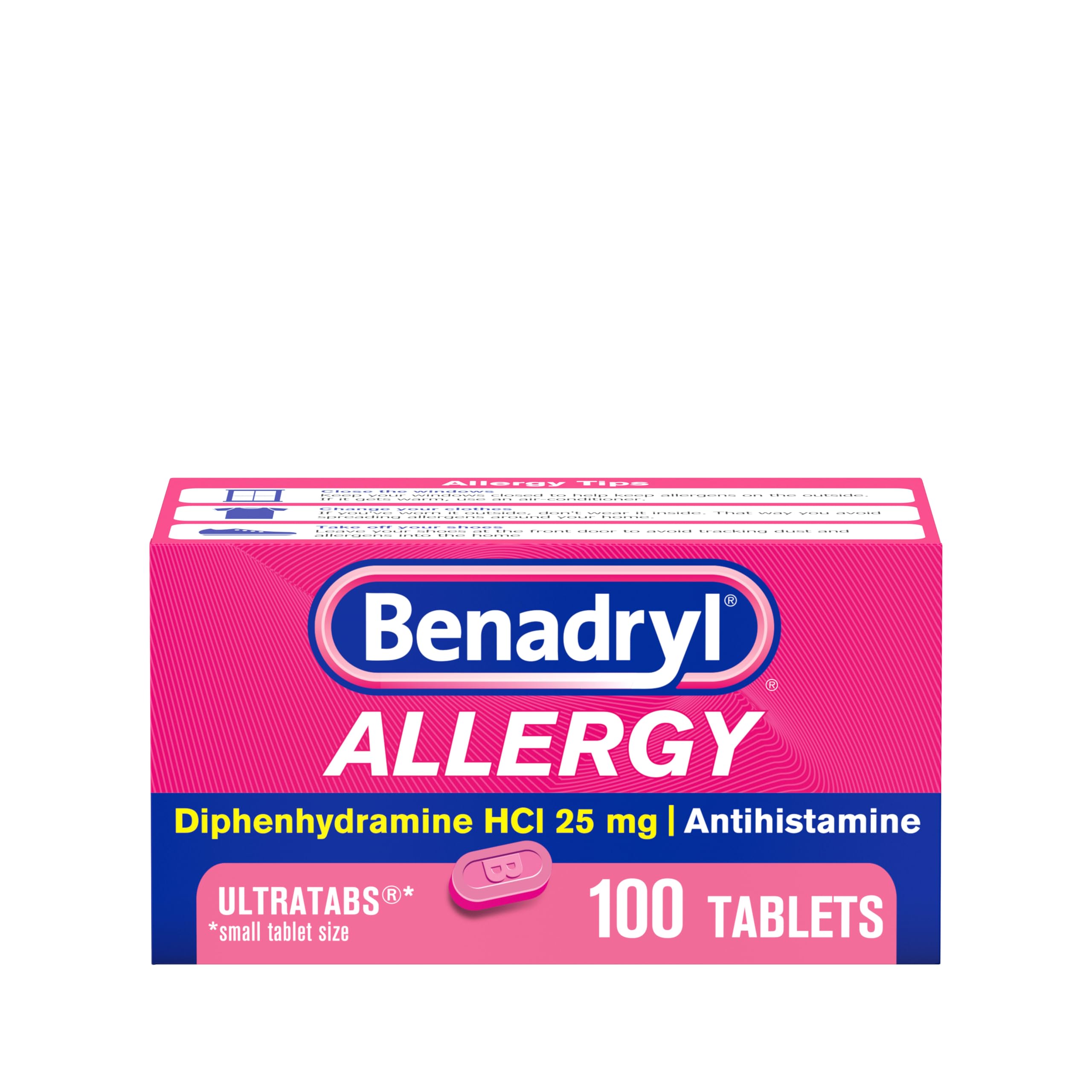
1. Benadryl Ultratabs Allergy Relief 25 mg 100 Ct
Our pick — over 4.5★ from 32,000+ verified ratings; the strongest balance of quality and price.
The 25 mg tablet that shuts a reaction down fast, then asks you to sit down.
If your sinus headache starts with a sneezing fit and itchy, watery eyes, this is the one people reach for first. Each Ultratab carries 25 mg of diphenhydramine HCl (an antihistamine that blocks histamine at the receptor), so the sneezing, runny nose, and itching of the nose and throat calm down rather than just getting masked. You get 100 tablets, and the label says adults and children 6 and older can use it as directed. It is also FSA- and HSA-eligible without a prescription, which matters if you have a benefits card sitting unused.
What buyers praise most is simply that it works — the effectiveness thread is the loudest by a wide margin, with quality close behind. The pills are small and swallow cleanly, which comes up again and again for anyone who struggles with larger tablets. The single most repeated owner complaint is the trade-off baked into diphenhydramine: some people feel no drowsiness at all, others feel wiped out. As owners put it: “I use this product regularly for psorisis itch–it works! The only issue iI have it that I can only take one tablet, it makes me drowsy but no more itch–worth the price. Take the pill before bed–win win.” That bedtime framing is the honest way to use it — many owners turn the sedation into a feature during allergy season.
It earns its place as the overall pick because it covers more ground than the other options here. Indoor and outdoor triggers, sudden multi-symptom reactions, and allergic flare-ups that come out of nowhere are all on the label. It handles more than one symptom at once rather than chasing a single one, and the value size keeps you stocked. The comparison worth knowing: this bottle runs 32301 ratings at 4.8 stars, and the 25 mg dose is a fifth of the 500 mg you get in the GenCare acetaminophen bottle — different drugs entirely, so never swap them for each other.
What earns it the top spot
- 25 mg diphenhydramine HCl tackles sneezing, runny nose, itchy eyes, and itchy nose or throat in one tablet
- Works on indoor and outdoor allergens, including sudden multi-symptom reactions
- 100-count value size plus FSA/HSA eligibility without a prescription
- Small, easy-to-swallow tablet that owners consistently single out
The honest trade-off
- Drowsiness hits some people hard and others not at all — you will not know which until you try
- Children under 6 should not take it, and the label says children 6 and older use it only as directed
- A handful of owners flag expiration dates on arrival, so check the bottle
Reach for this if: your sinus headache arrives with a full allergic reaction and you can take your dose at night.
Look elsewhere if: you need to drive or work alert right after dosing — the sedation is real for a good share of people.
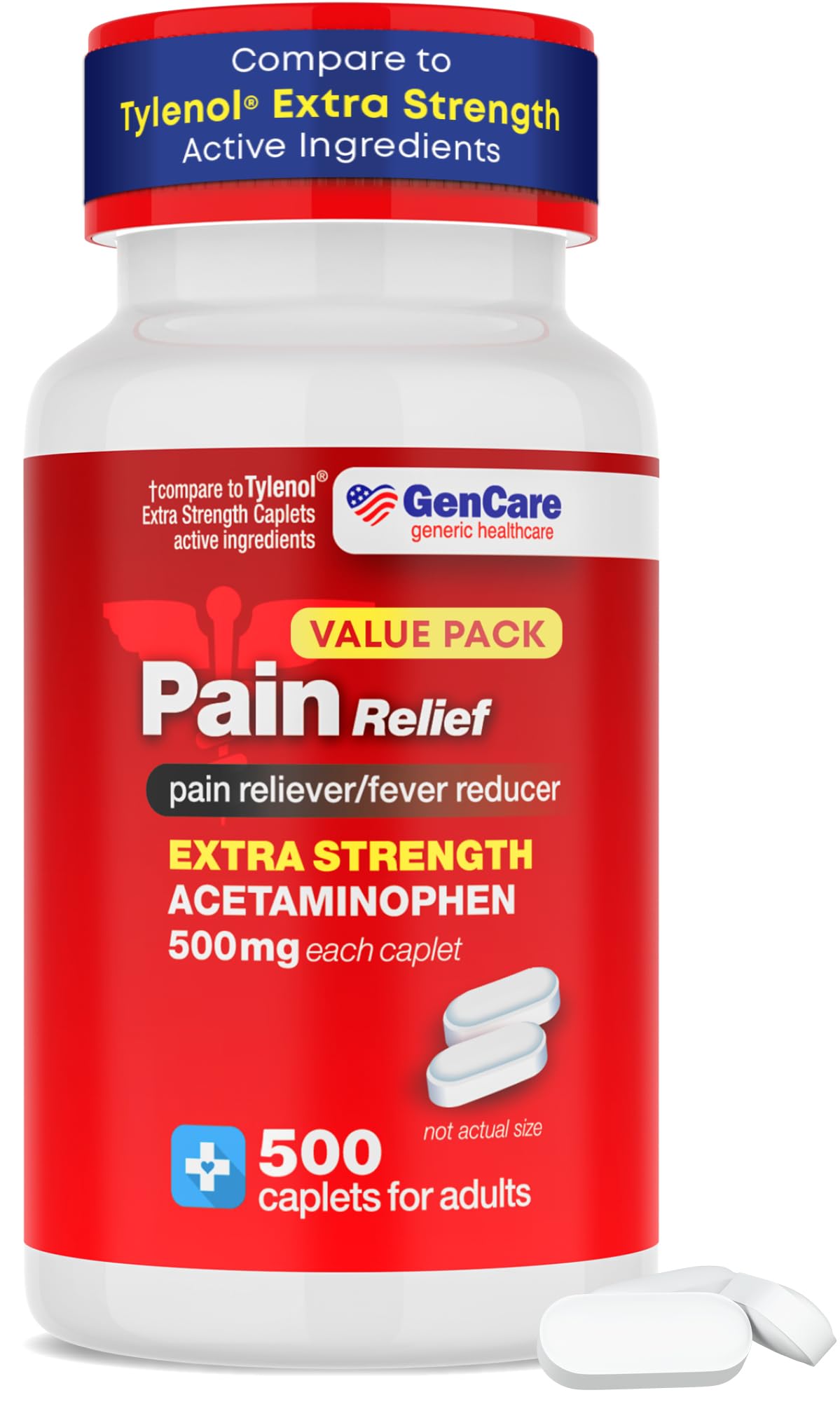
2. GenCare Acetaminophen 500mg Extra Strength 500 Ct
Half a thousand caplets of straight pain relief, with no sedation built in.
The ache behind your cheekbones is a pain problem, and pain is what acetaminophen solves. Each caplet here holds 500 mg, which is the extra-strength dose for headaches, backaches, muscular aches, toothache, and menstrual cramps — and it also brings a fever down. There is no caffeine and nothing in it that causes drowsiness, so it is a genuine daytime option when you cannot afford to get foggy. The directions cap adults and children 12 and over at 2 caplets every 6 hours, no more than 6 caplets in 24 hours, and no longer than 10 days without a doctor. Children under 12 need a doctor’s guidance.
At 500 mg per caplet, this is the strongest strength option in this whole comparison against the 25 mg Benadryl — 20 times the milligram figure, though they could not be more different drugs. The count works the same way: 500 caplets against the 100 in the Benadryl bottle. And it is no featherweight in the cabinet, weighing 11.68 ounces, while the MediNatura BHI chewables come in at 1.44 ounces. Effectiveness and value are the two things buyers bring up most often, with many noting it performs like the name-brand version at a bulk-bottle price. Sleep quality comes up positively too — people report falling asleep quickly and waking without morning grogginess, which is exactly what you want from a pain reliever you take at night.
The clear limitation is scope. Acetaminophen does nothing about the allergic reaction producing your congestion, and nothing about swollen nasal tissue — it only quiets the pain signal. If your doctor has told you to limit acetaminophen for any reason, this is not the bottle to keep on hand. The 500-count size also means it lives on your shelf for a long time, so family members need to know what it is and how much is safe.
Where it wins: pure pain relief with no drowsiness and a bulk count that lasts an entire allergy season and beyond.
Where it stops short: it will not touch the allergy itself or open a blocked sinus, so pair it with an antihistamine or a decongestant if pressure is part of your picture.
Pick this one when: the headache is the main thing and you want a non-drowsy pain option to build around.
Pass if: you need the congestion or the allergic reaction handled — this caplet only covers the ache.
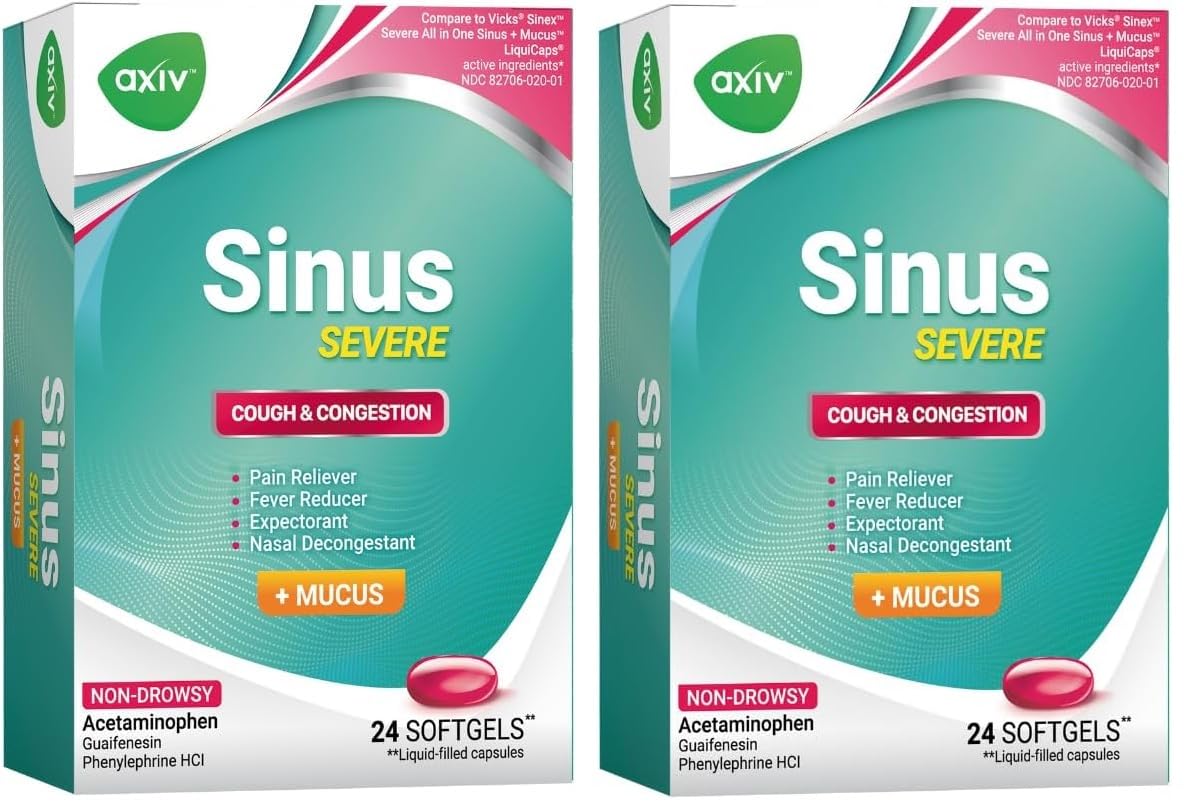
3. AXIV Sinus Severe + Mucus Relief Softgels 24 Count Pack of 2
Three jobs in one softgel — kill the pain, open the sinus, thin the mucus.
When you have all of it at once — the pressure, the ache, and mucus you cannot shift — a single-ingredient pill leaves something uncovered. These softgels carry a pain reliever, a decongestant, and an expectorant together, so one capsule addresses sinus pressure, sinus headache, sinus pain, nasal congestion, chest congestion, and mucus at the same time. The expectorant is the piece people underestimate: it thins bronchial secretions so a cough becomes productive instead of stuck. The formula is non-drowsy, so it fits a workday, and the label points to sinus symptoms brought on by the common cold, hay fever, or other upper respiratory allergies.
Dosing is strict and worth reading carefully. Adults and children 12 and over take 2 softgels with water every 4 hours and must not exceed 8 in 24 hours. Children 4 to under 12 need a doctor’s advice, and it is not for children under 4. On the physical side, the pack measures 4.6 x 3.3 x 1.2 inches against the Benadryl box’s 1.69 x 3.31 x 1.75 inches — a wider, flatter shape that stacks easily. Owners here are a smaller, newer group, and the value angle is what they highlight most: the same formula as the big brand-name sinus product for a better price, as one buyer put it — “Exact same ingredients as Tylenol severe sinus and a little better price.”
Quality is the mixed note. Some buyers call it great, a few say it did not fully clear them. That kind of split is normal for a newer listing with fewer ratings to average out, and it is worth remembering that a multi-symptom softgel locks its three doses together — you cannot take more decongestant without also taking more pain reliever. If your main problem is a stopped-up nose and nothing else, a single-ingredient decongestant gives you finer control.
What you get: a pain reliever, decongestant, and expectorant in one non-drowsy softgel, aimed squarely at severe sinus and mucus symptoms.
The catch: the three doses move together, so you cannot fine-tune one ingredient — and the feedback on overall quality is genuinely split.
Best for: the congested, achy, mucus-heavy day when you want one softgel to cover everything and stay alert.
Skip if: your only symptom is a blocked nose — a single-ingredient decongestant gives you cleaner control.
4. MediNatura BHI Sinus Congestion Relief Chewable Tablets 100 Count

Chew one, breathe easier, and skip the pill-swallowing problem entirely.
Not everyone can or wants to swallow a tablet, and a chewable sidesteps that completely. The 1.44-ounce bottle — featherweight next to the 11.68-ounce GenCare acetaminophen bulk bottle — holds 100 chewables that dissolve rather than sit whole in your throat. The plant-powered, mineral-based formula skips artificial sweeteners, flavors, dyes, and preservatives, and the label calls it gluten-free and non-addictive with no known drug interactions or contraindications. It targets nasal breathing discomfort, sinus pressure, and the nasal symptoms that come with a cold or flu, and it is FSA/HSA-eligible.
Speed is the thing buyers highlight most. Owners describe it working within about 30 minutes and specifically good for sinus headaches, and a notable number note the absence of side effects. The routine that comes up in the feedback is steady rather than one-and-done: take one tablet, another roughly 30 minutes later, then one each hour until things ease — many find three to six tablets settle a flare. If you have reacted badly to a daily prescription antihistamine, this as-needed approach is the appeal, since there is no daily dosing obligation.
Value is the honest sticking point. Some owners consider it well worth the cost, others feel the bottle empties too fast for what they paid, and one buyer sums up the ceiling plainly: “Great product but could last longer.” It is also worth being clear about what it is not — it is not a substitute for antibiotics if a sinus infection has genuinely taken hold, and owners who have compared it to pseudoephedrine-based decongestants find it gentler but less forceful. Treat it as a congestion support tool, not a heavy hitter.
What to weigh: value is genuinely debated, and it is gentler than a decongestant — not a replacement for a diagnosed infection.
Suits you if: you want an as-needed, dye-free chewable you can take without water and without a daily routine.
Think twice if: you want maximum decongestant force or a bottle that stretches a long way.
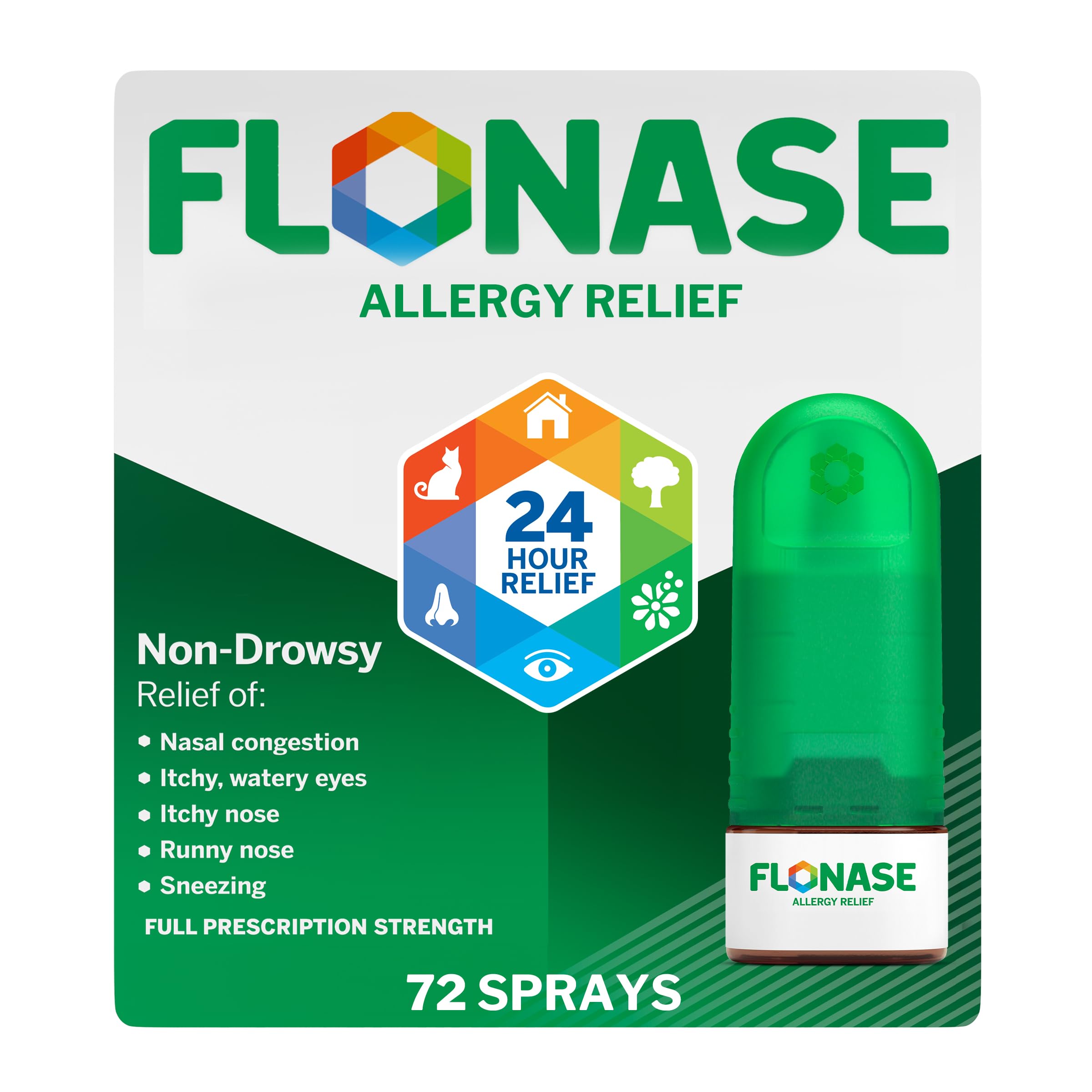
5. Flonase Allergy Relief Nasal Spray 72 Sprays
One nightly spray in each nostril, and pollen stops running your mornings.
If you wake up congested every single day through hay fever season, a daily spray treats the inflammation where it actually lives. The 72-spray bottle delivers fluticasone propionate straight into the nasal passages, where it works to stop your body from overreacting to allergens. You use it once or twice daily in each nostril, and it is formulated for adults and children 12 and older. Unlike a tablet that travels through your whole system, this goes to the inflamed tissue directly, and it does so without drowsiness — you can dose it in the morning and drive.
The label covers runny nose, sneezing, itchy nose, watery and itchy eyes, plus nasal congestion relief, all in one bottle, around the clock. Effectiveness is the headline in the feedback, followed closely by allergy relief specifically, and owners describe it handling dust, grass, pet dander, pollen, and even fabric fibers. It also pairs well with tablets — plenty of people run a daily spray for the congestion and keep an antihistamine for breakthrough days. The convenience of finding it over the counter without a prescription is a recurring point of relief in the reviews.
Nasal dryness is the honest counterweight, and it is worth taking seriously. One owner who switched from pills reports that a single nightly spray controls pollen reactions all the next day for months without fading — but also notes dryness and slight bleeding in the nose as the cost. If that happens to you, backing off to once daily or rotating in a saline spray is the usual fix. And like any steroid spray, this one is a daily habit, not something you reach for only after symptoms flare.
The strong case: 24-hour, non-drowsy coverage of runny nose, sneezing, itchy nose and eyes, and congestion from a single once- or twice-daily dose.
The trade-off: some users get nasal dryness and light bleeding, and it rewards consistent daily use rather than as-needed dosing.
Go with it if: your sinus pressure is a daily seasonal companion and you want one bottle to cover the whole pollen calendar.
Not the fit if: you want to dose only when symptoms strike — this one wants a steady routine.
6. Zyrtec 24-Hour Allergy Relief Tablets 5 mg 35 ct
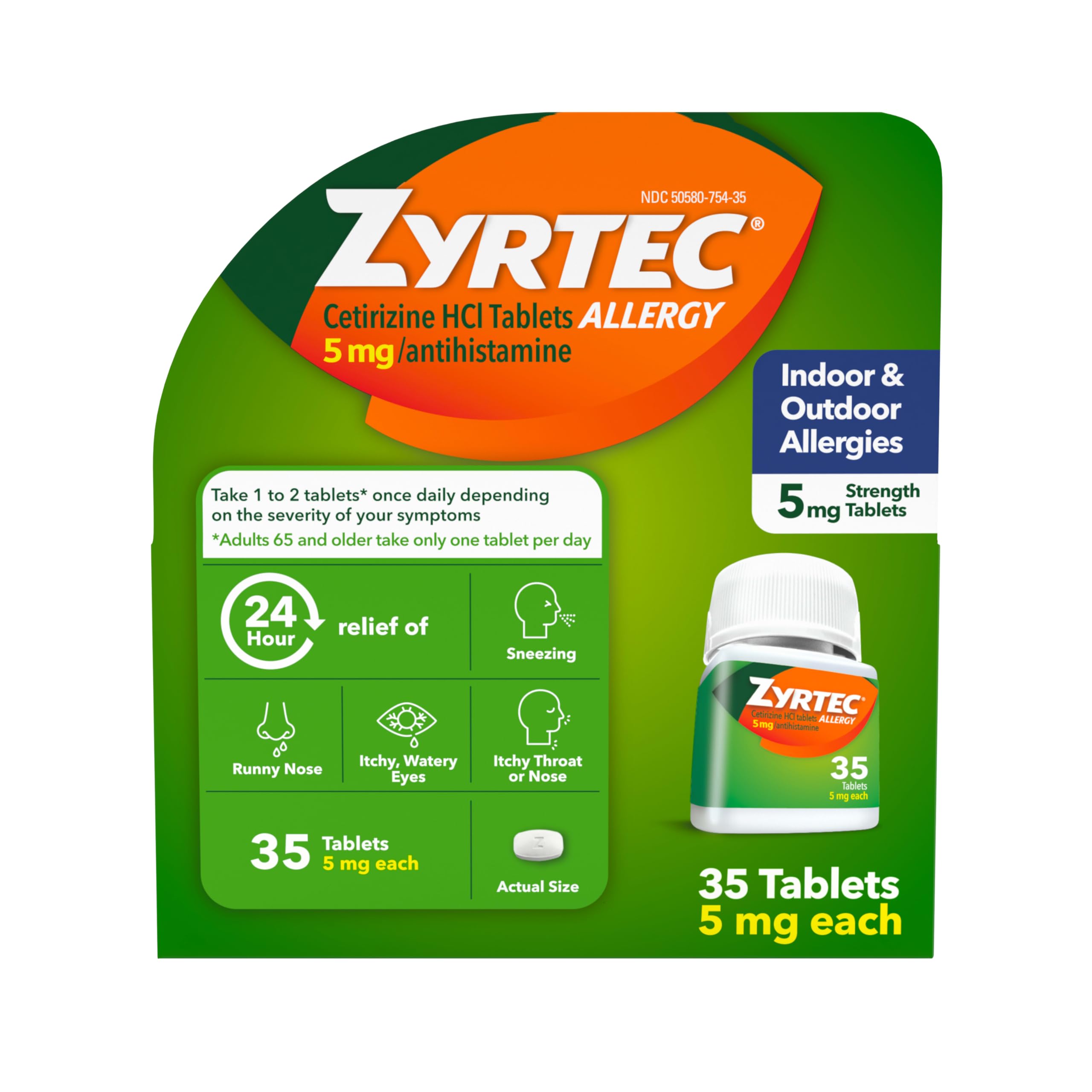
One tablet for a mild day, two for a bad one — your call, once a day.
Most allergy tablets give you one dose and no room to move. This one hands you the dial. Each tablet is 5 mg of cetirizine HCl, and the label says adults and children 6 and up can take one for mild allergy days or two for more severe ones, once daily. That flexibility is genuinely useful when your symptoms swing with the pollen count instead of holding steady. Relief covers runny nose, sneezing, itchy watery eyes, and itching of the nose or throat for up to 24 hours.
The trigger list is broad rather than narrow, which is why it suits people whose allergies come from several directions at once. Indoors it covers dust, mold, and pet dander including dog and cat; outdoors it takes on tree pollen, weeds, and grasses. The 35-count bottle is compact enough to ride in a purse, backpack, or medicine cabinet. What buyers report most is straightforward effectiveness, with the absence of side effects a close second — and drowsiness specifically gets positive mention, meaning most people do not feel sedated by it the way they do with older antihistamines.
Value is where opinions genuinely split. Some call it the best value going, others find the bottle small for the money — and one honest owner points out that running two people on it means two bottles. There is also a footnote worth knowing: cetirizine works for a lot of people without any drowsiness, but a minority do feel sleepy on it, so test your first dose at home. And because the label calls for consistent daily use to maintain that 24-hour coverage, it is a routine product rather than a rescue one.
The appeal: 5 mg cetirizine tablets with 1-or-2-tablet flexibility, covering indoor triggers like dust, mold, and pet dander plus outdoor pollen, weeds, and grasses.
The honest note: it wants consistent daily use to hold 24-hour relief, and a small share of people still feel sleepy on cetirizine.
A good match for: someone whose symptom severity changes day to day and who wants to match the dose to the day.
Less ideal if: you want a stockpile — the 35-count bottle goes quickly for a two-person household.
7. Boiron SinusCalm Tablets 120 Count Pack of 2

No water, no swallowing — the pellet melts under your tongue and gets to work.
Sinus pain does not wait for you to find a glass of water, and this format does not need one. The pellets dissolve under your tongue with no chewing or swallowing, so you can take them at a desk, in a car, or anywhere you happen to be when the pressure hits. The box holds two multidose tubes of roughly 80 oral pellets each, which is the reason a two-pack makes sense for a home tube and a bag tube. It targets nasal congestion, sinus pain and pressure, and cold- or allergy-related headache, with no habit-forming or rebound risk.
The feedback on this one is unusually specific about sinus headaches in particular, and the no-side-effect thread runs alongside it — buyers repeatedly note it does not cause drowsiness, which is the difference between taking it mid-morning and losing the afternoon. Natural is the other word that keeps surfacing, with owners describing it as a gentler route than a prescription. There is real range in the stories: people managing post-nasal drip and a deviated septum over the long haul, and someone whose post-illness sinus headaches cleared within a couple of days without needing antibiotics.
Set expectations on strength. Owners who have also used pseudoephedrine or guaifenesin find SinusCalm less forceful, and it is not a replacement for antibiotics once an infection is fully established. The other recurring note is simply that the tubes empty faster than people would like. It shines brightest as a first-line tool you take early and often, not as the heavy option you call in after a week of pressure.
The draw: quick-dissolving pellets you can take anywhere without water, non-habit forming, and no drowsiness reported by owners.
Set expectations: gentler than pseudoephedrine-based options, and not a stand-in for antibiotics if an infection has taken hold.
Fits the person who: wants a portable, no-water, non-drowsy option for sinus pain and pressure they can take the moment it starts.
Look elsewhere if: you need maximum decongestant strength or are managing a confirmed infection.
8. Medi-First 80913 Sinus Decongestant 500 Count
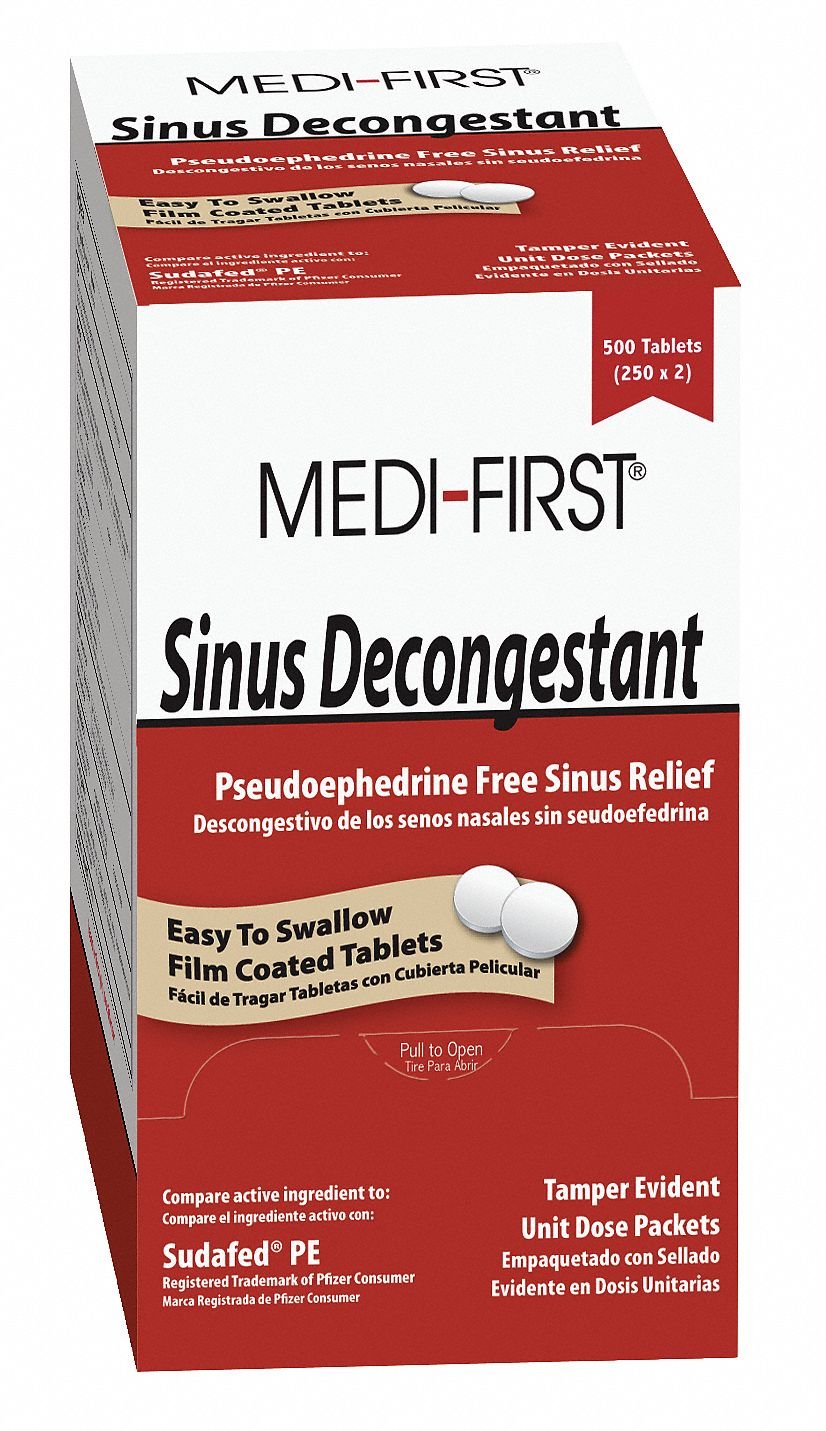
Five hundred wrapped tablets built for a glovebox, a purse, or a first aid kit.
This is the decongestant for the person who wants relief to live wherever they do. Each tablet carries 10 mg of phenylephrine HCl, a nasal decongestant that works to clear up your sinuses — and it is pseudoephedrine-free. The formula is non-drowsy, so a stuffy nose does not also cost you your afternoon, and the label points it at symptoms of allergies, the common cold, and hay fever. The 500 tablets come individually wrapped in 0.9 g tamper-evident packets, with the simple instruction that a packet opened or damaged should not be used.
The format is what buyers talk about most after effectiveness. Portability is a real theme — owners describe keeping the packets in a purse or pocket, and the wrapped design is easier to open for hands that struggle with foil, which matters for anyone with arthritis. Each dose is pre-measured, so there is no counting caplets from a bottle in a hurry. That said, the honest expectation is a pressure reducer, not a full clear-out: owners who use it report it eases sinus pressure and pressure headaches, but one long-time user notes it does not fully decongest. Taken every four hours without enough fluids, it can also dry you out — many owners keep to morning dosing for that reason.
The single-dose logic is its strongest argument. Nothing gets counted or spilled, a packet lives in a jacket pocket for the day you need it, and the 500 count means the box stays stocked through multiple cold and flu seasons. The reported relief window is roughly four hours per tablet. It is a practical staple rather than a heavy hitter — and it is worth checking the expiration date on arrival if the box ships in a bubble envelope.
Why it works for travel: 500 individually wrapped 10 mg tablets, pre-measured and easy to open, so a dose is always within reach.
What to expect: about four hours of pressure relief per tablet, and it eases rather than fully clears congestion.
Made for: the traveler, the commuter, and the first-aid-kit keeper who wants non-drowsy decongestant relief pre-portioned and portable.
Not for you if: you want a tablet that completely unblocks your sinuses or a bottle you can dispense freely from.
9. Nasacort 24-Hour Adult Allergy Nasal Spray 150 Spray Pack
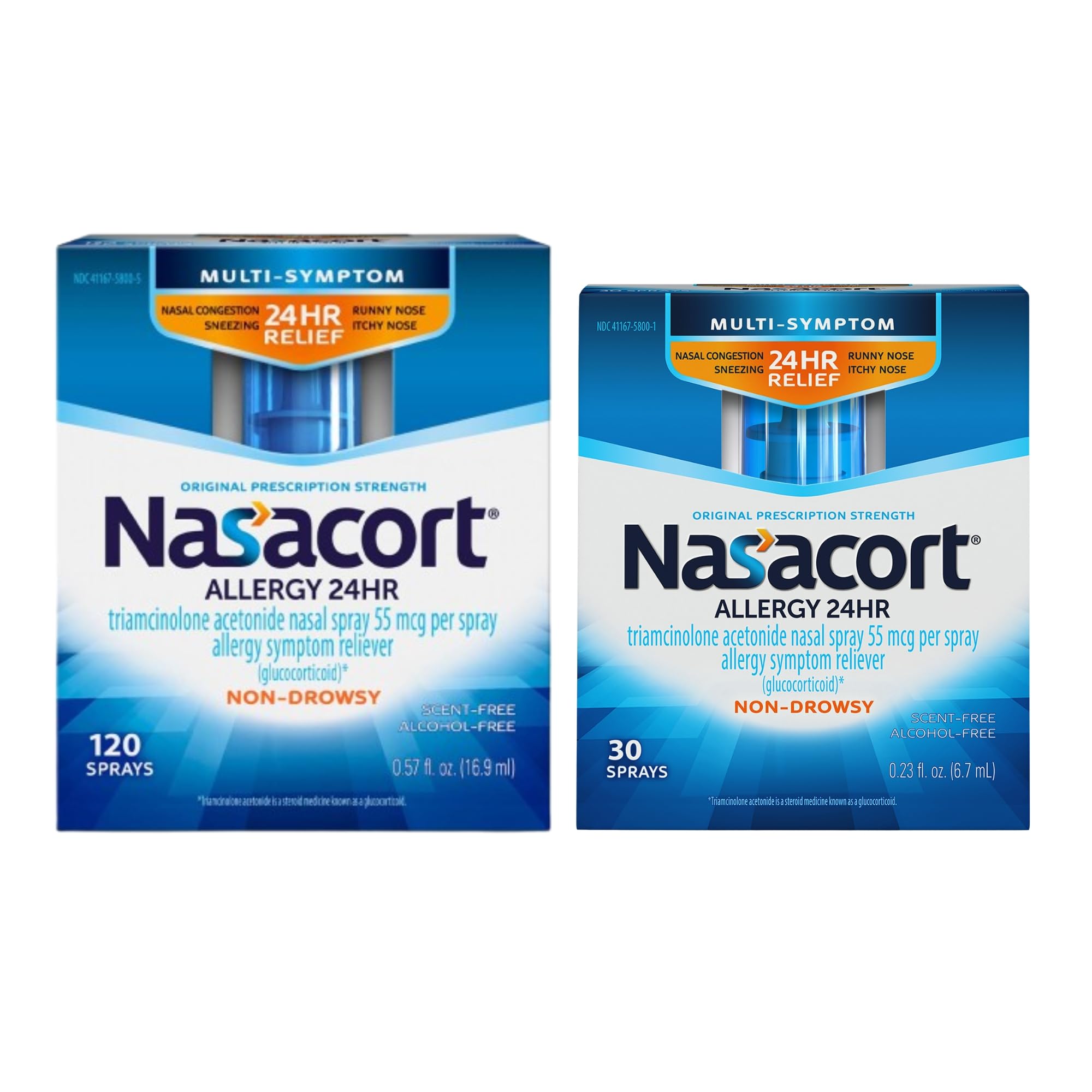
A 24-hour congestion spray that goes in scentless and tasteless — no stinging surprise.
If the smell or the taste of a nasal spray is what puts you off using one, this takes that excuse away. The spray is formulated with no scent and no harsh taste, and it delivers a full 24 hours of relief from nasal allergy symptoms including congestion, sneezing, and runny or itchy nose — all without making you drowsy. The pack holds two bottles, one with 120 sprays and one with 30, for 150 sprays total. It is non-addictive, and the label says it is safe alongside blood pressure medication as directed, but to consult your doctor before combining it with anything else.
Nasal bleeding and dryness are the two things that push people off spray formats, and this is where this bottle earns its reputation. The quality thread is the strongest note in the feedback, and owners specifically call out that it does not cause the nosebleeds they got from other sprays. One puts the difference simply, saying they finally found an allergy nasal spray that does not make their nose bleed. Others describe it as a daily fixture through severe allergy season, keeping a stuffy nose manageable, with the usual advice to rotate in a saline spray if the nose does start to dry out.
Value is the one split opinion — some owners call the price fair for a 150-spray two-bottle pack, others find it on the steeper side. It also helps that the packaging is moving to a recyclable carton, so what arrives may vary slightly.
The standout: 150 sprays across two bottles, scent-free and taste-free, with owners reporting it avoids the nosebleeds other sprays caused.
The trade-off: opinions on value are split, and dry nasal passages can still turn up with steady daily use.
Worth it if: other sprays irritate your nose and you want a scentless, non-drowsy daily option with a long spray count.
Reconsider if: you are strictly budget-driven or already prone to a dry nose on steroid sprays.
10. Xyzal Adult 24-Hour Allergy Relief Tablets, 5 mg, 80-Count

Take it at night, sleep through the worst of it, wake up clear.
The label gives you a schedule, not just a dose. Adults take one 5 mg tablet of levocetirizine dihydrochloride at night, which means the medicine does its work while you sleep and covers you all through the next day. Relief is designed to hold steady rather than fade — the label claims hour-24 relief equal to hour one, with onset in 45 minutes. It targets sneezing, runny nose, itchy watery eyes, and itchy nose or throat, covering pollen, ragweed, grass, trees, dust, mold, and pet dander.
Effectiveness is the loudest praise in the feedback by a wide margin, with quality close behind and the allergy-friendly nature of the formula repeatedly noted. The pattern that stands out is what happens when people stop: owners who pause it for months report their morning nose-blowing and coughing come right back, and that resuming it brings substantial improvement. Some people find their body adapts over time and switch between this and a different antihistamine every few months, reporting this one works better for them than several alternatives they have tried. Ease of swallowing gets its own mention — these are small tablets.
Drowsiness is the one to watch, and the feedback is genuinely mixed rather than one-sided. A fair number of owners find it non-drowsy, but a smaller group does feel drowsy or anxious on it, and that reaction is individual. Taking it at night, as the label directs, is the sensible hedge — if it makes you sleepy, you are already in bed. It is not a rescue tablet you take at noon unless you have already learned how your body responds.
Why owners keep it: prescription-strength relief that holds from hour one to hour 24, with a bedtime dosing routine built into the label.
The caveat: drowsiness hits a minority of people, and some find they need to rotate brands over time to keep getting the same effect.
Choose it when: you want one nightly tablet that has you clear before breakfast and stays that way all day.
Hold off if: you have reacted to levocetirizine-family antihistamines before or need a midday rescue dose.
11. Allegra Adult 24-Hour Allergy Relief Tablets 90-Ct + 1-Ct Travel Pack
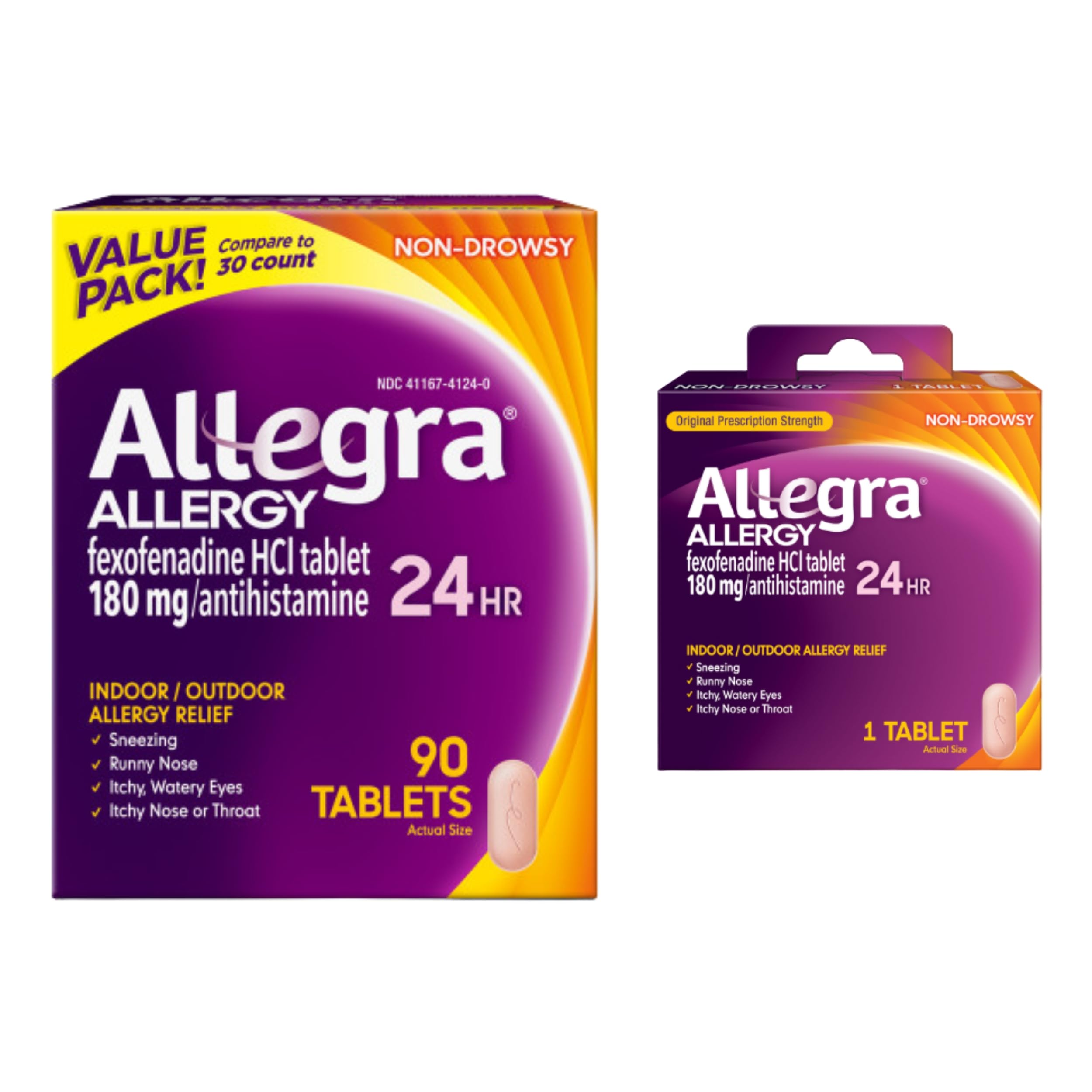
A full day of clear-headed relief, with a single travel tablet tucked in for later.
If drowsiness is the reason you avoid allergy medicine, fexofenadine is the active ingredient to know. This bottle gives you 90 tablets plus one bonus single tablet in a travel pack, and the formula is built to be non-drowsy with no brain fog. Take it day or night for 24-hour relief; it starts working in one hour. It covers sneezing, runny nose, itchy watery eyes, and itchy nose or throat, plus pollen, ragweed, grass, trees, dust, mold, and pet dander. The label also names it the top allergist-recommended non-drowsy OTC oral antihistamine brand.
Effectiveness is what buyers highlight most, and the duration point comes up repeatedly — owners describe relief that lasts an entire day rather than fading by afternoon. The absence of grogginess is right behind it in the feedback, and it gets credit for helping with itching as well. One owner who has tried several brands calls it the only one that works consistently for them, lasting 12 to 14 hours at first and stretching out with steady use. The 90-tablet count plus the bonus travel tablet is what the value comments point to, and the pills themselves swallow easily.
The one thing worth knowing before you commit is that the 24-hour claim is a target, not a guarantee for every person — a genuinely non-drowsy formula for most users still leaves a minority who feel a little tired, and the length of coverage can vary from person to person. It is also a routine product rather than a rescue one: the value comes from taking it before symptoms build, not after. And if you have never used fexofenadine before, buy the small size first to confirm it works for you.
The winning detail: fexofenadine starts working in one hour, stays non-drowsy with no brain fog, and covers both indoor and outdoor triggers.
What to keep in mind: coverage can run shorter than the full day for some people, and it works best taken steadily rather than on demand.
The clear choice for: anyone who has given up on allergy pills because they make them sleepy and wants their days back.
Look elsewhere if: you are brand new to fexofenadine and want to test a small supply before stocking up.
Know the Specs
Active Ingredient and Strength
The line on the front of the box that says something like “5 mg cetirizine HCl” or “25 mg diphenhydramine HCl” tells you two things at once: which drug you are taking and how much of it is in each dose. That milligram number matters because it decides how strong the effect is and how likely you are to feel side effects. A 25 mg diphenhydramine tablet is an older-style antihistamine that commonly causes drowsiness. A 5 mg cetirizine tablet is a newer one that most people tolerate without getting sleepy. Neither is better in the abstract — they are simply built for different jobs, and the number is how you tell them apart on the shelf.
Form, Count, and How You Take It
Form decides how fast relief arrives and where you can use it. A tablet or caplet is the classic option — you swallow it with water, and it is the most portable. A dissolving pellet goes under the tongue with no water at all, which is why people keep them in a bag or at a desk. A nasal spray goes straight to the inflamed tissue inside your nose, treating the congestion close to the source, but it usually needs several days of steady use to reach full effect. The count on the bottle tells you how long your supply lasts, and if you want a small bottle to test or a bulk bottle to stock the cabinet.
Common Questions
Can I take an allergy tablet and a decongestant at the same time for sinus pressure?
How long does a sinus headache from allergies usually last?
Is a nasal spray better than a tablet for a sinus headache?
Which allergy medicine for sinus headache will not make me drowsy?
Can I take acetaminophen at the same time as an allergy pill?
Are homeopathic sinus tablets as effective as regular allergy medicine?
How long does a bottle of allergy tablets last?
Can I take allergy medicine every day during pollen season?
Does a sinus headache from allergies mean I have an infection?
Which is better for sinus pressure, phenylephrine or pseudoephedrine?
The Bottom Line
The allergy medicine for sinus headache that covers the most ground for the most people is the Benadryl Ultratabs, because its 25 mg diphenhydramine HCl handles the sneezing, runny nose, and itchy eyes that drive so much sinus pressure, and the 100-count value size keeps you ready. If your problem is mostly the ache behind your cheekbones with no sedation wanted, the GenCare Acetaminophen 500 mg bottle is the straightforward non-drowsy pain answer. And if a blocked nose is the daily battle, the Flonase Allergy Relief spray treats the inflammation where it actually sits.
One last piece of guidance: buy the pick that matches your worst symptom, not the one with the longest label. A decongestant that shrinks swollen tissue does nothing for itchy eyes, and a pain reliever does nothing for a blocked nose. If you need one bottle to do everything and you can dose at night, the Benadryl value size is the safest starting point — with the honest note that drowsiness, not effectiveness, is the thing you are managing.
How we choose
We do not accept paid placement. Every pick is matched to a real buyer and a real use-case; we do not hands-on test units.
Sources
Specifications: manufacturer listings and product documentation. Review insights: verified customer reviews, as of October 2026. Pricing: not shown on this page (it changes often); check the current price via the retailer link.
As an Amazon Associate, Aappliancez earns from qualifying purchases. This does not affect which products we feature.