Disclosure: Some links in this post are affiliate links. As an Amazon Associate I earn from qualifying purchases, at no extra cost to you. Learn more
Specs are compiled from manufacturer listings and verified buyer reviews and can change over time — please confirm the key details on the product page before buying.
If you want one answer: buy a bike whose tires and suspension actually match the ground you ride on, not the shiniest frame. A fat-tire hardtail with 4-inch knobby rubber will cross sand and snow a cheap 2.25-inch trail bike cannot, and a full-suspension 29er will soak up rock gardens that shake a rigid fork apart. Know which surface you ride most before you spend a dollar.
This guide is built by comparing the manufacturers’ published specifications and the patterns across verified customer reviews, so you get each pick’s real strengths and trade-offs instead of marketing spin.
Terrain decides everything here, from tire width to brake style to gear count. Below you get ten real bikes, matched to real riding, so you can pick the one built for your ground — this is your working shortlist of all terrain bikes.
Top Picks


How To Choose The Best All Terrain Bikes
Match the bike to the ground under you before you compare specs. A trail bike with thin tires will bog down in loose sand, and a fat-tire bruiser will feel sluggish on a smooth bike path. Read your terrain first, then match the three numbers below.
Tire width: the number that decides where you can go
Wider rubber floats on top of loose ground instead of digging in. A 4-inch fat tire — that is the width of the rubber itself, not the wheel — carries you across sand and snow where a 2.10-inch tire sinks and stalls. Narrower 2.10-to-2.4-inch tires roll faster on gravel, dirt, and pavement, so pick width by the surface you ride most, not the one you ride occasionally.
Suspension: full, hardtail, or lock-out
Full suspension means shock absorbers at both the front fork and the rear, which soaks up rocks and roots so your body takes less punishment. A hardtail has only a front fork, which keeps the bike simpler and cheaper. A lock-out fork lets you switch the front suspension stiff on smooth roads so your pedaling effort goes into speed instead of bouncing.
Wheel size and frame fit
A 29-inch wheel rolls over obstacles with more momentum and suits taller riders, while a 27.5-inch wheel turns quicker in tight corners. Match the frame size to your height before anything else — a bike that fits badly is tiring regardless of its specs. Most of these bikes ship 80% to 90% pre-assembled, so expect to fit the front wheel, seat, and pedals yourself or pay a shop to tune it.
Side-by-Side Comparison
| Model | Best For | Tire Width | Speeds | Frame | Amazon |
|---|---|---|---|---|---|
| Schwinn Traxion 29★ Best Overall | All-round trail riding | 2.25 in | 24 | Aluminum | Amazon |
| Mongoose Argus Fat TireBest Fat Tire | Sand and snow | 4 in | 7 | Alloy Steel | Amazon |
| SAVADECK Titan 612Top Suspension Pick | Technical trails | 2.4 in | 12 | Carbon Fiber | Amazon |
| TST Electric Bike | Commuting with pedal power | 4 in | 7 | Iron | Amazon |
| Eurobike 29 | Taller riders on a budget | — | 21 | Aluminum | Amazon |
| HILAND 27.5 | Mixed city and trail | — | 21 | Aluminum | Amazon |
| Tommaso Sentiero | Gravel and light off-road | 40mm | 24 | Aluminum | Amazon |
| SPATIAL 27.5 | Beginners on a tight budget | 2.10 in | 8 | Aluminum | Amazon |
| Schwinn Suburban | Paved paths and errands | — | 7 | Alloy Steel | Amazon |
| SAVADECK Carbon Road | Paved road speed | 25C | 24 | Carbon Fiber | Amazon |
Detailed Reviews
1. Schwinn Traxion Mountain Bike, 29-Inch Wheels
Our pick — 4.0+★ from 500+ verified ratings; the strongest balance of quality and price.
Full suspension front and rear plus a 24-speed Shimano drivetrain, ready to ride without upgrades.
You get full suspension on both ends, so bumps are absorbed at the rear as well as the front. The bike also has a 24-speed Shimano drivetrain (24 gear combinations), a 29-inch wheel, and a 2.25-inch knobby tire. That gearing lets you keep spinning up a climb instead of standing and grinding. The Traxion pulls away from the SPATIAL here: 24 speeds against 8 is a huge spread, and on long climbs the Traxion still has a gear in reserve.
A lightweight aluminum frame carries all of it, and the front and rear mechanical disc brakes give you crisp stopping in wet weather and loose dirt. The double-wall alloy rims add strength without much weight, and the alloy cranks keep the gearing steady with less maintenance on your end. It arrives 80% assembled with some tools needed, so budget an evening or a shop visit for the rest.
The honest catch is durability at the component level. Some riders report the stock shifting and suspension feeling basic, and a few say parts wear out faster than they would like. The frame and build quality win people over, but the bolt-on parts are where the budget lives. The 29-inch wheel also makes this a tall bike, best for riders in the 5’8″ to 6’2″ range. It is not built for high-speed downhill runs.
Riders who put 50 miles across trails, rocks, and jumps say it handles all of it well. With strong overall quality and a good assembly reputation, it is the 4.0+ star crowd favorite across 500+ owners. That makes it the easiest first all-terrain bike to recommend.
What the spec sheet gives you
- Full suspension front and rear so rocks and roots hit the bike, not your spine
- 24-speed Shimano drivetrain — three times the gear count of the SPATIAL’s 8-speed setup
- 2.25-inch knobby tires grab loose gravel and packed dirt
- Mechanical disc brakes stay crisp in wet weather and mud
Where you’ll want to budget for upgrades
- Stock suspension and shifter hardware is entry-level and some riders swap it later
- Not designed for high-speed downhill riding
- Ships 80% assembled, so you still need to finish it
Buy this one if: you want one bike that handles trail, gravel, and pavement without a custom build.
Think twice if: you plan to bomb steep downhill lines or want premium suspension from the start.
2. Mongoose Argus Fat Tire Mountain Bike
Four inches of knobby rubber that floats over sand and snow instead of digging in.
If your terrain includes loose sand, deep snow, or chunky gravel, tire width is the whole game, and the Argus puts 4-inch knobby fat tires under you. That is nearly double the 2.25-inch rubber on the Schwinn Traxion, and the difference is real: where a narrower tire cuts in and stalls, these wide tires stay on top and keep rolling. The trade-off is weight and roll resistance, which shows up the moment you point it at smooth pavement.
A durable steel hardtail frame and rigid fork take a beating, and the drilled aluminum rims keep the wheels from turning into boat anchors. Shimano twist shifters with a rear derailleur give you 7 gears, and mechanical disc brakes provide reliable stopping in varied conditions. It fits riders roughly 5’7″ to 6’1″, arrives easy to assemble, and carries a paint job that draws compliments.
Fun is the word that keeps coming up, and the sturdy build plus easy assembly make it a great entry point into fat-tire riding. Be aware the frame is heavy — some riders find the weight noticeable on regular mixed terrain — and the 4.0-inch tires have fairly shallow tread, so they slip on hard-packed snow where a deeper lug would bite. Swapping tires later is an added cost.
Where it shines: loose sand, snow, and gravel are exactly what the 4-inch tires were built for, and the steel frame shrugs off rough treatment.
What to plan for: it is a heavy bike with shallow tread on the stock tires, so serious snow riders will want to upgrade rubber.
Reach for this if: your rides cross beach, snow, or gravel and float matters more than speed.
Look elsewhere if: you mostly ride pavement and want a light, quick-handling bike.
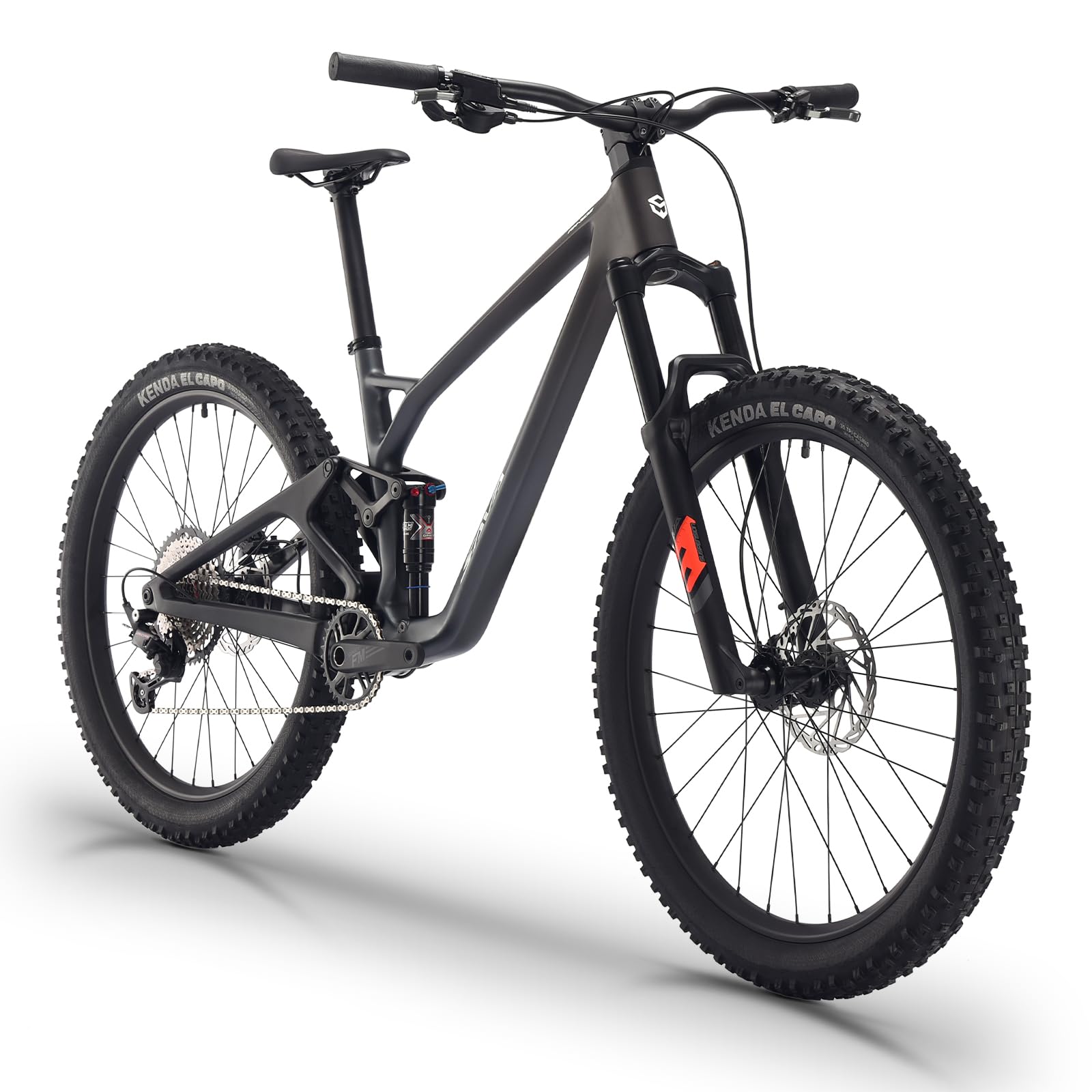
3. SAVADECK Titan 612 Carbon Fiber Soft Tail Mountain Bike
A carbon full-suspension trail machine with twelve gears and air-shock tuning for riders who chase technical singletrack.
You get trail-tuned control from a Shimano DEORE M6100 12-speed groupset (12 gears) paired with a dual-link suspension system running a DNM air shock (an air-filled rear shock). The shock has a three-stage lockout for climbing efficiency and rebound adjustment so you can dial in the ride for the trail. That is control the Schwinn Traxion’s spring setup cannot match. The 12-speed range is half the Traxion’s raw gear count, but the DEORE hardware is a clear step up in shifting quality.
Four-piston hydraulic disc brakes with a dual opposed-piston design provide strong stopping and better heat dissipation on long descents. The 2.4-inch Continental all-terrain tires carry multidirectional tread for mud, gravel, and rocks, and the frame accepts an upgrade to 2.6-inch tires if you want more stability. Internal cable routing keeps the lines clean and protects them from mud and debris.
The carbon frame is light, but the bike as a whole is not featherweight — one rider weighed it around 32 lbs because of steel wheels and handlebars. Sizing also runs large, so shorter riders should size down carefully. What wins people over is the ride itself: smooth rolling, positive shifting, and handling that keeps up with pricier shop bikes.
The standout: DEORE 12-speed shifting with four-piston hydraulic brakes and a tunable air shock is serious trail hardware at this tier.
The catch: the carbon frame does not make the whole bike light, and the fit chart runs large.
The right rider: someone chasing technical descents and rooty climbs who wants real suspension tuning.
The wrong rider: a shorter or first-time buyer who wants a light bike straight from the start.
4. TST Electric Bike for Adults, 48V 15Ah Battery
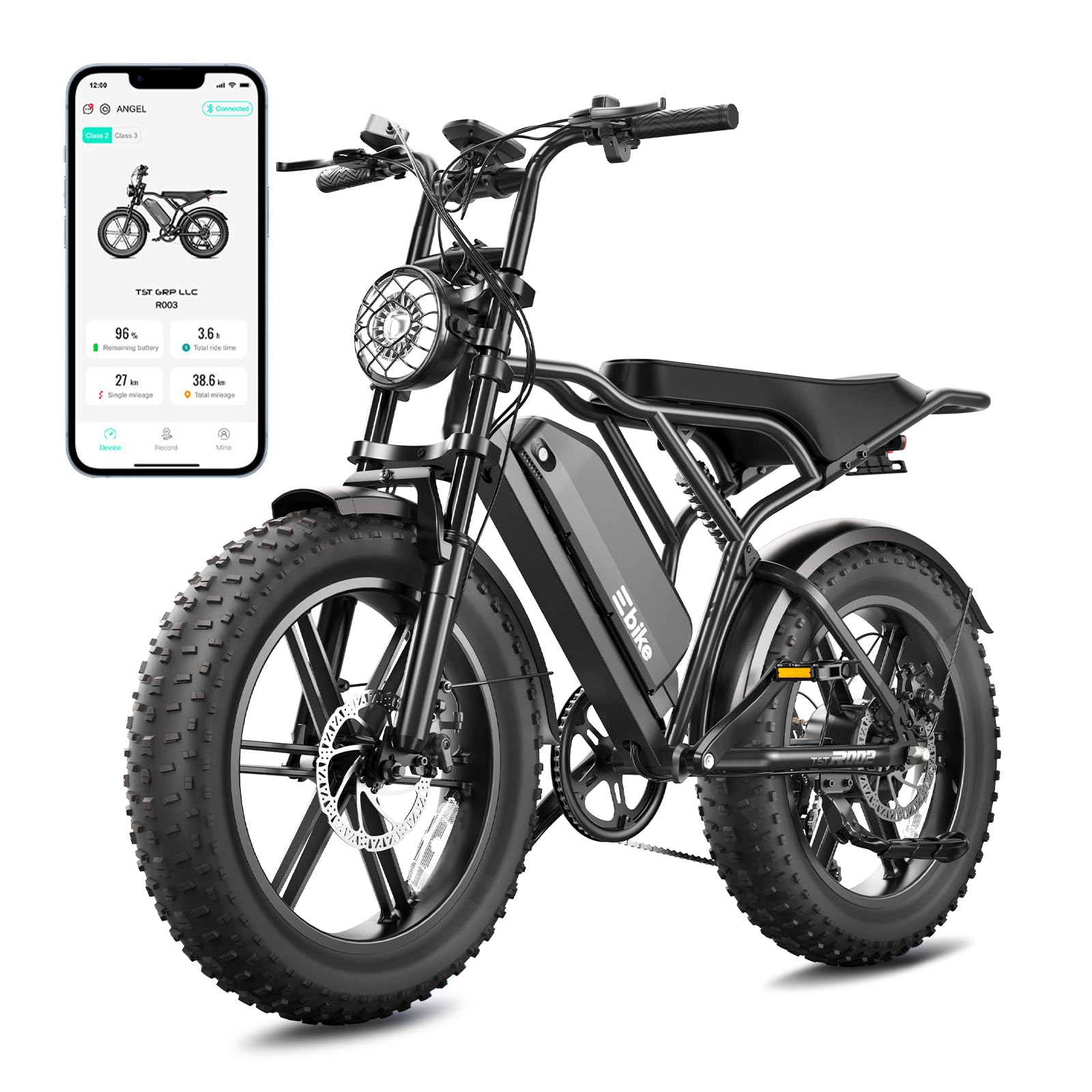
A 749W pedal-assist motor and 48V 15Ah battery that flatten the hills on a 60-mile commute.
When the hills are the reason you do not ride, this is the pick. A 749W motor with a 2000W peak drives the bike through a 48V 15Ah removable battery that charges in 6-7 hours and covers up to 60 miles in pedal-assist mode, or roughly 40 miles in throttle mode. That removable battery is anti-theft as well as convenient, so you can charge it indoors without dragging the whole 66-pound bike inside.
Front and rear suspension soak up bumps, and the 20″x 4″ puncture-proof snow tires provide grip that carries you across city streets, rugged mountains, and beaches. A 7-speed drivetrain and three working modes let you dial effort by terrain, and the LCD display tracks speed, distance, and battery level. Mechanical disc brakes and a high-brightness front light round out the safety kit, and it arrives 90% pre-assembled with a 450-pound maximum load.
The honest gap is hardware checks. The hex flange nuts on the front wheel can loosen, so a periodic bolt check is part of ownership. The seat sits low for taller riders and is not adjustable enough on its own. What keeps people coming back is the range and the comfort — a smooth, sturdy ride that handles errands and commuting without feeling bulky.
The numbers that matter
- 749W motor with a 2000W peak moves you up hills without standing on the pedals
- 48V 15Ah removable battery covers up to 60 miles in pedal-assist mode
- 20″x 4″ puncture-proof fat tires handle streets, trails, and beach
- Front and rear suspension plus a high-brightness front light for night riding
What you’ll want to keep an eye on
- Front-wheel hex flange nuts can loosen, so check them regularly
- The seat is too low and not adjustable enough for tall riders
- 66 lbs is heavy to lift onto a rack or up stairs
Best for: commuters and errand-runners who want a motor to flatten the hills.
Not for: riders who want to carry the bike up flights of stairs every day.
5. Eurobike 29” Mountain Bike

A 29-inch aluminum trail bike built around taller riders and daily commutes off the beaten path.
The 29-inch wheel and 19-inch aluminum frame make this one of the few picks sized for taller riders, with a 21-speed Shimano drivetrain and front suspension fork soaking up bumps and thumps. Front and rear mechanical disc brakes keep stopping crisp across wet and dry conditions, and alloy cranks keep gearing steady with less maintenance. It is 85% assembled, so you fit the front fork, front wheel, seat, and pedals before you air up the tires.
The rack and kickstand mounts make it easy to add accessories and haul a load, which is exactly what a daily commuter wants. A magnesium alloy wheelset and color-matched parts give it a sharp look that draws compliments. Buyers praise the build quality and easy assembly, describing it as solid on mountain bike trails with smooth shifting straight from the start.
The recurring gripe is tire and sizing honesty: one rider measured the wheel closer to 26-inch than the advertised 29, and a few found the rear gears skipping and noisy after a month. The stock handlebar grips also draw requests for an upgrade. For a tall rider who wants a 29er at a budget-friendly tier, this still makes a strong case.
Why tall riders pick it: the 29-inch wheel and 19-inch frame suit riders that shorter geo leaves cramped.
Worth knowing: a few buyers report a wheel sizing discrepancy and some rear gear noise over time.
Pick it if: you are taller, want a 29er for trail and commute duty, and want it to go together fast.
skip it if: exact wheel sizing or long-term gear silence is critical to you.
6. HILAND 27.5 inch Mountain Bike

Hydraulic disc brakes and a lock-out fork on a 21-speed aluminum frame that handles city and dirt in the same ride.
For riders who want better stopping than mechanical brakes offer, this is the bike at that tier with hydraulic disc brakes instead. A lock-out front suspension fork with adjustable damping lets you stiffen the front end on smooth roads so your pedaling power goes into speed, then soften it for bumps and dips. The 21-speed drivetrain gives you a high gear for speed and a low one for climbs, and the double-walled alloy rim adds strength where it counts.
Internal shift cable and brake hose routing protects the lines and helps them last longer, while the ultralight aluminum frame is easy to clean and maintain. The 27.5″ xc tire is thin and fast rolling with strong grip and puncture resistance, so it works on hills, gravel, and trails. It fits riders between 5’8″ and 6’5″ and ships 85% pre-assembled with tools included.
Buyers praise the ride quality, but build consistency is the recurring complaint — some hydraulic brake lines arrive unsecured, and one buyer had a front rotor arrive slightly warped. There is a single gear set and no kickstand, and the hydraulic disc brakes are the feature that makes it stand apart.
The differentiator: hydraulic disc brakes provide stopping power that mechanical setups can’t match on rough, wet descents.
The honest note: some units arrive with brake lines or rotors that need a shop’s eye before the first hard ride.
Suits: riders 5’8″ to 6’5″ who want hydraulic stopping and a lock-out fork without a premium tier.
Does not suit: anyone who wants a kickstand bundled in or wants zero first-ride shop checks.
7. Tommaso Sentiero Sport Performance Aluminum Gravel Bike

A gravel rig that runs 40mm tires and a 24-speed Claris drivetrain for riders who split time between road and light trail.
You get a bike that feels fast on pavement but does not fall apart on gravel. It has 40mm tires, a steel fork, and a Shimano Claris 24-speed (3×8) drivetrain (24 gears from 3 front rings and 8 rear cogs) across a 700c wheel (a standard road-bike wheel size). That 40mm tire width is far narrower than the 4-inch fat tires on the Mongoose when it hits loose sand, but it rolls dramatically faster on hardpack and asphalt. It is an all-terrain bike, not a trail bruiser.
Mechanical disc brakes provide reliable stopping, and the aluminum frame keeps the weight reasonable. Assembly is straightforward enough that most riders finish it under an hour, though many take it to a shop for a pro tune first. Buyers describe the ride as smooth and fast, with a fit and finish that feels above its tier.
The honest limitation is that this is not built for heavy riders or rough terrain abuse. One rider around 230 lbs went through several rear inner tubes with no detectable puncture. A few report shifter cable tension that needs adjusting from the start, plus a saddle that gets uncomfortable past the hour mark. Buyers cite build quality as the draw and the smooth, fast ride as the reason they keep riding it.
What it does well
- Shimano Claris 24-speed drivetrain shifts cleanly across road and gravel
- 40mm tires roll fast on pavement and hold gravel without drama
- 700c aluminum frame keeps the bike light and easy to move
Where it asks for care
- Heavier riders have reported repeated rear-tube issues
- Shifter cables can arrive too taut and need slack added
- Stock saddle gets uncomfortable on rides over an hour
Built for: riders splitting time between road, gravel, and easy trail who want speed and clean shifting.
Not built for: heavier riders pushing hard off-road, or anyone expecting trail-bike rough-terrain durability.
8. SPATIAL Mountain Bike, 27.5-Inch
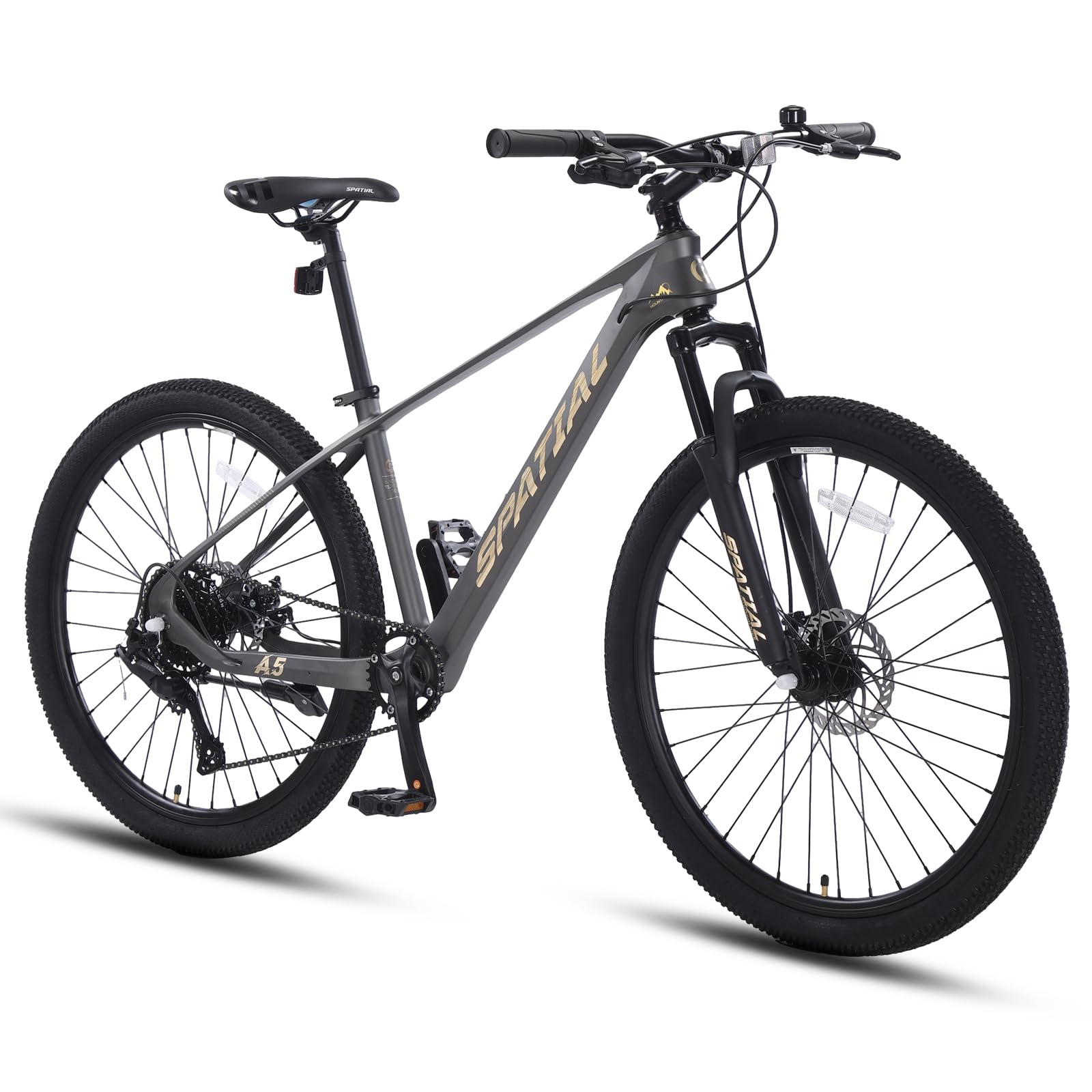
An 8-speed drivetrain and lockout fork on a 34-pound aluminum frame — the cheapest entry to trail riding here.
This is the leanest setup on the list, and that is the point. An 8-speed rear derailleur handles steep climbs and flat roads, a 27.5″x2.10″ tire offers traction on dirt and pavement, and a suspension fork with a lockout feature firms up for climbing efficiency. The high-grade aluminum alloy frame weighs 34 lbs and an adjustable seat post fits riders 165-186cm (5’4″ to 6’1″).
Mechanical disc brakes give more braking power than rim brakes and stay stable in rain, mud, or dirt. It is 85% pre-assembled with clear instructions and basic tools included, so a beginner can finish it without a shop visit. That makes it walk-out-the-door ready for someone who has never owned a mountain bike.
Where it becomes risky is long-term durability at this price — there are reports of pedal threads tearing out and frames arriving scratched, and with so few ratings the track record is thin. This is a first bike or a spare for short commutes, not a bike you push hard on trails for years.
The draw: 8-speed gearing, a lockout fork (a fork you can stiffen for climbs), and 34 lbs of aluminum at the balance for a first bike.
The risk: the sample size is tiny, and the pedal and finish issues reported suggest modest hardware quality.
Consider it if: you want a low-cost first mountain bike for gentle trails and short commutes.
Leave it if: you ride hard, weigh a lot, or expect years of trail abuse without upgrade costs.
9. Schwinn Suburban Adult Comfort Bike, 26-Inch

An upright seven-speed cruiser for pavement, errands, and riders who want comfort over trail aggression.
The 26-inch wheel and step-over comfort frame put you in an upright riding position, and the 7-speed twist shifter tackles hills with a simple turn of the wrist. Large-volume tires deliver a cushy ride, retro fenders on the front and rear keep splashes off you, and linear pull brakes provide reliable stopping. It fits riders 5’5″ to 6’3″, which covers a wide range of heights.
Comfort is the reason this bike exists — a large cushioned seat, ergonomic grips, and a steel frame designed for casual rides around the neighborhood or a rail trail. It is a hybrid, not a mountain bike, so the intended terrain is paved roads and urban paths rather than rocks and roots.
Assembly is the catch. Some riders report the manual is hard to follow and the handlebars and seat need tuning, and a few note a missing axle nut or fender screws that arrive overtightened. The fix is a shop tune or a patient afternoon with the right tools, and one rider even had a handy partner finish it easily. For casual riding, the comfort and value are what people talk about most.
The appeal: upright positioning, cushioned seat, and retro fenders make suburban errands comfortable.
The friction: assembly instructions are thin, and the right tools make the finish easier.
Made for: casual riders on pavement who want comfort and a classic look more than trail capability.
Not ideal for: anyone who wants to ride rocks, roots, or steep off-road terrain.
10. SAVADECK Carbon Fiber Road Bike
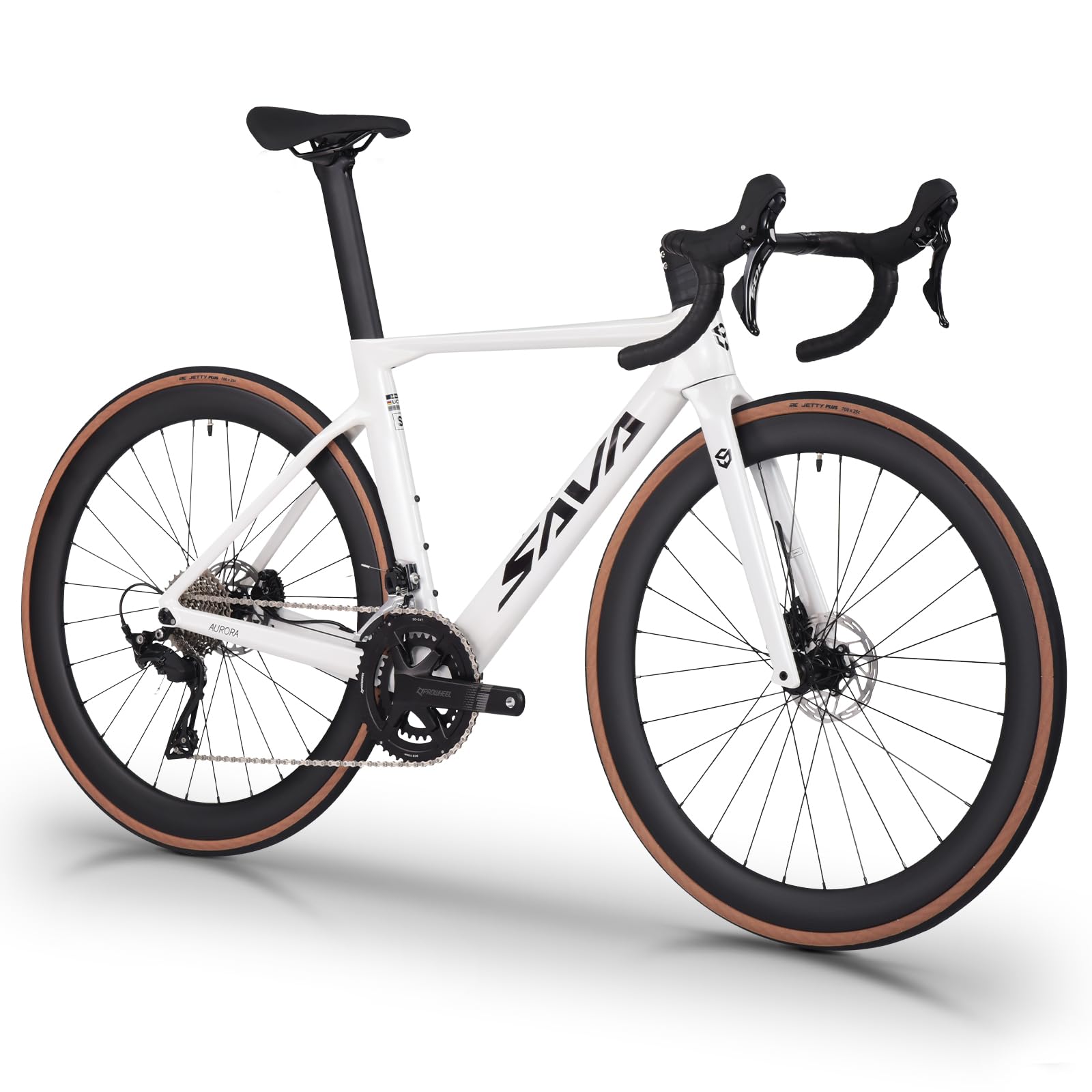
A full-carbon road machine at 19.4 lb for riders who chase speed on pavement, not dirt.
At 8.8kg (19.4 lb), this is the lightest bike on this list by a wide margin, and the full T800 carbon fiber frame, fork, seat post, and wheelset are why. The Shimano R7120 2*12 (24-speed) groupset with R7100 front and rear derailleurs shifts smoothly and lasts, and hydraulic disc brake levers with R7170 calipers give stronger stopping than conventional V-brakes. The 700*25C tires are built for road, not trail.
Full internal cable routing keeps airflow clean and the bike tidy, and the tapered head tube adds torsional rigidity for better handling at speed. It arrives almost 90% pre-assembled, with a pair of free clipless pedals included. Buyers describe it as fast, lightweight, and easy to assemble, with confident stopping and quick cornering on long rides.
The honest trade-off is road-only intent — this is not an all-terrain bike and the 25C tires should not be pushed onto gravel. A few riders point out cheap non-aero round spokes, a saddle worth swapping, and a slight front brake rotor rub at delivery. None of that stops it being a great buy for a serious road rider who wants carbon at a fair tier.
What earns the price
- Full T800 carbon frame, fork, seat post, and wheelset at 19.4 lb
- Shimano R7120 2*12 groupset with hydraulic disc brakes
- Almost 90% pre-assembled with a pair of free clipless pedals included
Where it needs finishing touches
- Non-aero round spokes and a stock saddle most riders replace
- Occasional front brake rotor rub at delivery
- Built for pavement — not gravel or trail
Choose it if: you ride pavement and want a fast, full-carbon bike that assembles in under an hour.
pass on it if: your rides include gravel, dirt, or anything rougher than smooth asphalt.
Know the Specs
Tire width in inches and millimeters
Tire width is the size of the rubber itself, not the wheel. A 4-inch tire floats over loose sand and snow, while a 2.10-to-2.4-inch tire rolls faster on gravel and dirt, and a 25C or 40mm road tire is for pavement and hardpack. Pick your width by the surface you ride most, because the wider the tire, the more effort it takes to push on smooth ground.
Drivetrain speeds and gear range
The speed count tells you how many gears you can shift between. A 7 or 8-speed setup handles gentle hills and flat roads, while a 21 or 24-speed drivetrain gives you more range for steep climbs and fast descents. More gears also mean more maintenance and tuning, so a casual rider does not need the same gear count as a trail rider.
Brake style: mechanical vs hydraulic
Mechanical disc brakes use a cable to press the pads, and they stay reliable in wet weather with less maintenance. Hydraulic disc brakes use fluid and deliver stronger, smoother stopping power, which matters on long descents where heat builds up. Both are a step up from rim brakes on mud and rain.
Frame material and weight
Aluminum frames are light and corrosion resistant, steel frames are durable and heavy, and carbon fiber is the lightest option. But the frame alone does not decide the bike’s weight — wheels and handlebars matter too. A carbon frame with steel wheels can still weigh as much as a well-built aluminum bike.
Common Questions
How wide should tires be for sand and snow riding?
Is a full suspension bike worth it over a hardtail?
What wheel size should a taller rider choose?
Are hydraulic disc brakes better than mechanical disc brakes for trail riding?
How much assembly does a new mountain bike need?
Can a fat tire bike handle regular pavement riding?
How long does an electric bike battery take to charge, and how far will it go?
Do I need a license to ride an electric bike?
What is the difference between a gravel bike and a mountain bike?
Can I replace the stock tires with wider ones later?
The Bottom Line
For most riders, the all terrain bikes winner is the Schwinn Traxion because full suspension, 24 gears, and 29-inch wheels cover trail, gravel, and pavement in one bike. If your ground is sand or snow, grab the Mongoose Argus for its 4-inch fat tires. And for hilly commutes where you want pedal power, the TST Electric Bike is the one to reach for.
How we choose
We do not accept paid placement. Every pick is matched to a real buyer and a real use-case; we do not hands-on test units.
Sources
Specifications: manufacturer listings and product documentation. Review insights: verified customer reviews, as of October 2026. Pricing: not shown on this page (it changes often); check the current price via the retailer link.
As an Amazon Associate, Aappliancez earns from qualifying purchases. This does not affect which products we feature.