Disclosure: Some links in this post are affiliate links. As an Amazon Associate I earn from qualifying purchases, at no extra cost to you. Learn more
Specs are compiled from manufacturer listings and verified buyer reviews and can change over time — please confirm the key details on the product page before buying.
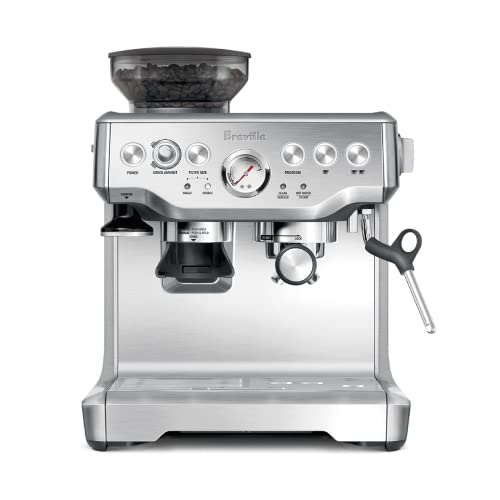
If you want a machine that pulls real café-style espresso and is built with stainless steel inside and out, start with the Breville Barista Express. It has the grinder, the steam wand and the temperature control in one unit, and it is the pick most home baristas end up happy with. Below you get eleven stainless steel machines explained in plain English — what each one does well, where it falls short, and who it actually suits.
This guide is built by comparing the manufacturers’ published specifications and the patterns across verified customer reviews, so you get each pick’s real strengths and trade-offs instead of marketing spin.
Stainless steel matters here for two reasons: it holds heat steadily and it does not stain or hold onto old coffee oils the way plastic does. You will see which machines pair that body with a burr grinder, a PID controller and a steam wand you can actually live with. Here is the honest shortlist of the best all stainless steel espresso machine picks for a real kitchen counter.
Top Picks


How To Choose The Best All Stainless Steel Espresso Machine
A stainless steel body is the easy part to spot. The hard part is working out which grinder, heating system and steam wand sit behind that brushed panel, because those three parts decide whether your morning shot tastes sweet or thin. Read the machine like a set of separate tools stacked together.
Grinder type beats pump bar numbers
A conical burr grinder crushes beans between two shaped metal cones so the grounds come out even. Even grounds mean water flows through the puck at the same speed everywhere, which is what gives you a sweet, syrupy shot instead of a sour or bitter one. A blade grinder chops unevenly and leaves dust that clogs the basket. Machines like the Breville Barista Express and the CASABREWS 5700Pro grind straight into the portafilter, so the coffee never sits around losing aroma.
What PID control actually does for you
PID stands for proportional-integral-derivative — it is a small controller that reads the water temperature many times a second and nudges the heater to hold it steady. Without one, a machine swings a few degrees hot and cold, and that swing is the difference between a smooth shot and a sharp, burnt edge. Several picks here spell it out, including the Breville Barista Express, the Bambino Plus, the Rocket R58 and the COWSAR dual boiler.
Manual wand, automatic wand, or none at all
A manual steam wand gives you full control over how much air you fold into the milk, so you can build the fine microfoam that latte art sits on. The trade-off is practice: your first few pitchers will be bubbly. An automatic wand, like the one on the De’Longhi Dedica Maestro Plus and the Breville Bambino Plus, handles the aeration for you and stops at a set temperature. If you mostly drink straight espresso, neither matters much — the Jura E6 and KitchenAid KF6 skip the pitcher entirely and froth through a milk tube.
Counter depth and tank size
Measure your counter depth before anything else. The Rocket R58 measures 17″D x 22.75″W, which is deep and wide enough that it wants its own stretch of counter. The Cuisinart EM-550 is 7.09 inches wide, so it slots into a narrow gap. Water tanks run from 50 fluid ounces on the Cuisinart up to 91 fluid ounces on the CASABREWS, and a small tank means refilling every few drinks — worth knowing if you brew for two every morning.
Side-by-Side Comparison
Every row uses the same three measures so you can scan straight down: how the machine grinds, how much water it carries, and how much counter it eats.
| Model | Best For | Grinder | Water Tank | Power | Amazon |
|---|---|---|---|---|---|
| Breville Barista Express★ Best Overall | All-in-one home setup | Integrated conical burr | 67 oz | 1600 Watts | Amazon |
| Rocket R58 CinquantottoDual Boiler Pick | Dual boiler purists | None built in | 2.5 liters | — | Amazon |
| Chefman Crema SupremeBig Tank Value | Big tank, low outlay | 30-setting conical burr | 3 liters | 1450 Watts | Amazon |
| De’Longhi Dedica Maestro Plus | Small kitchens | None built in | 54 oz | — | Amazon |
| CASABREWS 5700Pro | Latte art practice | 15-setting conical burr | 91 oz | 1500 Watts | Amazon |
| Breville Bambino Plus | Fast daily espresso | None built in | 64 oz | 1560 Watts | Amazon |
| Cuisinart Espresso Bar EM-550 | One-touch convenience | Stainless conical burr | 50 oz | — | Amazon |
| COWSAR 20 Bar Dual Boiler | Brew and steam at once | Built-in | — | — | Amazon |
| Ninja Luxe Café Premier ES601 | Espresso plus drip coffee | 25-setting conical burr | — | — | Amazon |
| KitchenAid KF6 KES8556 | Hands-off bean-to-cup | Built-in smart dosing | 2.2 liters | — | Amazon |
| Jura E6 Platinum | One-button coffee routine | Professional Aroma Grinder | 1.9 liters | — | Amazon |
Detailed Reviews
1. Breville BES870XL Barista Express Espresso Machine
Our pick — 4.0+★ from 27,500+ verified ratings; the strongest balance of quality and price.
The one machine that grinds, doses, brews and steams without you buying a second box.
You get whole beans in the hopper and a finished shot in the cup, because the grinder sits inside the machine and drops grounds straight into the portafilter. That is the reason this one takes the top slot: nothing else in this list combines a conical burr grinder and a steam wand at this level of integration. The hopper holds 1/2 lb of beans and the tank carries 67 oz of water, so a two-person morning does not need a refill.
Temperature control is handled by a PID — a controller that checks and corrects the water temperature continuously — so your extraction stays even rather than drifting. Low pressure pre-infusion wets the puck gently before full pressure arrives, which pulls flavor out evenly instead of blasting the center of the dose. You also get a 54mm stainless portafilter, single and dual wall baskets, an integrated tamper and the Razor dose trimming tool in the box. Grinding to espresso takes under a minute according to Breville.
Where it asks something back is in the learning curve. Getting the grind size dial, the dose and the tamp right for a new bag of beans takes patience, and a few bags in you will still be adjusting. The water tank is on the smaller side for heavy use, and the steam wand is loud enough that you will hear it across the kitchen. Once dialed in, it turns out café-grade lattes and replaces the daily coffee-shop run.
What earns it first place
- Grinder, tamper and steam wand all built in, so the workflow is one continuous motion
- PID temperature regulation and low pressure pre-infusion for even, balanced extraction
- Adjustable grind amount plus manual override for full control over dose
- Brushed stainless body with a 1-year limited warranty and 2 free bags of specialty coffee on registration
What you should plan for
- Dialing in a new bean takes trial and error on grind, dose and tamp
- The steam wand is loud, and cleanup after milk takes real effort
- Consumables and maintenance parts wear over time — treat the O-ring and water filter as routine replacements
Buy this if: you want one countertop machine that takes whole beans to a finished latte and you are willing to learn its settings.
Think twice if: you want push-button coffee with no dialing in — a fully automatic pick further down suits you better.
2. Rocket Espresso R58 Cinquantotto Espresso Machine
Two boilers, one for brewing and one for steam, so nothing waits on anything else.
This is the machine for someone who has already learned to pull shots and now wants the temperature to stop being a variable. Separate brew and steam boilers mean you can extract and steam at the same time, and the detachable PID lets you read and set brew and steam temperatures directly. If you make three lattes back to back, that separation is the whole point.
Footprint is the first thing to check. It measures 17″D x 22.75″W x 17″H, which puts it deep and wide on the counter — noticeably more counter space than the Breville Barista Express at 13.8″D x 12.5″W x 15.9″H. The 2.5 liter water reservoir can also be bypassed: a commercial-caliber rotary pump allows optional water line plumbing, so the machine can run from a plumbed supply. Scheduled auto-on brings it up to temperature before you walk into the kitchen, and a small mirrored shot timer sits on the front without breaking the classic stainless look.
Owners consistently point to the espresso itself — the shot quality is what this machine is for, and it holds up over a year of steady use. The honest caveats show up around the edges. Brew head clearance is tight enough that a scale will not fit under the portafilter, the drip tray fills quickly without a drain hose, and the external display is sensitive to the touch. Fit and finish is top-tier and the steam wand stays cool to the touch, but this is a manual machine, so the controls still expect you to know what you are doing.
The real draw: a genuinely commercial layout — rotary pump, dual boilers, plumbable water and a shot timer — wrapped in stainless steel that looks as good as it performs.
The honest catch: low clearance under the brew head and a shallow drip tray mean you work around the machine rather than with it, and the manual workflow rewards practice.
Made for: the home barista who will plumb it in or at least schedule it, and who wants brew and steam running independently.
Not for: anyone wanting a scale under the portafilter or a machine that forgives an unmeasured dose.
3. Chefman Crema Supreme 15 Bar Espresso Machine
Three liters of water and thirty grind settings, for a brunch crowd on a modest outlay.
The 3 liter removable reservoir is the largest tank in this round-up, beating the Rocket R58’s 2.5 liters. Fill it in the sink, click it back on, and you can pour for a table of guests before it needs topping up. The conical burr grinder offers 30 grind settings and dispenses directly into a 58mm portafilter that comes with both single and double baskets. A 15-bar pump, adjustable shot temperature and volume, and a pressure gauge on the interface give you readouts to work from.
What it does well is produce a decent shot with very little ceremony. Basic supermarket beans still come out tasting like espresso, the accessories — milk pitcher, stainless tamper, cleaning tools, grinding funnel — all ship in the box, and the detachable drip tray doubles as storage for them.
This is a temperamental machine, though, and the honest read is that it punishes neglect. Descaling is not optional here; pressure drops when scale builds up, and a proper descale brings it back. Grind too fine and the puck clogs and no coffee comes out at all. Dosing in the 16-17g range with a puck screen helps consistency a great deal. Treat it as a machine that needs a cleaning routine and it delivers far more than its tier suggests; ignore that routine and it will stall on you.
The value case: 3 liters, 30 grind settings, a 58mm portafilter and a full accessory kit for a fraction of the boutique brands — with cETL approval and a 1-year Chefman warranty behind it.
The honest catch: it is finicky about grind and scale. Clogged pucks and dropping pressure are the two things that send this machine back, and both come down to maintenance habits.
Reach for this if: you brew for several people and want a big tank plus a real burr grinder without spending boutique money.
Look elsewhere if: you want a machine that runs without a descaling and cleaning schedule.
4. De’Longhi Dedica Maestro Plus Espresso Machine

Narrow enough for a tight counter, with a steam wand that textures milk for you.
At 8.15 inches wide it is the narrowest machine here that still has a real steam wand, which makes it the one that fits beside a toaster without a fight. The automatic wand does the aeration itself and gives you 3 temperature and milk texture options, so you pick a setting and it stops at the right point. A 15 bar pump handles pre-infusion at low pressure and extraction at the optimal 9 bar, and Active Temperature Control lets you pick from 3 infusion temperatures to suit the beans in the hopper.
The Thermoblock heating system is the reason this one is quick: it gets to brewing temperature in seconds rather than waiting on a boiler. That matters on a work morning when you want a shot before you leave. You also get single and double baskets in both pressurized and unpressurized versions, a stainless milk jug, a professional tamper and a cleaning brush — plus parts that go in the dishwasher, which is rare at this size.
There is no grinder in this one, and that is the trade you are making for the small body. Fresh beans need a separate burr grinder and a scale to get the dose right, because pre-ground coffee in the pressurized baskets will only take you so far. Buyers who moved up from a cheaper machine describe the coffee quality as the standout, and the appearance earns its share of the praise too. The recurring note is temperature — some find the shots land cooler than they would like, so pre-warming the cup is worth doing.
Best fit for: a small kitchen and a beginner who wants a hands-off steam wand and dishwasher-safe parts.
Worth knowing first: no built-in grinder, so budget for a separate burr grinder if you buy whole beans.
5. CASABREWS 5700Pro Espresso Machine
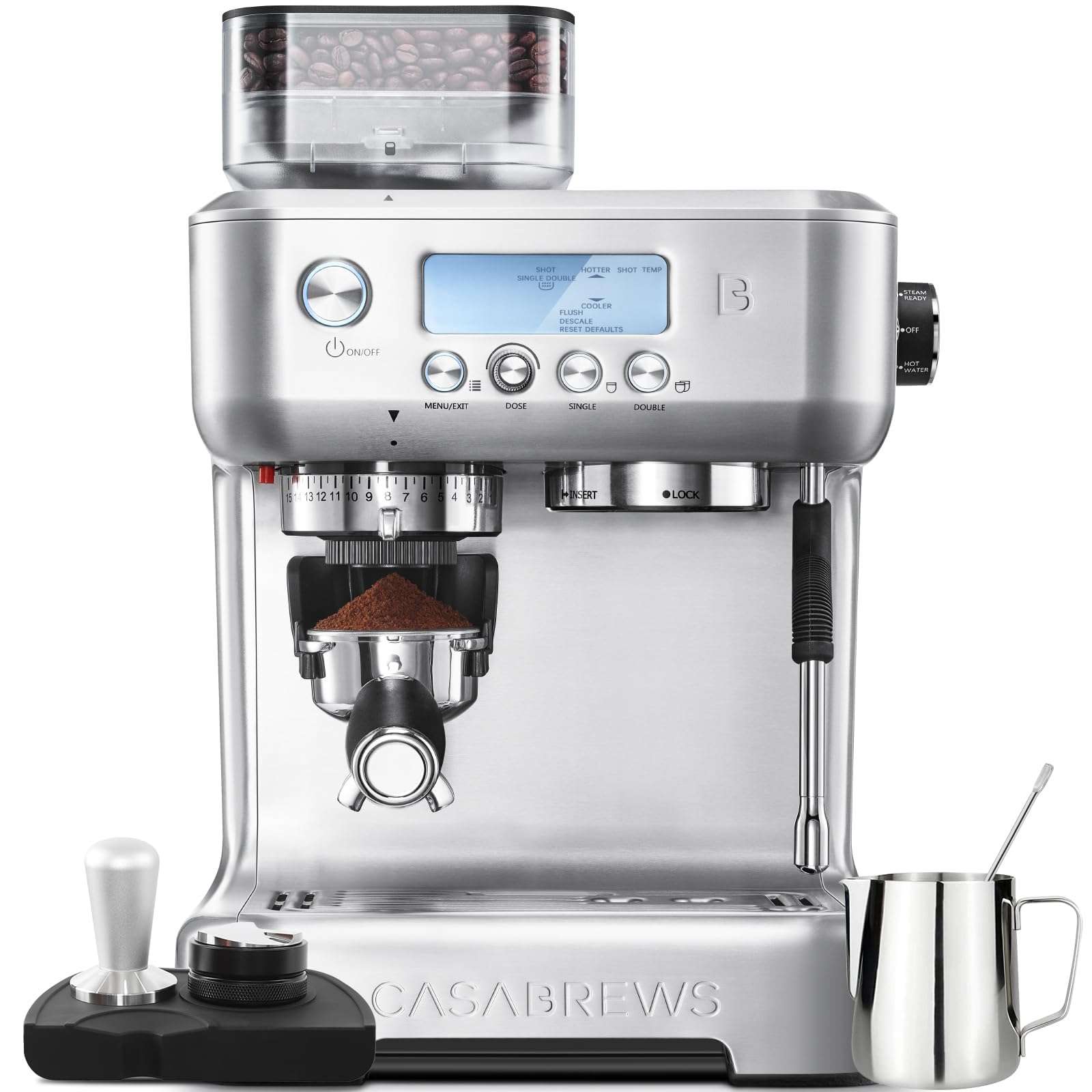
A 20-bar pump and a 91oz tank aimed squarely at people who want to pour rosettas.
The 91 fluid ounce detachable tank is the largest water capacity in this list, so pulling shots for four people on a Sunday never means touching the tap. The automatic conical burr grinder offers 15 grind settings and grinds straight into the portafilter on demand. A 20-bar Italian pump and 1500W power system drive the extraction, and the LCD screen animates the grind and extract stages so you can watch what the machine is doing and adjust the next shot from there.
The steam wand is a 10 mm milk frothing wand built for microfoam, and with a little practice it produces the kind of dense, wet foam latte art sits on. What wins people over is performance — the machine does what it says and keeps doing it, with reliability close behind. Daily users report barista-level drinks, and one summed it up: “It’s easy to use, makes amazing coffee, and looks great on my counter.”
A couple of honest notes. The steamer is on the gentle side, so a full pitcher takes over a minute to reach temperature. The grinder arrived open up on at least one unit and had to be reseated by following a video. And with only one profile per shot button, switching between beans means dialing the grind again. Clean the grinder every 18-25 days as CASABREWS advises and it stays consistent.
Why it earns a place
- 91 fl oz removable tank, the biggest here, so refills are rare
- 20-bar Italian pump with an LCD that shows grind and extraction progress live
- 10 mm steam wand built for microfoam and latte art
- Ships with a full kit: tamper, distributor, milk pitcher, art pen, brush and a spare grinder
Where it asks patience
- The steam wand is gentle — a pitcher of milk takes a while to heat
- One profile per shot button means redialing grind when you change beans
- Grinder needs cleaning every 18-25 days to stay consistent
Pick this one if: you want a big tank, an integrated grinder and a wand you can learn latte art on.
Skip the upgrade thinking if: you want fast steaming — a stronger wand exists on pricier machines here.
6. Breville BES500BSS Bambino Plus Espresso Machine

Ready to brew in three seconds, which is the whole reason people forgive its quirks.
Breville’s ThermoJet heating system reaches extraction temperature in 3 seconds, so there is no warm-up wait and no boiler sitting hot all morning. That single spec is why this machine suits the person who wants a double shot before the kettle boils. At 7.64 inches wide it also fits almost anywhere, and the automatic steam wand adjusts milk temperature and texture so you are not standing over a pitcher counting seconds.
You get a 54mm portafilter sized for a 19 gram dose, low pressure pre-infusion, PID temperature regulation and auto purge after steaming so the next shot extracts at the right temperature. It ships with single and dual wall baskets, a 480ml stainless milk jug and the Razor dosing tool. The 64 fluid ounce tank is respectable, though it will not cover a long party.
Where it gets fussy is around the milk. The wand occasionally stops mid-cycle and needs a restart and a clean before it will go again. The purge after steaming can splatter if you are not watching, and the drip tray is small. Some find the value question harder to answer than they expected given the plastic insert in the portafilter, though a bottomless one solves it. Performance and espresso quality are what carry this machine — the rest is workaround knowledge you pick up in a week.
The standout spec: a 3-second heat-up via ThermoJet, paired with an automatic wand that hits 3 heat and foam levels on its own.
The honest catch: the auto-steam cycle can cut out mid-way, and you learn the restart-and-purge routine fast.
Ideal for: tight counters and fast mornings where waiting on a boiler is the deal-breaker.
Consider the alternative if: you want a grinder inside the machine — this one expects ground coffee.
7. Cuisinart EM-550 Espresso Machine
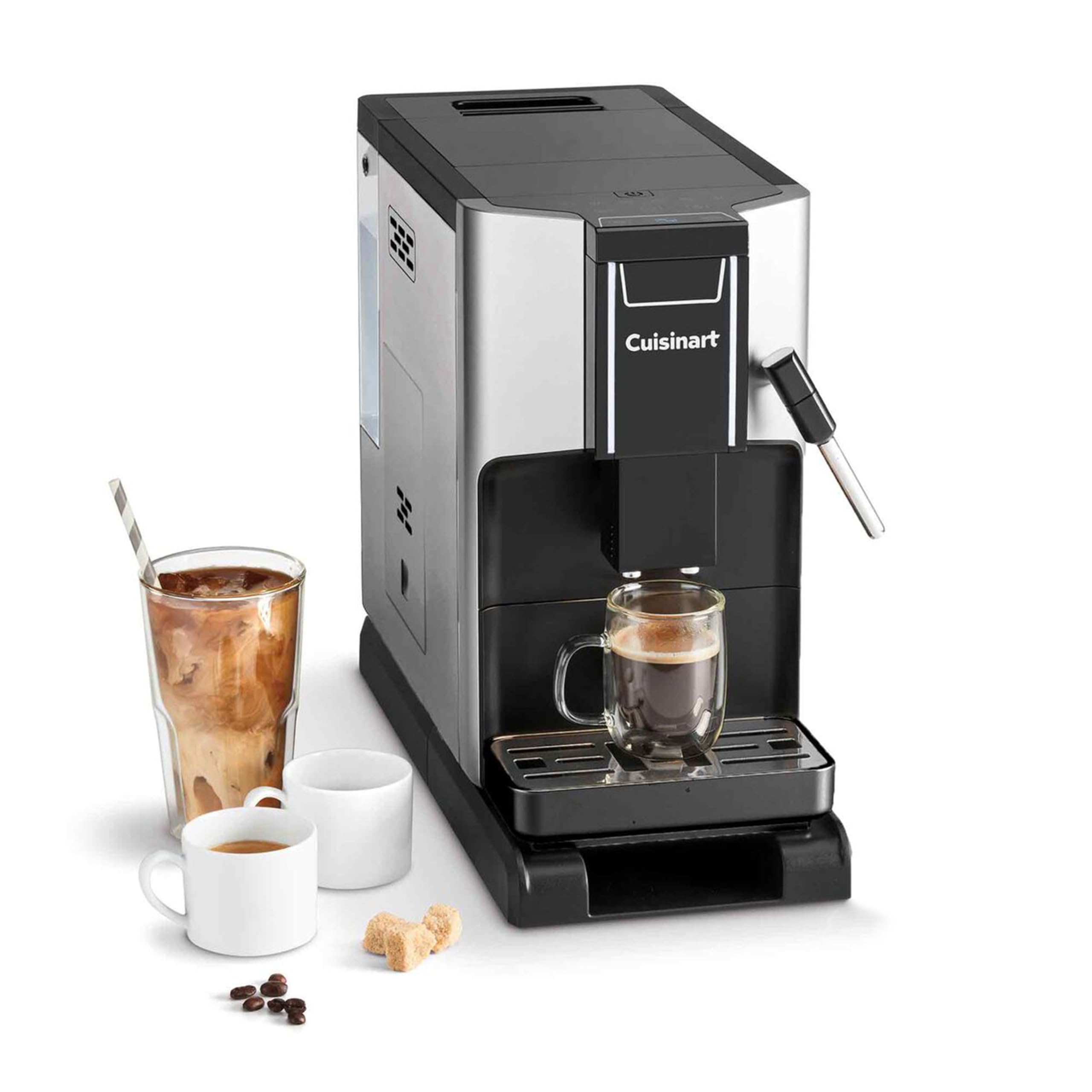
A fully automatic stainless bar that also pulls cold espresso when the weather turns.
Press a button and this machine grinds, doses and brews — including cold extracted espresso, which brews without heat for a smoother, less acidic cup. That cold function is unusual at this level, and it is the reason to consider this pick over a manual machine. The stainless steel conical burr grinder runs automatically, single and double shot options are one touch, and the adjustable base and brew head accept travel mugs as well as cups.
At 7.09 inches wide it is narrow, and the frothing wand handles dairy or non-dairy milk for cappuccino and latte toppings. Owners describe it as a compact automatic that fits where a bigger machine will not, and some have run it against far more costly machines on the same oily beans without bitterness or overheating. Setup and cleanup are straightforward, which is really the promise of a fully automatic.
The small stuff is where you plan around it. The drip tray holes are narrow, so rinse water can leave cup bottoms wet. Water temperature runs a bit under what a hot Americano wants. And only one Americano brews at a time, so two people wanting different drinks will wait. None of these are stopping problems if you drink espresso and lattes rather than long hot americanos.
This is your machine if: you want one-button espresso plus cold extracted drinks and a narrow footprint.
Look at a different pick if: you want hot americanos and brewed drip coffee as well.
8. COWSAR 20 Bar Espresso Machine
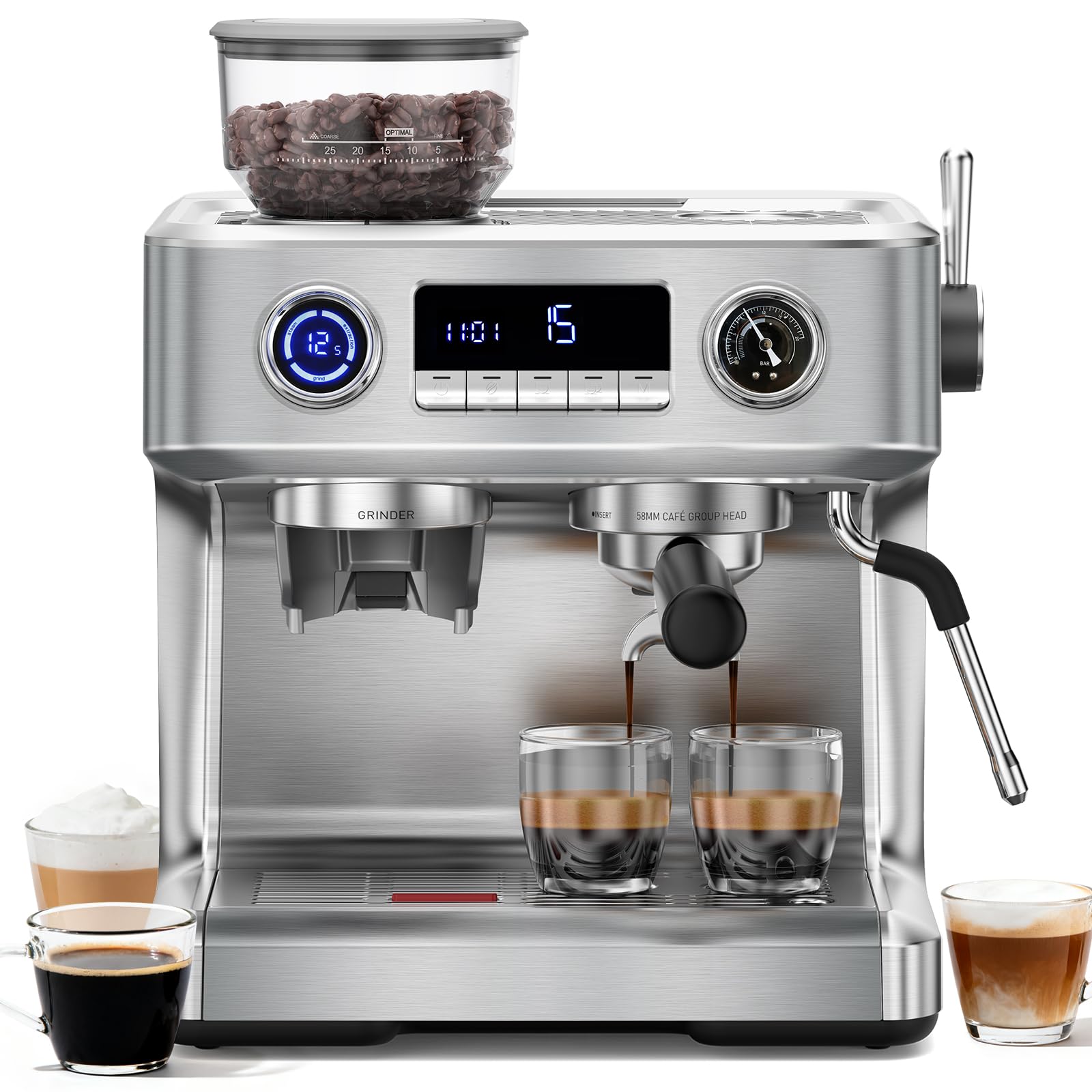
Dual boilers, PID control and one-degree brew temperature tuning in a brushed silver shell.
Two separate boilers mean brewing and steaming happen at the same time, so a milk drink does not wait on a shot and a shot does not wait on milk. The PID holds brew temperature in the 195°F-204°F range, and you can nudge it in 1°F steps. That is precision you rarely see in a home machine, and it lets you tune to a specific roast rather than accepting whatever the boiler happens to be at.
There is a pressure gauge and an LED display that counts extraction seconds, so you can watch the shot and adjust the next one. Manual mode lets you fine-tune pre-infusion, bloom and brew temperature, which is the sort of control a keen hobbyist wants. It carries ETL certification and ships with a cleaning brush, milk jug, tamper and filter.
The honest note here is that this is a young listing with very little owner history behind it. You are buying on the spec sheet — dual boiler, PID, 20-bar pump, 1°F tuning — rather than on a long track record. That makes it a considered purchase for someone who wants dual-boiler capability and is comfortable being an early adopter, not a safe first choice for a cautious buyer.
Where the spec shines: simultaneous brew and steam, plus 1°F temperature adjustments and a live extraction timer — the control set of a much pricier machine.
What to weigh: limited real-world feedback so far, so the long-term service story is unproven.
Suits: the tinkerer who wants dual boilers and fine temperature control and is happy to be an early user.
Less suited to: the buyer who wants a proven service history behind the purchase.
9. Ninja Luxe Café Premier ES601 Espresso Machine

Espresso, drip coffee and cold brew from one stainless tower with a hands-free frother.
Most machines here do one job. This one covers three: double or quad espresso shots, three drip coffee styles including over ice, and cold brew in two forms. Drip and cold brew come in 6, 8, 10, 12, 14, 16 and 18 oz sizes, so one household can make a latté and a mug of drip without buying a second appliance. The conical burr grinder offers 25 settings, and Barista Assist Technology guides the process from precision grinding through weight-based dosing and assisted tamping.
The Dual Froth System pairs a spinning whisk with an automatic steamer and gives you 4 presets — steamed milk, thin froth, thick froth and cold foam — plus a manual option. Pour the milk, choose your style, and walk away. Built-in accessory storage keeps the portafilter, milk jug, baskets, assisted tamper and cleaning tools out of your drawers.
At 31.6 pounds it is the heaviest machine in this list, so pick its counter spot before it arrives and leave it there. Users running it daily for almost two years report consistent lattes with little guesswork and no major problems. Portafilter locking takes a bit of wrist strength, which is worth knowing if hand strength is limited.
What it gives you
- Three appliances in one: espresso, drip coffee and cold brew
- Hands-free frothing with 4 presets plus a manual mode
- Guided grinding, dosing and tamping takes the guesswork out
- Built-in storage for every accessory in the box
What to plan around
- 31.6 pounds — pick a spot and commit, it is not a machine you move daily
- Portafilter mounting is tight and needs some wrist strength
- The water tray fills quickly and can spill when you empty it
Worth it if: you want espresso and regular coffee from one machine and would rather not buy two appliances.
Choose differently if: you only ever drink espresso — simpler machines do that job for less.
10. KitchenAid KF6 KES8556 Espresso Machine

Fifteen drinks from one button, with a bean hopper you twist off to swap.
If you want the machine to do the thinking, this is the one. Fifteen recipe options cover espresso, americano, latte and cappuccino, and the built-in grinder applies smart dosing so the grind volume and consistency adjust per drink without your input. A removable bean hopper twists and lifts off, so switching from your morning blend to a decaf takes seconds rather than emptying the whole thing.
The milk system uses a hose into a separate container of your choice, and automatic milk frothing delivers the exact amount needed at the push of a button. Metal-clad construction gives it the heft you want in a machine this automatic, and cleaning is often the thing owners mention as easy, alongside the coffee quality. The 2.2 liter tank and included water filter save you the descaling routine you would face without one.
Where the fit gets tight is temperature and long-term confidence. Some find the coffee arrives less hot than they like, to the point of warming it up, and the machine does offer low, medium and hot settings worth checking before you judge. Maintenance is heavier than the button count suggests: milk system cleaner, brew unit tablets and descaling tablets are all part of the routine, plus a quick milk clean after every froth.
Best suited to: someone who wants a one-touch bean-to-cup machine and will keep up with the cleaning supplies.
Reconsider if: you want hot coffee straight from the spout without a workaround.
11. Jura E6 Platinum 15465
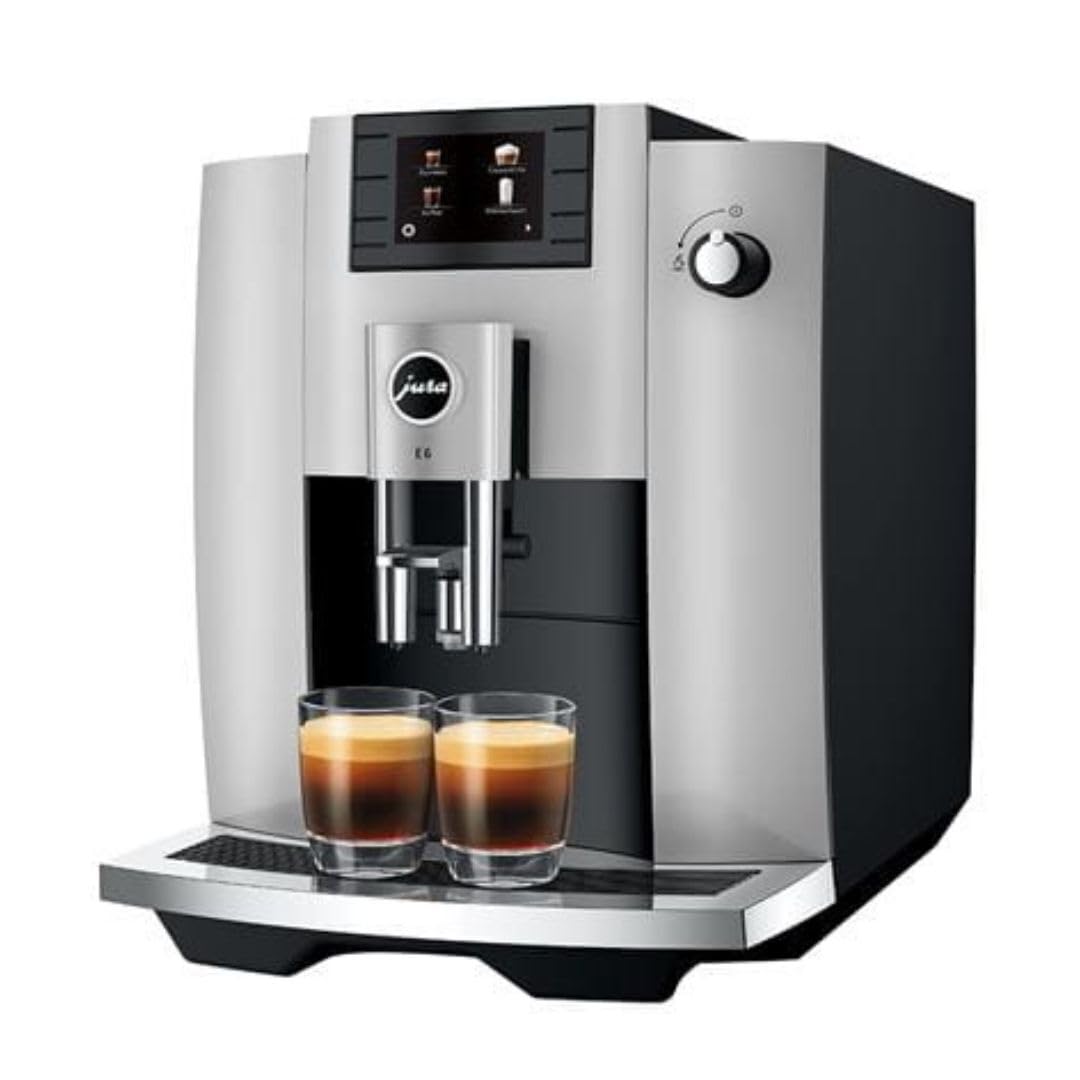
Grinds, tamps, brews, froths and cleans itself in under sixty seconds flat.
The Professional Aroma Grinder grinds fresh whole beans for more aroma, and the Pulse Extraction Process pulses water through the puck for a fuller espresso. An eighth-generation brew unit with 3D brewing technology sits inside a stainless steel body.
Control is where this one surprises. The color display is genuinely easy to read, and you can program strength, volume, temperature, milk foam amount and hot water to your taste. An optional preground chute lets you run a scoop of decaf without emptying the hopper. Water capacity is 1.9 liters, and the integrated maintenance programs prompt you before anything goes wrong.
Brew quality is the reason people buy this. Owners call it a dependable high-end machine for great coffee and espresso; one put it plainly: “Best value for your buck! The coffee is soo good and really easy to set up.” The honest caveat is that it is a considered purchase, and it is also somewhat noisy in operation — fast, but you will hear it. It is designed for someone who drinks their coffee black most days and reaches for the milk rarely.
Why it holds up: a self-cleaning bean-to-cup cycle under 60 seconds, programmable down to milk foam volume, with a color display that makes it manageable.
The real talk: this is the priciest pick in the line-up and noisier than most — the value question is one you answer for yourself.
Choose it if: you want a one-button routine and a machine that cleans itself without you thinking about it.
Pass if: you want to learn to pull shots manually and control every variable.
Know the Specs
Bar pressure and what it means
The bar number on the box tells you the pump’s maximum pressure, not the pressure your coffee actually sees. Espresso tends to extract best around 9 bar, which is why machines with a 15-bar or 20-bar pump use pre-infusion — a slow pressure ramp at the start — to ease into extraction rather than slamming the puck. A higher max number does not automatically mean better coffee; it usually means the pump has headroom to hold steady pressure as the puck resists.
Boiler versus Thermoblock
A boiler heats a tank of water and holds it at temperature, which gives you stable heat and lots of steam but takes time to warm up. A Thermoblock runs water through a heated metal block on demand, so it reaches brewing temperature in seconds and takes a fraction of the warm-up time. Boiler machines suit someone pulling several shots back to back; Thermoblock machines suit someone who wants one shot right now.
Dual wall versus single wall baskets
A single wall basket has a flat bottom with holes, so the grind and tamp do the work of creating resistance. A dual wall basket has a single small hole and uses pressure to fake that resistance, so it forgives pre-ground coffee and an uneven tamp. If you buy a standalone grinder and use fresh beans, single wall baskets give you better results. If you use supermarket pre-ground, dual wall baskets keep the shot from running straight through.
Steam wand types
A manual wand is a bare tube — you control the air and the depth yourself, which is how microfoam gets made and why it takes practice. An automatic wand pulls air in on its own and stops at a set temperature, trading some control for repeatability. A milk-tube system, as on the KitchenAid and Jura machines, siphons milk from a container and froths it inside the machine, so the whole drink is one button.
Common Questions
Do I need a separate grinder if the machine is stainless steel with a steam wand?
Is a 20-bar pump better than a 15-bar pump for espresso?
How often do I need to descale a stainless steel espresso machine?
Will a stainless steel espresso machine fit under my kitchen cabinets?
What is the difference between a manual and automatic steam wand for milk drinks?
Can I use pre-ground coffee in these machines?
How much counter depth does a dual boiler machine need?
Why does my espresso taste sour or bitter and is it the machine’s fault?
How long should a stainless steel espresso machine last?
Can I plumb a stainless steel espresso machine into my water line?
The Bottom Line
For most kitchens, the all stainless steel espresso machine that gets the job done is the Breville Barista Express. It bundles a conical burr grinder, a 54mm portafilter, PID temperature control and a steam wand into one brushed stainless body, so you buy one machine instead of three. The catch is the learning curve, and that is the honest price of real espresso at home. If you would rather have the machine think for you, the KitchenAid KF6 turns fifteen recipes into single-button drinks. And if counter space is your limiting factor, the De’Longhi Dedica Maestro Plus at 8.15 inches wide with an automatic steam wand is the one to reach for. Before you choose, note the space you have, the water you will use, and how much you enjoy dialing in a shot — those three answers point to your machine faster than any spec sheet.
How we choose
We do not accept paid placement. Every pick is matched to a real buyer and a real use-case; we do not hands-on test units.
Sources
Specifications: manufacturer listings and product documentation. Review insights: verified customer reviews, as of October 2026. Pricing: not shown on this page (it changes often); check the current price via the retailer link.
As an Amazon Associate, Aappliancez earns from qualifying purchases. This does not affect which products we feature.