Disclosure: Some links in this post are affiliate links. As an Amazon Associate I earn from qualifying purchases, at no extra cost to you. Learn more
Specs are compiled from manufacturer listings and verified buyer reviews and can change over time — please confirm the key details on the product page before buying.
You want smoother texture, a clearer tone and fewer breakouts — without buying a serum that leaves your face stinging and raw. The short answer: the one worth buying first is The Ordinary AHA 30% + BHA 2% Peeling Solution, a wash-off peel that has earned 4.5+ stars across 31,000+ ratings and still costs entry-level money. If your skin is on the sensitive side, the gentler leave-on acids lower down this page will suit you better. Below you’ll find eleven acid serums sorted by what they actually do, how strong the acid is, and who each one fits.
This guide is built by comparing the manufacturers’ published specifications and the patterns across verified customer reviews, so you get each pick’s real strengths and trade-offs instead of marketing spin.
What separates a serum you keep from one that sits half-full in a drawer is the acid percentage and how often you can use it. Read on for aha serum picks that match your skin’s tolerance, not just the boldest label.
Top Picks
How To Choose The Best Aha Serum
The mistake most first-time acid buyers make is starting with the strongest bottle on the shelf. A chemical exfoliant is measured by how much acid it delivers, and your skin needs weeks to build tolerance to that number. Pick the strength that matches where your skin is now, then step up once your face stops reacting.
Start with the acid percentage, not the brand
An AHA (alpha-hydroxy acid) is a chemical exfoliant that dissolves the glue holding dead skin cells together, so the fresh layer underneath shows through. The percentage on the label tells you how hard it works. A 5% lactic acid serum is mild enough for many people to use nightly, while a 30% peel is a once-or-twice-a-week treatment you rinse off. Buy the strength you will actually use consistently — a bottle you’re afraid of does nothing sitting on the shelf.
Wash-off peel or leave-on serum
A wash-off formula like a peeling solution gives you a short, controlled burst: apply, wait, rinse. A leave-on serum stays on your skin all night, so the acid keeps working slowly and needs a lower percentage to be safe. If you have never used an acid, a leave-on at 5% to 10% is the safer starting line. If you have used acids for a while and want a fast glow, a rinse-off peel fits that job.
Look for what cushions the sting
Acids can irritate, so the better formulas pair the exfoliant with hydrating and soothing ingredients. Hyaluronic acid (a moisture magnet that holds water in the skin) and pro-vitamin B5 are the common buffers. Tasmanian Pepperberry extract is another anti-irritant you will see on labels. These don’t cancel the acid — they just make the experience easier on your face.
Plan for the sunscreen you’ll need
Every AHA makes your skin more sensitive to the sun while you use it, so a daily sunscreen is part of the routine, not an add-on. Most of these serums ask for evening use and SPF the following morning. Factor that into your choice: if you can’t commit to sunscreen, a gentle leave-on acid used a couple of nights a week is the more forgiving option.
Side-by-Side Comparison
| Model | Best For | Key Acid | Use Pattern | Size | Amazon |
|---|---|---|---|---|---|
| The Ordinary AHA 30% + BHA 2% Peeling Solution★ Best Overall | Fast glow, experienced acid users | 30% AHA + 2% BHA | Wash off after 10 min, 1–2x weekly | 1 fl oz | Amazon |
| Good Molecules Overnight Exfoliating TreatmentBest Value | Overnight resurfacing on a budget | AHA + BHA blend | Leave on at night, up to 3x weekly | 1 fl oz | Amazon |
| The Ordinary Lactic Acid 5% + Hyaluronic Acid 2%Gentlest Start | Dry and sensitive skin | 5% lactic acid | Once daily, evening | 1.06 oz | Amazon |
| The Ordinary Lactic Acid 10% + Hyaluronic Acid 2% | Stepping up from the 5% | 10% lactic acid | Once daily, evening | 1 fl oz | Amazon |
| Good Molecules Mandelic Acid Serum | First acid for sensitive skin | Mandelic acid (AHA) | Night, up to 4x weekly | 1 fl oz | Amazon |
| Advanced Clinicals 10% Glycolic Acid Serum | Rough texture, night routine | 10% glycolic + lactic acid | Night, patch test first | 1.75 fl oz | Amazon |
| QRxLabs 15% Glycolic Acid Serum | Hydration plus exfoliation | 15% glycolic acid | With vitamin C in routine | 1 fl oz | Amazon |
| L’Oreal Paris Revitalift 10% Pure Glycolic Acid Serum | Daily anti-aging on all skin types | 10% glycolic acid | Every night, fragrance-free | 1.0 fl oz | Amazon |
| Alpha Skin Care Renewal Serum | Body and face, dry or oily skin | 14% glycolic AHA | Daily, no rinse, pH 3.7 | 2 oz | Amazon |
| Medicube 21% Acid Wash-off Exfoliant | Bumpy, breakout-prone skin | 21% AHA + BHA + succinic | Wash off after 1 min, 1–2x weekly | 1.41 fl oz | Amazon |
| Paula’s Choice SKIN PERFECTING 8% AHA Gel Exfoliant | Twice-daily leave-on exfoliation | 8% glycolic acid | Twice daily after toner | 3.28 oz | Amazon |
Detailed Reviews
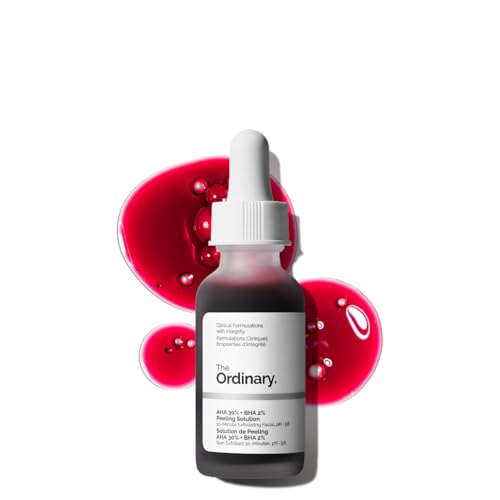
1. The Ordinary AHA 30% + BHA 2% Peeling Solution
Our pick — 4.5+★ from 31,500+ verified ratings; the strongest balance of quality and price.
A ten-minute rinse-off peel that delivers a salon-style glow at entry-level money.
This is the strongest acid on the page, and that is exactly why it sits first. The 30% alpha-hydroxy acid blend (a high-strength chemical exfoliant) plus 2% beta-hydroxy acid (a second acid that works inside the pore) lifts dead skin in one short session. You apply a thin, visible layer to clean, dry skin, wait ten minutes, and rinse. The 1-ounce bottle runs 1.97 x 1.97 x 3.94 inches, a compact size that tucks onto a crowded shelf. A little goes a long way — the bottle lasts well past a month even at twice-weekly use.
The pairing with hyaluronic acid (a moisture holder), pro-vitamin B5 and black carrot is what keeps this from being a harsh peel. The formula is cruelty-free, gluten-free, vegan, alcohol-free, oil-free and silicone-free, so it suits a lot of skin types — provided you are already used to acids. What wins people over is the visible result: smoother texture, brighter tone and pores that look cleaner. Acne-prone users report fewer cystic breakouts, and fine lines look softer after several weeks of twice-weekly use. The tingling that shows up for the first two or three minutes is normal; it should fade on its own.
This is not a beginner’s bottle, and the maker’s own directions warn against sensitive or broken skin. A minority of buyers report it is too much even at once a week. If your face is reactive, drop to a 5% lactic acid or a mandelic serum instead. For everyone else, the sharpest comparison is with the gentler lactic options further down: at 30% AHA (alpha hydroxy acid, an exfoliating acid) plus 2% BHA (beta hydroxy acid, an oil-soluble exfoliant that clears pores), this peel does in ten minutes what a leave-on serum does in weeks. You pay for that speed with a real sting. Always follow with sunscreen, and skip sun exposure for the week after.
Where it pays off
- High-strength 30% AHA + 2% BHA gives a fast, visible glow in one rinse-off session
- Buffered with hyaluronic acid, pro-vitamin B5 and black carrot so the sting stays brief
- Vegan, cruelty-free and oil-free — suits a wide range of routines
- Tiny 1-ounce bottle still lasts past a month at twice-weekly use
Where it asks more of you
- Not for sensitive or broken skin — the maker says so directly
- Requires a sunscreen commitment and a week of sun caution afterward
- Ten-minute timer means it isn’t a set-and-forget serum
Grab it if: you’ve used acids before and want a peel-strength glow with a quick rinse-off routine.
Leave it for later if: your skin is reactive or new to exfoliation — start with a 5% lactic serum instead.
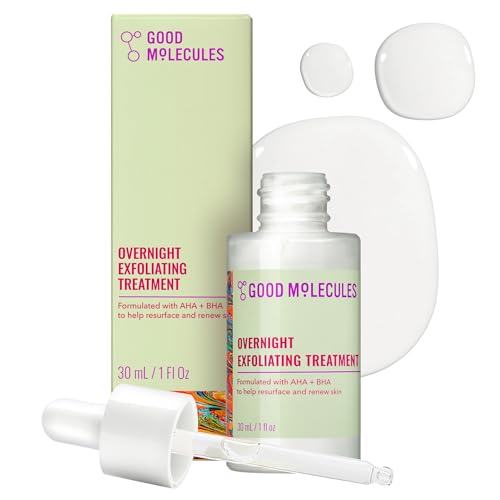
2. Good Molecules Overnight Exfoliating Treatment
A leave-on acid you sleep in, priced like a drugstore impulse buy.
The overnight format is the whole point here. You apply this AHA and BHA blend to clean, dry skin at night and go to bed — no scrubbing, no rinsing, no timer. The acids work while you sleep, and you wake up to smoother-looking skin. Use it up to three times a week, and avoid stacking it with other acids or retinoids on the same night. Cruelty-free, vegan and fragrance-free on top of that. What keeps it popular is the value: the resurfacing results land far above what the entry-level price suggests, and it layers without flaking.
Buyers with textured skin, clogged pores and stubborn bumps tend to see the clearest payoff. Buyers with PCOS report fewer ingrown hairs on an every-other-night schedule, since the acid clears the dead skin that traps them. Combination-skin users note less morning redness and puffiness within the first few applications, and no gritty residue. A 38-year-old combination-skin buyer described it as gentle enough for mature skin too.
The catch is tolerance, and the formula is honest about it. It can sting if you apply it to dry, torn or irritated patches, and overuse dries your skin out. A few people find the feel rougher than they expected. Build up slowly, always follow with sunscreen the next day, and don’t try to use it nightly right out of the gate. Compared with the 30% peel up top, this is the slower, more forgiving path to the same smoother finish — and for most people, starting here is the smarter move.
The overnight advantage: leave-on acids work over hours, so a lower, gentler acid load still smooths texture — that is why this suits newcomers and acid veterans who want a night they don’t have to time.
Worth knowing: if your skin runs sensitive, the sting is the one thing to plan around — start every other night and stop if your face feels tight.
Reach for this if: you want resurfacing without a timer, a rinse, or a big spend.
Hold off if: your skin is already irritated and drying out — this is a slow build, not a rescue product.
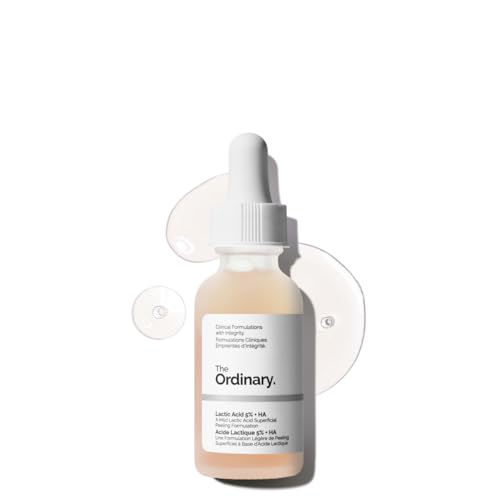
3. The Ordinary Lactic Acid 5% + Hyaluronic Acid 2%
The acid beginner’s bottle — so mild it feels like water, so consistent it changes texture.
Five percent lactic acid is the number that matters here. Lactic acid is a gentler AHA than glycolic, and at 5% with hyaluronic acid (the moisture magnet) and Tasmanian Pepperberry extract (a known anti-irritant) this is the mildest way onto the acid ladder. It’s a water-based serum you apply once nightly, then follow with sunscreen the next morning. The bottle runs 1.31 x 1.31 x 4.5 inches and weighs 1.06 ounces — trimmer and a touch heavier than the 30% peel’s compact 1-ounce bottle, and it fits neatly next to your other skincare.
What surprises people is how quiet it is. It has a water-like consistency with no scent and little tingling, which makes it easy to think nothing’s happening. Two months of twice-daily use tells a different story: smoother, softer texture, a more even tone and dark spots that fade. Sensitive-skin users apply it a couple of nights a week and get brightening without dryness. A few find it not hydrating enough on its own, and a slight stickiness appears as it dries — a light moisturizer over the top fixes both.
Where the 30% peel above is a fast, stingy treatment, this is a slow, comfortable one you can build into a nightly habit. The dedicated-to-dry-and-sensitive framing is not marketing filler here — the whole point of 5% lactic is that it exfoliates while keeping hydration in place. If your skin has ever reacted to glycolic, start here.
What it does well
- 5% lactic acid is mild enough for nightly use on dry or sensitive skin
- Hyaluronic acid and Tasmanian Pepperberry extract buffer the exfoliation
- Water-like texture absorbs fast and layers under moisturizer
- No rinse step — apply once in the evening and go to bed
What to keep in mind
- Little visible change in the first weeks — results build with consistency
- Can feel slightly sticky as it dries and needs a moisturizer on top
Best for: dry or sensitive skin taking its first step into AHA exfoliation.
Think twice if: you want fast, dramatic resurfacing — this is the long-game bottle.
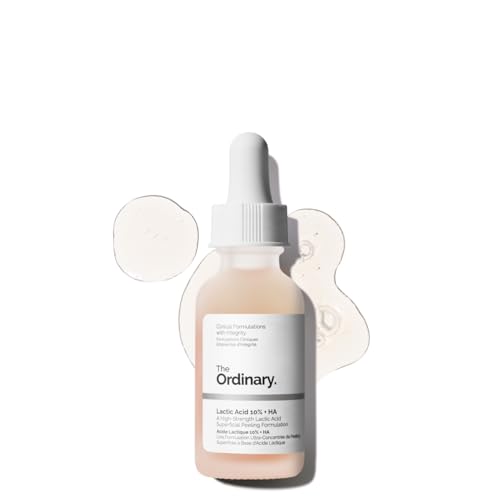
4. The Ordinary Lactic Acid 10% + Hyaluronic Acid 2%
The same gentle formula as its 5% sibling, doubled in strength for skin that’s ready.
If the 5% lactic serum above has become your routine and you want more, this is the natural next rung. It carries 10% lactic acid — twice the exfoliating load — with the same hyaluronic acid and Tasmanian Pepperberry extract to soften the edge. You apply it once daily in the evening and wear sunscreen the next day. It arrives as a 1 Fl Oz bottle, and it keeps the cruelty-free, gluten-free, vegan, alcohol-free, oil-free and silicone-free formulation the brand is known for.
The payoff is what a bump in percentage buys you: smoother texture, more even tone and a brighter, more luminous look. Long-time users of the brand describe dramatic texture changes once they moved up. The anti-irritant is doing real work here — at 10% you’d expect more sting, and the pepperberry extract is there to keep it manageable.
Here’s the thing to be honest about: doubling the percentage doesn’t just double the results, it also raises how much your skin has to tolerate. If you haven’t settled into the 5% version, this bottle will feel stronger than you want. Treat it as a graduation, not a starting point, and keep the sunscreen habit going.
The graduation move: this bottle rewards patience — step up only after the 5% lactic serum feels easy, and the tone and texture payoff lands without the sting of a peel.
One thing to weigh: a stronger acid means a longer adjustment; if your face still reacts to 5%, this will feel like a jump.
For you if: you’ve outgrown the 5% lactic serum and want more resurfacing from the same gentle family.
Wait if: your skin is still adjusting to lower-strength acids — build tolerance first, then come back.
5. Good Molecules Mandelic Acid Serum
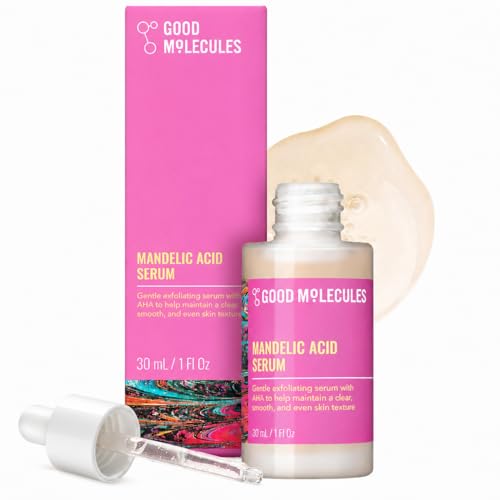
Mandelic acid is a larger-molecule AHA, which is the technical reason it exfoliates more gently than glycolic or lactic acid. Bigger molecules don’t slip into skin as fast, so the sting stays lower — which is why this is often called a great first acid for sensitive skin. You apply it at night after cleansing, up to four times a week, and you keep other acids and retinoids off the same evening. It’s formulated for all skin types including sensitive, and it’s cruelty-free, vegan and fragrance-free.
What happens with regular use is gradual, comfortable resurfacing. Acne-prone users report fewer breakouts and less inflammation, with skin that stays cleaner-feeling through the day. Dark spots fade gradually, and texture and scarring look smoother with steady use. Expect a purging stage in the first several weeks — a normal breakout phase as the skin clears — and then the smooth, glassy finish. The texture wins people over: it spreads easily, absorbs nicely and leaves a healthy glow rather than irritation.
The honest limit is frequency. This is not a daily serum if your skin is sensitive — once a week may be all your face tolerates before flaking starts. A few users also find the formula gets grainy if the bottle isn’t closed tightly. And the initial purge is annoying even when it isn’t severe. Stay consistent through it and the scarring and texture payoff shows up.
Why it earns the spot
- Mandelic acid’s larger molecules make it the gentler first AHA for reactive skin
- Up to four nights a week fits a real schedule, not a punishing one
- Works on hormonal acne, texture and hyperpigmentation together
- Fragrance-free, vegan and formulated for all skin types
What to expect
- Purging in the first weeks is normal and can be annoying
- Sensitive skin may only handle it once a week before flaking
- Keep the cap tight or the formula can turn grainy
Start here if: your skin is sensitive or acne-prone and other acids have stung too much.
Not ideal if: you expect overnight results — mandelic acid is a patience game with a purging phase.
6. Advanced Clinicals 10% Glycolic Acid Serum
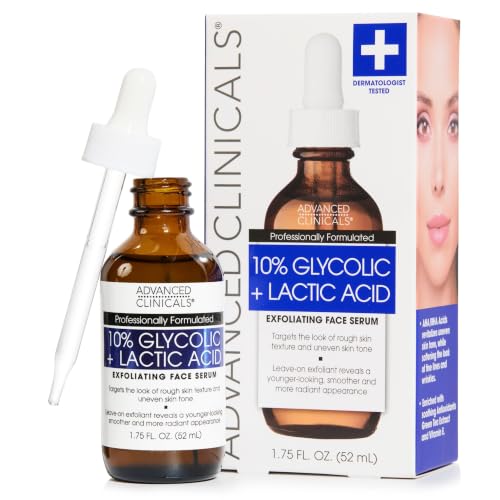
Two acids in one gel — glycolic for power, lactic for softness, licorice for tone.
The design here is the draw: 10% glycolic acid (a small-molecule AHA that penetrates fast) paired with lactic acid, plus licorice root and a fruit-acid complex. Glycolic goes after rough, dry patches and fine lines while lactic keeps the experience gentler, and licorice root is there to support a more even-looking tone. The result is a light gel that glides on and delivers hydration as it renews. It’s recommended for nighttime use and suitable for most skin types, with a patch test advised first.
People with rough, uneven texture feel the difference quickly — the smoothness is noticeable right away for many, and consistent use keeps refining it. Sensitive-skin users report months of nightly use without breakouts, redness or irritation. Used as the first step before tretinoin, it plays well with other actives for some routines.
The catch is the sting. Glycolic at 10% produces a momentary zing on application, and the formula is strong enough that daily use can tip into irritation for some. If your skin is reactive, treat it as a few-nights-a-week serum rather than an every-night one. Compared with the Paula’s Choice 8% gel later on, this delivers slightly more acid in a larger bottle — but the Paula’s Choice is the more cushioning experience.
The dual-acid logic: glycolic handles the heavy lifting on texture while lactic acid softens the overall experience, which is why this bottle suits rough, dry-feeling skin that still wants a smoother finish.
The sting to plan for: 10% glycolic doesn’t hide — apply a small amount and expect a brief tingle, and don’t push to nightly use if your face feels tight the next morning.
A good fit for: rough, uneven texture that wants a stronger glycolic push in a generous bottle.
Look elsewhere if: your skin reacts to glycolic — the sting here is real, and a gentler lactic serum is the safer call.
7. QRxLabs 15% Glycolic Acid Serum
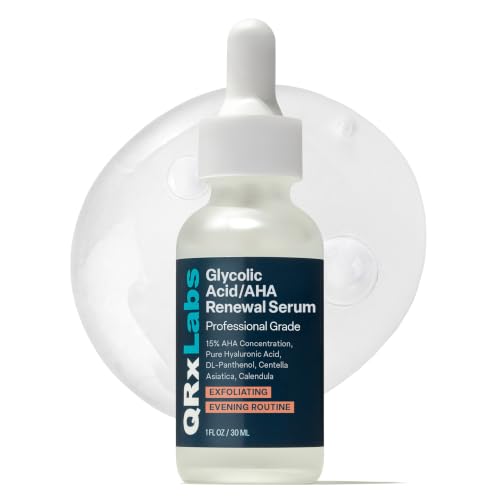
A 15% glycolic serum that exfoliates hard yet leaves skin feeling moisturized and silky.
Fifteen percent glycolic acid is a serious step up, and this serum backs it with natural botanical extracts — bilberry, sugar cane and citrus fruits — to keep the experience refined rather than raw. It works with vitamin C serums, retinol and niacinamide in a layered routine, and it’s designed to smooth texture and ease the look of fine lines and dark spots. Paraben-free and cruelty-free. The 1 fl oz bottle is sized like a standard serum and lives easily on a vanity shelf.
The thing everyone raves about is how moisturizing it feels for a glycolic serum. Skin ends up hydrated and silky smooth without a greasy residue, and it absorbs quickly. That combination — strong acid, soft finish — is why people with combination skin keep it in rotation. It also plays well under a vitamin C serum for a brighter, more even tone.
At 15% the sting factor is real for some, and a minority find the consistency not quite what they expected. Treat it as an experienced-user serum: patch test, start at a couple of nights a week, and build up. If you’re still on a 10% glycolic, this is one rung beyond — powerful, but it asks for tolerance.
The stand-out quality: most 15% glycolic serums leave skin tight, and this one leaves it silky — the botanical blend makes a high-strength acid feel like a hydrating treatment.
What to watch: the acid load is high enough that sensitive skin will feel it; go slow and don’t layer it with other exfoliants on the same night.
Choose it if: you want strong glycolic exfoliation that still feels moisturizing on combination skin.
Pass if: you’re new to acids — 15% is a confident setting, and a lower percentage is the wiser first bottle.
8. L’Oreal Paris Revitalift 10% Pure Glycolic Acid Face Serum

A 10% glycolic serum built for nightly use on all skin types, soothing aloe included.
This one is engineered for daily wear, not occasional treatments. Ten percent glycolic acid at an optimal concentration, softened with soothing aloe so it doesn’t hit sensitive skin harshly. You apply it every night after cleansing and before moisturizer, then follow with sunscreen in the morning. It’s fragrance-free, paraben-free and dye-free, and it’s positioned for all skin types. The 1.0 fl oz bottle holds a standard month-to-two-month supply at nightly use.
Buyers see the most anti-aging payoff here: dark spots fading and wrinkles softening with consistent use, and some report a firmer, smoother feel within days. Its slippery, silicone-free gel texture suits combination and oily skin as it evens tone and gently exfoliates without drying. Long-term users describe dramatically improved sun spots and dull, tired-looking skin after two years of use. A little goes a long way, so the bottle outlasts expectations.
Not every experience is the same. Some feel a burning sensation, and a few find it doesn’t last as long as they’d like. It can also dry skin enough that you’ll want a heavier moisturizer over the top. Compared with the Advanced Clinicals 10% glycolic earlier, this one is fragrance-free with aloe added — the smoother experience for anyone wary of scent or sting, at a slightly smaller size.
The daily case
- 10% glycolic at a concentration built for nightly use on all skin types
- Fragrance-free, paraben-free and dye-free with soothing aloe
- Lightweight gel that suits combination and oily skin without drying
The honest caveat
- A minority feel a burning sensation on application
- Can dry skin enough to need a heavier moisturizer over it
- Some find the bottle empties faster than they expect
Suits you if: you want a fragrance-free 10% glycolic you can slot into every night.
Think twice if: your skin already burns from acids — the aloe helps, but 10% glycolic is still an active.
9. Alpha Skin Care Renewal Serum

A 14% glycolic serum with a pH of 3.7 — strong enough for elbows and knees, light enough for your face.
The pH number is the detail worth knowing. This serum balances 14% glycolic alpha-hydroxy acid at a pH of 3.7, a level where the acid stays effective without being raw. It’s free of parabens and fragrances, and the 2 oz bottle is the largest on this page — which makes it a realistic option for both face and body. Apply daily to clean skin on face and neck, don’t rinse, and follow with sunscreen if you use it during the day.
The texture is famously watery, and that lightness turns out to be a feature: dry-ish and especially oily skin types like it because it leaves no residue and doesn’t sit heavy. Long-time users describe brightening, clarifying and moisturizing results, and some mix it with a body lotion for elbows and knees. Gentler than some drugstore alternatives, and easy on the nose.
It does take build-up. At 14% the first applications irritate many people, so start once or twice a week and let tolerance grow. A watery texture is not everyone’s ideal and it isn’t a silky makeup base. And the sun rule is strict here — high SPF and sun avoidance during daytime use are non-negotiable.
Why it lasts in people’s cabinets: a 2-ounce bottle that handles face, neck and rough body patches, at a pH that keeps the 14% glycolic usable — that’s a lot of utility from one serum.
The patience it demands: strong enough to irritate at first, so build to it slowly and keep it away from broken skin.
Worth it for: anyone who wants one glycolic serum for face and body in a generous 2-ounce bottle.
skip it if: you prefer a silky serum texture — this one is watery and fast.
10. Medicube 21% Acid Wash-off Exfoliant

A 21% acid blend you wash off in sixty seconds — the shortest session on this page.
The one-minute format is what makes this different. A blend of succinic, lactic and salicylic acids totals 21% acid, and you apply two drops, leave it for one minute, gently massage, then rinse with lukewarm water. Once or twice a week is the recommendation, and the wash-off design lets you cap the intensity by rinsing sooner. It’s built with the brand’s soothing actives to keep irritation down, and it’s aimed at bumpy, breakout-prone and acne-prone skin. The 1.41 fl oz bottle holds a good supply at that cadence.
Skin feels soft and smooth right after, and people with stubborn bumps, blackheads and whiteheads describe their pores clearing and their complexion looking cleaner than ever. Some users with deep cystic acne see improvement, and makeup glides over the smoother surface. What surprises people is how gentle a 21% blend can be — the wash-off format means it doesn’t sit on the skin, so the sting stays brief. No burning or redness for many, even with the high percentage.
The trade-off worth naming: the scent is strong, and scent-sensitive skin won’t love it. A few wish it were more intensive. It’s also a touch costlier than the drugstore options, and like any strong acid it needs a patch test first and sunscreen the next day. If you want the deepest pore clean in the least time, this is the one — just keep the session under a minute if your skin is sensitive.
Pick it if: bumpy, breakout-prone skin wants a fast, rinse-off deep clean you control second by second.
Not for you if: strong fragrance bothers your skin — this one has a pronounced scent.
11. Paula’s Choice SKIN PERFECTING 8% AHA Gel Exfoliant

A leave-on 8% glycolic gel you can use twice a day, cushioned with chamomile and green tea.
Eight percent glycolic acid (an exfoliating acid that lifts dead surface skin) is the balance between effectiveness and daily comfort, and this gel is built to be used twice daily after cleanser and toner. It pairs the acid with chamomile and green tea, so it soothes while it exfoliates. The maker positions it as a non-abrasive alternative to a scrub, designed to reach built-up dead skin that scrubs can’t while keeping skin hydrated. The 3.28 oz bottle is the largest-serum format here, so it lasts through a twice-daily routine.
For a daily gel, the reported results are striking: congested, cystic-prone skin clearing over months of nightly use, with milia and closed comedones fading. Sensitive, combination types who couldn’t use a stronger AHA found this one worked where others failed. A little goes a long way — one drop or under a full pump covers the face, which offsets the higher cost. The gel spreads easily and layers under moisturizer without pilling.
Be realistic about the timeline and the sting. It causes an initial purging phase, and some feel a mild sting in the first few uses. Dry, sensitive skin still needs a moisturizer on top. Multi-month consistency is what turns this from decent to genuinely effective, and sunscreen is a must given the photosensitivity. If you want one product you can use twice a day for years, this is that product.
Why it holds up
- 8% glycolic is mild enough for twice-daily use but strong enough to clear congestion
- Chamomile and green tea cushion the acid while it exfoliates
- Large 3.28 oz bottle lasts through a twice-daily routine
- One drop covers the face, so the cost spreads out over months
What to expect
- Purging in the first weeks, and a mild sting in early uses
- Slow results — most report real change over months, not days
- Dry skin still needs a moisturizer layered on top
- Photosensitivity means sunscreen is non-negotiable
The right call if: you want a leave-on acid gentle enough for twice-daily use that still clears congestion over time.
Look elsewhere if: you need fast results — this is a months-long commitment, not a quick peel.
Know the Specs
Acid Strength and Percentage
The percentage on an AHA serum tells you how much exfoliating acid you’re putting on your face. A 5% lactic serum is gentle enough for nightly use on dry or sensitive skin, while a 30% AHA peel is a once-or-twice-a-week treatment you rinse off. Higher isn’t automatically better — it means more exfoliation but also more sting and more sun sensitivity. Start low, let your skin adjust, and move up only when the current strength feels easy.
Leave-On vs Wash-Off Formats
A leave-on serum stays on your skin overnight and works slowly, so it needs a lower percentage to stay safe. A wash-off peel delivers a strong burst of acid in a short session and then rinses away. Leave-on suits a nightly routine and builds change gradually; wash-off suits experienced users who want fast results and can handle the intensity for a few minutes. Pick the format that matches how much time and tolerance you have.
pH Level
The pH level is how acidic the serum is, and it affects how active the acid feels. An AHA needs to sit in a certain acidity range to exfoliate effectively, but too low a pH can sting. A serum balanced at a pH like 3.7 keeps the acid working without tipping into irritation for most people. You won’t see pH on every label, but when it’s listed, it’s a sign the formulator tuned the formula for a usable balance.
Buffering Ingredients
Buffers are the ingredients that soften the acid’s edge — hyaluronic acid to hold moisture, pro-vitamin B5 to soothe, Tasmanian Pepperberry extract as an anti-irritant, aloe, chamomile or green tea. They don’t cancel the exfoliation, they just make it easier to tolerate. If your skin is reactive, look for a formula that lists one of these alongside the acid, and expect a gentler experience than a bare acid solution.
Common Questions
Can I use an AHA serum every day?
What percentage AHA should a beginner start with?
Do I need to wear sunscreen when using an AHA serum?
What does purging mean and how long does it last?
Can I layer two different AHA serums on the same night?
Which is better for sensitive skin, lactic or glycolic acid?
How long should I leave a wash-off peel on my skin?
Can I use an AHA serum with retinol?
Where can I use an AHA serum besides my face?
What does an AHA serum actually do to my skin?
The Bottom Line
For most people, the best AHA serum on this list is The Ordinary AHA 30% + BHA 2% Peeling Solution — a ten-minute rinse-off session gives a fast, visible glow, and its 4.5+ star rating across 31,000+ ratings shows how reliably it performs. If your skin is dry or sensitive and you want a gentle nightly habit, reach for the The Ordinary Lactic Acid 5% + Hyaluronic Acid 2%. And if you want one leave-on acid you can use twice a day, the Paula’s Choice SKIN PERFECTING 8% AHA Gel Exfoliant is the bottle built for that routine. Whatever you pick, start below your tolerance and work up — your skin will tell you when it’s ready for more.
How we choose
We do not accept paid placement. Every pick is matched to a real buyer and a real use-case; we do not hands-on test units.
Sources
Specifications: manufacturer listings and product documentation. Review insights: verified customer reviews, as of October 2026. Pricing: not shown on this page (it changes often); check the current price via the retailer link.
As an Amazon Associate, Aappliancez earns from qualifying purchases. This does not affect which products we feature.