Disclosure: Some links in this post are affiliate links. As an Amazon Associate I earn from qualifying purchases, at no extra cost to you. Learn more
Specs are compiled from manufacturer listings and verified buyer reviews and can change over time — please confirm the key details on the product page before buying.
If your watch has gone quiet, your kitchen scale reads blank, or your kid’s sound book stopped mid-sentence, the battery that died is almost certainly an AG13 — and buying the wrong replacement is the reason it happens again. AG13 is not one battery but a family of names for the same 1.5-volt button cell (a small, coin-shaped battery that powers tiny devices): LR44, SR44, 357, 303, A76, L1154, PX76, and V13GA all describe a coin about the size of a shirt button. The chemistry behind that name is what decides whether your device runs for months or goes flat by the weekend.
This guide is built by comparing the manufacturers’ published specifications and the patterns across verified customer reviews, so you get each pick’s real strengths and trade-offs instead of marketing spin.
You will see which cells are silver oxide, which are alkaline, and which pack sizes actually make sense for a drawer. Below, we break down the best AG13 battery equivalent by chemistry, capacity, and how long each one sits usable on a shelf.
Top Picks

How To Choose The Best AG13 Battery Equivalent
Every AG13 replacement you can buy is the same physical size — roughly 11.6 mm across and 5.4 mm thick — so fit is rarely the problem. The decision that matters is chemistry, because the cell inside that metal shell decides how steady the voltage stays as the battery drains.
Silver Oxide vs Alkaline — the choice that actually matters
Silver oxide cells hold a flatter 1.5 volts across their life. That steadiness is why watches, calipers, and medical devices that need a precise reading specify silver oxide. Alkaline cells start at the same 1.5 volts but taper downward as they drain, which shows up as a dimming display or a slow clock before the cell is truly empty.
The trade-off is shelf life and cost. Silver oxide traditionally costs more per cell but holds its charge in storage longer, which matters if you are buying a multi-pack to keep in a drawer. Alkaline is the budget route — fine for toys, pen lights, and sound books that get replaced often.
The cross-reference code is your real compatibility check
A genuine AG13 replacement will list the codes it covers. Look for LR44, SR44, SR44SW, 357, 303, A76, L1154, PX76, V13GA, and G13 on the back of the pack. If your device’s manual names one of those instead of AG13, the cell is the same size and voltage — you just need to confirm the chemistry your device expects.
How many should you actually buy
Button cells are bought in strips or bulk because the per-cell cost drops hard as the count climbs. A two-pack is an emergency buy. A fifteen or twenty-four pack is a drawer-stocking move that only pays off if the cells are stored sealed and cool. Check the printed shelf-life figure before you commit to bulk.
Match the cell to the device, not the marketing
High-drain gadgets — laser pointers, motorized toys, Hexbugs — chew through alkaline quickly. Low-drain precision devices — watches, thermometers, glucose monitors — reward the flatter discharge curve of silver oxide. Buying silver oxide for a toy is money you will not notice; buying alkaline for a vintage watch is the regret you will.
Side-by-Side Comparison
| Model | Best For | Chemistry | Count | Voltage | Amazon |
|---|---|---|---|---|---|
| Energizer LR44 Silver Oxide 357/303★ Best Overall | Vintage watches and precision gear | Silver Oxide | 2 | 1.5 V | Amazon |
| AmVolt LR44 15-PackBest Value Pack | Household drawer stock | Alkaline | 15 Count | 1.5 volts | Amazon |
| PHILIPS LR44 24 Count | Toys, thermometers, and sound books | Alkaline | 24 Count | 1.5 V | Amazon |
| Duracell 357/303 Silver Oxide Strip of 5 | Watch repair and calipers | Silver Oxide | 5 Count | 1.55 volts | Amazon |
| Energizer A76/LR44 40-Pack Bundle | Heavy toy households and classrooms | Alkaline | 40 Count | 1.5 volts | Amazon |
Detailed Reviews
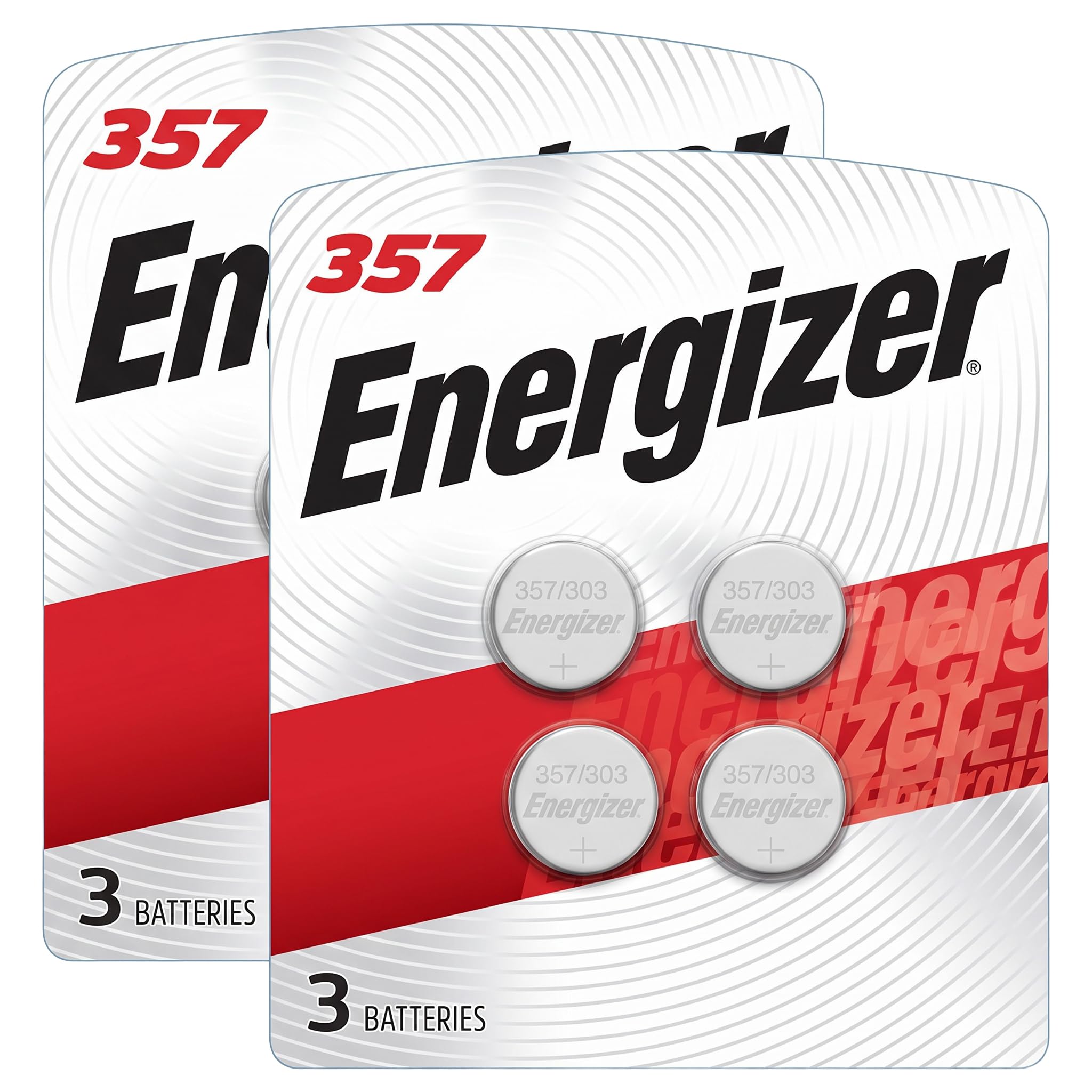
1. Energizer LR44 Battery Pack of 2
Our pick — 4.5+★ from 24,000+ verified ratings; the strongest balance of quality and price.
Silver oxide chemistry that wakes a stopped watch and keeps a caliper reading true
This is the pack to reach for when the device in your hand is one you actually care about. The Energizer 357/303 is a silver oxide cell (a battery chemistry that holds voltage steady), which means it holds a flatter 1.5 volts across its discharge than an alkaline button cell will — so a watch keeps accurate time instead of drifting slow, and a digital caliper keeps reading zero instead of wandering. Watchmakers and precision-instrument makers specify silver oxide, which is why this cell tops the list.
The cross-reference coverage is broad. Energizer lists it as a direct replacement for 280-03, 280-08, 303/357, D303/357, SB-A9, SR 1154 SW, WS14, and SR44SW — so if your device manual names any of those instead of AG13, this cell fits. The manufacturer also rates storage life at up to 5 years, and it is a zero-mercury cell, which makes disposal simpler when the time comes. These are the steady-power qualities vintage gear rewards: buyers report that three Timex watches from 1975, long unused since 1983, came back to life once a little terminal cleanup was done and a fresh cell dropped in.
The honest catch is the count. This is a two-pack, and silver oxide sells at a higher per-cell cost than alkaline — so it is a precision-device purchase, not a drawer-stocking one. If you are feeding a bin of kids’ toys, a bulk alkaline pack below stretches much further per cell. The other thing to know: battery life surfaced as a mixed theme in the feedback, so a small number of units likely arrive weaker than expected from long warehousing. Buy from a seller with healthy turnover and you sidestep it. Check availability on Amazon.
The case for silver oxide
- Flat 1.5V discharge keeps watches and calipers accurate to the last drop
- Cross-references 280-03, 280-08, 303/357, SB-A9, SR 1154 SW, WS14, and SR44SW
- Rated for up to 5 years of storage, so spares keep until you need them
- Zero-mercury construction
Where it stops making sense
- Two cells per pack — expensive per unit next to bulk alkaline
- Silver oxide is overkill for toys and cheap electronics
- Battery life drew mixed feedback, so freshness on arrival varies
Buy it for: anyone reviving a watch, caliper, thermometer, or glucose monitor where a drifting voltage is the whole problem.
Look past it if: you need a pile of cells for toys — a 15- or 24-count alkaline pack covers that for less per cell.
2. AmVolt Pack of 15 LR44 Batteries
Fifteen labelled spare cells that live in a drawer until something in the house goes silent
Fifteen AG13 cells in one flat pack is the practical middle ground between a two-pack emergency buy and a forty-count bulk bundle. AmVolt’s model 4330210759 runs on alkaline chemistry at 1.5 volts — so it acts like the classic A76-type cell and gives steady performance for the first stretch of its life before tapering toward the end. For toys, pen lights, clocks, and children’s books, that taper is invisible. For a precision watch, it is the wrong chemistry.
The battery quality and value-per-cell here are what buyers point to again and again, and the aspects most-discussed in the feedback are battery quality and value for money neck and neck, with performance close behind. What that tells you in plain terms: the cells arrive consistent, they arrive individually wrapped, and the per-cell price lands well under the silver oxide strip. Owners mention that a pack bought back in 2019 still had working cells left years later when stored sealed in a Ziploc and then a Battery Daddy organizer — which lines up with the printed 5-year warranty on the pack.
The comparison worth naming: this pack carries a 1.5-volt rating against the Duracell strip’s 1.55 volts, and it weighs 0.04 kg against that Duracell pack’s 0.02 kg — heavier because you are holding fifteen cells instead of five. A price-per-cell shopper will like this pack; a shopper chasing the flattest possible voltage curve should go silver oxide instead. See the 15-pack on Amazon.
The quantity math: Fifteen cells spread across the small devices in a house also beats buying one or two at a time, because the pack covers a dead toy now and the next three replacements later.
Fit note: Because these are alkaline (a common, lower-cost battery type), expect a dimmer output and slower timekeeping near the very end of a cell’s life — that is normal for the chemistry, not a defect, and it is why precision devices should still take silver oxide.
The smart buy for: a household drawer that has to cover a rotating cast of toys, remotes with button compartments, and battery clocks.
Skip the substitution if: you are dropping a cell into a vintage watch — go with the silver oxide pick above for that job.
3. PHILIPS LR44 Batteries 24 Count

The long cross-reference list that settles the “will this fit?” question before you buy
Look at the replacement list on this one and the AG13 guessing game ends. Philips prints LR44, SR44, 357, SR44W, AG13, G13, A76, LR44H, V13GA, GP76A, L1154, RW82B, PX76, SR44SW, 303, S303, S357, and SP303 on the pack — eighteen names for one cell size. If your device’s manual, its old battery, or a forum post pointed you at any of those, this is the matching cell, and you do not need to think about it further.
The count is the second reason it lands here. Twenty-four cells against the Duracell strip’s five is the biggest volume gap in this roundup, and it means one purchase covers a whole season of toy changes, thermometer swaps, and watch batteries without a repeat order. Philips rates the build as sealed and leak-resistant, which is the property you want when a cheap cell sits forgotten inside a device for a year. Customers note a set dropped into the kids’ sound books and working perfectly.
Now the trade-off, and it is a real one worth naming plainly: the packaging is tightly sealed. Multiple layers of shrink-wrap around the strip mean you will likely need scissors to free the first cells, and the sealed construction that protects the cells from moisture is the same construction that fights you at the drawer. A couple of reports also mention arriving dead cells, which for a 24-count pack is frustrating but not surprising at this volume. Twenty-four cells is a lot to commit to if you only have one device that takes them. Check the current pack on Amazon.
The compatibility payoff: Eighteen printed cross-reference codes mean you almost certainly will not have to return these for a size mismatch — the exact failure that makes people give up on button cells.
Where it costs you: The sealed shrink-wrap is genuinely hard to open, and the 24-count commitment only makes sense if you are feeding several devices, not one.
Reach for this if: you want the widest printed compatibility list and the deepest one-pack count to cover a whole household of small electronics.
Think twice if: you only need one or two cells, or you want airtight-fresh packaging you can actually open by hand.
4. Duracell 357/303 A76 Battery Strip of 5

A five-cell silver oxide strip rated at 1.55 volts — the highest voltage figure in this lineup
If you want the number that separates this strip from the alkaline packs, it is 1.55 volts. That is a fraction above the 1.5 volts the alkaline options here list, and it is the Duracell silver oxide cell’s way of saying it holds its output where a tapering alkaline cell starts to sag. Drop one into a caliper, a watch, or a key fob and the device behaves as if it were new rather than as if it were fading.
Five cells is a tighter, more deliberate count than the bulk packs. That is the point. You buy a strip of five for the devices that actually deserve silver oxide — the watch you wear every day, the caliper you trust a measurement to, the thermometer you need to read correctly on the first try. The manufacturer’s own replacement list ties it to AG13, LR1154, EPX76, A76, LR44, and SR44SW/SW, so if your device name is on that list, you are covered.
Two honest notes on this one. First, the value-per-cell math favors the AmVolt 15-pack and the Philips 24-count above, since five silver oxide cells cost more per unit than fifteen alkaline ones — but they are not the same chemistry, so it is not a fair fight for precision devices. Second, battery life is the recurring theme in the feedback, and it runs both ways: this is a strip that has arrived dead on some buyers, which tracks with a cell that has been sitting on a shelf. Check the seller and the listed freshness before you commit. See the strip on Amazon.
Made for: the one watch or one instrument you actually rely on, where the extra volt of headroom is worth the extra per-cell cost.
Not for you if: you are stocking for toys and giveaways — the alkaline multi-packs cover that far more cheaply.
5. Energizer A76/LR44 40-Pack Bundle

Forty cells in one box — the move for classrooms, toy bins, and anyone tired of reordering
Forty is the number that defines this bundle, and it is more than double the 24-count Philips pack and just shy of triple the Duracell strip. For a household with a bin of Hexbugs, a shelf of talking toys, and a couple of classrooms’ worth of gadgets, that count is the entire argument. You stop thinking about button batteries and start treating them as a consumable you happen to have on hand.
These are alkaline cells (a common, lower-cost battery type) rated at 1.5 volts, so the play here is throughput, not precision. Energizer labels them as used in watches, toys, glucose monitors, and calculators, and rates them for what the maker calls world-class capacity and leakage resistance. The value you get per cell is what the feedback talks about most — the disposable math of a 40-pack is tough to top if cells are actually being consumed.
Set expectations on runtime, because this is where the review theme splits. Battery life comes up as mixed: some owners say the cells last quite a while, others find they run down faster than expected — which is the normal alkaline story, and it is worse in high-drain toys than in a low-draw clock. Run a motorized toy on these and you will burn through cells faster than on a watch, so budget the bundle accordingly. At 0.12 kg the box itself is heavier than the smaller packs, and forty cells is a lot of shelf commitment if you only swap one battery a year. Check the bundle price on Amazon.
The volume play: Forty alkaline cells drop the per-unit cost to the lowest in this lineup, which only pays off if you are genuinely going through cells every month or two.
The runtime caveat: Alkaline taper hits high-drain toys first, so a bundle this size suits light-duty devices better than it suits motorized gadgets.
Pick this if: you are keeping a classroom, a kid’s room, or a repair drawer supplied and want the lowest cost per cell without reordering every few weeks.
Leave it if: you replace one button battery a year — the box will outlast your device.
Know the Specs
Chemistry — Silver Oxide vs Alkaline
Silver oxide and alkaline AG13 cells are physically identical and both start at roughly 1.5 volts, but they behave differently as they drain. Silver oxide holds a flatter curve, so a watch keeps time and a caliper keeps reading accurately until the cell is spent. Alkaline tapers down, so a display dims or a clock drifts slow before the cell is truly finished. The Duracell strip and the Energizer two-pack here are silver oxide; the AmVolt, Philips, and Energizer bundle are alkaline.
Voltage Rating and Cross-Reference Codes
You will see 1.5 volts on nearly every pack, and 1.55 volts on some silver oxide strips like the Duracell here. That small gap reflects the chemistry, not a different battery size. The count of cross-reference codes on the back of the package is the more useful number for a shopper — a longer list (the Philips pack prints eighteen) means less chance your device’s name is missing from the compatibility sheet.
Shelf Life and Storage
Button cells are usually bought in advance, so how long they hold a charge unused matters as much as how long they last in a device. Energizer rates its silver oxide cell for up to 5 years in storage, and AmVolt backs its pack with a 5-year warranty. Store cells sealed, cool, and away from damp — the Philips pack’s sealed construction is designed for exactly that. Bulk only makes sense if you can store it properly.
Count and Use Case Match
Match the count to the device. A single precision watch or instrument wants a small silver oxide strip so you are not aging good cells on a shelf. A drawer that feeds toys, remotes, clocks, and kids’ books wants a broad alkaline multi-pack. There is no single right count — only a right count for how many devices you actually own that take this cell size.
Common Questions
Is AG13 the same as LR44 and SR44?
Will an alkaline AG13 work in my watch, or do I need silver oxide?
How long do AG13 button cells last in storage before they die on the shelf?
How do I know which AG13 replacement fits my device without the original packaging?
Are Duracell and Energizer silver oxide cells worth the extra per-cell cost over alkaline?
What happens if I use an alkaline cell in a device that calls for silver oxide?
Can I recharge an AG13 button cell instead of replacing it?
How do I open the sealed shrink-wrap on button battery packs without damaging the cells?
Should I buy a 40-count bundle or a 24-count pack for my household?
Can I mix silver oxide and alkaline AG13 cells in the same device?
The Bottom Line
The best AG13 battery equivalent for precision devices is the Energizer LR44 Silver Oxide 357/303 Pack of 2: flat 1.5 volts, a 5-year storage rating, and zero mercury. If you want a drawer-stocking pack that covers a household, the AmVolt 15-Pack gives you fifteen alkaline cells at a value-per-unit that a two-pack cannot touch. And if your priority is maximum compatibility with the widest printed cross-reference list, the PHILIPS 24 Count pack is the one to grab. For a device you rely on, pay the silver oxide premium; for everything else, the bulk alkaline picks cover you.
How we choose
We do not accept paid placement. Every pick is matched to a real buyer and a real use-case; we do not hands-on test units.
Sources
Specifications: manufacturer listings and product documentation. Review insights: verified customer reviews, as of October 2026. Pricing: not shown on this page (it changes often); check the current price via the retailer link.
As an Amazon Associate, Aappliancez earns from qualifying purchases. This does not affect which products we feature.