Disclosure: Some links in this post are affiliate links. As an Amazon Associate I earn from qualifying purchases, at no extra cost to you. Learn more
Specs are compiled from manufacturer listings and verified buyer reviews and can change over time — please confirm the key details on the product page before buying.
Most cheap protein bars taste like a punishment you pay for. The trick to buying well is knowing which bars actually deliver real protein without the chalky, sandy mouthfeel that makes you dread the second bite. This guide covers the bars that hold up on taste, protein count, and sugar — so you can stock the pantry without wasting money on a box you’ll never finish.
This guide is built by comparing the manufacturers’ published specifications and the patterns across verified customer reviews, so you get each pick’s real strengths and trade-offs instead of marketing spin.
You want a bar that fills you up without wrecking your budget, and the eleven picks below run from nut-based bars with 6g of protein up to 21g cookie-dough bars. Each one was checked for texture, sugar, and honest ingredients. Your pick depends on one question: do you want a filling breakfast substitute or a post-gym hit? That is what this affordable protein bars shortlist sorts out for you.
Top Picks


How To Choose The Best Affordable Protein Bars
A protein bar is only affordable if you actually eat it. A box of twelve that sits in the drawer because the texture is gritty is the most expensive snack in your kitchen. So the first thing to sort out is not the protein number — it’s whether the bar fits the moment you bought it for.
Protein count against calories, not on its own
A 20g protein bar carrying 190 calories gives you a different deal than a 15g bar at 140 calories. The 20g bar suits post-workout recovery better, since the extra protein is what muscle rebuilding draws on. The 15g bar is a smarter treat when you just want something sweet with a little protein in it.
Look at the sugar line right beside the protein. A bar with 20g protein and 1g sugar is a very different object from a bar with 20g protein and 18g sugar. That second bar is closer to a candy bar with a health label on it.
Texture is the make-or-break spec
Chalky, sandy, or tough-to-swallow bars are the number one reason people abandon a box halfway through. Dense dough-style bars (cookie dough, peanut butter cups) tend to feel chewy and rich. Puffed bars feel airy, almost like nougat. Nut-and-fruit bars are firm and crunchy.
If you know you hate dense textures, a puffed bar or a nut-based bar is a smarter starting point. If you want a bar that feels like dessert, a dense dough-style bar delivers that chewy, rich bite.
Watch what the sweetener does to your stomach
Bars that avoid added sugar often use sugar alcohols or fiber syrups to get sweetness. Some people digest those easily; others find them bloating or uncomfortable. If you’re sensitive, look for bars that get their sweetness from real fruit, nuts, or a modest amount of actual sugar rather than a long list of sugar-alcohol names.
Match the bar to the moment
A breakfast-substitute bar should be filling — higher protein, higher fiber, more calories. A pre-workout bar needs easy carbs. An afternoon craving-killer can be smaller and sweeter. Buying one box that fits one job beats buying a “best” box that fits none of them.
Side-by-Side Comparison
Every pick below uses the same three dimensions so you can scan trade-offs side by side.
| Model | Best For | Protein | Count | Sugar | Amazon |
|---|---|---|---|---|---|
| KIND Dark Chocolate Nuts & Sea Salt (6 ct)★ Best Overall | Low-sugar snacking | 6g | 6 bars | 5g | Amazon |
| Nature Valley Protein Chewy Granola VarietyBest for Breakfast | On-the-go breakfast | 10g | 15 bars | — | Amazon |
| KIND Dark Chocolate Cherry Cashew (12 ct)Sweetest Pick | Sweet-tooth satisfaction | 4g | 12 bars | — | Amazon |
| KIND Dark Chocolate Nuts & Sea Salt (12 ct) | Everyday pantry staple | 6g | 12 bars | 5g | Amazon |
| Misfits Protein Bar Variety Pack | Vegan chocolate lovers | 14-15g | 5 bars | 1g | Amazon |
| Pure Protein Chocolate Peanut Butter | Post-workout fuel | 20g | 12 bars | 3g | Amazon |
| CLIF BUILDERS Chocolatey Peanut Butter | Meal replacement | 20g | 12 bars | 18g | Amazon |
| Pure Protein Variety Pack | Flavor variety | 20-21g | 18 bars | — | Amazon |
| Quest Chocolate Chip Cookie Dough | Keto & low carb | 21g | 12 bars | 1g | Amazon |
| BUILT Puff Variety Pack | Soft-texture seekers | 15-17g | 12 bars | 6-8g | Amazon |
| Barebells Classics Variety Pack | Treat-style bars | 20g | 12 bars | — | Amazon |
Detailed Reviews
1. KIND Dark Chocolate Nuts & Sea Salt (6 Count)
The bar that wins on texture — crisp whole almonds, real dark chocolate, a whisper of sea salt.
If you want a snack bar that doesn’t pretend to be a protein supplement, this is the pick. The 6-count box leads with almonds as the number-one ingredient, so you get a firm, crunchy bar that actually tastes like nuts and dark chocolate. At 6g of protein per bar, it won’t replace your post-gym shake. What it will do is keep you full between meals without the sugar crash.
The 6g protein point is the honest catch. If your goal is hitting a 20g-per-bar protein target, this isn’t the tool. But if the goal is a snack that’s lower in sugar and built from real nuts, this fits the bill exactly. The bars come individually wrapped, hold their shape in a bag, and don’t crumble into dust the way some trail-style bars do.
What wins people over most is the quality of the ingredients — the almonds read as real almonds, not cereal filler. The dark chocolate adds richness without pushing into candy-sweet territory. The recurring gripe across the reviews is texture: if you prefer a soft, chewy bar, this firm style won’t be your favorite. And a few shipments have arrived with stale bars or a crushed box, so buy from a seller who packs it well.
What lands well
- Almonds as the #1 ingredient — a bar that actually tastes like nuts
- Only 5g sugar per bar, so it won’t spike your afternoon
- Individually wrapped and firm enough to survive a bag or glovebox
- Higher in fiber and lower in sugar than a typical candy-bar substitute
What to know before you buy
- 6g protein per bar — a snack, not a protein supplement
- Firm, crunchy texture is wrong for anyone who prefers soft and chewy
- Some units arrive stale or with a crushed outer box
Reach for this if: you want a nut-forward, low-sugar snack that travels well and doesn’t taste like a supplement.
Look elsewhere if: your workout recovery plan needs 20g of protein per bar — the Pure Protein pick below does that job.
2. Nature Valley Protein Chewy Granola Bar Variety Pack, 15 ct
Three flavors, 15 bars, and a chewy granola texture that’s more breakfast than dessert.
Fifteen bars in three flavors — Peanut Butter Dark Chocolate, Salted Caramel Nut, and Peanut Almond Dark Chocolate — is a real advantage if you’re buying for a family or packing lunches. Each bar carries 10g of protein, which is enough for a morning grab or a pre-workout snack, and the bars are gluten free with no artificial flavors or colors.
Compare the protein count to the KIND bar above and you see the tier: the Nature Valley bar doubles the protein at 10g versus 6g. That’s the difference between a snack bar and a light breakfast bar. The chewy granola texture also avoids the sandy, gritty mouthfeel common in dense protein bars — buyers keep calling out that it doesn’t have the sandy mouth feel.
Sweetness is the honest note. Some bars run sweeter than expected, and sugar content appears as a mixed point in the reviews. If you’re watching sugar closely, read the nutrition panel before committing to a box of 15. Freshness shows up mixed too — most arrive fine, but an occasional box has come through with expired bars. Ordering direct from a high-turnover seller reduces that risk.
Best breakfast play: with 10g protein and a chewy texture, this is the bar you can eat on the drive in without needing a drink of water after every bite.
Watch the sugar line: the sweetness is the one consistent note across reviews — fine for a treat, worth reading if you’re cutting sugar.
Pick this one if: you want a variety pack for lunch boxes, hiking, or a desk drawer with a real breakfast-level protein hit.
Think twice if: you need strict sugar control — the sweetness here is the recurring note.
3. KIND Dark Chocolate Cherry Cashew, 12 Count
Tart cherries, salty cashews, and dark chocolate — a bar that eats like dessert but isn’t one.
Twelve bars, 4g of protein each, and a flavor combination that most nut bars can’t touch: tart dried cherries against salty cashews and dark chocolate. Cashews are the number-one ingredient, so you’re paying for real nuts rather than a puffed grain filler. As a sweet-tooth satisfier, it does the job — buyers describe it as a bar that keeps them satisfied until lunchtime.
Here’s the comparison buyers ask about: the Cherry Cashew carries 4g of protein, while the Nuts & Sea Salt version carries 6g. So if protein is the priority, the Sea Salt bar wins. If flavor is the priority, this wins. That’s the honest trade-off, and it’s the reason both bars belong on this list rather than one crowd-picked “best.”
The catch is the protein number for the price tier. At 4g, this is a snack bar, not a protein bar in any serious sense, and one review specifically calls out that the protein count disappoints at this cost. A few bars also arrived in a crushed outer box — the bars survived, but the outer packaging took a hit in transit. Buy from a seller who ships in a proper carton and you avoid that entirely.
The flavor case: cherries plus cashews plus dark chocolate is a genuinely good combination, and the 12-count box makes it a repeatable snack rather than a one-off.
The protein caveat: 4g per bar is the lowest on this list — buy it for the taste and the fiber, not the protein number.
Best for: anyone who wants a bar that satisfies a chocolate craving without tipping into candy-bar territory.
skip it if: 4g protein doesn’t clear your bar — you’ll want a 20g pick from the second half of this list.
4. KIND Dark Chocolate Nuts & Sea Salt, 12 Count
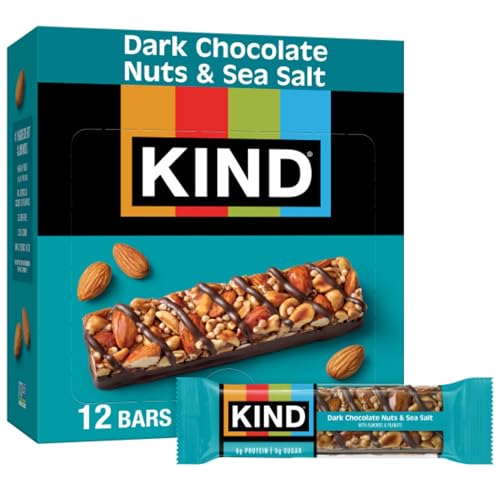
The same 6g-protein bar you met at the top — now in a 12-count box built for the pantry.
You get the same bar in a bigger box. If the 6-count version at the top of this list was too small for your household, this twelve-bar version fixes that. The recipe still starts with almonds, and each bar still gives you 6g of protein and 5g of sugar, with the same dark chocolate and sea salt finish. Twelve individually wrapped bars keep a drawer, a car console, and a work bag stocked, so you are not reordering every other week.
Where it earns its place on this list is the sugar number. Five grams per bar puts it in a very different category from a candy bar, and it pairs that with heart-healthy almonds as the leading ingredient. For an everyday snack where you want low sugar and a real nut flavor, it’s a solid pantry anchor.
The texture is the consistent gripe: these bars are firm, and for some people they’re very hard to bite through, especially if you’ve had dental work or prefer soft textures. If that’s you, the BUILT Puff or Misfits bars further down the list are a much softer experience. The bars also carry 15g of fat per bar — a normal number for a nut-based bar, but worth knowing if you’re tracking fat, not just protein and sugar.
Where it earns its keep
- Twelve bars per box makes it the everyday stock-up version of the top pick
- Almonds as the first ingredient, with real dark chocolate and sea salt
- Only 5g sugar per bar and a good source of fiber
- Individually wrapped, travels well, holds its shape
The honest trade-offs
- Firm enough that some people find it hard to bite through
- 15g of fat per bar — worth knowing if you track fat
- 6g protein is snack-tier, not supplement-tier
Choose this if: the top pick’s flavor works for you and you want the larger box to last through the month.
Pass if: crunchy, firm bars feel like work to chew — the puffed and dough-style bars suit you better.
5. Misfits Protein Bar Variety Pack

Plant protein that finally carries real chocolate flavor — 14-15g per bar, 1g sugar.
Here’s the comparison that matters: the KIND bars up the list carry 4g and 6g of protein. This Misfits bar carries 14-15g of plant-based protein from a blend of pea and soy, with 1g of sugar, 1-2g net carbs, and 190 calories. That’s a real step up in the protein department without the sugar you’d get from a candy-bar-flavored equivalent.
Vegans and dairy-avoiders are the clear audience here. The bar is triple-layered and coated in chocolate, so it eats like dessert, and the reviews keep coming back to how good the flavor is. It’s a sample pack of five bars across multiple flavors, which means you can try before you commit to a full-size box of one flavor.
Flavor variance is the catch. With a five-bar sampler you’ll likely find one or two you love and one or two you don’t — and one specific note in the reviews is that Caramel Popcorn stands out while others fall flat. Texture runs chewy, and the value question splits: it’s a premium plant-protein bar, so the cost per bar lands higher than a conventional whey bar. Chewiness and value are both mixed points, not dealbreakers.
Vegan win: 14-15g plant-based protein at 1g sugar is a hard combination to find at this price tier.
Sampler caution: expect about one or two flavors to hit — treat the five-pack as a tasting flight, not a full commitment.
Made for: vegans, dairy-free eaters, or anyone who wants a chocolate-heavy bar with serious protein and almost no sugar.
Not for: anyone who wants a full box of one flavor they’ve already decided on — the five-bar sampler is for trying.
6. Pure Protein Chocolate Peanut Butter Protein Bars, 12 Ct
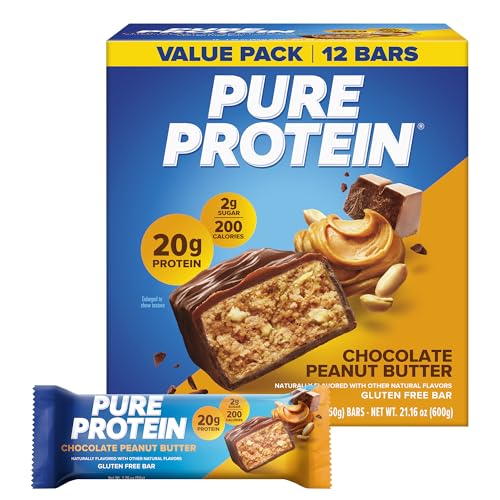
Twenty grams of protein, three grams of sugar, and a chocolate-peanut-butter flavor that actually tastes good.
If 20g of protein is your target and you want it in a bar that doesn’t taste like a brick, this is the value play. Each bar carries 20g of protein, 3g of sugar, and 190 calories — that’s a real protein-to-calorie ratio at a price that keeps the per-bar cost reasonable. It’s certified gluten free and works as a pre-workout, post-workout, or meal-replacement snack.
What wins people over is the flavor-to-sugar balance. Chocolate Peanut Butter is the standout, with a creamy texture and a dark cocoa note rather than the typical protein-bar aftertaste. Buyers describe it as a bar that hits chocolate cravings without loading up on sugar, and it’s filling enough to hold you to the next meal.
The one honest caveat is texture consistency. Some bars come out smooth and chewy, while others are firm enough that they stick to your teeth — a real consideration if you have dental work. A quick tip that comes straight from the reviews: five to ten seconds in the microwave makes a firm bar much easier to eat. Bar count is 12 per box, which is enough for a couple of weeks of weekday gym days.
The protein math: you get 20g of protein for just 3g of sugar and 190 calories, among the most efficient ratios on this list.
The texture note: firmness varies bar to bar — a few seconds in the microwave makes it pliable.
The obvious fit: a gym-goer who wants a bar that delivers 20g of protein and won’t wreck the sugar target.
The honest catch: if dental work or firm textures are a concern, don’t buy this before trying the softer options here.
7. CLIF BUILDERS Protein Bars, Chocolatey Peanut Butter, 12 ct
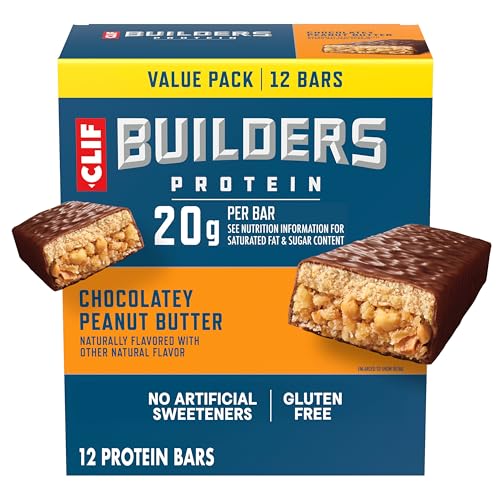
Bigger, heavier, denser — a bar built to replace a meal, not sit beside it.
Twelve bars at 2.4 oz each, with 20g of plant-based protein from soy protein isolate plus carbohydrates to sustain a workout. Where the Pure Protein bar just above is a lean 190-calorie snack, this CLIF bar is a proper meal-replacement weight — heavier, denser, and designed for recovery after training or competition. It’s non-GMO, low glycemic, and gluten free, and it avoids high-fructose corn syrup and artificial sweeteners.
The chocolatey peanut butter flavor reads like a peanut butter cup with a crunchy texture, and the mint chocolate version is also mentioned as a winner. If you’ve written off plant protein because of chalky powders, this is a bar that doesn’t carry that aftertaste — no sugar alcohol or chemical tang. It’s easy to chew, filling, and works as breakfast or a post-workout snack.
Two honest trade-offs. First, the sugar: each bar carries 18g of sugar, which is the highest on this list and lands it closer to a candy bar than a low-sugar protein bar. Second, calories are high for the protein — if you’re eating at a deficit, this bar will stretch it. For anyone using it as a meal replacement after a long run or a lifting session, the sugar and calories are part of the point. For anyone tracking sugar tightly, it’s not the right bar.
What makes it work
- 20g of plant protein per bar, dense enough to actually fill you
- Crunchy texture, not chalky, with no artificial sweetener aftertaste
- Non-GMO Project Verified, low glycemic, gluten free
- Substantial enough to act as a real meal replacement
Where it gets tricky
- 18g of sugar per bar — the highest of any bar on this list
- Calories run high for the protein delivered — a meal, not a snack
- Heftier weight and package — less convenient for a pocket
Ideal for: endurance athletes, long-training days, or anyone who wants a bar that actually stands in for a meal.
Wrong for: low-sugar or calorie-counting plans — 18g of sugar makes this a fuel bar, not a diet bar.
8. Pure Protein Variety Pack, 18 Ct
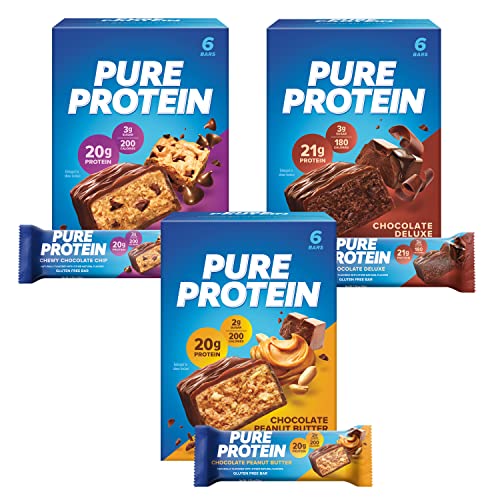
Eighteen bars, three flavors, 20-21g protein each — the bulk option for the serious gym rotation.
The single biggest draw here is volume: eighteen bars split across Chocolate Peanut Butter, Chocolate Deluxe, and Chewy Chocolate Chip — six of each. Each bar carries 20g or 21g of plant-quality protein depending on flavor, so it’s an everyday workhorse box rather than a tasting pack. Gluten free and low in sugar, it works as a pre- and post-workout bar, an office snack, or a lunch-box staple.
This one suits you if you already know you will burn through a bar a day for the better part of a month. The variety keeps the flavor from getting boring, and the whey-style blend (a milk-based protein mix) is designed to deliver quick and sustained energy. With 20-21g of protein per bar and a milk-based blend built for quick energy, it works as a pre-workout bar.
The catch will sound familiar from the whole Pure Protein lineup: texture varies. Some bars are chewy and easy, others are tough enough that people with dental concerns should be careful. Freshness also comes up — the recurring issue is parcels that arrive with expired bars, so buy from a high-turnover seller and check the date when the box lands. If yours arrives fresh, this is one of the best cost-per-bar protein deals on the list.
Best bulk buy: eighteen bars across three flavors is the value-per-bar play of this whole list.
Check the date: freshness is the recurring flag — verify the best-by stamp when the box arrives.
Right for: habitual gym-goers who want a cheap cost-per-bar box with variety to avoid flavor fatigue.
Ask yourself first: are you committed to a bar a day for a few weeks? If not, a smaller box is smarter.
9. Quest Nutrition Chocolate Chip Cookie Dough Protein Bars

Twenty-one grams of protein, one gram of sugar, and it tastes like cookie dough from the bowl.
Cookie dough is the flavor here, and it’s the bar’s whole pitch — sweet, chocolatey, and eaten like a treat while delivering 21g of complete dairy-based protein, 4g of net carbs, and 1g of sugar. Twelve grams of fiber per bar rounds out the macro profile. If you’re on a keto or low-carb plan and miss dessert, this bar was built to slot into that gap.
Here’s a direct comparison to the CLIF BUILDERS above: CLIF carries 18g of sugar per bar; Quest carries 1g. If sugar is the deciding metric, Quest wins that matchup easily. If calories and heft matter more, CLIF is the bigger meal bar. Both deliver around 20g of protein, so the sugar line is what separates them.
Texture is the one honest split. A bunch of buyers love the chewy cookie-dough feel, while a meaningful group find it rubbery or too chewy for their taste. The bar’s fiber load also means a few people notice it sits heavy. Freshness is a recurring theme with any long-shelf-life bar, so check the date on arrival. For a keto-friendly bar with 1g of sugar, this one is very tough to top on flavor.
The macro case: 21g protein, 1g sugar, 4g net carbs, 12g fiber — the tightest macro profile of the low-carb bars on this list.
The texture honest note: chewy to the point of rubbery for some — try one before you buy the box if that worries you.
Perfect fit: keto and low-carb eaters who want a dessert-flavored bar that doesn’t blow the sugar budget.
Less of a fit: anyone who needs a lighter, airier texture — the chew here is intense.
10. BUILT Puff Protein Bars, Variety Pack, 12 Count
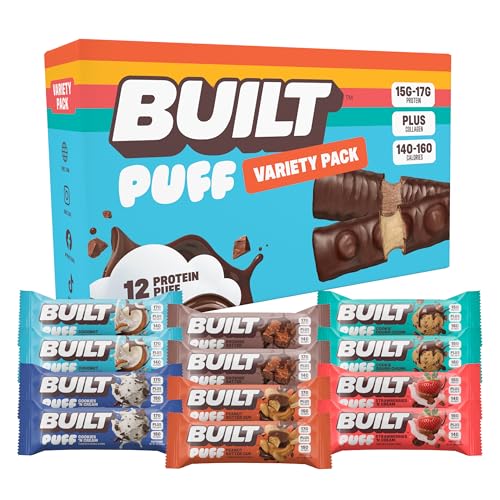
Marshmallow-soft, collagen-boosted, and the closest thing to dessert in the protein-bar aisle.
If every bar above sounds too dense, chewy, or firm, this is the alternative. BUILT Puff bars are designed around a soft, marshmallowy texture with 15-17g of protein (enriched with collagen), 140-160 calories, and 6-8g of sugar. Six flavors in the variety pack — Coconut, Cookies ‘N Cream, Brownie Batter, Peanut Butter Cup, Cookie Dough Chunk, and Strawberries ‘N Cream — lets you find the one you’d reorder before committing to a full box.
The texture is the entire point, and the reviews are consistent on it: it feels like eating candy, not protein. Buyers describe it as light and fluffy, like chewing on merengue or nougat, with no chalky aftertaste. If your past attempts at protein bars ended with a half-eaten bar in the trash, this is the one to retry.
The honest trade-off is the sugar — 6-8g per bar is higher than a keto style pick but right in the middle for a dessert-flavored bar. Opinions on value-for-money are mixed, and a few specific flavors (Strawberries ‘N Cream is mentioned) don’t land for everyone. At 15-17g protein it’s slightly under the 20g-club bars above, but for a treat-style bar, that’s a reasonable compromise.
What makes it different
- Marshmallow-soft texture — nothing like a classic dense protein bar
- 140-160 calories with 15-17g of collagen-enriched protein
- Six flavors in the variety pack, from Brownie Batter to Peanut Butter Cup
- No chalky aftertaste, which is the usual failure point of protein bars
Where the trade-offs sit
- 6-8g of sugar per bar — a dessert bar, not a low-sugar bar
- 15-17g protein falls just under the 20g bars above
- Flavor preferences vary — some flavors mean more to some people than others
Choose it when: you want a protein bar that tastes like candy and finishes without effort.
Pass if: you’re chasing the highest protein-per-calorie ratio — a 20g bar gets you further for the sugar.
11. Barebells Classics Protein Bars Variety Pack

The Swedish bar with the reputation — soft, chocolatey, 20g protein, no added sugar.
Twelve bars, four flavors, three of each: Cookies & Cream, Caramel Cashew, Salty Peanut, and Chocolate Dough. Each bar carries 20g of protein with no added sugar, and the Swedish brand has built a cult following on the back of its texture and flavor. If you want a bar that eats like a chocolate bar while still delivering real protein, this is the premium lane.
The texture is the reason people pay more. Barebells bars are soft and chocolate-coated, closer in mouthfeel to a candy bar than a dense dough block. They’re filling and they satisfy a sweet craving, which is precisely why they cost more per bar than most of the picks on this list.
The catch is the price. Value for money and purchase intent are both mixed in the reviews — plenty of people find it worth the premium, plenty decide it’s a special-occasion bar rather than a daily one. Physical fragility is the other real flag: a chocolate-coated bar can arrive melted in warm weather, so buy from a seller who ships in cooler months or with a cold pack. For anyone who wants a treat-style bar with 20g of protein and no added sugar, this is the top of the category.
The celebration case: soft chocolate coating and 20g protein at no added sugar is the standard that other treat bars get measured against.
The honest cost note: the premium per-bar cost and the melt risk mean this is the bar you buy when the flavor matters to you enough.
Ideal buyer: someone who wants a bar that feels like a chocolate bar and delivers 20g of protein with zero added sugar.
Think twice if: budget per bar is the deciding factor, or if you’re ordering in summer heat — the chocolate coating can arrive melted.
Know the Specs
Protein per bar
Protein per bar is the headline number, but it only means something when you read it against the bar’s total calories and sugar. A bar delivering 20g of protein at 190 calories is doing real work. A bar with the same 20g of protein and 18g of sugar delivers the protein alongside a hefty sugar load you may not want. For a post-workout bar, aim for the 20g range. For a between-meals snack, anything from 6g to 15g is reasonable.
Sugar content
Sugar is the number that separates a protein bar from a candy bar with a lab coat on. Below about 5g per bar is squarely in protein-bar territory. Between 6g and 10g is a sweet-lover’s bar. Above 15g you’re looking at a fuel bar built for endurance training. Labels that say “no added sugar” mean the bar may still contain natural sugar from fruit or dairy — read the full sugar line, not just the claim on the front.
Fiber & net carbs
Fiber appears on the label beside total carbs for a reason. Bars with a high fiber count (10g or more) often have a low “net carb” line — total carbs minus fiber minus sugar alcohols. That’s the number keto and low-carb buyers track. High-fiber bars also tend to be more filling, but eating several in a day can feel heavy if you aren’t used to that much fiber.
Texture styles
There are three main bar textures. Nut-and-fruit bars are firm and crunchy. Chewy granola bars are somewhere between cereal and a candy chew. Dough-style and puffed bars are dense and soft, closer to a candy bar. Texture is the single most common reason people abandon a box — pick the style you actually enjoy chewing, not the one with the best label.
Common Questions
How many protein bars a day is too many?
Do affordable protein bars actually have enough protein to matter?
Is a protein bar better than a protein shake?
Can I eat protein bars on a keto diet?
Why do some protein bars upset my stomach?
How do I know if a protein bar is actually fresh?
Are gluten-free protein bars safe for someone with celiac disease?
Which protein bar tastes least like a protein bar?
How should I store protein bars so they stay good?
Is it cheaper to buy protein bars in bulk boxes or single bars?
The Bottom Line
For most people, the winner is the KIND Dark Chocolate Nuts & Sea Salt because it nails the everyday-snack job with almonds as the number-one ingredient, only 5g of sugar, and a firm crunch that travels without crumbling. If your workouts need a real protein hit, the Pure Protein Chocolate Peanut Butter bar delivers 20g of protein at 3g sugar and remains the value play of this list. For keto followers who still want a treat, the Quest Cookie Dough bar carries 21g of protein at 1g sugar. And if you want a bar that tastes like dessert on the first bite, the BUILT Puff variety pack is the soft-texture standout. Whichever direction you go, buy from a seller with steady turnover — freshness is the one issue that runs through this entire category.
How we choose
We do not accept paid placement. Every pick is matched to a real buyer and a real use-case; we do not hands-on test units.
Sources
Specifications: manufacturer listings and product documentation. Review insights: verified customer reviews, as of October 2026. Pricing: not shown on this page (it changes often); check the current price via the retailer link.
As an Amazon Associate, Aappliancez earns from qualifying purchases. This does not affect which products we feature.