Disclosure: Some links in this post are affiliate links. As an Amazon Associate I earn from qualifying purchases, at no extra cost to you. Learn more
Specs are compiled from manufacturer listings and verified buyer reviews and can change over time — please confirm the key details on the product page before buying.
You want to know who walked up your driveway at 2 a.m., and you don’t want to pay a monthly bill to find out. That is the whole point of a modern affordable home security system: cameras, sensors, and instant phone alerts that run over your own Wi-Fi instead of a landline and a contract. The trick is separating the kits that actually hold a connection from the ones that drop the feed the moment the wind picks up, so this guide walks you through the real specs that matter — video resolution, night vision, battery or solar power, and if you need a subscription at all.
This guide is built by comparing the manufacturers’ published specifications and the patterns across verified customer reviews, so you get each pick’s real strengths and trade-offs instead of marketing spin.
You’ll see wireless camera packs you can mount with four screws, sensor kits that need no wiring, and one wired 4K setup for whole-property coverage. Each pick below earns its spot on battery life, night vision, or smart detection. Here’s how to choose the best affordable home security systems without overpaying.
Top Picks


How To Choose The Best Affordable Home Security Systems
Start with the two things you cannot change later: how the camera gets power, and where your video gets saved. Everything else — resolution, alerts, night vision — sits on top of those decisions. Get power and storage right and the rest of the system falls into place.
Resolution Is About Identifying, Not Just Watching
A 2K (roughly 3-megapixel) camera gives you enough pixel detail to recognize a face or read a plate, while 1080p is fine for seeing that someone is there. A 4K (8MP) camera captures the most fine detail of all, which helps most when you need to zoom in on a single frame after the fact. For a front door or mailbox, the higher the resolution the more useful your footage becomes when you actually need it.
Power Source Determines Where You Can Mount It
Battery cameras go anywhere with no outlet and no cable, which suits rentals and remote corners of a yard. Solar panels trickle-charge those batteries so you climb a ladder far less, and a handful of kits support a constant plug-in option for high-traffic doorways. Wired cameras never need a recharge but demand a cable run back to a recorder, so they suit a permanent install you plan to keep.
Local Storage vs Cloud Subscriptions
An SD card or a built-in hard drive records locally with no monthly bill — a memory card feeds free playback, and one wired kit here carries a 3TB hard drive that can hold weeks of footage. Cloud plans add offsite backup and AI features like person detection for a recurring fee. Plenty of owners run happily on local storage alone and only add the cloud if they want footage safe from a stolen camera or recorder.
Wi-Fi Band and Range Matter More Than You Think
Most battery cameras connect only on 2.4GHz Wi-Fi, which travels farther through walls. A dual-band camera that also talks to 5GHz can pair faster and stream with less lag, and Bluetooth pairing on some models removes the fiddly password step entirely. Check your router’s band before you buy, because a 5GHz-only network will lock out a 2.4GHz-only camera.
Side-by-Side Comparison
| Model | Best For | Video Resolution | Power Source | Storage | Amazon |
|---|---|---|---|---|---|
| GMK 4 Pack Cameras System★ Best Overall | Whole-home camera coverage on one app | 2K 3MP | Rechargeable battery, plug-in option | SD card or cloud | Amazon |
| Rraycom 4 Pack Camera SystemTop Performer | Homes with a 5GHz router | 2K UHD | Rechargeable battery | SD card up to 256GB or cloud | Amazon |
| tolviviov 15-Piece Alarm KitBest Value | Renters wanting door and window alerts | Not a camera | Alkaline battery sensors | App notifications, no storage fee | Amazon |
| Arlo SS1201 System | Whole-home sensors with optional monitoring | Not a camera | Plug-in hub, battery sensors | 24/7 monitoring trial | Amazon |
| Blink Outdoor 4 (3 cameras) | Long battery life, Amazon households | 1080p HD | AA lithium, up to 2-year life | Cloud or Sync Module expansion | Amazon |
| aosu Solar Camera System | No-charge, no-fee solar monitoring | 2K QHD | Integrated solar panel + battery | 32GB local hub storage | Amazon |
| Like-New Ring Alarm 8-Piece | Whole-home protection for less of a spend | Not a camera | Plug-in base, battery backup | Optional Ring Protect plan | Amazon |
| Ring Alarm 8-Piece (2nd Gen) | 1-2 bedroom homes wanting an alarm | Not a camera | Plug-in base, battery sensors | Optional Ring Protect plan | Amazon |
| Hiseeu 4K Wired System (3TB) | Whole-property 4K with no internet | 4K 8MP | Wired | Built-in 3TB hard drive | Amazon |
Detailed Reviews
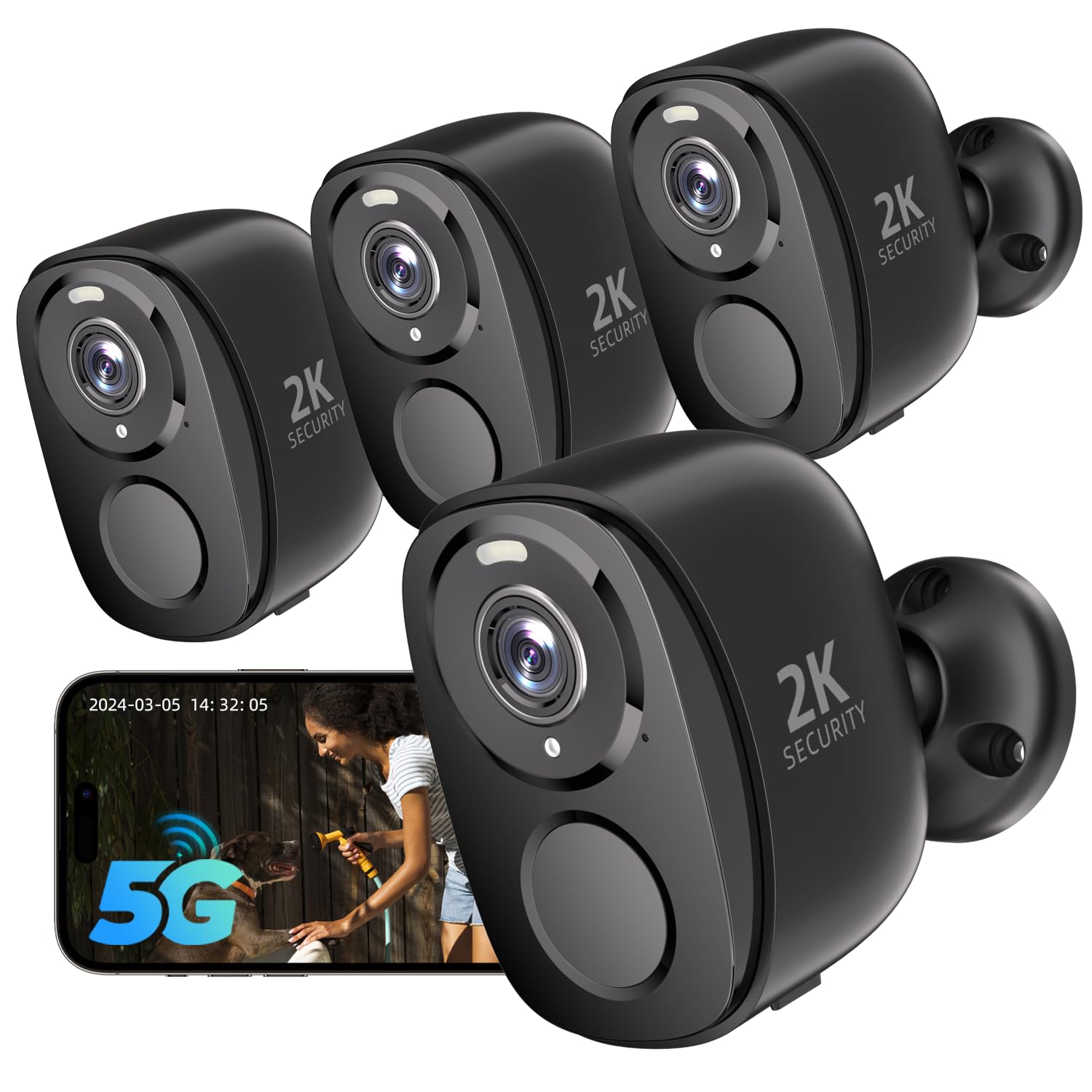
1. GMK 4 Pack Cameras System
Four cameras, no wiring, and a night view clear enough to catch a face.
The GMK four-camera kit packs 2K resolution and a 3MP sensor into each camera, so you see detail rather than a gray blob when someone walks up after dark. Its color night vision (which keeps footage in full color instead of black and white) works right down to a totally dark yard, and the 110-degree lens covers a wide slice of a porch, driveway, or garage. One 4-pack feeds four zones from a single phone app, which is the main reason this one takes the top spot — you get complete coverage instead of one angle.
What buyers keep coming back to is the sheer build quality and the price of admission — it is among the strongest value plays in its class. That reliability is the headline. Owners run these outside in rain, snow, and heat thanks to the IP65 weatherproofing (an outdoor rating against dust and water spray), and they report the cameras survive it. Alerts land on your phone the instant the PIR motion sensor (a body-heat detector) trips, and a built-in alarm fires a siren with flashing white lights to push intruders off. In high-traffic doorways you can switch a camera to constant plug-in power to stop fiddling with recharges.
Two-way talk lets you answer a courier or scare off a stranger straight from the app. Clips live on a memory card with no fees, or on the cloud if you want them offsite. Buyers report the free option works well: “Free option available; paid plan ~/mo per camera… Good battery life with sufficient sun.” The honest catch is the connectivity and battery — some owners lean on solar panels to keep these topped up, especially in busy spots, and a few find the Wi-Fi signal dips on cameras mounted far from the router.
What makes it the pick
- Four 2K cameras from one app cover a whole house
- Color night vision stays vivid in the dark
- IP65 weatherproof body handles rain and heat
- SD card storage runs with no monthly fee
Where it asks for patience
- 2.4GHz Wi-Fi only, so a 5GHz network needs a workaround
- Battery drains faster in high-traffic spots without solar
- Distant cameras can lose a strong signal
Grab it if: you want an affordable four-camera starter setup that works the moment it is from the start.
Think twice if: your router is 5GHz-only or you plan to mount cameras far from a Wi-Fi source.
2. Rraycom 5G/2.4G Security Cameras Wireless Outdoor, 4 Pack
Runs on 5GHz Wi-Fi, a rarity among battery cameras — and it recognizes birds.
If your home network runs on 5GHz, most wireless cameras simply will not connect. The Rraycom four-pack breaks that wall with dual-band Wi-Fi that talks to both 2.4GHz and 5GHz, plus Bluetooth pairing so the initial setup skips the usual password dance. Each camera shoots 2K and covers a 130-degree wide angle, meaning fewer blind spots on a big yard or an open driveway than the tighter 110-degree view on the GMK above. A spotlight and a 110dB siren fire the moment motion trips, a full tier louder and brighter than the standard notifications-only alert.
Night vision stays in full color, so plate and face detail comes through in low light. The build is ABS plastic with an IP65 waterproof seal, rated to shrug off rain and dust whether it sits on a porch or indoors. The standout oddity is the built-in bird-recognition feature, which the maker says can name thousands of species through a subscription — a genuine bonus if you hang these near a feeder. On the alert side, you can draw safety zones on your phone so passing cars or squirrels stop triggering the siren.
The trade-off is consistency. Battery life varies widely — owners mention the same settings can stretch a charge to two weeks or drain it in three days — and a few noted the app’s activity zones sometimes misfire, triggering on nothing or missing a genuine event. The good news is the video and the range hold up: clear images, no lag, and an app that stays free to use. If you have a 5GHz router and want the sharpest, widest view of a large outdoor space, this kit’s dual-band speed and 130-degree coverage are what set it apart.
Why it stands out: Dual-band Wi-Fi and Bluetooth pairing solve the two biggest setup headaches, and the 130-degree lens cover more ground than a standard 110-degree camera.
What to weigh: Battery endurance is the weak link here — expect to recharge more often than the multi-month claims suggest, and lean on the solar panels if you can.
Best matched to: 5GHz households that need wide outdoor coverage and want a free app.
Less ideal for: anyone who wants a set-and-forget battery that only needs a charge a couple of times a year.
3. tolviviov 15-Piece WiFi Home Security System
Ten door sensors, a motion detector, and a siren you can hear from the street.
Not everyone wants cameras — some people just want to know the second a door or window opens. That is the job of this tolviviov kit, and it covers a remarkable amount of ground in one box: a Wi-Fi base station, a keypad, ten door/window sensors, one motion sensor, and two remote fobs. The sensors stick on with adhesive or screws, so a renter can arm a whole apartment without drilling a single hole. Pair it with your 2.4GHz Wi-Fi and the 120dB siren (loud enough to be heard outside) plus instant phone alerts give you a real deterrent without a monitoring contract.
There is no monthly fee, which is the point of this pick. Everything runs through the app and Alexa voice control at no recurring cost, and the base station supports expansion to as many as 20 sensors and 5 remotes or keypads if your home grows. A backup battery keeps the alarm live through a power cut, a detail that matters more than people expect. Owners say the 120dB siren is loud enough to hear from the street.
The snag is the network band and the occasional dud sensor. This system is 2.4GHz-only, so if your router broadcasts 5GHz you will need to enable the 2.4GHz band or run an extender. A minority of kits also arrive with a sensor that will not stay paired, and the app’s notifications get mixed marks for reliability. Neither is common, and for the money you are getting a serious sensor count. Ten door/window sensors, a motion detector, and two remotes cover a full apartment, and the adhesive mounts install without drilling.
Why renters like it
- 10 door/window sensors cover a full apartment in one kit
- No monthly subscription of any kind
- Expands to 20 sensors and 5 remotes or keypads
- Backup battery keeps the siren armed during an outage
Honest limits
- Works on 2.4GHz Wi-Fi only
- A few kits ship with a sensor that struggles to stay connected
- No camera, so sound without eyes to match
Made for: renters and small-home owners who want door and window alerts with zero recurring fees.
Look elsewhere if: you want video evidence as well as a loud alarm — this one is sensors and sound only.
4. Arlo Home Security System SS1201
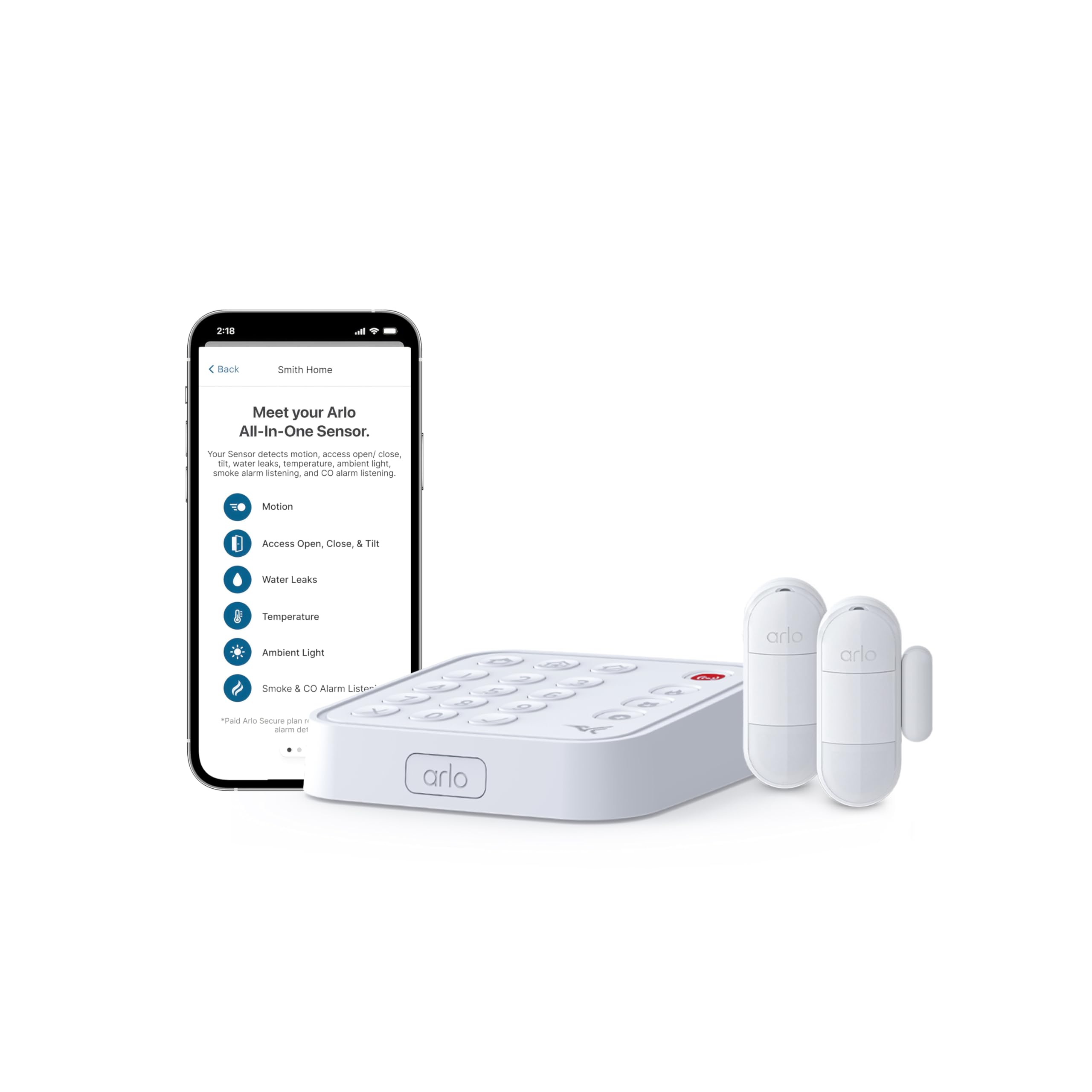
One sensor that watches for motion, open doors, water leaks, and more at once.
Arlo’s sensors do the work of several devices in one small puck. Each of the two included sensors packs 8-in-1 detection — motion, open/close, water leak and freeze, smoke and CO alarm listening, tilt, and ambient light — so a single unit can flag a door opening or a leaking water heater without a separate gadget for each. The 6-in-1 hub adds a built-in siren and its own sensors, and the whole thing plugs in and pairs over Wi-Fi with an app that lets you arm, arm home, or go standby.
Setup is the part buyers genuinely appreciate. The plug-in hub and wire-free sensors are designed for a DIY install, and owners describe putting it together as one of the easiest systems they have tackled, with one describing it as the easiest thing they have ever installed. There is no long-term contract required, and the trial includes 24/7 professional monitoring with one-tap emergency buttons that can summon fire, police, or medical response.
Here is the honest part. This one runs into connection trouble for some owners — customers note the system struggling to latch onto local Wi-Fi, and a portion find reliability uneven, with the app occasionally requiring a specific setup step (pressing a button on the sensor’s underside) before contact sensors register. The feature set and easy install are real; so is the need for a patient setup day. If sensors that flex across water, freeze, and smoke detection appeal to you and you want optional pro monitoring without a contract, this is a genuinely different take on a home kit.
Worth it for: anyone who wants multi-purpose sensors — water, freeze, and smoke listening included — with no long-term contract.
Weigh the risk if: your Wi-Fi setup has been finicky before, since connectivity is this system’s known friction point.
5. Blink Outdoor 4 (3-Camera System)

Two years on AA batteries — as long as the motion alerts don’t run nonstop.
Blink’s headline is simple: power these three Outdoor 4 cameras with the included AA Energizer lithium batteries and leave them alone for up to two years. That is the longest run between charges of anything here, and it means cameras in awkward spots — a shed, a back fence, an upstairs eave — that you reach once and forget. You get 1080p HD live view, infrared night vision (black-and-white footage that sees in the dark), and two-way talk through the Blink app, with a Sync Module Core included to tie the three cameras together.
This is the pick for an Amazon household. It works with Alexa, so you can pull up multi-camera live view or arm the system by voice, and setup takes minutes. Dual-zone motion detection alerts you faster, and person detection can filter out everything that is not a human to cut down on the noise. The one thing to know up front: the Sync Module Core does not store clips locally, so you either run a free 30-day cloud trial and then a plan, or add a Sync Module 2 with a USB drive or a Sync Module XR with a MicroSD card (both sold separately) for local recording. As owners put it: “impressive coverage and battery life — just be aware of the storage setup.”
Where this stumbles is reliability. A portion of long-time reviewers point out the cameras going offline now and then, and a few describe brief power blips knocking their Sync Module system out of sync. The two-year battery claim also softens in heavy-traffic zones, where constant motion eats the charge far faster than the spec suggests. Run them where a human occasionally walks past rather than where something moves every hour, and the battery math holds up.
The standout spec: Up to two years per set of AA lithium batteries is the longest gap between recharges in this whole roundup, and the Sync Module Core makes a three-camera install a minutes-long job.
The fine print: No local storage in the box, so plan on a cloud plan or an added Sync Module before you count on stored clips.
Suits: Alexa households that want to mount cameras and then forget about charging them for a long while.
Skip the plan at your peril: without a subscription or an added Sync Module, there is nowhere for your clips to live.
6. aosu 2K QHD Solar Security Cameras System

Solar panels and a built-in hub mean you may never charge or pay a fee.
The aosu system attacks the two biggest annoyances in one move. Each camera has a solar panel built into the top, so it charges itself, and the aosuBase hub carries 32GB of encrypted local storage (onboard memory for your clips) for free playback and downloads. Two hours of direct sun a day keeps a camera running, and a 5500 battery backs it up for cloudy stretches — a genuinely charge-free, fee-free setup once mounted.
On the picture side, you get 2K QHD color night vision that captures detail clearly up to 30ft away, enough to make out a face or a license plate in the dark, with a 130-degree fixed-angle lens focused on a driveway, gate, or fence line. The dual-band Wi-Fi (2.4GHz and 5GHz) keeps the stream stable and reaches farther from the router than a single-band camera would. The hub also enables cam-to-cam tracking, which hands a moving intruder from one camera to the next so you get one continuous playback instead of four separate feeds to stitch together in your head.
The recurring gripe here is connection quality — buyers describe some cameras dropping their link to the hub despite a good network, showing low signal in the app, and a few had a faulty hub that needed a warranty replacement. Setup is described as fiddly, with firmware updates and written instructions that could be clearer. Lean toward mounting these near the hub rather than at the far edge of the property. For a fully self-powered, no-fee system with proper local storage, the sun does the charging and the hub does the saving.
Why it earns the solar tag
- Solar panel on every camera keeps charging off your list
- 32GB hub storage gives free playback with no subscription
- 2K color night vision reads detail up to 30ft
- Dual-band Wi-Fi reaches farther than single-band cameras
What to plan around
- Cameras can drop their link to the hub over distance
- Mount near the router or hub for the sturdiest signal
- Written instructions are thinner than the app deserves
Built for: owners who want solar power plus local hub storage and no subscription at all.
Consider your layout first: keep cameras relatively close to the hub, since hub signal drops are this system’s weak spot.
7. Like-New Ring Alarm 8-Piece Kit
A like-new Ring kit for a fraction of a fresh one — same warranty, same parts.
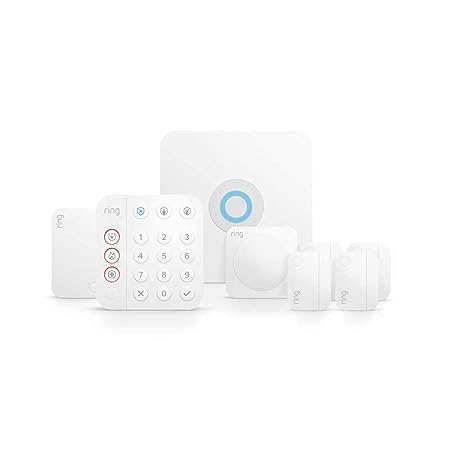
This is the same Ring Alarm 8-piece kit (2nd Gen) below, refurbished and certified to look and work like new, with the identical limited warranty and all-new adhesives and screws in the box. You get a base station, keypad, four contact sensors, one motion detector, and a range extender — aimed squarely at 1-2 bedroom homes. The sensors are pet-immune, so a dog or cat wandering the hall will not trip the alarm, and the motion alerts arrive on your phone the second a door or window opens.
The value story is what sets this pick apart from the new-in-box version. Shoppers say the refurbished units arrive looking and working like new. Setup runs about 45 minutes through the intuitive Ring app, the sensors respond quickly, and the whole system ties into Alexa for voice arm and disarm. Optional 24/7 professional monitoring is there if you want police, fire, and medical response, but it is not required to use the alarm.
There is a battery backup inside the base station that keeps your protection alive when the power cuts out — a feature you only appreciate the night it matters. The one thing to budget for is consistency across units: because these are refurbished, a small number arrive with a sensor that will not pair to the base, and you may want a Ring Protect plan to arm the system remotely or keep it online if your Wi-Fi drops. Otherwise this is a way to step into a proven alarm at a lighter spend than buying new.
Reach for this if: you want the proven Ring Alarm experience while spending less than the new-in-box price.
Weigh the trade: refurbished stock occasionally ships a stubborn sensor, so order from a seller that makes returns easy.
8. Ring Alarm 8-Piece Kit (2nd Gen)

The alarm most people picture — easy sensors, one app, and no false alarms.
The new-in-box Ring Alarm 8-piece kit is the easiest system here to live with, and it sits near the top of this list for exactly that reason. Setup runs about five minutes per sensor through a single app, and the eight-piece set for a 1-2 bedroom home includes a base station, keypad, four contact sensors, one motion detector, and a range extender. The pet-immune motion detection ignores small animals, and buyers report running it for a year with no false alarms and no connectivity headaches.
Monitoring is where the savings show up. Ring Protect is optional, so you can skip it entirely and still get phone alerts, or add 24/7 professional monitoring for police, fire, and medical response for far less than traditional alarm contracts cost. The system also keeps working with your voice — Alexa can arm and disarm it, and you can hear motion alerts through a compatible Echo device.
If there is a knock, it is the siren volume and the occasional setup snag, neither of which clips its appeal. A few owners wish the built-in alarm were louder, and one or two needed a wireless extender to reach a far corner of the house. Comparing it to the refurbished kit, you pay more here for the same parts — but you get new-in-box stock and no refurb lottery. That trade is worth it if you want zero surprises on arrival.
Why it leads: Between the five-minute sensor installs, the single app, and a year of clean operation for many owners, this is the least fussy alarm to own.
One thing to note: The siren is not the loudest, so pair it with a Ring camera or an exterior siren if hearing it from outside matters to you.
The right fit: a first apartment or small house where you want alerts and optional monitoring without a heavy contract.
Spend less if you like: the refurbished version carries the same parts and warranty for a smaller outlay.
9. Hiseeu 4K Wired Security Camera System
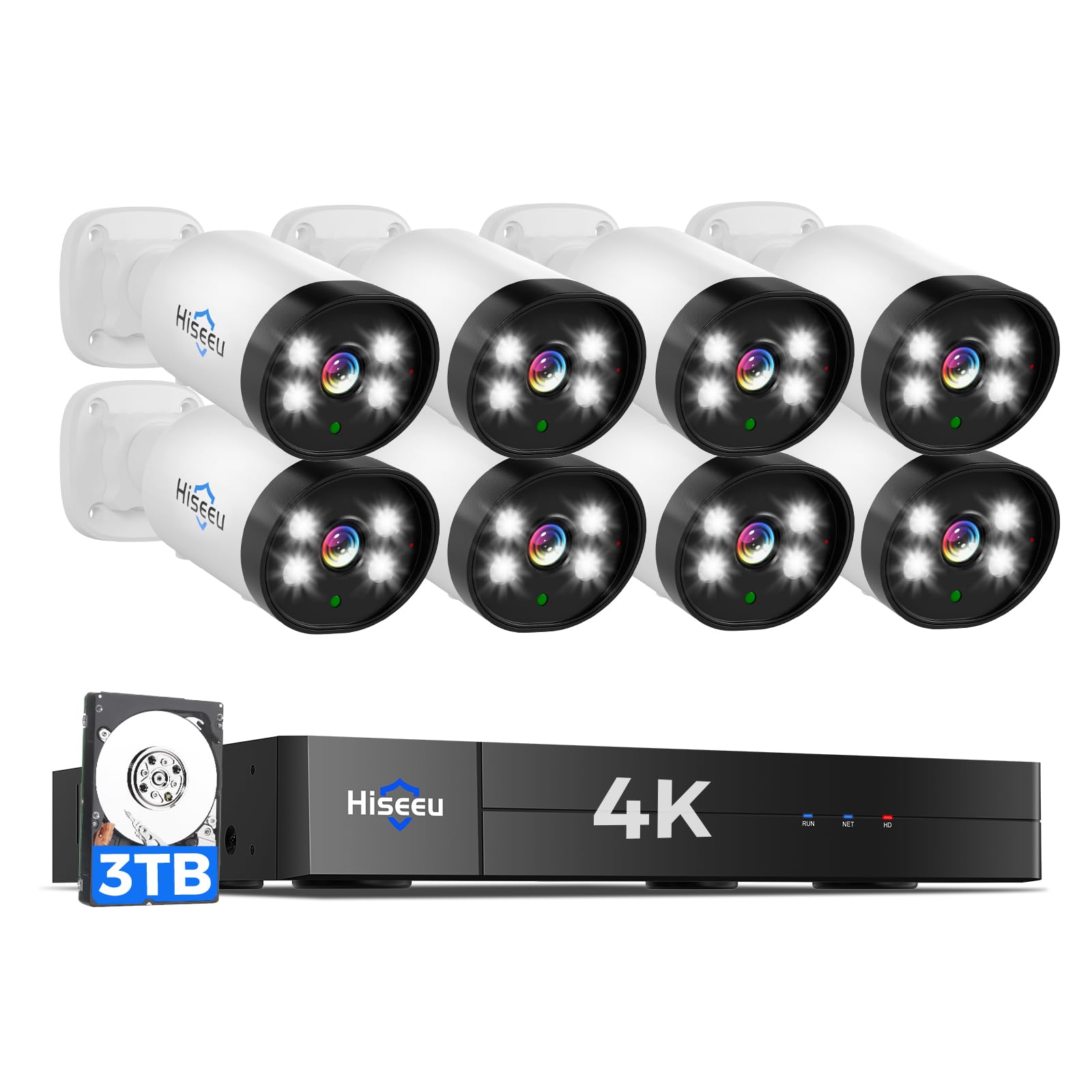
Eight 4K cameras, a 3TB drive, and it runs even with the internet down.
For a permanent install where you want maximum detail and zero monthly fees, this Hiseeu system goes bigger than anything else here: eight 8MP cameras at 4K resolution and a built-in 3TB hard drive that records roughly 15 days of footage across all eight lenses. The resolution captures detail that 1080p simply cannot, which pays off when you need to zoom into a single frame after a break-in. Eight 96ft and 58ft BNC cables let you stretch cameras across a large property, and the DVR works without any internet connection at all — local TV monitor surveillance, no cloud required.
Smart motion detection separates people from vehicles to cut false alarms, and the privacy mask lets you black out a neighbor’s window from the frame. Night vision reaches about 100 feet and runs two ways: infrared black-and-white, or an alarm spotlight that switches to color. That spotlight only triggers when a person is detected, which is a thoughtful way to save energy, and it works across up to four of the channels. One-way audio lets you hear what the camera hears.
The honesty here is durability. This is a wired system with a recorder, and the recorder is the part that can fail — owners describe DVRs dying with little warning and some cameras flickering or dropping signal as light levels shift. When it works, it works very well, with clear pictures, dependable AI detection, and storage that stretches into weeks. Support is a bright spot: buyers repeatedly mention quick, helpful responses and replacement parts sent under warranty. If you want the sharpest picture and no subscription ever, this delivers, as long as you go in knowing the DVR is the piece most likely to give you trouble.
What you get for the spend
- Eight 4K cameras capture the finest detail of any system here
- 3TB drive records roughly 15 days across eight cameras
- Runs entirely without internet — no cloud, no fees
- AI person and vehicle detection trims false alarms
The hard truth
- The DVR is the part most likely to fail over time
- Wired install takes a cable run to every camera
- Some cameras flicker as lighting shifts between color and infrared
Pick this when: you want 4K detail, massive local storage, and no internet or subscription involved.
Think again if: you cannot run cables or you want an install you never have to revisit — wired systems need a permanent setup.
Know the Specs
Resolution: 1080p vs 2K vs 4K
Resolution decides how much detail survives when you zoom in. 1080p HD, as on the Blink Outdoor 4, is enough to see that someone is on your porch. 2K, like the GMK and Rraycom kits and the aosu solar cameras, roughly triples the pixel count, so faces and plates stay readable. 4K 8MP, as on the Hiseeu wired system, packs the most detail so a single recovered frame can identify a vehicle or a person. Higher resolution also means bigger files, which is why a card or drive fills faster at 4K than at 1080p.
Power Source: Battery, Solar, and Wired
Battery cameras mount anywhere with no outlet, but you recharge them by hand — rechargeable cells run a few months on light traffic. A solar panel, as on the aosu cameras, trickle-charges the battery so two hours of sun a day can keep a camera alive, and a few kits let you switch to constant plug-in power in busy doorways. Wired cameras, like the Hiseeu set, never need a charge but need a cable run to a recorder. Match the power source to the mount spot: solar for a fence post, wired for a permanent eave.
Storage: Local vs Cloud
Local storage means your clips stay on a memory card, a USB drive, or a hard drive, with no monthly bill. Cloud storage uploads footage offsite so it survives even if the camera is stolen, usually for a monthly plan. Some systems, like the GMK and Rraycom kits, let you pick either, while the aosu hub and the Hiseeu recorder store locally by default. If you want zero recurring cost, local wins; if you want footage safe from a thief who grabs the camera, cloud wins.
Night Vision and Detection Zones
Night vision comes in two forms: infrared, which produces black-and-white footage in the dark, and full-color, which keeps color using built-in light. Color night vision, as on the GMK, Rraycom, and aosu cameras, makes it easier to spot a jacket color or a car shade. Motion detection can be smart — a PIR sensor that reads body heat, or AI that tells people from cars and trees — which cuts the false alerts that drain attention and battery. Drawing activity zones to ignore a busy sidewalk helps those alerts stay useful.
Common Questions
Will a wireless security camera work on my 5GHz Wi-Fi network?
Do I need a monthly subscription to use these systems?
How long does the battery actually last on a wireless camera?
Can I use a camera without any internet connection?
What is the difference between 2K and 4K security cameras?
How long does a security system take to install myself?
Can wireless security cameras survive rain and cold weather?
Will motion alerts trigger every time a cat or squirrel passes by?
How much footage can a local hard drive or memory card hold?
Do these security systems work with Alexa or a smart home setup?
The Bottom Line
For most homes, the affordable home security systems winner is the GMK 4 Pack Cameras System because four 2K cameras, color night vision, and free SD card storage cover a whole house without a single monthly bill. If a loud door-and-window alarm with no fees is what you are after, reach for the tolviviov 15-Piece Kit and arm an entire apartment in an afternoon. And when you want the sharpest picture and the largest local storage of all, the Hiseeu 4K Wired System records for weeks on its own drive with no internet required.
One honest nudge before you decide: the strongest pick by owner satisfaction is the Ring Alarm 8-Piece Kit, a crowd favorite sitting at 4.5+ stars from 18,000+ owners — and the like-new version carries the same parts and warranty for less. Whichever route you take, match the power source to where you can actually mount the hardware, and choose a system that stores footage the way you want it stored.
How we choose
We do not accept paid placement. Every pick is matched to a real buyer and a real use-case; we do not hands-on test units.
Sources
Specifications: manufacturer listings and product documentation. Review insights: verified customer reviews, as of October 2026. Pricing: not shown on this page (it changes often); check the current price via the retailer link.
As an Amazon Associate, Aappliancez earns from qualifying purchases. This does not affect which products we feature.