Disclosure: Some links in this post are affiliate links. As an Amazon Associate I earn from qualifying purchases, at no extra cost to you. Learn more
Specs are compiled from manufacturer listings and verified buyer reviews and can change over time — please confirm the key details on the product page before buying.
Silicone is the one surface most glues quietly refuse to grab — it is slippery, it flexes, and it shrugs off water. If you are trying to stick silicone to glass, silicone to metal, or a torn silicone seal back together, the tube you pick decides whether the repair holds for years or peels off by the weekend. The short answer: a clear, flexible, moisture-curing silicone sealant wins most silicone jobs, and the picks below are the ones that actually hold on slick, non-porous surfaces.
This guide is built by comparing the manufacturers’ published specifications and the patterns across verified customer reviews, so you get each pick’s real strengths and trade-offs instead of marketing spin.
A normal adhesive needs a slightly rough surface to key into, while a flexible silicone sealant bonds by curing into rubber that grips slick material as it sets. Below you will find the tubes that do that job well, sorted by what each one is genuinely best at. The five picks below are the strongest tubes for bonding silicone to glass, metal, rubber, and itself.
Top Picks

How To Choose The Best Adhesive for Silicone
Sticking to silicone is a different job from sticking to wood or drywall. Silicone has low surface energy, which is a technical way of saying liquids and glues struggle to wet it and grip it. The products that work here are silicone-based sealants themselves, because they cure into a rubber that chemically suits the surface rather than fighting it.
Match the adhesive to the material you are bonding
A clear multi-purpose sealant is the safe default for glass, metal, porcelain, ceramic, and painted surfaces. If you are joining a rubber or fabric panel — a headliner, an upholstered chair, a boot sole — a contact cement built for porous and non-porous materials is the better fit. For anything that lives underwater or on a boat, choose a marine-grade polyurethane sealant rated for below-waterline use.
Understand cure time before you start
Cure time is how long the product takes to go from soft paste to full-strength rubber. Some formulas skin over in an hour and reach handling strength in 24 hours, while others let you expose the joint to water in as little as 30 minutes. Faster is convenient, but it also means less working time to position a part, so plan your clamp or tape job before you squeeze the tube.
Check flexibility and weather resistance
Silicone expands and contracts constantly, so the adhesive needs to flex with it rather than crack. A sealant that meets a stated flexibility standard — like ASTM C-920, Class 35 — is telling you it will move without splitting. UV and weather resistance matter for anything outdoors, and mold resistance matters for anything in a shower or sink.
Side-by-Side Comparison
| Model | Best For | Item Form | Container | Item Weight | Amazon |
|---|---|---|---|---|---|
| Dow Corning 3138356 732 Clear Multi-Purpose Sealant★ Best Overall | Slick surfaces like glass and metal | Paste | Tube | 3.17 ounces | Amazon |
| S-18 All-Purpose Adhesive 4 ozTop Performer | Upholstery, headliners, rubber and metal | Liquid | Can | 5.6 ounces | Amazon |
| Berkland Marine Adhesive Sealant 5200 Fast Cure | Waterline and marine repairs | Paste | Tube | 4.5 ounces | Amazon |
| Gorilla 100% Silicone Waterproof Caulk, 2-Pack | Showers, sinks and outdoor sealing | Paste | Cartridge | 1.6 pounds | Amazon |
| Permatex 80855 Clear RTV Silicone Sealant | Auto and garage jobs | Paste | Cartridge | 0.31 kg | Amazon |
Detailed Reviews
1. Dow Corning 732 Clear Sealant 90 mL
Our pick — 4.5+★ from 400+ verified ratings; the strongest balance of quality and price.
The clear sealant that grips slick glass and silicone where ordinary glue gives up.
The 732 earns the top spot because it handles the exact situation that stumps other adhesives: bonding to silicone itself. It is a one-component sealant, meaning it comes ready to squeeze with nothing to mix, and it cures into a tough, flexible rubber once it meets moisture in the air. The non-sag paste consistency means it stays where you put it on a vertical joint instead of running down the surface before it sets.
Its grip on slick, non-porous surfaces is what wins buyers over. Buyers report it “worked great to repair a silicone inflatable door seal” — the kind of repair that usually ends in frustration with a standard glue. It also holds its grip on glass, metal, porcelain, ceramic, painted surfaces, non-oily woods, and many plastics and rubbers. For silicone-on-silicone work specifically, this is the most dependable tube on the list.
The catch is fit, not quality: the acetoxy cure formula releases a strong smell while it sets, so work in a ventilated room. And at 3.17 ounces it is a modest tube — fine for a targeted repair or a glass joint, less suited to sealing a long run of trim. If your job is small and precise, that size is an advantage.
What It Does Best
- Non-sag paste holds position on vertical and overhead joints without dripping
- Cures at room temperature from airborne moisture — no mixing or catalyst
- Documented grip on glass, metal, porcelain, ceramic, painted surfaces and many plastics
Where It Asks More Of You
- The acetoxy cure gives off a sharp smell while setting, so ventilate the room
- At 3.17 ounces it suits small jobs better than long sealing runs
Go-to for silicone-on-silicone: the clear, flexible cure is the right chemistry for repairing or bonding silicone parts where most glues slide.
Think about order size: if you are sealing a whole shower line rather than a single joint, a larger cartridge may spare you a second purchase.
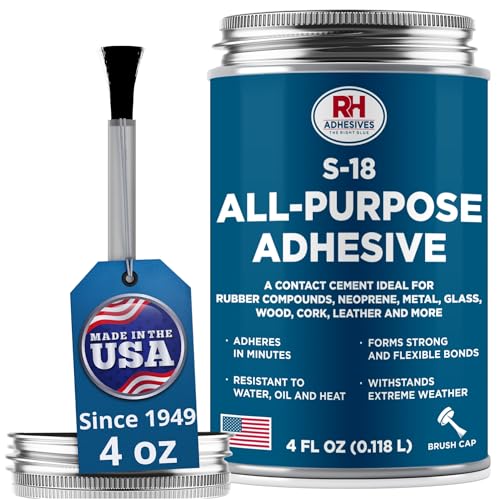
2. S-18 All-Purpose Adhesive 4 oz
The upholstery workhorse that saves sagging headliners and peeling fabric for a few dollars.
If your repair involves fabric, foam, or a rubber panel meeting metal, this contact cement is the right tool rather than a silicone sealant. It is a neoprene-based liquid that adheres both porous and non-porous materials, so it bridges a soft foam liner to a hard roof panel in one layer. The films it forms resist oil and hold strong peel strength, which is exactly what a constantly flexing headliner demands.
It also out-carries most tubes on the list on volume — 4 oz of adhesive against the 3 oz in the Berkland marine tube. The bottle is water resistant and built for difficult temperatures, so a hot car roof in summer does not defeat it. Buyers praise the hold: one scraped the old glue off a blown boot sole, applied S-18, and the repair lasted multiple wears with enough left in the 4 oz can for a second pair.
The honest fit note here is adhesion to bare rubber. While plenty of jobs succeed, some surfaces resist it, so scuff and clean the rubber first and test a corner before committing. Ease of use is also a learning curve: it is a contact cement, so you coat both surfaces, let them get tacky, then press. The strong solvent smell means crack a window open while you work. And it does take up to 24 hours to reach a full cure, so a clamp or a weight overnight helps.
Room to spare: the 4 oz can covers more ground than the 3 oz marine tube, and a little goes far on thin foam layers.
What to watch: bare rubber can be stubborn, so prep the surface and run a small test patch before you coat the whole panel.
Reach for this if: you are gluing upholstery, headliner foam, vinyl, or rubber to metal and want a flexible, water-resistant film that holds through heat.
Look elsewhere if: your joint lives underwater — that is a marine sealant’s job, not a contact cement’s.
3. Berkland Marine Adhesive Sealant 5200 Fast Cure, 3 oz White
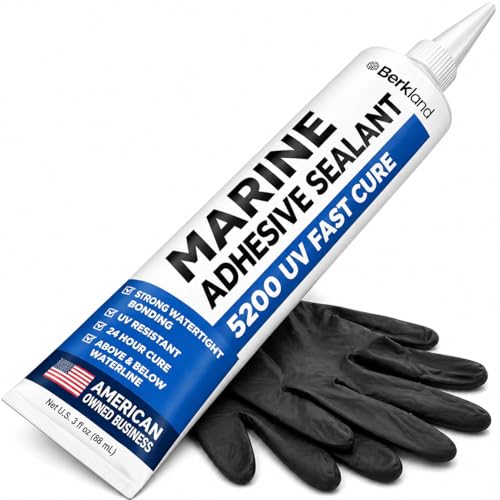
A permanent, watertight bond built for hull joints, through-hulls, and anything that gets wet.
This is the one to buy when the repair has to survive water pressure, hull flexing, and wave impact. The polyurethane formula skins in 1 hour, becomes tack-free by 2 hours, and reaches handling strength by 24 hours. Traditional 5200 can take up to 7 days to get there, so this fast-cure version puts your boat back on the water far sooner without trading away bond strength.
It bonds fiberglass, wood, aluminum, steel, gelcoat, and most plastics — essentially the whole material list of a boat. The white finish blends into gelcoat and hardware bedding, and the formula resists UV, salt spray, and temperature extremes without cracking, shrinking, or chalking. The 3 oz tube is sized for targeted repairs and small bedding jobs, and it ships with disposable gloves so you can handle the sticky paste cleanly.
The trade-off is the squeeze. Buyers praise the bond quality, but ease of use is mixed — the thick paste fights you coming out of the tube, especially in the cold. Warm the tube a little before use and cut a slightly larger nozzle opening. As for the volume versus the S-18, this tube holds 3 oz against the contact cement’s 4 oz, so if you have a large deck fitting to bed, you may want more than one.
Built for the waterline: the permanent, flexible bond holds above and below water, so through-hulls and hull-to-deck joints stay sealed as the hull moves.
The squeeze factor: thick paste takes effort to push from the tube — warm it first and open the nozzle wider to keep the bead flowing.
Best for boat owners: anyone bedding hardware, sealing a through-hull, or making an on-the-water fix who needs a UV- and salt-resistant waterproof bond.
Not the pick for: indoor furniture or fabric repairs, where a contact cement or clear sealant does the job more simply.
4. Gorilla Silicone Waterproof Caulk 2-Pack
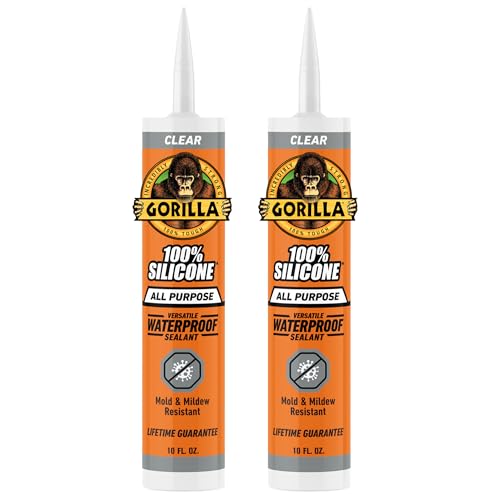
The bathroom and window sealer that takes water in 30 minutes and shrugs off mold.
You get two 10 oz cartridges here, both of which fit a standard caulking gun — a generous kit if you are resealing a shower, a sink edge, and a window in one weekend. The 100% silicone formula is fully waterproof indoors and outdoors, and it is rated water-ready in just 30 minutes, so you can run the shower the same day you seal it. It meets ASTM C-920, Class 35 for flexibility, which means the seal moves with the joint instead of splitting.
Mold and mildew resistance is a real plus in damp rooms, and the finish is designed not to yellow with age. Buyers rave about the finish: a solid watertight bead that tools smooth and stays bright. As one happy owner put it, it went on easy, dried fast, and “the finished look is awesome.”
Here is the honest part. This is a silicone caulk, not a slick-surface adhesive — it seals gaps and bonds to tile, glass, metal, and porcelain beautifully, but silicone-to-silicone bonding is better served by the Dow Corning 732. The cure also has a sharp vinegar odor, it is not paintable, and it takes 24 hours for a full cure even though it is water-ready far sooner. If you let a bead sit on painter’s tape too long, it can fuse and need razor cleanup.
Why Bathrooms Love It
- Water-ready in 30 minutes so a shower can go back into service same-day
- Mold and mildew resistant with a no-yellowing clear finish
- Two 10 oz cartridges cover multiple rooms from one kit
- Meets ASTM C-920, Class 35 for flexibility without cracking
Sized For Sealing, Not Slick Bonding
- Sharp vinegar smell during cure and not paintable once set
- Full cure takes 24 hours even though it is water-ready in 30 minutes
- Excess bead left on tape can harden and demand a razor to remove
Pick it for wet rooms: showers, sinks, tubs, and exterior window or door seals where you want a flexible, mold-resistant bead fast.
Skip it for glue jobs: if you need to stick silicone to silicone or bond a rubber panel, choose a purpose-built sealant or contact cement instead.
5. Permatex 80855 Clear RTV Silicone Sealant

The garage-grade RTV that bonds a seat cushion or door seal and survives the weather.
RTV stands for room-temperature vulcanizing — a silicone that turns from paste to rubber at ordinary temperatures once it meets moisture, no oven or heat gun needed. This 11 oz cartridge is the largest tube here by volume, and it grips glass, metal, plastic, and vinyl, which covers most of what a car, truck, or garage repair throws at you.
The proof is in the jobs it finishes. One owner glued a Honda Pioneer side-by-side seat cushion back to its base, and a second set a door seal to concrete on a 40-degree garage floor where the cold did not stop it from vulcanizing. Buyers rate it on the bond itself: it seals a seat cushion or door seal and keeps holding. The clear color keeps the repair discreet, and once set it holds through ongoing movement and weather.
One practical point: this RTV sets fast, so you have a short window to position your part before it grabs. Work in small sections, tape or clamp the piece first, and keep a rag ready. If a spot goes wrong, you will find it hard to reposition the bead cleanly and the long-term hold under constant flexing is unproven — so treat the taped clamp as part of the job, not an optional extra.
Garage-ready strength: an 11 oz cartridge that bonds glass, metal, plastic, and vinyl and keeps holding through cold and weather.
Fast-set pace: it grabs quickly, so line up your clamps and tape before you squeeze — repositioning a cured bead is difficult.
Made for mechanics: auto, truck, and garage repairs where a waterproof clear bond needs to hold through movement and cold weather.
Better elsewhere for: indoor fabric or headliner work, where a contact cement’s spray-and-press method is easier to control.
Know the Specs
Cure Time and Working Window
Cure time is how long a sealant takes to harden from paste into solid rubber. A formula can skin over in an hour and reach handling strength in 24 hours, or it can be water-ready in as little as 30 minutes. Shorter windows are handy for quick repairs, but they also cut the time you have to position a part — so clamp or tape first, then squeeze.
Flexibility and Waterproof Rating
Silicone joints flex constantly with heat and movement, so the adhesive must stretch rather than crack. A stated flexibility standard, like ASTM C-920, Class 35, tells you the seal will move without splitting. Waterproof ratings matter too: a sealant rated above and below the waterline is built for submerged marine work, while an indoor/outdoor silicone caulk handles splashes and showers.
Surface Compatibility
Different formulas grip different surfaces. A clear multi-purpose silicone sealant suits glass, metal, porcelain, ceramic, and painted surfaces. A neoprene contact cement suits porous and non-porous materials like leather, felt, and foam. A marine polyurethane sealant suits fiberglass, wood, gelcoat, and metal. Match the formula to the material — silicone sealant for glass and metal, contact cement for foam and fabric, polyurethane for fiberglass and wood.
Item Form and Container
Paste sealants stay where you put them on vertical joints, while liquid contact cements get brushed or sprayed and let both surfaces tack up. Tubes suit small, targeted fixes; cartridges fit a caulking gun for longer runs; and cans hold liquid cement for fabric jobs. Pick the container to fit the job: a 3 oz tube for a single joint, an 11 oz cartridge for a long run, a can for fabric panels.
Common Questions
What is the best adhesive for bonding silicone to silicone?
Will regular super glue work on silicone?
How long does silicone adhesive take to cure?
Can I use a marine sealant for a bathroom repair?
Does silicone adhesive stick to glass and metal?
Is a contact cement the same as a silicone sealant?
How do I stop silicone adhesive from sagging on a vertical joint?
Can I paint over silicone adhesive?
Does silicone adhesive need to be clamped while it cures?
What is the strongest adhesive for repair jobs under water?
The Bottom Line
The best overall adhesive for silicone jobs is the Dow Corning 732 Clear Multi-Purpose Sealant — its clear, flexible, moisture-cured rubber is the right match for slick silicone, glass, and metal, and it fixes the kind of repair most glues cannot. If you are gluing upholstery, headliner foam, or rubber panels, the S-18 contact cement offers more film and a water-resistant hold for fabric work. For bathroom and window sealing, the Gorilla 100% Silicone Caulk 2-pack delivers a water-ready, mold-resistant bead across two full cartridges. And for marine or auto work, the Berkland 5200 fast cure and the Permatex 80855 RTV cover the waterline and the garage respectively.
How we choose
We do not accept paid placement. Every pick is matched to a real buyer and a real use-case; we do not hands-on test units.
Sources
Specifications: manufacturer listings and product documentation. Review insights: verified customer reviews, as of October 2026. Pricing: not shown on this page (it changes often); check the current price via the retailer link.
As an Amazon Associate, Aappliancez earns from qualifying purchases. This does not affect which products we feature.