Disclosure: Some links in this post are affiliate links. As an Amazon Associate I earn from qualifying purchases, at no extra cost to you. Learn more
Specs are compiled from manufacturer listings and verified buyer reviews and can change over time — please confirm the key details on the product page before buying.
Here is the short answer you came for: for a real ceramic tile backsplash, a ceramic-rated paste adhesive is the right glue, and for a peel-and-stick tile panel, the tile’s own adhesive is what holds it up. If you are simply trying to get a new backsplash onto the wall without a grout float and a bucket, a peel-and-stick tile is the easier job. If you are bonding actual ceramic tile to the wall, you want a purpose-made ceramic tile adhesive instead. This page sorts both paths out, so you can pick the one that matches your kitchen, your wall, and your patience.
This guide is built by comparing the manufacturers’ published specifications and the patterns across verified customer reviews, so you get each pick’s real strengths and trade-offs instead of marketing spin.
Sticky-backed tile panels and ceramic paste adhesives solve two different problems, so the real question is which one your wall needs. This breakdown of the adhesive for backsplash options weighs coverage, cure time, and how much trimming each one demands.
Top Picks
How to choose the best adhesive for a backsplash
Start by naming your actual material, because that single answer eliminates half these products. A backsplash is a splash zone — it takes steam, grease, and the occasional jet of water from the sink — so whatever glue or panel you pick has to survive constant moisture without letting go in the middle of the night.
Paste adhesive or peel-and-stick panel?
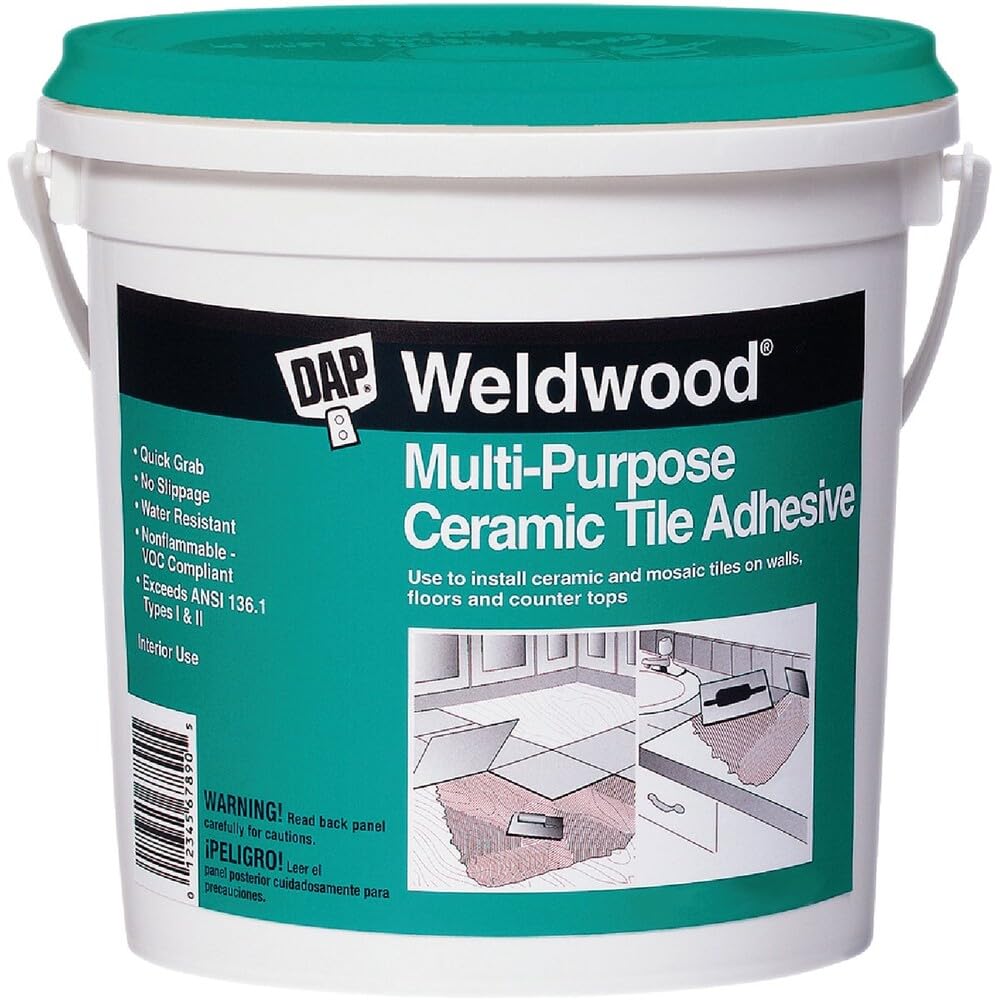
A ceramic tile adhesive like the DAP Weldwood spreads on in a pasty layer and grabs the tile itself. A peel-and-stick panel is a finished tile-shaped sheet with glue already on the back, so there is no separate adhesive to buy at all. If you are setting ceramic or mosaics, you need the paste. If you want the tile look with the least mess, the peel-and-stick sheet is the whole product.
Match the product to what is behind it
Peel-and-stick panels want a smooth, clean, dry surface. Textured walls are the usual failure point, though one renter found the texture was not a problem when the panel still gripped. Bare paint can come off with the tile on removal, which is why removable-friendly picks exist for apartments and dorms.
Coverage is a math problem, not a guess
Every peel-and-stick listing sells by the sheet, and the sheets are different sizes. A panel listed at 12″ x 12″ covers a very different wall than one at 11.55″ x 8.38″. Measure your wall, then divide by the sheet coverage — and add spare sheets, because cuts around outlets and cabinet edges eat more material than most people expect.
Heat, steam, and the strip behind the stove
The area directly behind a cooktop sees the worst of it: heat, oil, and steam at once. Look for a panel that states heat and moisture resistance if that is where yours is going. If you are gluing actual tile there, pick an adhesive whose label matches tile and ceramic work rather than a general-purpose grab glue.
Side-by-Side Comparison
| Model | Best For | Type | Coverage | Cure / Install | Amazon |
|---|---|---|---|---|---|
| DAP 25190 Weldwood Ceramic Tile Adhesive★ Best Overall | Setting real ceramic tile | Paste adhesive | 1 Quart container | Paste, ceramic-rated | Amazon |
| Loctite Power Grab Ultimate crispPremium Pick | Near-invisible bonds on tricky surfaces | Construction adhesive | 9 oz cartridge | 24 hours full cure | Amazon |
| Smart Tiles Subway Emerald Green | Small, high-impact walls | Peel and stick panel | 2.76 sq ft (pack of 5) | Adheres fully around 48 hours | Amazon |
| DEWOO Green Peel and Stick Tiles | Renters covering a full kitchen run | Peel and stick panel | 10 sheets, approx 10 sq ft | Peel and stick, bottom up | Amazon |
| Midcard 20 Sheet White Marble PVC Tile | Large walls on a tight budget | Peel and stick panel | 20 sheets, 9.8 sq ft | Peel and stick, no grout | Amazon |
Detailed Reviews
1. DAP 25190 Weldwood Ceramic Tile Adhesive
Our pick — 4.5★ from 900+ verified ratings; the strongest balance of quality and price.
The old-school paste that keeps grabbing tile long after the trendy stuff has let go
If you are setting actual ceramic tile on a backsplash, this is the one to reach for first — a 1-quart tub of off-white paste made specifically for ceramic, and the highest-scoring pick here at 4.5 stars across 900+ ratings. It arrives as a thick paste in a quart container weighing 3 pounds, one piece per order. Spread it, press the tile, and it holds. That is the whole job.
What wins people over is simply that it works. Across 900+ ratings, reviewers praise one thing above all: it holds ceramic tile. One five-star write-up sums up the tradesman view: “Ive renovated 8 homes now for Kings Home Properties (our Airbnb business) and this tile adhesive always works great!” Mosaic work gets the same treatment — small tiles go down and stay put, and it holds up outdoors too. For crafts and repairs, owners use it on ceramics, gems, beads and shells on decorative houses, and on chipped ceramics, because it dries indoors and holds outdoors.
One tip worth stealing from the feedback: it has a soft, marshmallow-like consistency, so you need less than you expect. For small spaces, dab it on with a fingertip and wipe the excess before it dries, because you can still reposition the piece while it is wet. The honest catch is the curvy part of the feedback — most owners find it dries in a reasonable window, but a few report it turning unusable in the tub once opened, so reseal the container between sessions. Touch-up work, mosaic edges, and craft projects are where it shines brightest.
What makes it the default pick
- Purpose-made for ceramic tile, so it is the correct product rather than a workaround
- Works indoors and outdoors, with a small gap-filling, repositionable paste texture
- A little goes further than the tub size suggests — tip: use less than you expect
Where it asks a little patience
- Once the tub is open, it does not stay usable forever, so seal it between sessions
- Fingertip application for tight corners is slower than squeezing a tube
Buy this one if: you are setting ceramic, mosaic, or small decorative tile on a backsplash and want a paste that matches the material.
Think twice if: you wanted a finished tile look with zero adhesive work — that is a peel-and-stick panel, not this.
2. Loctite Power Grab Ultimate Construction Adhesive
The invisible-bonder that holds pavers through a year of weather
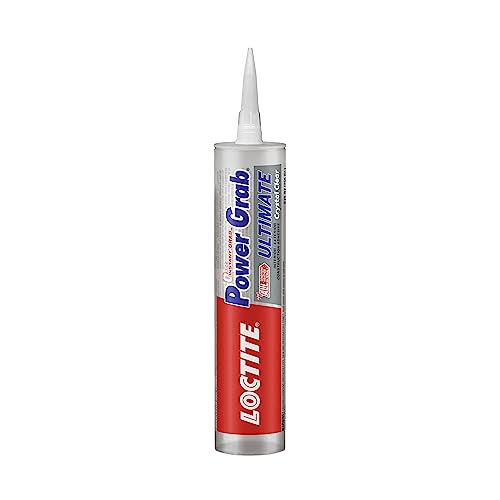
Where the DAP above is built for tile, this Loctite is built for the awkward stuff: wood, plywood, MDF, and tile, and the label says it can even bond two non-porous surfaces together. The clear formula stays see-through as it sets, which is the whole reason people buy it — no ugly yellow line peeking out from behind a finished edge. It comes as a 9 oz cartridge, and it fully cures in 24 hours.
The clarity is the standout everyone notices, and the weatherproofing carries it. The tube’s own numbers put it stable from 0°F to 140°F for exterior projects, and a buyer using it to reset loose pavers on outdoor steps reported: “It’s been a year of weather and still holding well.” Grab is genuinely fast — one owner glued lighter objects and found it “a super quick grab even on horizontal surface,” though that same buyer was unsure how it would handle something heavy. The quick tack also means you can often skip bracing and nailing on a backsplash trim piece.
Here is the fair, and genuinely useful, warning: cold is where it struggles. One project that failed to hold an exterior door in freezing temperatures stayed tacky past the 24-hour mark even with heaters running, despite the cold-weather labeling. Cleanup is easy while it is fresh with mineral spirits, and much harder once it sets — so wipe drips immediately.
Why it earns a slot: a clear, gap-filling bond with weatherproofing down to 0°F and a fast tack makes it the right tube for trim, loose pavers, and repairs where a visible glue line would ruin the look.
The caveat that matters: in freezing conditions it cures far slower than advertised, so plan warm-weather projects or give it extra time and warmth.
Reach for this if: you need an invisible, weatherproof bond on wood trim, a backsplash edge, or an outdoor repair.
Look elsewhere if: you are working in a cold garage or on a freezing exterior wall — the cure time stretches out badly there.
3. DEWOO Green Peel and Stick Backsplash Tiles

Ten crack-and-peel sheets that turn a tired kitchen into a rental-friendly makeover
Ten 12″ x 12″ sheets per box, each one 0.05 inches thick, adding up to roughly 10 square feet of coverage — enough for a standard kitchen run, and far more material than the Smart Tiles pack below delivers. The 3D epoxy surface is the trick here: it mimics the depth of real tile rather than the flat shine of a sticker. The material is PU and vinyl, and it is rated water resistant.
Renters are the buyers here: one finished a full apartment install in about an hour. One apartment dweller applied it over painter’s tape and butcher paper and finished the whole install — paper included — in about an hour. Another was worried about slightly textured walls and found everything stuck on great, with no damage when the tester was pulled. It suits laundry rooms, bathroom walls, campers, and kitchen islands, and the waterproof method is specific: start at the bottom and overlap the upper tile over the lower one so water cannot seep behind.
Cutting is where expectations need managing. Buyers report it works fine to put up and piece around outlets, but several found it harder to cut than expected, so budget time for trimming and use a fresh blade. Adhesion is the honest split — plenty of owners find it grips firmly, while a few note it does not stick as strongly on their particular surface, which usually traces back to wall prep. At 4.3 stars across 450+ ratings, this is the pack to buy when you need to cover real square footage without a contractor.
The highlight: the look. Owners say the 3D epoxy surface reads like genuine tile, not a flat sticker.
A small reality check: the sheet is thinner than a real tile, and trimming around outlets and cabinet edges takes longer than the listing makes it sound.
Best for: renters and DIYers covering a full kitchen or bathroom run who want the tile look without grout.
skip it if: you need a permanent, waterproof-for-decades surface — a peel-and-stick sheet is a temporary upgrade, not a replacement for real tile.
4. Smart Tiles Peel and Stick Backsplash

Small glossy sheets with a gel-depth finish that hold behind a stovetop without melting
These are not 12-inch squares — each glossy sheet measures 11.56″ long by 8.38″ wide and 0.07 inches thick, and a pack of five covers 2.76 square feet. That is the smallest coverage in this lineup, so it is the pack to buy for a compact wall: a stove alcove, a sink strip, a fireplace surround, a camper galley. Compared to the DEWOO’s roughly 10 square feet per box, this one is built for tight, deliberate placements rather than a full kitchen sweep.
Heat and moisture are handled head-on: the sheets are rated resistant to stovetop heat, fine for a bathroom backsplash (though not inside the shower), and the maker backs them with a guarantee that once fully adhered — generally after 48 hours — they will not peel or crack if the install guidelines were followed. The gel-like Gel-O finish gives them a 3D gloss instead of a flat sticker sheen. Owners put them behind stoves and report no melting after a year, with bright, vivid color that held up.
The real grievance is worth knowing before you buy: trimming and aligning takes time, and some batches arrive with pages cut slightly off, which makes edges fight each other. A white silicone bead fills small gaps beautifully, and white trim finishes the exposed edges — a project within the project that the listing does not spell out. At 4.2 stars across 450+ ratings, the look is the crowd-pleaser and the durability curve is the question mark.
The case for the emerald
- A glossy, gel-depth subway finish that reads as real tile, not a flat sticker
- Rated against stovetop heat and bathroom moisture, and not suitable inside a shower
- Made in Canada, and backed to keep sticking once fully adhered
The fiddly bits
- At 2.76 sq ft per five-pack, small walls only — a full kitchen needs several packs
- Some sheets arrive cut slightly off, so edges can need trimming to line up
Ideal for: a compact, high-visibility wall — behind a stove, above a sink, or in a camper kitchen — where the glossy emerald finish is the point.
Not the one if: you are covering a wide run; the small per-pack coverage means several boxes and a higher total spend.
5. Midcard Peel and Stick Backsplash
Twenty marble-look sheets — the most material in the box for the least per square foot
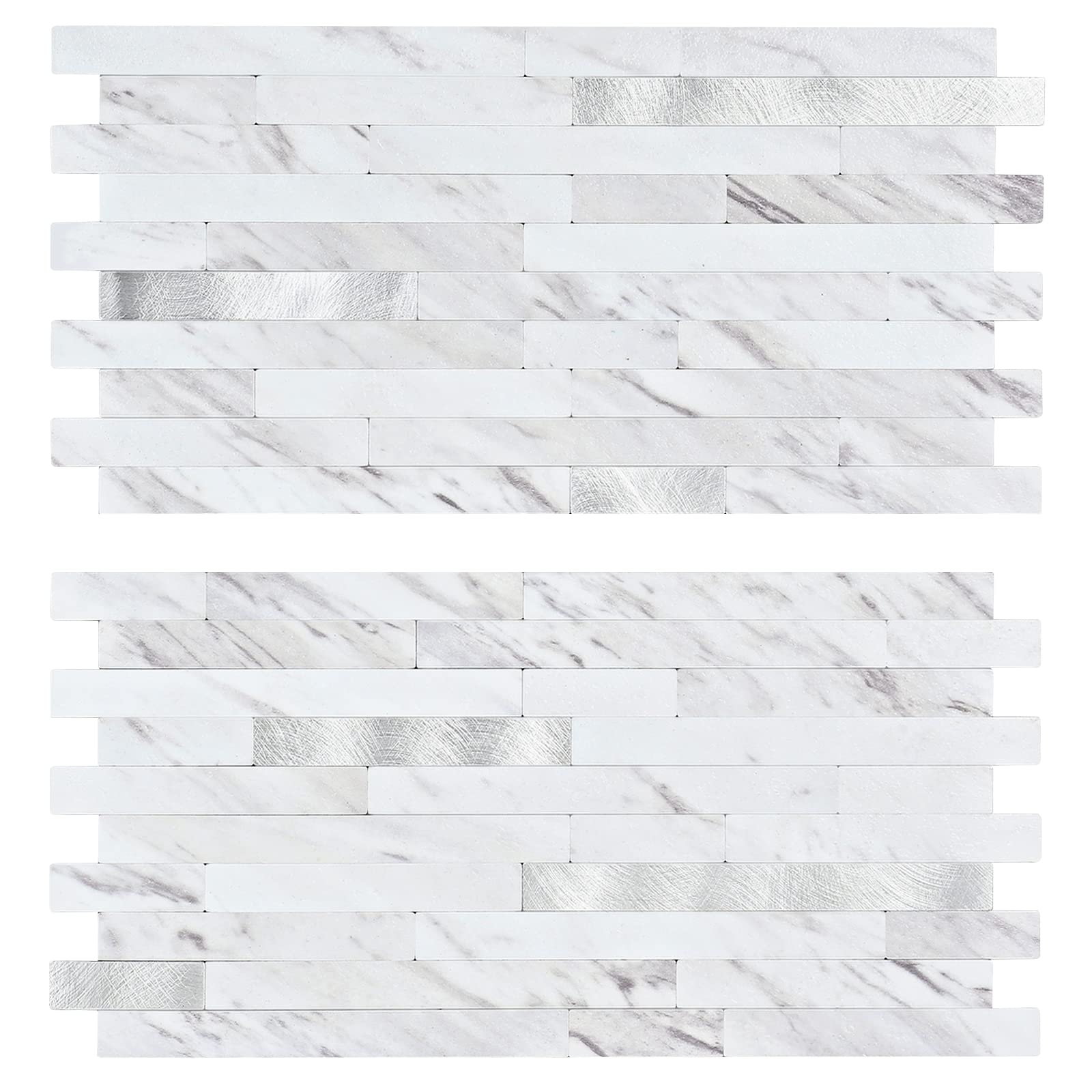
Twenty sheets at 5.7″ x 11.8″ each, 9.8 square feet total, in a realistic white-marble pattern with metallic silver veining. Tile for tile, that is the most generous pack here — double the quantity of the Smart Tiles five-pack. The material is PVC at 0.12 inches thick, water- and heat-resistant, and the smooth surface wipes clean with a damp cloth. Installation is peel-and-stick, no tools or grout needed.
Reviewers agree on one point: the marble pattern reads as real stone, not vinyl. Owners say the tiles read as modern and high-end, cut and install easily, and hold firmly on clean surfaces. One shopper was blunt about it — tiles “look like real tile,” easy to apply, adhesive solid. Another praised how they flex over uneven surfaces where a rigid tile would crack. For a quick, budget-friendly renovation with a marble look, this is the volume play.
Two things to plan around. First, the adhesive is genuinely strong, so you get one shot — one owner said the tiles are “extremely sticky so you cannot reposition them,” and another noted that removing them can pull paint or drywall. Second, the marble pattern shifts between tiles, so order all your sheets together in one go; the maker also recommends buying at least 10% extra for cuts and pattern matching. At 4.5 stars across 450+ ratings, this earns its Best Value tag on coverage per pack.
The volume advantage: at 20 sheets and 9.8 square feet, this pack covers a standard backsplash in a single order, so you are not reordering and risking a color mismatch mid-project.
The one gotcha: that same strong adhesive means no repositioning and possible wall damage on removal — great for a permanent look, less so for a place you might move out of.
Your pick when: you want a big marble-look wall covered in one order with no tools and no grout.
Pass if: you are renting and need a clean, damage-free removal — the adhesive is strong enough to lift paint, so peel-and-stick removal here is a commitment.
Know the Specs
Coverage area and sheet count
Coverage is the square footage a pack actually tiles, and the sheet count is how many peel-and-stick panels you get. These two numbers decide whether a box finishes your wall or leaves a bare strip. Measure your backsplash, then check the listed coverage — and add spare sheets, because cutting around outlets and cabinet edges eats material fast.
Full cure time
Full cure time is how long an adhesive takes to reach its final, strongest bond. A paste or cartridge glue can feel dry within hours but keep strengthening for a day. The Loctite states a 24-hour full cure, while the Smart Tiles recommend letting panels fully adhere for around 48 hours. Give it the time before you load the surface or test edges.
Heat and moisture resistance
This tells you whether a product survives the splash zone behind a stove or sink. Steam, grease, and hot oil are hard on weak bonds and thin materials. Panels that state heat and moisture resistance are safer for the area directly above a cooktop, and the Loctite rates a temperature range of 0°F to 140°F for exterior work.
Removability versus holding power
Strong adhesion and clean removal pull against each other. A bond strong enough to stay put is often strong enough to take paint with it when pulled. Renters should weigh how removable a panel claimed to be actually is, while homeowners setting permanent tile can happily choose the strongest grip.
Common Questions
Can I use peel-and-stick tile over an existing painted wall?
How do I know how many sheets to buy for my backsplash?
Will a peel-and-stick backsplash survive heat behind a stove?
What is the difference between a tile adhesive and a construction adhesive?
Is the Smart Tiles adhesive safe for a bathroom backsplash?
Can I reposition a peel-and-stick tile if I place it crooked?
How long should I wait before using the backsplash after sticking tiles on?
Do I need to overlap the tiles when installing a backsplash?
Will air bubbles or misaligned cuts show on a marble-look tile?
Which is better for a rental — peel-and-stick or real ceramic tile?
The Bottom Line
For most backsplash jobs, the adhesive for backsplash that earns the top spot is the DAP 25190 Weldwood Ceramic Tile Adhesive, because it is made for the ceramic tile it is bonding and the feedback confirms it holds — no gimmicks, just a paste that works. If you want a genuinely invisible bond on trim, pavers, or tricky mixed materials, grab the Loctite Power Grab Ultimate. And if you would rather skip adhesive entirely and cover a whole kitchen wall with peel-and-stick, the DEWOO Green tiles give you roughly 10 square feet per box and a look that reads like real tile. Whichever path you choose, measure your wall, add spare material for cuts, and give the bond its full cure time before you judge it.
How we choose
We do not accept paid placement. Every pick is matched to a real buyer and a real use-case; we do not hands-on test units.
Sources
Specifications: manufacturer listings and product documentation. Review insights: verified customer reviews, as of October 2026. Pricing: not shown on this page (it changes often); check the current price via the retailer link.
As an Amazon Associate, Aappliancez earns from qualifying purchases. This does not affect which products we feature.