Disclosure: Some links in this post are affiliate links. As an Amazon Associate I earn from qualifying purchases, at no extra cost to you. Learn more
Specs are compiled from manufacturer listings and verified buyer reviews and can change over time — please confirm the key details on the product page before buying.
If you want the short answer: pick an acid that matches your skin’s tolerance before you pick one that matches the strength you read about online. A 20% niacinamide serum suits someone chasing stubborn post-blemish marks, while a gentle time-released mandelic blend suits anyone whose face flares at the first hint of a strong active. The five picks below cover both ends of that spectrum, and each one earns its place for a different reason.
This guide is built by comparing the manufacturers’ published specifications and the patterns across verified customer reviews, so you get each pick’s real strengths and trade-offs instead of marketing spin.
You will see how each formula actually behaves on skin day to day, which concentration suits which concern, and where the honest limits sit before you commit. Here is the practical breakdown of the acid for dark spots that fits your routine and your skin barrier.
Top Picks

How To Choose The Best Acid for Dark Spots
The single biggest mistake people make with a dark-spot acid is starting at the strongest concentration they can find. Pigment responds to consistency, not intensity. A serum you can wear every night for two months will out-fade a harsh one you have to quit after five days because your cheeks are stinging.
Match the acid to the type of mark
Post-blemish marks left behind by acne tend to respond to niacinamide, which works by helping block melanin from surfacing. Sun spots and melasma often call for kojic acid, alpha arbutin or a gentle AHA that resurfaces the top layer. If your spots came from old breakouts and your skin is oily, a water-gel niacinamide formula is the natural starting point.
Read the delivery, not just the dose
A time-released acid, meaning the ingredient trickles into skin gradually instead of all at once, can deliver the effect of a stronger percentage while feeling mild. That matters if your face reddens easily. Look for the words time-released or encapsulated on the label if gentleness is your priority.
Check what soothes the formula
Strong brighteners often come bundled with calming ingredients such as centella, aloe or ceramides. Those extras are what let you use the product long enough to see a change. A serum with no soothing support is the one most likely to sit unused in a drawer.
Side-by-Side Comparison
| Model | Best For | Key Active | Size | Texture | Amazon |
|---|---|---|---|---|---|
| CeraVe Skin Brightening Vitamin C Serum★ Best Overall | Everyday brightening | 10% L-ascorbic acid | 1 oz | Lightweight gel | Amazon |
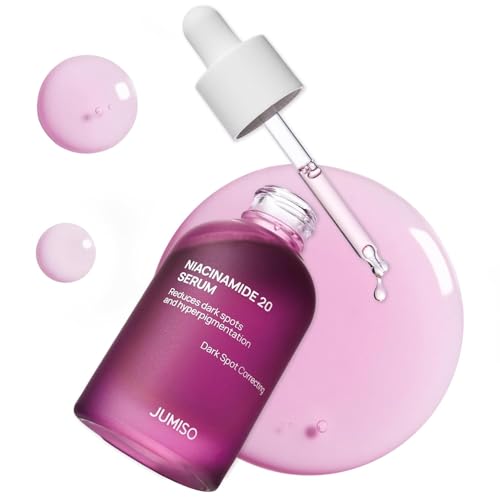
| JUMISO 20% Niacinamide SerumTop Performer | Stubborn post-blemish marks | 20% Niacinamide | 1.35 fl oz | Silky water-gel | Amazon |
| SeoulCeuticals Kojic Acid Serum | Melasma and sun spots | Kojic acid blend | 1 oz | Light liquid | Amazon |
| TruSkin Brightening Vitamin C Serum | Sensitive skin beginners | SAP vitamin C | 2 fl oz | Lightweight liquid | Amazon |
| Paula’s Choice 6% Mandelic + 2% Lactic Acid | Resurfacing uneven tone | 6% Mandelic, 2% Lactic | — | Watery liquid | Amazon |
Detailed Reviews
1. CeraVe Vitamin C Serum 1oz
Our pick — 4.5+★ from 44,000+ verified ratings; the strongest balance of quality and price.
The dermatologist-developed workhorse that brightens without asking much of your skin in return.
The headline ingredient here is 10% L-ascorbic acid, the purest form of vitamin C, which is the version that has the most behind it for evening out tone. CeraVe pairs it with hyaluronic acid, which holds water in the skin so the brightening does not come at the cost of tightness. The formula also carries 3 essential ceramides, the fatty molecules that make up much of your skin barrier, so daily use supports the barrier instead of thinning it.
What wins people over is plain effectiveness — it is the most-discussed strength in the feedback, and the brightening results follow close behind. The texture helps: it is a gel that sinks in with a non-greasy finish, so you can layer an eye cream or moisturizer on top without waiting around. It is also fragrance free, paraben-free and non-comedogenic, which means it is formulated not to clog pores.
The catch is dose control. The vitamin C in this formula is potent enough that a heavy hand can leave a temporary orange cast, so a thin layer is the whole game — as buyers report, “Be wary will turn your face orange – have to make sure just use a tiny amount. Otherwise it feels good on the skin.” Skin compatibility is genuinely mixed in the feedback, with some sensitive faces breaking out and others sailing through, so patch test first if your skin reacts easily.
What earns its keep
- 10% L-ascorbic acid is the purest, most-studied form of vitamin C for tone
- 3 essential ceramides plus hyaluronic acid support the barrier while brightening
- Fragrance-free gel absorbs fast with no greasy film
Where it asks for care
- Too much product can leave a temporary orange tint
- Reactions vary — some sensitive skin breaks out
Reach for this if: you want a proven, fragrance-free vitamin C you can wear every morning without a complicated routine.
Go gentler if: your skin has reacted to vitamin C before — start with a thin layer and build up.
2. JUMISO Niacinamide Serum 1.35 fl oz
A three-front melanin fighter for the marks that have ignored everything else.
Most brightening serums lean on one ingredient. This one stacks three: 20% niacinamide to help block melanin from surfacing, tranexamic acid to calm discoloration at the source, and glutathione plus hexylresorcinol to brighten dullness. That is a heavier hitter than the CeraVe pick, and it is aimed squarely at stubborn post-blemish marks rather than general dullness. The maker cites a clinical study showing up to 27.7% improvement in the look of skin clarity after 2 weeks, with results varying by person.
Size and weight are where it separates from the SeoulCeuticals bottle — 1.35 fl oz versus 1 oz, at 2.47 ounces versus 1 ounce. The water-gel texture absorbs in seconds with no sticky residue, and the triple centella complex (asiaticoside, madecassic acid and asiatic acid) is there to calm the redness that high-strength niacinamide can trigger. Six weeks in, owners mention smaller-looking pores alongside smoother, less oily skin, and the “glass skin” glow shows up again and again in the feedback.
Here is the honest part: 20% is a serious concentration, and the maker tells you to start at 2-3 nights a week before going nightly. Do not layer it with retinol, high-strength vitamin C or AHA/BHA in the same routine — alternate nights instead. If your skin is dry or easily irritated, the oily finish and the strength both work against you, so this is the pick for resilient, oily or combination skin.
The muscle behind it: three brightening actives in one bottle, with centella to soften the blow of a 20% dose.
Use it like a treatment: it is a ramp-up product, not a first-night product — start twice a week and let your skin adapt.
Best for: oily or combination skin chasing dark marks that have stuck around for months.
Not for: dry or reactive faces that sting at anything above a mild strength.
3. SeoulCeuticals Kojic Acid Serum 1oz
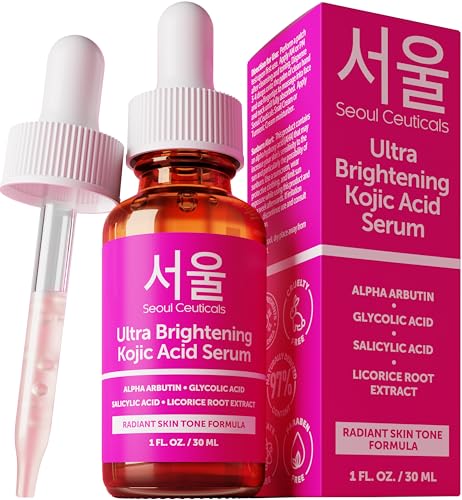
The patient one — a low-dose kojic blend for melasma that rewards weeks, not days.
Kojic acid is the classic route for the flat, sun-driven patches that sit along the hairline and cheekbones. This serum bundles it with alpha arbutin, licorice root and hyaluronic acid, and adds glycolic and salicylic acid to gently exfoliate the surface so newer skin shows through. The formula is 72% organic and 98% naturally derived, paraben free, cruelty free and vegan friendly. At 1 x 1 x 4 inches and 1 ounce, it is the slimmest bottle on this list — noticeably more compact than the Jumiso pick.
The thing everyone raves about is texture. It is non-sticky, absorbs fast, and layers cleanly under the rest of a multi-step Korean routine — several owners with acne-prone skin note it caused no breakouts and faded old scars alongside a slight overall brightening. Pair it with azelaic acid if your routine already includes it; the two sit well together.
Set your expectations to months, not days. The recurring note is that this works slower than a prescription, which is exactly why it is a good first kojic acid for someone who has never used one. Consistency carries it — the lightening of cheek spots tends to show up around the second bottle. Sunscreen is non-negotiable with any kojic formula, and the feedback is split enough that a full bottle before you judge it is fair.
Choose this when: melasma or sun patches are the target and you want a gentle kojic entry point that plays well with other actives.
Look elsewhere if: you need visible change inside two weeks — this one runs on a slower clock.
4. TruSkin Vitamin C Serum 2 fl oz

Two ounces of the gentlest vitamin C form, built for faces that flinch at the strong stuff.
Where the CeraVe serum goes for pure L-ascorbic acid, this one uses SAP — sodium ascorbyl phosphate, a stable, gentle form of vitamin C designed to be tolerated daily. You get the brightening without the sting or dryness that the stronger forms can cause, which is why it suits reactive skin so well. Botanical hyaluronic acid holds moisture, vitamin E helps defend against everyday environmental stress, and aloe and jojoba calm and soften. The bottle is 2 fl oz — double the CeraVe and Jumiso sizes — so a single bottle lasts a good while.
Sensitive-skin success stories are where this formula earns its keep. People who patch-tested and built up slowly over time report brighter, smoother skin with lines and roughness softened when paired with sunscreen. Acne-prone and mature skin both get mentioned, and makeup artists have flagged the smooth finish. The unscented, lightweight liquid absorbs fast and dries down completely, so makeup goes on over it without slipping.
The trade-off is speed. This is a slow, steady brightener, and someone expecting a quick glow from two weeks of use may see nothing yet — that is the nature of a gentle SAP formula. Patience is the price of a vitamin C that will not upset your barrier, and for many sensitive faces that is a fair trade.
Why sensitive skin likes it: SAP vitamin C plus aloe and jojoba means brightening that rarely bites back.
The honest wait: gentle forms move slowly, so give it a full bottle before you judge the result.
It suits you if: strong vitamin C has stung or flaked your skin and you want the brightening without the drama.
Skip if: you need fast, dramatic fading and have no sensitivity issues at all.
5. Paula’s Choice 6% Mandelic + 2% Lactic Acid Liquid Exfoliant
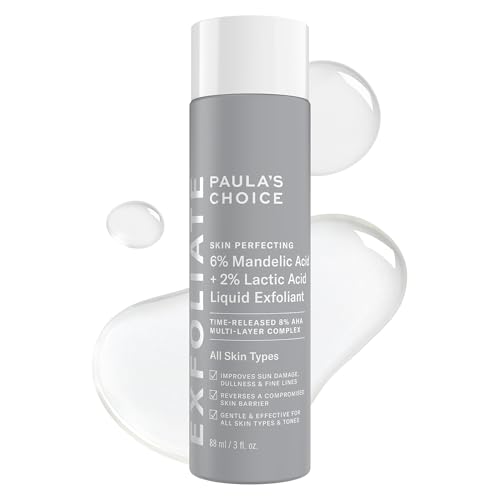
Liquid exfoliation that lifts dull surface cells so old pigment has somewhere to go.
This is a different tool from the serums above — an AHA exfoliant rather than a brightening serum. Mandelic acid at 6% and lactic acid at 2% work on the surface of the skin, resurfacing texture and tone to reduce the look of uneven pigment. The lactic acid is time-released, which the maker says was tested to be gentle as water while delivering the potency of a conventional 10% concentration. Yarrow extract and a fermented antioxidant blend of cherry blossom, chocolate vine and yumberry support the microbiome and barrier.
What makes it stand out is how much it does without a sting. It is a watery, cool liquid that absorbs instantly with no tacky residue, and people with rosacea report it does not trigger flares the way many acids do. Softness is the result most people notice — smoother skin within about a week of daily use — along with a brighter, more even complexion. It alternates nicely with a BHA or a moisturizing toner if you already run a layered routine.
The fair warning is the bottle and the smell. The size runs smaller than expected and the value question is the one complaint that shows up most, so it is a product you buy for the formula rather than the volume. A mild funk to the liquid is normal for an unfragranced acid, and the watery texture can be tricky to dispense, so decanting into a pump works for some.
Where the formula shines
- Time-released lactic acid tested gentle as water at conventional 10% strength
- Antioxidant and yarrow blend supports the skin barrier while it exfoliates
- Watery texture absorbs instantly, no sticky residue
What to expect going in
- Bottle runs smaller than the price suggests
- Unfragranced formula carries a slight natural smell
The one to grab if: your dark spots sit on top of dull, textured skin that needs resurfacing as much as brightening.
Think twice if: volume-for-money matters most to you — the formula is the draw here, not the fill size.
Know the Specs
Niacinamide (Vitamin B3)
Niacinamide is the workhorse brightener for post-blemish marks. It helps block melanin from moving up to the skin’s surface, so new pigment does not darken the mark further. High concentrations — 20% is the top of the consumer range — can irritate, which is why formulas often pair it with soothing centella. Start at a few nights a week.
Vitamin C Forms
L-ascorbic acid is the purest form and works fastest, but it can sting and oxidizes over time. SAP (sodium ascorbyl phosphate) is a stable, gentle form that suits reactive skin and moves slower. If you can tolerate strong vitamin C, the pure form is the more potent choice; if not, the gentle form is the one you will actually stick with.
Kojic Acid and Alpha Arbutin
These two target sun-driven pigment such as melasma. Kojic acid lightens; alpha arbutin supports it by helping curb the enzyme that drives pigment production. Both take weeks of consistency to show, and both require sunscreen during the day or the sun simply re-darkens what you lightened.
AHAs (Mandelic and Lactic Acid)
Alpha hydroxy acids exfoliate the top layer, lifting dead cells so newer, more even skin shows through. Mandelic acid has the larger molecule, so it tends to be gentler on skin than smaller acids. Time-released lactic acid trickles in gradually, delivering potency without the sharp sting of a full-strength hit.
Common Questions
How long before a dark-spot acid actually fades a mark?
Can I use a niacinamide serum with vitamin C at the same time?
Do I need sunscreen while using a kojic acid serum?
Is a 20% niacinamide serum too strong for sensitive skin?
Can I layer an AHA exfoliant with a brightening serum?
What is the difference between kojic acid and vitamin C for dark spots?
Will a brightening serum make my skin purge or breakout?
How many nights a week should I apply a high-strength brightening serum?
Does bottle size affect how long a serum lasts?
Can I use a dark-spot acid if I have acne-prone skin?
The Bottom Line
For most people chasing dark spots, the winner is the CeraVe Skin Brightening Vitamin C Serum because 10% L-ascorbic acid with ceramides gives real brightening support without wrecking the barrier — and it is the crowd favorite, 4.5+ stars across 44,000+ owners. If your marks are stubborn post-blemish pigment on oily skin, grab the JUMISO 20% Niacinamide Serum and start slowly. For melasma that needs patience, the SeoulCeuticals Kojic Acid Serum is the gentle one to keep on the shelf. And if your skin reacts to strong actives, the TruSkin Brightening Vitamin C Serum is the one to reach for first.
How we choose
We do not accept paid placement. Every pick is matched to a real buyer and a real use-case; we do not hands-on test units.
Sources
Specifications: manufacturer listings and product documentation. Review insights: verified customer reviews, as of October 2026. Pricing: not shown on this page (it changes often); check the current price via the retailer link.
As an Amazon Associate, Aappliancez earns from qualifying purchases. This does not affect which products we feature.