Disclosure: Some links in this post are affiliate links. As an Amazon Associate I earn from qualifying purchases, at no extra cost to you. Learn more
Specs are compiled from manufacturer listings and verified buyer reviews and can change over time — please confirm the key details on the product page before buying.
If you have orthostatic hypotension (a drop in blood pressure when you stand up that can leave you dizzy or lightheaded), an abdominal binder works by gently squeezing your belly to help keep blood from pooling in your legs. The right one holds that pressure all day without slipping, scratching, or rolling down. The wrong one fails at the hook-and-loop closure within weeks, or arrives in a size that gapes. This guide covers seven binders that patients actually use, sorted by how well they hold.
This guide is built by comparing the manufacturers’ published specifications and the patterns across verified customer reviews, so you get each pick’s real strengths and trade-offs instead of marketing spin.
Most binders are sold as hernia or postpartum products, but the mechanics are identical — firm, even compression that stays put. The trick is matching width, closure quality, and pad design to your torso. Here is what separates a binder that helps from one you take off by noon. The right abdominal binder for orthostatic hypotension holds steady compression so blood does not pool in your legs when you stand.
Top Picks
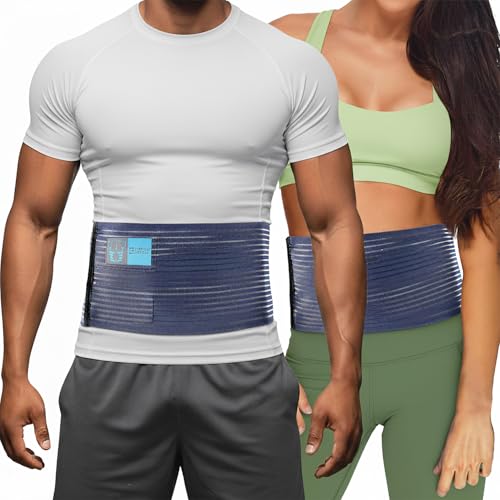

How To Choose The Best Abdominal Binder for Orthostatic Hypotension
Three things decide whether a binder helps your blood pressure stay steady or ends up in a drawer: how wide it is, how it closes, and whether it fits your torso length. Get those right and almost any well-made binder will do the job.
Width and panel count
A binder spreads pressure across your abdomen. Wider binders with more horizontal panels cover more of your torso and stay in position better. A 12-inch-wide four-panel binder covers from below the ribs toward the hips, which suits a longer torso. A narrow single-band binder works for a shorter frame but can dig in when you sit. The stitch lines between panels are what let the fabric follow your body shape instead of bunching at the waist.
The closure is the weak point
Almost every binder uses hook-and-loop (the grabby material often called Velcro). This is the part that wears out first. A binder with a wide closure strip and repositionable straps holds tension for months. A cheap closure loses its grip in weeks and the binder stops compressing. If you plan to wear it all day, this is the spec to look at hardest — not the price.
Measure your belly, not your waist
Measure around your belly button, not where your pants sit. Binder sizes run by abdominal circumference and the ranges vary a lot between brands. A binder listed as S/M may fit a 27-to-40-inch belly on one product and run tight on another. When you are between sizes or shrinking after surgery, size to the smaller end of your range so the compression stays firm as swelling goes down.
Side-by-Side Comparison
| Model | Best For | Width | Closure | Padding | Amazon |
|---|---|---|---|---|---|
| Everyday Medical Umbilical Hernia Belt★ Best Overall | All-day discreet wear | Fits 27-40 in belly | Hook & Loop | Removable silicone pad | Amazon |
| Funcy Adjustable Abdominal BinderBest Adjustability | Adjustable daily support | Medium | Hook & Loop | Attached cinch panels | Amazon |
| Fitomo Umbilical Hernia Belt 3D Pad | Hernia plus lumbar support | — | Hook & Loop | Removable 3D pad | Amazon |
| Dale Medical 810 Binder | Long-torso hospital-grade hold | 12 in, fits 30-45 in | Hook & Loop | EasyGrip drainage strip | Amazon |
| MediChoice Four-Panel Binder | Larger frames | 12 in, fits 46-62 in | Hook & Loop | Plush inner, butted seams | Amazon |
| Armstrong America Belly Band | Postpartum and hernia support | Wide compression bands | Hook & Loop | Adjustable flap tightening | Amazon |
| Paskyee Postpartum Belly Band | Customizable compression stages | 9 in wide | Hook & Loop | 3 removable stays | Amazon |
Detailed Reviews
1. Everyday Medical Umbilical Hernia Belt
Our pick — 4.0+★ from 2,500+ verified ratings; the strongest balance of quality and price.
The slim cotton binder you forget you are wearing until your belly reminds you it is working.
For standing tolerance with orthostatic hypotension, the Everyday Medical binder earns the top spot on results. A size Small/Medium fits an abdominal circumference of 27 to 40 inches, measured around the belly button rather than the waist. The fabric is an elastic cotton blend, which reads soft against bare skin and low enough profile to sit under a shirt without a bulge. The closure is hook-and-loop, so you tighten it to exactly the compression you want instead of relying on a fixed snap. It carries a 4.0+ star rating across 2,500+ owners.
What wins people over is simply how well it holds a hernia in check. Buyers describe walking and working without that dragging sensation, and many find it more effective than improvising with a pillow. The removable silicone pad sits over the site to concentrate pressure right where you need it. As one buyer summed up the fit: “Size S/M fits 36″ waist/40″ belly well.” The thin design also earns praise for staying put under loose clothing.
Two honest catches. The fit range is genuinely broad, but a small number of owners with very short or very long torsos find S/M still a touch big. And the closure, while strong for most, has drawn occasional reports of losing grip after heavy use about two months in. For everyone else, it is the balance of price, pad, and stealth that is hard to argue with.
Where it wins
- Removable silicone pad concentrates pressure over the hernia or surgical site
- Fits 27-40 in belly and sits flush under clothing for all-day discretion
- Breathable elastic cotton blend stays comfortable against bare skin
Where it asks patience
- Very short and very long torsos may find S/M on the loose side
- A handful of buyers report the closure losing grip with months of heavy daily wear
Grab this if: you want one binder that does compression, concealment, and a targeted pad without a fuss — and you measure your belly first to lock the fit.
Look elsewhere if: your belly circumference sits near the very top of the listed range and you prefer a longer, wider, four-panel wrap.
2. Funcy Men’s Adjustable Abdominal Binder
A medium panel that cinches tighter than most — the pick for a waist that changes size through the day.
Where the Everyday Medical wins on stealth, the Funcy wins on the ability to dial compression up and down on the fly. Two attached panels make cinching the binder tighter a one-hand job, so you can snug it before standing and ease it off while seated. The medium size and hook-and-loop straps adjust across a wide span of waist sizes. It is built for post-surgery recovery and hernia support, and it adds a back-support element with metal ribs along the rear that the slimmer cotton binder above does not offer.
Owners mention that the fit is easy to fine-tune and that they can move and breathe comfortably while it is on. Because the panels are attached, there is less loose strap to tuck. The most consistent wish is for a little more coverage top to bottom — the panel is deliberately narrow, which suits a shorter frame and shorter surgical recovery zones.
The one thing to weigh honestly: this model has a smaller track record than the Everyday Medical binder, and a vocal few have had the closure give out quickly. When the hook-and-loop holds, it is a comfortable, customizable belt. When it does not, you will be shopping again. If long-term closure reliability is your top priority, the MediChoice four-panel below is the sturdier bet.
What you are buying: adjustable compression you can change by the hour, plus light back support from the metal ribs.
The honest caveat: a short overall track record and isolated reports of the closure wearing out fast mean you treat it as a fit-and-comfort pick, not a lifelong one.
My read: reach for this one if you want to tighten or loosen the binder without help and you like a lighter, narrower panel.
Think twice if: you need a closure that will survive years of daily use — this is a lighter-duty belt.
3. Umbilical Hernia Belt XXL
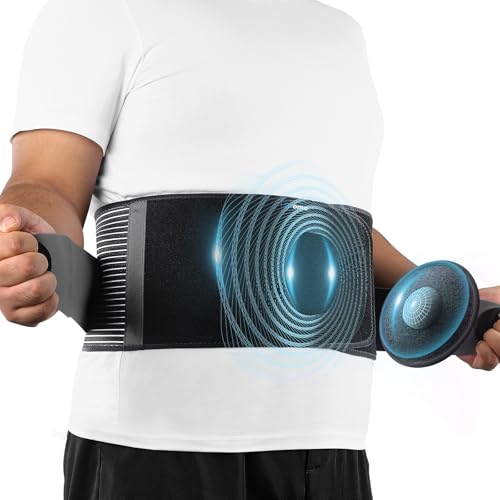
The dome-shaped pad is the whole point — concentrated pressure that stays locked over the bulge.
This Fitomo belt solves a problem the flatter pads do not: getting firm pressure directly on a protruding hernia. Its dome-shaped 3D pad is engineered to focus compression over the site and keep from slipping, unlike a flat pad that spreads force across the whole belly. A dual-strap system layers a main band for all-around compression with a second pressurized strap that adds targeted pressure right over the hernia. Remove the pad and the same binder converts into a lumbar belt for lower-back support.
The support is exactly why buyers keep it on. The dome pad is what owners credit for holding a hernia in place through errands and light activity. The belt wears comfortably enough to forget for stretches, and the front-adjustment design lets you apply and tune it without help — useful if bending to reach a back closure is hard. It runs large, though: an XXL user who normally wears a 3XL found the XXL fit despite the size up. That is a reminder this one sizes generously.
The recurring gripe is the fit-and-finish of the pad itself — the pad is firm rather than cushiony, and some find it pushes a little hard on bare skin. Front adjustment you must re-tighten through the day is the other note if you are very mobile. Sizing down from your usual letter pays off here.
Why the pressure lands
- Dome pad keeps targeted pressure over the hernia instead of spreading it flat
- Second pressurized strap lets you add extra force exactly where you need it
- Pad removes to double as a lumbar belt for back support
- Front adjustment is workable even when reaching behind you is hard
What to expect
- Pad is firm — a thin cloth between it and your skin helps
- Runs large, so size down from your usual; a snug fit holds better
Best suited to: anyone with a protruding umbilical or abdominal hernia who needs the pressure to stay focused on one spot.
Not your pick if: you want a soft, flat compression layer only — the hard dome pad is meant to press.
4. Dale Medical 810 Abdominal Binder, 4 Panel, 12″ Wide

The binder hospitals reach for — 12 inches wide, four panels, and cloth that survives being cut for tubing.
Some torsos simply need more coverage, and the Dale 810 delivers it. It is a 12-inch-wide, four-panel binder that stretches to fit a 30-to-45-inch abdomen, so the compression spans from the lower ribs down toward the hips rather than sitting as a narrow band at the waist. The four-panel build lets the fabric follow your body as you move, and it will not fray or unravel if you cut it to clear drainage tubing. An EasyGrip strip on the front holds up to four 100cc drainage bulbs in place, and it doubles as an abdominal dressing holder. It is machine washable and not made with natural rubber latex.
What buyers won’t stop talking about is how long it lasts. The stitch and closure quality is the draw — this is the binder that keeps locking when cheaper ones shred. A long-torso buyer will find the four-panel coverage the real advantage, since it reaches the hips that a narrow band misses. It is rated 4.0+ stars.
The honest trade-off is that its design cues come from the hospital ward, not the bedroom. It is bulkier and more utilitarian than the cotton Everyday Medical binder above, so it shows more under a fitted shirt. And at 40+ ratings it has a smaller owner base than the top pick — meaning fewer voices to lean on, even if the ones that exist are enthusiastic.
The case for the Dale: maximum coverage for a long torso, proven closure durability, and a machine-washable build that tolerates being trimmed for tubing.
Worth knowing: it is a functional, clinical-looking binder that is a little obvious under fitted clothing.
Pick it if: your torso runs long and narrower binders ride up or leave your hips uncovered, or you want hospital-grade durability.
skip it if: you need a fully invisible, low-profile binder for slim clothing.
5. MediChoice Abdominal Binder 12 Inch

Built for bigger frames — 12 inches wide and cut to fit a 46-to-62-inch belly with room to spare.
If most binders look like they were scaled for a small frame, this is the stretch. The MediChoice four-panel binder is 12 inches wide and stretches to fit a 46-to-62-inch abdomen, which makes it one of the few options here that comfortably covers a larger stomach. A hook-and-loop closure lets you dial in a secure, precise fit, and the stitching between the horizontal panels lets the knit elastic follow your body contours and stay in place instead of riding up. The inner surface is plush with butted seams, which reduces pressure points against the skin, and the durable stitching allows a cutaway for drainage tubing. Multiple binders can be combined for extra girth.
The thing everyone raves about is the stiffness — this thing supports a back through a full workday in a way softer binders do not. Buyers compare it to the flimsier binders handed out at the hospital and find it a clear upgrade in both size range and quality. It is the top-rated binder of this group at 4.5+ stars.
The catch: this is a firm, substantial binder, so it feels heavier and more medical than the discreet cotton option. And a handful of owners who wanted to cut it for an ostomy bag found the material fought the scissors. If you want soft subtlety, look to the Everyday Medical. If you want support that does not quit, this is it.
What you get
- Fits 46-62 in — one of the few binders cut for a larger frame
- Plush inner surface and butted seams cut down on skin pressure points
- Panel stitching lets it contour to the body and stay put
- Combines with a second binder when you need even more circumference
One thing to note
- Firm and substantial — the material resists being cut for an ostomy opening
The right call if: you have a larger belly and want firm, back-supporting compression from a binder that will actually fit.
Not for you if: you want a featherlight, invisible layer — this one feels as sturdy as it is.
6. Armstrong America Abdominal Binder Post Surgery Tummy Tuck
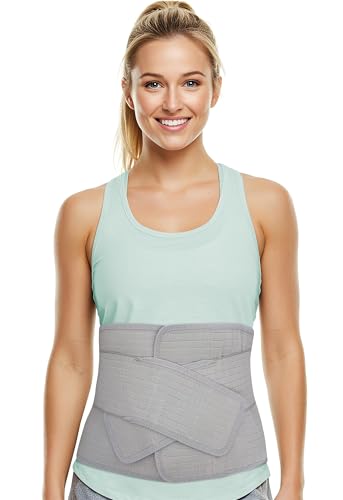
Wide stretch bands with extra flaps that let you tighten further than the base size suggests.
For daily support without a rigid panel pressing on your middle, this Armstrong America band leans on soft, wide compression instead. It is made from a 50% polyester, 30% spandex, 20% nylon blend, which gives it stretch and a light non-slip feel. The closure is hook-and-loop with adjustable extra flaps that let you cinch tighter for a firmer hold. It is sized Small/Medium and aimed at post-surgery, postpartum, and hernia support.
Buyers describe it as easy to put on alone — no second pair of hands needed to wrap it around the torso — and it holds the stomach with a stretchy, flexible fit. The extra tightening flaps are the standout feature, letting you get a snug hold even on days when the base closure feels loose. Rated 4.0+ stars across a healthy base of owners.
The most common note is length: on a short torso this band can run long and may need folding or tucking. If you are around 5 feet 4 inches, expect to adjust the fit. It is a gentle-compression pick rather than a rigid, hernia-pressing one, which is exactly right for someone who wants steady abdominal support through chores and standing.
Best used for: light, flexible, all-day compression you can put on yourself without help.
Heads-up: it can run long on a short torso and is not the firmest option for a prominent hernia.
For you if: you want soft, adjustable support for daily activity and standing tolerance on a budget.
Look on if: you have a very short torso or need firm, targeted pressure over a bulging hernia.
7. Paskyee Postpartum Belly Band
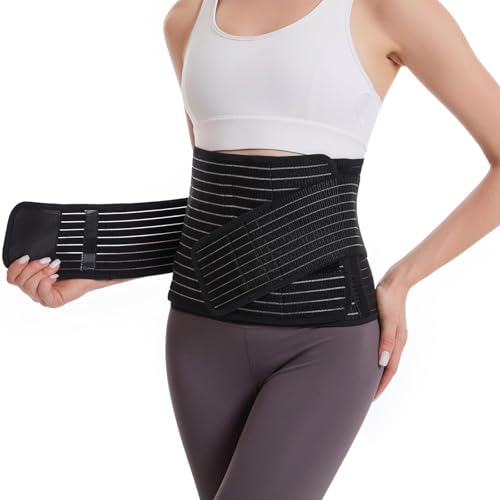
Three removable stays let you go from gentle post-op hold to firm support as you recover.
Recovery does not stay one size, and this Paskyee band is built to change with it. Three removable stays — the firm, vertical ribs that give a binder its structure — let you dial compression from just-enough post-op support to a firmer everyday hold. The band is 9 inches wide, which gives the full back a band of support that promotes upright posture. The fabric is a naturally sourced viscose rayon, a plant-based fiber built to be soft and to wick moisture away from skin. It comes in S/M (waist 25 to 37 inches) and L/XL (waist 37 to 56 inches), with dual adjustable hook-and-loop straps.
What people love most is the fit — it wraps closely to the body and stays molded to your shape rather than digging in. Buyers recovering from C-sections and hysterectomies describe it holding them securely with no pinching, and they credit the dense, even support for helping them stand and move more comfortably. Rated 4.0+ stars across a large base of owners.
The trade-off worth naming: comfort experiences are genuinely mixed here. Most find it soft and comfortable, but a few with very sensitive post-surgical skin have reported irritation at the incision line, so gauge your own skin’s tolerance. It is note this runs on the higher end of the group, so you are paying for the plant-based fabric and the customizable stay system rather than a stripped-down feature set.
What stands out: the three removable stays and dual straps give you a range of compression settings you can change as you heal.
One honest note: a few owners with sensitive skin have found the fabric irritating at the incision, so test it on a short wear first if you have had reactions before.
Ideal for: anyone who wants compression that adapts through recovery stages and values a softer, plant-based fabric against the skin.
Think twice if: you have extra-sensitive or broken skin at the incision site and prefer a plain cotton layer.
Know the Specs
Abdominal circumference vs waist size
Every binder here is sized by the distance around your belly button, not by your pants size. Measured this way, a Small/Medium on the Everyday Medical covers a 27-to-40-inch belly, while the MediChoice stretches for a 46-to-62-inch frame. That gap is why the number on the tag can be misleading. Always wrap a soft tape around your bare belly at the navel, stand relaxed, and read it before you order. Being between sizes often favors the smaller end, especially after surgery when swelling drops.
Width, panels, and stays
Width governs how much of your torso the compression reaches. A 12-inch-wide, four-panel binder like the Dale or MediChoice blankets from ribs toward hips, which supports a long torso and lower back. A narrower band focuses force in one zone and suits a shorter frame. Stays are the firm vertical ribs inside a binder — the Paskyee gives you three removable ones so you can stiffen the front for a firmer hold or pull them out for a softer feel. More panels generally mean better contouring, but also more fabric to manage under clothing.
Common Questions
How do I measure for an abdominal binder?
Why does hook-and-loop closure matter so much on a binder?
Can I wear an abdominal binder for orthostatic hypotension every day?
What is the difference between a hernia belt and a general abdominal binder?
Will a binder show under clothing?
Can I cut an abdominal binder for drainage tubing?
How long should I wear a binder each day?
Is a wide binder better than a narrow one for back support?
Do abdominal binders come in sizes for larger frames?
What should I do if a binder pad irritates my skin?
The Bottom Line
For most people managing orthostatic hypotension, the Everyday Medical Umbilical Hernia Belt is the pick that covers the most ground — removable silicone pad, 27-to-40-inch belly fit, cotton blend comfort, and a low profile that hides under clothes. If you want to tighten or loosen without help and like a lighter panel, grab the Funcy Adjustable Abdominal Binder. And for a larger frame that needs firm, four-panel support from ribs to hips, the MediChoice Four-Panel Binder is the one to reach for. One nudge before you buy: the measured belly circumference, read at the navel, is the number that decides whether your binder helps or sits in a drawer — take it before you order.
How we choose
We do not accept paid placement. Every pick is matched to a real buyer and a real use-case; we do not hands-on test units.
Sources
Specifications: manufacturer listings and product documentation. Review insights: verified customer reviews, as of October 2026. Pricing: not shown on this page (it changes often); check the current price via the retailer link.
As an Amazon Associate, Aappliancez earns from qualifying purchases. This does not affect which products we feature.