Disclosure: Some links in this post are affiliate links. As an Amazon Associate I earn from qualifying purchases, at no extra cost to you. Learn more
Specs are compiled from manufacturer listings and verified buyer reviews and can change over time — please confirm the key details on the product page before buying.
If your living room has big windows facing the sun, you already know the problem: a normal TV turns into a grey mirror by mid-afternoon. The screens on this list fight back, because each one is built to stay readable when daylight hits it. Some push extreme brightness, some use a glare-killing anti-reflection layer, and one is quite literally an outdoor TV that shrugs off rain and full sun.
This guide is built by comparing the manufacturers’ published specifications and the patterns across verified customer reviews, so you get each pick’s real strengths and trade-offs instead of marketing spin.
Brightness in nits decides most of this fight, so it leads the guide. Screen glare is the second front, and panel type is the third. Here is everything that actually matters for a 75 inch tv for bright room.
Top Picks


How To Choose The Best 75 Inch TV for Bright Room
You cannot decorate your way out of a bright room. It is a light problem, and only three things solve it: more light coming out of the screen, less light bouncing off it, and a panel that keeps colours honest once you crank the brightness up.
Brightness is the first number, and the only one that truly ends glare
Brightness is measured in nits, which is simply how much light a screen throws at your eyes. A typical indoor TV sits in the low hundreds. The Sylvox on this list claims 2000 nits and the TCL QM8L goes far beyond that, which is why both stay readable with a window behind you.
Do not chase nits you will never use. If your room has one small window and you mostly watch at night, a mid-tier Mini LED already carries enough headroom. If daylight hits the screen most of the afternoon, buy the highest nits you can afford.
Anti-glare is a different job from brightness
Anti-glare treatment handles reflections — the mirror image of your lamp or window sitting on the glass. A screen can be bright and still show a window reflection, or be modestly bright and be coated so the glass stays dark. The Hisense U6 Pro, the Sony BRAVIA 3 II, and the LG G5 all lean on reflection handling rather than raw output alone.
Anti-glare helps most in a room where the light source sits behind your chair. Brightness helps most when the sun lands on the screen itself. Most bright rooms need some of each.
Mini LED and local dimming are what keep black looking black
Mini LED means the backlight is split into hundreds of tiny zones that dim independently. That matters in a bright room because a TV fighting daylight tends to wash its blacks into grey. Tight zone control keeps a night scene looking like night even when the overhead lights are on.
Zone count tells you how fine that control is. TCL’s QM8L quotes up to 4000+ discrete dimming zones, and QM64L quotes up to 500 — a wide spread that shows up as different black depth in a lit room.
Reflections, viewing angles, and why seating position matters
A 75 inch panel spreads light across a wide surface, so a window at the side of the room sends light across the glass at a shallow angle. That is exactly the angle where plain LED panels lose contrast and colours fade. QLED layers and anti-reflection coatings are what defend that wide-angle view.
Brightness means nothing without good source material
A bright panel shows off great footage and also amplifies weak footage. Standard 1080p streams can show compression artifacts when pushed hard, which is why upscaling quality and HDR support — Dolby Vision IQ, HDR10+ — belong on your checklist next to the nits figure.
Side-by-Side Comparison
| Model | Best For | Brightness Claim | Display Tech | Refresh / Zones | Amazon |
|---|---|---|---|---|---|
| SYLVOX 75″ Full Sun Outdoor TV★ Best Overall | Patios and pool decks | 2000 nits | 4K LED, IP56 rated | — | Amazon |
| Samsung QN90C Neo QLEDAnti-Glare Expert | Anti-glare living rooms | Neo Quantum HDR+ | Mini LED, anti-glare | 4K @120Hz | Amazon |
| Samsung Q8F QLEDColour Keeper | Everyday bright rooms | Billions of colours at any brightness | QLED, AirSlim | Up to 4K 144Hz | Amazon |
| Sony BRAVIA 7 Mini LED | Cinema and PS5 owners | Sony’s brightest 4K | Mini LED, XR Backlight Master Drive | — | Amazon |
| Samsung M80H Mini LED | Value-minded gamers | AI-enhanced Mini LED | Mini LED, Pure Color Spectrum | 144Hz | Amazon |
| Hisense U6 Pro Mini LED | Sun-facing windows | Glare-free anti-reflection | Hi-QLED Mini LED | Native 144Hz | Amazon |
| Toshiba Z670 Mini LED | Sports-heavy rooms | Full Array Local Dimming | QLED Mini LED | Native 144Hz | Amazon |
| Sony BRAVIA 2 II LED | Straightforward upgrades | 4K Processor X1 | Direct LED | Motionflow XR | Amazon |
| TCL QM64L QD-Mini LED | Big-screen value | High HDR brightness | QD-Mini LED, Halo Control | 144Hz, up to 500 zones | Amazon |
| Sony BRAVIA 3 II Gemini | Anti-glare + PS5 | XR Processor scene recognition | Direct LED, anti-glare | 120Hz, HDMI 2.1 | Amazon |
| Samsung QN80F Neo QLED | AI processing fans | Mini LED contrast boost | Mini LED, Neo Quantum HDR | Up to 4K 144Hz | Amazon |
| TCL QM8L SQD-Mini LED | Maximum brightness | Up to 6,000 peak nits | SQD-Mini LED, 7000:1 contrast | 144Hz, 4000+ zones | Amazon |
| LG G5 OLED evo | Bright-room OLED fans | Brightness Booster Max | OLED evo, self-lit pixels | 120Hz, 0.1ms response | Amazon |
Detailed Reviews
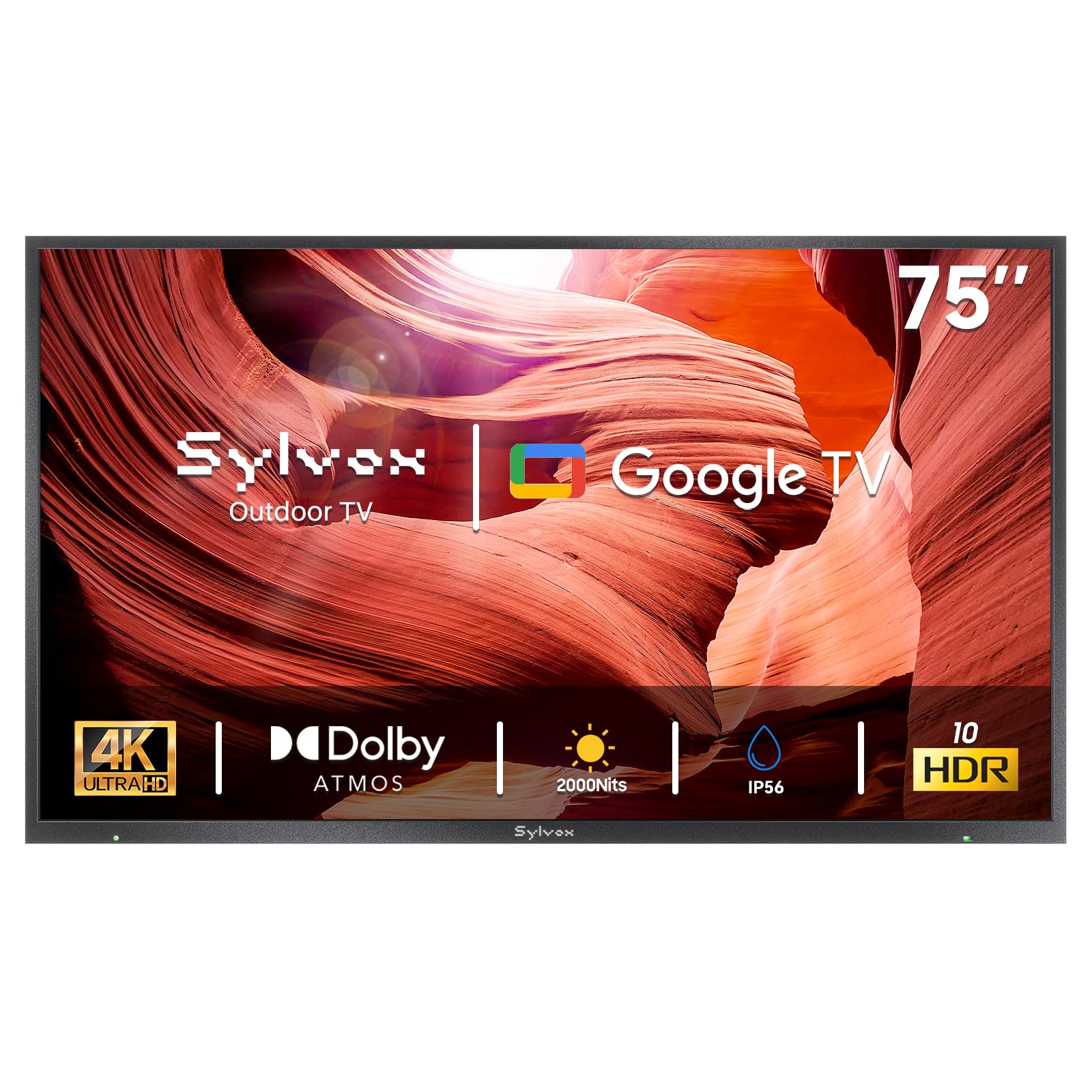
1. SYLVOX Outdoor TV, 75 inch 2000 nits Full Sun Outdoor TVs
Our pick — 4.5+★ from 70+ verified ratings; the strongest balance of quality and price.
The one panel here that is not just bright-tolerant, but genuinely built to live in the sun.
If your 75 inch TV is destined for a gazebo, a pool deck, or a wall the afternoon sun crosses, this is the pick that stops the whole problem at the source. Sylvox rates the panel at 2000 nits. That headroom is the entire reason you can see an image at all with direct sunlight landing on the glass.
The rest of the hardware matches the job. A full metal casing and an IP56 water-resistance rating (the second digit covers water spray, so rain is covered, but a dunking is not) mean you can leave it outdoors year-round. Internal temperature control keeps heat from cooking the electronics, which is the quiet killer of indoor TVs parked outside.
The smart side is not an afterthought either. You get voice remote, screen mirroring, independent user accounts, and a library the maker describes as 10000+ apps alongside 800+ free channels. Streaming on a patio does not feel like a compromise.
What wins people over is the picture, and the brightness is what carries it. A 30-foot sightline to a hot tub is no problem, and the image stays clean in intense sunlight rather than washing into a pale rectangle. One reviewer noted under full sun the images stay clearly readable — and at night the brightness is so strong they joked about needing sunglasses.
The honest trade-off is weight. A full metal shell built for weather is heavy, and it feels considerably heavier than a standard flat panel, so plan the mount and a second pair of hands before delivery day.
What earns the top spot
- 2000 nits keeps the picture legible with direct sun on the screen
- IP56 rating plus a full metal casing handles rain, wind, and heat
- Sound quality surprises people for an outdoor build
- Independent user accounts and screen mirroring cover the whole household
What to plan around
- Noticeably heavier than an indoor 75 inch — budget for a sturdy mount and help lifting
- Setup is straightforward, but this is a permanent install, not a weekend swap
Built for: patios, pool decks, and any wall where sun and weather hit the screen directly.
Think twice if: the TV stays indoors behind glass — you are paying for weather sealing you will never use.
2. SAMSUNG 75-Inch Class Neo QLED 4K QN90C Series
A wall of Mini LEDs behind an anti-glare sheet — the classic answer to a sunlit room.
Where the Sylvox fights daylight with raw nits, the QN90C fights it with precision. Its Quantum Matrix backlight uses a huge grid of Mini LEDs, each controlling its own zone of light. That fine control is why bright whites and deep blacks can sit side by side without the whole panel glowing grey — the exact failure a window-lit room exposes.
Add the anti-glare layer and you get the reason this screen earns its place here. Reflections from a window or a lamp are softened rather than mirrored back at you. For a room where you cannot move the couch, that single coating does more than another hundred nits would.
The feature set is deep. Dolby Atmos and Object Tracking Sound+ push audio around the frame, Motion Xcelerator Turbo+ runs 4K at up to 120Hz, and Gaming Hub gathers console and cloud games in one place. There are 4 HDMI ports and 2 USB 2.0 ports — enough to hang a soundbar, a console, and a streamer off one panel.
The thing that convinces most owners is how the picture holds together in difficult light — lifelike skin tones, punchy colour, and blacks that stay black next to bright highlights. The recurring grumble is the remote: a solar cell that charges from light has no number buttons, so you tap an onscreen 123 key instead. Annoying to use, but it does not affect the picture.
One honest note on the smart system: a few home-theatre owners find the interface auto-switches inputs in ways that fight an AV receiver setup. If you run a receiver and a harmony of sources, expect to spend a little time in the menus.
Go for it if: you want the glare killed properly and you game or stream constantly.
Second thoughts if: your setup lives on a receiver chain — the smart hub has a mind of its own.
3. Samsung 75-Inch Class QLED Q8F 4K UHD Smart TV
The colour promise that matters in a bright room: billions of shades that stay true as brightness climbs.
Most TVs lose saturation exactly when you push the backlight to fight daylight — reds go pink, greens go pale. Samsung’s answer on the Q8F is Quantum Dots, nano-sized particles the maker says can hold the full colour spectrum at any brightness level. In practice that means the picture does not turn into a washed-out pastel sheet when the sun is out.
The Q4 AI Processor handles the other half of the job — upscaling whatever you feed it to 4K and boosting colour and audio according to content type. For a bright room stuffed with broadcast sports and streaming apps, that scene-by-scene adjustment is the difference between a sharp picture and a soft one.
Gaming is well covered. VRR gaming runs at up to 4K 144Hz, so a fast-moving match does not stutter or tear. Add 2,700+ free channels with no subscription required, plus 400+ Samsung TV Plus premium channels, and there is always something on for a lazy Sunday.
What people keep coming back to is the picture itself — crisp visuals with colours that read accurate from the start. The recurring friction is the remote: the slim design looks great and navigates awkwardly, with some owners switching back to an older Samsung IR remote. A few also note the menu system takes some learning.
One thing to check before you mount it: the wall-mount holes sit high above centre, so an existing bracket may need longer screws or a fresh position. Buyers who plan for that call it a non-issue.
Where it delivers: full-spectrum colour that holds up under bright backlight settings, plus 4K 144Hz for console gaming and a huge free-channel library.
Where it grumbles: the slim remote is the weak link for menu-heavy viewing, and the off-centre mounting holes demand a measuring tape.
Best fit: a busy family room where colour accuracy and free content carry the day.
Look elsewhere if: you are allergic to learning a new remote layout.
4. Sony 75 Inch BRAVIA 7 Mini LED QLED 4K HDR Smart Google TV

Thousands of Mini LEDs under Sony’s control — brightness with the discipline of a film studio.
Sony’s pitch here is control over volume. Thousands of Mini LEDs are individually driven by the XR Backlight Master Drive, which the maker calls its brightest ever 4K TV. That combination matters in a bright room because the enemy is not just dim light — it is a backlight that floods the whole panel to compensate and flattens every shadow in the process.
Colour comes from QLED technology and XR Triluminos Pro, and the XR Processor rebuilds colour, contrast, and clarity scene by scene. Upscaling of HD content is the standout — old DVDs and 1080p streams come back with detail rather than blur, which matters when you are sitting close to a 75 inch panel.
For gamers, PlayStation 5 gets dedicated Auto HDR Tone Mapping and Auto Genre Picture Mode, plus a Game Menu that keeps every setting in one place. Dolby Vision, Atmos, IMAX Enhanced, and DTS:X round out the cinema side, and you get 5 movie credits plus 12 months on the Sony Pictures Core library.
The reviews split cleanly. Picture quality is the thing people rave about — several owners mounted this over a fireplace and found it bright enough to watch comfortably in a well-lit room, with colours and shadow detail that hold up. Brightness, though, is genuinely mixed in owner hands: some find it dazzling, and others say a very bright room still challenges it. This is a set that rewards thoughtful placement.
The real caveat is viewing angle. Contrast falls away past roughly 30 degrees off-centre, and there is no anti-reflective coating on this panel. If your seating runs wide across the room, sit this one directly in front.
Why it belongs on the list
- XR Backlight Master Drive keeps highlights and shadows separated in a lit room
- Upscaling brings 1080p and older discs back to life on a big screen
- PS5-specific features and a dedicated Game Menu for console players
- Studio calibrated modes for Netflix, Prime Video, and Sony Pictures Core
Where it asks for care
- No anti-reflective coating — reflections are handled by placement, not the glass
- Contrast drops past roughly 30 degrees off-centre, so wide seating gets the short straw
Made for: movie-first rooms with a straight-on seating layout and a PS5 underneath.
Not ideal when: the sofa wraps around the screen or a window sits directly opposite it.
5. Samsung 75-Inch Class M80H Series Mini LED Smart TV
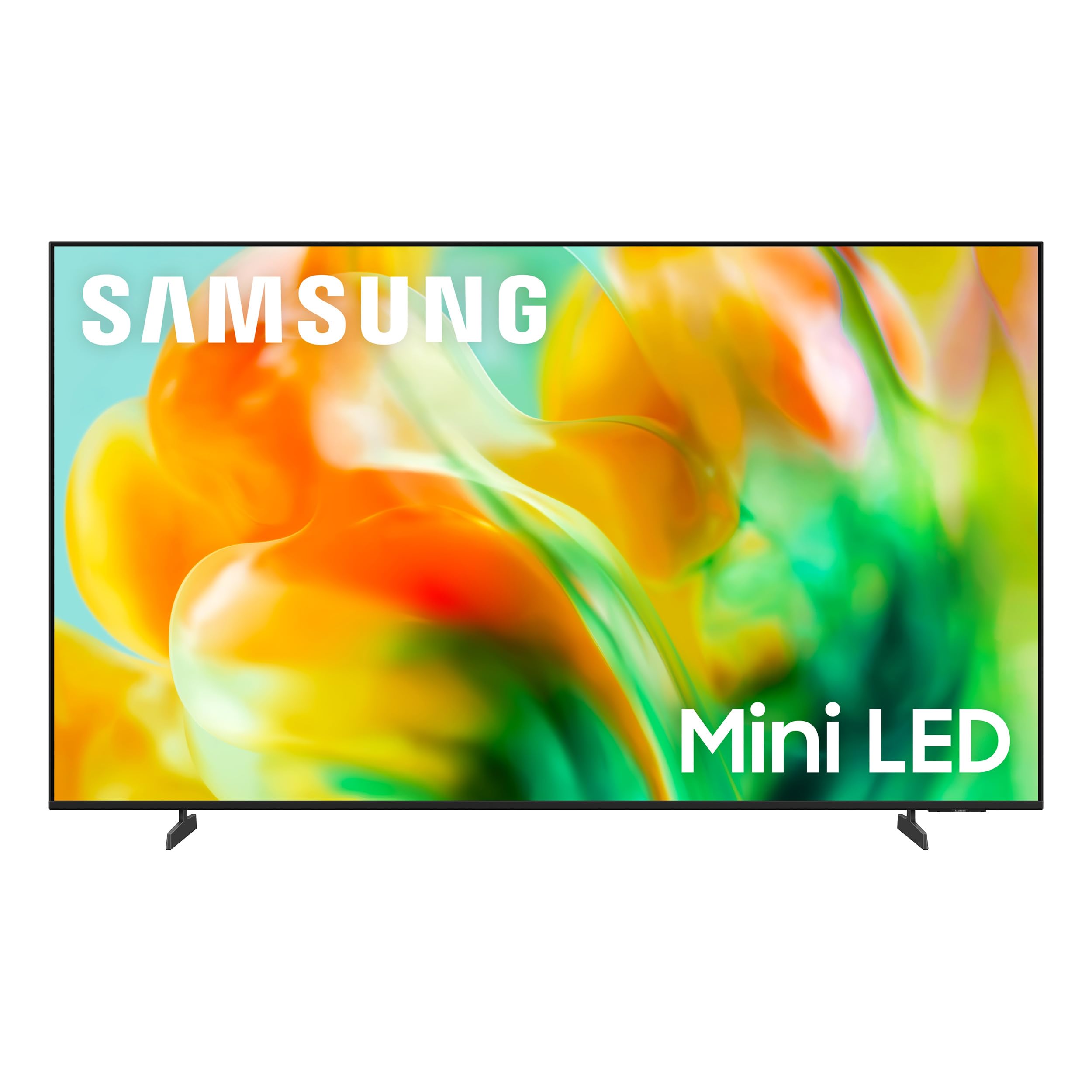
Mini LED brightness with AI scene-tweaking, priced like a mid-tier set.
The M80H takes the same compact Mini LED backlight that makes bright rooms tolerable and pairs it with AI processing that reads each scene and adjusts clarity, colour, and contrast on the fly. For a room with shifting daylight, that automatic adjustment is genuinely useful — you are not diving into menus every time the sun moves.
Motion is the other headline. Motion Xcelerator runs at 144Hz, and Variable Refresh Rate matches the panel to whatever game you are playing, so a fast shooter does not tear. The NQ4 AI Gen2 Processor drives 4K AI Upscaling in the background for streaming and sports, and Pure Color Spectrum claims one billion true-to-life colours.
Auto HDR Remastering is a quiet bonus for anyone with a big library of older SDR content — it lifts standard dynamic range footage toward HDR-like highlights and colour. Nightly news and old sitcoms look less flat because of it.
The picture is the reason this set keeps winning people over — clear, bright, and a genuine jump for anyone stepping up from an older TV. A few owners find the brightness needs dialling back for gaming and then back up for binge-watching, so a saved picture preset is worth setting early. The Bixby Vision AI assistant also has a habit of popping up mid-film until you disable it.
Do budget for the stand or a wall mount. The included legs feel cheap, and mounted owners sidestep the issue entirely. One detail worth knowing: the ports sit close under the bracket area, which occasionally needs a shorter adapter for a streaming stick.
Standout value: Mini LED, 144Hz with VRR, and AI upscaling at a price that undercuts the flagship Samsungs.
Small snags: flimsy bundled legs, a pushy Bixby assistant, and port placement that can fight a wall bracket.
Worth it for: buyers who want Mini LED brightness without flagship money, especially if they game.
Keep looking if: you refuse to disable a digital assistant or you plan to use the stock legs.
6. Hisense 75″ U6 Pro Series Mini-LED ULED 4K Smart Fire TV

Anti-reflection coating built for the room with a window right beside the couch.
Hisense leads this set with glare, not nits. The anti-reflection and glare-free display is designed so a bright room does not turn your picture into a light show, and the maker states plainly that bright rooms are no match for this screen. If your couch faces a window you cannot curtain, this is the spec worth paying attention to.
Behind that coating sits a Hi-QLED Mini LED panel with hundreds of precise light zones. Local dimming keeps the blacks deep and the highlights hot, which is what gives night scenes real depth instead of grey mush. The Hi-View AI Engine then adjusts the picture automatically for whatever is on — movie, sport, or game.
Gaming and sports get Native 144Hz, so fast breaks and high-speed chases stay sharp and trackable. Dolby Vision IQ and HDR10+ Adaptive cover the HDR formats, Pantone validation backs the colour accuracy, and IMAX Enhanced certification adds a cinema mode. A built-in subwoofer handles the low end without a soundbar if you would rather keep the setup simple.
Anti-glare is the standout in owner hands. People run this right beside a window and report the screen stays readable in daylight, with brightness holding through the afternoon. Colour reproduction is praised as calm and natural rather than over-saturated, which is exactly what you want when the backlight is running hot.
The catch is viewing angle. Off-axis, the picture loses some punch, and a couple of owners simply angled the screen to fix it. If your seating is dead-on, it never comes up. The other thing to know: audio is decent but bass-hungry viewers usually add a soundbar anyway.
Pick this for: a sun-facing living room where glare, not brightness, has been the daily frustration.
Reconsider if: people watch from the far ends of a long, wide room — off-axis viewing costs some contrast.
7. Toshiba 75″ Z670 Series Mini-LED 4K UHD Smart Fire TV
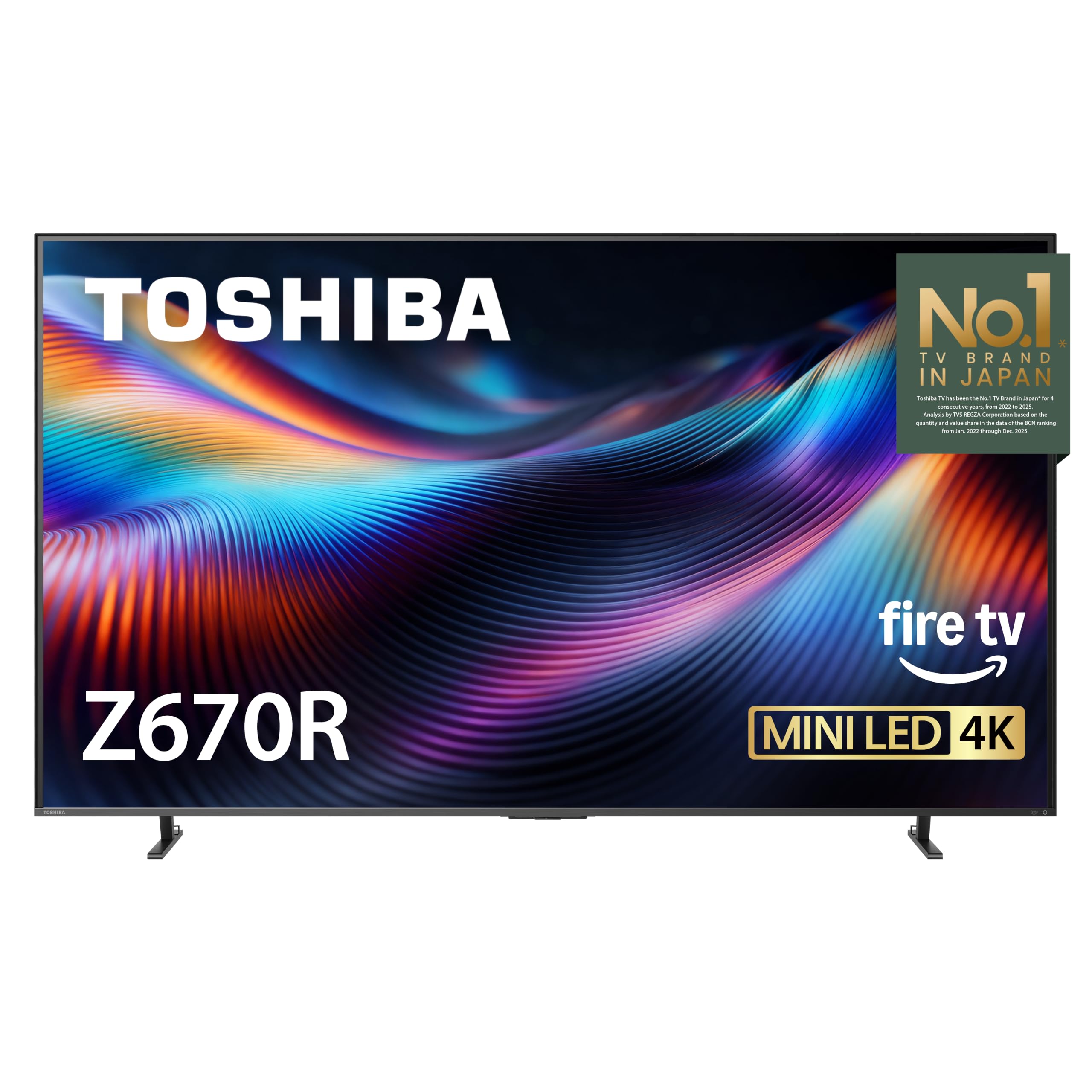
Full array dimming and 144Hz tuned for a house that lives on live sports.
Toshiba’s Z670 runs Mini LEDs through Full Array Local Dimming, so light zones dim and lift independently across the whole panel. In a bright room that is what keeps a scoreboard crisp and a night game’s crowd from turning into a grey blur. Colour comes from QLED technology promising over a billion shades.
The refresh rate is where this set separates itself for sports. Native 144Hz with AMD FreeSync Premium, VRR 144Hz, and ALLM keeps a fast break or a racing game smooth, with Game Mode Pro trimming input lag for consoles and PC. Dolby Vision IQ, HDR10+ Adaptive, and HLG cover the HDR bases, and the REGZA Engine ZRi Gen3 handles scene-by-scene processing.
Audio punches above its class thanks to a REGZA Bass Woofer inside the REGZA Power Audio Pro system. That means real low end without adding a soundbar — a genuine saving for a second room or a packed living room. An AI Light Sensor Pro adjusts brightness and colour to your room’s lighting, which helps during a bright day-to-evening transition.
Owner sentiment centres on a picture with real contrast and depth — vibrant colours, deep blacks, and streaming apps that run without lag. The 144Hz refresh is felt in both movies and games, and setup is quick. Value comes up constantly, with owners comparing it favourably to rivals that cost more.
Two things to weigh. The Fire TV home screen leans on ads and promotions, which is annoying if you hate a cluttered interface. And as with any brand, an occasional defective unit slips out — if yours looks hazy or smoky regardless of settings, that is a return, not a calibration issue.
Where it shines: 144Hz with FreeSync for live sports and gaming, plus a bass woofer that saves you a soundbar.
Better to know now: Fire TV pushes ads onto the home screen, and a rare defective panel has left a buyer or two frustrated with returns.
This suits: households where sports and console sessions fill most of the screen time.
Less suited to: anyone who wants a clean, ad-free home screen from the start.
8. Sony 75 Inch BRAVIA 2 II LED 4K HDR Smart Google TV

Sony’s processing expertise in a plain LED package — a safe, unfussy upgrade.
This is the entry point to Sony’s panel processing: a direct LED backlight rather than Mini LED, driven by the 4K Processor X1. The pitch is that Sony’s software gets more out of the panel than the raw hardware suggests, with natural colour, dynamic contrast, and clean near-4K upscaling for everything you stream.
Google TV keeps every app on one screen, and Apple AirPlay 2 plus Google Cast mean you can throw a phone display up without fuss. Motionflow XR handles fast sports and action scenes, and PS5 owners get Auto HDR Tone Mapping and Auto Genre Picture Mode along with a Game Menu that gathers the gaming settings in one place.
You also get Sony Pictures Core movies included, and an Eco Dashboard pulls the energy-saving settings into one panel — worth a look since this set lists 226 kilowatt hours per year.
Sony’s processing is the thing that keeps people coming back. Upscaling and colour accuracy land well, setup is quick enough that a first-timer can be watching inside ten minutes, and the picture holds up for day-to-day streaming. A recurring gripe is reliability: some panels work from day one for years, and a small number stop working not long after arrival. That is worth knowing, not a reason to rule the set out.
Check your stand footprint before buying. The bundled legs spread wide, which is a real constraint on a narrow media unit. If that fits, this is one of the least complicated ways into a large Sony.
Right for: a first big-screen upgrade where Sony processing and Google TV matter more than Mini LED hardware.
Check first: measure your stand — the wide legs need a generous surface.
9. TCL 75″ QM64L High Contrast QD-MINI-LED 4K Smart Fire TV

Five hundred dimming zones and Onkyo audio — big-screen punch without the flagship tag.
The QM64L is a QD-Mini LED set with up to 500 local dimming zones, each tightened by TCL’s Halo Control Technology to reduce the light bleed you see around bright objects. In a bright room, that control is the difference between clean highlights and a glowing halo around every white shirt.
Brightness is the headline. Mini LED is known for pushing hard against daylight, and this panel is built to keep highlights bright while holding blacks deep. Native 144Hz with Motion Rate 480, VRR, ALLM, and Game Accelerator covers both sports and console gaming, with FreeSync Premium Pro and IMAX Enhanced rounding out the gaming and cinema modes.
Audio gets unusual attention here. Onkyo 2.1 with a 20W subwoofer and Dolby Atmos means you may genuinely skip the soundbar, and the bezel-less design keeps more of the frame on the picture. Colour comes via QLED and the AiPQ Pro Processor across up to 1.07 billion colours.
What owners celebrate is the price-to-picture ratio — bright, colourful, and far above what the price suggests, with deep blacks and a big-screen feel. Setup is quick, and Fire TV is approachable once you are in. Colour and brightness come up again and again as the reasons people are glad they bought.
The friction sits with the smart system. A handful of owners find Fire TV slow to load apps and occasionally glitchy, and some end up using an external streamer. The bundled remote also asks to be aimed straight at the sensor. Neither ruins the picture, but both are quirks to plan around.
The deal: up to 500 dimming zones, native 144Hz, and Onkyo 2.1 audio for a big-screen step-up that feels like a steal.
The fine print: Fire TV loading can feel sluggish, and the remote wants a direct aim at the TV.
Grab this if: you want serious Mini LED brightness and big audio on a value-minded budget.
Skip the gamble if: a snappy smart interface is non-negotiable — pair it with your own streamer.
10. Sony BRAVIA 3 II 75 Inch TV
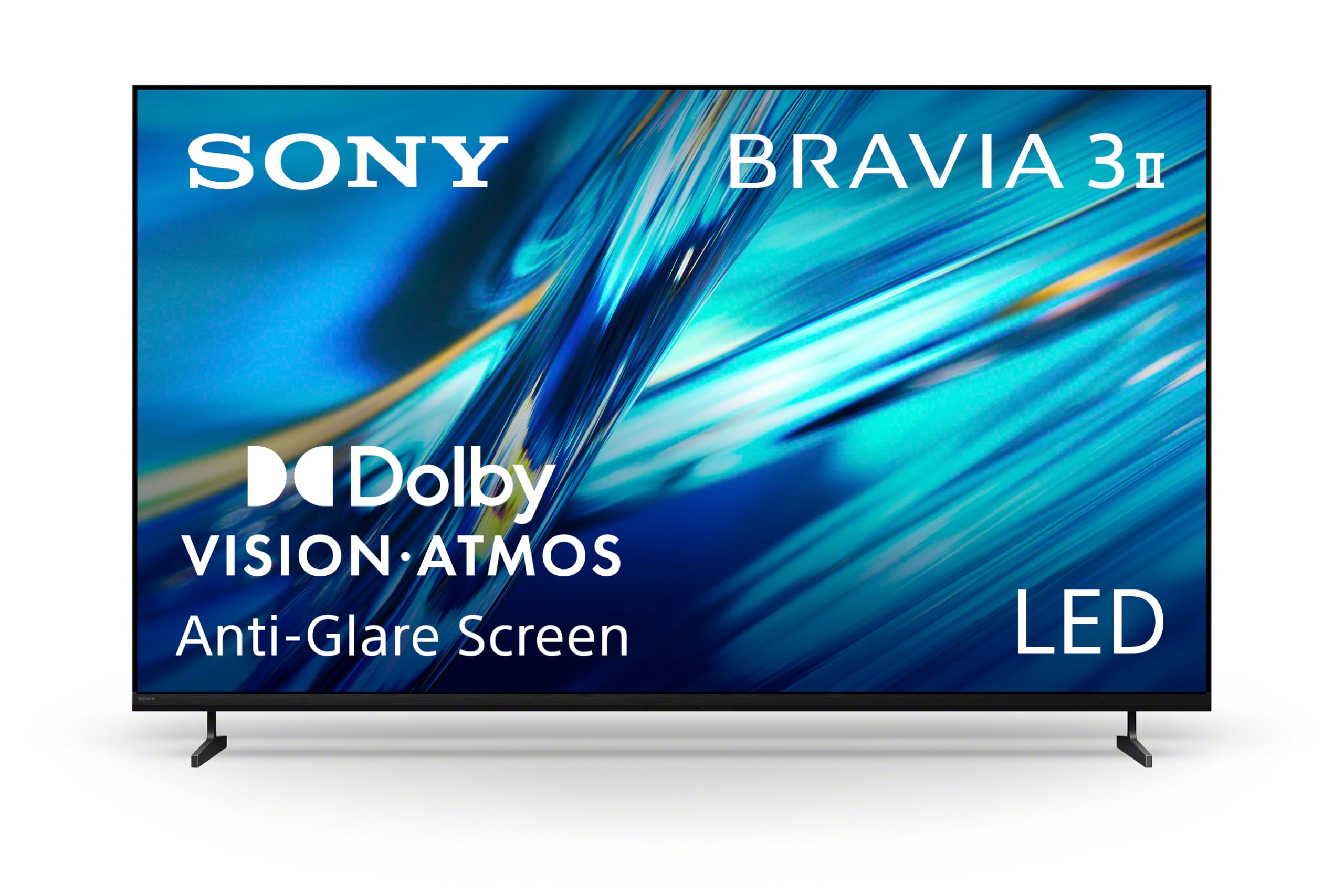
Anti-glare on a big screen, with Gemini handling the “what do I even watch” problem.
The BRAVIA 3 II makes glare a feature, not an afterthought. Anti-Glare Screen technology is designed to cut light bouncing off windows and lamps so the picture stays clear wherever the TV lands — and Sony specifies that on the 75 inch class size, that coating is included.
Behind it, the XR Processor uses AI scene recognition to tune colour, contrast, and clarity frame by frame, with XR Clear Image restoring detail and knocking down noise. XR Triluminos Pro claims over a billion real-world colours. For a lit room, that pairing — anti-glare plus intelligent processing — is the whole argument.
Gamers get HDMI 2.1 with 4K/120, VRR, and ALLM, plus PS5 features like Auto HDR Tone Mapping and a Game Menu. Google TV with Gemini lets you ask for something to watch in plain language rather than hunting through menus, and you land 700,000 movies and TV episodes in one place. Dolby Vision and Atmos handle the cinema side.
According to Sony’s published specs, the 120Hz panel is the standout for fast action and gaming — smooth, blur-free motion on sports and shooters alike. Owners find the Google TV interface intuitive and the picture genuinely beautiful for the money, with plenty of free Sony channels for background viewing.
The honest note is the smart system and the panel lottery. A couple of owners hit factory-reset loops or a dead panel, and some find the default surround settings sound echoey until you disable surround and set dialogue compression to standard. Both are fixable, but budget a few menu tweaks on day one.
A good match for: bright rooms where anti-glare matters and a PS5 is plugged in downstairs.
Might not suit: buyers who want stock audio to sound perfect without adjusting surround settings.
11. Samsung 75-Inch Class Neo QLED 4K QN80F Series

The AI-heavy Neo QLED — twenty neural networks working overtime on a lit-room picture.
Samsung leans hard on silicon here. The NQ4 AI Gen2 Processor runs the picture through 20 neural networks, upscaling content to 4K and optimising sound along the way. In a bright room that processing earns its keep by squeezing clarity out of less-than-perfect sources.
The panel itself is Neo QLED with Mini LED backlighting — concentrated zones of precision-controlled light that brighten highlights without bleaching the whole screen. Neo Quantum HDR pushes contrast, and Object Tracking Sound Lite with Dolby Atmos moves audio around the frame to follow on-screen action.
Gaming gets VRR at up to 4K 144Hz, and Samsung’s motion handling keeps sports clean during a fast break. There is a 4K upscaler for HD sources, HDR-like conversion for older SDR content, and built-in Alexa for voice control without another device.
The pattern in owner hands is a crisp, clear picture with vibrant colour and a dramatic leap over older sets. Sound quality surprises people, and setup via smartphone is painless. The recurring concern is glare — a few owners placed this facing a window and had to adjust the room to tame reflections, so placement matters.
The only feature worth really examining is brightness in extreme conditions. Owners describe it as plenty bright in normal living rooms, but if the sun lands directly on the glass, plan on blinds or repositioning. That is a placement issue, not a panel defect.
Where it pulls ahead: aggressive AI processing, 4K 144Hz VRR gaming, and Object Tracking Sound Lite built in.
Worth noting: reflection handling leans on where you put the screen — position it away from a direct sun line.
Choose it for: a bright but well-placed room where AI upscaling and gaming smoothness top the wishlist.
Look elsewhere if: the sun hits the glasshead-on and you cannot move it.
12. TCL 75 Inch QM8L Series SQD-Mini LED QLED 4K Smart Google TV
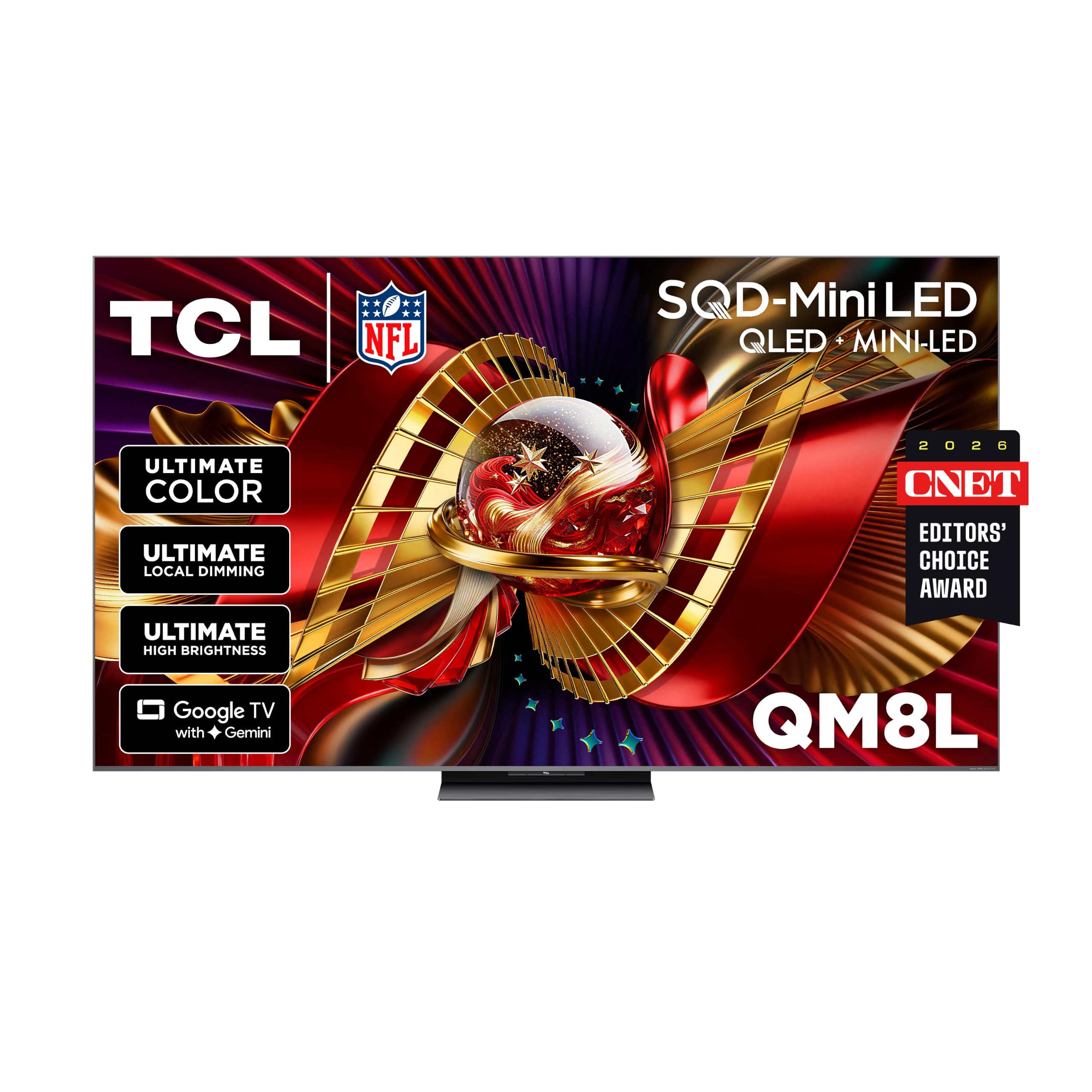
Up to 6,000 peak nits — this is the set that treats daylight as an inconvenience, not a threat.
No other pick on this list goes as far on brightness. The QM8L quotes up to 6,000 peak nits and up to 4000+ discrete dimming zones working together, plus a high 7000:1 contrast ratio. In practical terms, that means highlights can be brilliant while blacks stay deep in the same frame — the combination a sun-facing room demands.
The panel uses SQD-Mini LED with TCL’s Enhanced Halo Control System, which includes a 26-bit dynamic dimming system and a WHVA 2.0 Ultra Panel. Halo control is the part that matters most in a bright room: it reduces the light bleed that makes bright objects on a dark scene look foggy. TCL’s Ultra Color Filter uses fine 5 nanometer particles for colour accuracy, and the AiPQ Pro-style AI suite handles colour, contrast, clarity, motion, upscaling, and sound.
Audio gets real attention — Audio by Bang & Olufsen with optional wireless subwoofer and satellites. For gaming, the TCL Game Pack bundles Game Accelerator 288 VRR, Game Bar, and AMD FreeSync Premium Pro, so low latency and smooth motion are covered alongside the 144Hz refresh rate.
The picture is the thing that overwhelms people. It is bright enough that owners routinely turn the backlight down, and one describes it as the ideal choice for a bright room compared to an OLED. Colour is vivid, halos are near-invisible, and the remote’s brightness button makes it easy to tame in a hurry. Setup takes roughly an hour at a relaxed pace.
Two trade-offs to know. First, it is heavy — mounting genuinely needs two people, and one owner advised verifying your bracket’s weight capacity because the panel can overwhelm a light stand. Second, some owners find the Google TV operating system blocks certain paid streaming apps, so a quick compatibility check before you buy is smart.
Why it tops the brightness chart
- Up to 6,000 peak nits and 4000+ dimming zones keep a sunny room fully watchable
- Halo control keeps bright objects crisp against deep blacks
- Audio by Bang & Olufsen and Game Pack gaming features built in
- Remote brightness button for quick adjustment as the light changes
The fair warnings
- Heavy panel — verify your mount’s weight rating and get a second pair of hands
- Google TV app compatibility varies by service and region
The one for: a bright room where you refuse to compromise on brightness and want near-zero halo.
Prepare for: a heavy install and a quick check that your streaming apps run on Google TV.
13. LG 77-Inch OLED evo AI 4K G5 Series Smart TV

The OLED that was actually built to survive a bright room — verified glare-free, with perfect blacks.
OLED has a reputation for struggling in daylight, and LG’s G5 is the answer to that reputation. Brightness Booster Max magnifies each individual pixel for more luminous output, and LG states the panel is verified by UL for Discomfort Glare Free with a UGR under 22 (a measure of how much a screen’s reflection bothers the eye). On paper, that is a bright-room OLED built for the job.
The technology underneath is the real draw: over 8.3 million self-lit pixels, each switching on and off independently. That is why blacks look truly black even in a lit room — no backlight to flood the dark areas. Perfect Black and Perfect Color is not a slogan here; it is what self-lit pixels do.
Gaming is savage. A 0.1ms response time and up to 120Hz refresh rate keep fast action blur-free, and there are four HDMI 2.1 inputs so you can leave a console, a PC, and a streamer all plugged in. NVIDIA G-Sync, AMD FreeSync Premium, and VRR cover the sync side, while the Alpha 11 AI Processor Gen2 runs AI Picture Pro and Super Upscaling behind the scenes.
The One Wall Design is note — the panel sits with virtually no gap when wall-mounted, and it displays paintings and photos when idle. Owners describe it as very bright, bright enough that several dial the brightness back. Colours and blacks are repeatedly the highlight.
Two points to weigh seriously. First, it is an OLED — the price is clearly premium-tier. Second, some owners find the pointer remote frustrating, with a motion pointer that can be hard to disarm. If you plan on using the TV primarily from a wall mount, factor that in.
For the design-minded: a near-flush wall panel with self-lit pixels, a 0.1ms response, and four HDMI 2.1 inputs.
Honest caveats: premium-tier pricing and a well-documented remote flaw for a set this expensive.
This is for: a living room that deserves a flush wall panel and owners who want OLED blacks with real brightness.
Not for: anyone who wants to stay off a premium-tier price for a screen this large.
Know the Specs
Nits — the brightness number
A nit measures how much light a screen pushes per unit of area. Higher numbers mean the picture can out-shout daylight, and they are the single most decision-relevant figure for a bright room. The Sylvox quotes 2000 nits; the TCL QM8L quotes up to 6,000 peak nits. In a bright room, the difference between those two figures is the difference between a readable image and a washed-out one. Look at the nits figure before you look at anything else.
Local dimming zones
Mini LED panels break the backlight into separate zones so each can dim independently. More zones means finer control, which is what lets bright and dark parts of a scene coexist without the whole picture glowing grey. The TCL QM64L quotes up to 500 zones, the TCL QM8L quotes up to 4000+.
Anti-glare vs anti-reflection
These are related but not identical. Anti-glare softens the reflection of a light source; anti-reflection redirects it away from your eye. Both reduce the window mirror on the screen. The Hisense U6 Pro, Sony BRAVIA 3 II, and Samsung QN90C all lean on one or the other.
Refresh rate and VRR
Refresh rate is how many times per second the screen repaints — 120Hz or 144Hz means smoother motion in fast sports and games. VRR (Variable Refresh Rate) matches the panel to a game console’s output so frames do not tear. Native 144Hz on the Hisense, Toshiba, TCL, and Samsung M80H gives a visible smoothness edge in fast content.
IP56 weather sealing
The IP number has two digits: the first is dust protection, the second is water. The “6” on the Sylvox means it tolerates water spray, so rain is fine — but a dunking or a pressure washer is not. That matters only for genuinely outdoor installs.
HDR formats: Dolby Vision IQ, HDR10+, HLG
HDR formats tell the TV how to brighten highlights and deepen shadows within a scene. Dolby Vision IQ is the adaptive version — it uses a light sensor to adjust per your room. HDR10+ Adaptive does the same job natively, and HLG is the broadcast standard for live sports. For a bright room, the adaptive versions are worth having.
Common Questions
How many nits do I actually need for a bright living room?
Is a bright TV better than an anti-glare TV for a sunny room?
Does a Mini LED TV look better than a regular LED TV in a bright room?
Will a 75 inch TV fit on my existing wall bracket?
Can a 75 inch OLED work in a bright room?
How do I stop reflections showing on my TV during the day?
Do I need 144Hz for watching sports?
Is an outdoor-rated TV worth it for a covered patio?
Why does my 75 inch TV look washed out at an angle in a bright room?
Do bright TVs use more electricity?
The Bottom Line
For most people buying a 75 inch tv for bright room, the winner is the SYLVOX Full Sun Outdoor TV because its 2000 nits and IP56 weather sealing solve the bright-room and outdoor problem in one move — no other pick here handles direct sun and rain at the same time. If your screen stays indoors behind glass, the TCL QM8L is the brightest choice on the list, quoting up to 6,000 peak nits and 4000+ dimming zones. And for a room with a window behind the couch, the Hisense U6 Pro brings anti-reflection and 144Hz together at a sensible price.
If gaming, wall-mount elegance, or the biggest possible bright panel are what you care about, the LG G5 and Samsung QN90C each earn their place on their own terms. Match the pick to your room’s light and you stop squinting at a grey mirror.
How we choose
We do not accept paid placement. Every pick is matched to a real buyer and a real use-case; we do not hands-on test units.
Sources
Specifications: manufacturer listings and product documentation. Review insights: verified customer reviews, as of October 2026. Pricing: not shown on this page (it changes often); check the current price via the retailer link.
As an Amazon Associate, Aappliancez earns from qualifying purchases. This does not affect which products we feature.