Disclosure: Some links in this post are affiliate links. As an Amazon Associate I earn from qualifying purchases, at no extra cost to you. Learn more
Specs are compiled from manufacturer listings and verified buyer reviews and can change over time — please confirm the key details on the product page before buying.
Numbness, chafing or sit-bone ache at the end of a ride usually points to the saddle, not your legs. The quick answer: the ISM PN 3.1 is the safest first buy for most road and triathlon riders, since its noseless shape removes soft-tissue pressure and its 40-Series foam is ISM’s softer grade. The rest of this list covers shaped and 3D-printed options for riders who want a specific fit, a specific shape, or a specific rail material.
This guide is built by comparing the manufacturers’ published specifications and the patterns across verified customer reviews, so you get each pick’s real strengths and trade-offs instead of marketing spin.
You will see noseless designs, gel padding, carbon shells and printed honeycomb tops side by side, each with its real dimensions and rail material. By the end you will know which width and shape fits your sit bones, so you can pick the 3d printed saddle that actually matches your body and your bike.
Top Picks


How To Choose The Best 3D Printed Saddle
The most common mistake is buying a saddle because it looks fast or because a friend swears by it. A saddle is a fit part: the wrong width hurts no matter how good the padding is. Work through these four checks in order and the shortlist narrows fast.
Start with your sit-bone width, not the saddle’s looks
Your sit bones are the two bony points at the base of your pelvis that carry your weight on the saddle. Measure the distance between them at a bike shop, or on a gel pad at home. A saddle that is too narrow puts pressure on soft tissue; one that is too wide rubs the backs of your thighs. Riders with narrow sit bones tend to do well on something around 120 mm wide, while wider sit bones need a broader platform.
Decide if you want a nose at all
A traditional saddle has a long nose that you grip with your inner thighs for control. A noseless saddle removes that nose, which takes pressure off soft tissue but changes how the bike handles under you. Short-nose saddles are a middle ground: they keep a stubby tip for control while moving the support back. If numbness is your main complaint, a noseless saddle is the most direct fix.
Understand what 3D printing changes
A 3D-printed saddle builds its padding from a lattice of tiny struts instead of a slab of foam. That lets the maker vary firmness across the surface — softer in the middle, firmer at the edges. The trade-off is texture: a printed top can feel grippy, which stops you sliding but can also grab your shorts. Foam and gel are simpler, cheaper and easier to live with if you move around a lot in the saddle.
Side-by-Side Comparison
| Model | Best For | Width | Weight | Padding / Material | Amazon |
|---|---|---|---|---|---|
| ISM PN 3.1★ Best Overall | Numbness relief on road and tri bikes | 120 mm | 12.32 oz | 40-Series foam, faux leather | Amazon |
| PRO Stealth 142mmTrainer Favorite | Indoor trainers and short, hard efforts | 142 mm | 1.2 lb | EVA padding, carbon-reinforced shell | Amazon |
| Selle Italia Lady Gel FlowWomen’s Gel Pick | Women wanting gel cushioning | — | 310 g | Gel padding, synthetic cover | Amazon |
| ROCKBROS 3D Printed 145mm | Budget entry into a printed saddle | 145 mm | 5.6 oz | 3D resin honeycomb, carbon shell | Amazon |
| Brooks Cambium C19 Carved | All-weather commuters and bigger riders | 184 mm | 450 g | Rubber and organic cotton canvas | Amazon |
| Fizik Tempo Aliante Adaptive | Long endurance days in an upright position | — | 11.2 oz | 3D-printed Adaptive padding | Amazon |
| Fizik Vento Argo Adaptive | Aggressive, forward riding positions | — | 15.52 oz | 3D-printed zonal padding, nylon shell | Amazon |
| Fizik Vento Antares Adaptive | Power transfer on flat, low-profile shapes | — | — | 3D-printed Adaptive padding | Amazon |
| Selle Italia SLR Boost 3D Superflow | Riders chasing the lightest printed race saddle | 145 mm | 205 g | 3D-printed pattern, Ti316 rails | Amazon |
Detailed Reviews
1. ISM PN 3.1 Padded Road Bike Saddle
Our pick — 4.5+★ from 250+ verified ratings; the strongest balance of quality and price.
The saddle that simply takes the nose out of the equation.
If numbness is the reason you are shopping, start here. The PN 3.1 has no nose at all, so there is nothing pressing on soft tissue when you roll forward onto the drops. The 40-Series foam is the softer of ISM’s padding grades, which means you get pressure relief without a plank under your sit bones. It measures 255 mm long and 120 mm wide, with Chromoly rails — the steel-alloy rails that clamp into a standard seatpost. At 12.32 oz, it stays in road-bike territory.
What wins people over is the comfort: this is the clear standout across the PN 3.1’s feedback, far ahead of design or performance notes. Owners describe riding multi-day events on it while friends dropped out with sore seats, and long-time road riders report the noseless shape ends the chafing they had on previous saddles. Do expect a short adjustment period as your sit bones settle into a new position. One practical wrinkle: the cover arrives tacky, and it takes roughly 50 miles of riding before the surface smooths out — as buyers report, “after about 50 miles of riding it smoothed out and got more comfortable.”
The real catch is width, not padding. This is a 120 mm saddle, and that is a full 25 mm narrower than the ROCKBROS 3D printed model at 145 mm — a meaningful difference in feel for anyone with wider sit bones. Riders who feel the edges digging in should look at a broader platform rather than add a padded cover. For narrow-to-average sit bones on a road, gravel, triathlon or time-trial bike, though, this is the safest first buy on the list. The crowd here is settled: 4.5+ stars across 250+ ratings.
What clicks on the road
- Noseless shape removes the nose that presses on soft tissue
- 40-Series foam is the softer grade, so it cushions without going mushy
- 120 mm width gives generous thigh clearance on the downstroke
- Chromoly rails fit standard seatpost clamps with no adapter
Where it asks something back
- 120 mm runs narrow — wider sit bones will notice the edges
- The cover starts tacky and needs about 50 miles to smooth out
- Sit bones need a few rides to adjust to the noseless platform
Go here first: road, gravel and triathlon riders whose main complaint is numbness or chafing.
Try wider instead: riders who already know they need a broad platform for wide sit bones.
2. PRO Stealth Road Bicycle Saddle, 142mm
Built for the rider who spends winter locked into a trainer.
A 142 mm platform, a deep anatomic recess and a carbon-reinforced polymer shell — the Stealth is shaped for riders who sit forward and stay there. The recess is a long channel cut through the middle of the saddle that keeps pressure off soft tissue when you are tucked low. EVA padding (a lightweight closed-cell foam) provides the cushion, and the smooth PU top is designed to let cycling shorts slide rather than snag. It weighs 1.2 lb.
This saddle shines indoors. On a smart trainer (an indoor bike that adjusts resistance), you never coast and never stand, so your weight sits in one place for the whole session. Riders who use it only on a smart trainer say it solves discomfort an outdoor saddle could not handle. Owners also report the cut-out (a hole in the middle that relieves pressure) works better for them than pricier saddles they had tried. The padding takes a break-in; several riders describe it as firm at first and right after a handful of sessions.
Now the honest part. Comfort tops the feedback, but padding is the contested point, and the long-ride limit is real. As owners mention of the padding: “Over 20 miles and the lack of padding and direct impact on my sit bones is brutal.” That is not a defect — it is a shape and density choice that suits narrow sit bones and riders who move around. If you plan century rides (100-mile rides), look at the wider Brooks Cambium C19 Carved at 184 mm instead. If your rides are short, hard and indoors, this is the one.
The trainer verdict: a deep recess plus a smooth PU cover is exactly the combination indoor riders need, and the carbon-reinforced shell keeps it stiff under hard efforts.
Know before you buy: firm EVA padding rewards narrow sit bones and punishes long, static sits — sizing this as a fit choice, not a fault, is the honest read.
Suits you if: your miles happen on a trainer or in short, hard blocks under 20 miles.
Think again if: you want plush support for multi-hour road days.
3. Selle Italia Lady Gel Flow
Gel cushioning and a shock absorber for riders who want softness back.
Not everyone wants a printed lattice or a race plank. The Lady Gel Flow leans the other way: synthetic gel padding, a Fibrate cover and an elastomer shock absorber wedged between the rails and the shell to soak up vibration. Selle Italia’s ID Match system labels this shape L2, which is their fit code for a moderately wide, curved platform. It weighs 310 g and uses tubular manganese rails.
The comfort story is the headline, and riders back it up. One rider took it out for a 15-mile first outing and reported feeling nothing at all — as she put it: “First time trying it rode 15 miles and did not even feel it.” Others describe riding an indoor trainer for hours without numbness, and the fit lands well for the riders it is shaped for. This is not the sleekest or lightest saddle on the list, and it is not trying to be.
Two things to weigh up. Pressure draws mixed reactions — some riders find the platform hard rather than soft, which is normal for a saddle with a defined shape. And one buyer could not get it mounted on the bike they intended it for, so check your seatpost clamp before you order. Give it three or four rides before you judge it; gel saddles need your body to settle in the same way any other saddle does.
Comfort-first build: gel padding plus an elastomer shock absorber is a combination aimed squarely at riders who find race saddles punishing.
Check the clamp: confirm your seatpost takes standard rails before ordering — that is the one setup snag that shows up here.
Made for: women riders who want a padded, shock-absorbing saddle for road or trainer sessions.
Not the pick for: weight-obsessed racers or anyone needing a flat, firm race platform.
4. ROCKBROS 3D Printed Bike Saddle 145mm
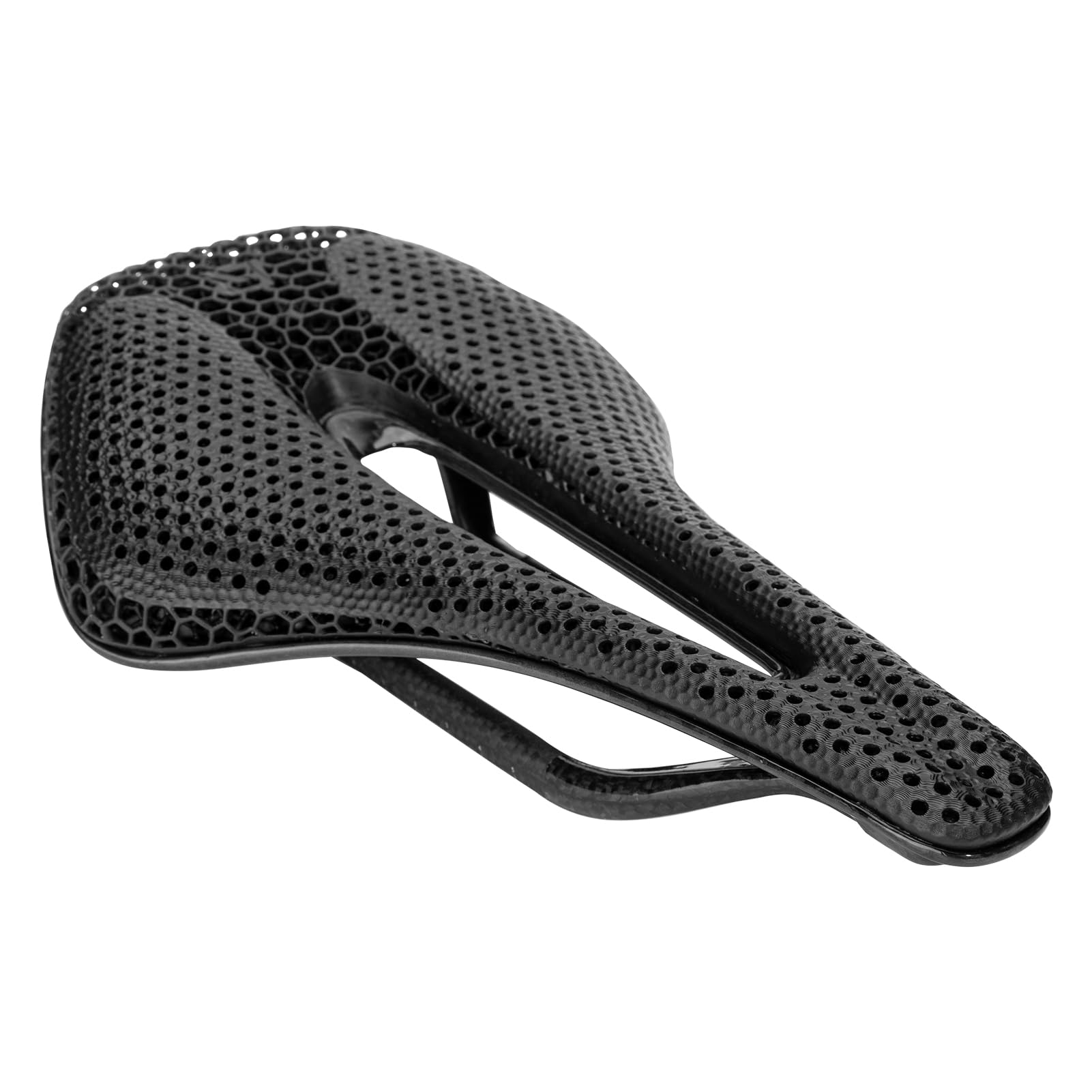
The cheapest way to try a printed honeycomb top on your own bike.
Here is the price-to-value read: if you have been curious about 3D-printed saddles but not ready to commit to a premium one, this is the way in. The ROCKBROS uses a breathable honeycomb liquid resin cover over a carbon fiber shell, which is the same broad recipe the premium printed saddles use. It measures 145 mm wide and weighs 5.6 oz. The 145 mm width matters — that is 25 mm broader than the ISM PN 3.1 above, so riders with wider sit bones get a platform here that the ISM cannot offer.
Comfort is the thing that lands, comfortably ahead of mentions of weight or appearance, and the surface gets described as non-slip. One rider who hated it on the first ride ended up moving it onto every bike in the garage, and another put it ahead of two far pricier printed saddles after 33 hours of riding. It is firm — this is not a cushioned saddle — and the shape has a short, narrow tip that wants you sitting back on the platform.
The trade-off is durability and weight limits. The rails are the weak point: one reviewer noted them breaking right after installation while lifting the bike, and riders over roughly 160 lbs report the padding running out on long rides. Fit is genuinely mixed too — some find the 145 mm perfect, others find it small. If you are light, ride smooth roads and want a printed saddle without the premium spend, this delivers. A 7 x 9 mm adapter is not included, so confirm your seatpost clamp first.
Why budget buyers choose it
- Printed honeycomb cover and carbon shell at entry-level value
- 145 mm width suits wider sit bones than most race saddles
- 5.6 oz keeps the bike feeling light on the climbs
- Non-slip surface stops you creeping forward under power
Honest limits to plan around
- Firm padding runs out on long rides for heavier riders
- Rail durability is the recurring weak point
- The 7 x 9 mm adapter is not included in the box
- Short, narrow tip demands a rearward seated position
Worth it for: lighter riders on smooth roads who want to test a printed saddle without premium spend.
Pass if: you are a heavier rider planning long days or rough gravel.
5. Brooks England Cambium C19 Carved
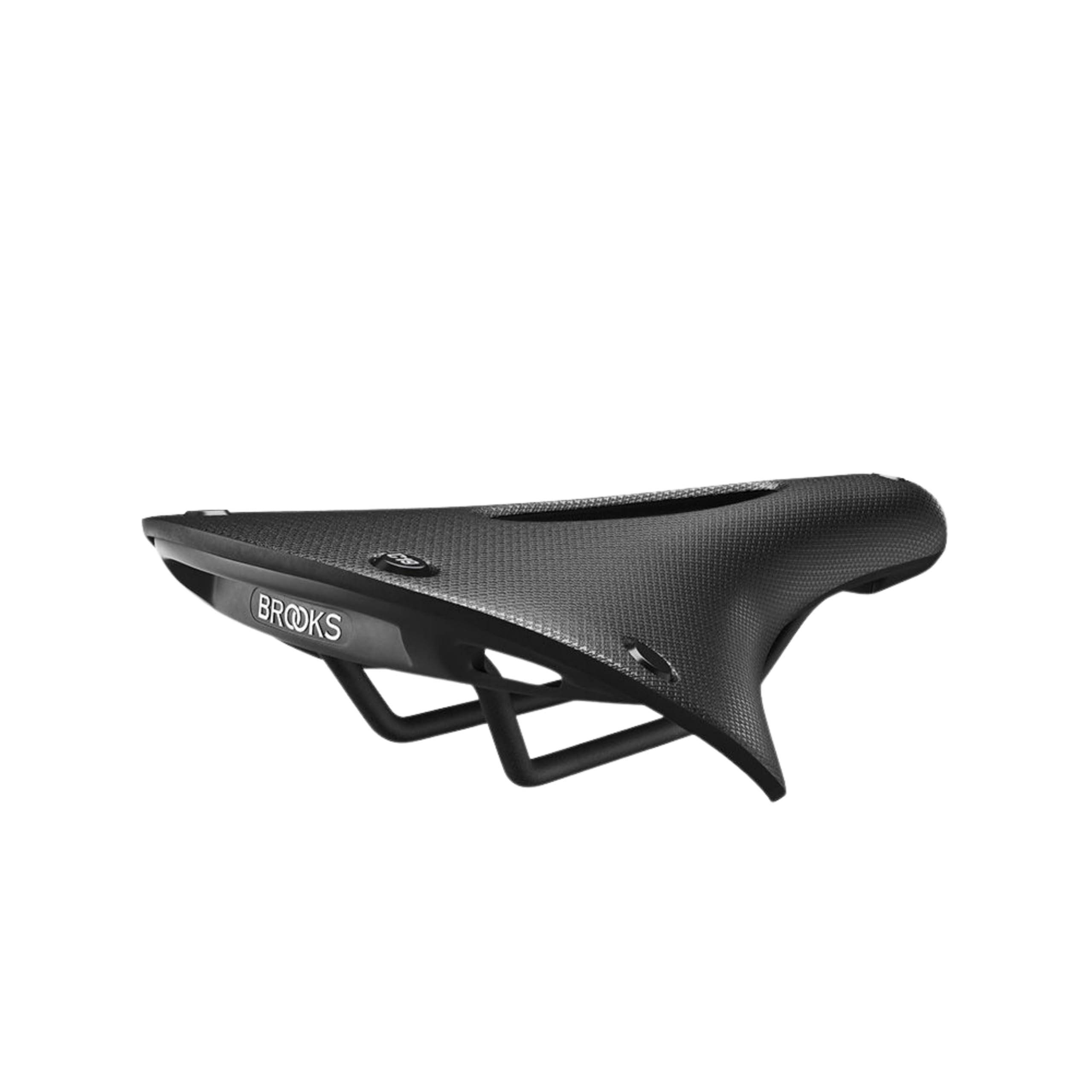
A 184 mm platform that shrugs off rain and never needs breaking in.
The C19 is the widest saddle here at 184 mm, and it is built from vulcanized natural rubber and organic cotton canvas rather than leather or foam. It carries its own waterproof nylon cover, so a soaked commute does not turn your saddle into a sponge. The fiberglass-reinforced back plate has loops for a saddle bag. It weighs a sturdy 450 g, and it is meant for city, cruiser and hybrid bikes where you sit more upright.
What keeps people on it is that it needs no break-in at all — the rubber top stays the same flex from the first ride onward. Riders around 220 lbs describe picking the size from a sit-bone measurement and riding long distances with zero maintenance, and heavier riders compare the feel to sitting on a hammock once they tilt the nose slightly up. The carve-out channel underneath adds a bit of give. Rain is handled without drama; one rider installed it on a 90s cross bike and called it comfortable from the very first ride, noting only a slight rubber smell that fades into the background.
The honest flip side: the top is hard, and it stays hard. If you have loved a leather Brooks that molded to you over a season, this is a different animal — the texture divides opinion, and a few riders never get comfortable. It is also heavy by road-bike standards, which is exactly why the weight-sensitive Fizik Vento Argo Adaptive is a better match for aggressive riding. Buy this for weatherproofing and width, not for a soft landing.
Weatherproof and maintenance-free: a waterproof rubber-and-canvas top with nothing to oil, treat or re-tension.
The hard truth: it will not soften with miles, and the 450 g weight rules it out as a race saddle.
Reach for it: commuters, cruisers and bigger riders who ride rain or shine and want a wide, zero-upkeep platform.
Look elsewhere: if you want a saddle that softens to your body, or need low weight.
6. Fizik Tempo Aliante Adaptive
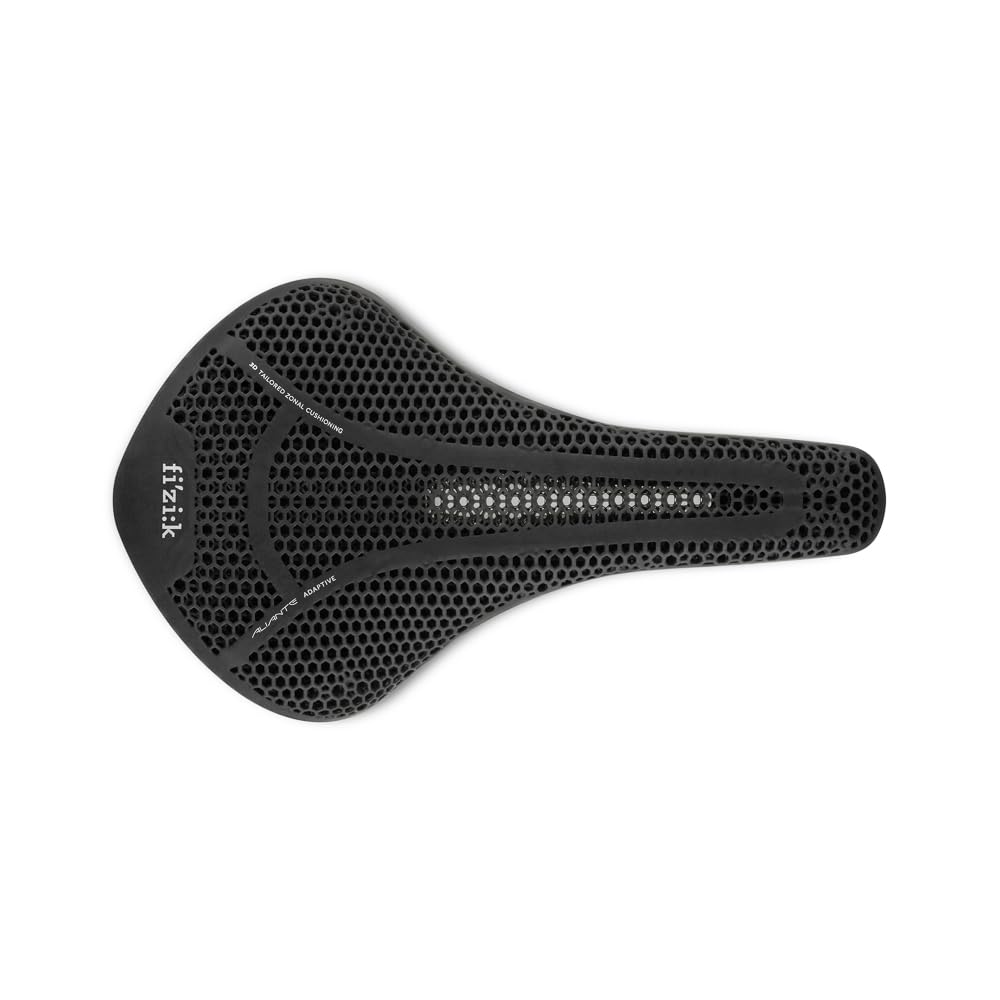
A waved platform tuned for riders who sit upright all day.
The Aliante is a waved saddle — it curls up at the back and tapers gently toward the nose — with a slightly wider platform than a pure race shape. That wave is designed to hold you in place and spread your weight across the ischial bones (the sit bones you feel on a hard chair). Fizik builds the padding with its Adaptive 3D-printed lattice, tuning different zones separately so the centre is softer than the edges. It weighs 11.2 oz with a nylon-reinforced outer.
For endurance riders the shape is the point. The gradual wing-to-nose transition means you can move around during a long day without the surface shoving you forward, and new riders notice it stops the forward sliding they had on flatter saddles. The 3D-printed top is also designed without a traditional cut-out, using a softer central zone for pressure relief instead. It is a genuinely comfortable place to sit for hours, and the lighter weight helps on climbs.
Set your expectations on consistency. One owner loves their first one and finds the second lopsided with poor support, so inspect the saddle when it arrives and make sure the printed top sits level. A rider reviewing in German found it only slightly more comfortable than cheaper options and could not get a width that suited them — widths are a fit question, and this is one to measure carefully before you commit. If it fits, the Aliante is the most natural pick for relaxed, long-distance riding.
Shape does the work: a waved profile with a wider platform keeps you planted and comfortable on all-day rides.
Check it on arrival: inspect that the printed top is level — consistency between units is the one thing to verify.
Best fit: endurance riders who prefer an upright position and ride long, steady days.
Skip the shape if: you ride aggressively forward or need a very specific width.
7. Fizik Vento Argo Adaptive

The short-nose printed saddle that disappears under hard efforts.
This is the pick for the rider who rides low and forward. The Argo is a short-nosed saddle, which means the tip is cut back so your soft tissue sits behind the pressure instead of on top of it. Fizik builds the top with Carbon Digital Light Synthesis — a 3D-printing process that lays down a lattice with zones of different firmness. The shell is carbon-reinforced nylon, and the Kium hollow rails are a high strength-to-weight alloy. It weighs 15.52 oz.
Comfort is what carries this one, and it holds up under load. Riders who came off other premium short-nose saddles describe forgetting the saddle entirely during hard VO2 max sessions, with no pressure or numbness even riding aggressively on the front. The grippy surface is a deliberate choice: it stops you sliding, which cuts chafing on long rides. Measure your sit bones before ordering — one tall rider found they had narrow sit bones and chose the smaller size, then felt the saddle improve over several hundred miles.
The question mark is durability, where opinion splits. There are riders who rate it 5/5 on fit, aesthetics, easy install and easy cleaning, and riders still getting used to it after a handful of outings who say the padding simply works. What it is not is a soft, forgiving cushion — the lattice is firm and grippy by design. If you want plush, the Selle Italia Lady Gel Flow is the softer route. If you want a race shape that lets you ride forward without pressure, the Argo is the strongest printed pick here.
Race-day shape: short nose plus zonal 3D padding puts the support under your sit bones and off soft tissue when you are low and forward.
Grippy by intent: the surface holds you still and reduces chafing, but it is firm rather than cushiony.
Made for: road and gravel riders with an aggressive, forward position who want a short-nose printed saddle.
Wrong shape if: you sit upright and want soft, deep padding.
8. Fizik Vento Antares Adaptive

Flat, fast and printed — a race saddle that wants you connected to the bike.
The Antares has been under pro riders for two decades, and this version swaps the traditional padding for Fizik’s Adaptive 3D-printed lattice. The shape is low-profile with a tapered nose-to-wing transition, built to keep you connected to the pedals for efficient power transfer. Instead of a cut-out, the printed padding incorporates a softer central zone for pressure relief. It is designed for road, gravel and mountain bikes where you want a flat, responsive platform.
What it does well is stability. The printed top supports weight more evenly than the standard version of the same shape, and riders using it on a smart trainer describe it solving perineal soreness that came from never standing or coasting indoors. For endurance riding and indoor sessions that is a real benefit — you are not shifting around all night trying to find a comfortable spot.
Two honest caveats. The hexagonal texture on the printed surface can grip sweaty bib shorts hard enough to cause friction, so it rewards smooth, well-fitted shorts and a stable seated position. And it is a genuine splurge — one rider gave it eight months and still could not decide whether the shape or the material was letting them down. If you want the same flat Antares feel without the printed top, the standard version is lighter, less expensive and less grippy. Buy the Adaptive when pressure relief and even support matter more than texture.
What the printed top delivers
- Spreads weight more evenly than the standard Antares shape
- Low-profile taper supports efficient pedalling in every position
- Soft central zone replaces the cut-out for pressure relief
- Works well on smart trainers and long endurance sessions
What to weigh before you commit
- Hex texture can grip sweaty shorts and cause friction
- Firm, race-oriented feel rather than plush cushioning
- A meaningful premium over the standard version of the same shape
Choose it for: flat-out road riding and indoor training where even support beats softness.
Better off with the standard: if you want the same shape lighter and less grippy.
9. Selle Italia SLR Boost 3D Superflow

Selle Italia’s lightest printed race platform, with titanium rails.
Selle Italia’s first 3D saddle uses a proprietary printed pattern that varies the cushioning across the surface, so different areas absorb shock differently. The 145 x 248 mm platform is a classic race shape, and the Ti316 rails are a titanium-alloy rail chosen for strength. It weighs 205 g. If shedding grams for climbing matters to you, this and the ROCKBROS at 5.6 oz are the two lightest saddles here.
When it fits, it works. A heavier rider put 600 km and up to 6-hour rides on it and found the pressure distribution notably broader, with the discomfort that came after two hours resolved. The printed top is well-ventilated through the lattice, which helps on hot days, and the low-grip surface keeps you planted. Riders who already like the SLR Boost shape tend to slot straight onto it.
Be clear-eyed, though: this is a firm race saddle with little give, and the printed surface divides riders sharply. Riders who love Selle Italia’s standard SLR Boost find the 3D top hard and chafing, and some describe it as having no spring compared with other printed saddles. Because the surface grips, you lift your hips to change position rather than sliding. That makes it a specialist pick for fit-confirmed race riders — not a first saddle for a new cyclist.
Grams-first race gear: 205 g with titanium rails and a ventilated printed top is a climbing-focused package.
Firm and grippy: the printed surface rewards a stable race position and punishes riders wanting softness.
For the weight-focused racer: riders who already know the SLR Boost shape fits and want the lightest printed version.
Not a first saddle: newer riders or anyone who wants forgiving, soft padding.
Know the Specs
Saddle width in millimetres
Width is the number that decides whether a saddle fits, more than any other figure. It is measured across the widest part of the platform, and it needs to roughly match the distance between your sit bones (the bones you sit on). A 120 mm saddle like the ISM PN 3.1 works for narrow sit bones; a 145 mm saddle like the ROCKBROS gives wider sit bones more to sit on; and a 184 mm platform like the Brooks Cambium C19 Carried suits riders who sit upright on cruisers and hybrids. Too narrow and pressure moves to soft tissue; too wide and the edges rub your thighs.
Padding type: foam, gel and 3D printing
Foam is a slab of synthetic cushion that compresses and stays compressed; gel adds a softer layer that spreads load; and 3D printing builds a lattice of tiny struts, which lets the maker vary firmness across the saddle. A 3D-printed top can be soft in the middle and firm at the edges in one part. The trade-off is texture — printed covers run grippy, which can stop you sliding but can also grab your shorts. Foam and gel are more forgiving to live with if you move around a lot.
Rails and how the saddle mounts
Rails are the two metal or composite bars underneath the saddle that clamp into your seatpost. Chromoly is a steel alloy used on the ISM PN 3.1; manganese is a lighter alloy on the Lady Gel Flow; Kium is a high strength-to-weight alloy on the Vento Argo; and Ti316 is a titanium alloy on the SLR Boost 3D. A stiffer rail transmits pedalling force better but feels harsher; a more flexible rail takes the edge off road buzz (vibration from rough roads). One ROCKBROS detail matters: it needs a 7 x 9 mm adapter, which is not included — check your seatpost clamp specs before ordering.
Noseless vs traditional vs short-nose shapes
A noseless saddle removes the long tip entirely, which takes pressure off soft tissue but changes handling — that is the ISM PN 3.1’s approach. A traditional saddle keeps the nose for control and lets you steer with your thighs. A short-nose saddle like the Fizik Vento Argo cuts the nose back but keeps a stub, giving you a middle path. The shape you choose should follow your riding position: upright riders do well with wider waved shapes, while riders tucked forward need a longer recess and a firmer platform.
Common Questions
How do I measure my sit bones to pick a saddle width?
Does a 3D printed saddle really reduce numbness?
Are 3D printed saddles harder than gel saddles?
Will a noseless saddle like the ISM PN 3.1 fit my seatpost?
Is a wider saddle like the Brooks Cambium C19 better for bigger riders?
How long should I give a new saddle before deciding it is wrong?
Can I use a road saddle on a mountain or gravel bike?
What weight changes on a saddle actually matter?
Do printed saddles wear out faster than foam saddles?
Is it worth spending more on a premium printed saddle?
The Bottom Line
For most riders chasing the best 3d printed saddle outcome, the ISM PN 3.1 is the safest buy: the noseless shape takes pressure off soft tissue, the 40-Series foam softens the ride, and it has the strongest comfort consensus of the group. If you ride forward and low, the Fizik Vento Argo Adaptive is the printed pick that disappears under hard efforts. And if you want the lightest printed race saddle here, the Selle Italia SLR Boost 3D Superflow at 205 g is the one for fit-confirmed racers.
One last nudge before you click: the ISM PN 3.1 sits at 4.5+ stars across 290+ ratings, and its comfort feedback is the clearest signal on this page. Measure your sit bones first, then buy — that single step is what separates a saddle you forget about from one you fight all season.
How we choose
We do not accept paid placement. Every pick is matched to a real buyer and a real use-case; we do not hands-on test units.
Sources
Specifications: manufacturer listings and product documentation. Review insights: verified customer reviews, as of October 2026. Pricing: not shown on this page (it changes often); check the current price via the retailer link.
As an Amazon Associate, Aappliancez earns from qualifying purchases. This does not affect which products we feature.