Disclosure: Some links in this post are affiliate links. As an Amazon Associate I earn from qualifying purchases, at no extra cost to you. Learn more
Specs are compiled from manufacturer listings and verified buyer reviews and can change over time — please confirm the key details on the product page before buying.
You want an open-road feel without taking a June bug to the cheek. A 3/4 motorcycle helmet covers your skull, ears and face sides while leaving your chin free — and the right one also cuts wind roar and slides a tinted visor over your eyes on demand. The pick that suits most riders here is the VCAN V88: a 1.8 kg shell, an integrated sun visor, and a micrometric buckle that snaps shut with one gloved hand.
This guide is built by comparing the manufacturers’ published specifications and the patterns across verified customer reviews, so you get each pick’s real strengths and trade-offs instead of marketing spin.
Below you get seven helmets sorted by what they actually do well: a retro cruiser shell, a Bluetooth-ready modular, a fiberglass classic and a couple of budget-friendly lids. Every spec is translated into what it means on a Tuesday commute — and the quietest, most versatile 3/4 motorcycle helmet for most riders is the VCAN V88.
Top Picks


How To Choose The Best 3/4 Motorcycle Helmet
The single biggest mistake riders make is buying by the size printed on their last lid instead of measuring their head. A 3/4 shell wraps your ears and occiput differently than a half helmet or a full-face, so you need your actual head circumference in inches or centimetres and the brand’s own chart. Sizing complaints show up in almost every helmet on this list — some run small, some run large, and one brand’s chart told a buyer a 22-inch head was a Large before the helmet turned out painfully tight.
Get the shell weight right, because your neck feels every gram
A shell under 1.3 kg keeps fatigue low on a two-hour highway run; anything near 2 kg starts to feel top-heavy when you look over your shoulder in traffic. Weights in this category swing from 2.3 pounds to 4.5 pounds, so pay attention once you are past the mid-range. A lighter lid also reduces the amount of buffeting you absorb from crosswinds.
Decide what actually protects your eyes
Three options sit in this category: a clear outer shield, a retractable inner tinted sun visor, or a snap-on bubble visor. The drop-down inner tint is the easiest for daytime glare — no sunglasses to carry, no swapping shields at dusk. If you already wear prescription glasses, look for grooves in the cheek pads or generous ear pockets rather than a specific visor style.
Check the straps in the reviews before you buy
The closure is where these helmets differ most in daily life. Micrometric buckles snap quickly with gloves on; double D-rings are old-school and secure but slower; quick-release clicks are a compromise. Some helmets ship with D-ring straps that ride too high or come up short, which is the kind of thing owners complain about most. Check the strap type in the reviews before you fall for the paint.
Match the vent count to your climate
One vent on top is enough for cooler weather; two intakes plus exhaust ports keep you cooler in summer gridlock. Ventilation is genuinely the spec where good helmets fall short — several riders note the shell is comfortable but wish there were more openings. Factor in humidity as much as temperature when you weigh the airflow system.
Side-by-Side Comparison
| Model | Best For | Weight | Visor Type | Chin Strap | Amazon |
|---|---|---|---|---|---|
| VCAN V88★ Best Overall | Best all-round daily lid | 1.8 kg | Inner sun visor + anti-scratch clear | Micrometric | Amazon |
| Daytona Helmets 3/4 ShellBest Retro Style | Retro cruiser style | 2.3 pounds | Snap-on bubble visor | Quick-release | Amazon |
| BEON Half 3/4 Face | Quietest commuter on the list | 1200 g | Dual — clear outer + retractable inner | Quick-release buckle | Amazon |
| ILM Z302 | Removable face mask flexibility | — | Detachable visor + face mask | Metal quick-release | Amazon |
| HJC i31 | Widest field of vision | 3.4 pounds | Pinlock-ready clear + tinted sun shield | Double D-ring | Amazon |
| BELL Custom 500 | Fiberglass shell and quiet ride | 3.7 pounds | None — needs add-on shield or goggles | Hook & Loop | Amazon |
| ScorpionEXO Covert 2 | Bluetooth-ready modular | 4.5 pounds | SpeedView drop-down + spare clear | Double D-ring | Amazon |
Detailed Reviews
1. VCAN V88 Open Face Motorcycle Helmet
Our pick — 4.5+★ from 300+ verified ratings; the strongest balance of quality and price.
The sub-2-kilo all-rounder that slips on easier than the lid it replaces.
If you commute on a scooter or cruise a naked street bike and want one lid to do everything, this is the one to weigh first. The shell is built from thermoplastic resin and carries dual ECE 22-05 and DOT certification — the European and American safety standards — so it clears the tests that check how the shell absorbs impact and resists penetration. The listed 1.8 kg weight is light enough to carry in one hand off the bike, and the micrometric retention system (a ratchet buckle you push until it clicks) shuts with gloves still on.
The appearance is the thing that wins people over. Over and over, the finish gets treated as the reason to buy — it has been compared to lids that feel like a model in the hand. The integrated sun visor drops down over your eyes at the flick of a slider, and the outer shield carries an anti-scratch coating so you are not looking through spider scratches after a season. One top air vent circulates air through the shell, enough for warm-weather city riding without pulling your hair out of place.
The one honest catch is where the cheek pads live. They are removable and washable — good for hygiene — but the inner foam around the cheeks is the weak point on the comfort side, and a few owners have found it gives up early in hard daily use. Treat the pads as a consumable and the rest of the helmet as a genuine workhorse. The removable lining also means you can pull it out for a proper wash rather than spraying it with deodoriser.
Where the V88 earns its keep
- Dual ECE 22-05 and DOT certification, so it clears both the European and American safety standards
- 1.8 kg thermoplastic shell — easy to carry and light on the neck
- Integrated sun visor with anti-scratch clear outer shield
- Removable and washable lining keeps the inside fresh
What to know before you click
- Cheek pads have a habit of giving up earlier than the shell
- Single top vent suits mild weather better than summer gridlock
- The sun visor is harder to flick with prescription glasses on
The daily rider’s answer: a light, dual-certified 3/4 with a working sun visor that suits commuters on a scooter or a small street bike.
Then think again if: you want to run summer traffic with two intake vents — one top opening will not cut it.
2. Daytona Helmets 3/4 Shell Open Face Motorcycle Helmet
Paint that draws comments at the stop light, if you buy the right size.
You buy this lid because it looks like a lid, not a fighter-pod — the cruiser-style finish in Hi-Gloss Black and Captain America graphics has been described as a finish that avoids the spaceman look. At 2.3 pounds it is genuinely light on the head, and the quick-release chinstrap clicks in a second with one gloved hand. The ear room is generous enough for good hearing, which a lot of 3/4 shells get wrong. It ships with a cloth drawstring helmet bag, a snap-on bubble visor, a headwrap and a keychain — nice touches for the price tier.
What riders keep coming back to is the fit once the size is right — well past 40 owners single it out in their feedback, and the smooth polyester shell holds up to daily use. Where the sizing goes wrong is the chart, not the helmet. A 22-inch head has been sold a Large that turned out painfully tight, and a few buyers have had the same experience. One clear way around it: buyers report the smart move is to order one size up from what the chart tells you. That is consistent enough across reviews that it is worth treating as the rule, not the exception.
Two further points worth knowing. The shell sizes genuinely scale — an XS shell is noticeably smaller than an XL, so a small-headed rider is not stuck in a bubble. And the helmet carries a real DOT certificate; some riders have bought one as a display piece for a chopper-style build only to find it was an approved helmet they could actually wear if needed. No vents worth mentioning, which suits open-face riding in warmer weather but not summer traffic — the shell itself is the airflow.
Fit is the whole game: measure your head, then order a size up from the chart. Owners who did exactly that landed a snug, comfortable lid that passes the look test at every red light.
The sizing trap: returns cost postage plus a 15% restocking fee, so the sizing decision deserves more care than the graphics do.
Worth the shot if: you want a light, visually striking 3/4 for a cruiser, scooter or custom build and you will size up proactively.
Look elsewhere if: you refuse to gamble on the size chart or you want a vented shell for hot-weather riding — the V88’s single vent gives you more air than this lid.
3. BEON Half 3/4 Face Motorcycle Helmet

Two visors, ear flaps that muffle traffic, and a shape that matches your bike.
Here is a helmet built for the rider who wants the open-face look without giving up eye protection. It carries both DOT FMVSS 218 and ECE 22.05 certification — the American and European safety standards — and the 1200 g shell is the lightest build on this list. That weight matters: it is the difference between glancing left in traffic and feeling your neck protest. The shell is advanced thermoplastic over high-density EPS with a mesh liner, and the metal visor base is tool-free, so you can swap shields without a screwdriver.
The standout is the vision system. You get a clear, anti-scratch outer visor, a retractable inner sun visor with anti-UV coating, and a spare long outer visor in the box for better face protection at speed. The retractable tint is the bit owners love — one click and sunlight disappears, another and it is back. The Quick-Release Buckle comes off with a single gloved hand. The liner pulls out and washes, and the ear pads are velcro-mounted so you can leave room for earbuds and glasses without fighting the fit. One owner on a grey Honda XR150 noted the colour matched the bike “98%” of the way — this is a lid that looks considered.
Where this helmet pressures you is at speed. Above 70 mph riders report too much crosswind and noise, so this is a city and back-road helmet, not a motorway mile-eater. The tinted sun visor also has limits in low-sun conditions, and the clear outer visor is not scratchproof against a careless glove wipe. Fit runs on the large side for some — the sizing is the one feature with genuinely mixed feedback. If in doubt, measure yourself and check the guide against that measurement before clicking.
What makes it different: dual visors, a quick-release buckle, washable liner, and room for earbuds and glasses at a weight the rest of the field cannot match. On daily commutes this is a lot of helmet for the price tier.
The limits to know: it gets loud above 70 mph, and the tinted visor can struggle with low, harsh sun. Treat it as a city lid.
Reach for this if: your riding is daily commutes and weekend city cruises and you want the maximum of features and minimum of weight.
Think again if: your riding is mostly highway — the wind noise past 70 mph is the trade-off you feel at every mile.
4. ILM Open Face Motorcycle 3/4 Half Helmet Z302

One helmet, two looks, thanks to a face mask that pops off on the fly.
This ILM is the 3/4 for the rider who wants options. The face mask and visor detach, so you can run it as a bare open-face lid or with the cage in place, and the top screw lets you tilt the sun visor without affecting a camera mount. The metal quick-release buckle releases with a lift of a red lever, and the removable and washable liner keeps the inside clean. There is a camera mount available separately, and replacement chin straps and visors are sold by ASIN if you need spares. It is the highest-ticket item on this list and it earns that with hardware, not graphics.
Appearance does its part too — well over 70 owners flag it as the reason they bought. Fit runs a close second, with an XXL that accommodates very large heads and ear pockets with speaker compartments for a Bluetooth setup. The quick-release strap and closable vents keep the daily routine easy. Rider accounts of long trips land on the same note: comfortable, well-vented, and stable enough to wear for hours.
Now the caution. The face mask is plain hard plastic without padding, and with your nose grazing the front cage the fit can go from snug to unpleasant. Some riders note the visor fogs immediately when the mask is on, so a breath guard would help but is not in the box. The plastic lenses on the spare clear visor arrive unpadded and have been reported cracked. It also sits lower-profile than some 3/4 shells, which trims the visible field. Use it as a fair-weather, lower-speed helmet and it shines; treat it as a highway lid and the mask becomes a nuisance.
Why it earns a place
- Detachable face mask and visor give you two configurations from one shell
- Metal quick-release buckle is sturdy and easy with gloves
- Speaker compartments and generous ear pockets for a Bluetooth setup
- Removable and washable liner, plus replacement parts available
Where it falls short
- Face mask is unpadded hard plastic — fogging and nose contact are common
- Extra clear visor can arrive with scratches
- Lower profile means less visible field than others on this list
Suits: riders who want to switch between a minimalist open-face look and a masked one, and who want Bluetooth-ready ear pockets.
Not for: riders chasing a fog-free highway commute — the unpadded mask fogs the visor quickly once you are moving at pace.
5. HJC i31 Solid Open Face Motorcycle Helmet
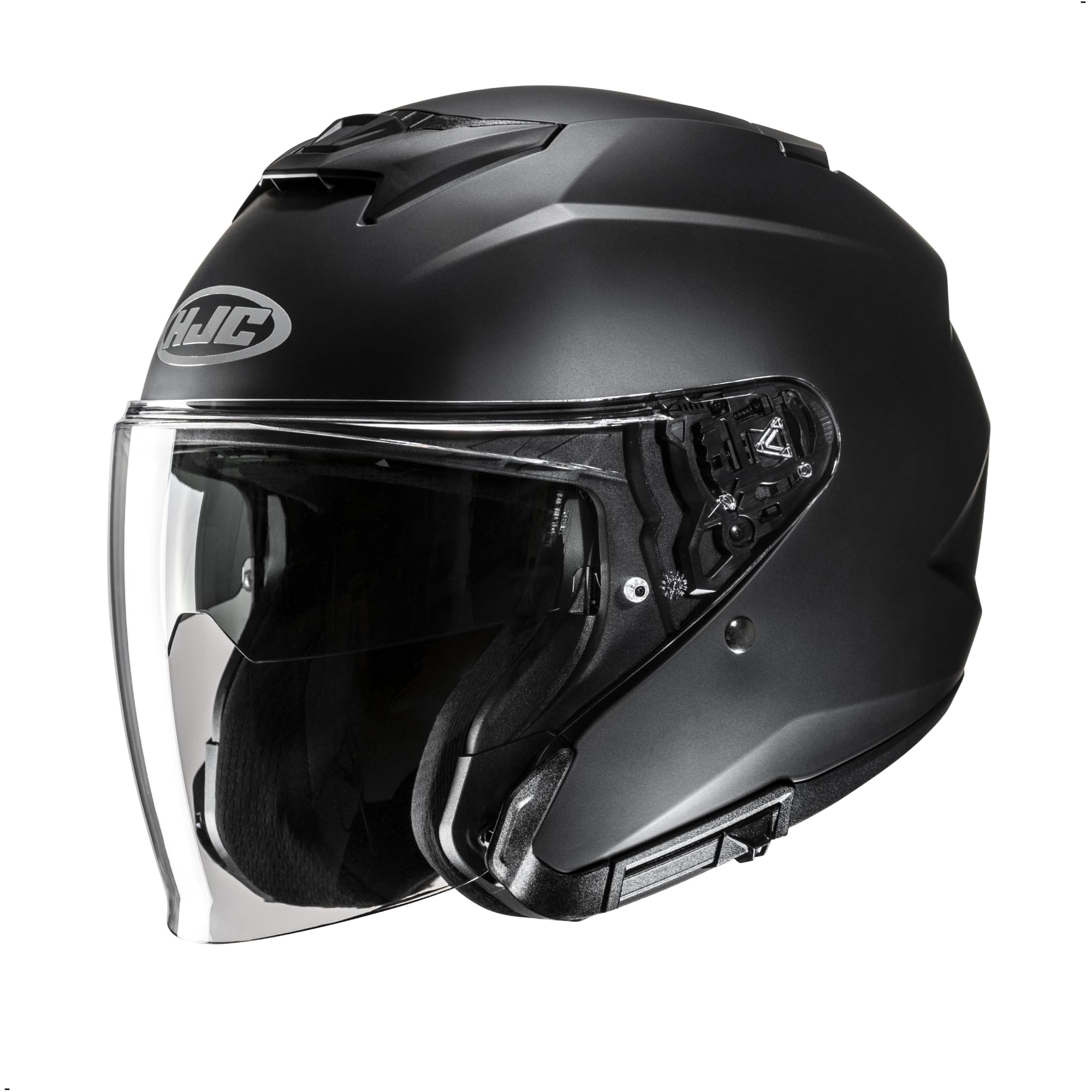
The widest view of the road of any lid on this list.
Field of view is the spec HJC engineers worked hardest on — the i31 gives you a wide, unobstructed picture of the road ahead, better than a full-face, and riders notice it at every junction. The shell is an advanced polycarbonate compound blended with high-impact ABS for strength at 3.4 pounds, and the crown and cheek pads are removable and washable. Cheek pads interchange across all shell sizes, so you can fine-tune the fit rather than accept it. It runs true to size against other HJCs.
Vision and quality are the two things riders praise most, quality taking the top spot by a wide margin. The Pinlock-ready HJ-43 visor offers 99% UV protection and an anti-scratch coating, and it ships with a dark smoke HJ-V12 sun shield already installed. The dual-visor setup means you can run clear shield and tinted inner shield simultaneously — one owner described needing no sunglasses at all. The Advanced Channeling Ventilation System pushes air front to back and the moisture-wicking liner keeps you dry. Glasses grooves in the cheek pads fit riders with eyewear without pinching.
The catch is the closure. The double D-ring strap sits high and comes up short — riders have had trouble threading it in gloves, and one returned the lid over it rather than fight it. The fix owners converge on is adding a quick-release clip aftermarket. Ventilation is the other split; some riders want more openings for sweaty commutes. If you are happy to fit a clip or you like D-rings, the rest of this helmet — visibility, comfort with glasses, and the tinted slide-down shield — earns its keep.
Vision and quality lead: a 99% UV-protected Pinlock-ready visor, a ready-fitted sun shield, and glasses grooves make this the strongest pick for riders who wear prescription eyewear or want the widest road picture.
Fit the strap first: the D-ring strap is genuinely short and high, so plan on adding a quick-release clip or accept a slower strap routine.
Choose it if: field of view, a Pinlock-ready shield and glasses-friendly cheek pads are top of your wish list.
Give it a pass if: you want a fast, one-handed chinstrap from the start — the D-rings on this one need a workaround.
6. BELL Custom 500 Helmet, Matte Black, Medium

A fiberglass composite shell that cuts wind noise and holds its finish through years of daily riding.
The Custom 500 is the most understated helmet here — and the only one with a fiberglass composite shell, which is the material that gives it both its light feel and its quiet ride. It meets Federal Motor Vehicle Safety Standard 218 (FMVSS 218) plus DOT and ECE22.06 standards, so it clears the toughest European certification in this list. The Ionic+ padding manages sweat as it quick-dries and fights odour-causing bacteria, a nice touch if you ride daily and do not want to pull the liner every week. At 3.7 pounds it is nearly as light as the HJC despite the fiberglass build.
What long-time riders report is the noise. One rider with more than 100k miles upgraded from a DOT brain bucket and found wind noise and buffeting drop off dramatically without a windshield. The shell stays quiet at 3/4 level because there are no vents to whistle through. The interior is quilted and high-end in feel, the stitching and finish are consistent, and the matte black wears well. If you are going for the Steve McQueen look, this is the shell for it.
The honest trade-offs: this lid runs a little small — one rider found it needed half a size up, and a 59 cm head fitting a Large is a useful reference point. There is no venting at all, so warm open-face riding is fine but a summer gridlock will leave you warm. And it can sit low on the forehead and be tight at the crown for some head shapes — if you have a round or oval head, try it on with care. The strap is hook-and-loop, which suits a retro lid but is not the fastest closure in this list.
Where the Custom 500 shines
- Fiberglass composite shell with DOT and ECE22.06 certification
- Quiet ride at 3/4 level, no buffeting to speak of
- Ionic+ quick-drying, odour-resistant padding
- Quality stitching and quilted interior that holds up
What to keep in mind
- Runs about half a size small; no venting for hot days
- Can sit low on the forehead and feel tight at the crown
- Hook-and-loop closure is slower than a quick-release buckle
Go for it if: you want a quiet, hard-wearing fiberglass shell with retro credibility and you are prepared to size up.
Skip past it if: you want a vented lid for summer heat, or a closure that clicks in one motion.
7. ScorpionEXO Covert 2 Open Face Motorcycle Helmet
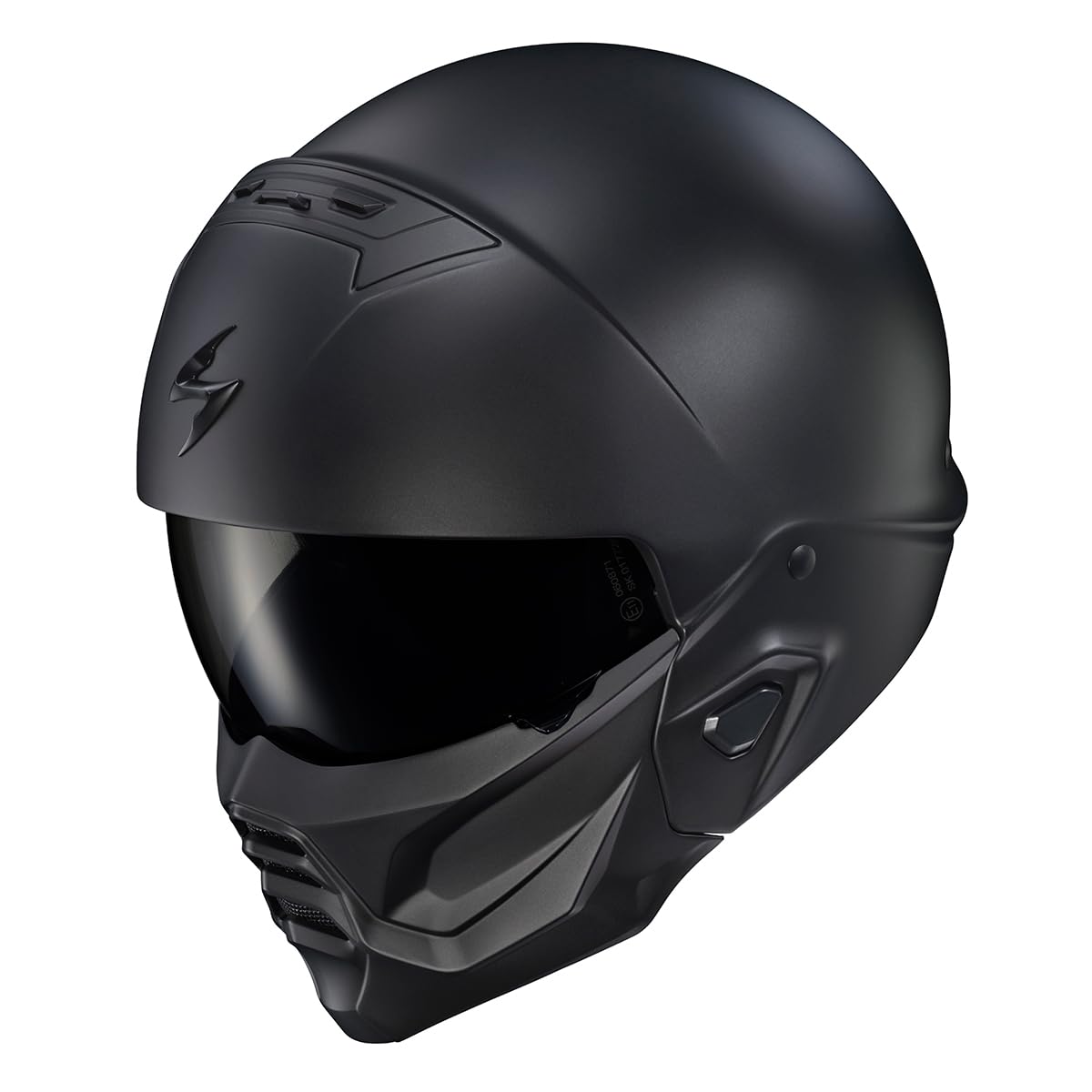
Swap the front mask for a full-face look, or pop it off and ride open.
This is the priciest and most configurable helmet on the list, thanks to a removable front mouth guard held on by Neodymium magnets. Pop it off for 3/4 mode, clip it on for Full Mode — two helmets from one shell. The advanced polycarbonate shell carries DOT FMVSS No. 218 certification and dual-density EPS, and ScorpionEXO backs it with a 5-year warranty, which is the longest coverage on this list. The 4.5-pound shell is the heaviest here, and that weight buys you the extra mask, the larger side-release buttons and the double D-ring strap.
Where this helmet earns its extra cost is the setup for a Bluetooth communicator. The speaker pockets are large-diameter and positioned in front of the ears — big enough for most Bluetooth system speakers, with Cardo units specifically reported to fit perfectly. The KwikWick “C” comfort liner keeps you cool in summer and warm in winter, and the Kwikfit cheek pads make it easy to slide glasses on and off. The EverClear SpeedView drop-down sun visor is anti-fog coated and comes with a dark smoke visor installed plus a clear one for night riding.
Fit is the question mark. Riders say the Covert 2 fits snug — some size up — and the pressure points are the symptom of that. The XL runs tighter than the original Covert 1, so measure against the chart with intent. Wind noise is lower than a half shell but present, and the front mask adds a little whistle at highway speed. Weigh the mask as a weekend option rather than a daily accessory. If you want a lid that works with your communicator and your glasses and can change face, this is the one.
The comms-first pick: large speaker pockets, Kwikfit cheek pads for glasses, an anti-fog SpeedView sun visor and a 5-year warranty are the reasons to pay for this shell over the others.
The weight and fit trade: 4.5 pounds makes it a deliberate choice, and the snug sizing means you need to buy the size you measure, not the one you think you are.
Perfect for: the rider who runs a Bluetooth communicator, wears glasses, and wants the flexibility of an open-face or masked 3/4 in one shell.
Not ideal for: weight-conscious riders who want a light lid for short hops — 4.5 pounds is the heaviest build on the list.
Know the Specs
Shell weight and what it does to your neck
Weight is measured in kilograms or pounds and it is the number that decides how fresh you feel at hour two. A lid near 1.2 kg or 2.3 pounds feels barely there; anything near 2 kg or 4.5 pounds starts to tug when you look over your shoulder. For city riding the difference is small, but on long trips it compounds. Weigh the helmet against your usual ride length before you fall in love with the paint.
DOT vs ECE and why dual certification matters
DOT is the US federal standard — FMVSS 218 — and it tests impact absorption, penetration resistance and strap security. ECE is the European standard and adds its own energy-absorption protocol; both apply to helmets sold in their regions. A shell that carries both clears two sets of tests, and lids like the VCAN V88 and BEON go that route. Dual certification is a marker of build seriousness rather than a guarantee, but it is a useful filter.
Inner sun visors vs outer shields
A retractable inner sun visor slides down inside the shell when the sun hits; an outer shield snaps onto the shell and needs swapping when the light changes. Inner sun visors win on convenience and suit glasses wearers, but they do not replace clear eye protection in rain. Outer shields give bigger coverage but cost space and add noise. The best setup gives you both — clear outer plus tinted inner — as the BEON and HJC do.
Chin strap closures and their trade-offs
Three closures dominate: micrometric ratchet buckles snap in seconds and suit gloves, double D-rings are the traditional secure choice but slower, and quick-release clips are the compromise. Some D-ring straps run short and high, which owners find annoying in day-to-day use, while a quick-release can be added aftermarket. The strap is the part you touch every single ride, so check the closure type before the paint.
Common Questions
Can I wear prescription glasses under a 3/4 motorcycle helmet?
Is a 3/4 helmet as safe as a full-face helmet?
How do I measure my head for a 3/4 helmet?
Can I fit a Bluetooth communicator to these helmets?
What is the difference between a 3/4 helmet and a half helmet?
How do I clean a 3/4 helmet liner?
Do I need an inner sun visor if I already wear sunglasses?
Will the visor fog up when I stop at a light?
Are all 3/4 helmets DOT approved?
How long does a 3/4 helmet last before I need to replace it?
The Bottom Line
The 3/4 motorcycle helmet that fits most riders is the VCAN V88, because 1.8 kg of thermoplastic shell, dual ECE and DOT certification, and a working sun visor cover the daily commute without drama. If you want a full set of features and the lightest weight on this list, the BEON is the one to reach for. And for a route that needs a Bluetooth communicator and glasses-friendly cheek pads, the ScorpionEXO Covert 2 earns the premium ask. The small honest nudge: the VCAN’s crowd backing and the BEON’s fanbase both make either easier to recommend than a cheaper, unvented lid — so let weight and visor type pick for you.
How we choose
We do not accept paid placement. Every pick is matched to a real buyer and a real use-case; we do not hands-on test units.
Sources
Specifications: manufacturer listings and product documentation. Review insights: verified customer reviews, as of October 2026. Pricing: not shown on this page (it changes often); check the current price via the retailer link.
As an Amazon Associate, Aappliancez earns from qualifying purchases. This does not affect which products we feature.