Disclosure: Some links in this post are affiliate links. As an Amazon Associate I earn from qualifying purchases, at no extra cost to you. Learn more
Specs are compiled from manufacturer listings and verified buyer reviews and can change over time — please confirm the key details on the product page before buying.
Buying 12×50 binoculars for hunting is really a bet on one trade-off: 12x power pulls distant game close, but it also magnifies every shake in your hands. The right pair balances that power against exit pupil size (the beam of light that reaches your eye), eye relief, and a weight you can brace on a pack for a long sit. This guide walks through nine real options so you can match the glass to how you hunt.
This guide is built by comparing the manufacturers’ published specifications and the patterns across verified customer reviews, so you get each pick’s real strengths and trade-offs instead of marketing spin.
Most of these 12x50s share a 4.2mm exit pupil — enough light for dawn and dusk, but not enough to forgive unbraced hand-holding. Below you’ll find honest trade-offs on every pair of 12×50 binoculars for hunting I would actually take into the field.
Top Picks


How To Choose The Best 12×50 Binoculars for Hunting
You want to judge a rack at several hundred yards and still see into the shadows at dawn. A 12×50 pair is built for exactly that: 12x magnification (the image looks 12 times closer) lets you size up an animal far out, and a 50mm objective lens (the big front glass) pulls in light for the first and last legal minutes of shooting hours. Pick the wrong pair and you either can’t hold it steady or can’t see into the shadows. These are the variables that decide it.
Magnification is a commitment, not a free upgrade
Twelve power brings game close, but it amplifies hand tremor at the same rate. A steady rest — a pack, a tree, or a tripod — turns a 12×50 into a genuine long-range tool. If you mostly glass offhand from a truck or a stand rail, plan on bracing. Beginners often buy 12x for the reach, then blame the glass for shake that comes from their own hands.
Exit pupil and low light
Exit pupil is the width of the light beam that hits your eye, and it governs how bright the image looks in dim conditions. The 50mm objective is what makes 12×50 pairs usable at dawn and dusk instead of a bright-day-only toy. A larger exit pupil looks brighter at dusk, but the bigger objective that produces it adds ounces to the neck strap, so weigh brightness against the miles you’ll carry it.
Field of view and eye relief
Field of view tells you how wide a swath of hillside you see at 1,000 yards — wide is easier for finding moving animals, narrow is more detail. Eye relief is the distance your eye sits from the lens; if you wear glasses, you want generous eye relief and eyecups that adjust. Both numbers are published on every pair below, so compare them directly.
Side-by-Side Comparison
| Model | Best For | Field of View | Eye Relief | Exit Pupil | Amazon |
|---|---|---|---|---|---|
| Vortex Crossfire HD 12×50★ Best Overall | All-around hunting glass | 273 ft | 15 mm | 4.2 mm | Amazon |
| Bushnell Prime 12×50Budget Backup | Budget field backup | 1000 m | — | 4.2 mm | Amazon |
| Bushnell Engage DX 12×50Widest View | Wide-view bird and game scanning | 64 degrees | 15 mm | 4.2 mm | Amazon |
| Nikon PROSTAFF 5 12×50 (7573) | Light long-carry hunting | 246 ft | 15.5 mm | 4.2 mm | Amazon |
| Nikon PROSTAFF 5 12×50 Bundle | Ready-to-go kit | 246 ft | 15.5 mm | 4.2 mm | Amazon |
| Pentax SP 12×50 WP | Star and low-light glassing | 87.2 | 11 mm | 4 mm | Amazon |
| Celestron Nature DX ED 12×50 | ED glass on a budget | 84 degrees | 14.3 mm | 4.1 mm | Amazon |
| Leupold BX-4 Pro Guide HD 12×50 Gen 2 | Premium clarity and ergonomics | 6.84 degrees | — | 4.17 mm | Amazon |
| Maven C.3 12×50 ED | High-end glass for the value hunter | 251 ft | 15 mm | 4.1 mm | Amazon |
Detailed Reviews
1. Vortex Crossfire HD 12×50 Binoculars
Our pick — 4.5+★ from 3,000+ verified ratings; the strongest balance of quality and price.
The pair that pulls shot holes into focus at 100 yards and still survives a drop.
When an animal steps out and you have to get on it fast, the Vortex Crossfire HD gives you the most room to work with: 273 feet of field of view at 1,000 yards (how wide a slice of ground you see that far out), the widest of the trail-ready picks here. Its 4.2mm exit pupil (the light beam reaching your eye) and fully multi-coated lenses (anti-reflective layers on every glass surface) keep the image usable at first light and last light, so you can still pick out a deer in dim timber. The aluminum body with rubber armor means a knock against a rock isn’t a disaster.
What wins people over on this pair is the sheer optical quality for the money — it’s the single most-praised thing about the Crossfire, and it shows in the field. Hunters report crisp focus and enough resolution to see shot holes at 100 yards, and it does close-range duty just as well as long-range glassing. The diopter adjusts ±5 diopters, so you can dial it to your own eyes and leave it there. It’s tripod-adaptable too, which matters on a 12x when you need to hold steady.
The honest catch is weight: reviews split on whether it’s fairly light or a touch heavy, and there’s a real reason for both reactions. At 12x, any bigger and you’d want a tripod — as the feedback puts it, “These are perfect as long as you don’t shake a lot. I think any bigger and you would need a tripod.” The included case is also snug for a 12×50 and the lens-cap tabs are fussy. Neither flaw stops the optics from doing their job.
What earns its place on the rail
- Widest FOV among the trail-priced options at 273 ft at 1,000 yards, so you track moving game faster
- 4.2mm exit pupil plus HD glass keeps dawn and dusk images bright
- Nitrogen-purged, o-ring sealed, fogproof, and backed by a fully transferable lifetime VIP warranty
- ±5 diopter adjustment fits a wide range of eyes
Where it makes you work
- Weight gets a mixed read — light to some, heavy to others
- Supplied case runs short for a 12×50 and the strap hardware is basic
- Lens-cap tabs slip off easily unless you trim or tuck them
Grab this one if: you want one pair that handles long-range glassing, close birding, and rough truck-bed duty without a premium price barrier.
Pass on it if: you plan to hand-hold for hours on end without a rest — 12x wants bracing, and a heavier-feeling body adds to that.
2. Bushnell Prime 12×50 Binocular
The entry ticket into 12×50 glassing that still rings clear at 200 yards.
If you want a second pair to leave in the truck or hand to a kid on the first hunt, the Bushnell Prime is the value play. It carries the same 4.2mm exit pupil as much pricier glass here, plus IPX7 waterproofing (rated to survive a dunk) and Bushnell’s EXO Barrier lens coating, which is designed to shed rain, dust, and fingerprints. At 16 ounces, it’s also a light carry compared with the big bodies further up this list.
The Bushnell Prime earns a spot because owners keep coming back to how much glass you get for the money — it’s a durable, clear view that measures up on the things that matter. One buyer reports “Easy-to-use very clear view close up view at 200 yards,” and the pair has been taken to Alaska and Montana and held up. It’s a straightforward, no-frills hunting tool that does its job without extra features you won’t use.
The main thing to know going in: field of view is listed as 1000 meters on the spec sheet rather than the more usual feet-at-1,000-yards figure, which makes it hard to compare directly against the picks above. A small number of first units arrive with an optics flaw, though the service side handles replacement quickly. At this price that’s a trade you decide whether to accept.
Worth knowing: IPX7 sealing plus EXO Barrier coating means a wet jacket, a dropped-and-splashed scope, or a dew-covered morning won’t end your glassing session.
The trade: the spec sheet reports field of view in meters rather than feet, so buyers comparing side by side should ask Bushnell for the feet-at-1,000-yards figure before committing.
Reach for this if: you need a dependable spare pair for the truck, the boat, or a young hunter’s first season.
Look elsewhere if: you glass wide open country where knowing your exact field of view in feet is a deal-making number.
3. Bushnell Engage DX 12×50 Binoculars
A wide 12x view that keeps flying birds and moving game in the frame.
The Engage DX is built around a 64-degree apparent angle of view, and that wide window is what it does best. A 275 ft at 1,000 yards field of view makes tracking a flushing bird or a moving deer far less frantic than a narrow 12x tunnel. Phase coating (a treatment on the internal prism that keeps the image crisp) plus fully multi-coated glass keeps the picture bright in low light, which is why owners trust it well past sunset.
Field of view is the top-raved quality here — buyers who glass moving targets single out that wide window as what makes the Engage DX worth owning. It’s light enough to carry on a short walk, has a good feel in the hand, and brings subjects close with minimal shake for a 12x. A nature-lover’s take sums it up: it’s ideal for scanning from a car, a stadium, or anywhere you’re not shouldering a rifle.
Plan on keeping an eye on the lens caps — they fit inside the barrels rather than snapping tight, so they can drop off when the binoculars hang around your neck. There’s also a sharper-eyed knock: an optical designer notes the color correction isn’t quite as clean as the claimed ED glass implies, with a blue fringe on bright objects like the moon. For everyday daylight hunting, neither complaint will cost you an animal.
The draw: a 64-degree apparent field and 275 ft at 1,000 yards give this pair the widest scanning window in its price tier — exactly what a fast-moving target needs.
Keep in mind: lens caps that sit inside the barrel come loose when hanging, and a critical eye will notice some color fringing on bright objects.
Best matched to: the hunter who scans wide open country and values seeing more ground per look over absolute optical perfection.
Think twice if: you’re buying mainly for razor-clean color on bright objects or for a locking diopter.
4. Nikon PROSTAFF 5 12x50mm (7573)
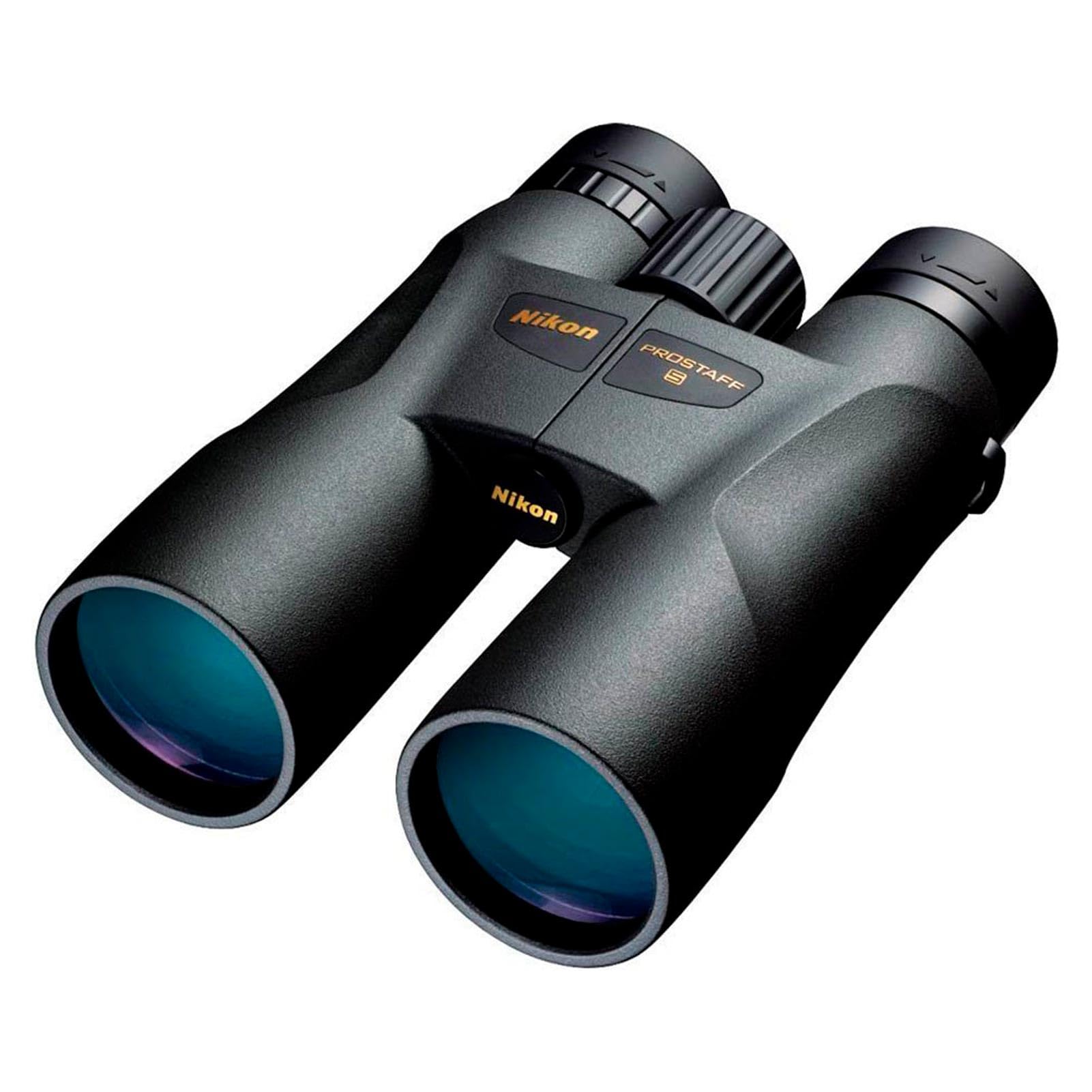
Built for the spot-and-stalk hunter who counts every ounce on the climb.
Spot-and-stalk is exactly where the Nikon PROSTAFF 5 makes its case. The body is fiberglass-reinforced polycarbonate resin, which keeps it light enough to hang around your neck for a full day and tough enough to shrug off bumps. You get 15.5mm of eye relief and turn-and-slide eyecups that fine-tune to glasses, plus a nitrogen-filled, o-ring-sealed interior that stays clear through rain and cold snaps.
Tracking a running animal takes a touch more effort here, because the field of view is 246 feet at 1,000 yards — narrower than the Vortex Crossfire HD’s 273 feet. The image is still bright and clean. What wins owners over is the light-in-the-hands feel paired with glass that holds up in poor light: a hunter who has run this pair for five years describes flawless performance with no distortion, and it compares well to bigger-name glass at a lower price. Field reports say it’ll spot deer over 500 yards at night.
Nikon’s lens caps are the recurring gripe — they fit loosely and can drop off when the binoculars are hanging. Some buyers also find the eye placements take a moment to dial in. Neither affects the optical range that makes this a serious hunting pick.
Why it earns a neck-strap spot
- Light polycarbonate build makes all-day carry easier than the heavier 12x50s
- Nitrogen-filled, o-ring sealed, waterproof and fogproof
- 15.5mm eye relief and multi-click eyecups suit glasses wearers
- ±5 diopter adjustment and center focus for fast range changes
Small things that nag
- Field of view of 246 ft is narrower than a couple of the wide-window picks here
- Lens caps fit loosely and slide off when hanging
Worth it for: the backcountry hunter covering miles who wants bright 12×50 glass without a heavy carry.
Reconsider if: you demand the widest possible scan window for running game.
5. Nikon PROSTAFF 5 12×50 Bundle with Lens Pen

The same PROSTAFF 5 glass, bundled with the cleaning gear you’ll actually use.
This is the PROSTAFF 5 12×50 you just read about, packed with a Nikon lens pen and cleaning cloth on top of the carry case, neck strap, and caps. Same 246 feet at 1,000 yards field of view, same 15.5mm eye relief, same nitrogen-filled fogproof body. If you’re buying your first serious pair and don’t already own a lens pen, this bundle saves you a separate trip.
The optical verdict carries over: image quality is consistently praised as some of the best in its price range, and the glass holds up under moon testing. It’s sturdy enough for hunting and light enough for short sessions — a family-friendly pair that all members can use. Where this bundle differs is delivery size: the box is compact and light, which some buyers prefer for travel.
Two things to weigh honestly. One is packaging and shipping — the product box can arrive lightly secured, and buyers have reported needing replacement orders to get the right pair or an undamaged unit. The other is size: it’s a full-size 12×50, so “compact” is relative. If storage space or pack dimensions are tight, check the measurements before you commit.
The bundle angle: the lens pen and cloth are genuinely useful maintenance extras — keeping the objective lenses clean is the cheapest way to preserve the image you paid for.
The fine print: expect to confirm the correct magnification on arrival, and don’t count on compactness — it’s a full-frame 12×50.
Made for: the first-time buyer who wants the PROSTAFF 5 glass plus the cleaning kit in one order.
Skip the bundle if: you already own a lens pen or you’re tight on pack space and want a smaller-bodied pair.
6. Pentax SP 12×50 WP Binoculars
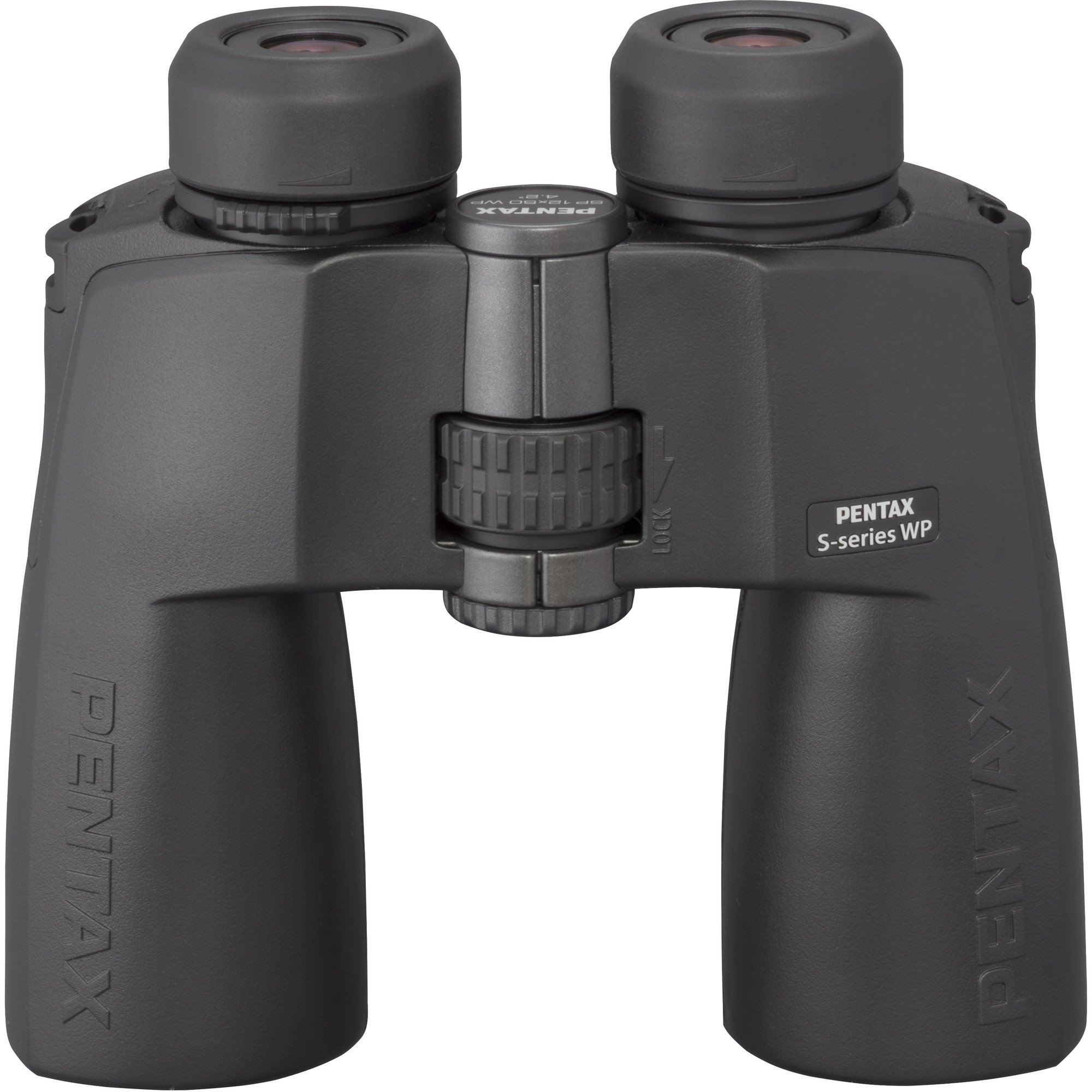
A low-light specialist that savors the last minutes of legal shooting hours.
The Pentax SP 12×50 WP is built to drink light. Large 50mm objective elements with multi-layer coatings deliver a bright, crisp image in the widest range of viewing conditions, and the rigid body keeps the two barrels aligned so the view stays comfortable. Waterproof and nitrogen-filled to JIS Class 6 (submersible to one meter), it handles wet weather without fogging. Its 87.2 field-of-view figure is the spec you’ll want to check if you’re comparing against the feet-based picks above.
The build quality is what most praise here — it’s described as solid and chunky with an excellent grip and eye relief that compares favorably with pricier glass. Long-term field use in an outfitting business is a real-world test some owners have run, and it’s held up. It does a good job on stars, galaxies, and the moon for a 12x, which tells you how well it gathers light.
Eye relief is the number that makes the choice for some buyers: at 11mm, it’s the shortest of the picks on this list, so glasses wearers will notice. And the pair that arrived with a defect does show the occasional quality-control miss — a lens with a fishbowl effect, or an eyecup that separates after use. Those reports sit alongside plenty of satisfied long-term owners, so it’s a matter of checking your unit on arrival.
Standout: JIS Class 6 waterproofing and multi-layer coatings make this a genuine low-light, wet-weather glass at a mid-range tier.
The caution: 11mm eye relief is the shortest here — glasses wearers should confirm fit, and it pays to inspect the eyecups when the box lands.
Choose it if: low-light hunting and night-sky glassing are your priority, and you shoot without glasses.
Look past it if: you wear eyeglasses or want the longest eye relief available.
7. Celestron Nature DX ED 12×50
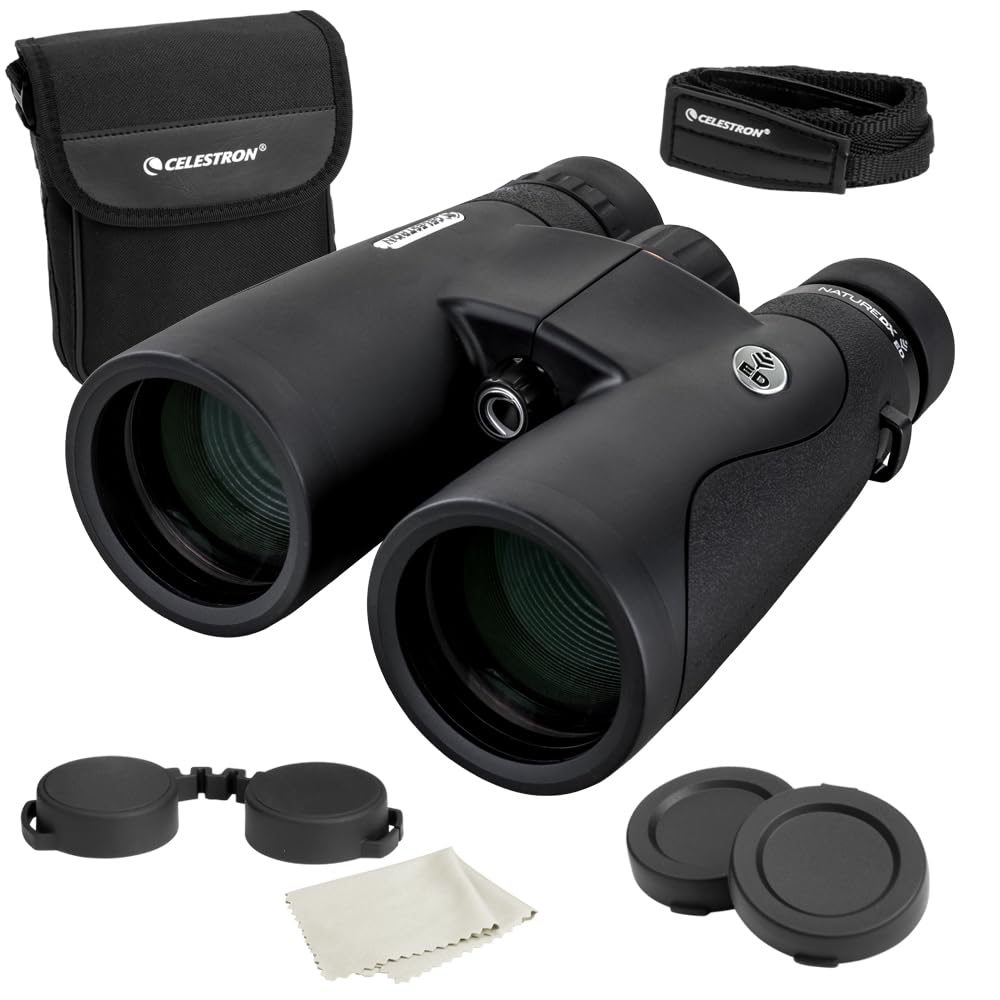
ED glass that strips color fringing out of a 12x image without a premium tag.
Extra-low dispersion glass is the headline here — the “ED” in the name is a lens material that pulls the color layer together so you don’t get purple fringing on a deer’s edge against the sky. Celestron pairs it with BaK-4 prisms (quality glass inside the barrel) plus dielectric and phase coatings to push light through to your eye. The rubber-armored polycarbonate housing is waterproof and nitrogen-purged, and there’s a built-in tripod socket so you can lock it down for extended glassing.
Optical quality is what the field reports come back to, and having ED glass at this tier is the reason. One air traffic controller compares the view favorably to much pricier premium glass, and other owners describe it as sharper than they expected. A hunter running it for a year of heavy backcountry use calls it crisp and tough enough to take rough handling.
Weight is the mixed variable — some find it super light, others heavy for long handheld sessions, and a weighed sample came in at 896g with the strap. The eyecups compress rather than lock, and the focus can be sensitive if sand finds its way into the knob. If you plan to hand-hold for miles without a rest, factor that in.
What sells it
- ED objective lenses cut chromatic aberration for clean, true-color images
- BaK-4 prisms with dielectric and phase coatings brighten the view
- Built-in tripod socket enables shake-free glassing and phone photography
- Waterproof and nitrogen-purged for rain, snow, and humidity
Trade-offs to plan for
- Mixed weight reports — a real consideration for all-day handheld carry
- Twist-up eyecups compress rather than lock into position
- Focus knob can bind if sand reaches it
The right call for: a hunter who wants ED-glass color correction at a mid-tier price and will mount it on a tripod for serious glassing.
Not for you if: you’ll carry it on the neck for hours without a rest — some find it heavy for that.
8. Leupold BX-4 Pro Guide HD 12×50 Gen 2

Leupold’s premium glass brings a 12x image that stays clear past 400 yards.
The BX-4 Pro Guide HD leans on Leupold’s Elite Optical System for high light transmission and glare control, and the Guard-ion lens coating sheds water, dirt, and fingerprints so a wet hand doesn’t smear your view. The open-bridge, dual-hinge body is genuinely light — 1.8 pounds — and the grip stays comfortable when you’re glassing for long stretches. Its 6.84-degree field of view and 4.17mm exit pupil are the numbers that define its hunting-readiness.
Optical quality is the top-raved quality here, and owners say the pair is bright and clean with no weird color aberrations. Some report it resolves small detail out to 400+ yards and is easier on the eyes than a spotting scope since you can use both eyes. One hunter who waited until after hunting season to break it in says it’s “clear and seem to gather light well at dusk” — which is exactly the window 50mm glass is for.
The real limit is its audience: fewer eyes have looked through this pair than through the Vortex or the Celestron, simply because it’s newer and pricier. The neck strap is adjustable but thin on padding. Neither undermines the elite optics — it just means fewer field-tested reports to read before buying.
The core: the Elite Optical System and Guard-ion coating give you premium light transmission and a wipe-clean surface in equal measure.
One honest note: the strap is thin on padding and the neck-strap comfort could be better at this tier.
Buy it if: premium glass and long-range clarity are the whole point and you’ll pay for the optical step up.
Wait if: you want the most field-tested, proven option — the Vortex Crossfire HD has a longer track record.
9. Maven C.3 12x50mm ED Binoculars

ED glass (extra-low-dispersion glass that cuts color fringing) gives you clarity above its price tier — the pick for the budget-minded hunter who still wants a sharp image.
The Maven C.3 is the pair for the hunter who wanted premium glass but set a hard ceiling on what they’d spend. It runs extra-low dispersion glass to cut color fringing, a sealed housing that resists water and fog, and a magnesium frame under rubber armor that weighs 1.8 pounds. There’s a tripod mount, fully multi-coated lenses, and 15mm of eye relief — so it plays the full-size role without the premium-brand surcharge.
Price-to-performance is what the field reports hinge on, and it’s the thing owners mention most. The glass comes back consistently clear, with hunters reporting they can spot scoring rings from 13 to 70 yards and even resolve feather-level detail on a bird at 1,000 yards. One buyer who upgraded from a well-known mid-tier pair to these Mavens brought them to Montana for a mule deer hunt and called the improvement huge.
The trade-off is a focus knob that takes a firm nudge to get moving (worse in the cold below 40°F), and eye placement wants to be dead-square or you’ll get edge blur. It also carries more heft than lighter 12x50s, which is the cost of that clarity. If your hunt is mostly glass-and-wait from a rest, none of that gets in the way.
What it gets right: ED glass, a sealed fogproof body, and a magnesium frame add up to premium performance at a value tier.
The catch: the focus knob needs deliberate effort and gets stiffer in the cold, and eye placement has to be exact.
Perfect for: the value-driven hunter who wants premium-grade glass without the flagship price and will brace it on a rest.
Think twice if: you’re in freezing temps a lot or need a fast, one-finger focus wheel.
Know the Specs
Exit Pupil
Exit pupil is the size of the light beam that reaches your eye, measured in millimeters. The 12x50s here mostly sit at 4.2mm, which is enough for dawn and dusk viewing. A bigger exit pupil tends to look brighter in low light, but it comes with a heavier body — so you trade a little low-light reach for carry weight.
Eye Relief
Eye relief is how far your eye sits from the lens. The picks here range from 11mm up to 15.5mm. If you wear glasses, look for 15mm or more of eye relief plus turn-and-slide eyecups, or you’ll glass through a narrow tunnel. Non-glasses wearers can get away with less.
Field of View
Field of view is how wide a slice of country you see — most often written as feet at 1,000 yards. A wide field of view helps you catch a running animal in the glass; a narrow one concentrates detail but slows target acquisition. Note that some spec sheets list apparent angle in degrees instead, so compare like with like before you decide.
Coating and Waterproofing
Fully multi-coated lenses improve light transmission and cut glare. Nitrogen purging and o-ring sealing keep moisture out and stop the glass fogging when temperatures shift. For a hunting pair that rides a wet neck strap through rain and cold snaps, nitrogen purging and o-ring seals are requirements, not upgrades.
Common Questions
Is 12×50 too much magnification for close-range hunting?
Can I hold 12×50 binoculars steady without a tripod?
What does exit pupil mean and why does it matter for dawn hunting?
Do I need waterproof and fogproof binoculars for hunting?
How much eye relief do I need if I wear glasses?
Is ED glass worth it in a 12×50 hunting binocular?
How do I compare field of view when some specs are in degrees and some in feet?
What is a diopter adjustment for?
Should I buy a bundle with a lens pen or the bare binocular?
The Bottom Line
Most 12×50 hunts come down to field of view, and the Vortex Crossfire HD 12×50 wins it at 273 feet, with fogproof sealing (keeps internal glass clear when temperatures swing) and a fully transferable lifetime warranty behind it — the crowd favorite at 4.5+ stars across 3,000+ owners. If long-range premium clarity is your priority, the Leupold BX-4 Pro Guide HD Gen 2 is the optical step up, and it’s the highest-rated pick here at 4.5+ stars. For the value-conscious hunter who wants ED glass without the flagship price, the Maven C.3 12×50 ED is the one to grab.
How we choose
We do not accept paid placement. Every pick is matched to a real buyer and a real use-case; we do not hands-on test units.
Sources
Specifications: manufacturer listings and product documentation. Review insights: verified customer reviews, as of October 2026. Pricing: not shown on this page (it changes often); check the current price via the retailer link.
As an Amazon Associate, Aappliancez earns from qualifying purchases. This does not affect which products we feature.