Disclosure: Some links in this post are affiliate links. As an Amazon Associate I earn from qualifying purchases, at no extra cost to you. Learn more
Specs are compiled from manufacturer listings and verified buyer reviews and can change over time — please confirm the key details on the product page before buying.
Every 120V ceramic kiln on this page runs from an ordinary wall outlet — no electrician, no dedicated circuit, no garage rewiring. Confirm your outlet and circuit amperage before you buy, because that is what decides whether home firing works at all. Below you get fifteen real options, from kiln furniture and microwave kilns to full programmable tabletop furnaces that hit 2192°F, each one matched to a specific kind of maker.
This guide is built by comparing the manufacturers’ published specifications and the patterns across verified customer reviews, so you get each pick’s real strengths and trade-offs instead of marketing spin.
Firing clay and fusing glass at home starts with one honest check: what your outlet can actually carry. Here is how each one of these best 120V ceramic kiln options fits that reality.
Top Picks
How To Choose The Best 120V Ceramic Kiln
The outlet decides almost everything. A 120V ceramic kiln plugs into a standard household circuit, which is what makes home firing realistic for a garage, a spare room, or a kitchen counter. The trade-off is power: these units pull far less current than a 240V studio kiln, so they heat smaller chambers and take longer to climb to temperature. Pick the chamber size that matches your projects and the outlet will do the rest.
Chamber size and what actually fits
Measure your tallest and widest piece before anything else. A microwave kiln with a 4.9″ interior fusing platform handles pendants and small glass pieces. A tabletop furnace with a 6″ x 5″ x 6″ chamber takes jewelry burnout, metal clay, enameling and test tiles but skips full bisque loads. Measure before you order, because a chamber that is too small means return shipping on a heavy kiln.
Temperature control: PID, ramps and soak
A PID controller (a circuit that continuously measures the chamber and corrects the heat) is the difference between a guess and a firing schedule. Multi-stage programmability lets you set a slow ramp for the first part of the fire and a hold at the top, which is how you avoid cracked greenware. Simple knob or button panels work for glass, where a short fuse cycle is all you need.
Elements, insulation and longevity
Embedded heating elements wrapped around the chamber spread heat more evenly than a single exposed coil. Ceramic fiber lining holds that heat in, and a firebrick base gives the metal or clay something solid to sit on. Both materials show up in the better tabletop units and both affect how long the kiln keeps working.
Side-by-Side Comparison
| Model | Best For | Max Temp | Power | Weight | Amazon |
|---|---|---|---|---|---|
| Nuanchu 4 Pack Kiln Post★ Best Overall | Shelf spacing | 2380°F | — | 1.76 ounces | Amazon |
| VEVOR 1500W Programmable KilnTop Performer | Programmable firing | 2192°F | 1500W | — | Amazon |
| Fuseworks Craft KilnBest for Glass | Glass crafters | — | — | 13.82 pounds | Amazon |
| VEVOR Electric Kiln 1500W | Studio workshops | 2192°F | 1500W | 38 pounds | Amazon |
| TOAUTO 8KG TAF8000 | Aluminum melting | 1830°F | 1800W | 16.5 pounds | Amazon |
| KITCHIEF Pottery Apron | Wheel work | — | — | — | Amazon |
| Jutom 100 Sheets Kiln Paper | Glass separation | — | — | 6.88 ounces | Amazon |
| Hensom Large Microwave Kiln | Fusing in a microwave | — | — | 1.5 kg | Amazon |
| WICAND Large Microwave Kiln | Low-fire pottery | — | 800W microwave | 2.48 pounds | Amazon |
| Tujoe Microwave Kiln + 50 Papers | Beginners | — | — | 1.5 kg | Amazon |
| TOAUTO TMF6000B-V3 | Metal smelting | 2372°F | Propane | 13.2 pounds | Amazon |
| K2 Kiln Controller | Upgrading an old kiln | — | 15 amp kilns | 10 pounds | Amazon |
| RapidFire Pro-L | Fast jewelry burnout | 2200°F | 1500W | 12 pounds | Amazon |
| RapidFire Pro-LP | Programmable control | 2200°F | 1500W | 12 pounds | Amazon |
| RapidFire Programmable Tabletop | Multi-step schedules | 2200°F | 1500W | 12 pounds | Amazon |
Detailed Reviews
1. Nuanchu 4 Pack Kiln Post
Our pick — 4.5+★ from 100+ verified ratings; the strongest balance of quality and price.
Four tiny posts that decide whether your whole shelf load fires evenly.
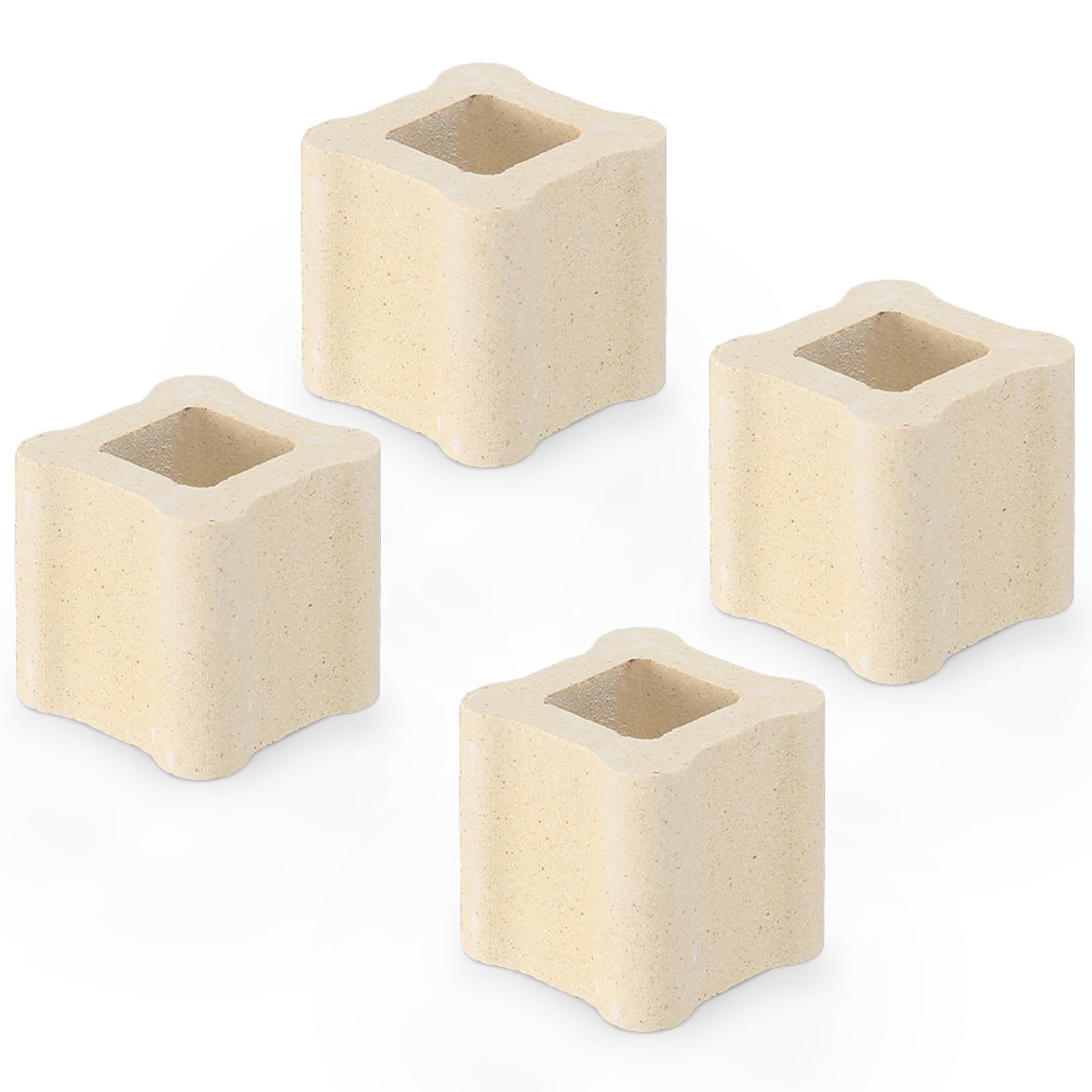
Here is the piece of kiln kit almost nobody buys first and almost everybody needs. These Nuanchu posts stand 1″ tall and half an inch wide, and their job is to lift your kiln shelf off the floor so hot air can move underneath. No airflow, no even heat. No gap under the shelf means the floor of your load fires hotter than the top. The build is rated to safely fire up to 2380°F, which clears the operating ceiling of every electric kiln on this page.
What wins people over is the build itself — the quality of these little posts is the thing that gets talked about most, and the suitability for real kiln layouts comes second. They slot into pottery studio setups, glass fusing loads and any kiln furniture arrangement where a compact support is what you need. At 1.76 ounces for the set, they add nothing meaningful to the shelf load. The four-pack size means you can set a stable square under a small shelf without hunting for a spare. The name you can quote on this one: the Nuanchu 4 Pack Kiln Post lifts shelves to 1″ to open airflow, and it is rated to 2380°F — hotter than any 120V kiln here can reach.
The catch is the label on the box. Half an inch by one inch is genuinely small, and the size feedback splits both ways — perfect for some chambers, too tiny for others. Check your kiln’s interior clearance and how much shelf gap your firing schedule needs before you order. If you run a wide shelf across a big chamber, you will want taller posts, not more of these.
kiln shelf stilt set
- Rated to fire up to 2380°F, above the ceiling of every kiln reviewed here
- 1″ height lifts the shelf so heat distributes more evenly under the load
- 1.76 ounces for the four-pack — no measurable load on the shelf
- Works for pottery firing and glass fusing setups alike
four-pack only
- At 0.5 x 1 inch the posts are compact — measure your chamber clearance first
- Only four come in the pack, so a large shelf needs a second set
shelf and stilt buy: you are setting up any shelf-based firing and need airflow under the load — they work with every kiln in this guide.
single-post need: your chamber is tight and tall posts are what your clearance actually calls for.
2. VEVOR 1500W Programmable Electric Kiln
Nine programmable ramp stages in a tabletop box that plugs into the wall.
If you want a real firing schedule rather than a single on-off switch, this VEVOR is the one to look at. It runs up to 9 temperature ramp stages, which means you can tell it to climb slowly through the first part of the fire and hold at the top — the way you avoid thermal shock in greenware. A PID control loop watches the actual chamber temperature and corrects it, so you are not babysitting a dial and guessing.
This kiln is built for small, focused loads, not a full shelf of pots. Its 1500 watts and embedded heating elements melt metals below 2192℉ in 34-38 minutes, so you can finish a jewelry-sized melt in under 40 minutes. On raw volume it is in a different league from the TOAUTO 8KG furnace — 3363500 ml against 1000 ml, a 3363.5x gap — though the TOAUTO is aimed squarely at aluminum melting while this one covers ceramics, glass, jewelry and wax casting too. The included crucible tongs, heat-proof gloves and power cord mean you can fire the first session without a separate shopping trip.
That ventilation design is worth knowing about: small holes let wax escape during lost-wax casting, and a heat exhaust structure speeds cooling between sessions. Those vent holes also cut heat buildup between firings, which is easier on the elements. Just plan your space around the 13″W x 18.9″H footprint before it lands on the bench.
programmable 1500W control: 9 ramp stages plus PID correction is genuinely programmable territory — the kind of schedule control that usually lives on much bigger studio kilns.
power draw check: the enlarged cavity is built for small loads, and the 13″W x 18.9″H body needs real counter depth.
digital melt pick: you fire mixed projects — clay, glass, metal clay, wax casting — and want to write your own ramp schedule.
manual dial fan: you need to load a full shelf of large pots at once.
3. Fuseworks Craft Kiln
A dedicated craft kiln that has been sitting in the same product slot since 2018.
The Fuseworks has been around long enough to have a track record — first available in May 2018, and it still ranks #40 in the Kilns category on Amazon. Seven years in the same Amazon kiln slot suggests the design holds up for craft-scale work. It weighs 13.82 pounds, which puts it in the portable class. That is a small fraction of the 38 pounds the VEVOR Electric Kiln carries, and it means you can move it between a workbench and a shelf without help.
This is a craft kiln, and the scale of the work should match that. Small glass pieces, small decorative projects, bench-top sessions — that is the lane. If your plan involves large fused platters or a full shelf of pottery, this is not the unit for that job.
The honest note is that it is not the highest-scoring kiln in this lineup, and the published spec sheet is thinner than the VEVOR or RapidFire entries. If you want detailed ramp programming and a documented temperature ceiling, look at those instead. If you want a known-name craft kiln that fits on a bench and has been in the catalog for years, this one is steady.
beginner glass try: your work is small-scale craft firing and you want a bench-top unit with real history behind it.
large batch work: you need multi-stage programming or a documented top temperature — the VEVOR covers both.
4. VEVOR Electric Kiln 1500W
The heavier VEVOR sibling — same 1500 watts, more steel around the chamber.
Same power as the programmable VEVOR above, but a different animal on the bench. This one weighs 38 pounds, against the 13.82 pounds of the Fuseworks — a 2.7x gap that changes how you think about placement. It is a fixture, not a portable tool. The stainless steel body and the enlarged chamber with embedded heating elements are aimed at someone who fires regularly and wants the unit to stay put.
The PID digital control system monitors and adjusts the actual temperature, and the panel has clearly labeled function buttons plus an easy-to-read LED display. Metals with melting points below 1200°C melt within 34-38 minutes. The cooling design does real work here too: small holes on top let wax discharge during lost wax casting, and body vents bleed heat fast to extend the unit’s life.
What you get is a broad working envelope — lost wax casting, metal clay, pottery firing, metal tempering — under one roof. That breadth is the reason to pick this over a single-purpose furnace. The trade-off is that it does not publish a multi-stage ramp count like the programmable model, so if your schedule needs staged climbs, look one entry up.
high-temp melt furnace
- 1500W with embedded elements heats evenly across the enlarged chamber
- PID control with labeled buttons and a clear LED readout
- Top vent holes handle wax discharge during lost wax casting
- Covers casting, metal clay, pottery and tempering in one body
basic controls
- 38 pounds means it stays where you put it
- No published multi-stage ramp programming — that is the other VEVOR
metal melting fit: a dedicated bench where the kiln lives permanently and the work spans casting through pottery.
precision firing need: you move your kit between rooms or want scripted ramp schedules.
5. TOAUTO 8KG TAF8000
Built to swallow a whole batch of scrap aluminum in a single pour.
This one is not a pottery kiln and it does not pretend to be. A 1L graphite crucible holds up to 1000mL of liquid aluminum, which means an entire session of soda cans or scrap metal goes in at once instead of one piece at a time. On capacity it is a fraction of what the programmable VEVOR offers — 1000 ml against 3363500 ml, a 3363.5x gap — but the two do completely different jobs. The VEVOR fires clay and glass; this one is a dedicated melter.
The heating is the story. 1800 watts with a PID algorithm holds a stable temperature up to 999°C (1830°F). Reaching that takes 60-70 minutes, which is the honest trade for a plug-in electric unit — no propane, no charcoal, no exhaust. It runs on standard US household voltage at 110V with a plug-and-play design, and at 16.5 pounds you can carry it to the garage without a second set of hands.
The kit is genuinely complete: the 1L graphite crucible, heat-resistant tongs, protective gloves and manual all come in the box. That matters because crucibles are the part beginners forget to buy. Just budget the warm-up time into your session — this is a slow-and-steady machine, not a fast one.
bulk casting pick: you recycle aluminum scrap and want an electric melter that needs no fuel. tiny shop setup: ceramic firing is your goal — the VEVOR kilns cover that ground.
6. KITCHIEF Pottery Apron Split Leg
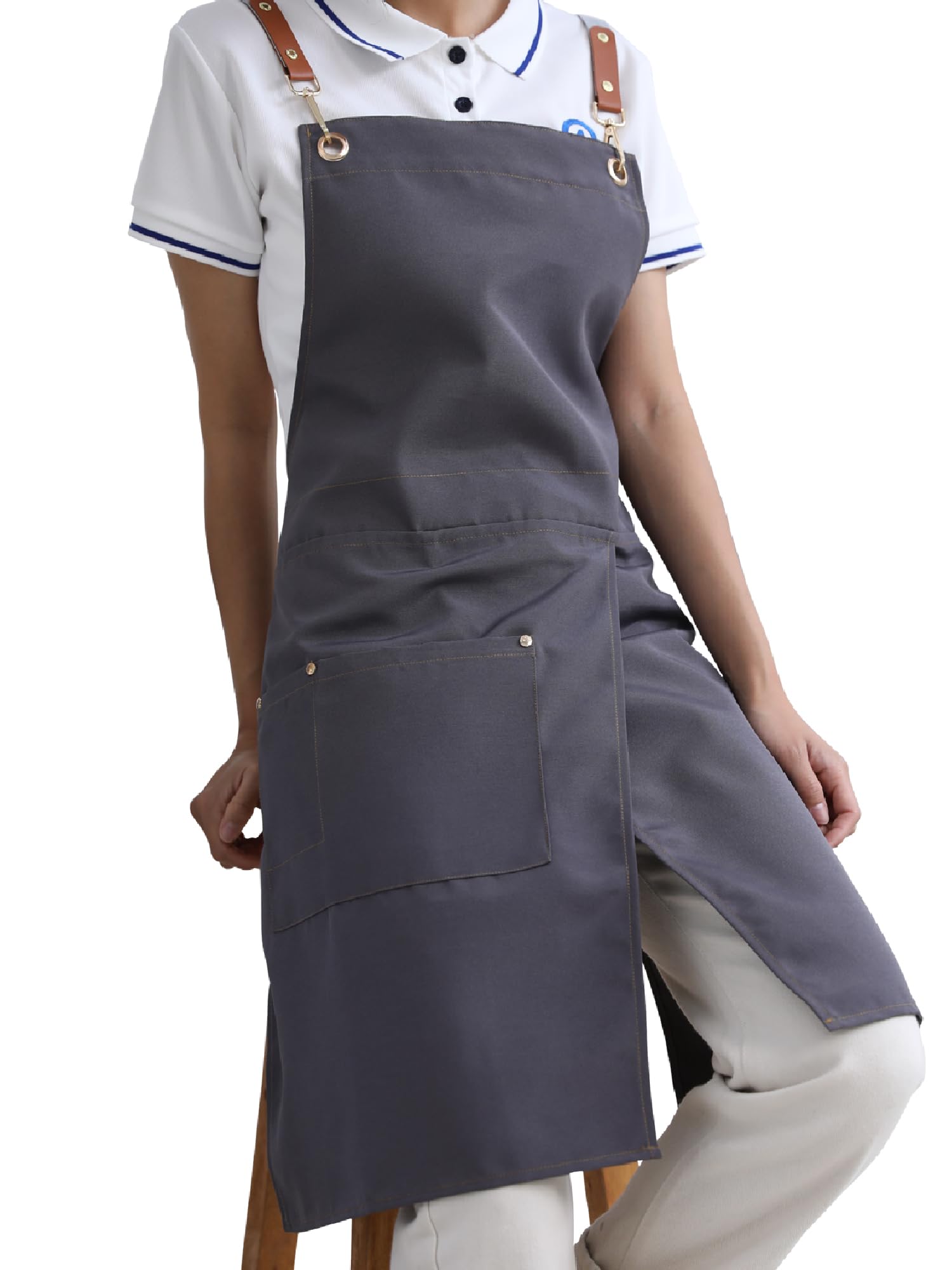
The split-leg cut that lets you bend over the wheel without fighting fabric.
Clay dust gets everywhere, and an apron that binds at the knees makes wheel work worse. The KITCHIEF solves that with a split-leg design and cross-back straps — you bend or crouch and the fabric moves with you. The polyester is heat-resistant, lightweight, breathable and easy to wash and dry, which matters when a session ends with slip on the front. The material is the most-praised trait across its feedback, and there is a reason for that.
Two multifunctional pockets take a phone, pens, a notebook or a thermometer. The removable brass buckle on the strap and the metal rivets at the pocket corners are details that survive daily wear. The cross-back strap design takes pressure off your neck, and the length adjusts to your body.
Fit is the one thing to check. The length reads perfect to some wearers and too short to others, so measure from shoulder to mid-thigh before you commit. If you are tall, order with that in mind.
What makes it a pottery apron rather than a kitchen one: the split leg and cross-back straps are built for bending and crouching at the wheel, not for standing at a stove.
split-leg pottery apron: length runs short on some frames, so check the sizing against your height first.
studio wear buy: you throw on a wheel and want coverage that moves with you and washes clean.
full-coverage want: you need extra-long coverage on a tall frame.
7. Jutom 100 Sheets Kiln Microwave Papers

One hundred round sheets that stop glass fusing itself to your kiln floor.
This is the cheapest way to protect an expensive kiln bottom. The Jutom sheets are 4.7 inches (12 cm) across and made from ceramic fiber — you lay one under a glass piece and it stops the melt from welding to the shelf. Functionality is what these are praised for most, and there are a hundred in the pack at 6.88 ounces for the stack.
They go beyond glass fusing too. The fiber reduces the smell of burning adhesive and keeps jewelry and small crafts looking clean. Tuck them under beads, charms, ornaments or models and the kiln floor stays intact. As owners put it: “They do the job and protect the floor of my Vevor Electric Kiln.”
Here is the sizing catch. The manufacturer says single use, and the fiber does degrade after a fire — some people get a second run out of a sheet, others find it spent. At this pack size you have plenty either way. Just do not count on endless reuse.
round kiln paper sheets
- 100 sheets at 4.7 inches each — a season’s worth of glass fusing sessions
- Ceramic fiber stops melted glass from sticking to the kiln floor
- Also cuts the burning-adhesive smell during a fire
- Works under beads, charms, ornaments and small models
fixed 4.7 size
- Designed as single-use — reuse is possible but not guaranteed
- 4.7 inches is a small footprint; large pieces need more than one sheet
microwave fusing pack: anyone running a microwave kiln or a small electric kiln who wants the floor to survive the glass.
odd shape projects: your pieces are wider than 4.7 inches — you would be lining up multiple sheets per load.
8. Hensom Large Microwave Kiln for Glass Fusing

Fuse glass jewelry in a kitchen microwave in as little as six minutes.
No 120V circuit, no dedicated bench — this kiln heats from microwave radiation inside your existing oven. Glass fuses in as little as 6 to 8 minutes, and the outer body measures 19.5 x 11 cm with a 13.5 x 4.5 cm interior. At 1.5 kg it stores on a shelf between sessions, so the whole kit packs away when you are done. It is a compact, energy-saving answer to glass fusing on a kitchen counter.
It is honest fun. People rate it for exactly that, and the glass melting results come in right behind. It lets you try pendants and small embellishments before committing to a full kiln. At this price it lets you test pendants and small embellishments before committing to a plug-in kiln.
The honest limits cut both ways. The size reads great to some and smaller than expected to others — check the 13.5 x 4.5 cm interior against your piece dimensions before you buy. And ceramic fiber does crack with repeated heat cycling, so handle it gently and let it cool fully between fires. Neither of those is unusual for this class of microwave kiln; both are worth knowing.
fusing hobby pick: you want to test-drive glass fusing before investing in a plug-in kiln.
pottery firing need: you plan heavy weekly firing — a countertop electric kiln is built for that workload better.
9. WICAND Large Microwave Kiln
A microwave kiln that will also fire low-fire earthenware and glaze.
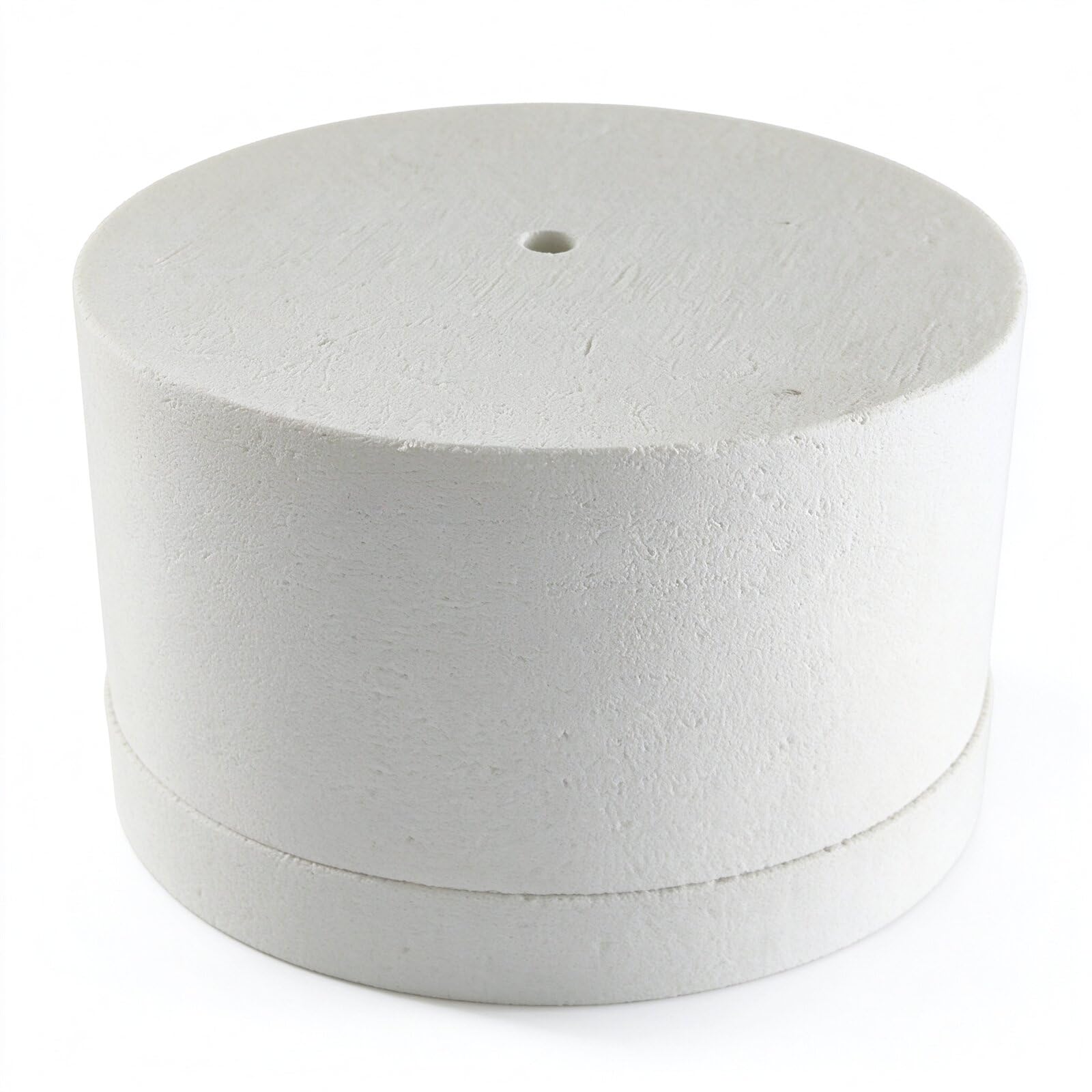
Most microwave kilns stop at glass. This one goes further. It is designed for DIY glass jewelry — pendants, earrings, bracelets, décor — and the manufacturer states it has been customer-tested with low-fire earthenware clay and low-fire glaze. The caveat is printed right there: it is not for high-fire stoneware or large pieces. Match your clay to that limit and it does real pottery work.
The numbers are useful. Outer diameter is about 7.5″ (19 cm) with a 3.3″ (8.5 cm) height and a 4.9″ (12.5 cm) interior fusing platform. For best results use a microwave with at least 800W. Glass fuses in 6 to 8 minutes. At 2.48 pounds it lifts in and out with one hand. Heat-resistant gloves and a full cool-down before handling are non-negotiable.
Running it well takes a real schedule — bone-dry thin pieces, a preheat at 250-300°F for an hour, a 10-15 minute bisque at full power, then a slow cool. Get the cool-down right and the glaze does not craze. The recurring risk is the fiber body; it can crack if you rush it. Treat the chamber with care.
pottery and glass kiln: it fires low-fire clay and glaze, not just glass — a rare thing in microwave kiln territory.
capacity ceiling: high-fire stoneware is off the menu, and the ceramic fiber will crack if you skip a slow cool.
dual-use buy: you want to try both glass fusing and small low-fire pottery in a kitchen microwave.
production volume: you need stoneware temperatures or a bigger firing platform.
10. Tujoe 1 Pc Large Microwave Kiln
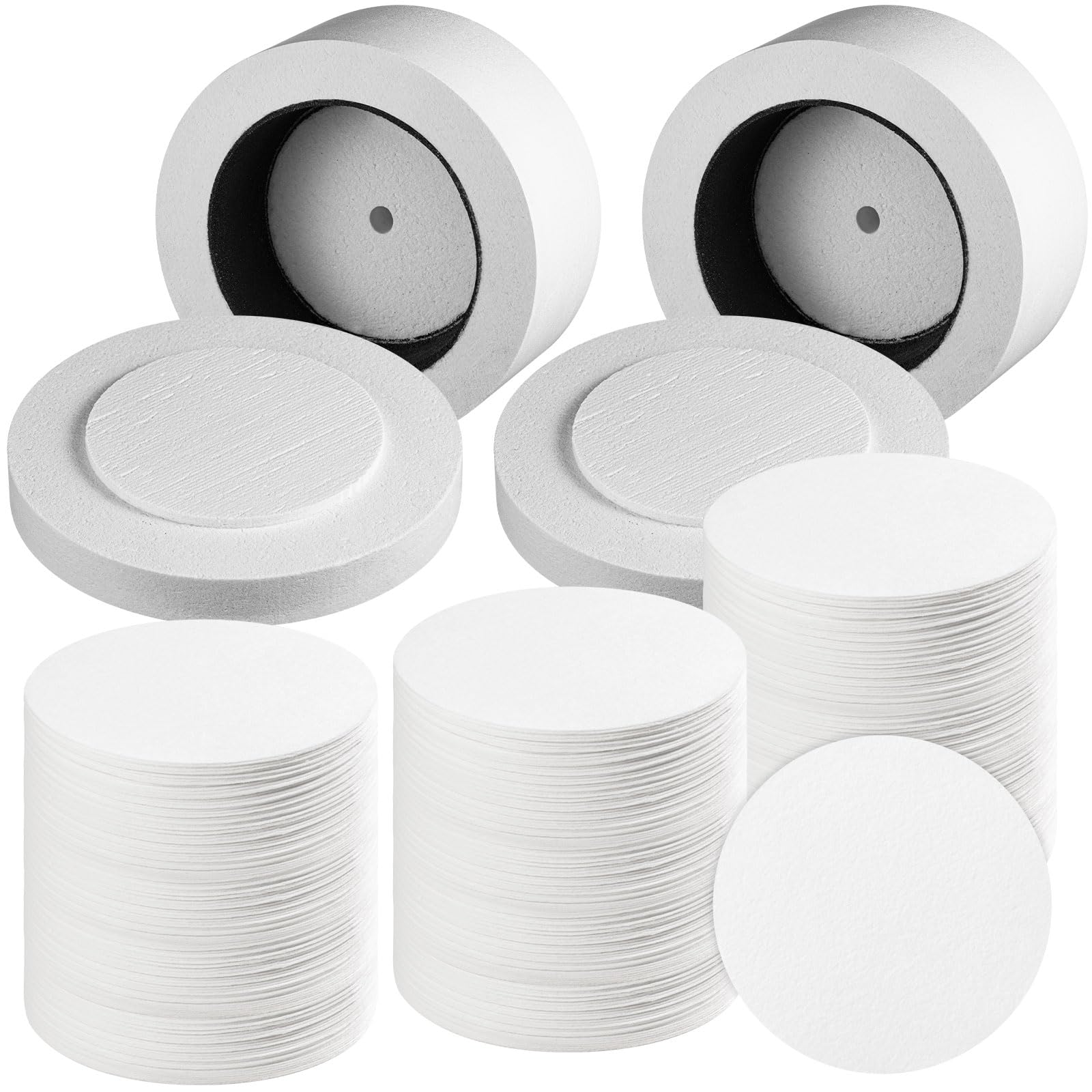
A kiln and fifty liner papers in one box, so nothing extra to buy first.
Beginners usually buy the kiln, then discover they need kiln paper, then place a second order. This Tujoe set skips that. You get the white microwave kiln plus 50 sheets of kiln paper at about 4.72 inches (12 cm) across. The outer body is roughly 7.68 x 4.33 inches (19.5 x 11 cm) with an inner space of about 5.31 x 1.77 inches (13.5 x 4.5 cm). It fuses glass in 6 to 8 minutes.
Quality and functionality are the two things that get praised most, and for a starter unit that is the right pair. It stores easily, cleans up with a paper between loads, and keeps the entry point low enough to try the hobby properly. Firing in a running microwave is the whole appeal — no wiring, no bench, no dust.
Two things to plan for. There are no instructions in the box, so a few online videos before the first fire are time well spent. And the fiber body can crack over time with heavy use — treat it as a consumable craft tool rather than a lifetime fixture. For a starter kit, missing instructions and a fiber body that cracks are both worth knowing up front.
new potter start: you are new to kiln work and want a complete first kit with consumables included.
refill-only shopper: you expect years of heavy firing from one chamber — this is a starter tool.
11. TOAUTO 6KG TMF6000B-V3

A propane-fired smelter that turns scrap into ingots in fifteen minutes.
This is not a 120V plug-in — it runs on propane, with a single burner and an adjustable 30 psi regulator. That fuel choice buys real heat: it reaches 1300°C / 2372°F and melts metals below that point in 15-20 minutes. Gold, sterling silver, pure copper and aluminum all fall in that range. If your goal is scrap-to-ingot work, propane gets you there faster than any electric unit on this page.
The V3 version is meaningfully upgraded: improved inlet valve on the burner, thicker ceramic cotton, a powder-coated body, a new 30PSI regulator with a gauge, a premium clay crucible and a limit device. Insulation is a 1.2″ (30mm) high-density ceramic fiber blanket rated past 2000°F, plus a 4.5″ x 9″ x 0.8″ firebrick base. Together they hold heat in and protect the floor of the chamber. The kit ships complete — 6KG crucible, 113ML graphite ingot mold, tongs, high-temperature gloves, firebrick and an illustrated manual.
The heat story is not universal, though. Multiple buyers report it never quite reaches the stated temperature, particularly at the top end. That fits a propane burner’s nature — leeside heat can lag behind the gauge. If you are running a long session near max, add extra insulation wool and a smaller crucible and you will get more usable heat. Two mods turn this into a workhorse; the budget version from the start is less forgiving than the price suggests.
propane 6KG furnace
- Reaches 1300°C / 2372°F and melts most non-ferrous metals in 15-20 minutes
- V3 upgrade adds thicker ceramic fiber, a gauge regulator and a clay crucible
- Kit includes crucible, ingot mold, tongs, gloves, firebrick and manual
- 1.2″ ceramic fiber blanket plus firebrick base hold heat for long sessions
gas setup needed
- Top-end temperature can fall short of 1300°C without added insulation
- Outdoor use only — propane fumes and open flame rule out indoor firing
- Needs fuel, a regulator and a safe open-air workspace — no 120V simplicity here
field melt pick: you melt scrap metal outdoors and want a complete propane kit with real heating punch.
indoor-only user: your work is clay or glass — a plug-in 120V kiln is the right shape.
12. K2 Kiln Controller — Capable of Running Almost Any Kiln

The retrofit that turns a dumb old kiln into a programmable one.
Already own an electric kiln with a dial and nothing more? You do not need a new kiln. This K2 controller adds the programming brain instead. It comes pre-programmed with 14 custom programs and leaves room for 4 user-defined ones — 20 in total. It can run most any 15 amp kiln, and the instructions cover wiring it to a wider range of units (parts for the less common ones are purchased separately). A 6′ type K thermocouple is included — the temperature probe that does the measuring.
What makes it valuable is the price-to-capability story. One jeweler swapped out a pricier controller that had overridden its own programs, and is now confident leaving burnouts overnight. Another uses it on a small jewelry kiln for metal clay and calls the setup easy to follow. It can even be converted to 220V with basic skills and the right parts, so the controller follows you if you upgrade the kiln.
Programming is the hurdle. The pre-set programs are aimed at glass slumping, and the instructions can be dense on the first read. Budget an evening with the manual and a flowchart, and after that it runs quietly.
universal kiln controller: 20 programs (14 factory, 4 your own) and a 6′ type K thermocouple — the brain, not the body.
wiring required: the pre-sets are glass-slumping oriented and the directions read heavy on the first pass; plan for a learning session.
retrofit brain buy: you have an existing 15 amp electric kiln and want programmed ramps without replacing the whole unit.
plug-and-play want: you have no kiln body to add it to — this is an upgrade, not a complete firer.
13. RapidFire Pro-L Portable Digital Kiln Furnace with RapidHeat
Twelve pounds, five minutes from cold to a real working temperature.
The RapidHeat technology reaches 2200°F (1205°C) in just 8-10 minutes. That is the number that matters if you need frequent short burns rather than one long firing a week. The chamber measures 6″ x 5″ x 6″ — sized for jewelry burnout, metal clay, enameling, glass work and ceramic test firing. Bisque firing isthe one job it explicitly cannot do. At 12 pounds and 1500 watts on a standard 15 Amp circuit, it rides in the car and plugs into a normal household outlet wherever you land.
Where it loses points is documented in the hard numbers: a limited 90-day warranty, plus a heating element that went during break-in on one owner’s unit. The seller shipped a replacement inside a week, so support exists — but the element is the part to watch. If daily production work depends on this kiln, put away the spare element before you need it.
Another practical note: burnout cycles produce smoke and a toaster-like smell. Ventilate the room or fire near an open window. The PID controller documentation is on the thin side, so read through it before your first programmed ramp rather than after. On performance and build quality that is where this one shines, and both land right where a small shop needs them.
portable rapid fire: 8-10 minutes to 2200°F is the fastest warm-up on this list, and 12 pounds means it moves wherever the work is.
small load: the 90-day limited warranty is short for a kiln, and the heating element is the part most likely to need a spare.
travel melt fit: you need fast, frequent small firings or you carry the kiln between a home bench and a workshop.
big kiln need: your work involves bisque firing — this unit is not built for it.
14. RapidFire Pro-LP Electric Kiln
The Pro-L’s speed, now with a controller that writes its own firing steps.
Same 8 to 10 minutes to 2200°F (1200°C), same 12-pound portability, same carrying handle. What changes here is the programmable controller — the thing that makes the difference between firing a one-off and running a repeatable process. It rocks 1500 watts and a large 6″ x 6″ x 5″ front-loading chamber. The door opens forward, so loading flat pieces and jewelry trays is a two-hand operation rather than a juggling act.
Size is the strength most owners talk about — and the honest weakness. The chamber is genuinely small: some find it under five inches inside, and a 5″ shelf or bowl simply will not drop in. That is a specification to know before you order, not a fault. Measure your largest planned piece against 6 x 6 x 5 first.
The learning curve is real. Burnout instructions are thin, so the YouTube walkthrough carries the setup. First fires emit heavy smoke from the firebrick coating burning off — plan for a covered outdoor spot, and set the unit on bricks or paving stones because the base gets hot. Once it is broken in, the smell fades and the programming settles. Reliability bets are the honest risk here: the heat bricks and top coils can weaken after several firings, so inspect them between sessions.
2200F programmable furnace
- Reaches 2200°F (1200°C) in 8 to 10 minutes at 1500 watts
- Programmable controller makes firings repeatable, not one-off
- Front-loading 6″ x 6″ x 5″ chamber is easy to load from the door
- 12 pounds with a carrying handle — genuinely portable
power hungry
- Interior feels smaller than expected — about 5″ of usable clearance
- Firebrick and top coils need checking after repeated firings
- Break-in smoke requires a well-ventilated or outdoor setup
hot firing pick: you fire the same load repeatedly and want each run to match the last.
low-temp crafter: your pieces need a 5-inch-or-bigger platform inside the chamber.
15. RapidFire Programmable Tabletop Kiln

Thirty programmable steps for anyone who treats a firing schedule like a recipe.
If you want to script every ramp and soak rather than pick a single temperature, this is the fullest-featured controller on the list. The dual-display PID controller runs 30 programmable steps with ramp and soak, adds fuzzy logic enhancement and holds 0.2% accuracy on the bright LED readout. That is serious schedule control for a 12-pound box. The chamber is 6″ x 5″ x 6″ with a 180 cubic inch capacity, and it runs at 1500 watts on a standard 15 Amp circuit.
Build detail is worth naming: an embedded heating element, 16-gauge coiled resistance wire, a wide-opening door and a raw steel body that develops its own coloration from the heat. None of that changes the firing, but all of it tells you this unit is built to be worked, not displayed. Temperature accuracy is what people consistently count on here, and programming is the second thing they highlight.
One honest flag on the electrical side. A small number of units have tripped a breaker seconds after switch-on, so test yours on a circuit with headroom before committing a batch of work. The written instructions also skip a few programming steps, and the controller maker’s own guide fills those gaps online. Get past setup and the schedule runs clean.
bench melter buy: ramp-and-soak scripting matters to your work and you want 30 steps of control in a portable body.
large crucible job: your workshop outlet is already loaded — run a test fire on a free circuit before the real thing.
Know the Specs
Why 120V Matters and What It Limits
A 120V ceramic kiln draws from a standard household outlet, which is the whole reason home firing is possible without an electrician. The trade-off is heating power — the units here top out around 1500 to 1800 watts, so they warm smaller chambers and climb more slowly than a 240V studio kiln. That is why heat-up times of 34-38 minutes or 60-70 minutes show up in the specs. Match the chamber to your piece size and the outlet does the rest.
PID Controllers, Ramps and Soak
A PID controller continuously measures the chamber temperature and corrects the heat, so you are not guessing at a dial. Ramp stages let you set how fast the kiln climbs, and soak holds it at the top. Multi-stage programming avoids the thermal shock that cracks greenware. Simpler button and knob panels work fine for glass, where a short 6 to 8 minute fuse cycle is the whole job.
Chamber Size and Usable Clearance
Published chamber dimensions and usable clearance are not the same thing. A 6″ x 5″ x 6″ interior can feel tighter once you account for the door and the shelf. Measure your tallest and widest piece before ordering. Microwave kilns are smaller still — a 4.9″ interior fusing platform handles pendants and small glass, not a full load.
Ceramic Fiber, Firebrick and Wear
Ceramic fiber lining holds heat in and keeps the body light. A firebrick base gives metal or clay a firm seat. Both handle high heat well, but fiber does crack with repeated cycling, so let the kiln cool fully between fires. Thicker fiber and a firebrick base hold heat longer, so the elements cycle less per firing.
Common Questions
Can a 120V ceramic kiln plug into a normal wall outlet?
What is the difference between a PID controller and a simple dial?
How many ramp stages do I actually need for clay?
Can I fire pottery in a microwave kiln?
How long does it take a microwave kiln to fuse glass?
What size kiln posts do I need for shelf spacing?
Do I need kiln paper under glass in my kiln?
Can a kiln controller upgrade an old electric kiln?
Is a propane furnace better than an electric kiln for melting metal?
What temperature can a 120V kiln reach?
The Bottom Line
For most people setting up a first or second firing station, the 120v ceramic kiln answer starts with the Nuanchu 4 Pack Kiln Post, because even heat and shelf airflow underpin every load you fire. From there, the VEVOR 1500W Programmable Kiln is the one to grab if you want real ramp programming — 9 stages and PID control in a 1500W plug-in body. And if you need speed to temperature above everything else, the RapidFire Pro-L hits 2200°F in 8-10 minutes at 12 pounds, so it travels with you.
How we choose
We do not accept paid placement. Every pick is matched to a real buyer and a real use-case; we do not hands-on test units.
Sources
Specifications: manufacturer listings and product documentation. Review insights: verified customer reviews, as of October 2026. Pricing: not shown on this page (it changes often); check the current price via the retailer link.
As an Amazon Associate, Aappliancez earns from qualifying purchases. This does not affect which products we feature.