Disclosure: Some links in this post are affiliate links. As an Amazon Associate I earn from qualifying purchases, at no extra cost to you. Learn more
Specs are compiled from manufacturer listings and verified buyer reviews and can change over time — please confirm the key details on the product page before buying.
This guide covers eleven high-end paddles — from tournament-certified carbon faces to foam-core hybrids — and names the right one for your level, your grip, and the shot you live on. Every pick here earns its place on real specs and owner experience, not logo prestige.
This guide is built by comparing the manufacturers’ published specifications and the patterns across verified customer reviews, so you get each pick’s real strengths and trade-offs instead of marketing spin.
We start with what the certifications mean, then break down core thickness, surface grit, and swing weight in plain terms. By the end you’ll know exactly which of these high-end pickleball paddles fits your game and budget without guesswork.
Top Picks


How To Choose The Best High-End Pickleball Paddles
A high-end paddle is the one thing in your bag that decides how much of your practice shows up on match day. The premium tier buys you three things: a dense carbon face for spin, a core thick enough to dampen shock, and a grip and handle that let you play longer without fatigue. Here is what actually matters before you spend.
Core Thickness: The 13mm to 16mm Trade
Thinner cores throw more power but demand cleaner contact; thicker cores stretch the balance and calm your dinks. A 16mm paddle like the CRBN or Warping Point gives a wide hitting area and absorbs vibration so your hand stays relaxed. A 14.3mm hybrid like the Paddletek splits the difference, and a 12.7mm option like the Engage elongated favors raw drive speed. Ask yourself which shot you want easier: the putaway or the third-shot drop.
Face Grit and Why “Raw Carbon” Matters
Spin lives in the face’s texture — tiny carbon grit that grabs the ball on contact. Raw carbon fiber surfaces are textured from the mold (the T700 layup appears across the CRBN, Franklin, and Selkirk picks here), while abrasion-sanded faces like JOOLA’s carbon abrasion surface get their bite from a mechanical process. Grit is also the first thing to wear, so a gritty face and a maintenance routine (wiping off ball residue) go together.
Side-by-Side Comparison
| Model | Best For | Core Thickness | Handle Length | Weight | Amazon |
|---|---|---|---|---|---|
| CRBN X Series Power★ Best Overall | All-court intermediate control | 16mm | 5.25″ | 7.8-8.1 oz | Amazon |
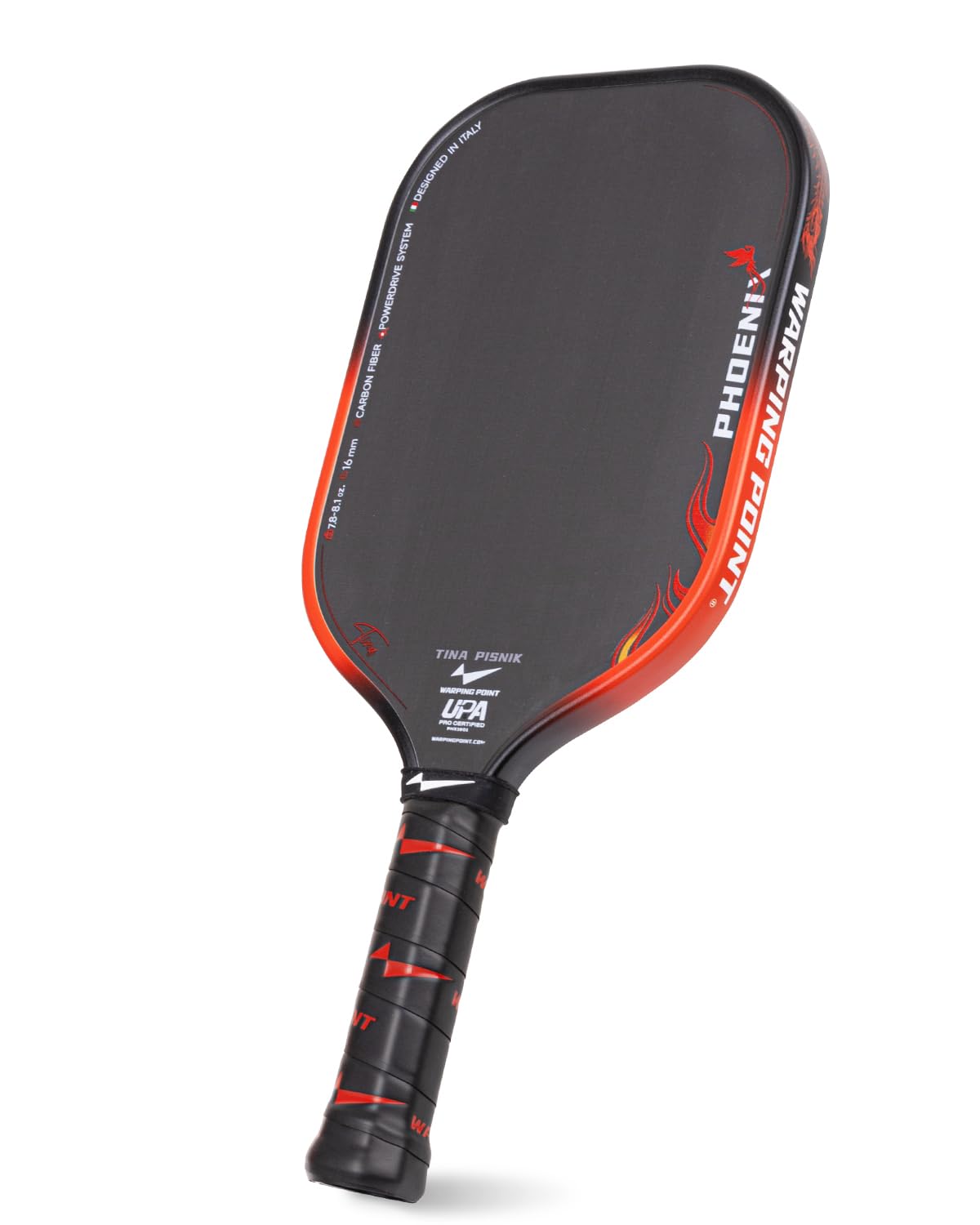
| Warping Point UPA-ABest for Power Players | Power with repeatable precision | 16mm | 5.6″ | 8.1 oz | Amazon |
| AugOcean 3K CFS ProBest Family Set | Two-player starter kit | 16mm | 5.5″ | 8 oz | Amazon |
| Franklin FS Tour Series | Stability and forgiveness | 16mm | 5.6″ | 8.5-8.8 oz | Amazon |
| JOOLA Ben Johns Hyperion | Spinning drives and dinks | 16mm | 5.5″ | 8.3 oz | Amazon |
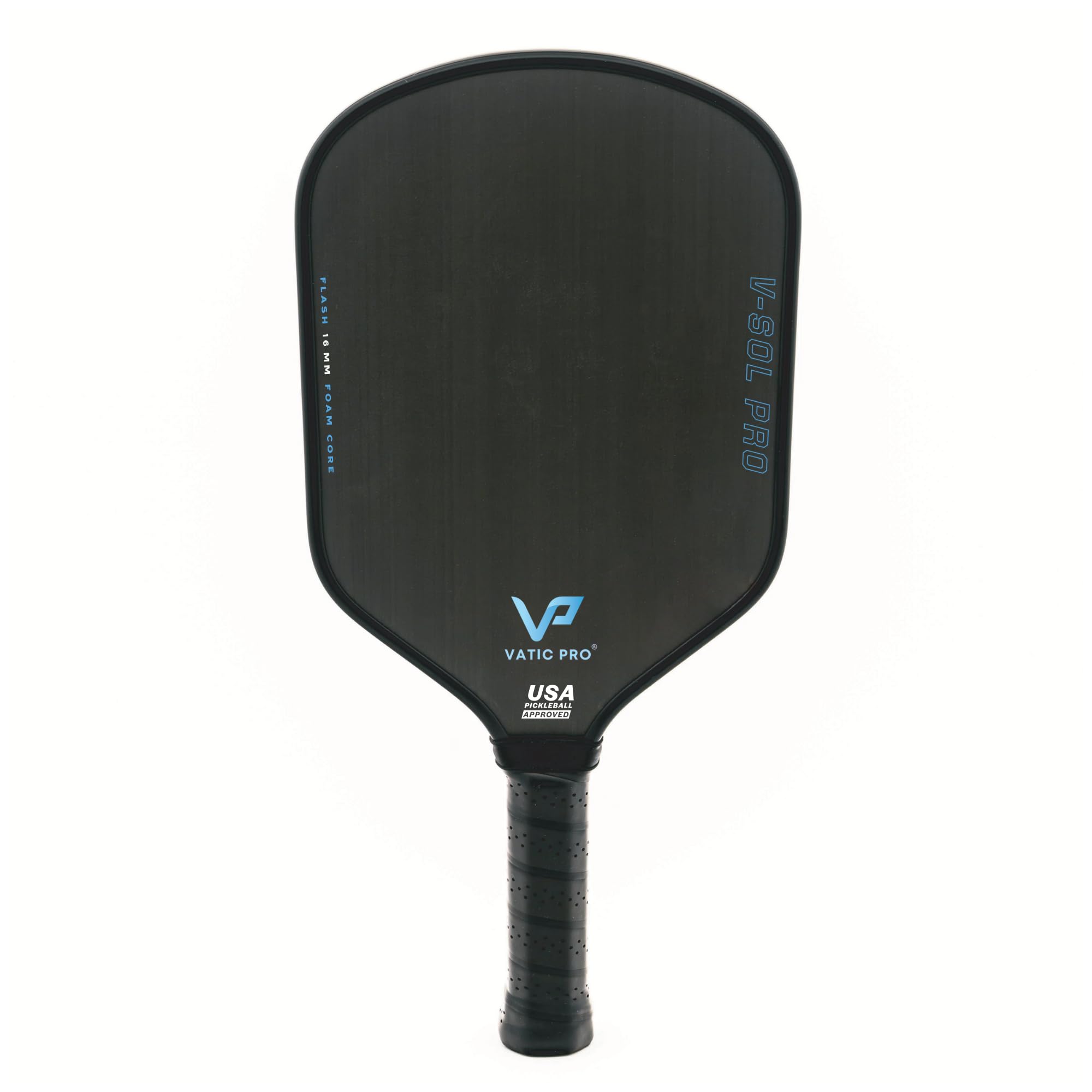
| Vatic Pro V-Sol Pro | Power without losing control | 16mm | — | 8.1 oz | Amazon |
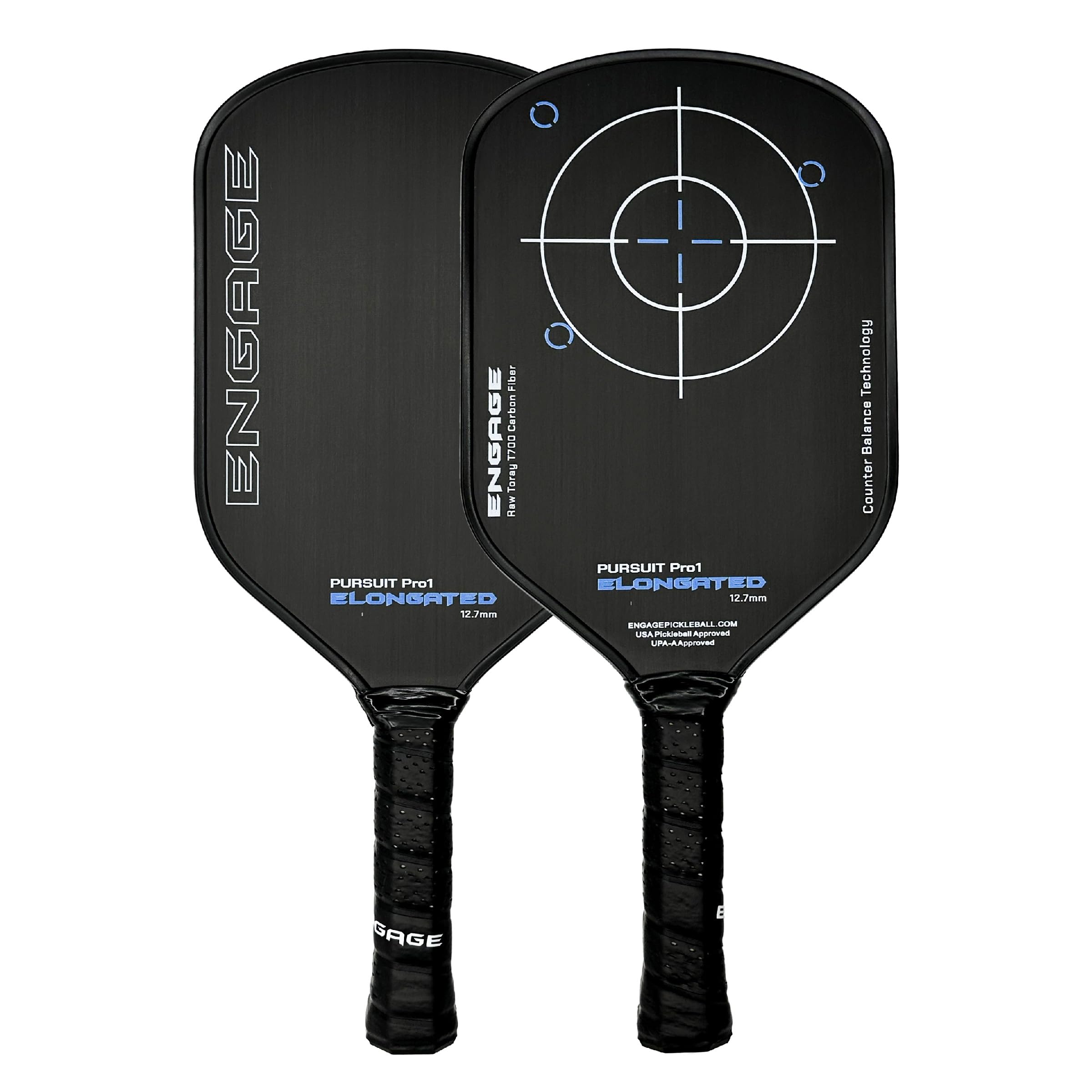
| Engage Pursuit Pro1 | Fast hands at the kitchen | 12.7mm | — | 8 oz | Amazon |
| ProKennex Black Ace Pro | Power hitters with sensitive elbows | — | — | 0.47 kg | Amazon |
| Paddletek Bantam GTO-C | Punching above your weight | 14.3mm | 5.5″ | 7.9 oz | Amazon |
| Selkirk SLK ERA Power | Aggressive baseline power | — | — | 12.8 oz | Amazon |
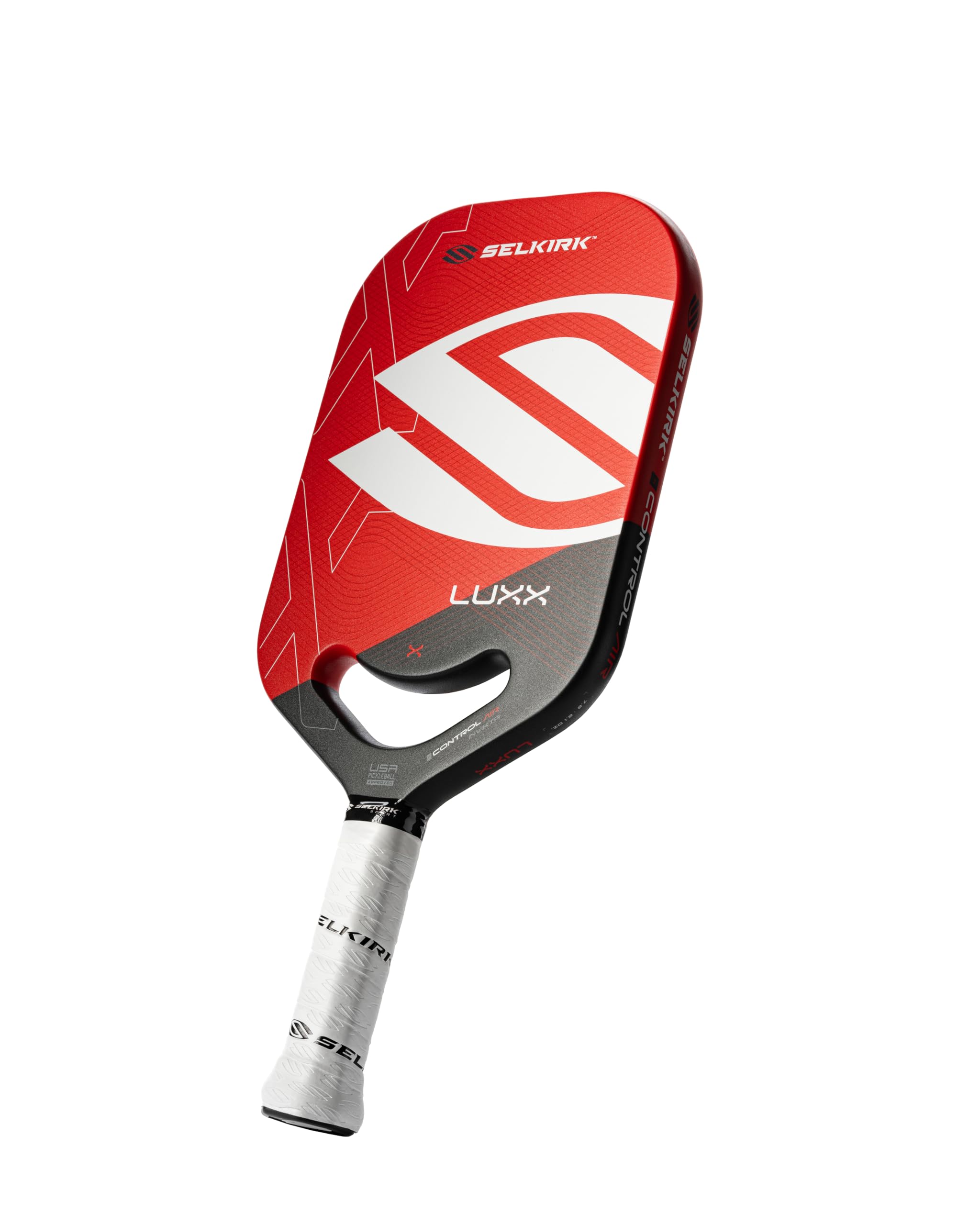
| Selkirk LUXX Control | Soft dink battles and control | — | — | 8.1 oz | Amazon |
Detailed Reviews
1. CRBN Pickleball – X Series Power Paddle
Our pick — 4.5+★ from 550+ verified ratings; the strongest balance of quality and price.
The all-court carbon paddle that hands a mid-level player an extra gear of control.
A 16mm core (the foam-and-honeycomb layer behind the face that decides feel) is the reason this paddle feels planted on every dink. That thicker core stretches the balance instead of concentrating it, so off-center hits still travel where you aimed. At 16.5″ long and 7.5″ wide with a 5.25″ handle, it sits in the wide-body family — stable at the net, forgiving on hard returns from the back line.
The carbon fiber surface is what serious paddles use for spin, and it shows in the way owner feedback lines up. What wins people over is control — nearly fifty owners call it out as the standout trait, and the buzz around the paddle’s overall build quality is even louder. One 3.0–3.5 DUPR intermediate took roughly thirty minutes to adjust to the weight, handle, and balance — then reported improved shot control, especially on kitchen shots. A two-handed backhander appreciates the grip wrap, and a size-7 player says the stock handle feels a touch slim, which a cheap overgrip fixes in a minute.
Spin and pop are both there, and owners describe a bigger hitting zone than a beginner paddle offers. The unibody design — handle and face molded as one piece rather than glued — stiffens the throat so it doesn’t flex and eventually crack where the neck meets the face. The catch is the surface residue: the gritty face picks up ball dust quickly and wants a wipe-down or an eraser after every session to keep its bite. That is maintenance, not a malfunction, but it is the recurring chore.
What owners keep coming back for
- 16mm core widens the balance, so mis-hits still land in play
- Carbon fiber face delivers dependable spin on serves and dinks
- Unibody neck resists the flex that snaps glued-on handles
- Comes with a protective neoprene cover to protect the face
The honest catch
- Gritty face collects ball residue fast and needs a wipe-down after play
- Stock handle runs slim for larger hands; an overgrip helps
- Value gets debated among owners — a fair note, not a dealbreaker
Buy it if: you play a balanced game at 3.0–4.0 and want the balance to forgive your off-center hits while the carbon face puts bite on your third-shot drops.
Think about a longer handle if: you play two-handed backhands — the 5.25″ grip satisfies one-handed players but shorter than the Warping Point’s 5.6″ handle.
2. Warping Point Pickleball Paddle
Built for the player who wants to end the point on a drive, not outlast it.
Here’s the number that grabs a power player: the Endura Spin face is lab-tested to generate 2100+ RPM, a heavy-ball spin rate that lets you shape sharper dips and heavier topspin without over-swinging. The face itself is a three-layer raw T700 carbon surface with a fine texture, and the longer contact time it produces is what gives you confident control on kitchen shots alongside the spin.
Compare the geometry against the CRBN: this paddle stretches to a 5.6″ handle versus the CRBN’s 5.25″, giving two-handed backhands more real estate, and it isn’t much heavier on paper — 8.1 oz against the CRBN’s listed 7.8-8.1 oz — so the extra reach doesn’t cost you swing speed. The elongated, power-focused balance is the whole point: it’s shaped to accelerate drives and pressure returns. Per buy-side feedback, a 16mm version adds control and extra power over a Selkirk Halo, with faster serves, a well-balanced feel, and minimal break-in, and the PowerDrive System pairs a 2cm TPE foam layer with a dense honeycomb core and reinforced edge wall to push energy transfer.
Slightly head-heavy, which is the trade for that pop — a caveat rather than a knock, because the same profile keeps resets stable. The loud, satisfying strike sound is a recurring theme, and a firm face this aggressive takes a softer touch on dinks until you dial it in. Budget for adjustment; the payoff is a paddle that stays composed when you’re aggressive.
The power-to-reach ratio: the longest handle here pairs with a head-heavy balance so drives carry without shortening your swing arc. That 2100+ RPM spin rate on a raw carbon face rivals paddles costing far more.
What to expect in the first week: the extra power needs restraint on the soft game. Add a lead strip at 10 and 2 if you want a larger balance, and accept that a firm face plays firmer than a soft control paddle.
Reach for this if: your game is built on the serve and the drive, and you want the longest handle in this list to load power.
Look elsewhere if: you live on touch dinks and want a plush, forgiving face — this one rewards a decisive swing.
3. AugOcean Pickleball Paddles Set Pro — 3K Raw Carbon Fiber
Two carbon paddles, four balls, covers, and grip tape in one ready-to-play box.
Sometimes the smart buy isn’t the single best paddle — it’s the complete kit that gets two players on the court tonight. This set bundles two paddles, four indoor/outdoor balls, two water-resistant covers with a carrying strap, and six grip tapes in different colors. Each paddle is 16.4″ long by 7.5″ wide, giving a familiar wide-body footprint that beginners find easy to line up.
The face is the value story. A 1.2mm thick 3K carbon fiber abrasion surface increases friction for sharper sidespin, backspin, and topspin, and the total carbon layer runs 1.6mm with durable T700 fiber for strength and stability. Underneath sits a 16mm polypropylene honeycomb core (a plastic honeycomb that absorbs vibration), which keeps the dink feel soft while still carrying enough pop for drives — exactly the balance a newer player needs to learn both shots.
The 5.5″ handle is long enough for a two-handed grip, and the perforated artificial-leather wrap absorbs sweat so it doesn’t slip mid-rally. Both paddles carry the USAPA approval label, so they’re legal for sanctioned play if a beginner wants to enter a first tournament. Light enough that arms don’t tire over a long session — a real plus when two people share one set.
Where the money goes: instead of one premium paddle, you get a matched pair plus the accessories that usually cost extra. For a couple or a family starting out, the kit is the practical pick.
Pick this for: a duo or family who want to try the sport with proper carbon faces and USAPA legality from day one.
Know the limit: it’s a starter kit — players who advance to a 3.5+ rating will likely want a paddle with a longer handle and finer spin texture.
4. Franklin Sports FS Tour Series Pickleball Paddle

The stable, forgiving option for the player who wants their paddle to do the work.
Here’s the design choice that defines this paddle: the 16mm polymer core is surrounded by a high-density foam perimeter, which enlarges and enhances the balance. When you catch a ball off-center during a fast exchange, the foam ring keeps the shot alive instead of twisting the face. The frame carries a premium T700 raw carbon fiber surface layer, textured at the manufacturer level to increase spin for precise shot-making.
Weight lands in the midweight 8.5-8.8 ounce range, and that is the one spot where feelings divide — some players like a slightly heavier paddle for the solid feel, while others find it heavier than they prefer. Owners who favor stability describe confident, forgiving handling on hard drives and a paddle that doesn’t punish you for a rushed swing. Spin and control are both present, and the sweet-spot size gives beginners room to miss while they learn.
The one-piece construction wraps the core fully in carbon fiber for a stiff, stable neck, and the handle is a cushioned 5.6″ elongated grip with a 4.3″ circumference — a size most adult hands can wrap around without an overgrip. The trade: at that midweight, a player with wrist or hand sensitivity might feel it by the end of a long session. Sort your own grip preference before committing.
Where the stability pays off
- Foam-injected perimeter creates an enlarged, more forgiving balance
- One-piece core construction stiffens the neck for enhanced durability
- 5.6″ cushioned handle suits two-handed grips and adds reach
- USA Pickleball authorized for tournament play
What to weigh
- 8.5-8.8 oz feels heavy to players who prefer a light, whippy paddle
- Handle and grip feedback splits between owners who like it and those who want a wrap
- Control is the strong suit — power comes from your swing, not the paddle’s pop
Suits you if: consistency and forgiveness matter more than raw speed, and you play a placement game that rewards a big balance.
Try something else if: you have small hands or wrist sensitivity — the midweight frame and 4.3″ grip circumference may feel like more paddle than you want.
5. JOOLA Ben Johns Hyperion Pickleball Paddle

The carbon-abrasion workhorse that turns a dink into a spin-loaded attack.
The headline feature is the Carbon Abrasion Surface — a multi-step sand-blasting process that textures the face for spin rather than relying on a raw molded finish. Rather than a copy of the raw-carbon pack, this is a distinct approach, and it pairs with a 16mm Response honeycomb core (the cell-shaped shock absorber behind the face) that reduces vibration and adds control.
What makes the Hyperion stand out is Hybrid-Ply Technology: layers of different materials chosen so the top converts to dinking and blocking while the bottom layers carry the power of a drive. It’s a clever split that shows up in the soft game. For a paddle in this weight class, the control and grip earn the most praise from owners, and the perforated Sure-Grip wrap with an anti-slip ridge keeps the handle dry through long rallies. The textured surface gives you the bite to shape serve returns.
The body is a 16mm power profile at 8.3 oz, running 22″ long by 7.5″ wide — a reach that helps on wide balls. Where it asks for care: the textured surface rewards a soft touch, so a player with a heavy hand may over-hit on dinks at first. There are also reported durability concerns with the honeycomb core over long-term, heavy use, which is the reason to keep a spare and respect the paddle’s limits.
The spin-first pick: if your game runs on kick serves and sharp angles, the abrasion surface is the reward. The 16mm core and Sure-Grip handle make sure control doesn’t get lost in the process.
The durability read: the core is the part to watch over many months of hard play — treat the paddle as a performance tool with a working life, and rotate in a backup if you play multiple times a week.
Choose it if: you’re an intermediate-to-advanced player who wants a spin-generating texture and a brand with tour-level pedigree.
Pause if: you play on a very hard schedule and need a paddle you can lean on without worrying about a core that breaks down over time.
6. Vatic Pro – V-Sol Pro 16mm – Foam Core
The foam-core value play that plays several tiers above what its owners paid.
The differentiator is a full EPP foam core with an outer foam ring — a construction that expands the balance for explosive drives while keeping soft touch at the net. The “foam ring” means the edges are forgiving too, so an off-center hit on a fast exchange still comes back clean.
An intermediate who upgraded from beginner gear found the initial feel muted but, after five or six sessions, settled into better consistency, top-end spin, controlled dinks, and predictable drives. A hard hitter who wants controllable power described strong fast drives and a stable 16mm build, and a 3.0 player using the Bloom shape praised how quick it got at the kitchen after some adjustment.
At 16.2″ long and 7.7″ wide with a 4.125″ grip, it’s a standard wide-body reach, and the included neoprene cover is a nice touch for storage. The trade is a face that takes a session or two to learn — you need to give the foam core time to reveal its feel. Once you do, it rewards good mechanics.
Why it plays bigger than its class
- Full EPP foam core with outer ring enlarges the balance
- Foam forgiveness on off-center hits for fewer dead balls
- Balanced power, spin, and control in one forgiving package
- Neoprene cover included for storage and transport
The one adjustment
- Initial feel runs muted; give it a session or two to break in
- Grip circumference sits at 4.125″ — a touch smaller than some rivals
- Foam-core longevity is a longer-term question, so store it dry
Go for it if: you want a foam-core paddle with a large balance and a feel that outperforms pricier rivals.
Give it time: the muted first-session feel means don’t judge it on day one — it settles in after a few outings.
7. Engage Pursuit Pro1 Innovation Pickleball Paddle
A thin-core paddle tuned for speed at the kitchen line, not brute force.
The 12.7mm core is the clue to where this paddle spends its effort. A thinner core like that trades some plushness for hand speed and quick reactions, which is exactly what you want in the firefight that happens at the net. Raw carbon fiber runs across the surface with an inner application layer, lending friction for spin on drives, drops, and serves.
Engage made a deliberate engineering choice here: a repositioned Flex Zone and tune twist weight move the performance closer to the balance, which reduces torque and delivers a more stable response on off-center hits. That translates to a solid, predictable pop that intermediate players find intuitive. It’s also made in the USA and carries a limited lifetime warranty — a meaningful signal of confidence for a paddle you expect to play hard.
On court, it feels built for the transition game — a player with active hands finds it quick at the kitchen. The honest note is on packaging and presentation: feedback flags that the paddle can arrive loose in the box without a head cover, so if presentation matters, plan to add a cover. It still holds its own where it counts: control, spin, and power in one controlled package.
Best for the net game: the thin core and quick feel let you hold your own in fast hands exchanges. The raw carbon face is capable of good spin when you want to play a heavier ball.
Presentation caveat: the paddle isn’t bundled with a cover, so budget for one if you want protection between sessions.
Fits you if: you play an aggressive net game and want engine-backed speed with a USA-made build and lifetime warranty.
Not your match if: you need the plushest, thickest-core soft game — a 16mm paddle will feel more forgiving on dinks.
8. PROKENNEX Black Ace Pro – Toray 700 Carbon Fiber

The power paddle with a shock system built to keep your arm comfortable.
What makes this paddle different from the rest of the list is its patented Kinetic System — a shock- and vibration-absorbing mechanism that the maker says cuts vibration by 43%, plus a second kinetic system in the handle as a final filter. If you’ve ever felt a stinger travel up your arm after a dead hit, that mechanism is the reason to look here. It’s a single-piece Toray 700 faced carbon paddle, which the maker bills as its most aerodynamic and fastest design.
The edgeless design is another move worth noting. Without a plastic edge guard, the paddle swings faster through the air — a real advantage on quick exchanges at the net. Power is the standout trait, and the eager owners describe it as a hard-hitting attack paddle. It’s light, and the grip is sized right for most hands.
The honest catch is the balance: it’s smaller than some competitors, which makes it punishing for novices but rewarding for precise hitters. Adding a strip of lead tape at the corners widens it and doesn’t ruin the feel. A few owners also mention noise is on the louder side and that some units shipped with a shorter working life, so treat the cover and storage as part of your ownership routine. If your swing is dialed in, this paddle gives you pop and spin in a lightweight frame.
Why the arm comfort matters
- Kinetic anti-vibration system reduces the sting on dead hits
- Single-piece Toray 700 carbon face is aerodynamic and fast through the air
- Edgeless build trims weight and boosts swing speed
- Lightweight frame suits players with hand or wrist sensitivity
Where it demands precision
- balance is smaller than some rivals — off-center hits lose steam
- Power is on the aggressive side, so dinks need a soft hand
- Strike sound runs loud; a few buyers report a shorter lifespan
Buy this if: your arm flares up with a stiff paddle, you want a lightweight frame, and you play a power game that rewards a precise swing.
Skip if: you’re a newer player who needs a large balance to keep the ball in play — this one asks you to hit the middle.
9. Paddletek Bantam GTO-C 14.3mm Hybrid Pickleball Paddle

A tapered hybrid that packs power into a light frame without swelling the weight.
The hybrid 14.3mm polymer core sits between a control-first 16mm and a power-first thin paddle — enough pop for aggressive play, enough stability for the soft game. The tapered, aerodynamic shape is the clever part: it enhances swing weight and power while maximizing the balance location, so the paddle swings fast without being a brick.
Your 7.9 oz frame punches against heavier paddles — the maker says it delivers more swing-weight power and twist-weight stability than most 8.3 oz paddles. Twist weight is worth understanding: it’s how much a paddle resists twisting when you hit off-center, so higher means a sturdier feel on a rushed return. The benefit is a light paddle that doesn’t feel flimsy.
It’s UPA-A approved and carries a PBCoR.43 certification, so it’s legal for competitive play, and it’s made in the USA. A 3.0-3.5 player testing it reported noticeably better play, a lively pop off the face, and more control over their game. The trade is a smaller brand footprint than a Selkirk or JOOLA — you’re buying the shape and the specs, not the brand name on the cap.
The light/strong split: a 7.9 oz hybrid that generates the swing weight of heavier paddles lets you attack without tiring your arm. The tapered build makes the balance behave like a larger one.
Keep expectations real: this is a precision-leaning hybrid, so budget a couple of sessions to dial your aim at the balance before judging it.
Fits you if: you want hybrid power and control in a sub-8-ounce frame that still handles tournament play.
Consider otherwise: if you prefer a wide, plush 16mm control paddle, this faster hybrid asks for a bit more precision.
10. Selkirk Sport SLK ERA Power Pickleball Paddles

The widebody that adds serious velocity to hard drives without shrinking the balance.
At the core of this paddle sits the Dynamic Fusion Core — a polypropylene honeycomb wrapped in EVA foam. That combination extends dwell time (how long the ball stays on the face) for spin placement, then lets you flex its power for the putaway. The face is a three-layer build mixing T700 raw carbon fiber and fiberglass, which balances rigidity for power with flex for durability.
The widebody shape is the other half of the story: a longer handle for reach and extra room for two-handed backhands, plus a large balance that stays consistent across the face. Owners describe lively power from the baseline with control that holds up, and the friction surface is capable of heavy topspin on serves, drives, and lobs.
At 12.8 oz, this is a heavier build — that’s the frame weight, not to be confused with swing weight, and it’s part of why the paddle generates such easy pop. Movement through the air feels substantial, and a couple of players note the touch game takes adjustment. The flip side: a player who relies on feel and finesse may prefer a lighter control frame.
Built for the hard drive
- Dynamic Fusion Core adds dwell time and a powerful putaway
- Three-layer carbon-fiber-and-fiberglass face balances power and durability
- Widebody shape gives the largest balance in this list
- Longer handle accommodates two-handed backhands
The trade-off to know
- At 12.8 oz it’s a heavier frame than lighter control paddles
- Touch and finesse shots take a session or two to dial in
- Power is the home turf — you’ll swing harder to match it on dinks
Reach for it if: your game runs on big serves and drives, and you want a widebody that rewards an aggressive swing.
Hold off if: you play a light touch-and-finesse game and want a feathery frame at the net.
11. Selkirk LUXX Control Pickleball Paddle
The soft-face specialist tuned for dink battles and pinpoint placement.
If you play a control game, the LUXX earns its spot by engineering airflow and flex rather than raw pop. The Air Dynamic Throat refines airflow through the throat for enhanced control, and ThroatFlex’s open throat design boost flex on contact to extend dwell time — that’s the soft feel at the net most control players chase. The 360° Proto Molding process uses high pressure to deliver a consistent feel on every hit.
The face carries ProSpin+ NextGen Micro Texture, developed in Selkirk Labs for a more durable spin surface, so you can shape heavy topspin and controlled slices. At 8.1 oz and 16.45″ long by 7.5″ wide in the elongated Invikta shape, it lands in the standard control-paddle frame class. What owners rave about is the control and the soft cushioned grip — the balance between power and touch is the core appeal.
A player transitioning from tennis describes a gritty surface for spin, a larger balance, and fewer out balls. Another notes the grip is soft enough for heavy play. The real caveat: a couple of players mention no edge guard, and the surface texture can chip and peel over time, so it’s honest to say this paddle asks for care as it ages — but a full season of grit is the track record many report. At this control level, small imperfections barely touch the scoreboard.
The control-first read: a soft face and extended dwell time make dinks feel automatic, and the ProSpin+ texture keeps spin on tap when you want to attack. It’s a placement paddle, not a power paddle.
Plan for the wear: give it a cover and wipe the face clean, because the textured surface is the part that ages first.
Choose it if: your game is built on patience, dink control, and small placement advantages over power.
Think twice if: you want to overpower opponents from the baseline — this one wins points through control, not velocity.
Know the Specs
Core Thickness (13.3mm, 14.3mm, 16mm)
The core is the honeycomb-and-foam layer sitting behind the face. A thicker core in the 16mm range absorbs more vibration and stretches the balance, so a dink comes off soft and controlled. A thinner core in the 12.7mm–14.3mm range transmits more energy into the ball, giving drives extra speed but demanding cleaner contact. Your choice here sets your shot shape: thick for dinks and placement, thin for drives and speed.
Face Grit (TGrit and Raw Carbon)
The face’s texture — the gritty surface that grabs the ball at contact — is where spin comes from. Raw carbon fiber faces are textured at the manufacturing stage, while an abrasion-sanded surface like JOOLA’s Carbon Abrasion gets its bite from a mechanical process. Either way, grit wears first, so wipe off ball residue and store the paddle in a cover. More grit means heavier topspin and sharper serves; less grit keeps the face cleaner longer.
Weight and Swing Weight (7.9 oz to 12.8 oz)
Static weight is what the paddle registers on a scale; swing weight is how heavy it feels as you accelerate it. A 7.9 oz hybrid like the Paddletek can generate the swing weight of a heavier paddle thanks to its tapered shape, while a 12.8 oz widebody like the Selkirk SLRA gives you easy drive pop but moves slower through the air. Lighter frames suit hand battles and long sessions; heavier frames suit baseline power and stability.
Handle Length and Grip Circumference
The handle’s length decides your reach and whether two-handed backhands feel natural. A 5.6″ handle like the Warping Point or Franklin gives two hands real room, while a 5.25″ grip like the CRBN satisfies one-handed players. Grip circumference — measured around the wrap — should fit your hand so you can close it without slipping; a 4.125″ to 4.3″ range covers most adult hands, and an overgrip can shrink or pad the feel.
Common Questions
What does UPA-A or USAP approval actually mean for tournament play?
Will a 16mm paddle slow down my putaway shots?
How long does the textured face on a carbon paddle last?
Do I need a two-handed backhand to benefit from a longer handle?
Is a heavier paddle better for power or control?
What is swing weight and how is it different from listed ounces?
Can a control paddle still generate enough power for drives?
Will lead tape help if my paddle has a small balance?
How do I keep ball residue from clogging my paddle’s grit?
Does a larger balance really matter for a beginner?
The Bottom Line
For most players, the strongest pick among these high-end pickleball paddles is the CRBN X Series Power Paddle — its 16mm core widens the balance, the carbon fiber surface puts dependable spin on your dinks and serves, and the unibody neck resists the wear that plagues glued handles. If you want the longest handle and a heavier ball off the drive, reach for the Warping Point UPA-A and let its 2100+ RPM spin rate work for you. And for players whose arm needs a softer riding paddle, the ProKennex Black Ace Pro layers in the Kinetic System while still hitting with real pop. Pick the one that matches your shot, keep the face clean, and you’ll get months of consistent play from any of these.
How we choose
We do not accept paid placement. Every pick is matched to a real buyer and a real use-case; we do not hands-on test units.
Sources
Specifications: manufacturer listings and product documentation. Review insights: verified customer reviews, as of October 2026. Pricing: not shown on this page (it changes often); check the current price via the retailer link.
As an Amazon Associate, Aappliancez earns from qualifying purchases. This does not affect which products we feature.