Disclosure: Some links in this post are affiliate links. As an Amazon Associate I earn from qualifying purchases, at no extra cost to you. Learn more
Specs are compiled from manufacturer listings and verified buyer reviews and can change over time — please confirm the key details on the product page before buying.
Back pain and house slippers have a quieter relationship than most people realize. When your arch collapses a little with every step across the kitchen tile, your ankles roll inward, your knees follow, and your lower back spends the whole day compensating. That is why the right pair is not the softest pair — it is the pair with real arch support, a firm heel, and a sole that does not slide. Below are five picks that actually hold your foot in place, led by a women’s pair that has become the crowd favorite at 4.0+ stars across 1,100+ owners.
This guide is built by comparing the manufacturers’ published specifications and the patterns across verified customer reviews, so you get each pick’s real strengths and trade-offs instead of marketing spin.
You will see exactly where each pair’s support sits, how the sizing really runs, and who each one fits best. The goal is simple: pick once, wear them all day, and stop guessing at the best slippers for back pain.
Top Picks

How To Choose Slippers That Actually Help Your Back
The wrong assumption most people bring to this category is that a slipper should feel like a cloud. Deep, squishy foam feels lovely for ten minutes and then lets your foot roll inward with every step. Your back ends up doing the stabilizing instead. What you want is a footbed that holds the arch up and a heel that stays put.
Start with the arch, not the fluff
An arch support is the raised section under the middle of your foot that stops it from flattening on contact. A slipper with a built-in orthotic insole keeps the foot in a neutral position, so the chain from ankle to knee to lower back stays lined up. Look for language like “orthotic insole,” “arch support,” or “heel cup” in the listing rather than “plush” alone.
Check whether the insole comes out
If you already wear custom orthotics, a removable insole is the difference between a usable slipper and a return. A pair with extra depth and a pull-out footbed lets you drop your own insert in without squeezing your toes. Some pairs also ship with fitting spacers and an arch booster so you can tune the height yourself.
Match the sole to where you walk
A house slipper that never leaves the bedroom can get away with a thin sole. If you step onto a porch, into a garage, or out to the mailbox, you want a grippy outsole. A slick bottom on hardwood or vinyl is a genuine trip risk, and one stumble is enough to wrench a back that is already sore.
Side-by-Side Comparison
All five are measured on the same three things: the support built into the footbed, the fit situation you should plan around, and what the upper is actually made of.
| Model | Best For | Support Type | Fit Note | Upper / Lining | Amazon |
|---|---|---|---|---|---|
| Skechers Women’s Cozy Escape Slip-ins★ Best Overall | Hands-free everyday wear | Memory Foam footbed | Runs small — size up | Vegan leather with faux fur trim | Amazon |
| ERGOfoot Orthopedic SlippersBest Value | Plantar fasciitis on a budget | Orthotic arch support | Runs large — size down | Silver fox velvet lining | Amazon |
| Mens Slippers for Plantar Fasciitis | All-day wear, wide feet | Molded supportive sole | Mixed — check size chart | Quilted upper, elastic back | Amazon |
| Vionic Cedar Perrin | Replacing a daily slipper | VIO MOTION orthotic insole | Runs small and narrow | Cozy slip-on upper | Amazon |
| Orthofeet Lorin | Custom orthotics and high arches | Ortho-Cushion with removable insole | Runs big and short — measure | Soft lining, hard rubber heel | Amazon |
Detailed Reviews
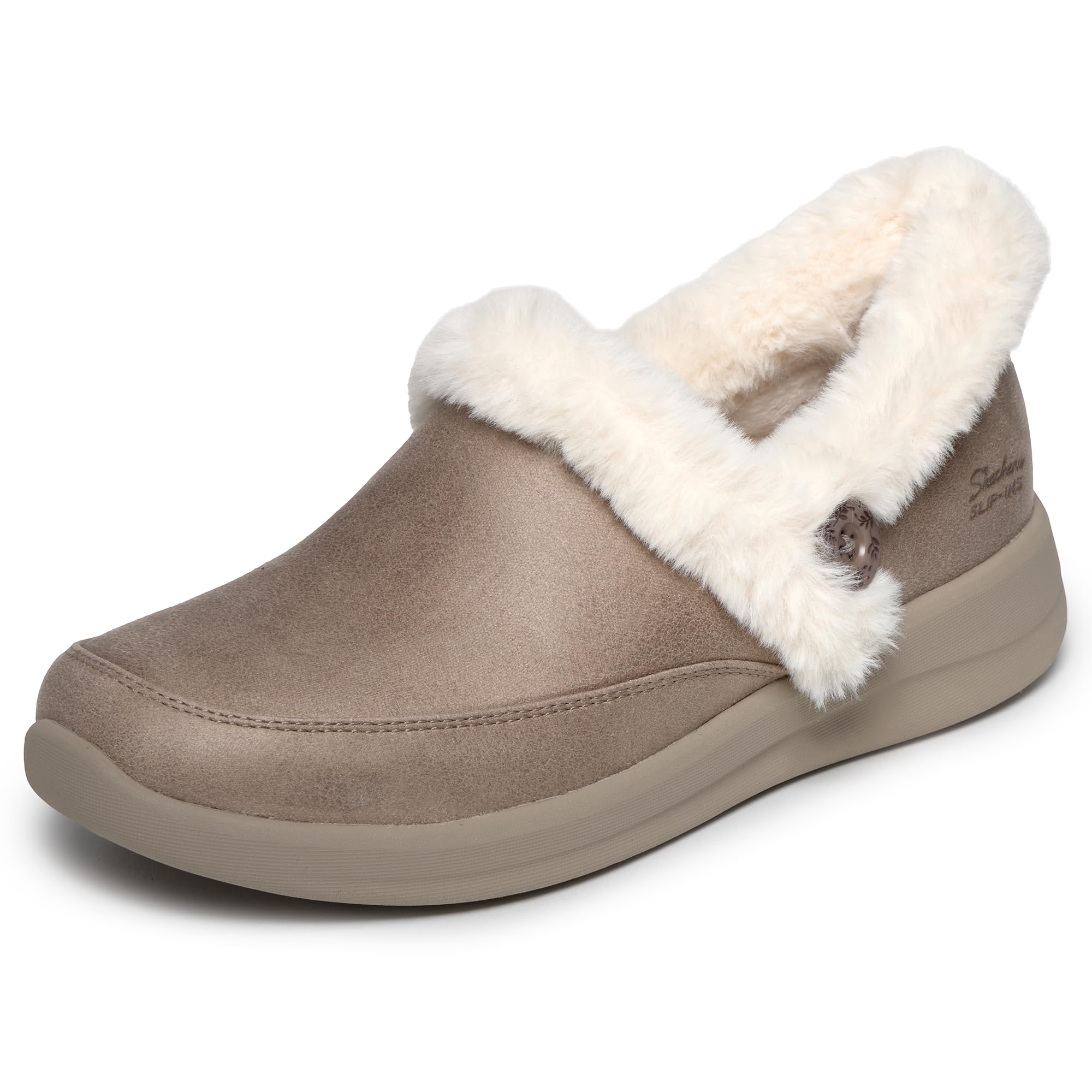
1. Skechers Women’s Cozy Escape-Slip-ins Slipper
Our pick — 4.0+★ from 1,000+ verified ratings; the strongest balance of quality and price.
The step-in pair you never have to bend over to put on — and the reason it leads this list.
If bending down to pull on a slipper makes your back twinge before you have even left the bedroom, this is the pair to start with. The Skechers Cozy Escape is a genuine hands-free slip-in: you step down and the shoe swallows your foot, no tugging and no heel to crush. One buyer summed up the appeal neatly: “Very sturdy slippers and easy to slip in to with hands free. True to size.”
Underfoot sits a Skechers Memory Foam footbed, which is the cushioned layer that molds around your foot’s shape rather than staying flat. The upper is a vegan leather with faux fur trim, treated so it shrugs off light spills, and the flexible traction outsole means you can walk out to the porch without changing shoes. The pair weighs 1.8 pounds total.
Here is the honest part: the sole runs firm rather than pillowy, and it can be slick on bare hardwood or vinyl until it scuffs up. A few owners roughened the bottom with sandpaper before wearing them indoors. Sizing also leans snug — several women who normally take an 8.5 went up to a 9 to clear the furry lining, and the sewn-in tag rubs bare heels, so thin socks help.
What earns its keep
- True hands-free step-in — no bending, no heel to pull
- Memory Foam footbed with a cushioned, responsive feel
- 1.8 lb per pair — light enough to forget you have them on
- Indoor/outdoor traction outsole for porch and mailbox runs
- The wipe-clean vegan leather upper with faux fur trim
Worth knowing before you buy
- Sole is firmer than the foam name suggests — not a deep squish
- Slippery on bare hardwood until the outsole roughens
- Sizing leans snug; women between sizes should go up
- The sewn-in tag can rub if you wear them with bare heels
Reach for these if: you want a supportive step-in you can pull on without stooping, and you want a sole that handles the occasional step outside.
Think twice if: you want a soft, deep-cushioned slipper — the firm sole here supports rather than pillows.
2. ERGOfoot Orthopedic Slippers for Women
A shoe-like clog slipper built around a high arch and a deep heel cup.
Where the Skechers above wins on easy entry, this ERGOfoot pick wins on raw support for the money. The footbed is shaped like a clog, with a raised arch and a heel cup that cradles the back of your foot — the geometry that keeps your stride from collapsing inward. That inward collapse is what sends the load up into your lower back. The velvet lining is a “silver fox” finish, and the outsole is grippy so hard floors do not turn into a skating rink.
Fair warning if you wear wide shoes: this one runs generous. The recurring feedback is that it fits about a size and a half larger than your usual, so people between sizes are sizing down for a snugger fit. One flat-footed reviewer with a wide 9 found the arch “spot on,” while a true 9.5 who ordered a 9/10 said it felt like an 11 and was too loose for bare feet. The cushioning is also firm rather than soft — a couple of people called it stiff, almost clog-like, in the first few days.
Give it a week of break-in and the footbed molds to your shape. For anyone with a high, medium, or flat arch who wants a stable base for walking around the house, this is one of the strongest picks at the value end of the shelf.
Where it delivers: A high arch, a deep heel cup, and a non-slip bottom — the three things that keep your foot from rolling inward over a full day of indoor steps.
The honest catch: The sizing runs large enough that a snug fit requires going down, and there is no narrow width option. Firm and clog-like from the start, it softens with wear.
Best match: women who want genuine orthotic-style support without paying premium-tier money, and who prefer a firm base underfoot.
Look elsewhere if: you want a plush, cloud-soft feel or need a narrow width.
3. Mens Slippers for Plantar Fasciitis

The pair that works as hard as you do — an adjustable mule you can wear for a full shift.
For men who spend hours upright on hard floors, this is the pick I would point to first. It is a house shoe rather than a soft slipper: a molded supportive sole, no fur or memory foam to trap sweat, and a foldable soft heel that lets you wear it as a backless mule or pull the back up for a covered fit. A Velcro strap across the top adjusts the fit, and an elastic back makes entry easy.
The roomy toe box is forgiving for wide feet and for anyone with bunions or neuropathy, and there is enough room to add an insert without tightening the fit. The quilted upper adds warmth without bulk. One buyer who wore them for a nine-hour shift said their feet ached after about seven hours — tolerable, and they planned to rebuy. Owners praise the build quality first and the arch support a close second.
The catch is sizing. The fit feedback is mixed, with some men finding they need a half size down and others finding the length short until the elastic stretches in.
Built for long hours: The molded sole and wide toe box give real arch support with room to add your own insert, and the adjustable strap handles a range of foot shapes.
The fit story: Sizing runs inconsistent, so check the size chart against your usual shoe and expect the elastic to settle in after a few wears.
A good fit for: men with wide feet or plantar fasciitis who want a slipper that wears like a supportive shoe through a workday.
Skip the brown if: color matching matters to you — the bright blue elastic back stands out.
4. Vionic Cedar Perrin Women’s Slip-On Cozy Slipper
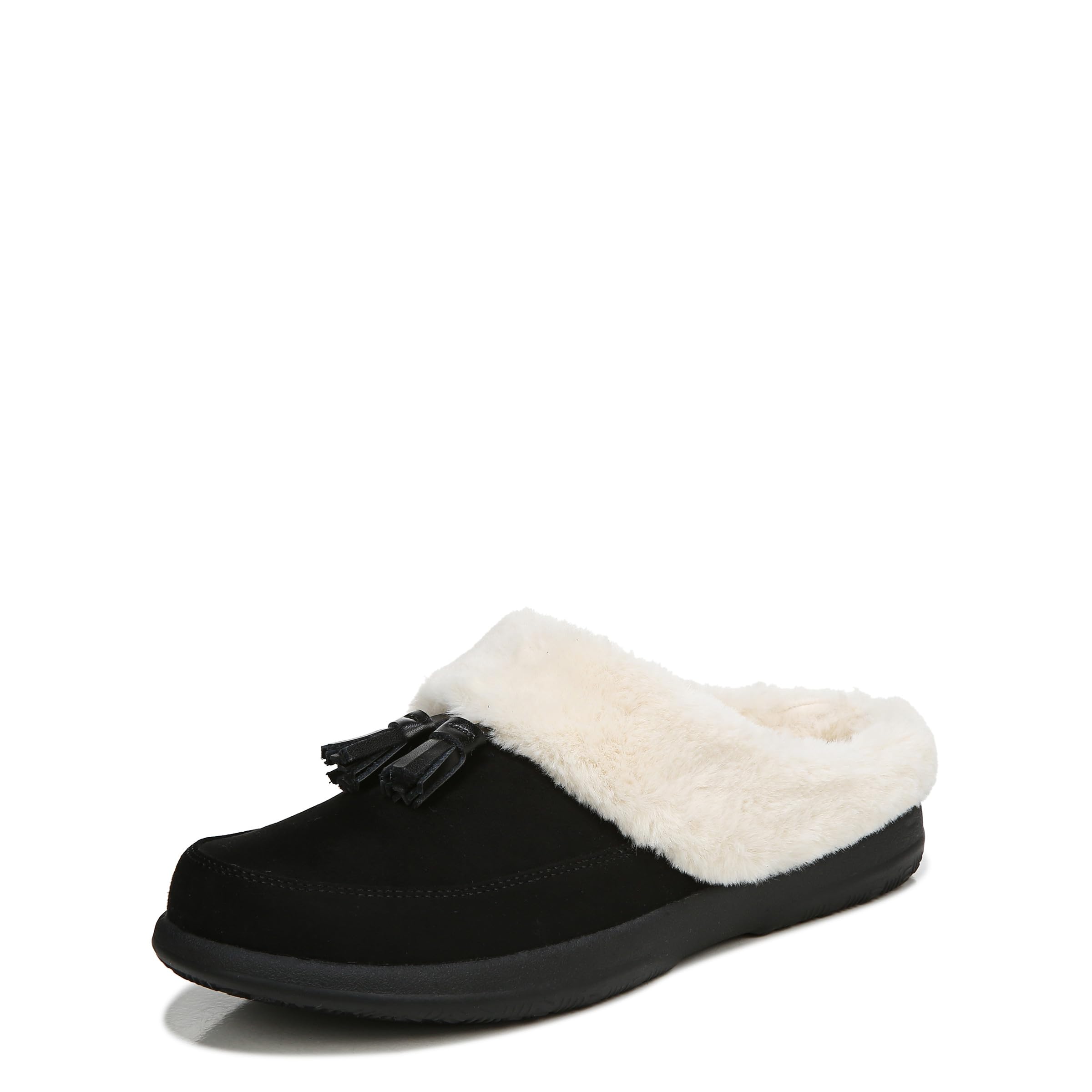
The slipper you reach for when the pair by the bed is your only footwear all weekend.
Vionic built its name on arch-hugging footwear, and the Cedar Perrin carries that into a cozy slip-on. The footbed uses the brand’s VIO MOTION Technology orthotic insole with built-in arch support, designed to hold your foot in a supported, aligned position. There is a firm outsole under it that resists pronation — the inward roll of the foot that pushes strain up into the knee and back. For a slipper you wear from breakfast to bedtime, that stability is the whole point.
Construction is where this pair earns its premium spot. The fit runs narrow and true to size for people with a standard-to-narrow foot, and the factory insole is replaceable if you want to swap in your own. Buyers who have worn the same pair for years describe them as durable and still going strong. Owners praise the build quality first, with value for the money close behind.
The catch is a hard sole that some find lacks cushioning, and a fit that can pinch across the top of a high-arched foot. A recurring note is that recent pairs run smaller than older ones of the same size, so order with a little wiggle room. If you have wide feet or need a soft, yielding footbed, this is not your pick.
Why it holds a premium spot
- VIO MOTION orthotic insole with built-in arch support
- Firm outsole designed to resist pronation
- Replaceable factory insole for custom inserts
- Durable enough that long-time owners reorder the same pair
Where it may not suit you
- Firm sole with less cushioning than a plush slipper
- Narrow fit can pinch across a high instep
- Sizing has drifted smaller on recent pairs
Worth it for: women with standard or narrow feet who wear one slipper all day and want orthotic-grade support that lasts for years.
Not for: wide feet or anyone who wants a soft, deep-cushioned footbed.
5. Orthofeet Lorin Orthopedic Womens Slippers
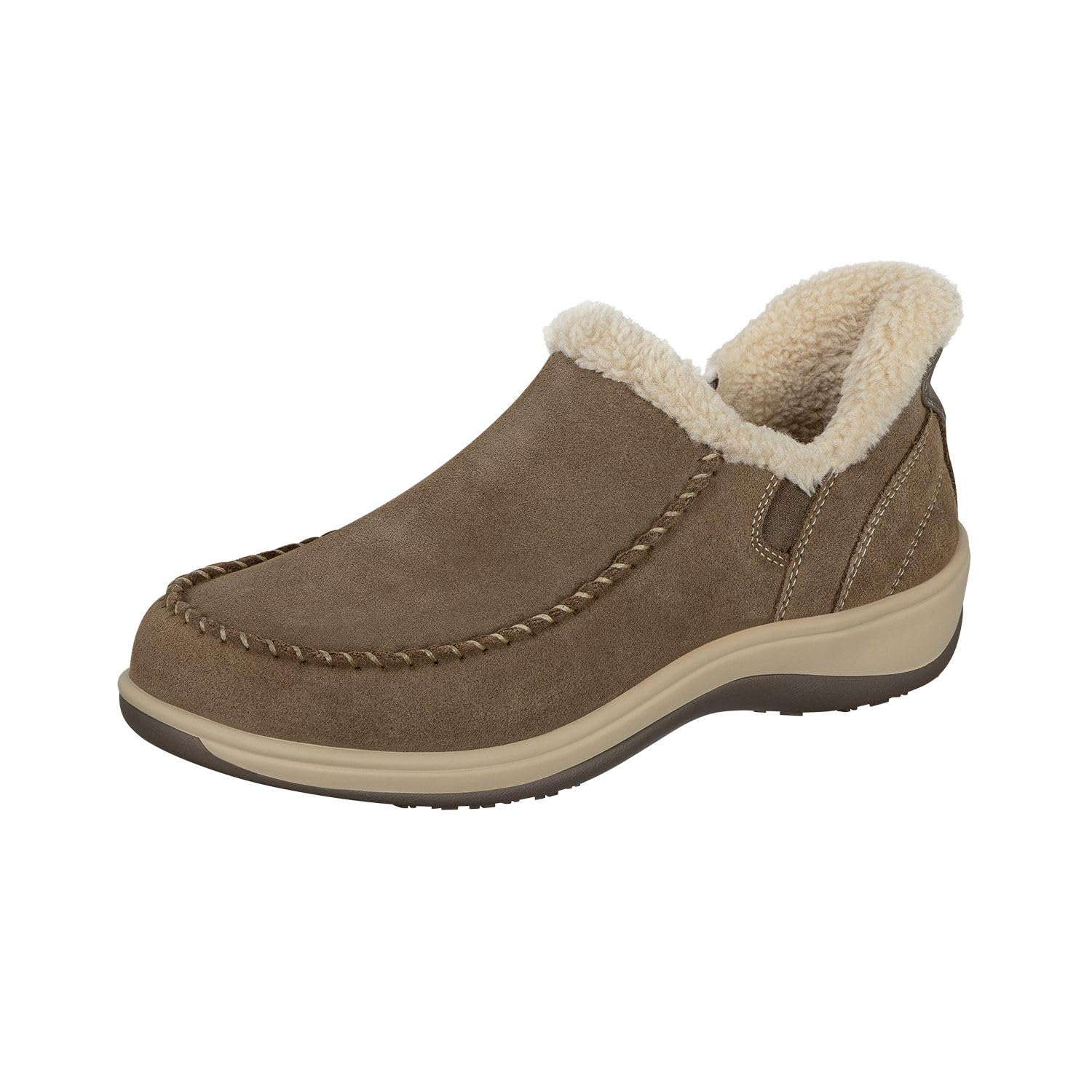
The tunable pair — swap the insole, add a spacer, and dial in the arch to your own foot.
This is the pick for anyone who already owns custom orthotics or has high arches that most slippers fail to reach. The Lorin runs on the Ortho-Cushion system: a built-in orthotic insole, a shock-absorbing sole, and extra depth to fit most custom inserts. It ships with heel cups, 1/8-inch and 1/16-inch spacers, an adjustable strap, and an Arch Booster, so you can tune the fit and support yourself rather than hope the factory default is right.
The design is smart for sore backs too — the high back and hard rubber heel let you step in hands-free, and the slip-resistant sole has enough grip for a snowy walk with the dog. The fit runs generous, and Orthofeet labels the Lorin as women’s when the sizing actually follows men’s dimensions. One buyer went through five returns and re-orders to land on the right size. The practical fix is to measure your foot length and match it to the chart, not to your usual number.
What keeps this on the premium shelf is the adjustability. If your arches are high and standard slippers leave you unsupported, the spacers and booster give you a real path to a comfortable fit. If you just want a simple, inexpensive house slipper, the setup is more than you need.
The adjustment story: Removable insoles, heel cups, two spacer sizes, and an Arch Booster put the final fit in your hands — rare in a slipper.
The sizing trap: The labeling is women’s but the fit follows men’s sizing, so a chart measurement saves you a return cycle.
Made for: women with high arches or custom orthotics who want a slipper they can tune to fit, and who also want a grippy sole for stepping outside.
Overkill if: you want a simple, low-fuss slipper with no inserts to manage.
Know the Specs
Arch Support and the Heel Cup
The arch support is the raised zone under the middle of your foot. The heel cup is the bowl-shaped dip at the back that holds your heel from drifting. Together they keep the foot in a neutral line, so your ankle does not roll inward and your lower back is not left to stabilize every step. A slipper with a high arch and a deep heel cup, such as the ERGOfoot, is doing more for your back than a flat, soft footbed ever will.
Orthotic Insole vs. Memory Foam
An orthotic insole is a shaped support layer designed to hold the arch and heel in place. Memory foam is a cushioning layer that molds to your foot’s shape but does not hold it up. The two are not the same job: the Skechers uses Memory Foam for softness, while the Vionic and Orthofeet use orthotic insoles for structure. If your back aches after a day in slippers, you want the structured option.
Removable Insoles and Fitting Spacers
A removable insole lets you pull out the factory footbed and drop in your own custom orthotic. Spacers are thin shims that change how much room sits under your foot, and an arch booster raises the support. The Orthofeet Lorin ships with a 1/8-inch spacer and a 1/16-inch spacer plus heel cups, so you can fine-tune the height until the fit feels right.
Outsole Grip and Where You Walk
The outsole is the bottom of the slipper that meets the floor. A grippy outsole prevents slipping on hard flooring, which matters because a stumble is especially risky for a sore back or for older feet. The Skechers and Orthofeet both offer indoor/outdoor traction, while softer slippers can skate on bare hardwood until the bottom scuffs.
Common Questions
Do slippers really help with back pain?
Should I wear slippers or go barefoot around the house?
Which slipper works if I use custom orthotics?
Why do my slippers feel slippery on hardwood floors?
How should I size slippers with a furry lining?
Are soft cushioned slippers bad for your back?
Can I wear these slippers outdoors?
How long do supportive slippers usually last?
Are the men’s and women’s sizes the same?
What is an Arch Booster and do I need one?
The Bottom Line
If your back aches after a day in house shoes, start with the Skechers Cozy Escape — it is the hands-free step-in that leads this list, with a Memory Foam footbed and an outsole that handles a step outside. The trade is a firm sole and a snug fit, so order up if you are between sizes. For a plant-your-foot-and-walk pair with real arch geometry, the ERGOfoot delivers orthotic-style support at the value end. For men who are on their feet all shift, grab the Mens Slippers for Plantar Fasciitis. And if you use custom orthotics or have high arches, the tunable Orthofeet Lorin is the one to reach for — just take ten minutes to measure your foot first.
How we choose
We do not accept paid placement. Every pick is matched to a real buyer and a real use-case; we do not hands-on test units.
Sources
Specifications: manufacturer listings and product documentation. Review insights: verified customer reviews, as of October 2026. Pricing: not shown on this page (it changes often); check the current price via the retailer link.
As an Amazon Associate, Aappliancez earns from qualifying purchases. This does not affect which products we feature.