Disclosure: Some links in this post are affiliate links. As an Amazon Associate I earn from qualifying purchases, at no extra cost to you. Learn more
Specs are compiled from manufacturer listings and verified buyer reviews and can change over time — please confirm the key details on the product page before buying.
You want to hear the room around you, not a sealed cup pressing on your ears — and that narrows your choices fast. True open-back wireless headphones are rare, because most brands that build a wireless model glue a battery and Bluetooth chip into a closed cup. Our top pick, the Sennheiser HD 490 PRO, isn’t wireless at all, and that is the honest starting point: it is the best-sounding open-back on this list and the most comfortable for long sessions. Every genuinely wireless option here asks you to trade some sound or some build for the cable-free life. Below you get nine real picks, sorted by what each one actually does well, with the catches named plainly.
This guide is built by comparing the manufacturers’ published specifications and the patterns across verified customer reviews, so you get each pick’s real strengths and trade-offs instead of marketing spin.
Some picks here plug in and some cut the cord entirely, so the first question is which one you actually need. This breakdown of open back wireless headphones separates the true wireless models from the wired reference cans.
Top Picks


How To Choose The Best Open Back Wireless Headphones
An open-back headphone has a grille (a perforated mesh panel) instead of a sealed cup, so air moves freely behind the driver (the speaker that makes the sound). That single design choice is why the sound feels like it comes from around you rather than inside your skull — and it is also why the person next to you can hear your podcast. Decide first if you want that trade, because it defines the whole category.
Wireless or wired — the split nobody warns you about
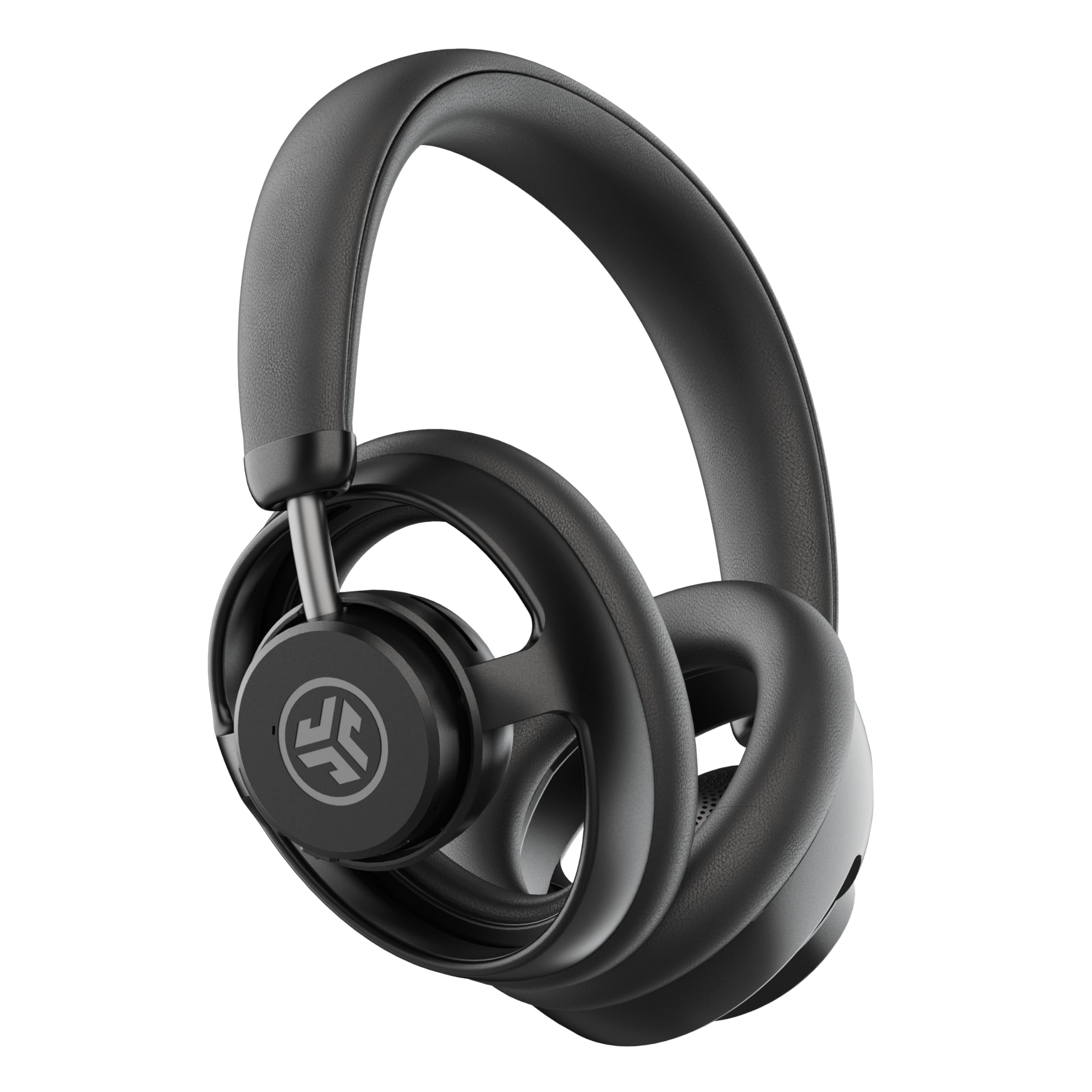
Genuinely wireless open-back headphones are a short list. Most of the best-sounding open-back models on the market are wired only, because a battery and a Bluetooth board add weight and cost to a design already tuned for pure acoustics. If cable-free is non-negotiable, you are choosing between the Grado GW100x, the JLab JBuds Open, the Koss Porta Pro Wireless, and the Turtle Beach Atlas Air. If sound quality is the priority and you can live with a cable, the wired picks here go further for the same money.
What the numbers on the box actually mean
Frequency response — the range of pitches a headphone can reproduce — is written as a low-to-high figure in hertz. The Sennheiser HD 490 PRO lists 5 to 36,000 Hz and the HIFIMAN Ananda Nano lists 5Hz to 55kHz, but a wide range tells you about extension at the edges, not about whether you will enjoy the tuning. Driver size is the next number people fixate on: the Audio-Technica ATH-R30X uses 40 mm drivers, the Grado GW100x uses 44 mm, and the Sennheiser HD 660S2 uses 42 mm transducers. Bigger does not automatically mean better — the tuning and the enclosure matter more.
Comfort decides whether you keep them
Weight and clamping force (how hard the headband squeezes) are the two things that send open-back headphones back to the box. The Audio-Technica ATH-R50X lists 207 g and the Turtle Beach Atlas Air lists 301 g, and both are described by owners as easy to wear for hours. If you wear glasses, pay attention to pad softness — thin pads press the frame into your temples after an hour or two.
Side-by-Side Comparison
| Model | Best For | Connection | Driver | Battery / Cable | Amazon |
|---|---|---|---|---|---|
| Sennheiser HD 490 PRO★ Best Overall | Studio mixing and long sessions | Wired (detachable) | Dynamic, open-back | 1.8m cable included | Amazon |
| GRADO GW100xBest Wireless | True wireless open-back sound | Bluetooth 5.2 + aptX Adaptive | 44mm dynamic | Up to 46 hours | Amazon |
| JLab JBuds OpenBest All-Day Value | All-day budget wear | Bluetooth multipoint | Dual coaxial 35mm + 12mm | 24+ hours | Amazon |
| Audio-Technica ATH-R30X | Entry-level wired reference | Wired (non-detachable) | 40mm dynamic | Fixed cable | Amazon |
| Koss Porta Pro Wireless 2.0 | Portable retro on-ear | Bluetooth 5.2 | Dynamic | 20+ hours | Amazon |
| Audio-Technica ATH-R50X | Open-back mixing on a budget | Wired (detachable) | Dynamic | 207 g, 3.0m + 1.2m cables | Amazon |
| Turtle Beach Atlas Air | Open-back gaming headset | Low-latency wireless + Bluetooth | 40mm dynamic | Up to 50 hours | Amazon |
| HIFIMAN Ananda Nano | Audiophile planar detail | Wired (detachable) | Planar magnetic | Detachable cable | Amazon |
| Sennheiser HD 660S 2 | Long-session vocal and acoustic listening | Wired (detachable) | 42mm dynamic | 1.8m cables included | Amazon |
Detailed Reviews
1. Sennheiser HD 490 PRO Open-Back Professional Headphone
Our pick — 4.5+★ from 350+ verified ratings; the strongest balance of quality and price.
The studio reference that makes dense mixes fall apart into clean, separate pieces.
The HD 490 PRO earns its spot with a 5 to 36,000 Hz frequency response (the range of low to high notes it can reproduce) that keeps the tuning uncolored, so what you hear matches the file. That makes it the pick for anyone who mixes audio or games competitively and needs to hear exactly where a sound sits. Its open-back design gives you an extremely wide, dimensional sound stage — meaning instruments and footsteps feel placed around your head rather than mashed together. Sennheiser’s open-frame architecture is built to cut total harmonic distortion (the smearing that makes detail feel muddy) and reduce internal resonance, which is why the detail holds up when a track gets busy. That acoustic honesty is what buyers praise most: sound quality is the runaway favorite in reviews, with build quality right behind it.
You get two sets of ear pads in the box, one aimed at producing and one at mixing, and both are washable and replaceable — a real long-term benefit because pad wear is what usually ends a headphone’s life. The 1.8m cable detaches and plugs into either ear cup, so you can route it to any studio setup, and the patented cable coil structure is designed to block cable-borne noise from leaking into the signal. Comfort is the other headline: owners of large heads and ears report wearing these for a full eight-hour day without pain, and one buyer put it plainly — these are “more comfortable than Hifiman Edition XS, under half the weight.” The build mixes a spring-steel headband with fiberglass-reinforced polymer cups and an aluminum enclosure, which feels durable rather than plush.
Here is the catch you need to weigh: this is a wired headphone, so if you came looking for Bluetooth freedom, this is not it. It also sits in the premium tier, and a slice of owners question whether the price is justified — the one mixed note among otherwise glowing feedback. Against the Grado GW100x, the HD 490 PRO carries a 4.5+ average versus the Grado’s 4.0+, and it holds far more ratings — 396 against 150 — so it is the more proven design of the two. What it will not do is untether you from your desk.
What earns the top spot
- Extremely wide, precise sound stage that makes mixing and competitive gaming easier
- 5 to 36,000 Hz uncolored response with a low-frequency cylinder system for defined bass
- Two swappable pad sets plus washable, replaceable cushions for years of use
- Detachable cable with right and left ear jacks for flexible studio routing
Where it asks you to compromise
- Wired only — no Bluetooth option at all
- Premium-tier cost, and some buyers question the value
- Open-back design leaks sound both ways by nature
Reach for this if: you mix, master, or game at a desk and want the clearest, most comfortable open-back here.
Look elsewhere if: wireless is a hard requirement — the Grado GW100x below is your starting point.
2. GRADO GW100x Bluetooth Open-Back Wireless Headphones Black
The one true wireless open-back that sounds like a Grado should.
If the whole reason you clicked is the word “wireless,” this is the pick that respects it. Grado took its signature open-back tuning and cut the cord, running Bluetooth 5.2 with aptX Adaptive for low-latency, high-resolution streaming across Android, iOS, and laptops. The 4th-gen 44mm drivers are retuned for wireless duty, and the result is the airy, separated Grado sound people come for — crisp highs, clear mids, and full-bodied bass through a wide soundstage. Battery is the showstopper: up to 46 hours on a single charge, which means a commute-plus-workweek habit barely dents it. Wireless range is rated to 10 meters, so you can leave your phone on the desk and walk the room.
What wins people over is the sound — the open-back presentation is the reason to buy this over any closed wireless can. The trade is build and fit. The enclosure is plastic with leather and fabric cushions, and the recurring gripe is that it feels fragile and cheap for the tier. Comfort is a mixed story: fine for a session, less so after a few hours, and glasses wearers report sore spots at the temples. There is no active noise cancellation (ANC, the tech that electronically cancels outside sound) and the open design leaks audio outward by definition, so this is a quiet-room headphone, not a train or gym one. Calls are serviceable but not a highlight.
Weigh it against the Sennheiser HD 490 PRO and the Grado’s 4.0+ average trails the Sennheiser’s 4.5+, while the Sennheiser also holds 350+ ratings to the Grado’s 150. That gap is the honest picture: the Grado trades proven reliability for the freedom of no cable. If you want the wireless open-back experience and can accept a plastic build that needs gentle handling, nothing else here matches it.
The wireless case: Bluetooth 5.2 with aptX Adaptive, 46 hours of playback, and a 10-meter range cover the cable-free promise better than any other pick on this list.
The honest counterweight: plastic construction and mixed comfort reports mean you get the sound, not the luxury feel — treat the headband gently and keep it for quiet rooms.
Who it beats: every other wireless model here on pure open-back sound quality.
Who should pass: commuters and glasses wearers who need isolation or all-day clamp relief.
3. JLab JBuds Open Wireless Headphones
A budget open-ear that stays cool through an eight-hour workday.
For a full workday plus the evening unwind, the JBuds Open runs 24+ hours per charge and stays airy the whole time. The open-back fit keeps heat from building up, and the cloud foam earcups and headband cushion are shaped for long sessions rather than short bursts. Dual coaxial drivers — a 35mm paired with a 12mm — are meant to spread sound into layered, spacious audio, with Labboost technology deepening the bass so the open design does not sound thin. Rotating earcups adjust to your head shape, and Bluetooth multipoint pairs two devices at once, so your laptop and phone can both stay connected. The JLab app adds EQ presets, and noise-canceling mics handle calls.
People keep these on for the cloud foam comfort and for hearing everything around them — the open design does exactly what it promises. If you have ever had to peel closed cups off sweaty ears, this is the fix, and a former Bose QuietComfort owner who switched over ear soreness called the sound “surprisingly good,” though a step below the Bose level. Bass is a touch tame without EQ (equalizer — the tone controls that boost or cut frequencies), so lean on the app presets if you want more low end. Fit is the mixed note: the design is reported to fit large heads with a little stretch, but it is not a snug all-shapes fit. Calling is a weak spot for console gamers — it does not connect directly to a PS5 without a Bluetooth dongle (a small USB plug that adds wireless), so do not buy it expecting plug-and-play PlayStation audio. The case flat-folds for transport, and buttons are on the small side.
Against the Grado GW100x, the JBuds Open trades sound quality for comfort and value — the Grado’s open-back tuning goes further, but the JLab stays cooler and cheaper. If your priority is all-day wear without ear heat, this is the pick, and the wireless parts are solid for the money.
The daily driver argument: breathable cloud foam, rotating cups, and 24+ hours make it the easiest pick to live with from morning to night.
What to expect going in: modest bass, small buttons, and no PS5 direct connection — budget open-ear done well, not a fidelity upgrade.
Best for: desk workers and glasses wearers who want open-air comfort all day.
Not for: console gamers or anyone chasing deep, punchy bass from the start.
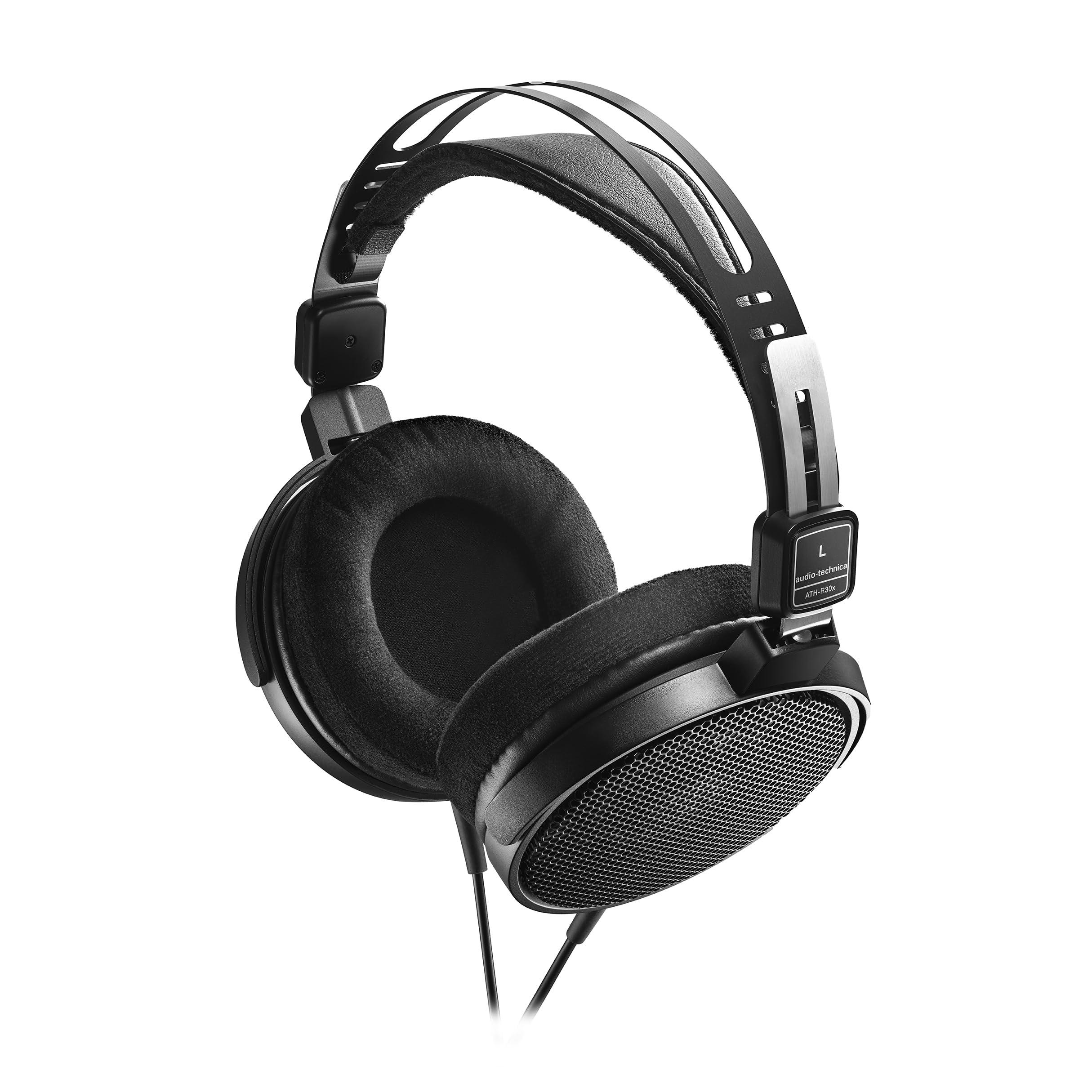
4. Audio-Technica ATH-R30X Open-Back Headphones
The cheapest honest entry into open-back reference sound.
If you have never owned an open-back and want to test the water without committing much, the ATH-R30X is built for exactly that. The 40mm drivers reproduce a well-defined low end, transparent mids, and smooth extended highs — the neutral, balanced character people want for mixing — and the open-back design lets the driver move freely for a natural signature. The wide, realistic soundstage makes the listening feel bigger than the price tier suggests. It covers home studio production, content creation, and everyday listening, and comes with a 6.3mm (1/4-inch) adapter for mixer and interface jacks. Build is stainless steel and lightweight, with a new headband design for longer wear.
Owner feedback lines up with the price: it sounds like good speaker monitors in a treated room, and the instrument separation surprises people at this tier. One buyer combined their pair with an Antlion ModMic and called it a gaming setup worth stopping at. The cable is the fixed, non-detachable kind and runs quite long — fine on a desk, awkward on a commute. Fit is the honest weak point: the ear cups run small, and the comfort can pinch after extended sessions if your head is large. If you are sensitive to clamp, plan on shorter listening blocks or add aftermarket pads.
Compare it to the ATH-R50X higher up the Audio-Technica ladder and the R30X gives you the same reference idea with less polish and a fixed cable; the R50X adds detachable cables and a lighter 207 g frame.
The smart entry: a first open-back that teaches you what a wide soundstage sounds like without a big spend.
The trade: small ear cups and a fixed long cable — check the fit if you have a larger head.
5. Koss Porta Pro Wireless 2.0 Retro On-Ear Headphones

That familiar bass-heavy Porta Pro sound, now without the cord.
The Porta Pro Wireless 2.0 takes the iconic 80s on-ear design and adds Bluetooth 5.2 with a 10-meter range, so you get the same colored, bass-forward signature without a tether. It covers 15 to 25,000 Hz, delivers up to 20+ hours from one USB-C charge, and keeps the collapsing portability that made the wired original a bag staple — plus a soft-shell case. A USB-C to 3.5mm cable is included for wired listening, and integrated controls handle volume, track skipping, play/pause, voice assistant, and calls. If you want transparency, the open on-ear design lets the world in, and owners rate it above the AirPods Pro transparency mode for exactly that.
The catch is build and polish. The plastic-and-steel frame feels cheap for the tier, and the stiff headband needs the sliders adjusted before you wear it. The default foam pads are uncomfortable for some, and swapping to Yaxi pads is the well-known fix. Controls are inconsistent — a couple of owners hit volume buttons that failed or needed a restart, and nothing here supports an app or EQ. Bluetooth is generally solid on the same floor but can stumble across rooms or on Windows devices, and the mic is ordinary for calls. It also leaks sound by design, so it is not a quiet-library headphone.
Set against the JLab JBuds Open, the Koss is the more charming, more bass-forward pick and lighter on the head, but the JLab wins on comfort from the start and app control. The Porta Pro Wireless 2.0 is the one to grab if you already love the Porta Pro sound and want it cable-free for the gym or a commute.
Why it still charms
- Genuine Porta Pro tuning with deep bass and crisp highs over Bluetooth 5.2
- Collapsible design with soft-shell case for pocketable portability
- 20+ hours per USB-C charge, plus a wired USB-C to 3.5mm backup cable
The quirks to accept
- Plastic build feels cheap for the tier; stiff headband needs adjusting
- Default foam pads uncomfortable for some — Yaxi pads are the fix
- Buttons inconsistent and no companion app or EQ support
Pick it if: you love bass-forward open sound and want it collapsible and cable-free.
Leave it if: you want refined controls, app EQ, or plush comfort straight from the start.
6. Audio-Technica ATH-R50X Open-Back Headphones
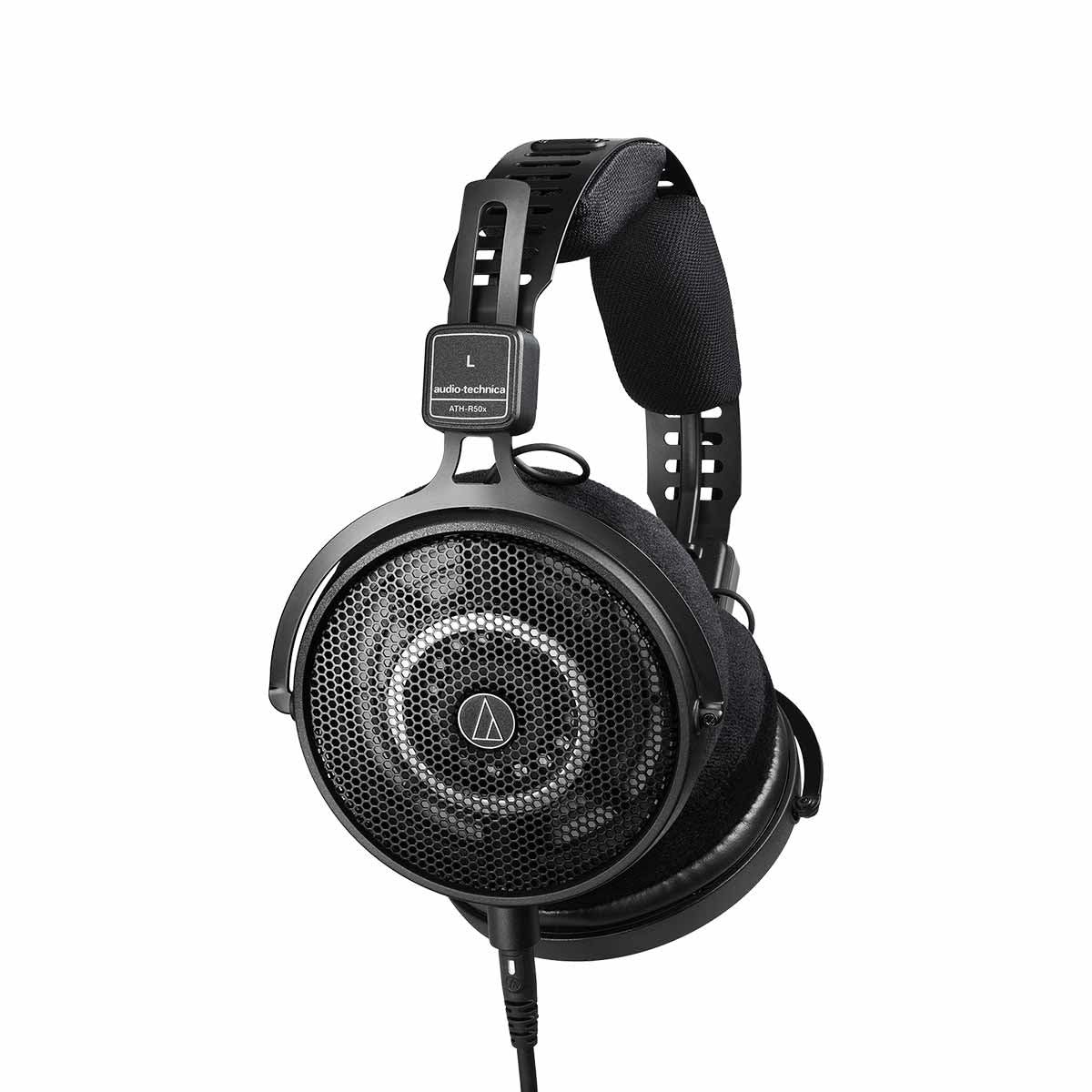
The 207-gram open-back that mixes like a reference can without the fatigue.
At 207 g, the R50X is the lightest genuine reference headphone here, and that number is the whole pitch: it stays light enough to wear through a long mixing session and does not build heat. The fully open-back design lets air flow freely to eliminate internal resonance and gives an extremely quick transient response — meaning drum hits and plucked strings start and stop crisply — over a wide, realistic soundstage. Extended bass and an accurate midrange carry the all-around performance for production work, and the build is a mix of mostly metal with plastic and a folding design for transport. Two detachable cables ship in the box, a 3.0m (9.8-foot) and a 1.2m (3.9-foot), each with a 2.5mm twist-lock connector at the left ear cup, plus a 6.3mm adapter and carrying pouch.
What owners notice first is how comfortable it stays: the low clamp force, adjustable yokes, and swiveling cups let it sit for hours without fatigue, while the sound stays bright and detailed with a strong lower treble and a wide stage. Bass runs heavier than most open-backs, which makes it forgiving for casual listening as well as mixing, and EQ lets you tighten or lift it. It is easy to drive — around 20% volume is plenty from a normal source. The honest limits: it does not replace a closed-back for tracking, since open-back bleed is expected, and the product-specific plastic pin connector on the detachable cable is the one part that could wear over time.
Against the ATH-R30X below it on the ladder, the R50X wins on weight, detachable cables, and control over the sound — the R30X is the fixed-cable entry, the R50X is the one you keep. For the money, it is the most balanced mix of comfort, stage, and detail in this group.
The weight argument: 207 g with low clamp and swiveling cups makes it the easiest long-session reference can here.
The fine print: open-back bleed rules it out for tracking, and that plastic pin connector wants gentle handling.
the balance: open-back mixing and critical listening with almost no fatigue penalty.
Wrong tool for: recording sessions where bleed into the mic is a problem.
7. Turtle Beach Atlas Air Wireless Open-Back Headset

The only open-back wireless gaming headset that lets you hear the room and the match.
Most wireless gaming headsets seal you inside a closed cup. The Atlas Air does the opposite: a fully open-back design with a floating earcup lets game audio and Discord come through clearly while your surroundings stay audible. That is genuinely useful if you game at a desk where someone might call your name. The 40mm drivers push high-fidelity 24-bit audio, the detachable mic is broadcast-grade with 32kHz high-bandwidth capture, and there is a QuickSwitch button to jump between wireless and Bluetooth. Battery runs up to 50 hours with quick charge, latency is rated at 50 milliseconds, and the whole thing weighs 301 g with glasses-friendly memory foam cushions. The Swarm II software adds a 10-band EQ and Waves 3D Audio on PC.
Owner experience splits sharply by use, and the split is worth knowing before you buy. The people who game on PC love it: comfortable, light, and class-leading for hearing footsteps in FPS (first-person shooter) games, with a mic that beats dedicated USB mics. The people who fight it are the ones tripping over connectivity — dropouts when Bluetooth and wireless run together, occasional software fights getting audio to start. There is no wireless on Xbox (wired works), and the headband has drawn complaints that the adjustable mesh strap can pop off at its limit. The mic mute does not lock, and volume steps are coarse. None of that erases how good the open-back audio sounds when it is behaving.
Against the Grado GW100x, the Turtle Beach is the better gaming tool by far — a detachable mic, 50 hours of battery, and 3D audio — while the Grado wins on pure music fidelity. If you want one headset for PC gaming and Zoom calls that keeps you aware of your room, this is the pick, provided your setup plays nice with its loaded connectivity.
Why PC gamers rate it: open-back audio for footstep placement, 50 hours of battery, and a genuinely good detachable mic.
Why some send it back: wireless dropouts when Bluetooth and the dongle run at once, plus no Xbox wireless.
Choose it for: PC or PlayStation gaming plus calls, where hearing your room matters.
Skip it for: Xbox wireless or a setup you cannot troubleshoot when audio drops.
8. HIFIMAN Ananda Nano Open-Back Planar Magnetic Headphones

Planar detail that places every instrument exactly where it belongs.
For listeners chasing pure detail, the Ananda Nano is the technical standout here. Its nanometer-thickness diaphragm, based on HIFIMAN’s SUSVARA design, is built for lower distortion and faster transient response — the subtle start-and-stop of a note — across a wide 5Hz to 55kHz range. The result is a three-dimensional sound field with instrument positioning precise enough to feel like a live performance. The acoustically invisible stealth magnets are shaped to let sound waves pass without interference, cutting the diffraction that smears detail, and the window-shade grille reduces internal reflections for a clearer sound. Asymmetrical ear cups follow the ear’s natural shape, and 3.5mm jacks mean you can swap cables over the headphone’s life.
What wins people over is the expansive stage, deep bass extension, and clarity — it competes above its price class on sound alone, and once fitted it stays comfortable for long sessions. Two honest caveats. First, the tuning is bright, and a couple of owners who love bass found the sub-bass slam lighter than planars with more heft; EQ sorts the brightness for most. Second, this is a wired planar, and planars tend to want a good amp to sound their best — plugging straight into a phone works, but a desktop amp open up it. The stock cable is a known weak point, and you should check the headband strap and pads if you want the softest fit. Reliability is the real mixed note: most units are fine, but the brand’s quality-control reputation shows up in the occasional dead driver, so buy from a seller with a clean return path.
Against the Sennheiser HD 660S2, the Ananda Nano leads on soundstage and detail for the same kind of money, while the Sennheiser comes out warmer and more forgiving. If you listen to well-recorded music on a good desktop setup and want to hear everything in the mix, this is the one.
Why audiophiles bite
- Planar magnetic drivers with nanometer-thickness diaphragm for fast, low-distortion detail
- 5Hz to 55kHz range with a wide, precise three-dimensional stage
- Stealth magnet geometry and window-shade grille cut interference and reflections
What to weigh first
- Wired only, and it rewards a proper amp and source
- Bright tuning and modest sub-bass slam for bass-forward tastes
- Quality control has produced the occasional failed driver
It wins on: detail, imaging, and stage for serious desktop listening.
It loses on: plug-and-play convenience and rock-solid reliability.
9. Sennheiser HD 660S 2 Open-Back Audiophile Headphones
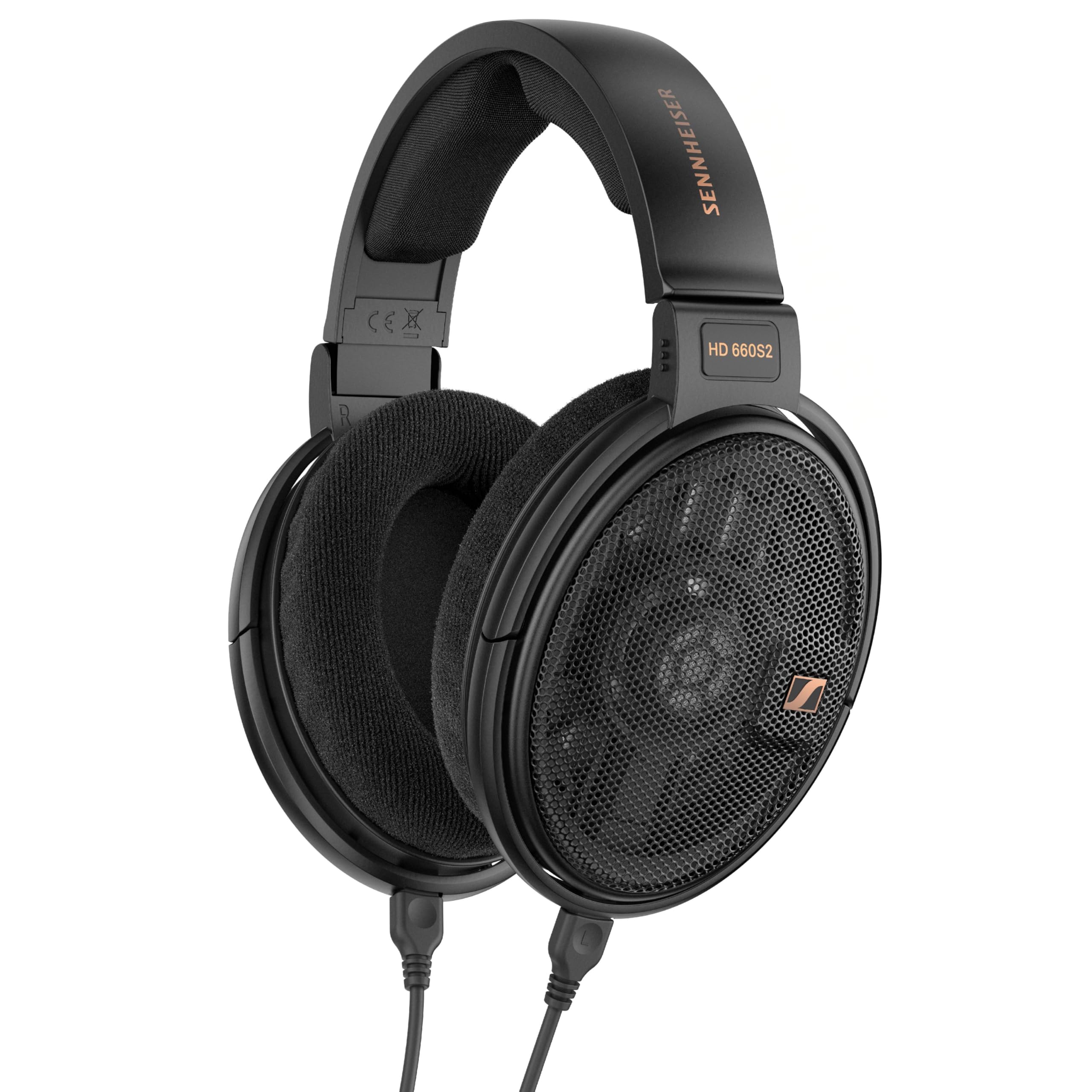
Warm, natural vocals that stay comfortable long after the first album ends.
The HD 660S2 is for the listener who prioritizes tone and comfort over raw detail. Its 42mm transducers and ultra-light aluminum voice coil deliver detailed highs, rich mids, and deep, controlled bass, with a natural signature that makes vocals sound like voices rather than recordings. The open-back design with breathable plush ear cushions keeps sessions fatigue-free, and the headphone covers the low end down to piano lows at 27.5 Hz and bass drums in the 45 to 60 Hz range. Cables detach, and two ship in the box — 6.3mm and 4.4mm balanced, both 1.8m — along with an adapter and carry pouch. Build quality is German and Irish craftsmanship in a plastic-and-metal frame, lighter than some rival studio cans.
The sound wins people over: a warm, musical, relaxed presentation that makes long listening easy and hides a bad recording’s flaws better than an analytic can would. Owners who wear glasses report soft velour pads with no pressure hotspots, and ears do not touch the drivers. Where it falls short is bite and dynamics — hard rock and metal guitars and drums can sound polite rather than aggressive. The soundstage is not expansive next to planars, and Sennheiser’s tuning is famously gentle rather than forward. Note the power needs: a clean balanced source (4.4mm) helps it open up, and a hybrid tube amp can smooth its harsher edges. The included carry pouch is a cheap plastic affair, and the cable near the cups can pick up contact noise.
Against the Ananda Nano, the HD 660S2 is the warmer, more forgiving and more comfortable listen, while the HIFIMAN pulls ahead on stage and micro-detail. Pick the Sennheiser if you value natural tone and all-day comfort and can give it a decent source.
The tone-first case: 42mm transducers and a natural tuning that flatters vocals, acoustic, and older recordings.
The reality check: polite dynamics on heavy music, plus a modest stage — and it wants a proper streamer or amp, not a phone jack.
Made for: long listening sessions where natural vocals and comfort matter most.
Not the pick for: bassheads or anyone expecting an aggressive, revealing monitor.
Know the Specs
Driver size and type
A headphone driver is the small speaker that moves air to make sound, and its size is given in millimeters. The Audio-Technica ATH-R30X uses 40 mm drivers, the Grado GW100x uses 44 mm, and the Sennheiser HD 660S2 uses 42 mm. Size alone does not decide quality — the enclosure and tuning matter as much. Driver type matters more: most picks here are dynamic drivers, which move a cone like a speaker, while the HIFIMAN Ananda Nano uses a planar magnetic driver, which moves a thin flat diaphragm. Planar sets tend to sound fast and detailed, and dynamic sets tend to sound warmer and more forgiving.
Open-back, wireless, and the trade-offs
An open-back headphone has a grille so air can escape behind the driver. That is what creates the wide, room-like soundstage, and it also means sound leaks in and out. Wireless adds a Bluetooth chip, a battery, and a codec (the compression format) into the mix. Bluetooth 5.2 shows up on the Grado GW100x and Koss Porta Pro Wireless; aptX Adaptive on the Grado is the higher-quality, lower-latency codec. Every true open-back wireless model here still leans on a codec, so expect slight compression versus a wired connection.
Impedance and sensitivity
Impedance (measured in ohms) and sensitivity decide how much power a headphone needs to reach a comfortable volume. Low-impedance, high-sensitivity sets run straight off a laptop or phone, while high-impedance planars and reference cans want a dedicated amp. The Sennheiser HD 660S2 and HIFIMAN Ananda Nano both reward a proper source, and owners commonly note that a good amp or DAC makes a real difference. If you plan to drive headphones straight from a phone, favor the easier-to-drive picks.
Common Questions
Can open-back headphones be truly wireless?
Will people around me hear my music with open-back headphones?
Do open-back headphones block background noise?
How much battery life do wireless open-back headphones actually deliver?
Do I need a headphone amp for open-back headphones?
Can I use open-back wireless headphones for gaming?
What is the difference between open-back and closed-back headphones?
Are replaceable pads and detachable cables worth looking for?
Do open-back headphones work with a phone or a console?
Do open-back headphones work with a phone or a console?
Why do some open-back headphones sound bright and others warm?
The Bottom Line
For most listeners, the open back wireless headphones winner is the Sennheiser HD 490 PRO because it delivers the widest, most precise soundstage here with washable replaceable pads and all-day comfort — the crowd favorite at 4.5+ stars across 300+ owners, and the pick with the most proven track record on this list. If cable-free listening is the whole point, grab the GRADO GW100x for its aptX Adaptive wireless (a Bluetooth codec that adjusts to keep audio stable) and 46-hour battery. And for a first open-back that will not break the bank, the Audio-Technica ATH-R30X is the one to reach for — budget-friendly, balanced, and honest about its limits.
How we choose
We do not accept paid placement. Every pick is matched to a real buyer and a real use-case; we do not hands-on test units.
Sources
Specifications: manufacturer listings and product documentation. Review insights: verified customer reviews, as of October 2026. Pricing: not shown on this page (it changes often); check the current price via the retailer link.
As an Amazon Associate, Aappliancez earns from qualifying purchases. This does not affect which products we feature.