Disclosure: Some links in this post are affiliate links. As an Amazon Associate I earn from qualifying purchases, at no extra cost to you. Learn more
Specs are compiled from manufacturer listings and verified buyer reviews and can change over time — please confirm the key details on the product page before buying.
You want tile that looks wet-polished, not greasy or foggy, and the wrong wax leaves a smeary film you spend a weekend stripping off. The short answer: pick a finish built for hard surfaces, prep the tile properly, and apply thin coats rather than one thick one. Below you get five real options, ranked, with what each one actually does for tile and where it falls short.
This guide is built by comparing the manufacturers’ published specifications and the patterns across verified customer reviews, so you get each pick’s real strengths and trade-offs instead of marketing spin.
Some finishes are built for vinyl and linoleum while tile needs a harder acrylic film that resists mopping. Get that wrong and the film clouds instead of glossing, so check the finish chemistry before you buy.
Top Picks

How To Choose The Best Wax for Tile Floors
Tile is not wood, and it is not vinyl. Ceramic and porcelain are hard, non-porous surfaces, so a finish has to bond to a slick face and then survive a wet mop. That is why the finish type matters more than brand loyalty here.
Start with the finish chemistry, not the label
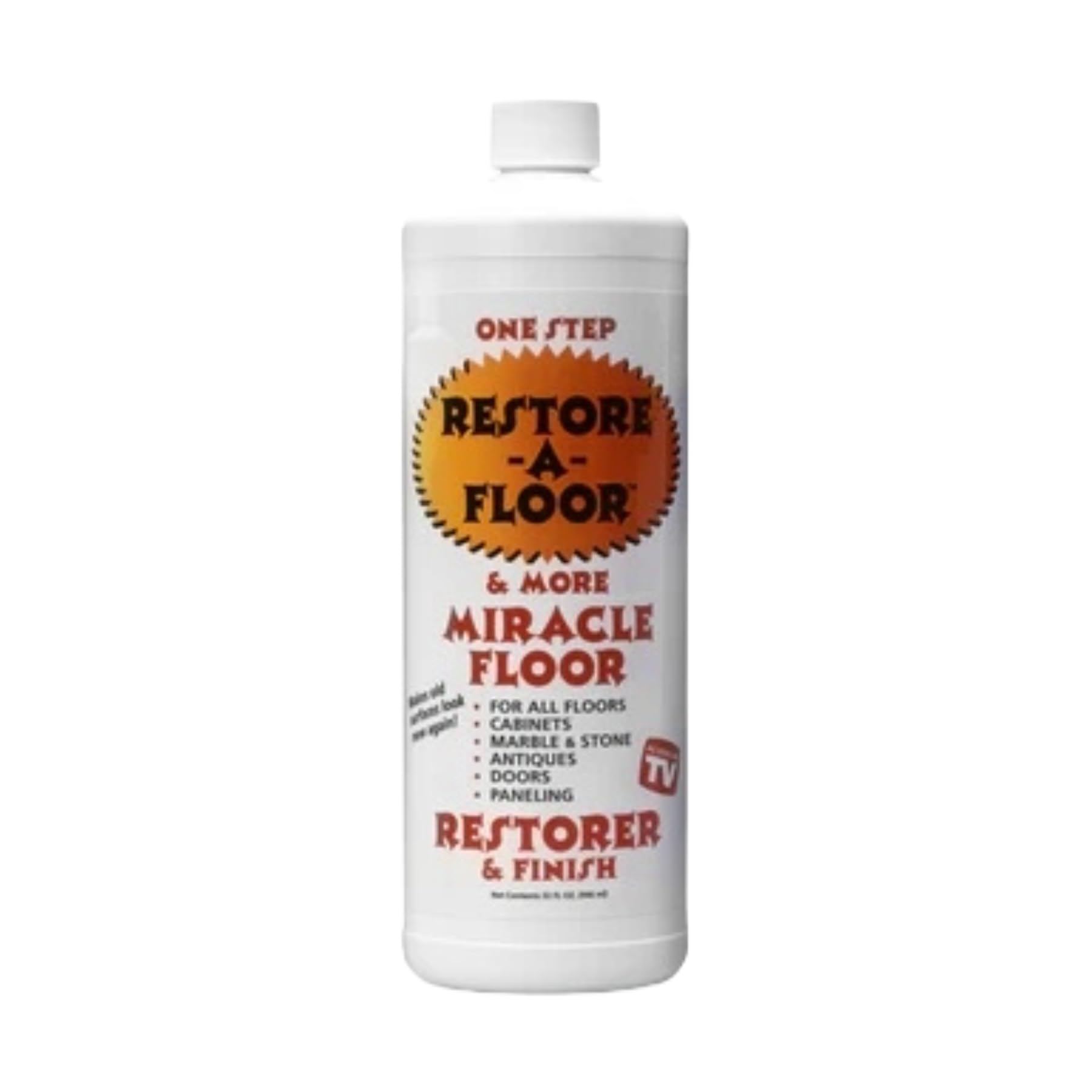
Look for an acrylic finish. Acrylic dries into a clear film that sits on top of the tile and can be stripped later. Paste wax on tile tends to smear and grab dirt. The All Floor Types Restorer & Finish is an acrylic formula, and it is why it can be reapplied without building up a yellow layer.
Match the product to the floor you actually have
Read the “for use on” line carefully. Some finishes are made for vinyl, linoleum, terrazzo, and sealed concrete but are not meant for natural stone. The Trewax Professional Gold Label Sealer lists vinyl, rubber, no-wax, linoleum, unglazed ceramic, terrazzo, sealed concrete, and asphalt. The Lundmark Super Gloss lists resilient tile, VCT, LVT, and laminate.
Work out coverage before you commit
Coverage is quoted as square feet per bottle. The All Floor Types restorer covers up to 600 sq ft from one 32 oz bottle. The Lundmark gallon is quoted at 500 square feet per quart when you apply 2-3 coats. If your kitchen is 150 sq ft, that tells you how many coats you can afford to lay down.
Prep is the whole job
Every finish here fails if the tile is not clean and dry first. Old wax, grease, and mop residue get sealed under the new coat and show up as cloudy patches. Strip or deep-clean first, let the tile dry completely, then apply in thin, even passes.
Side-by-Side Comparison
| Model | Best For | Finish Type | Coverage | Size | Amazon |
|---|---|---|---|---|---|
| All Floor Types Restorer & Finish★ Best Overall | Tile, stone, and mixed-surface homes | Acrylic, high gloss | Up to 600 sq ft | 32 fl oz | Amazon |
| Trewax Professional Gold Label SealerBest for Vinyl and Ceramic | Vinyl, linoleum, and unglazed ceramic | Acrylic, gloss | — | 2 x 32 fl oz | Amazon |
| Rejuvenate All Floors Restorer | Whole-home floors, one-coat touch-ups | Acrylic restorer | About 1,000 sq ft | 32 oz | Amazon |
| Armstrong Shinekeeper Resilient Floor Finish | Vinyl and linoleum tiles | Resilient floor finish, no buffing | About 400 sq ft | 32 oz | Amazon |
| Lundmark Super Gloss Acrylic | Large tile floors and heavy foot traffic | Acrylic wax, extra heavy-duty | 500 sq ft per quart, 2-3 coats | 1 gallon | Amazon |
Detailed Reviews
1. All Floor Types Restorer & Finish
Our pick — 4.5+★ from 550+ verified ratings; the strongest balance of quality and price.
One bottle of acrylic restorer that covers 600 square feet and makes dull tile look wet again.
This is the pick for a home with mixed floors. The All Floor Types Restorer & Finish is an acrylic formula that lists hardwood, laminate, vinyl, tile, marble, stone, and concrete as fair game. If your kitchen has tile, your hallway is laminate, and you want one bottle for both, this handles it. That is the reason it takes the top spot.
What wins people over is the shine. The finish is a clear, high-gloss film that fills light scratches and surface scuffs as it goes down. It is a concentrated formula, so one 32 oz bottle reaches up to 600 sq ft — enough for a good-sized kitchen and a small bath in one pass. The finish is non-yellowing, which matters on light tile where the wrong product turns cream over time.
Application is a mop job, not a machine job. Clean the tile, apply with a sponge mop or microfiber applicator, let it dry, and you have a renewed surface. Drying is quick, and the finish is designed to be reapplied without building up a thick layer. The honest catch is prep: this is a polish, not a cleaner. It seals in whatever is on the floor, so a greasy or half-waxed tile turns cloudy. Matte streaks are the recurring gripe when the floor was not fully clean or when coats went on uneven.
What earns it the crown
- Approved for tile, marble, stone, laminate, and vinyl, so one bottle covers the whole house.
- Up to 600 sq ft per 32 oz bottle, the widest quoted coverage on this list.
- Non-yellowing acrylic that can be reapplied without a buildup layer.
- Dries fast to a slip-resistant, high-gloss film.
Where it makes you work
- Seals dirt in if the tile is not stripped and clean first.
- Uneven coats or a rushed prep show as matte streaks.
- Dogs and cats walking on fresh finish dull the shine sooner.
Reach for this if: your floors are a mix of tile, stone, and laminate and you want a single acrylic product for all of them. It sits at 4.5+ out of 5 across 550+ ratings, the top score on this list.
Look elsewhere if: you will not spend the time stripping old wax first — that prep step is what keeps this finish clear.
2. Trewax Professional Gold Label Sealer 2 Pack
Two bottles of old-school acrylic sealer for unglazed ceramic and vinyl that need a hard, glossy shell.
If your tile is unglazed ceramic, vinyl composition tile, or linoleum, this is the match. The Trewax Professional Gold Label Sealer is an acrylic sealer that also finishes in one step, so it protects and shines in the same pass. It lists unglazed ceramic, vinyl, rubber, no-wax, linoleum, terrazzo, sealed concrete, and asphalt. That is a wider job list than the All Floor Types pick in one category and narrower in two — there is no hardwood or stone on the Trewax label.
The shine is the thing people talk about, and then the sealing. The acrylic film is non-yellowing and dries to a gloss that resists scuffing, heel marks, dirt, and stains. It is a two-pack, so you get two 32 oz bottles — enough to do a whole floor in multiple coats and still have a bottle for a re-coat later. It is a liquid, not a paste, so it flows out with a mop or applicator instead of needing a buffer.
Here is the trade-off you should weigh. The floor-protection side draws mixed feedback — the shine is the star, and the protective layer is the part people are less sure about long term. It also needs a clean, prepped floor; used over an unwaxed or dirty tile, it clouds. On a garage concrete floor, it added real luster and held up to foot traffic and tracked dirt, but it did not hide scratches — it only softened their look.
Where it fits best: a vinyl, linoleum, or unglazed ceramic floor that you want to look new without a buffer. The two-pack gives you room to re-coat.
What to know before you buy: it is a sealer and finish, not a cleaner, and it is not the pick for polished stone or sealed hardwood. Buy it for the resilient floors the label actually names.
Who it beats and who it does not: it is the more sensible choice than the All Floor Types restorer if your floor is unglazed ceramic or VCT, since it is built for those surfaces and comes as a two-pack.
The single caveat: do not expect it to erase scratches or protect a floor that is not already clean and prepped.
3. Rejuvenate All Floors Restorer 32 Oz

A squirt-and-mop restorer that reaches roughly 1,000 square feet and dries walkable in about an hour.
Need a floor you can use again the same afternoon? This is the one. Rejuvenate All Floors Restorer is a one-coat restorer made for unwaxed, polyurethane-finished hardwood, laminate, vinyl, and tile — and unlike the Trewax two-pack, it is not limited to vinyl-family floors. One bottle is quoted at about 1,000 sq ft, the largest coverage claim here, so a whole open-plan tile-and-wood main floor fits in one pass.
What people are after here is the shine, and it delivers a more subtle version than the high-gloss picks. It brings dull, scuffed tile and vinyl back to a clean luster without a mirror finish. The application is the easy part: squirt and mop with a microfiber pad, overlap strokes, and it stays streak-free even where you double back. It dries walkable in about an hour and has minimal odor, so a bathroom or kitchen is back in service fast.
The catch is honesty about what “fills scratches” means. It improves the look of scratches, but it does not erase them — several floors come out softer in texture, not flawless. Durability is the real question, and the answer is variable: some floors hold the finish a long time, others wear within three months in high-traffic spots. Some find removal hard when it is time to strip and redo.
The value read: at 4.5+ out of 5 across a deep pool of 15,000+ ratings, it is the crowd favorite on this list. The coverage-per-bottle math is the strongest part of the case — one bottle, roughly 1,000 sq ft, one coat.
The thing to size up: this is a restorer for shine and scuffs, not a scratch-filler and not a long-life coating. Plan a re-coat in busy rooms.
Suits you if: you want a quick, streak-free refresh across tile, vinyl, and sealed wood in one bottle without a two-coat project.
Think twice if: you need the finish to shrug off heavy foot traffic for a full year — re-coating is part of the deal.
4. Armstrong Shinekeeper Resilient Floor Finish 32oz
A ready-to-use vinyl and linoleum finish that renews worn floors without a buffer or a machine.
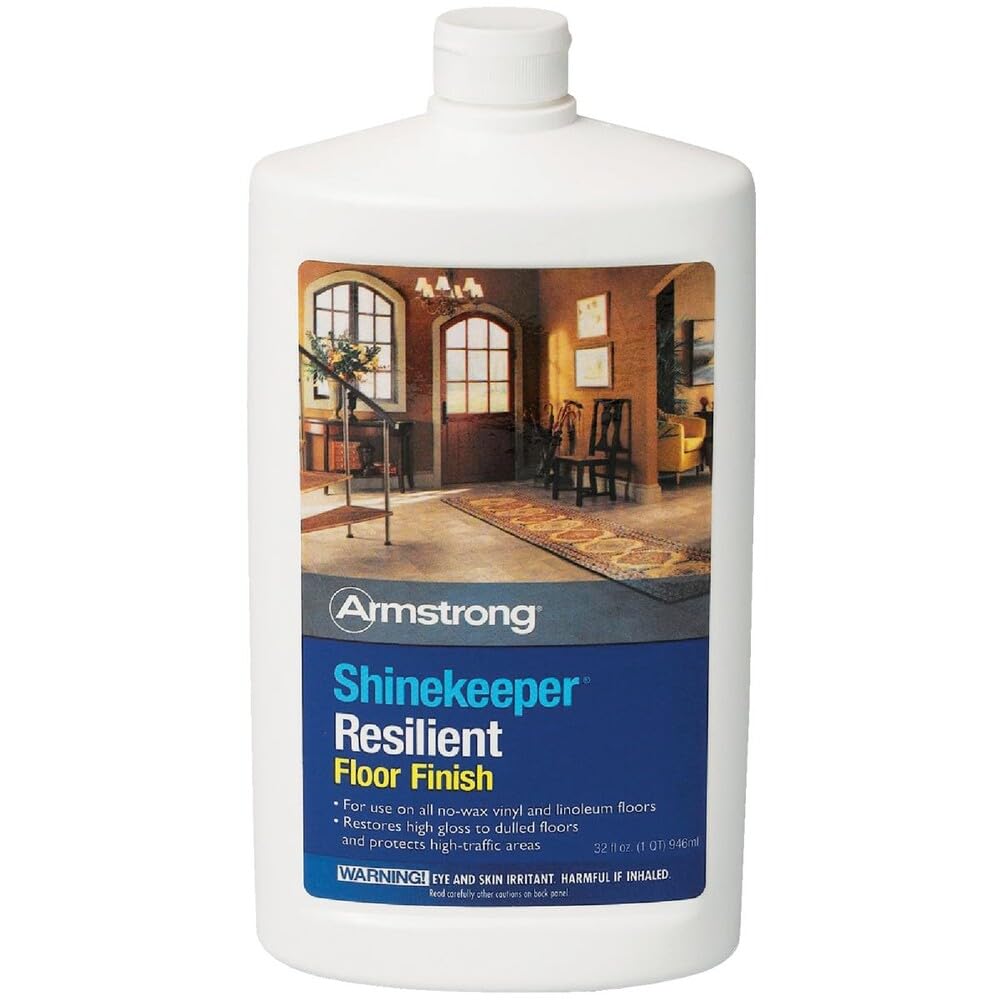
This one is the no-buff option, and that single line — does not require buffing — is why it belongs on a shortlist for older vinyl and linoleum tile. Armstrong Shinekeeper is a resilient floor finish that renews the look of worn, dulled floors and protects against scuffs, scratches, and dirt. It is ready to use, so there is nothing to mix or dilute before you start.
The appearance is the first thing owners mention, with cleaning performance close behind. That pairing is the real story: the finish goes down glossy, and then the floor is easier to clean because spills and dirt sit on the film instead of in the tile. One 32 oz bottle is quoted at about 400 sq ft, and the finish holds up — still shiny and easier to clean months after application, and it survives a floor scrubber without coming off.
The catch is the floor it was made for. This is a resilient-floor product, and the label explicitly says it is not for low-gloss vinyl floors. It also wants a thoroughly cleaned surface before the first coat — every note about this finish starts with cleaning the floor very well, and that prep is what gets you the even, bright result. Plan on two to three coats with drying time between them if your floor is tired.
The standout: a bright, even finish that dries fast — a mid-century or 80s vinyl floor comes back looking like new with three coats and 30 minutes between each.
The honest limit: it is a vinyl-and-linoleum finish, not a universal tile product. On stone or sealed hardwood, pass it over for the All Floor Types restorer above.
The floor it is made for: old vinyl tile, linoleum, and PVC that has gone dull and needs a fast, no-machine refresh. It sits at 4.5+ out of 5 across 450+ ratings.
The floor to keep it off: low-gloss vinyl, natural stone, and anything the label does not name.
5. Lundmark Super Gloss Acrylic 1-Gallon

A one-gallon jug of commercial-grade acrylic wax for tile floors that see real traffic.
Take a 1-gallon bottle of extra heavy-duty finish and you are buying volume and durability, not a touch-up. Lundmark Super Gloss Acrylic is made for resilient linoleum, vinyl composition tile, vinyl tile, asphalt tile, asbestos tile, laminate flooring, and luxury vinyl tile. It is a ready-to-use liquid wax that dries to a high gloss and meets or exceeds ASTM slip-resistance standards.
Shine is the reason people keep buying it, and drying speed follows. One coat dries in 30-45 minutes to a mirrored finish, and three coats last months on a busy floor. The coverage math is quoted at an average 500 square feet per quart when applying 2-3 coats, so a gallon does a lot of floor — a gallon has lasted one buyer about 1.5 years of regular use. Build-up comes off with an ammonia and hot-water mop when it is time to start fresh.
Here is the honest point to weigh. Some floors do not come out as glossy as the name suggests — on travertine tile, two coats left a sheen, not a high-gloss mirror. And the big one: this is a resilient-tile-and-laminate product in intent, but it is not for wood. It can curl the edges of laminate and wood floors, so keep it to genuine tile and vinyl-adjacent surfaces and skip it on anything wood-based.
The volume case: a gallon at 4.5+ out of 5 across 1,400+ ratings, with 500 sq ft per quart at 2-3 coats, makes it a workhorse for a large tiled kitchen, bath, or hallway.
The line to respect: do not run this over wood-based laminate or real wood. Use it on tile, VCT, LVT, and linoleum.
Where it shines: large tile and vinyl floors in heavy-traffic homes where one small bottle would not cover the job.
Where it does not: wood and laminate floors, and anyone chasing a mirror gloss on travertine or textured stone.
Know the Specs
Acrylic vs. Paste Wax
Acrylic is a liquid resin that dries into a clear, removable film. Paste wax is a solid that needs buffing and can smear on a slick tile face. The acrylic picks here — the All Floor Types restorer, the Trewax sealer, and the Lundmark Super Gloss — all lay down a film you can later strip rather than work into the surface. That film is what gives tile its gloss and protects it from mop water.
Coverage in Square Feet
Coverage tells you how far one bottle goes. It is quoted as square feet per bottle or per quart at a set number of coats. A 600 sq ft claim on a 32 oz bottle and a 500 sq ft per quart claim on a gallon are different sizes of job, so measure your floor before you buy two bottles of the wrong thing. More coats mean more coverage used.
Sheen Level
Sheen is the amount of shine, from matte through satin to high gloss. Tile usually wants high gloss. But a “high gloss” claim still depends on the floor underneath — textured stone and travertine read duller, and a smooth vinyl tile reads brighter. Pick the sheen for the floor you actually have, not the label you want.
Drying and Walkable Time
Drying time is how long the film takes to set; walkable time is when you can step on it without leaving marks. Some finishes dry walkable in about an hour, some recommend waiting overnight. A fast dry lets you do a second coat the same day, so factor it into a two-coat plan.
Common Questions
Can I use floor wax on ceramic or porcelain tile?
Do I have to strip old wax before applying a new coat?
How many coats should I apply for a high gloss?
Will floor wax make my tile slippery?
How long does a waxed tile floor stay shiny?
Can I use a steam mop or wet mop on a waxed floor?
Is acrylic floor wax safe for pets and kids?
What is the difference between a restorer and a sealer?
The Bottom Line
The winner, and the one to put in your cart, is the All Floor Types Restorer & Finish. It is the only pick here that names tile, marble, stone, laminate, and vinyl on the same label, and its 600 sq ft coverage per bottle stretches across a whole floor. The Rejuvenate All Floors Restorer is the one for quick one-coat refreshes across a big main floor. If your floor is unglazed ceramic or vinyl composition tile, the Trewax Gold Label Sealer is built for exactly that surface. And for a large tiled area that takes real traffic, the Lundmark Super Gloss gallon is the workhorse. One honest nudge: the Rejuvenate is the crowd favorite by volume, but the All Floor Types pick holds the highest score on the list at 4.5+ out of 5 — that is the one to buy for tile first.
How we choose
We do not accept paid placement. Every pick is matched to a real buyer and a real use-case; we do not hands-on test units.
Sources
Specifications: manufacturer listings and product documentation. Review insights: verified customer reviews, as of October 2026. Pricing: not shown on this page (it changes often); check the current price via the retailer link.
As an Amazon Associate, Aappliancez earns from qualifying purchases. This does not affect which products we feature.