Disclosure: Some links in this post are affiliate links. As an Amazon Associate I earn from qualifying purchases, at no extra cost to you. Learn more
Specs are compiled from manufacturer listings and verified buyer reviews and can change over time — please confirm the key details on the product page before buying.
A watch that slips on a narrow wrist or presses into the bone during sleep gives you messy overnight data — and messy data is worse than no data. So the real shortlist is about case size, band comfort, and whether the health features you actually care about (cycle tracking, sleep scoring, heart alerts) are on the watch you can stand to wear for 18 hours straight. Below you get eleven tested-by-owners options, separated by wrist size and by what you want the watch to do overnight.
This guide is built by comparing the manufacturers’ published specifications and the patterns across verified customer reviews, so you get each pick’s real strengths and trade-offs instead of marketing spin.
Every pick here was judged on the same three questions: does the case fit a smaller wrist, does the health data hold up overnight, and will you still be wearing it in month six. The result is a shortlist of the best health watches for women, ordered by who each one actually suits rather than by sticker price.
Top Picks

How To Choose The Best Health Watches for Women
You are not shopping for a screen. You are shopping for a sensor that has to sit flat against the underside of your wrist all night, on a wrist that is probably narrower than the one the product photos were shot on. Get the case size and band right and the overnight health data follows. Get it wrong and you will be re-seating a slipping case at 3 a.m. instead of sleeping in it.
Start with case size, not features
A 41mm or 42mm case is the comfortable middle for most women, and a 38mm case sits sleeker still. Anything in the high 40s is a large watch — it can work, but you will notice it against a sleeve and against your wrist bone during sleep.
Band material matters just as much. Silicone is the default and it is fine for swimming and showers. If you get irritation from silicone, a fluoroelastomer or stainless-steel band gives you a different surface against the skin, and several picks here ship with a spare band in the box.
Decide which health metric you actually want to watch
Sleep scoring is the most useful daily number for most people — it turns a night into a single figure you can compare across weeks. Heart alerts, which flag an unusually high or low heart rate or an irregular rhythm, are the feature you want if heart health is the reason you are buying. Cycle tracking and wrist temperature are the women-specific layer, and they only work if the watch is worn overnight.
SpO2 — the blood oxygen reading — is often taken on demand rather than continuously, and it drains the battery faster when it runs overnight. Treat it as a bonus, not the deciding spec.
Then check the battery math against your routine
A watch with an 18-hour battery needs a daily charge, so you build it into your shower. A watch rated for 6 days or 9 days lets you forget the charger on a weekend trip. There is no wrong answer, but be honest about whether you will actually charge daily.
Finally, check the phone in your pocket. Apple watches pair with iPhone. Samsung watches pair with Samsung phones for the full feature set, and some features are reduced on other Android phones. Pixel watches want a recent Android phone. Getting this wrong is the most common reason a good watch disappoints.
Side-by-Side Comparison
| Model | Best For | Case Size | Battery Rating | Phone Pairing | Amazon |
|---|---|---|---|---|---|
| Apple Watch Series 11 [GPS 42mm]★ Best Overall | All-round health tracking | 42mm | Up to 24 hours | iPhone | Amazon |
| Samsung Galaxy Watch 7 40mmBest for Small Wrists | Small-wrist Android users | 40mm | 30 hours | Samsung / Android | Amazon |
| Apple Watch SE 3 [GPS 40mm]Best Battery Runner-Up | First Apple Watch | 40mm | 18 hours | iPhone | Amazon |
| Google Pixel Watch 4 (41mm) | Android with Gemini | 41mm | Up to 30 hours | Android 11.0+ | Amazon |
| Garmin Lily 2 Active | Style plus multi-day battery | 38mm | Up to 9 days | iOS / Android | Amazon |
| Garmin vivoactive 6 | Sleep coaching | — | Up to 11 days | iOS / Android | Amazon |
| Samsung Galaxy Watch Ultra 47mm | Rugged training | 47mm | 2 days | Samsung / Android | Amazon |
| Withings ScanWatch Nova | Analog looks, month-long battery | — | 30 days | iOS / Android | Amazon |
| Fitbit Versa 4 | Everyday fitness basics | — | 6+ days | iOS / Android | Amazon |
| Withings ScanWatch Light | Hybrid simplicity | — | 30 days | iOS / Android | Amazon |
| Fitbit Sense | Stress and temperature sensing | — | 6+ days | iOS / Android | Amazon |
Detailed Reviews
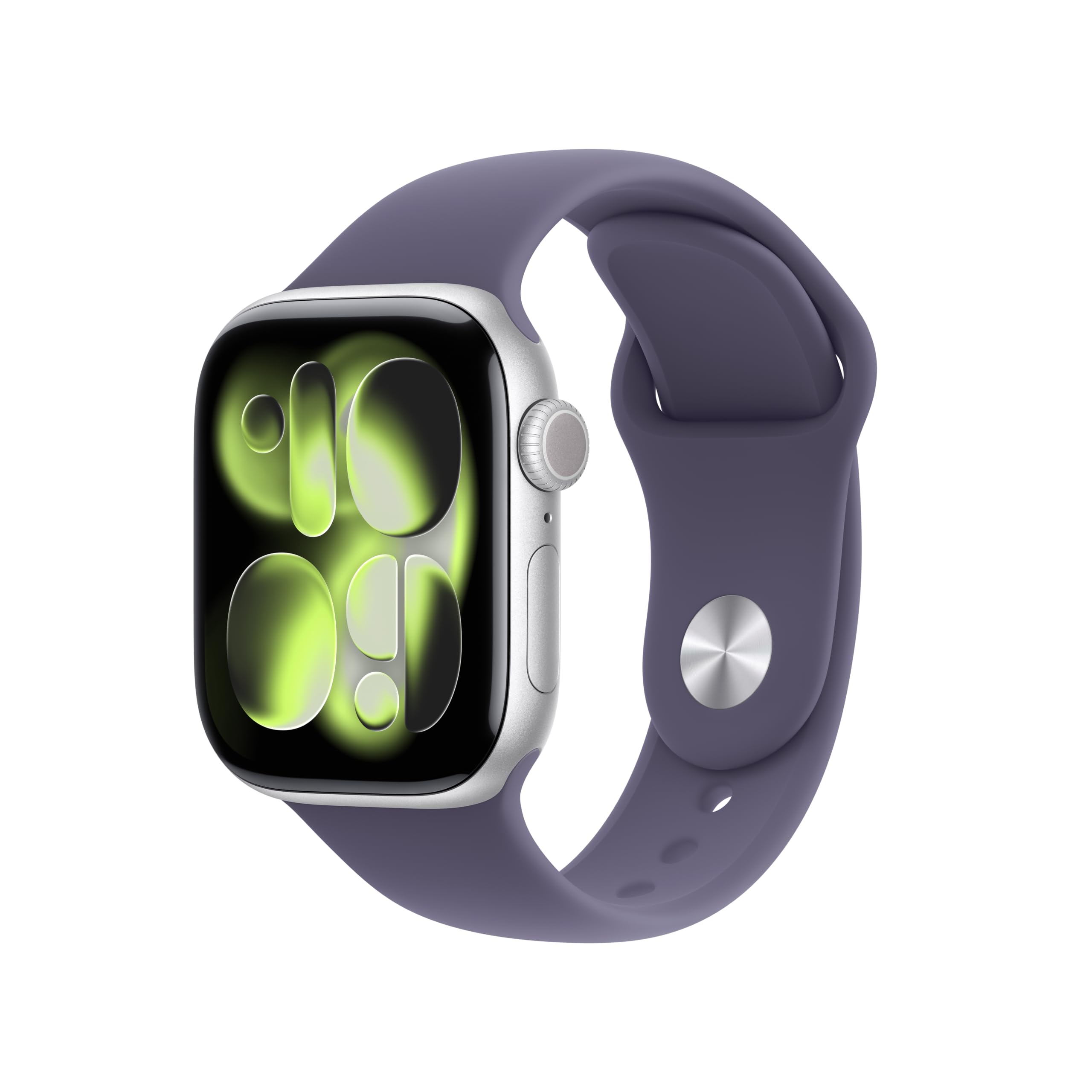
1. Apple Watch Series 11 42mm
Our pick — 4.5+★ from 9,000+ verified ratings; the strongest balance of quality and price.
The 42mm case that turns a full night of sleep into one score you can act on.
You get a case that sits flat through the night and stays readable mid-workout: 42mm. At 1.12 ounces it is light on the wrist, so owners end up sleeping in it instead of taking it off at bedtime. That matters, because the Series 11 is built for the overnight picture. You get a daily sleep score, a Vitals app that shows your overnight health metrics, and a notification if the watch picks up signs of possible sleep apnea (pauses in breathing during sleep).
Heart health is the other headline. You can take an ECG — a one-lead heart rhythm reading — any time you want, and the watch alerts you to a high heart rate, a low heart rate, or an irregular rhythm. It can also flag signs of possible hypertension by reading how your blood vessels respond to each heartbeat. For safety, it detects a hard fall or a severe car crash and can call emergency services for you.
You will charge this watch every day — that is the honest trade-off. Apple rates the battery at up to 24 hours of normal use, and 15 minutes of fast charging buys up to 8 hours, so a quick charge in the shower is genuinely enough. One buyer reports “Battery ~70% at bedtime, quick top-off.” That is a real all-day number, but it is still a charge-every-day watch. If you want to leave a charger behind on a weekend trip, this is not that watch. The display is superdurable glass, so it shrugs off keys in a bag. The case is water resistant up to 50m with IP6X dust resistance (the top dust-sealing rating), so swimming and paddleboarding are fine.
What earns its place up top
- 42mm aluminum case at 1.12 ounces — light enough to sleep in every night without noticing it
- ECG readings plus high, low, and irregular rhythm alerts give you a heart record to bring to a doctor
- Sleep score and overnight Vitals metrics in one place, with possible sleep apnea notifications
- 15-minute fast charge returns up to 8 hours of use, so a shower is enough to keep it alive
Where you will feel the limit
- Up to 24 hours per charge means a nightly routine — there is no multi-day buffer here
- iPhone required; this watch will not pair with an Android phone
- Hypertension and sleep apnea notifications are flagged as possible signs, not diagnoses
Made for you if: you carry an iPhone and want the most complete overnight health picture on a 42mm wrist.
Think twice if: you want to sleep in the same watch for four or five nights between charges.
2. Samsung Galaxy Watch 7 40mm
A 40mm case that reads a cream band as jewelry, then flat-out tells you how ready you are today.
If you have a narrow wrist, the number that decides this one is 40mm. That is the smaller of Samsung’s two Galaxy Watch 7 sizes, and it disappears under a cuff instead of catching on it. The band is thermoplastic polyurethane (a flexible, sweat-tolerant plastic) with a buckle closure, so it stays put through a sweaty workout. The case comes in a cream finish that owners clearly respond to; the look of this watch is far and away what people bring up first.
The health layer is where the Galaxy AI branding actually does something. Your Energy Score takes yesterday’s activity, sleep, and heart rate and turns it into one readiness figure for today. Heart Rate Tracking filters out your body’s movement so the reading holds steady mid-workout. Sleep tracking spots moderate to severe sleep apnea, and Wellness Tips push personalized suggestions from your phone based on what the watch collected.
Expect to charge every couple of days — a real catch in a wrist this size. Samsung rates the battery at 30 hours with a 300mAh cell (the battery’s capacity). The good news: owners who turned the always-on display off report stretching it to about three days. Buyers who accept a daily top-off get far more out of it than the ones who leave the display lit. It pairs best with a Samsung phone; on other Android phones some features are trimmed.
Readiness in one number: the Energy Score is the feature that keeps this watch on a wrist — it converts yesterday’s sleep, heart rate, and steps into a single read on whether to push or rest today.
The honest maths on battery: 300mAh and a 30-hour rating means a charge every second day for most people, so budget the habit before you buy, not after.
Pick this one: if your wrist runs small and you want a daily readiness score without a bulky square case.
Look elsewhere: if you expect to leave the charger at home for a week.
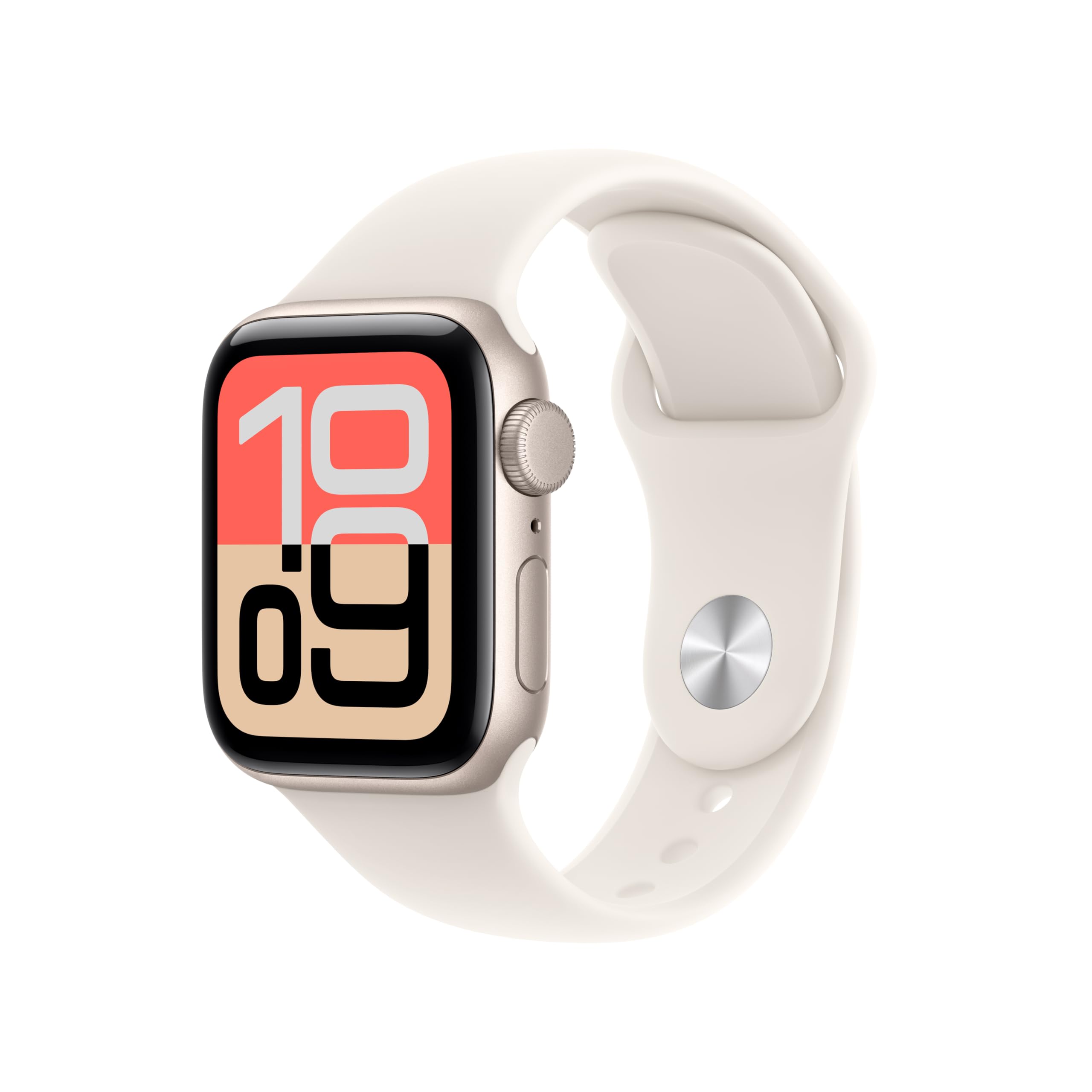
3. Apple Watch SE 3 40mm
The 40mm entry point that still gives you wrist temperature, sleep apnea alerts, and an always-on screen.
If the Series 11 above is the finished article, the SE 3 is the version that keeps the women-specific health layer and drops the extras. It ships in a 40mm case at 0.96 ounces versus the Series 11’s 1.12 ounces, and that lower weight is a genuine factor in whether you keep it on overnight. The always-on display stays readable without a wrist raise, which sounds minor until you are half asleep and want the time without a full screen flash.
What survives the downgrade is the part that matters most here. Advanced sensors track your wrist temperature while you sleep, you can log periods and symptoms, you get period predictions, and the watch notifies you of cycle deviations. You also get sleep score tracking, possible sleep apnea notifications, and alerts for an irregular rhythm or an unusually high or low heart rate. Fall detection and crash detection with automatic emergency calling are included too.
The charging story is the strong half of the battery picture: 18 hours of use, and a 15-minute charge returns up to 8 hours. That fast top-up makes the 18-hour rating far less annoying than it reads on the spec sheet, because a shower covers your evening. The caveat is simply that this is not a multi-day watch, and it needs an iPhone to work at all.
Reasons it lands on this list
- Wrist temperature plus period logging, period predictions, and cycle deviation alerts — the women’s health set survives intact
- 0.96 ounces in a 40mm case, the lightest Apple option here for all-night wear
- 15-minute charge gives up to 8 hours
- Always-on display and sleep score tracking at the entry Apple tier
Trade-offs worth knowing
- 18-hour battery rating means a daily charge is part of the routine
- No ECG on this model — that reading is reserved for the Series 11
- iPhone only, with no Android pairing option
Reach for this if: cycle tracking and wrist temperature are the features you came for, and you want the lightest Apple case.
Step up if: you want ECG readings and hypertension notifications, which only the Series 11 adds.
4. Google Pixel Watch 4 41mm

A 41mm domed face that finally pairs Android brains with a battery worth trusting.
You get a screen that is easier to read outdoors: the Actua 360 domed display on this 41mm case. It wears as a rounded, jewelry-like shape rather than a slab. The band is silicone in an iris colour, the case is aluminum, and the whole thing is built around a 325 battery capacity rating. Scratch-resistant Gorilla Glass covers that dome, which matters because the bezel is the first thing to catch a doorframe.
For the health side, you get 40+ exercise modes with real-time stats, high-precision dual-frequency GPS (two signal bands, so your route map stops cutting corners between tall buildings), and a full health tracking suite. Gemini is built in, which means you can ask a question out loud and get an answer on the wrist, and AI-powered quick replies handle texts. Up to 30 hours of battery, or up to 48 hours in Battery Saver mode, and the new side charging dock adds 15 hours in 15 minutes or less.
Owners consistently rate the look above everything else, and there is a practical detail worth knowing: at 41mm it sits well on a wrist around 6.25 inches. The honest limit is that the battery feedback is split — some get several days, others get about two — so how many health features you leave running decides which camp you land in. And it wants a recent Android phone, Android 11.0 or higher.
The 15-minute rule: a side dock that returns 15 hours of battery in 15 minutes or less changes this from a charge-daily watch into a charge-while-you-get-ready watch.
Fit and pairing reality: it is a 41mm aluminum case on a silicone band, and it needs Android 11.0 or above — an iPhone will not drive it.
The match: Android users who want a rounded 41mm case, Gemini on the wrist, and dual-frequency GPS for real routes.
The mismatch: iPhone owners, or anyone who wants the sleep-and-cycle depth of the Apple health stack.
5. Garmin Lily 2 Active 38mm

A 38mm patterned lens that hides a bright touchscreen until you tap it.
At 38mm with an anodized aluminum case, the Lily 2 Active is the smallest case on this list — and the one that solves a specific problem: it looks like a watch, not a notification machine. The lens has a subtle pattern that hides the screen until you tap it and the touchscreen lights up. Owners respond to that first and hardest; the look of this thing is what gets brought up most, and it is the reason a lot of people pick it over a bigger, brighter Garmin.
You get a fuller health package than the size suggests. It covers sleep score, respiration tracking, Body Battery energy monitoring (a running gauge of how charged your body is), all-day stress tracking, hydration tracking, and heart rate monitoring that alerts you when your heart rate runs high or low. A Health Snapshot feature captures a set of metrics in one go, and you also get menstrual cycle and pregnancy tracking — the women-specific set is all here. Built-in GPS handles outdoor runs and rides, and there are sports apps for yoga, Pilates, cardio, dance fitness, and golf.
Battery is the number that sells it: up to 9 days, from a 180mAh cell. GPS use will pull that down, but 9 days means you are not fighting the charger every night. The honest caveats are price relative to a grayscale interface, and a learning curve — Garmin’s menu system is deeper than an Apple or Samsung watch, and it takes a week to feel natural.
The case for the Lily 2 Active
- 38mm anodized aluminum case — the smallest on this list, and the most jewelry-like
- Up to 9 days of battery from a 180mAh cell, so charging is a weekly chore not a nightly one
- Cycle and pregnancy tracking, stress tracking, Body Battery, and heart rate alerts in one small package
- Built-in GPS with yoga, Pilates, dance fitness, and golf apps
What you give up
- A grayscale interface that costs more than you would expect at this level
- The menu system takes real time to learn — allow a week before judging it
- Not a full smartwatch: notifications arrive, but complex replies do not
Suits you: if a 38mm case and a watch that looks like a watch matter more than a bright always-on screen.
Not for you: if you want app-level smarts or a colour display that stays lit.
6. Garmin vivoactive 6
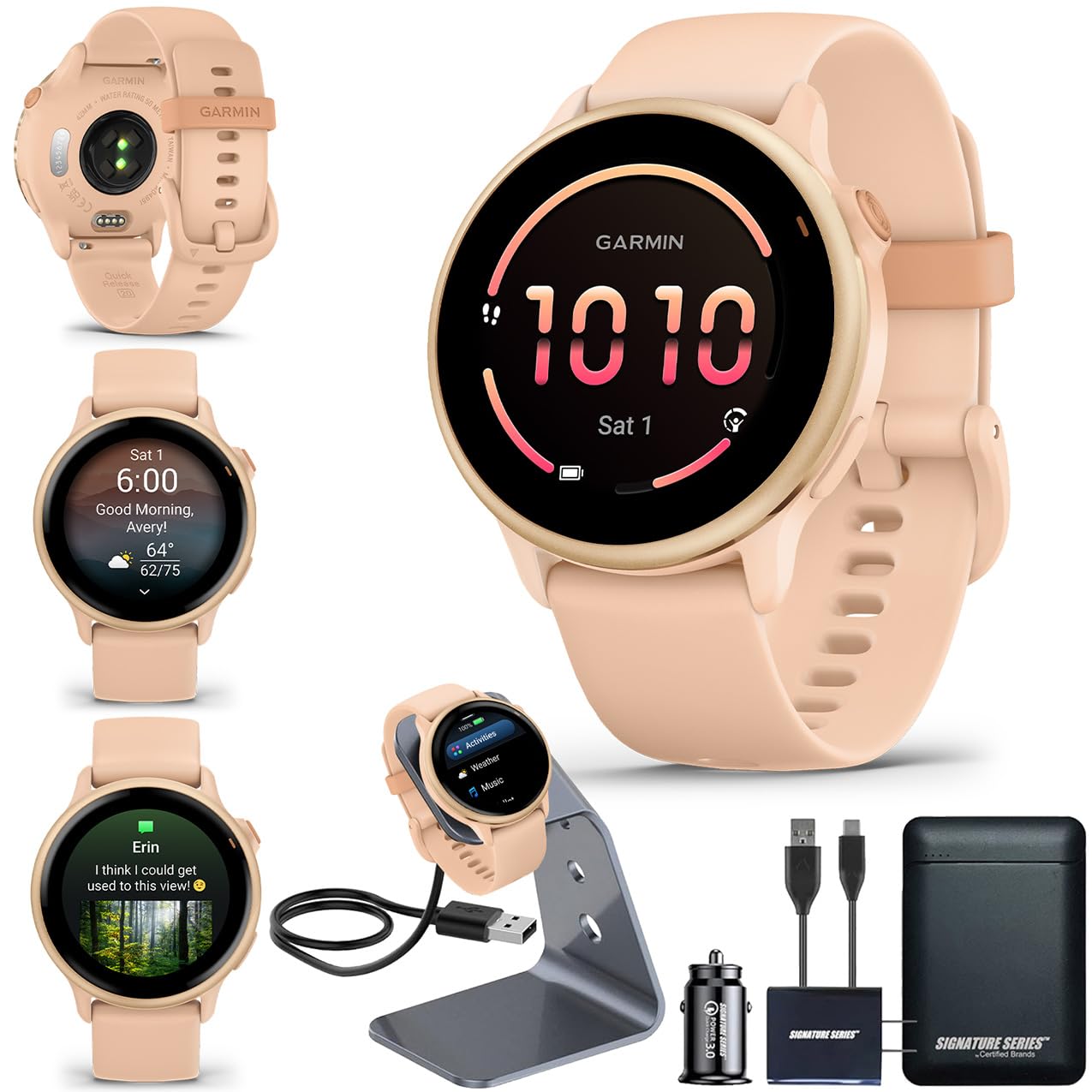
Eleven days of battery, an AMOLED screen, and a coach that wants you to sleep better.
Eleven days. That is the number that separates the vivoactive 6 from every charge-daily watch above — up to 11 days in smartwatch mode, which turns the charger into a travel item rather than a nightly ritual. The screen is AMOLED, so it is bright and colour rather than the grayscale of the Lily, and the silicone band comes in Pink Dawn with Garmin Pay for contactless purchases.
The health logic is built around rest. Sleep Coach gives you a tailored sleep score plus auto nap detection, and the smart wake alarm vibrates to wake you at what it judges the optimal moment. Body Battery Energy Monitoring reads metrics including HRV status — heart rate variability, the beat-to-beat variation that tracks how recovered you are — so you can see when you are charged up and when you need a breather. On the activity side there are over 80 built-in sports apps, blood oxygen tracking, fitness age, and a 5 ATM water rating for swimming.
Where it falls short of the Apple watches is setup and polish. Owners describe it as harder to set up than an Apple Watch, and it does not carry an ECG feature. The 41mm-class AMOLED body will also be a bigger presence on a narrow wrist than the 38mm Lily. If you want the deepest sleep and recovery coaching per charge, though, nothing here matches what 11 days buys you.
Sleep is the product: Sleep Coach, a tailored score, auto nap detection, and a vibrating smart wake alarm make this the pick if you are buying to fix your nights, not your workouts.
The setup tax: it asks more of you at the start than an Apple Watch, and there is no ECG — the payoff is up to 11 days between charges.
Choose it for: recovery and sleep coaching, with up to 11 days of battery so you never skip a night’s tracking.
Skip the sleep angle: if ECG readings and one-tap setup are the things you care about.
7. Samsung Galaxy Watch Ultra 47mm

A titanium 47mm tank with the biggest battery in this group, rated for ocean swimming.
This is the one for the woman who trains outdoors and does not want to think about the watch. The case is titanium, Samsung’s toughest build, rated to shrug off rain, dust, and ocean swimming. The 590mAh cell is the largest on this list and Samsung rates it at 2 days, with a 2-hour charge time.
The training side leans on Galaxy AI. Energy Score reads yesterday’s sleep, heart rate, and steps and scores your readiness today, and Heart Rate Tracking filters out the movement of your body so a mid-run reading is not thrown off by arm swing. Wellness Tips turn those insights into daily suggestions, and performance tracking lets you compare a run or ride against your last one. It is an LTE watch too, so it can stay connected without your phone sitting next to it.
Here is the part that decides it for a smaller wrist: 47mm is a large case, and owners say as much — the original band is wide and stiff, and several replace it immediately. The weight is real, the size catches on things, and a slim wrist will notice both. What you get in return is a durable training instrument with loud speakers for calls and multi-day use for people who switch the always-on display off. The look is also what buyers praise most, and it is a statement piece rather than a subtle one.
Built for the long session
- Titanium case rated for rain, dust, and ocean swimming — the toughest build here
- 590mAh battery, the largest in this comparison, rated at 2 days
- LTE connectivity so the watch works without your phone alongside
- Energy Score and movement-filtered heart rate tracking with Galaxy AI
What a small wrist will notice
- 47mm is a large case — expect to swap the stiff stock band for a softer one
- A 2-hour charge time is slow next to the fast top-ups Apple and Google offer
- Full features assume a Samsung phone
For the outdoor trainer: titanium durability, LTE freedom, and the biggest battery here, in a case that can take a beating.
Only if the size is fine: 47mm is a lot of watch, so try before you commit to all-day wear.
8. Withings ScanWatch Nova

A stainless-steel hybrid with real hands, a dedicated temperature module, and a month between charges.
Thirty days of battery changes what a health watch is. You stop planning your life around a charger, and overnight tracking just happens because the watch is always on your wrist. The Nova is a hybrid, which means analog hands over a real dial, a stainless-steel case and band, and a 2-hour charge that buys you a month of use.
You get a health set that justifies premium money for a hybrid. It includes 24/7 heart rate monitoring that notifies you if your heart rate runs too high or too low, plus overnight heart rate variability (the beat-to-beat variation in your pulse) so you can track heart health over time. A dedicated TempTech24/7 module tracks baseline body temperature and fluctuations, which is how the watch surfaces a temperature signal. On demand, you can take a blood oxygen reading (SpO2, the oxygen level in your blood) and track it overnight for breathing disturbances.
Sleep is broken out properly: duration, time in light and deep sleep, interruptions, regularity, and a Sleep Quality Score. Activity tracking covers 40+ auto-recognized activities, heart rate zones, VO2 max estimation for fitness level, and connected GPS. The catch is software. The app gets called lazy by owners, there is no on-watch alarm — you set one through a clunky time wheel in the app — and the battery is not user-replaceable. Buy it for the body and the health sensors; accept that the software side is the weakest link.
Temperature as a health signal: the TempTech24/7 module tracks baseline body temperature and fluctuations around it — a metric almost no other watch in this group carries on a dedicated sensor.
Software is the soft spot: no on-watch alarm, a clunky app time wheel, and a sealed battery you cannot swap out.
Right for: anyone who wants a month of battery, analog looks, and temperature plus overnight heart variability tracking.
Wrong for: someone who wants a polished app and on-watch controls for everything.
9. Fitbit Versa 4 Fitness Smartwatch – Pink Sand/Copper Rose

Six-plus days of battery, two band sizes in the box, and a Daily Readiness Score to plan around.
You get two band sizes in the box, so a narrow wrist gets a real fit rather than a compromise: the small fits wrists 5.1 to 7 inches around, the large fits 6.5 to 8.6 inches. That is more than most watches offer. The case is aluminum with a silicone band, and the 30-minute charge time keeps the in-between days short.
You get a health set built around fitness. A Daily Readiness Score tells you whether to work out or recover, and a built-in GPS plus workout intensity map shows where you pushed hardest. Active Zone Minutes count the time you spent at effort, and you get all-day activity tracking with 24/7 heart rate, 40+ exercise modes, and automatic exercise detection. Sleep is covered with daily sleep stages and a Sleep Score, a smart wake alarm, and a do-not-disturb mode. Stress management has a daily score, reflection logging, and guided breathing sessions, alongside SpO2 (blood oxygen) and menstrual health tracking.
Battery is the spec that makes the Versa 4 easy to live with: 6+ days of rated life, with 3 months of Google Health Premium membership included for the deeper analytics. The honest trade-off is accuracy during hard exercise — heart rate tracking during workouts is the recurring point of disagreement — so if you train deliberately at set heart rate zones, this is the weaker pick here.
What makes it the everyday default
- 6+ days of battery life, so overnight tracking happens without a nightly charge
- Small and large bands in the box — the small fits wrists 5.1 to 7 inches around
- Daily Readiness Score, Sleep Score, stress score, SpO2, and menstrual health tracking
- 3 months of Google Health Premium membership included
What it is not
- Heart rate during hard exercise is the recurring accuracy complaint
- No ECG, so no heart rhythm readings on this model
- Silicone band is the only option in the box, which some skin types dislike
Best first health watch: six-plus days of battery, two band fit options, and a full sleep-and-stress set without a daily charger.
Not the one: if you train by heart rate zone and need workout-grade accuracy over convenience.
10. Withings ScanWatch Light

A stainless-steel hybrid that reads as a normal watch and needs charging once a month.
The Look of a traditional watch, with a stainless-steel case and a fluoroelastomer band, is the whole opening argument for the ScanWatch Light — and it lands. It gets compared to a standard watch in the right way: people notice it because it looks good, and then find out it tracks heart rate, activity, sleep, and blood oxygen. Cycle tracking is in there too, which matters if that is why you are shopping.
Battery is the headline spec: 30-day battery life, which means one charge a month and no reason to take it off at night. Owners who bought it for that 30-day rating report going weeks between charges with 24/7 heart monitoring and overnight sleep tracking running the whole time. Connected GPS means the watch borrows your phone’s location rather than carrying its own antenna, so runs are mapped as long as the phone is with you.
Durability and accuracy are the honest limits. The functionality and step tracking split opinion, which is fair warning if you want lab-grade numbers. But if you want a watch that looks like jewelry and still counts your nights and your steps, this is the budget route into the hybrid idea above.
Looks first, tracking second: stainless steel and a fluoroelastomer band that reads as a normal watch, with heart rate, sleep, cycle, and blood oxygen tracking underneath.
Handle with care: the raised glass scratches easily — budget for a screen protector and treat the step count as a trend rather than a score.
Ideal pick: for someone who wants a month of battery and a watch that passes as jewelry in a meeting.
Wrong pick: if scratch resistance and step-count precision top your list over looks and battery.
11. Fitbit Sense

The entry ticket into ECG, skin temperature, and stress sensing on a silicone band.
The Sense carries sensors that usually sit higher up the price ladder: ECG, stress sensing, and a skin temperature sensor, packed into a 1.59in wide, 0.49in thick case on a silicone band with a tang buckle. That combination is the reason it stays on this list — if you specifically want a temperature and stress read on a budget, the spec sheet here is unusually generous.
Day to day, it handles calls, texts, calendar events, and app notifications with quick replies and voice replies from the wrist. Built-in GPS plus GLONASS maps your routes, a multi-path optical heart rate sensor watches your pulse, and IR sensors read oxygen saturation (SpO2). It is water resistant to 50 meters, saves 7 days of detailed motion data minute by minute, and is rated at 6+ days of battery life. The syncing range is up to 30ft, so you can leave the phone on a desk and still get notifications across a room.
Now the caveat, and it is the biggest one in this article. This is the oldest model here, and the longevity record is genuinely mixed — some units stopped powering on after a few months, and one buyer’s battery never held a charge past 24 hours. That is a real risk on an older platform, so buy it knowing the sensor set is the win and long-term reliability is the gamble. If a multi-year purchase is the goal, the newer Fitbit above is the safer version of the same idea.
Why it still earns a slot
- ECG, stress sensing, and a skin temperature sensor in one budget body
- Water resistant to 50 meters, with 6+ days of rated battery life
- Built-in GPS plus GLONASS and SpO2 sensors for outdoor runs
- Saves 7 days of minute-by-minute motion data
The aging-hardware warning
- Older generation: some units have failed to power on within months
- Battery life has come in far short of the 6+ day rating on some units
- Vibration is light and the touch experience is not as crisp as newer models
Worth it for: the budget shopper who wants ECG, stress sensing, and skin temperature in one package.
Know the risk: this is the oldest watch here, and some units have not reached their first birthday — buy it for the sensors, not for longevity.
Know the Specs
Sleep Score and Energy Score
A sleep score turns a whole night into a single figure — time asleep, time in deep and light sleep, and interruptions — so you can compare one night against the next week. An Energy Score (the Samsung name) or Body Battery (the Garmin name) works the other way: it takes yesterday’s sleep, heart rate, and steps and scores how ready you are today. Neither replaces a doctor’s sleep study; they are trend tools, and they only work if you actually wear the watch overnight.
Wrist Temperature, SpO2, and HRV
Wrist temperature is read while you sleep, which is why watches that track it ask you to wear them at night. SpO2 is the blood oxygen reading, often taken on demand rather than continuously, and running it all night drains the battery faster. HRV, or heart rate variability, measures the beat-to-beat variation in your pulse and is used to judge how recovered you are. A watch with a dedicated temperature module, a multi-path optical heart rate sensor, or IR sensors for SpO2 is doing more than averaging your pulse every few minutes.
Case Size and Wrist Fit
A 38mm, 40mm, 41mm, or 42mm case sits close to the wrist and is far easier to keep on overnight than a large watch. Anything in the high 40s is a large case that you will notice against a sleeve — and a 47mm titanium body with a stiff stock band is a different daily experience from a 38mm case on silicone. Check the band fit range too: a small band sized for wrists 5.1 to 7 inches is a different promise from a band you have to punch to fit.
Battery Life and Charge Time
Battery is the spec that decides whether overnight tracking happens. An 18-hour or 24-hour rating means a daily charge, and fast top-ups (15 minutes for up to 8 hours, or 15 hours in 15 minutes) make that routine bearable. A 6-day, 9-day, 11-day, or 30-day rating lets you forget the charger entirely. Read the charge time as well as the runtime — a 2-hour charge is a different commitment from a 30-minute one.
Heart Alerts and ECG
An ECG records the electrical signal of your heart from the wrist, while heart alerts notify you when your pulse goes unusually high, unusually low, or turns irregular. These are the features to prioritize if heart health is the reason you are buying. Most watches in this group flag possible signs rather than diagnosing anything, so treat a notification as a prompt to see a doctor, never as a diagnosis.
Phone Pairing and Apps
Apple watches pair with iPhone only. Samsung watches deliver their full feature set with a Samsung phone and trim some features on other Android phones. Pixel watches need Android 11.0 or higher. Garmin and Withings sit on their own apps and work with both iOS and Android. Getting this wrong is the most common reason a good watch feels broken on day one.
Common Questions
Will an Apple Watch work with my Android phone?
Which health watch is best for a very small wrist?
Do I have to wear the watch at night for sleep tracking to work?
What is the difference between a sleep score and an Energy Score?
Can a health watch tell me if I have sleep apnea?
How long does the battery really last on these watches?
Is water resistance enough to swim in these watches?
Do I need a subscription on top of the watch?
Which watches track menstrual cycles and pregnancy?
What is an ECG on a watch and do I need one?
The Bottom Line
For most women, the health watches for women winner is the Apple Watch Series 11 [GPS 42mm]. A 42mm aluminum case at 1.12 ounces is light enough to sleep in. The sleep score, Vitals app, ECG readings (a heart-rhythm reading), and hypertension notifications make it the most complete overnight health picture on a wrist that fits — the crowd favourite at 4.5+ stars across 9,000+ ratings.
If a 40mm case and a readiness score matter more, the Samsung Galaxy Watch 7 earns its place. If you want to stop charging nightly, the Garmin vivoactive 6 gives you up to 11 days and a real sleep coach, while the Garmin Lily 2 Active gives you the smallest 38mm case here.
And if you want to charge once a month, look at the Withings ScanWatch Light — a 30-day battery and a stainless-steel body that passes as jewelry, provided you add a screen protector and treat the step count as a trend rather than a score. The one question that decides long-term satisfaction: will you actually sleep in it? Pick the case size and battery rating you will genuinely keep on your wrist overnight, and the health numbers follow.
How we choose
We do not accept paid placement. Every pick is matched to a real buyer and a real use-case; we do not hands-on test units.
Sources
Specifications: manufacturer listings and product documentation. Review insights: verified customer reviews, as of October 2026. Pricing: not shown on this page (it changes often); check the current price via the retailer link.
As an Amazon Associate, Aappliancez earns from qualifying purchases. This does not affect which products we feature.