Disclosure: Some links in this post are affiliate links. As an Amazon Associate I earn from qualifying purchases, at no extra cost to you. Learn more
Specs are compiled from manufacturer listings and verified buyer reviews and can change over time — please confirm the key details on the product page before buying.
If you want one answer fast: buy the machine that brews the cup you drink every morning. A pod brewer wins for speed and zero mess, a drip machine wins for a full pot of ground coffee, and an espresso machine wins if you want a thick shot with crema on top. Paying more only helps when the money goes into the parts that touch your coffee — the heating system, the grinder, and the carafe — not a bigger screen or a fancier shape.
This guide is built by comparing the manufacturers’ published specifications and the patterns across verified customer reviews, so you get each pick’s real strengths and trade-offs instead of marketing spin.
Below you will find pod brewers, drip machines with thermal carafes, and full espresso setups, each matched to a specific kind of morning. Read on for the sharpest premium coffee maker picks for your counter and your morning routine.
Top Picks

How To Choose The Best Premium Coffee Maker
Two machines with identical wattage can brew completely different coffee, and the reason is water temperature. The Specialty Coffee Association — usually shortened to SCA, the industry body that sets brewing standards — says a drip brewer should hold water between 194°F and 205°F while it runs. Below that range you get a sour, under-extracted cup. Above it you scorch the grounds and taste ash. So the first thing to check on any premium brewer is whether it names its brew temperature range at all.
Decide your coffee format before anything else
A pod machine takes sealed K-Cup pods and finishes a cup in under a minute. A drip brewer takes loose ground coffee and makes four to twelve cups at once. An espresso machine forces hot water through finely ground coffee under pressure and yields one or two ounces with a layer of crema on top. Pick the format first, because no amount of spending turns a pod brewer into an espresso machine.
Match the carafe to your drinking window
A glass carafe sits on a heated plate that keeps coffee warm but slowly cooks it, changing the flavor after roughly an hour. A thermal carafe — a double-walled stainless steel pot with no heat source under it — holds temperature without that cooking effect. Machines with thermal carafes usually skip the hot plate entirely, which also means nothing to burn your hand on and nothing to scrape clean.
Check the footprint against your cabinets
Tall machines need clear space above them, not just counter area. A grind-and-brew unit can stand close to 18 inches high because the hopper and grinder sit on top, while a flat pour-over style brewer is often under 13 inches. Measure both the counter depth and the gap under your upper cabinets before you commit.
Side-by-Side Comparison
| Model | Best For | Capacity | Input Type | Carafe / Output | Amazon |
|---|---|---|---|---|---|
| Keurig K-Classic★ Best Overall | Fast single cups | 48 oz reservoir | K-Cup Pod | Single serve, 6 / 8 / 10 oz | Amazon |
| Ratio Six Series 2Top Performer | Small-batch drip coffee | 1.25 liters | Ground Coffee | Thermal carafe | Amazon |
| Gevi Grind & BrewMost Versatile | Whole-bean convenience | 10 cups | Whole bean | Glass carafe | Amazon |
| Breville Precision Brewer Glass | Custom brew profiles | 60 fl oz | Ground | Glass carafe | Amazon |
| Bonavita Enthusiast | Pour-over style simplicity | 8 cups (40 oz) | Ground | Thermal carafe | Amazon |
| Technivorm Moccamaster KBTS | Long-term repairability | 8 cups (32 oz) | Loose ground / beans | Thermal carafe | Amazon |
| Breville Luxe Brewer | Cold brew and custom profiles | 60 fl oz (12 cup) | Ground | Dual-wall thermal carafe | Amazon |
| Philips Baristina | No-skill espresso | 1.2 liters | Whole beans | Portafilter | Amazon |
| De’Longhi La Specialista Arte Evo | Manual espresso with a grinder | 3.5 pounds bean capacity | Ground | Portafilter, 15 bar pump | Amazon |
Detailed Reviews
1. Keurig K-Classic Single Serve K-Cup Pod Coffee Maker
Our pick — over 4.5★ from 109,500+ verified ratings; the strongest balance of quality and price.
The crowd favorite that finishes a single cup in under a minute.
If your morning is one cup on the way out the door, this is the machine that gets you there. Press the button, pick 6, 8, or 10 ounces, and coffee lands in your mug in under a minute. The 6-ounce setting is the one to use when you want the strongest taste from a pod, because less water runs through the same amount of coffee. The 48-ounce reservoir holds enough water for several cups before a refill, which is the container releasing from the rear so you can carry it to the sink.
What wins people over is the speed and the consistency of the cup — that is the part owners talk about constantly. There is a real long-haul story here too: buyers report using one machine for two to four cups daily for four straight years before it finally started cutting out on the brew button. Another ran from December 2016 into 2026. A brewer that survives nine years of daily pods points to a simple design with few parts to fail.
The honest catch is that the reliability record is genuinely mixed. Amazon’s own read of the review pool splits between owners whose machines keep working and others whose units stop powering on, with some failures inside the first couple of months. That is the highest-volume complaint in the whole review set, so frame it as a fit question rather than a defect. Pods also cost more per cup than loose grounds, and this brewer cannot make a large batch for guests.
Where It Wins Big
- Three pod sizes — 6, 8, and 10 oz — so you can go strong or go big without swapping machines.
- The 48 oz reservoir is removable, so refilling is a walk to the sink rather than a juggling act.
- Auto-off shuts the brewer down after two idle hours.
- Very little to clean: the drip tray at the base catches the mess.
The Trade-Offs
- Pods cost more per cup than ground coffee, and you cannot use loose grounds in it.
- The reliability record splits — some units stop powering on early.
- It is not the machine for a pot that serves four people at once.
Reach for this if: you drink one or two pods a day and want the cup finished before you find your keys.
Look past it if: you need a full carafe for a household, or you want to grind your own beans.
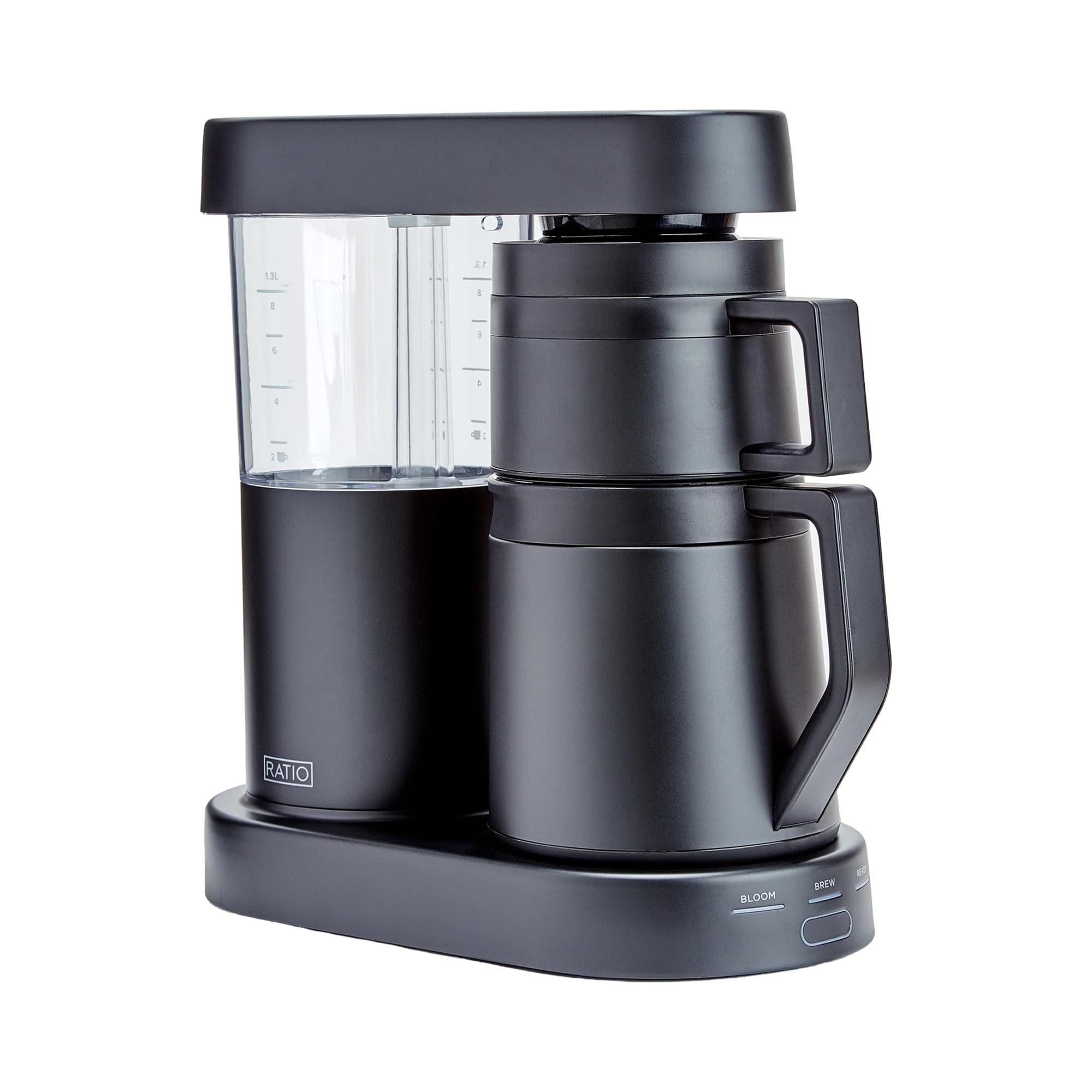
2. Ratio Six Series 2 Drip Coffee Maker
The small-batch brewer that treats a single mug like a full pot.
Ratio built this one for the person who makes a mug, not a pot. It brews 5 to 20 ounces at a time — enough for a solo morning or a travel mug, without brewing coffee you will end up pouring down the drain. It measures 7 inches deep, 12.5 inches wide, and 15 inches tall, so it tucks under cabinets where bigger drip machines will not fit.
The brewing approach is what justifies the tier. An automated bloom cycle wets the grounds and lets them release gas before the real pour begins, which is the same trick a barista uses by hand with a pour-over. Water travels up through a glass tube to a stainless steel showerhead, so plastic contact stays limited to the filter basket. Owners describe the finished cup as espresso-like rather than thin, and a brew takes about 6 to 7 minutes.
If your counter is tight, the size difference matters: the Gevi grind-and-brew measures 10.7 inches deep, 7.9 inches wide, and 17.8 inches tall, while this Ratio measures 7 inches deep, 12.5 inches wide, and 15 inches tall. So the Ratio is the shorter, shallower machine. One thing to know going in — the carafe lid tends to splash once you are about halfway poured, so go slow toward the end.
The case for it: a thermal carafe that holds heat all morning, a bloom stage that shows up in the cup, and a footprint built for small kitchens.
Go in with eyes open: the carafe is heavier than it looks and pours poorly at the end, and the value question splits — some owners think it earns its tier, others do not.
Best matched to: one or two coffee drinkers who want properly extracted drip without brewing a full pot.
Think twice if: you routinely serve four or more cups at once — this one runs out of batch size fast.
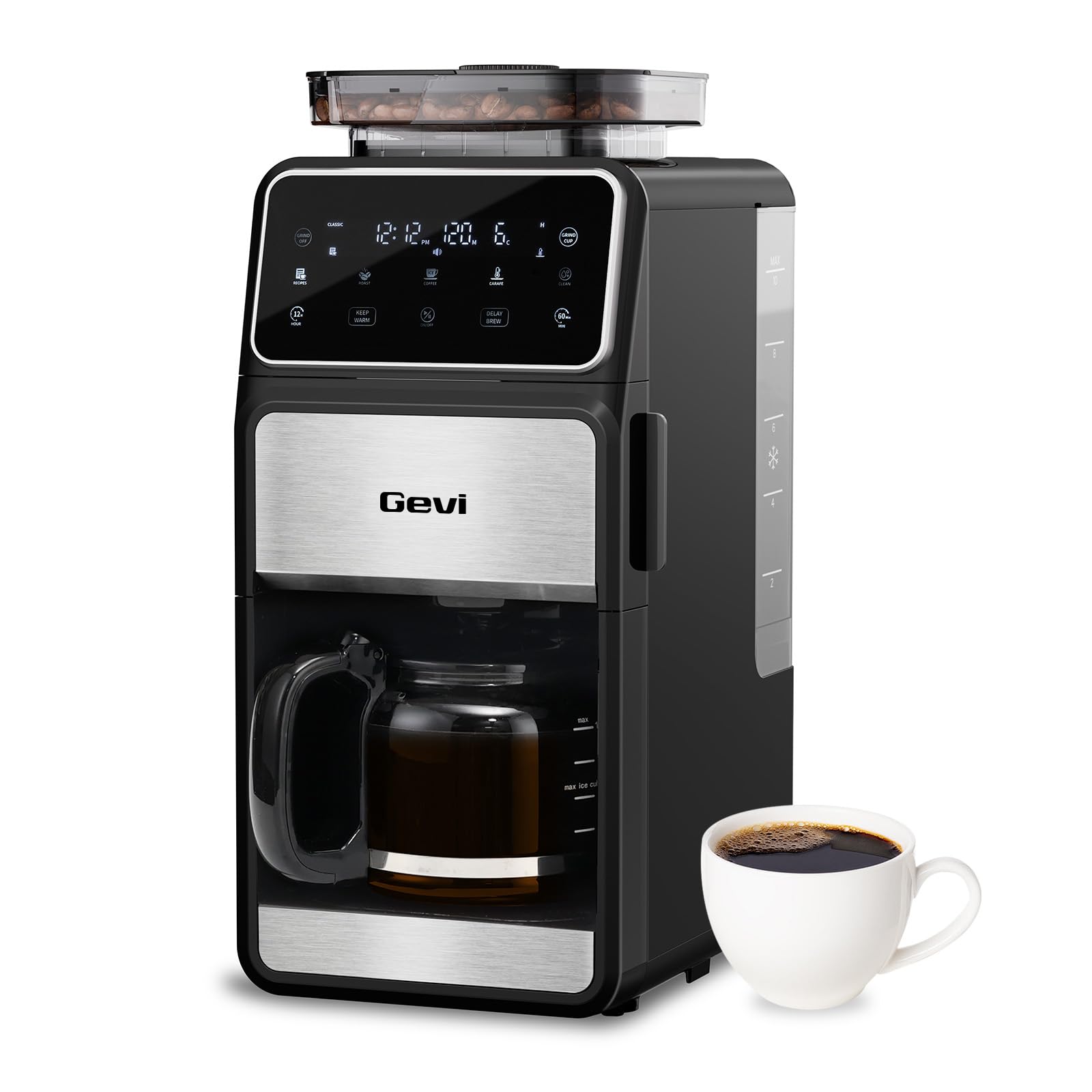
3. Gevi 10-Cup Grind & Brew Coffee Maker
Bean-to-carafe in one box, with a footprint that eats your cabinet clearance.
The pitch is simple: whole beans go in the top, ground coffee lands in the basket, and you never touch a separate grinder. It grinds fresh for 4 to 10 cups, and the touch panel also sets a keep-warm window you can stretch from 60 to 240 minutes. If you like dark roast and want the aroma of a fresh grind without a second appliance on the counter, that combination is genuinely appealing.
Where it falls down is under the hood. Amazon’s own summary of the reviews points to units that stop working within about two months, water leaking internally, and touch controls that quit responding. The burr itself earns credit for a consistent grind and the coffee quality is the bright spot in an otherwise rough record. Warranty is 12 months through authorized channels, and owners describe the service process as a slog.
Before you clear counter space, check the height: this machine measures 10.7 inches deep, 7.9 inches wide, and 17.8 inches tall, making it the taller, deeper option next to the Ratio Six, which measures 7 inches deep, 12.5 inches wide, and 15 inches tall. Measure your cabinet gap, because a grind-and-brew unit needs vertical room to load beans from the top.
The honest read: the concept is right and the grind quality is real, but the durability record is the weakest of anything on this list, so treat it as a light-use machine rather than a workhorse.
Buy it for: the convenience of fresh-ground coffee in a single appliance, at the entry end of the premium market.
skip it if: you want a brewer you can count on daily for years — this is not the one to bet your mornings on.
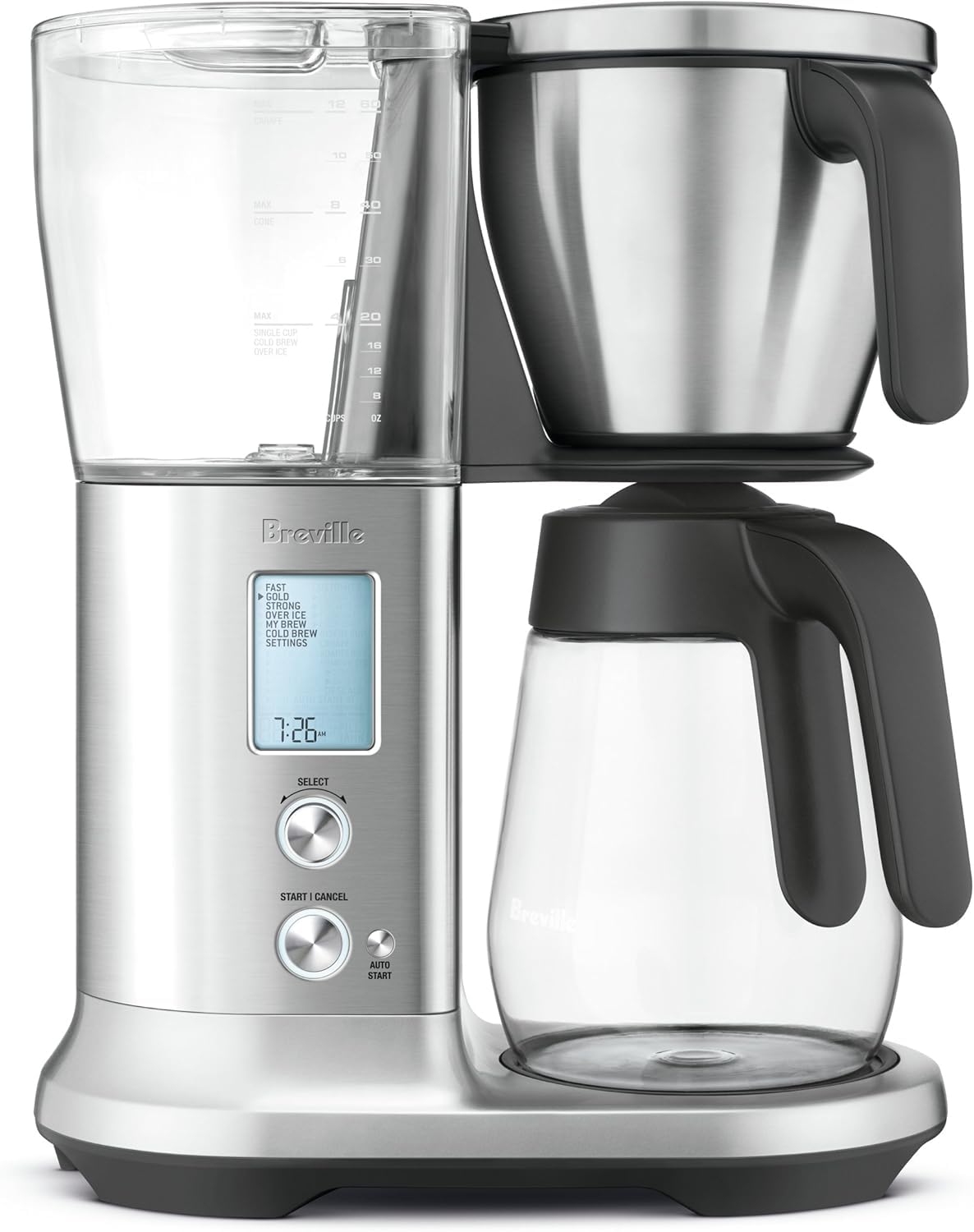
4. Breville BDC400BSS Precision Brewer Glass Carafe
Six brewing modes and a thermostat you can actually dial in by hand.
This is the brewer for someone who wants to fiddle. Six preset modes — Gold, Fast, Strong, Iced, Cold Brew, and My Brew — cover the common mornings, and the My Brew setting lets you change bloom time, brew temperature, and flow rate yourself. In the Gold Cup preset the machine adjusts its own water temperature and brew time to land inside the SCA’s 197°F to 204°F window. A PID controller (a chip that holds temperature steady instead of drifting) keeps that number from wandering mid-brew.
The hardware backs it up: a 60-ounce capacity, three flow rates to change how long water touches the grounds, and a Thermo Coil Heating System that heats water without the aluminum element common in cheaper brewers. It also ships with both a flat-bottom and a cone filter basket, and takes a pour-over dripper like a Hario V6 or Kalita Wave. If you want one machine that does standard drip and pour-over, this covers both.
The friction points are physical. The warming plate has no separate on/off, so a small leftover amount of coffee can creep up toward 185°F to 190°F in the pot. The glass carafe opening is narrow enough that larger hands struggle to get inside for cleaning. One owner also found rust forming on the warmer plate, which is worth knowing if your kitchen runs humid.
What Earns It a Spot
- Six modes including Cold Brew and Iced, plus a full manual profile.
- PID temperature control and three flow rates for real repeatability.
- 60 oz capacity with both flat-bottom and cone baskets included.
- Compatible with Hario V6 and Kalita Wave pour-over drippers.
Before You Commit
- The keep-warm plate has no independent switch, and coffee can climb toward 185°F to 190°F.
- The glass carafe mouth is tight for washing by hand.
- Rust on the warmer plate has been reported.
This is your machine if: you enjoy tuning temperature, bloom, and flow, and want one brewer that handles drip and pour-over.
Keep looking if: you want to press one button and never think about brew parameters again.
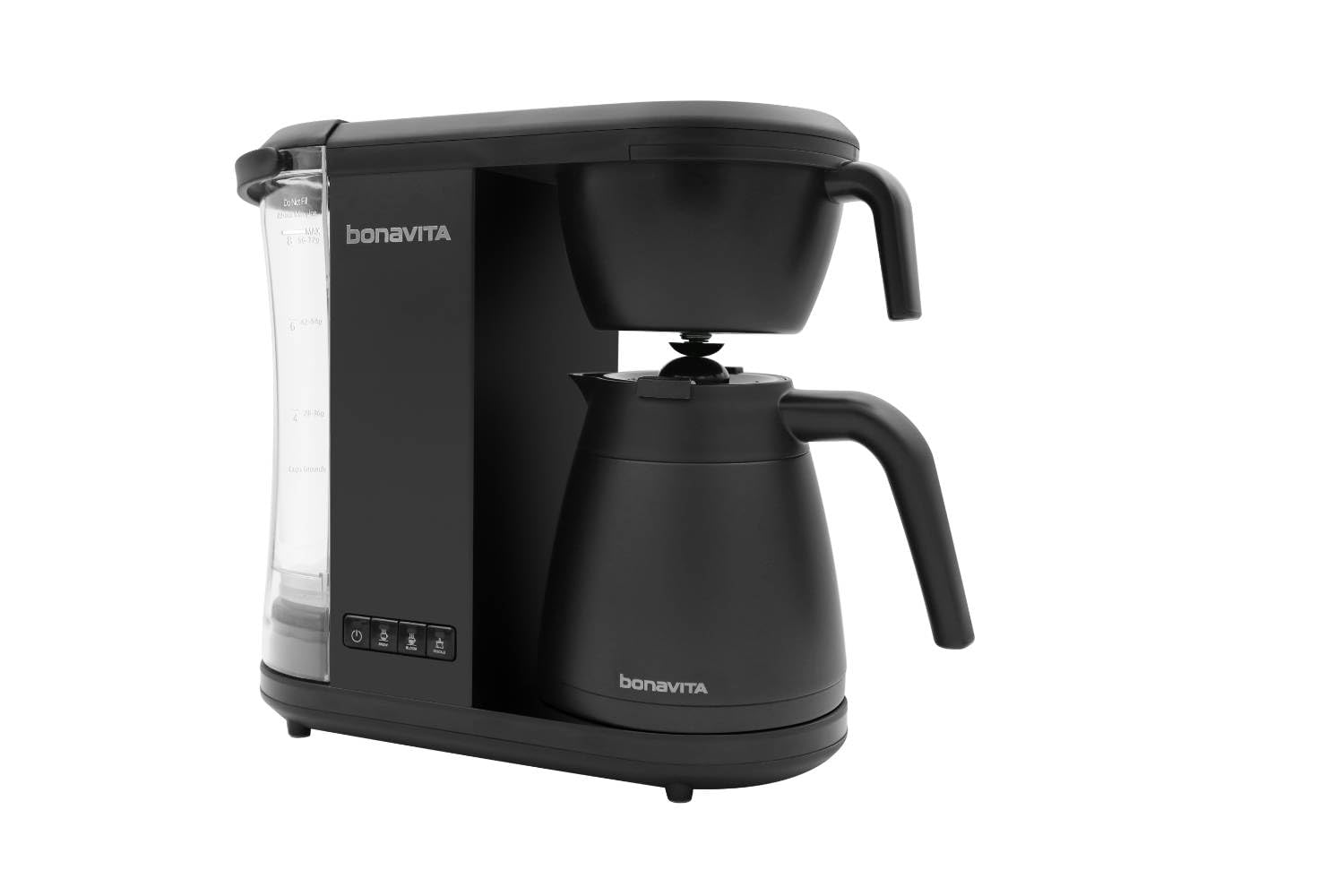
5. Bonavita Enthusiast 8 Cup Drip Coffee Brewer
Three buttons, one thermal carafe, and nothing else to learn.
Some people want a brewer that asks nothing of them. This Bonavita runs on three buttons, and the optional bloom setting pre-wets the grounds before the main pour so you get a fuller extraction without adjusting anything. It is SCA certified, which means it was tested to hold brew temperature between 194°F and 205°F — the range that separates properly extracted coffee from a sour or scorched cup.
Speed is the other strength. A full 8-cup, 40-ounce pot lands in under 7 minutes, and a wide showerhead spreads water evenly across the bed rather than drilling a hole through the center of the grounds. The 40-ounce tank detaches with a handle and comes printed with fill lines, so you can measure coffee-to-water ratio by eye. The stainless steel thermal carafe keeps the coffee warm for hours without a hot plate underneath.
What you give up for that simplicity is control: there is no timer, no clock, and no temperature setting. The carafe’s heat retention also divides opinion — some owners find it hot hours later while others see it fade within the hour. A lid dimple has been known to break under normal handling, and replacing the carafe is not cheap. Everything else here is a straight trade of features for ease.
Why it earns its place: SCA-certified temperature control, a genuinely fast 7-minute full pot, and a detachable tank make this the easiest premium brewer to live with.
Where it stops: no timer, no clock, no programmable settings — if you want to wake up to coffee already brewing, this machine will not do it.
Reach for this if: you want pour-over-quality drip and prefer to keep your morning routine to two decisions.
Pass on it if: you need a programmable start time or a carafe that stays reliably hot for a full afternoon.
6. Technivorm Moccamaster 79212 KBTS Coffee Brewer

A brewer built to be repaired rather than replaced, part by part.
Moccamaster’s whole argument is that you buy it once. The KBTS is SCA certified (a specialty coffee association stamp for meeting their brewing standards) and holds brew temperature in the 196°F to 205°F window, so your coffee extracts evenly instead of tasting sour or bitter. The nine-hole outlet arm spreads water across the grounds so they bloom evenly instead of channeling (water tunneling through one spot and missing the rest). A full pot finishes in 5 to 8 minutes. Owners consistently describe the cup as having body and sweetness with none of the bitterness that comes from a hot plate sitting under old coffee — this model uses an insulated thermal carafe and no warming plate at all.
It is also modular on purpose. The carafe, brew basket, reservoir lid, brew basket lid, and outlet arm all come apart, which makes draining the water out to prevent mold growth easy. Replacement filters are inexpensive and third-party descalers work fine. A five-year warranty backs it, and repairs are documented as running about rather than forcing a whole new machine. For anyone who has burned through three brewers in a few years, that math is the whole point.
The catch is that this is a machine you have to babysit slightly. The drip arm can spit, and you need to close the lever to wet the grounds and then slowly turn the handle for even coverage. It also will not turn itself off — you switch it off manually. Some owners find the plastic components feel light for the tier, and it cannot grind, fill its own water, or self-clean.
The Repairability Argument
- Modular parts — carafe, basket, lids, and outlet arm all separate for cleaning and replacement.
- SCA certified at 196°F to 205°F with a full pot in 5 to 8 minutes.
- Five-year warranty with low-cost documented repairs.
- Inexpensive OEM filters and no proprietary pod lock-in.
What You Take On
- No auto-off — you shut it down yourself.
- Brewing takes attention: close the lever, then turn the handle slowly for even extraction.
- Plastic components feel light relative to the tier.
Best for: the buyer who wants one brewer, wants to fix it rather than replace it, and does not mind a hands-on pour.
Not for: anyone who wants to press a button and walk away — this one wants your attention for the five minutes it runs.
7. Breville BDC465BSS Luxe Brewer Thermal Carafe
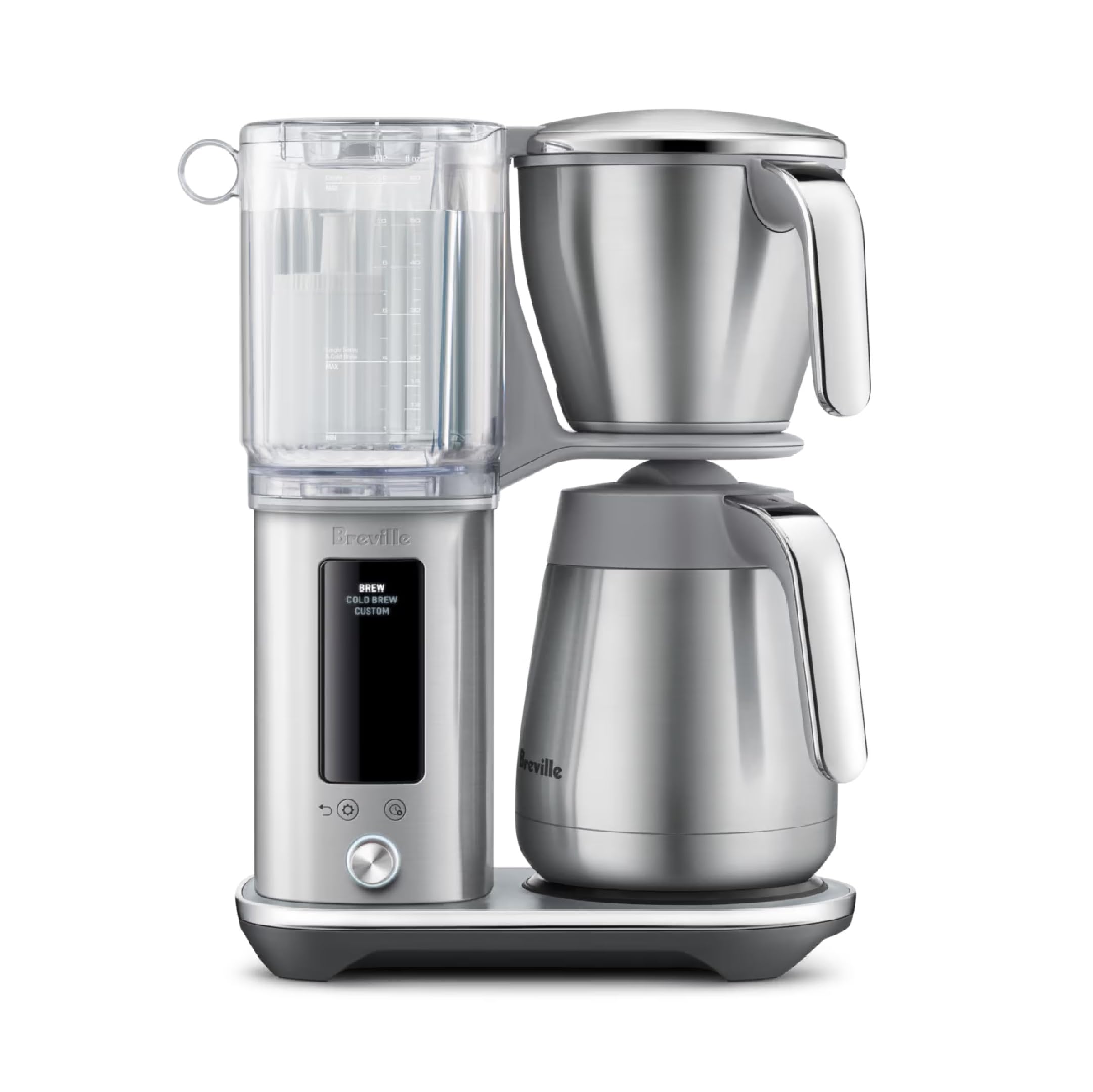
Cold brew on a weekday morning, without the overnight wait.
Most cold brew takes twelve hours on the counter. This Breville’s cold brew preset brews at a higher concentration and finishes in up to 30 minutes depending on water volume, giving you a base concentrate you can build drinks from. That single feature is rare at this tier and it is the reason to consider this machine over the Precision Brewer below, which does not carry a cold brew preset.
The daily-drip side is solid too. It brews to the SCA Golden Cup standard, and the dual-wall thermal carafe holds the brew above 150°F for up to 4 hours, which is a real number you can plan a morning around. A 60-fluid-ounce, 12-cup removable tank with an integrated Claro Swiss water filter feeds it, and the wide lid means less splash when you top it up. The Custom Brew setting remembers bloom volume, bloom time, brew temperature, and flow rate in a one-touch profile — set it once and it repeats.
You should know the mechanical reputation before you buy. The shower head and its ring have a habit of working loose during brewing, and the brew function itself sometimes fails to trigger. That is a strong reason to buy from a seller with an easy return path.
What stands out: a 30-minute cold brew preset and a carafe that holds 150°F for up to 4 hours make this the most versatile brewer on the list for drink variety.
What to watch: the shower head and ring can loosen mid-brew, and the brew button occasionally fails to fire — buy it where returns are simple.
Choose it for: hot drip and fast cold brew from a single machine, with both cone and flat-bottom filter baskets included.
Choose something else if: you want the simplest possible button-to-coffee machine — this one has more parts to keep an eye on.
8. PHILIPS Baristina Espresso Machine
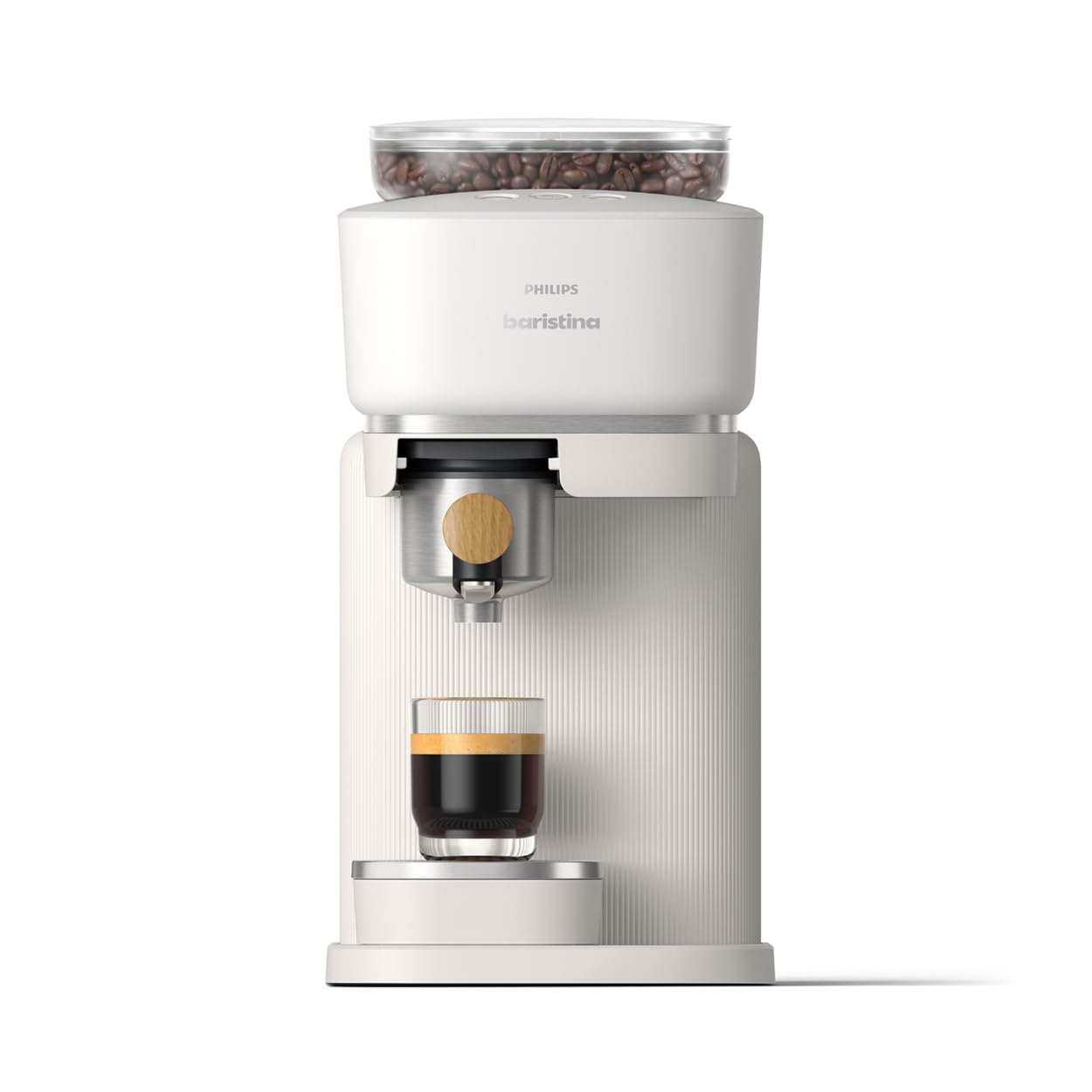
Swipe once and a full espresso lands in the cup, no skill required.
Espresso normally asks you to grind, dose, tamp, and time the shot yourself. The Baristina takes the whole chain and folds it into one motion: swipe the handle and the machine grinds, tamps, and brews bean to cup in under 60 seconds. A 16-bar pressure pump handles the extraction, and the shots come out with good crema when you feed it medium roast espresso beans. It is a genuinely compact unit that fits where a full espresso setup would not.
Nothing about the machine is fussy — no steam wand to master, automatic operation, easy cleanup, and a quiet brew. It runs on over 50% recycled plastics (excluding the parts that touch water and coffee) and carries an A+ energy label by Swiss standards, which matters if you leave a machine on through the morning. Espresso, Lungo, and Extra Intense are all selectable, so you can go long or go strong without changing anything but the button.
The obvious limitation is fine control. There are no grind size options, and the simplicity that makes it approachable is exactly what makes it too basic for someone who wants to dial in a shot. Durability is the bigger question — water leaking over the portafilter and brew heads that stop working cleanly are recurring reports, and the built-in grinder is awkward to clean.
The appeal: barista-style espresso with zero technique, under 60 seconds, and a compact body that leaves counter space free.
The honest limit: no grind adjustment and a short service life are the price of that convenience — this is an entry machine, not a long-term one.
Buy it for: a first espresso machine when you want real shots without learning a technique.
Look elsewhere if: you want to adjust grind size or expect a machine to hold up for years of daily doubles.
9. De’Longhi La Specialista Arte Evo Espresso Machine
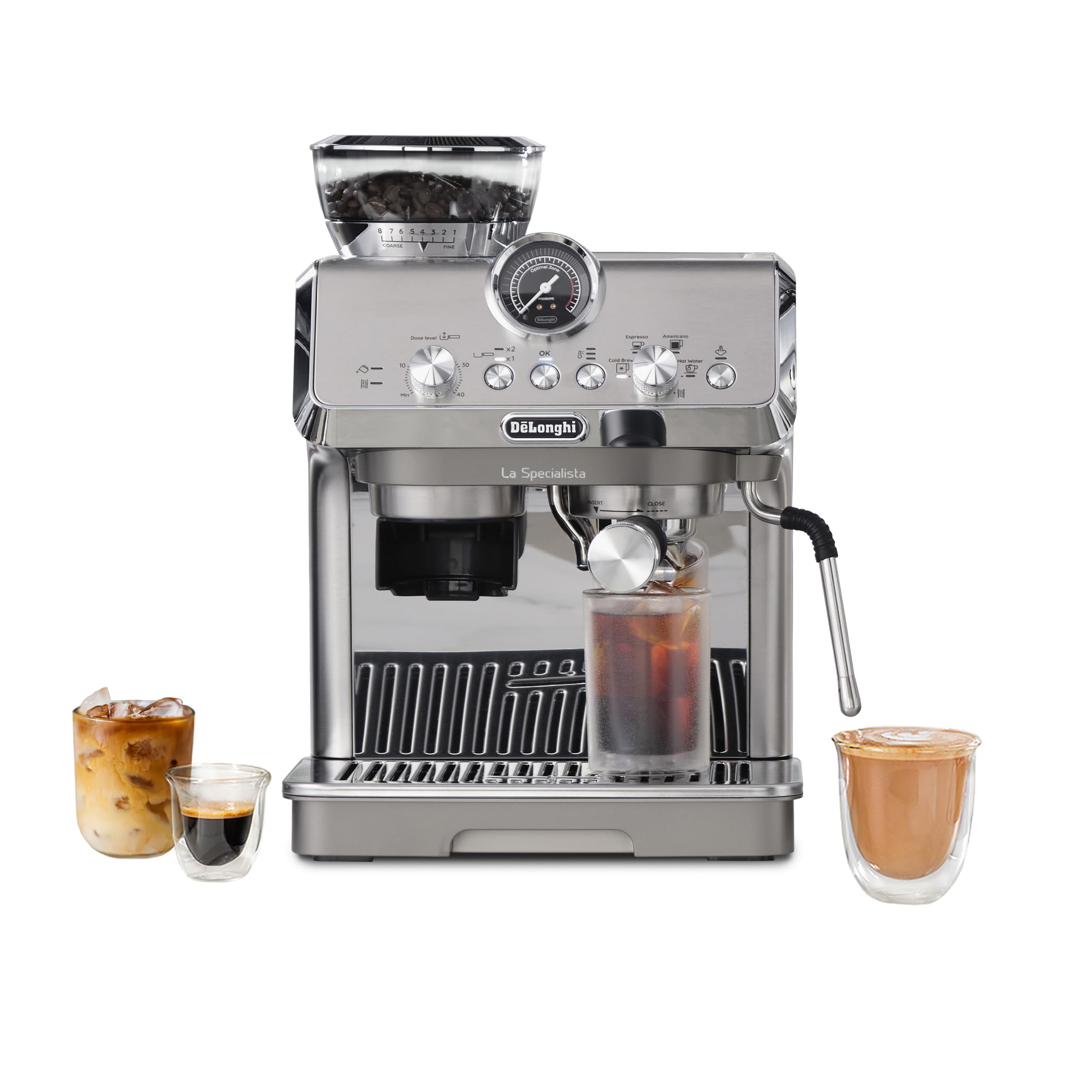
A grinder, a pressure gauge, and a steam wand — the full manual kit.
If you have wanted to learn real espresso, this machine hands you the tools instead of hiding them. The built-in conical burr grinder (a grinder with cone-shaped burrs that crush beans evenly) has 8 settings and doses fresh coffee straight into the filter for a single or double shot. A 15-bar Italian pump takes the pressure from low during pre-infusion (a gentle pre-wet before full pressure) up to the optimal 9 bar during extraction, and the pressure gauge lets you see whether your grind and dose are dialed in — which is the single most useful feedback a beginner can get.
Two extras push it past the Philips Baristina above. First, the commercial-style steam wand heats quickly and makes the micro-foam you need for latte art, something the Baristina does without a steam wand at all. Second, Cold Extraction Technology — developed in collaboration with the Specialty Coffee Association — produces a single cold brew in under five minutes using measured water flow and pressure at specific temperatures. The barista kit includes a dosing and tamping guide plus a tamping mat, so your counter stays cleaner while you learn.
The grinder is the part to keep an eye on. It saves counter space by doing double duty, but coffee oils build up inside it over time and can clog the burrs. Owners mention that a thorough clean requiring partial disassembly brings it back — worth learning early rather than waiting for it to stop. It is also loud enough to notice, though the brewing itself runs quiet.
Why it leads the espresso picks: an 8-setting burr grinder, a pressure gauge for feedback, a steam wand for micro-foam, and cold brew in under 5 minutes — the widest capability set of any machine here.
The maintenance reality: the built-in grinder accumulates oil and can clog, and clearing it properly means taking part of the machine apart. Plan a routine, not a reaction.
The right buyer: someone who wants to learn espresso properly and values a grinder and pressure gauge in one compact body.
The wrong buyer: anyone who wants to press one button — the learning curve here is real, and the machine rewards attention.
Know the Specs
Brew Temperature and Why It Decides Your Cup
Water temperature is the number that separates a sweet, balanced cup from a sour or burnt one. The SCA’s target window for drip brewing is 194°F to 205°F, and Breville’s Gold Cup preset is set to hold 197°F to 204°F. Moccamaster runs 196°F to 205°F. Machines that name a temperature range are telling you they control it; machines that only list wattage are not. A PID controller is the part that keeps that temperature from dipping when cold water enters the system.
Pressure and Grind: The Espresso Side
Espresso runs on pressure, not heat alone. Filter and drip machines let water fall through grounds by gravity at normal atmospheric pressure. Espresso machines force it through a compacted puck — De’Longhi’s La Specialista Arte Evo uses a 15-bar Italian pump that builds from low pressure during pre-infusion to 9 bar at extraction. The Philips Baristina uses a 16-bar pump. Grind size is the matching variable: finer grind plus consistent pressure equals a richer shot, which is why a built-in burr grinder helps more than a bigger tank ever will.
Carafe Type: Thermal vs. Glass on a Plate
A thermal carafe is a double-walled stainless steel pot with no heat source underneath. Coffee inside it holds its temperature without the slow cooking that a hot plate causes. Breville’s Luxe Brewer dual-wall carafe holds above 150°F for up to 4 hours, and Bonavita’s stainless carafe keeps coffee warm for hours with no plate at all. A glass carafe on a heated plate is cheaper to make and lets you see the level, but the coffee sitting on that plate pushes toward 185°F to 190°F as it drains, which changes the flavor. If you drink your pot over an hour or more, thermal is the safer choice.
Capacity: Cups, Ounces, and What They Actually Mean
Coffee industry “cups” are not standard. A Keurig K-Cup brew size is 6, 8, or 10 ounces per mug. A Bonavita Enthusiast brews 8 cups at 40 ounces total — about 5 ounces per cup by their measure. Breville’s Precision and Luxe Brewers hold 60 fluid ounces, labeled as 12 cups, which works out to a 5-ounce pour. Gevi’s grind-and-brew is listed at 10 cups. When you compare machines, check the ounce figure first, because cup counts vary by brand.
Common Questions
Will K-Cup pods work in a drip coffee maker like the Ratio Six?
How hot should a premium coffee maker brew at for the best taste?
How often do I need to descale a premium coffee maker?
Is a thermal carafe better than a glass carafe on a hot plate?
Do I need a built-in grinder or should I buy a separate one?
Can the Philips Baristina make milk drinks like a latte?
How long does the Moccamaster KBTS take to brew a full pot?
What does SCA certified actually mean on a coffee maker?
Which machine is better for someone who drinks only one cup a day?
Do espresso machines need different maintenance than drip brewers?
The Bottom Line
For most buyers, the premium coffee maker winner is the Keurig K-Classic because it delivers a full cup in under a minute with three pod sizes, a removable 48-ounce reservoir, and the strongest review record here — 4.6 stars from 100,000+ owners. If you want freshly ground drip with a bloom stage built in, the Ratio Six Series 2 is the machine that treats a single mug like it matters. And for anyone ready to learn real espresso with a grinder and pressure gauge already in the box, the De’Longhi La Specialista Arte Evo is where to put your money next.
One nudge before you close the tab: the Keurig K-Classic holds the highest rating on this list by a wide margin, and its three pod sizes mean you can change your brew strength by pressing a different button rather than buying a different machine. For a fast, consistent single cup every morning, that combination is tough to top.
How we choose
We do not accept paid placement. Every pick is matched to a real buyer and a real use-case; we do not hands-on test units.
Sources
Specifications: manufacturer listings and product documentation. Review insights: verified customer reviews, as of October 2026. Pricing: not shown on this page (it changes often); check the current price via the retailer link.
As an Amazon Associate, Aappliancez earns from qualifying purchases. This does not affect which products we feature.