Disclosure: Some links in this post are affiliate links. As an Amazon Associate I earn from qualifying purchases, at no extra cost to you. Learn more
Specs are compiled from manufacturer listings and verified buyer reviews and can change over time — please confirm the key details on the product page before buying.
If your eyes sting, water, or feel gritty after a long session in front of the monitor, the fix is a pair of blue light blocking glasses with a real coating, a comfortable fit for long hours, and a frame that won’t press on your temples. Here is the short answer: the best overall pick is the ANRRI, because it combines a genuine blue light filter, an 18-gram build that disappears on your face, and a lifetime warranty — all at a mid-range price that most buyers can justify.
This guide is built by comparing the manufacturers’ published specifications and the patterns across verified customer reviews, so you get each pick’s real strengths and trade-offs instead of marketing spin.
A first-time buyer usually assumes darker amber lenses equal better protection, but the filter strength, frame fit, and whether you game in daylight or at midnight matter more than lens colour. Hunting for best gaming glasses for eye strain means matching the lens tint to your play hours, the frame width to your face, and the coating to how rough you are on your gear — a mid-range pair that fits right beats a premium one that slides off.
Top Picks

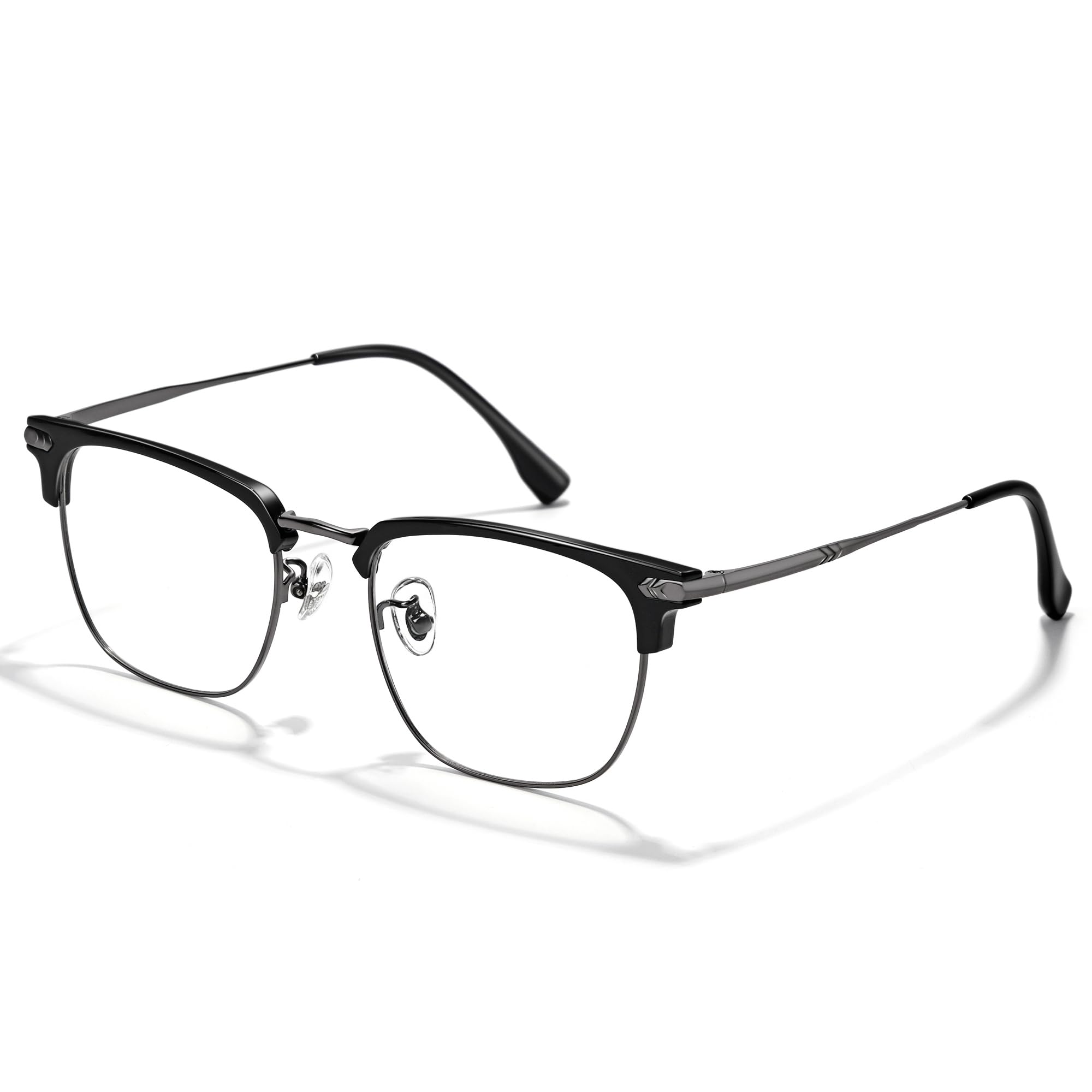
How To Choose The Best Gaming Glasses for Eye Strain
Most buyers walk into this category thinking one number — usually a blue light blocking percentage — decides everything. It doesn’t. The lens tint has to match when you actually game, and the frame has to survive a four-hour session without pinching your nose or ears.
Lens tint: clear, amber, or deep orange
Clear or nearly clear lenses filter blue light without changing how anything looks, so design work, video calls and daylight gaming stay accurate. Amber and deep orange tints cut a much larger share of blue light but shift everything warm — great for wind-down sessions, awkward in a shared office. Pick the tint by the hours you actually play, not by the darkest lens on the shelf.
Frame width and temple pressure
A 143mm width fits a medium face comfortably. If your head is wider, look for spring hinges and a frame rated for a wide fit — a wider frame with spring hinges spreads pressure instead of pinching, and that’s the single detail that decides whether you keep the glasses on past hour two. A frame that presses on your temples will get pushed up onto your forehead whether or not the lenses are working.
Coating: what’s actually on the lens
AR (anti-reflective) coatings reduce the glare bouncing off the lens surface — front-side AR stops other people seeing reflections of your screen; back-side AR stops light reflecting off the back of the lens into your own eye, which matters most if you work under overhead lights. Scratch-resistant layers are separate, and worth having if you’re hard on gear.
Side-by-Side Comparison
| Model | Best For | Blue Light Blocked | Frame Weight | Fit | Amazon |
|---|---|---|---|---|---|
| ANRRI Lightweight Computer Glasses★ Best Overall | All-day screen work and gaming | Filters blue light, clear lenses | 18g | 143mm width, medium | Amazon |
| ZanyLen Blue Light Blocking GlassesBest Value | Budget-friendly everyday screen wear | Filters blue light, UV400 | — | Snug, lightweight | Amazon |
| ViewJoy Sleep Glasses (Amber Orange) | Night gaming and pre-sleep screen time | 99.9% | — | Runs big or snug, mixed | Amazon |
| THL Sleep XL Orange Blue Light Blocking Glasses | Late-night gamers with larger heads | 99.5% | — | XL, spring hinges | Amazon |
| Prospek Blue Light Blocking Glasses | Readers who also want blue light filtering | Blue light (400–455nm) | — | Slips off easily for some | Amazon |
| GUNNAR Riot Gaming & Computer Glasses | Panoramic gaming with headset compatibility | Blocks peak blue light (450nm) | 26g | Wide (143mm temples) | Amazon |
| GUNNAR Vertex Blue Light Reading Glasses | Reading and computer work with magnification | 65% | — | Prescription compatible | Amazon |
Detailed Reviews
1. ANRRI Blue Light Glasses
Our pick — 4.5★ from 34,000+ verified ratings; the strongest balance of quality and price.
The pair you forget you’re wearing — until hour four, when other glasses start to bite.
Weighing 18g, this frame is built for people who wear glasses through a full shift and then keep them on for a raid. It uses Areolite material — a flexible, lightweight plastic that bends rather than cracks when you stuff it in a bag — so it survives the daily in-and-out of a setup drawer. The lens is clear rather than yellow-tinted, meaning you filter blue light without throwing your colour accuracy off, which matters if you game, edit, or do any design work where greens need to stay green.
Fit is the part buyers ask about most. It’s a classic square frame with a 143mm width, which lands squarely in medium-face territory for both men and women. If your face runs wide, this will feel snug. Everything else about ownership has held up over years of daily wear — the lightweight build and cushioning keep it non-intrusive through marathon sessions, and the included heavy-duty case means it travels well. What wins people over is simply that it does its job without ever making itself a problem.
The one honest catch is the frame finish on very old pairs. Some long-term users have seen the plastic coating start to peel after years of sun exposure or constant use — as owners put it: “After a few years of use the plastic layer throughout the glasses starts to peel.” That’s a wear point, not a defect, and because the frame itself is black it doesn’t shout. The lifetime warranty is the counterweight: ANRRI will stand behind the pair for as long as you own it.
What Earns It the Top Slot
- 18g frame stays comfortable through long gaming sessions
- Clear lenses filter blue light with no yellow tint, so screen colours stay accurate
- Flexible Areolite material bends instead of snapping
- Lifetime warranty is unusual at this price tier
Where It Asks for Care
- 143mm width runs snug on wider faces
- Frame coating can peel after years of heavy use
Reach for this if: you want one clear-lensed pair that handles work, gaming, and reading without ever coloring your screen.
Look elsewhere if: your face is wider than medium — the 143mm frame will feel tight.
2. ZanyLen Blue Light Blocking Glasses
A layered lens on a light frame — the spec sheet reads more expensive than the glasses feel.
ZanyLen stacks its lens with four separate coatings, and that’s the whole argument for this pair. There’s an anti-scratch layer so daily wiping and the occasional drop don’t cloud the surface. There’s a blue-light-filtering coating that lets beneficial blue light through and reflects the rest. There’s anti-reflective coating applied on both sides of the lens, knocking down reflections from overhead lights. And there’s anti-glare, which cuts haze in harsh conditions. On top of all four, the lenses carry UV400 protection — that’s full blocking of UVA and UVB rays.
The frame is what keeps it on your face without complaint. The design is deliberately low-key: a plain profile that doesn’t shout “I’m wearing special glasses.” People who want to wear a pair everywhere without drawing a second glance tend to land here. Blue light blocking is the aspect buyers mention most, and the quality of the build is right behind it — the pair reads more professional than the price tier would suggest.
The trade-off is durability. Buyers report: “It works fine however they are not durable at all, they broke within a couple weeks.” That’s the honest shape of this pair — treat it as a well-specced lens in a lightweight frame and keep it in the included packaging between sessions. The fit also runs slightly short for some heads, so if you’re at the larger end of the size range, size up your expectations accordingly.
The coating stack: anti-scratch, blue light filtering, dual-side anti-reflective, anti-glare, and UV400 — a lot of optical layers for an everyday pair.
The honest limit: the frame is where this pair cuts corners, so it rewards gentle handling over the long haul.
Best for: anyone who wants a stack of optical coatings and UV400 protection without stepping into premium pricing.
Handle with: care — the frame won’t survive the rough-and-tumble of a bottom-of-bag life.
3. ViewJoy Sleep Glasses

99.9% blue light blocked, amber lens, and a softness on screen that late-night gamers actually want.
If your gaming hours run past midnight, the tint on this pair is the whole point. The amber-orange lens blocks 99.9% of blue light — the maximum figure in this lineup — and the warm colour softens the glare off your phone, tablet or TV when you’re winding down. The lens isn’t just tinted; it’s a polycarbonate base with a scratch-resistant layer and 100% UV protection. On either side sit dual AR coatings, which on the front stop other people seeing your screen reflected in your eyes, and on the back knock out the reflected light that bounces into your own eye during computer work.
What buyers praise most is the lens quality itself — that’s the standout in the reviews, and it’s the reason this pair lands above its price tier for optical feel. The frame is sturdy and the pair is comfortable enough that some people wear it through an evening of reading and TV. It has the kind of calm, dimmed look that pairs with a low-light room rather than a bright office.
The fit is where the honest caveat sits. Buyers split sharply: some find the frame too big, others say it’s a little tight. There’s no middle answer that works for everyone, so if you know your head runs at either extreme, factor that in. Beyond fitting, this is a straightforward pair — it does one job (heavy blue light filtering with a warm cast) and does it without fuss.
What Stands Out
- 99.9% blue light blocking — the strongest figure in this roundup
- Dual AR coatings on front and back of the lens
- Scratch-resistant polycarbonate with 100% UV protection
What to Weigh Up
- Fit feedback is genuinely split — too big for some, too tight for others
- Amber tint isn’t suited to colour-critical work
Pick this if: you want the deepest blue light cut in the lineup and don’t mind the warm cast.
skip it if: you do design, editing, or any colour-sensitive work — the amber tint shifts everything.
4. XL Orange Blue Light Blocking Glasses

Built wide, built heavy on purpose — the frame size is the feature, not an afterthought.
Some people just cannot find a pair of glasses that fits their head. This one starts from the opposite direction: it’s explicitly XL, and it uses spring hinges to flex with a wider skull rather than press on the temples. Buyers who have spent years in pinching frames describe the fit here as the first thing that actually felt right. The frame itself is hand-polished acetate — a stiffer, denser material than the plastic on cheaper pairs — and the lens is made from premium nylon with a 7-layer orange tint.
Blue light filtering lands at 99.5%, just below the 99.9% of the ViewJoy above, but the lens also carries oleophobic, anti-fingerprint, anti-reflective and anti-glare coatings, so smudging and stray reflections are handled in the same package. The brand credits the lens design to Swedish engineer Oskar Eriksson, MS, and the 7-layer coating stack backs that up.
The one catch buyers raise is the tint being deeper than expected. That deep orange does shift colours noticeably — great for gaming and evening reading, less ideal if you also want to wear them for daytime work meetings. The fit feedback is mixed on width as well — XL really does mean XL, and this is not the right pair for a smaller face. What is not in doubt is the build quality: sturdy frames with spring hinges and a hard case in the box.
Why the fit matters here: spring hinges plus an XL acetate frame give wide heads a real option without temple pressure.
What you give up: a colour-accurate view — the deep orange tint is heavy by design, so daytime office use is a poor match.
Best for: larger heads that have struggled with every other frame on this list.
Not for: smaller faces — XL sizing here is literal, not marketing language.
5. Prospek Blue Light Blocking Glasses
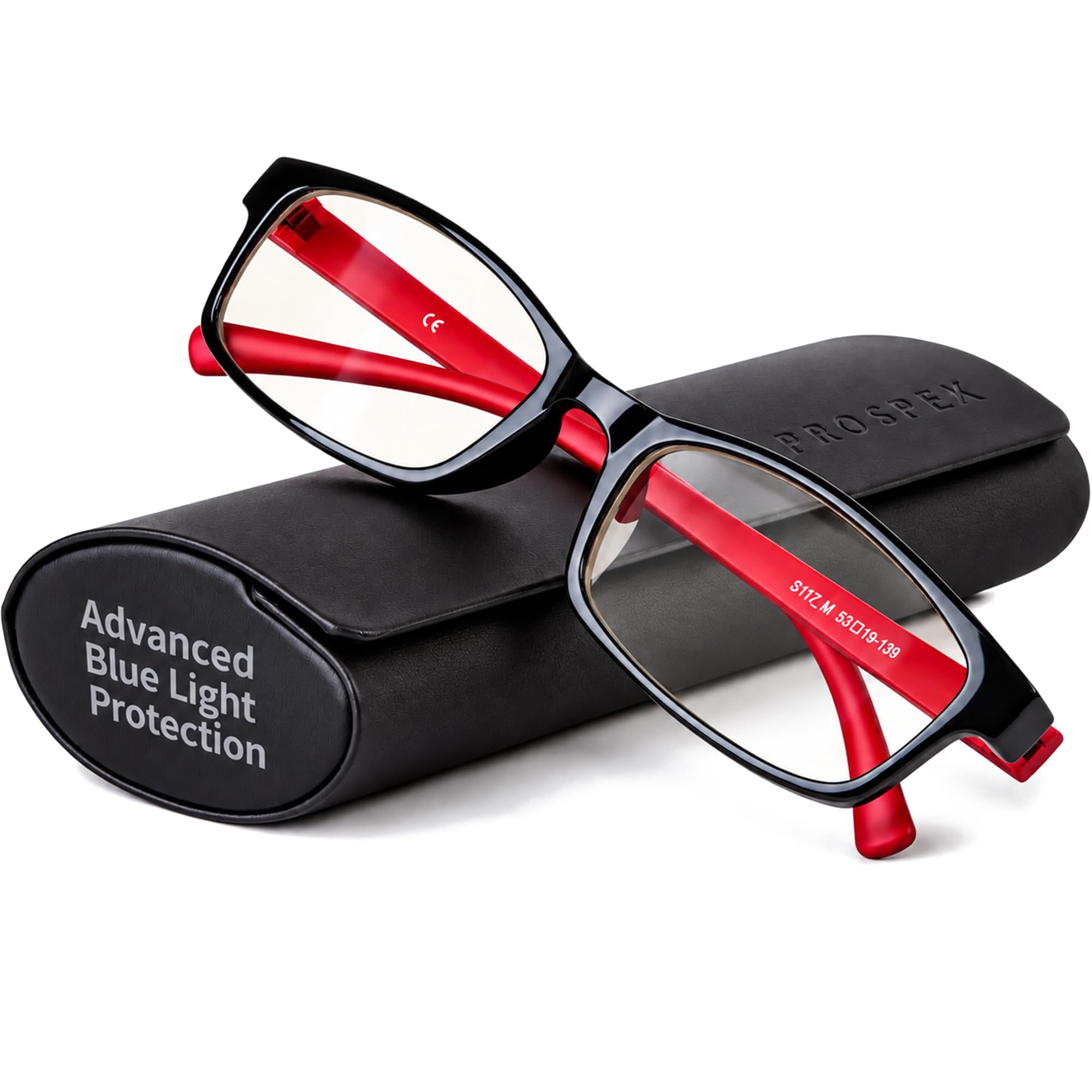
Blue light filtering and reader magnification in one frame — for the gamer who also needs reading help.
Prospek’s trick is that the frame does double duty. The same design ships either as a plain blue light pair with no magnification, or with reading magnification in 0.50 to 3.00 diopters — that’s the standard strength measure for reading glasses. Anyone over forty who games and squints at their phone at the same time will understand the appeal. The lens filters blue light in the 400–455nm range, which is the band most screens emit, and it carries eight advanced coatings including anti-glare and smudge resistance.
The lens itself is nearly clear, so colour distortion stays low — and that’s what buyers praise most: real clarity. Design work, movies and video calls stay true to life in a way they don’t with an amber tint. The frame is ultra-light and ergonomic, available in four different colourways, and arrives gift-ready with a hard case and microfiber cloth. The temple arms are marked with the magnification strength, which is a small but genuinely useful detail for someone juggling several pairs.
Two fit notes are worth flagging honestly. Some people find the frame slips off easily — a common complaint with lightweight designs on narrower faces. And the lens is larger than some buyers expect, which is either a feature or a nuisance depending on your preferences. There’s also a natural ceiling here: with higher magnification powers, the sharp focal range is short, so they suit close-up viewing more than arm’s-length monitor work. If you wear stronger readers, know what you’re buying them for before you commit.
What Sets This Pair Apart
- Available with no magnification or in 0.50–3.00 diopter reading strengths
- Nearly clear lens keeps colour accurate for design work and video calls
- Eight coatings including anti-glare and smudge resistance
- Four colourways, hard case and microfiber cloth included
What to Watch For
- Some buyers find the frame slips off easily
- Larger-than-expected lens size doesn’t suit everyone
- Higher magnification strengths have a short focal range
One to reach for if: you need blue light filtering and reading magnification in a single pair, with a clear lens that won’t distort colour.
Look past it if: you’re already comfortable with your current readers and just want screen protection — the magnification here is pointless for you.
6. GUNNAR Riot
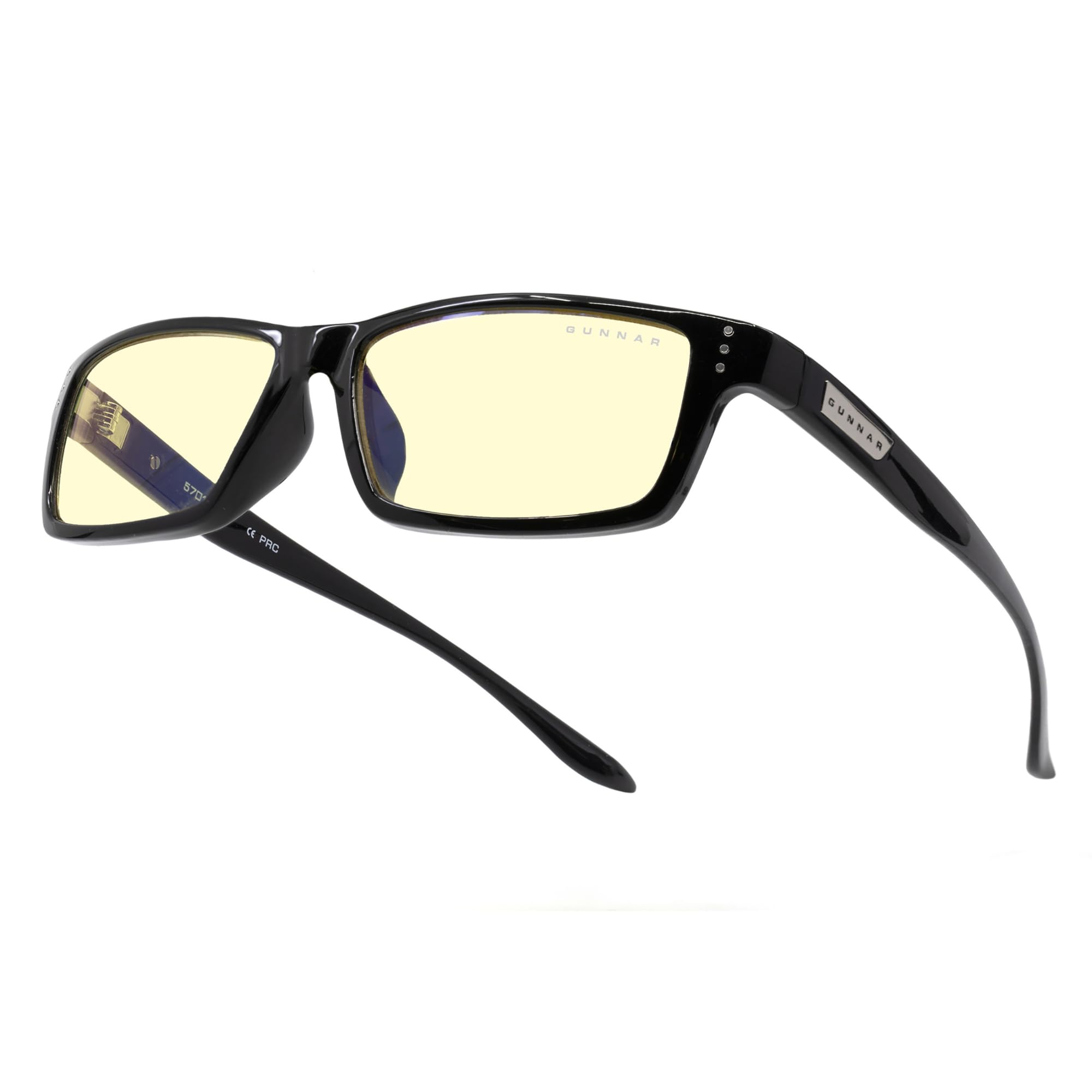
A gaming-specific lens profile with wide temples built to sit under a headset.
GUNNAR is unusual in this lineup because it publishes an actual Blue Light Protection Factor — a stated figure for how much of the peak blue light spectrum at 450nm the lens blocks, rather than a vague “blocks blue light” claim. That band, 450nm, is the strongest high-energy visible light that comes off a monitor, so knowing what the lens does at that exact wavelength is more useful than a marketing percentage. The lens is patented under #9417460, and its amber tint warms colours while boosting contrast.
The frame is engineered for a specific job: viewing tablets, phones, TVs and monitors over long sessions, with the Riot shape designed for panoramic viewing. The temples measure 143mm, the lens width is 58mm, the bridge is 16mm, and the frame fits wide. Weight lands at 26g, which is noticeably heavier than the 18g ANRRI up top — that’s the trade for the denser lens and wider bridge. The box includes a microfiber pouch and cleaning cloth, with a 30-day return policy and one-year warranty. Style-wise, the amber tint reads as a genuine gaming accessory rather than an office pair, and owners mention being able to wear them for hours without noticing them.
For anyone who games with a headset, the audio headset compatibility is the quietly useful spec here — the wide temple profile is shaped to sit flat under headphone cups. The honest caveat is the amber tint itself: it filters visible blue light, which is the point, but it does warm everything on screen. That’s the accepted trade for a lens designed around gaming rather than office work.
The spec that matters: a published Blue Light Protection Factor measuring blocking at the 450nm peak spectrum — real data, not a label.
The trade you accept: a 26g frame and an amber cast in exchange for the gaming-tuned lens profile and wide headset-friendly temples.
Best for: competitive gamers who want a lens tuned specifically for monitor use and temples built to live under a headset.
Think twice if: you want a nearly invisible pair — the amber tint is part of the design, not a compromise.
7. GUNNAR Vertex
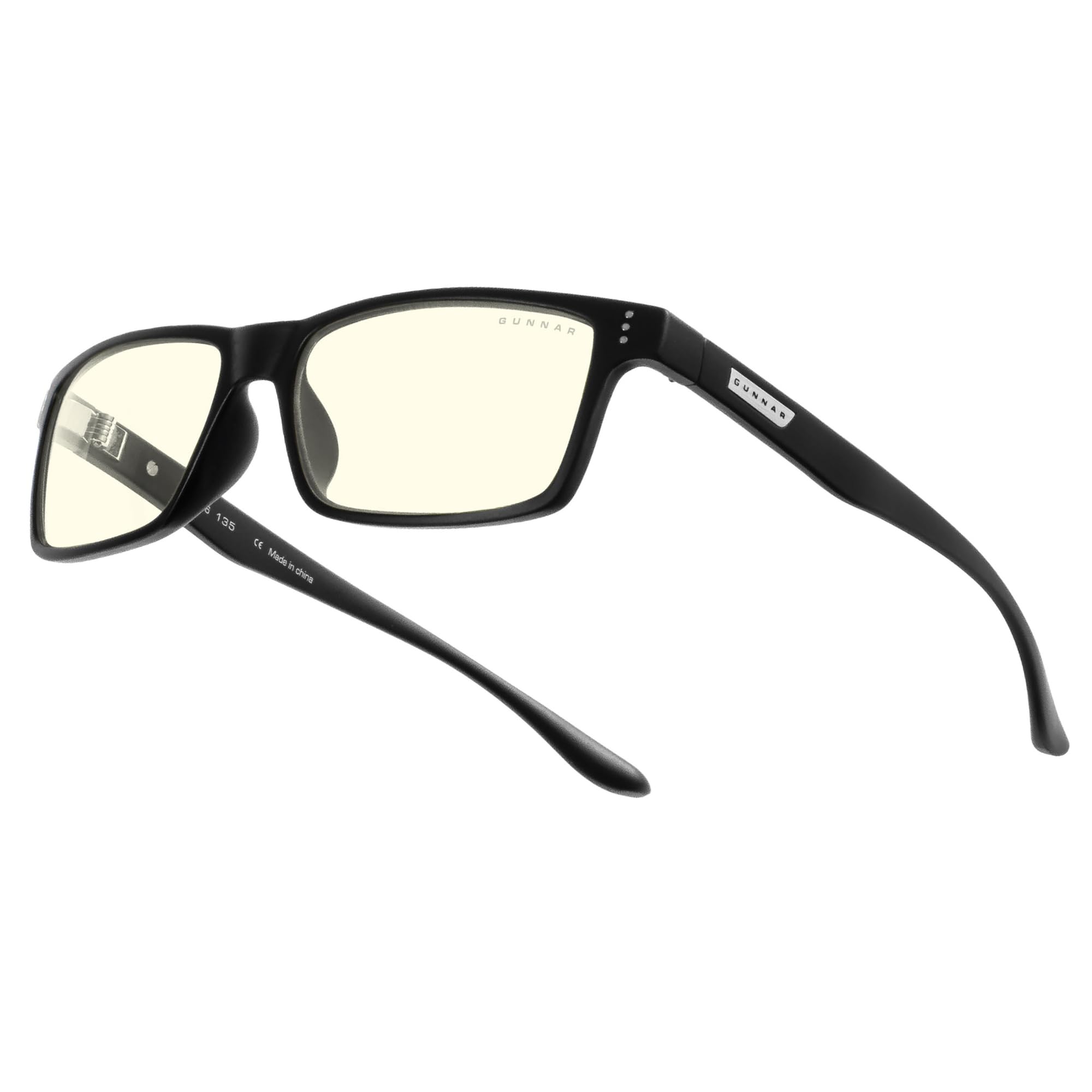
Take the same GUNNAR lens technology and add reading magnification — 65% blue light blocking included.
This is the reading-focused version of the GUNNAR formula, blocking 65% of blue light while also filtering UV, which makes it the lightest-touch filter in this roundup and the easiest to wear all day. The lens design also limits airflow near the eye, raising humidity at the eye surface to ease dryness during long sessions. The optical design sharpens focus and detail, and the lens material cuts haze and impurity distortion to keep the image clear. An external hard coat adds scratch resistance to the surface.
This is a reader, so the magnification is the star: buy it to see your phone, tablet or close-up monitor clearly, with blue light filtering thrown in. Software developers, IT professionals and long-tenured computer users tend to rate the optical quality as far better than generic drugstore readers — several say the magnification matches what their prescription pairs deliver. The frame is sturdy and the pair is comfortable enough to wear as a daily driver. As owners put it: “I love these so much I’m going to buy another pair. I immediately felt the difference in looking at my computer screen after putting these on.”
The honest caveat is on the frame rather than the lens. Higher magnification strengths introduce noticeable reflections during presentations, since this pair doesn’t carry anti-glare. The frames can also scratch easily with rough handling, and a small slice of customers note durability issues with the hinges over time. Handled with reasonable care and used at the magnification strength that matches your close-up distance, this is a genuinely high-quality reader with a strong optical reputation behind it.
Why the Optics Hold Up
- 65% blue light blocking plus UV filtering — the easiest filter to wear all day
- Lens design limits airflow near the eye, which helps with dryness
- External scratch-resistant hard coat on the lens
- Prescription compatible, with a strong optical reputation among heavy users
Where to Be Careful
- No anti-glare coating, which shows up as reflections at higher magnification
- Frames and hinges benefit from gentle handling
Reach for this if: you want top-tier optical quality with reading magnification and a light-touch blue light filter.
Look elsewhere if: you present to a room often — the missing anti-glare coating shows reflections at higher powers.
Know the Specs
Blue light blocking percentage
This is the share of blue light the lens filters out. Higher figures — like the 99.9% and 99.5% on the ViewJoy and THL Sleep pairs — cut nearly all of it, which is the right call if you game at night and want to wind down afterwards. Lower figures — like the 65% on the GUNNAR Vertex — leave more of the spectrum intact, which keeps things looking closer to normal and makes the glasses easier to wear through a workday. Neither number is “better” in isolation; match it to when you wear them.
Lens coating types
AR (anti-reflective) coatings cut the glare bouncing off the lens surface. Front-side AR stops other people seeing reflections of your screen in your eyes; back-side AR stops light from reflecting off the back of the lens into your own eye, which matters most under overhead lighting. Anti-scratch coatings are separate from AR and protect the lens surface itself. The ZanyLen pairs a four-coating stack on top of UV400 protection, while the Prospek carries eight coatings including anti-glare and smudge resistance.
Common Questions
Do blue light glasses actually reduce eye strain from gaming?
Should I choose a 99.9% blue light blocker or a lighter filter?
How do I know what width frame fits my face?
Can I wear blue light glasses over my existing prescription glasses?
What does the blue light blocking percentage actually measure?
Will amber or orange lenses distort the colors on my screen?
Do these glasses help with headaches from screen use?
How long do blue light glasses typically last?
Can I wear the same pair for work and gaming?
What’s the difference between anti-reflective and anti-scratch coatings?
The Bottom Line
The best of these gaming glasses for eye strain for most people is the ANRRI Blue Light Glasses for Men Women, Lightweight Computer Glasses, because it combines an 18g frame, clear lenses that keep your screen accurate, and a lifetime warranty in one mid-range pick. If you game before bed and want the deepest blue light cut, the ViewJoy Sleep Glasses filter 99.9% and will do exactly that. For a wide head that nothing has ever fit, the spring hinges on the THL Sleep XL Orange Blue Light Blocking Glasses are worth the try. And if you want gaming-specific optics with headset-compatible temples, the GUNNAR Riot is the pair to grab.
How we choose
We do not accept paid placement. Every pick is matched to a real buyer and a real use-case; we do not hands-on test units.
Sources
Specifications: manufacturer listings and product documentation. Review insights: verified customer reviews, as of October 2026. Pricing: not shown on this page (it changes often); check the current price via the retailer link.
As an Amazon Associate, Aappliancez earns from qualifying purchases. This does not affect which products we feature.