Disclosure: Some links in this post are affiliate links. As an Amazon Associate I earn from qualifying purchases, at no extra cost to you. Learn more
Specs are compiled from manufacturer listings and verified buyer reviews and can change over time — please confirm the key details on the product page before buying.
Your back rounds on the last rep, your knees ache on the way down, and your grip gives out before your legs do. That’s not a motivation problem — it’s a support problem, and the fix is a small kit of lifting gear that braces your joints instead of your ego. The picks below cover the three things that actually protect you under a heavy bar: a belt that stiffens your core, sleeves that hold your knees steady, and a strap that carries what you can’t.
This guide is built by comparing the manufacturers’ published specifications and the patterns across verified customer reviews, so you get each pick’s real strengths and trade-offs instead of marketing spin.
Every pick here earns its place on weight capacity, thickness, and how it actually behaves once the bar gets heavy — not on brand noise. Here’s how to build a lifting gear setup that supports your joints without slowing your lifts.
Top Picks

How To Choose The Best Lifting Gear
Lifting gear is three separate jobs wearing one label. A belt braces your trunk, a knee sleeve stabilizes a joint, and a sling carries a load that outmuscles you. Buying all three from one spec sheet is how you end up with a belt that pinches and a sleeve that slides.
Match belt thickness to your training style
A thicker belt resists more, and it also resists your ribs on a front squat. Belts here run from 7mm to 10mm, and the thicker the leather, the longer the break-in period runs.
If you pull conventional, a stiff 10mm belt gives you the wall you want. If you snatch or clean, a 7mm tapered belt bends where you need it and stays out of the way.
Size by your waist, never by your jeans
Nobody’s trouser size matches their waist measurement. Grab a flexible tape and measure around your navel, then point that number at the belt’s own chart — the same size label means different inches across brands.
Waist sizing runs from roughly 21 inches to 50 inches across the belts here, so the tape measure is the whole game. A belt that’s slightly too loose can’t brace you, and one that’s too tight will bite on every rep.
Know the difference between a sling rating and a strap rating
Nylon slings carry three capacities because the hitch changes the math. Vertical means a straight pull, choker means wrapped back on itself, and basket means the strap cradles the load in a U-shape.
Buckets, hooks, and hitches also have different stretch behavior, so the number you trust should match the way you actually rig the strap.
Side-by-Side Comparison
| Model | Best For | Material | Thickness / Load | Size Range | Amazon |
|---|---|---|---|---|---|
| DD Sling 2 Inch x 8 Foot Nylon Lifting Strap★ Best Overall | Heavy pulling and rigging | 2-ply nylon webbing | 12,800 lb basket capacity | 96″ x 2″ | Amazon |
| AEOLOS Knee Sleeves (1 Pair)Budget Champion | Budget knee coverage for squats and burpees | Neoprene | 7mm | Medium | Amazon |
| Mytra Fusion Weight Lifting Belt | Lifters who want a softer leather belt in pink | Real leather | 7mm thick, 4″ wide | XS through Large | Amazon |
| GurZinn 9mm Leather Lifting Belt | Heavy back support with padded lumbar coverage | Double-sided leather | 9mm thick, 4″ wide | XS 21.3″–28.3″ up to L 35″–43.3″ | Amazon |
| MRX Powerlifting Leather Belt | Powerlifters who want a stiff two-prong belt | Leather | 10mm thick, 4″ wide | S 27″–33″ up to 3XL 44″–50″ | Amazon |
| Rehband RX Knee Support | Knee support for CrossFit and squat days | 70% SBR, 30% Neoprene | 7mm | Large | Amazon |
| Iron Bull Strength 7mm Leather Belt | Powerlifting and Olympic lifting under one belt | A-Grade leather | 7mm thick, 4″ to 2″ taper | Large | Amazon |
Detailed Reviews
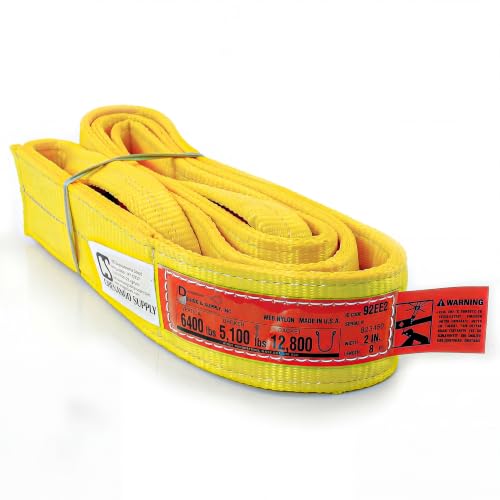
1. DD Sling 2 Inch x 8 Foot Nylon Lifting Strap
Our pick — over 4.5★ from 850+ verified ratings; the strongest balance of quality and price.
One strap rated at three different capacities, so the hitch decides how hard you can pull.
The first thing a rigger checks is the tag, and this one answers plainly: 6,400 lb vertical, 5,100 lb choker, and 12,800 lb basket. Those are three separate ratings for three different hitches, so you match the number to the loop you tie rather than trusting one blanket figure. It is 96 inches long by 2 inches wide and weighs 1.6 pounds, which is light enough to coil onto a truck bed hook without dragging you down.
What wins people over is the build. The 2-ply 900 webbing carries a serial-numbered ID tag for inspection paperwork, and the oversized print sits under a UV and moisture-inhibited clear cover so the numbers stay readable after a season in the sun. The twisted eye loops sit at 90 degrees to the body, which firms up the choker grip on an awkward load. Buyers report the sling looks and feels as heavy-duty as its printed load ratings, with one describing it handling up to 1.5 ton of force.
For comparison, the same sling runs 96 inches long against the GurZinn belt’s 38-inch length — the strap is stretch-and-wrap material, the belt is a snug enclosure, and the two never compete for the same job. Towing a vehicle out of a ditch and latching over a bucket quick hook are both reported as normal use. The trade-off is honesty about limits: ratings only mean something if the hardware on the other end holds, so check your hooks and shackles before you load this anywhere near capacity.
The case for keeping one in the truck
- Three published load ratings — 6,400 lb vertical, 5,100 lb choker, 12,800 lb basket — matched to hitch style.
- USA-made nylon with a serial-numbered ID tag that supports real inspection routines.
- UV and moisture-inhibited cover over oversized printing keeps the tag legible outdoors.
- 1.6 pounds and 96 inches of working length coil down small between jobs.
Where it stops working in your favor
- Nylon stretches under load, which is fine for towing and rough for precision positioning.
- The rating is only valid if your hooks and shackles are rated for the same class.
Reach for this if: you tow, recover vehicles, or move material and want the specific load number that matches your hitch.
Look elsewhere if: you need a stiff, non-stretching attachment for positioning loads to the inch.
2. AEOLOS Knee Sleeves 7mm Compression Knee Braces
A pair of 7mm neoprene sleeves that get you covered for the price of a single premium sleeve.
You get both knees for what one high-end sleeve costs elsewhere, and that math is the entire pitch. Each sleeve is 7mm of neoprene — a rubber-blend material that traps warmth and holds compression around the joint — and the pair weighs 0.24 kg total, so stashing them in your gym bag adds almost nothing. They slide on pull-style with no straps to fiddle with between sets.
The thing most owners point to is knee support during exactly the movements that punish the joint: burpees, knee push-ups, and squat work. Value for money is the second-most praised trait, which tracks with the pair-for-one pricing. The design has fans too — patterned sleeves show through the compressions and stand out under shorts.
Here’s where it gets honest. Fit, durability, and compression are the three mixed points in the feedback — some find them snug, some find them loose, and a small number report tearing after a second wear. Sizing runs by measurement, not clothing size, so measure your knee circumference before you order and treat these as a good-value entry sleeve rather than a competition-grade one. Unlike the Rehband sleeve below, which comes as a single piece, this is a matched pair.
Where the value sits: two 7mm neoprene sleeves with wicking and lightweight construction for the cost of one premium sleeve.
The honest caveat: durability is the trade-off on a sleeve this affordable — expect a budget lifespan and treat fit as the deciding factor.
Start here if: you’re new to sleeves and want both knees covered without committing to a premium pair.
Keep looking if: you need the sleeve to survive years of daily heavy squatting.
3. Mytra Fusion Weight Lifting Belt Women 7MM

Real leather at 7mm and 4 inches wide, cut for a smaller waist and finished in a soft pink that doesn’t shout.
This belt is built from 100% real leather at 7mm thick and 4 inches wide, which puts it in the middle of the stiffness range — supportive enough to brace hard on a heavy set, soft enough that it doesn’t dig into your hips while you set up. The taper and the extra back padding put pressure across your lower back instead of your waist. It’s the belt to look at if a stiff 10mm slab feels like overkill for your training.
The leather isn’t glossy and it isn’t raw. It breaks in quickly and the pink shows through the surface as a subtle finish rather than a paint job. Owners describe it as sturdy without being hard, which is why a slim lifter at 5’2″ and 100 lb reports it fits perfectly, and a 147 lb, 5’3″ lifter reports the medium running true with the small too tight.
The recurring gripe is sizing, and it runs small — if you measure near the bottom of a size range, step up. A smaller share of feedback mentions shedding inside the belt over time, which is normal for a leather liner. Durability and stiffness both land in mixed territory, so treat this as a comfortable everyday belt rather than a competition piece. The GurZinn below is the stiffer, thicker alternative if you want more wall under the bar.
Best fit for: smaller-framed lifters who want genuine leather support without a rock-hard break-in.
Think twice if: you want maximum stiffness for very heavy pulls, since 7mm bends more than the 9mm and 10mm options here.
4. 9mm Leather Fitness Weight Lifting Belt for Women&Men

Nine millimeters of double-sided leather with a sponge pad where your lumbar actually needs it.
At 9mm thick and 4 inches wide, this sits between the 7mm belt above and the 10mm MRX below — enough stiffness to brace a loaded squat, less brute resistance than the thickest belt in the lineup. The difference maker is the sponge pad stitched into the waistband, which spreads pressure across your lower back instead of concentrating it along one seam. It measures 38 inches long by 4 inches wide and closes with a buckle.
The hardware is where the value shows. Six stainless steel rivets and double reinforcement hold the buckle in, and 10 rows of holes let you dial the fit in halfway steps instead of jumping an inch at a time. The leather is double-sided and top-stitched, which the maker frames as resistance to tearing under repeated load.
Sizing is the thing to get right, and the listing chart is the authority: XS runs 21.3 to 28.3 inches, small 27.2 to 32.3, medium 31.1 to 36.2, and large 35 to 43.3. Measure your true waist with a tape rather than ordering your pants size. The purple finish and the padded build are what owners talk about most, along with how much the padding helps the belt sit still under a heavy pull.
Why the lumbar pad earns its place
- 9mm of double-sided leather with a sponge lumbar pad for pressure spread across the whole lower back.
- 10 rows of holes give you fine fit adjustment instead of coarse jumps.
- 6 stainless steel rivets with double reinforcement at the buckle.
- Dedicated sizing chart from XS to L takes the guesswork out of the order.
What a heavy puller should know
- Still breaks in — a 9mm belt takes a session or two before it stops fighting your setup.
- Ordering by pants size instead of the tape measure is where most sizing misses happen.
A strong pick for: anyone who wants padding between their lower back and a heavy bar.
skip it if: you train Olympic lifts where a wide, padded 4-inch belt catches on the bar.
5. MRX Powerlifting Leather Belt 4″ Wide 10mm
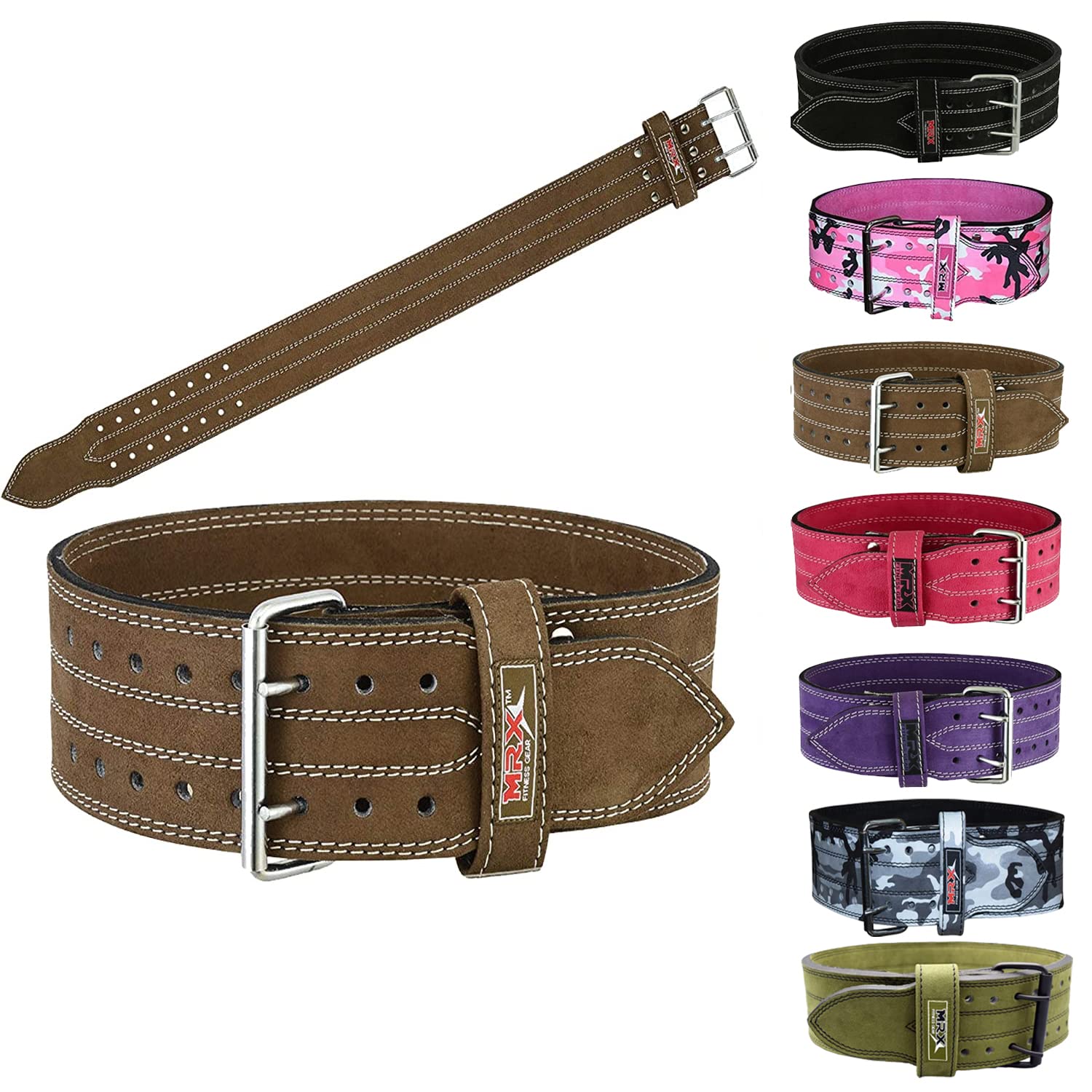
Ten millimeters of leather that turns your trunk into a loaded spring — once you spend an hour breaking it in.
This is the stiffest belt in the group at 10mm of leather and 4 inches of back support, closed with a steel two-prong buckle and a slide bar that lets you snug it to any torso shape. The size run is unusually wide: small covers 27 to 33 inches, medium 32 to 38, large 37 to 42, XL 40 to 46, 2XL 42 to 47, and 3XL 44 to 50. Owners describe the leather as soft against the skin while the belt itself stays brick-stiff, which is exactly the combination a heavy squat needs.
The price-to-support ratio is what keeps this belt popular — it’s the value story in the premium-leather group, and the reported confidence bump on heavier lifts tracks with that flexibility. Stitching and material quality sit where you’d want them for a serious pull.
The reality check: two prongs are fiddly. Fastening and releasing takes both hands and a beat of patience, and one powerlifter who trains twice a week for months notes it softened slightly while keeping its support. The 4-inch width also runs wide for a shorter or narrower torso. Plan on the breaking-in period, and if you prefer a fast single-prong release, the GurZinn above is quicker to get on.
Where the stiffness pays off: 10mm of leather with a steel two-prong buckle and a 6-size range from 27″ to 50″ waist.
What to expect on arrival: the belt needs real break-in time, and the double-prong closure is slower to fasten than a lever or single prong.
Best for: powerlifters who want maximum trunk stiffness without paying the top tier of the leather-belt market.
Not ideal for: lifters who want fast on-and-off between sets, or narrow torsos that a 4-inch belt over-covers.
6. Rehband RX Knee Support 7mm Neoprene Knee Sleeve
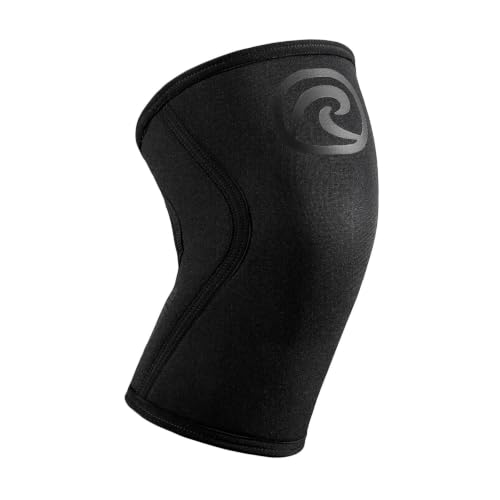
A single 7mm sleeve built in four panels, so it flexes with the knee instead of fighting it.
The construction is the story here. Four separate panels give the sleeve a defined fold line at the kneecap, which is why it bends through a deep squat without creasing into your leg. The material is 7mm SBR and neoprene — SBR is a rubber compound that holds its shape under repeated compression — and the blend runs 70% SBR to 30% neoprene. A non-slip grip lining keeps it from sliding down mid-set, which is the failure point on cheaper sleeves.
It’s sold as a single piece in Carbon/Black, size Large, and the fit is what owners talk about most. Rehband recommends machine washing at 40 degrees Celsius in a laundry bag and air drying only to keep the neoprene from degrading. That care routine matters on a sleeve you plan to use for years.
Owners mention the most benefit on squat days and during post-surgery rehab, with one lifter recovering from ACL and meniscus surgery noting it stayed in place through rehab work. Support and stability is the second-most raised point. The catch is the price: you’re buying one sleeve, where the AEOLOS pair above gives you two for less.
The right call for: CrossFit and strength athletes who train deep and want a sleeve that stays in place.
Weigh the value if: you want coverage on both knees, since this listing is one sleeve and the AEOLOS pair covers both.
7. 7mm Leather Weight Lifting Belt (IPF Approved)
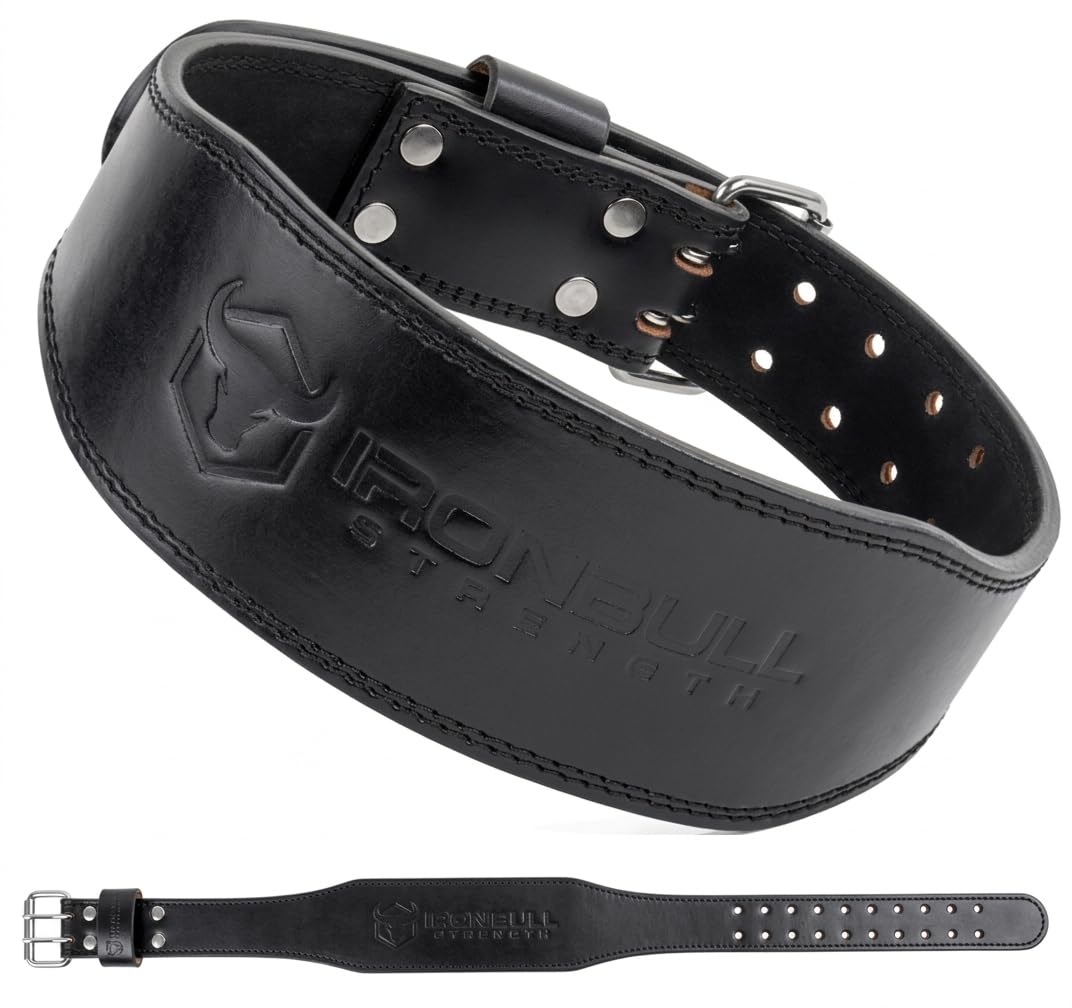
A 7mm belt that tapers from 4 inches to 2, so it braces the back without blocking the front of a clean.
The taper is the clever part. The belt is 4 inches wide at the back, where your spine needs a wall, and narrows to 2 inches at the front, where a wide slab would otherwise collide with the bar on a snatch or a clean. That shape makes it the most versatile belt in the lineup — squats, deadlifts, bench presses, snatches, cleans, and jerks all work with the same belt. It’s cut from A-grade leather at a steady 7mm thickness and closes with a double roller steel buckle.
Iron Bull certifies this belt for IPF, USAP, USPA, IPL, USAW, and IWF competition and backs it with a lifetime manufacturing-defect warranty plus a 30-day satisfaction guarantee. The leather carries a high-gloss finish and is built from single leather pieces rather than layers glued together, which is the difference the maker points to for keeping thickness even across the whole belt.
What customers note is break-in speed: the leather molds to your shape faster than a stiff 10mm slab does, and a 31-to-32 inch waist reports the medium sizing correctly with a 5’7″ frame for reference. Sizing is the mixed note — use the chart and your true waist measurement, not your pants size. It’s the premium pick here, and the competition approvals are what you’re buying at that level.
Why the taper earns the price
- 4″ to 2″ taper braces the lower back without blocking front lifts like cleans and snatches.
- Steady 7mm A-grade leather thickness across the whole belt, not layered scraps.
- Double roller steel buckle with double stitching throughout for durability.
- IPF, USAP, USPA, IPL, USAW and IWF competition approvals, plus a lifetime manufacturing-defect warranty.
The honest trade-off
- One listing, one size — the wrong size is the most common complaint here, so measure first.
- 7mm thickness flexes more than a 10mm slab on maximum-weight pulls.
This is the belt to buy if: you compete or train across multiple lift styles and want one belt that clears the bar on front racks.
Look at the MRX instead if: you squat and pull heavy and want the extra stiffness a 10mm belt gives.
Know the Specs
Belt thickness in millimeters
Thickness here runs 7mm, 9mm, and 10mm, and it dictates stiffness. A 7mm belt bends through a front rack and molds to your shape quickly. A 10mm belt resists and supports more but takes real break-in time. Heavier pullers tend to lean toward the thicker end.
Load rating and hitch type
A nylon sling carries a different number for each hitch. Vertical means a straight pull, choker means wrapped back on itself, and basket means the load cradles in the middle. Those three numbers can differ by thousands of pounds on the same strap.
Sleeve thickness and material
Knee sleeves here are 7mm thick — neoprene or an SBR/neoprene blend. The thickness gives compression, the material traps warmth, and neither property changes with the price tag alone. Wash in cold and air dry to keep the shape.
Sizing by measurement rather than clothing
Waist sizing across the belts here spans roughly 21 inches up to 50 inches depending on the model. Use a flexible tape at your true waist and match the belt’s own chart. Sleeves are sized on knee circumference, not pant size.
Common Questions
Should I buy a 7mm belt or a 10mm belt for heavy squats?
How do I measure my waist for a lifting belt?
What does a choker hitch load rating mean on a nylon sling?
Can I use a knee sleeve instead of a knee brace?
How long does a leather lifting belt take to break in?
Is a two-prong buckle harder to use than a lever belt?
How should I wash a 7mm neoprene knee sleeve?
What is an IPF-approved belt and why does it matter?
Should I use a lifting sling instead of a chain for pulling?
The Bottom Line
For most people building out their lifting gear, the winner is the DD Sling Nylon Lifting Strap because it publishes three distinct load ratings tied to hitches, made from USA nylon with a serial-numbered ID tag that holds up in real rigging work. If you compete or train across multiple lift styles, grab the Iron Bull Strength 7mm Leather Belt for its 4″ to 2″ taper and IPF approvals. And for maximum stiffness on squats and pulls, the MRX Powerlifting Leather Belt at 10mm is the one to reach for.
Start with the piece that fixes your weakest link, and check the sizing chart before you order — every size miss on this list traces back to a pants size where a tape measure should have been.
How we choose
We do not accept paid placement. Every pick is matched to a real buyer and a real use-case; we do not hands-on test units.
Sources
Specifications: manufacturer listings and product documentation. Review insights: verified customer reviews, as of October 2026. Pricing: not shown on this page (it changes often); check the current price via the retailer link.
As an Amazon Associate, Aappliancez earns from qualifying purchases. This does not affect which products we feature.