Disclosure: Some links in this post are affiliate links. As an Amazon Associate I earn from qualifying purchases, at no extra cost to you. Learn more
Specs are compiled from manufacturer listings and verified buyer reviews and can change over time — please confirm the key details on the product page before buying.
If you are shopping for a health monitor, the answer is simple: the KardiaMobile is the one to start with, because it is the only pick here that reads your heart’s electrical rhythm itself instead of just your pulse. Everything else on this list measures blood pressure or workout effort. Knowing which of those jobs you actually need is the whole decision, and that is what this page sorts out for you.
This guide is built by comparing the manufacturers’ published specifications and the patterns across verified customer reviews, so you get each pick’s real strengths and trade-offs instead of marketing spin.
Home heart and pressure monitors now range from a pocket EKG you touch with two fingers to a chest strap built for marathon training. You will pay more for clinical-grade ECG accuracy and less for a display-and-cuff unit, and the right call depends on whether you are chasing irregular rhythms or tracking numbers over time — which is exactly what this guide on health monitoring devices walks you through.
Top Picks
How To Choose The Best Health Monitoring Devices
Start by naming the job. A home monitor either watches your heart’s rhythm, watches your blood pressure, or watches your effort during exercise — and those are three different devices with three different price points. Pick the wrong job and the device will sit in a drawer no matter how good it is.
Rhythm versus pressure: the two big jobs
Rhythm readings come from an EKG (a sensor that reads the electrical signal your heart generates with each beat). A single-lead version like the KardiaMobile reads that signal through your fingertips, which is why it can spot an irregular pattern (arrhythmia) that a pressure cuff simply cannot see. Pressure readings come from a cuff that squeezes your arm and measures the force of blood against the artery wall — the classic systolic-over-diastolic pair your doctor calls out.
Cuff fit changes everything
An arm cuff that is too small or too loose gives you a number that is confidently wrong. Look for the stated fit range and check it against your own upper arm. Getting this right matters more than any app feature, because no algorithm can fix a bad wrap.
What syncing actually buys you
Bluetooth and Wi-Fi syncing push each reading into an app so you build a history instead of a pile of scribbled notes. If you only check once in a while, on-device memory is plenty. If you are tracking a daily trend for a doctor, automatic upload is the feature worth paying for.
Side-by-Side Comparison
| Model | Best For | Measurement Type | Power Source | Connects To | Amazon |
|---|---|---|---|---|---|
| KardiaMobile 1-Lead EKG★ Best Overall | Spotting irregular heart rhythms | Single-lead EKG | Lithium-Ion, 12-month average life | Smartphones | Amazon |
| Blood Pressure MonitorBest Value | Families sharing one monitor | Upper-arm blood pressure | 1 nonstandard battery (included) | None — on-device display | Amazon |
| OMRON Gold Blood Pressure Monitor | Morning-spike and AFib screening | Upper-arm blood pressure with AFib detection | 4 AA batteries (included) | Bluetooth app | Amazon |
| Polar H10 Heart Rate Monitor Chest Strap | Training and workout tracking | Chest-strap heart rate | CR2025 button cell, 400-hour life | Bluetooth and ANT+ | Amazon |
| Garmin Index BPM | Long-term trend reports for your doctor | Upper-arm blood pressure | 4 AAA batteries, up to 9 months | Wi-Fi to Garmin Connect | Amazon |
Detailed Reviews
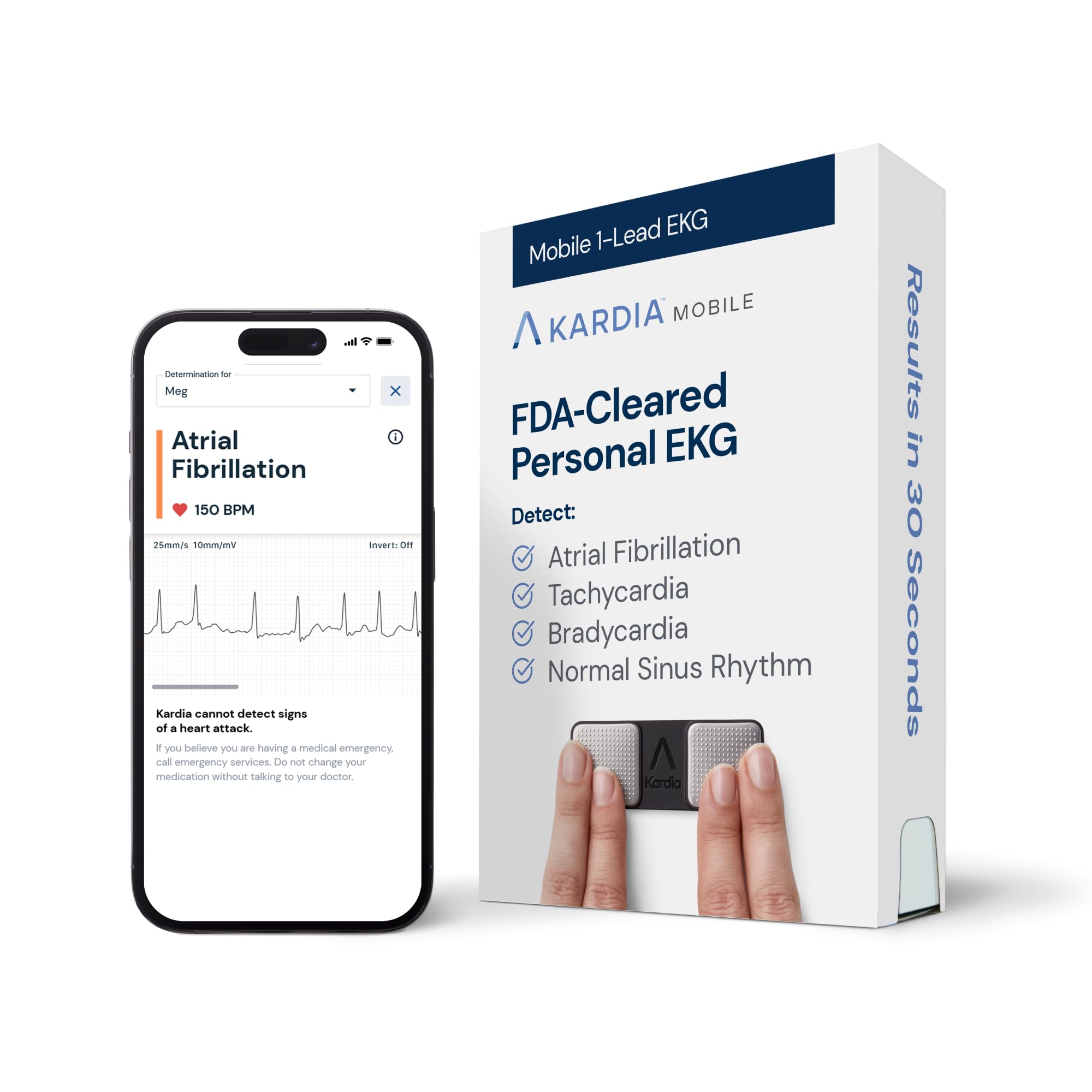
1. KARDIAMOBILEKardiaMobile
Our pick — over 4★ from 83,000+ verified ratings; the strongest balance of quality and price.
A credit-card-sized sensor that tells you your heart’s rhythm in 30 seconds flat.
This is the pick for anyone tracking heart rhythm rather than blood pressure. Place your fingers on the silver sensors and you get an FDA-cleared single-lead EKG (a fingertip reading of your heart’s electrical signal) in about 30 seconds. No Bluetooth pairing, no Wi-Fi setup, no cords, no computer — the device talks to your phone by sitting near it, which means the thing works even on the days your patience does not.
It holds the top spot because it reads rhythm, not because it is cheap. An EKG catches the skipped-beat, fluttering pattern that a cuff will never see, and this one is genuinely small enough to live in a jacket pocket at 3.28 inches long. The 12-month lithium-ion battery means you are not hunting for a charger every few weeks, and the pocket-sized footprint makes it the only monitor here you can carry to a restaurant without planning for it.
The honest catch is the app tiers. You can record and read a current result for free, but storing a history of past readings and open up the extra features requires a subscription, which owners grumble about. There is also a first-run quirk: the very first EKG goes through a review step before the device is usable, so do not buy this the night before a worried appointment. And accurate tracings take a little practice — a shaky hand reads poorly, which is a technique issue, not a defect.
What wins people over
- Fingertip EKG in about 30 seconds, no pairing or cords required
- Pocket-sized at 3.28 inches long, so it travels anywhere
- 12-month lithium-ion battery life means rare charging
Where it asks more of you
- Storing a reading history and open up extra features needs a paid subscription
- First EKG goes through a review step before the device is usable
- Clean tracings take a little practice with finger placement
Reach for this if: you want to know whether your rhythm is normal on a given day, especially with a history of palpitations or AFib.
Look elsewhere if: you need blood-pressure numbers — this reads rhythm only, and the cuff picks below do the other job.
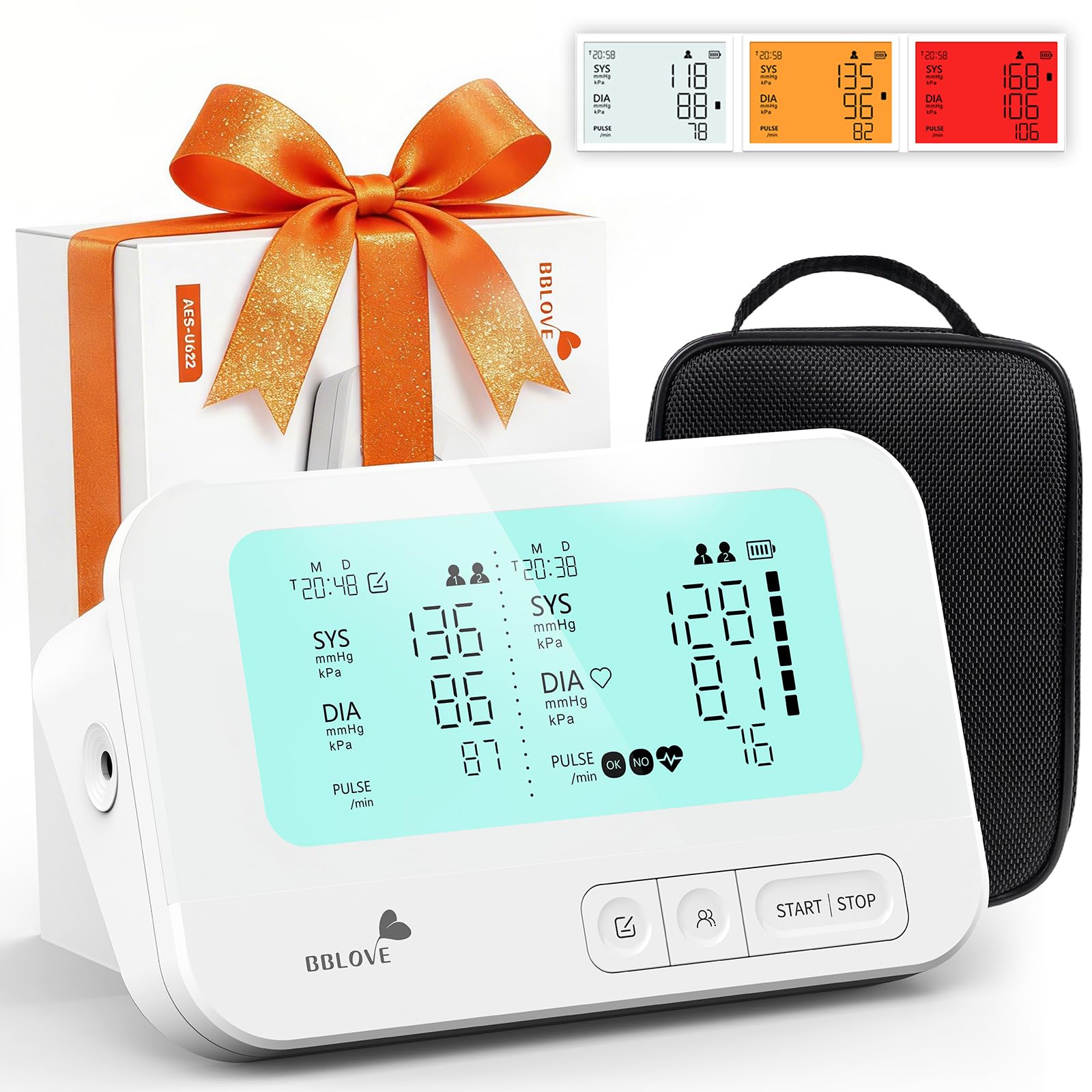
2. Blood Pressure Monitor
Two people, one monitor, and a screen that shows this reading beside the last one.
If two people in your house check their pressure, this is the one that does the job without anyone writing anything down. A physical switch flips between two users, and the dual-screen shows your current reading right next to your previous measurement — so the trend is visible on the device itself, not buried in an app. What wins people over most is the build quality, which is the thing owners talk about before anything else.
A dedicated mute button makes late-night checks quiet enough not to wake a partner, and the large backlit screen is readable in a dim bedroom. The adjustable comfort-fit cuff is stated to fit arms from 9 to 17 inches. It is also commonly eligible for flexible spending and health savings accounts depending on your plan, which changes the real cost for a lot of households.
Here is the trade-off worth knowing. Accuracy comes in as a mixed bag — some owners get readings that match a clinic, others do not — and a few mention the cord running short or the screen going dim. At 1.61 pounds it is noticeably heavier than the OMRON Gold below at 1.37 pounds, though it is the more compact of the two, measuring 6.69 x 2.6 x 4.33 inches against the OMRON’s 7.5 x 4.6 x 3.3. If there is no app in your routine, the missing Bluetooth will not bother you at all.
Family-first design: the 2-user toggle and side-by-side display turn a shared monitor into something two people can actually use without arguing over whose numbers are whose.
Suits: a household where a parent or partner also checks pressure regularly and wants the trend visible at a glance.
Caveat: skip it if you want readings synced to a phone app — this one keeps everything on the device.
3. OMRON Gold Blood Pressure Monitor
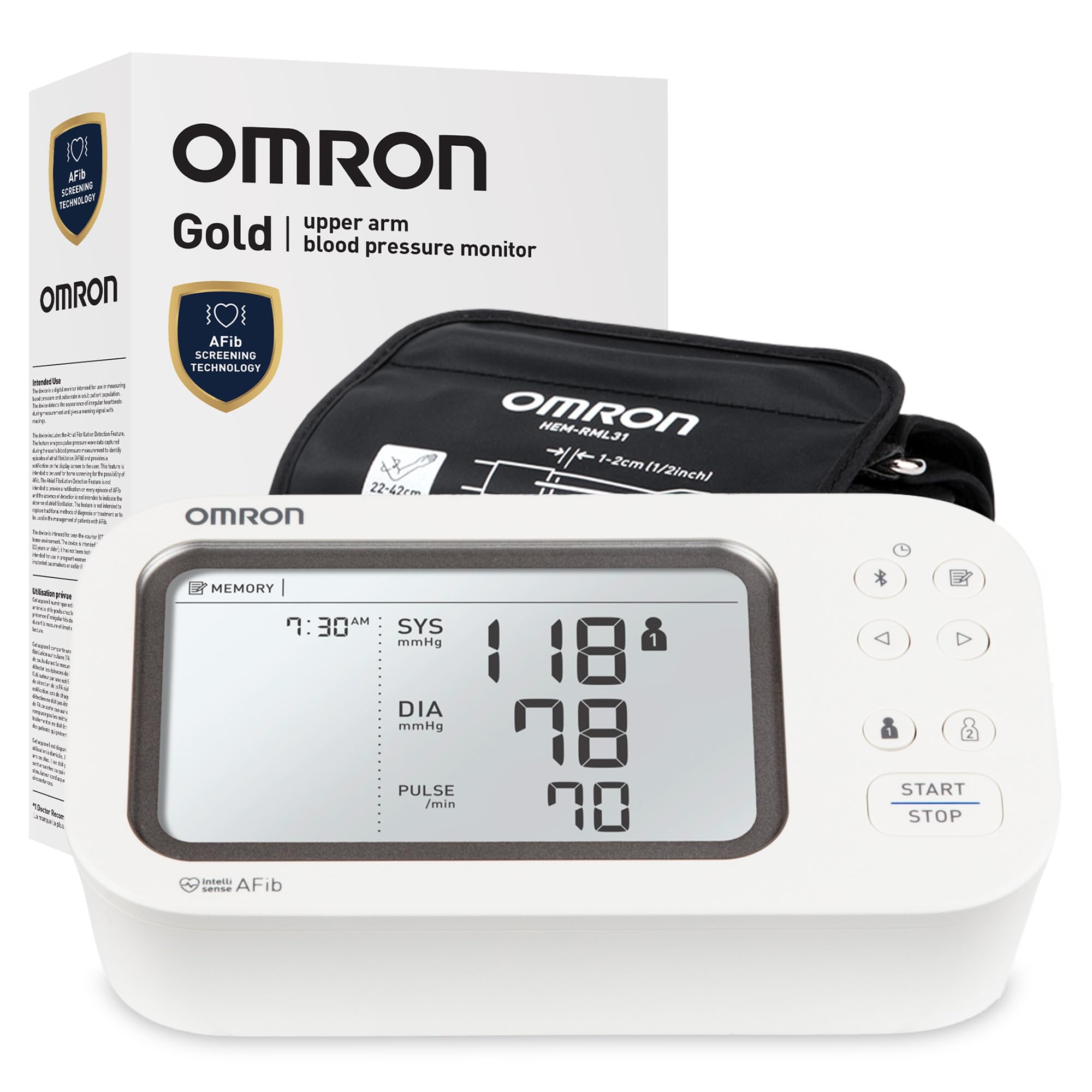
Pressure readings with a rhythm check built in — and a morning-spike flag for early risers.
This is the pick that gives a cuff two jobs at once. Every time you take a pressure reading, it also screens for unusual heart rhythms through AFib detection (a check that flags a possibly irregular beat pattern). A High Morning Average Indicator flags pressure spikes that cluster in the morning.
Owners like the dual-display the app workflow and the physical User 1 and 2 toggle, and the on-device history runs long. The wide-range D-ring cuff is stated to fit arms from 9 to 17 inches, and everything ships ready to go. What holds it back is the quiet print. The cuff is bulky for travel, and the biggest caveat is that if AFib is detected during a reading, the unit will not display a pressure value at all — a detail that lives in the manual rather than the listing.
Think of it as a screening tool rather than a passive number-taker: useful if you want a heads-up about rhythm while you track pressure, and a source of frustration if you just want a reading every time you press the button. A D-ring cuff also takes a bit of practice to wrap on your own arm, so the first few tries may feel clumsy before it clicks.
The catch worth knowing: the AFib screening is genuinely useful, but it can suppress a pressure reading entirely when it fires — so a blank screen is a deliberate behavior, not a broken monitor.
Best for: someone whose doctor wants both blood pressure numbers and a periodic rhythm screen without buying two separate devices.
Not the one if: you want a simple press-and-read cuff — the bulky D-ring and the AFib suppression will test your patience.
4. Polar H10 Heart Rate Monitor
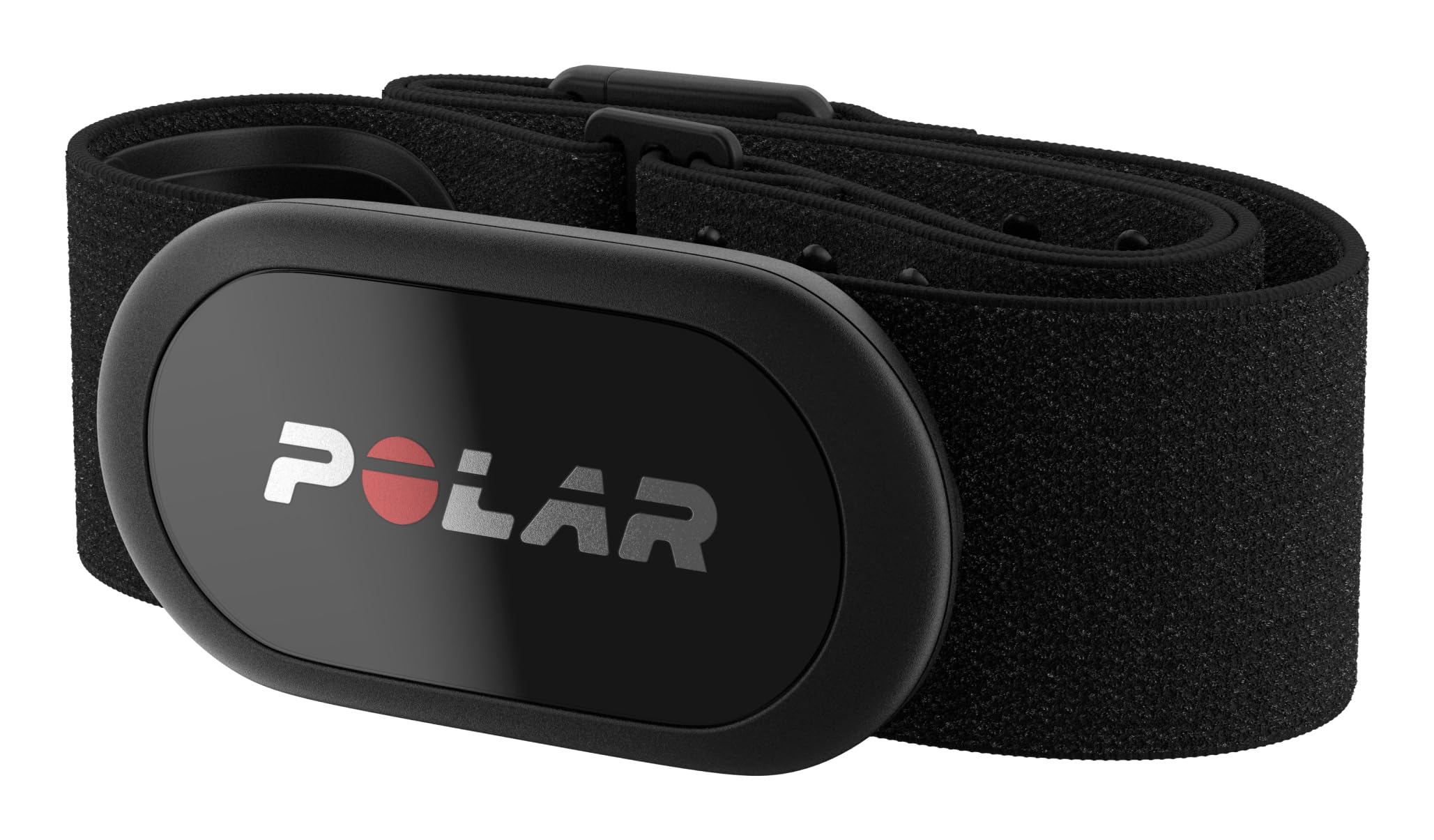
The rower’s and rider’s strap that reads your true effort without a single wet fingertip.
This is a different animal from everything above it. The H10 is a chest strap (a band worn around your ribcage that reads the heart’s electrical signal directly against your skin) built to feed live heart rate into rowing machines, bikes, and training apps while you move. It is fully waterproof, carries 400 hours of battery life from a single CR2025 button cell, and can be used with Bluetooth and ANT+ connections at the same time. It weighs 60 grams, light enough that most wearers forget it is there once the session starts.
Its strength is a steady signal. Owners who moved over from Garmin straps report that this one holds a steady signal without needing conductive gel or a splash of water first, and the buckle and silicone dots keep the band from sliding as you move. The chest-strap design is what makes it the right tool for anyone who genuinely wants to train to a heart-rate target rather than glance at a wrist reading mid-interval.
Be realistic about the trade-offs. Connectivity is split — some owners pair it in seconds, others wrestle with it — and the Polar flow app pairing can be fussy, so be patient during setup. Unlike the around-the-arm cuffs above, this is not a device you can use sitting still with a coffee; it is for movement and training, and it does that one job exceptionally well.
Why trainers keep coming back: the dual radio setup means it can talk to two Bluetooth devices plus an ANT+ receiver at once — gym equipment, app, and watch can all see your heart rate simultaneously.
Pick this up if: your priority is a live, reliable heart-rate number for the duration of a workout.
Think twice if: you want a sit-down device at home — this is a training tool, not a resting-monitor replacement.
5. Garmin Index BPM

The cuff that quietly files your readings into a doctor-ready report while you forget about it.
If your goal is a neat history you can hand to a physician, this is the pick. It is an FDA-cleared upper-arm monitor that syncs readings straight into your Garmin Connect account over Wi-Fi. From there you can build 7-day, 4-week and 1-year reports and export them as a PDF to email or bring to an appointment. Up to 16 users can sync their own Garmin Connect accounts, so a whole family can share the one device and still keep separate histories.
The battery life is generous — up to 9 months from four user-replaceable AAA batteries — so this is one you set up on a shelf and mostly forget between check-ins. The integrated display means you can read a value without opening an app, and the adjustable cuff is stated to fit 9 to 17 inches. Where it earns its place is the long view: a year of readings sorted into a clean chart is a different category of useful to your doctor than a single morning number.
The catch is that the reports live online. Setup is on the slower side because you are pairing Wi-Fi, an account, and a cuff, and the best features assume you already run the Garmin ecosystem. If you will not use the app, a simpler cuff does the same physical job. If you will, this turns scattered readings into a report you can actually hand over.
Set-and-forget syncing: the automatic Wi-Fi upload means there is no manual logging step between you and a doctor-ready trend — pick it up, cuff on, press once, done.
The one for you if: you check pressure regularly and want a long paper trail with zero bookkeeping.
Pass if: you would never open the companion app — the sync is the whole point, and a plain cuff is simpler.
Know the Specs
Measurement type: rhythm versus pressure
A monitor with an EKG reads the electrical signal your heart produces, which is what reveals an irregular beat. A cuff monitor reads the physical force of blood against your artery wall. They answer different questions, and no single device does both well. Match the type to the concern you actually have before you compare anything else.
Cuff fit range
The stated arm circumference a cuff covers decides whether the number you get is trustworthy. An upper-arm cuff is generally more consistent than a wrist unit because it sits at a stable height. Check the range against your own arm and wrap it snugly — technique matters as much as the sensor inside.
Battery life and power source
Long battery life is about how often you think about the device. A cuff that runs months on disposable batteries is easy to live with; an EKG with a year of battery life is even less of a chore. Either way, shorter battery life means more charging, and more charging means more chances for the device to be flat when you need it.
Connectivity and app syncing
Bluetooth and Wi-Fi move readings into an app so they build a history instead of a pile of notes. On-device memory is enough for a single user who checks occasionally. Automatic syncing earns its keep the moment you are tracking a daily trend or sharing reports with your doctor.
Common Questions
Is an EKG monitor or a blood pressure cuff better for me?
Does the KardiaMobile EKG work without a subscription?
What arm size do the cuffs on this list fit?
Why does the OMRON Gold not show a reading sometimes?
Can two people share one blood pressure monitor?
Is the Polar H10 waterproof enough for swimming?
How long does the battery last on each of these?
Do I need the app for the Garmin Index BPM to be worth it?
Which of these is best for tracking a workout rather than resting readings?
Is a home monitor accurate enough to rely on?
The Bottom Line
For most people starting out, the health monitoring devices winner is the KardiaMobile because it does the one thing no cuff can — reading your heart’s actual rhythm in 30 seconds from your fingertips — and it earns that spot with a 4.4-star average across 83,000+ owners at a mid-range price. If your need is blood pressure rather than rhythm, the OMRON Gold adds AFib screening and a morning-spike flag to its pressure readings. And for anyone who wants a clean, doctor-ready paper trail, the Garmin Index BPM turns daily checks into exportable reports automatically. Decide the job first — rhythm, pressure, or training — and the right pick is obvious.
How we choose
We do not accept paid placement. Every pick is matched to a real buyer and a real use-case; we do not hands-on test units.
Sources
Specifications: manufacturer listings and product documentation. Review insights: verified customer reviews, as of October 2026. Pricing: not shown on this page (it changes often); check the current price via the retailer link.
As an Amazon Associate, Aappliancez earns from qualifying purchases. This does not affect which products we feature.