Disclosure: Some links in this post are affiliate links. As an Amazon Associate I earn from qualifying purchases, at no extra cost to you. Learn more
Specs are compiled from manufacturer listings and verified buyer reviews and can change over time — please confirm the key details on the product page before buying.
If your bulletin board paper sags, curls at the corners, and shows every staple hole by October, the fix is not more tape — it is switching material. A good fabric-style roll hangs flat, hides pin marks, and wipes clean, so you set the board up once and it still looks tidy months later. The picks below cover the real choices: wood-look rolls, deep solid colors, a cheap craft fabric you can cut to any size, and a felt board you hang without nails.
This guide is built by comparing the manufacturers’ published specifications and the patterns across verified customer reviews, so you get each pick’s real strengths and trade-offs instead of marketing spin.
You will see why thickness, roll length, and surface texture decide whether a cover lasts one term or several — and which roll suits which wall. Read on for the honest breakdown of the fabric for bulletin boards that actually holds up.
Top Picks


How To Choose The Best Fabric for Bulletin Boards
The wrong cover is the one you re-do every nine weeks. The right one goes up once, survives staples and push pins, and wipes clean when a marker strays. Four things decide which camp a roll lands in.
Measure your board before you buy a roll
A standard Teacher Created Resources roll measures 4 feet by 12 feet, which covers a full-sized board with material left over. A narrower roll such as the Smart-Fab 24-inch width is 216 inches long, so it reaches far but needs doubling on a wide board. Get your board’s height and width first, then match the roll length to it — a long board can eat more than one roll.
Look for a surface that hides holes and wipes clean
The Better Than Paper rolls resist tearing and showing staple holes, and they take a damp cloth without losing color. That combination is what lets a cover survive a full year of border trim and student work being pinned and unpinned. Plain craft paper has neither, which is why it fades and tears.
Decide between a printed roll and a felt board
A printed roll gives you a wood, shiplap, or deep-color backdrop that goes up with staples or tape. A felt board gives you a thick self-healing surface that holds push pins and mounts without screws. Pick the roll if you want to cover a large existing cork board cheaply; pick felt if the wall is bare and you cannot drill.
Check the mounting method against your wall
Most rolls mount with staples or tape, which leaves small holes. Felt boards use hook-and-loop backing for removal without wall damage. If you rent, teach in a room that bans permanent adhesive, or share the space, the mounting type matters as much as the fabric itself.
Side-by-Side Comparison
| Model | Best For | Roll / Board Size | Material | Mounting | Amazon |
|---|---|---|---|---|---|
| Teacher Created Resources White Shiplap★ Best Overall | Bright farmhouse backdrop | 48″W x 144″L | Plastic, write-on/wipe-off | Wall mount (staples/tape) | Amazon |
| Teacher Created Resources Royal BlueBoldest Color | Bold classroom color that stays | 48″L x 144″W | Plastic, write-on/wipe-off | Wall mount (staples/tape) | Amazon |
| Smart-Fab Craft Fabric Roll | Cut-to-size craft and outdoor use | 24″W x 216″L | Non-woven fabric | Staple, glue, or sew | Amazon |
| Teacher Created Resources Rustic Wood | Warm wood-look office and classroom | 48″L x 144″W | Plastic, write-on/wipe-off | Wall mount (staples/tape) | Amazon |
| Felt Bulletin Board 36×24 | Damage-free felt board for home and office | 36″L x 24″W | Felt (0.35-inch thick) | Hook-and-loop backing | Amazon |
Detailed Reviews
1. Teacher Created Resources White Shiplap Better Than Paper
Our pick — 4.5+★ from 1,000+ verified ratings; the strongest balance of quality and price.
The shiplap roll that covers a full board and wipes clean all year.
What you get is a 4-foot by 12-foot roll of a plastic-backed sheet that prints like whitewashed wood planks — the measurement that matters because it drapes a full-sized board with a bit to spare. That spare length is the difference between a backdrop that stops short at the edge and one that wraps neatly. And it weighs just 1.8 pounds, so hanging it up is a one-person job.
The surface earns its keep. It is write-on and wipe-off, it resists tearing, and it does not show staple holes, so border trim, posters, and student work can go up and come down without leaving a pockmarked mess. A damp cloth brings it back to fresh. Think of it as a reusable backdrop rather than a one-term paper cover — you staple it, trim it with scissors to your exact shape, and it looks the same in spring as it did in fall.
What wins people over is the authentic wood look on a thick sheet. As buyers report: “Thick, easy to install, large enough to cover a full sized bulletin board with a bit to spare.” The one honest limit is width — at 48 inches it fits a typical board, but a long wall wrap may take more than one roll. It is the strongest all-rounder here, the pick most likely to still look tidy after a full school year.
What lands the top spot
- 4 ft x 12 ft roll covers a full board with material left over
- Write-on/wipe-off surface resists tearing and staple holes
- Shiplap printing reads as real wood, not flat print
- Cut with scissors to any shape; staples or tape attach cleanly
Where it asks more of you
- 48-inch width means a very long board may need a second roll
- Wall mounting with staples or tape leaves small holes
Best for: the teacher or office organiser who wants a warm, wood-look backdrop that stays clean from September to June.
Think twice if: your board is wider than a standard full-size frame, where the 48-inch width will leave you short.
2. Teacher Created Resources Royal Blue Better Than Paper
A royal blue that holds its depth instead of fading to a washed-out sky.
The number worth knowing here is the color’s staying power on a deep royal blue — this is the pick for a board you want to read as saturated from across the room. It is the same 4-foot by 12-foot roll format as the shiplap above, and 1.8 pounds, so you cut and hang it the same way. The difference is the finish: solid, vivid, and built to resist the sun-fade that ruins cheap paper.
Durability is what owners keep coming back to, and the long-haul stories are the real proof. One teacher has the identical paper hanging in a classroom after two years and still calls it “brand new”; another reports four-plus years of reuse, resisting staple holes and color fading. It takes staples without tearing at the staple line and wipes down with a damp cloth. There is enough on a single roll for three medium boards.
The recurring gripe is wrinkle resistance — some rolls come off the tube with creases that take a little coaxing to settle. Plan to unroll it and let it relax before you staple. If flat-from-the-box is your must-have, weigh that against the deep color and the multi-year reuse that make this one worth the extra patience.
The long-haul case: a royal blue this saturated that survives multiple school years is the reason teachers buy it again — the color does not go chalky and the sheet does not shred at the staple line.
The unroll ritual: give it a day to relax out of the tube before stapling, and the crease worry mostly disappears.
Reach for this if: you want the most saturated color in the lineup and plan to keep the same board up for years.
Look elsewhere if: you need it perfectly flat the instant it comes out of the roll.
3. Smart-Fab Craft Fabric Roll, 24″ x 18′, Blue
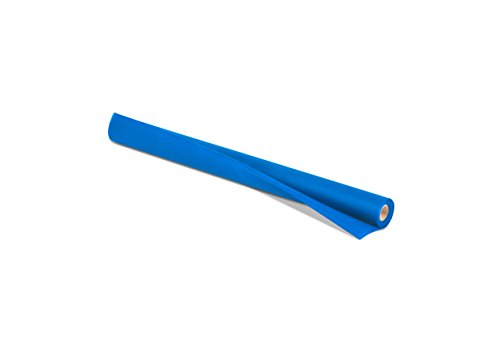
The narrow, weather-proof roll you can staple, sew, paint, and drag outdoors.
Here is the roll-length headline: 216 inches of fabric on a 24-inch width. That is far longer than the 48-inch length of the Teacher Created Resources rolls, so one bolt reaches across many boards instead of one. It is a non-woven fabric, not plastic-backed paper, and it weighs 6.4 ounces — light enough to pin up without sagging. The 24-inch width is the trade-off: on a wide board you lay two runs side by side or double it over.
Versatility is the whole pitch. This is the roll you can cut, staple, sew, glue, paint on, and shape — indoors or out — because it is weather-proof and does not fray or fade. A sixth-grade teacher swapped out fading, ripping paper for this and covered three large boards from one roll with leftovers, while other teachers asked what it was. It also holds up in sun, rain, and wind, so it covers a patio canopy or fair booth backdrop as easily as a classroom wall.
Be honest about thickness: this fabric is thin, and opacity is where it draws mixed feedback — a single layer can let a grey or stained surface show through, so double it over on a dark wall. Liquid glues also struggle to bond it to itself; hot glue works but can show through the thin sheet. As one buyer put it plainly, it is “thinner so I had to double it over to cover bulletin boards, but it worked.”
The one-roll reach: 216 inches at 24 inches wide means a single bolt covers multiple boards, which is why teachers keep a spare roll in the cupboard.
The doubling rule: on any dark or marked wall, plan two layers — thin fabric is the price of the low weight and the cut-anything flexibility.
Right choice for: crafters and teachers who cut, paint, and sew their displays and want one long roll that goes indoors and out.
Skip the single layer if: your wall is dark or stained — this needs doubling to hide what is behind it.
4. Teacher Created Resources Rustic Wood Better Than Paper

A warm light-brown plank print that turns a pin-scarred board into a feature wall.
The thing that makes this pick different from the shiplap and royal blue above is the color direction — a light-brown rustic wood that looks less like classroom paper and more like a finished accent wall. It measures 4 feet by 12 feet and 1.6 pounds, a hair lighter than its two siblings, so it hangs flat without sagging at the corners. The plastic surface hides staple holes and wipes clean, so a year of push pins and tacks does not scar it.
Appearance is what carries this one, and the reuse stories back it up. The review pages sum it up best: it is “NOT flimsy paper. It is very sturdy and looks great on bulletin boards.” People report using it across bulletin boards, wooden podiums, bookshelves, and cabinet doors, and one owner has a roll still looking new after three years in a classroom. It also covers a pair of boards from a single roll, with extra left for other projects.
The honest note is planning: a longer board can take 1.5 rolls rather than one, so measure before you start and keep a spare if your wall runs wide. It also costs more than plain paper — but that math only bites if you replace paper every term and this one every few years. Treat adhesion carefully too; it mounts best with staples or tape on a clean surface.
Why the wood print leads: of the printed rolls here, this light-brown plank finish blends into home offices and staff rooms without looking like a classroom decoration.
Measure first: wide boards can consume more than one roll, so buy the spare up front instead of mid-project.
Suits you if: you want a warm, authentic wood backdrop that hides pin holes and wipes clean for years.
Pause if: your board is unusually long — plan for 1.5 rolls rather than a single one.
5. Felt Bulletin Board 36×24 inches
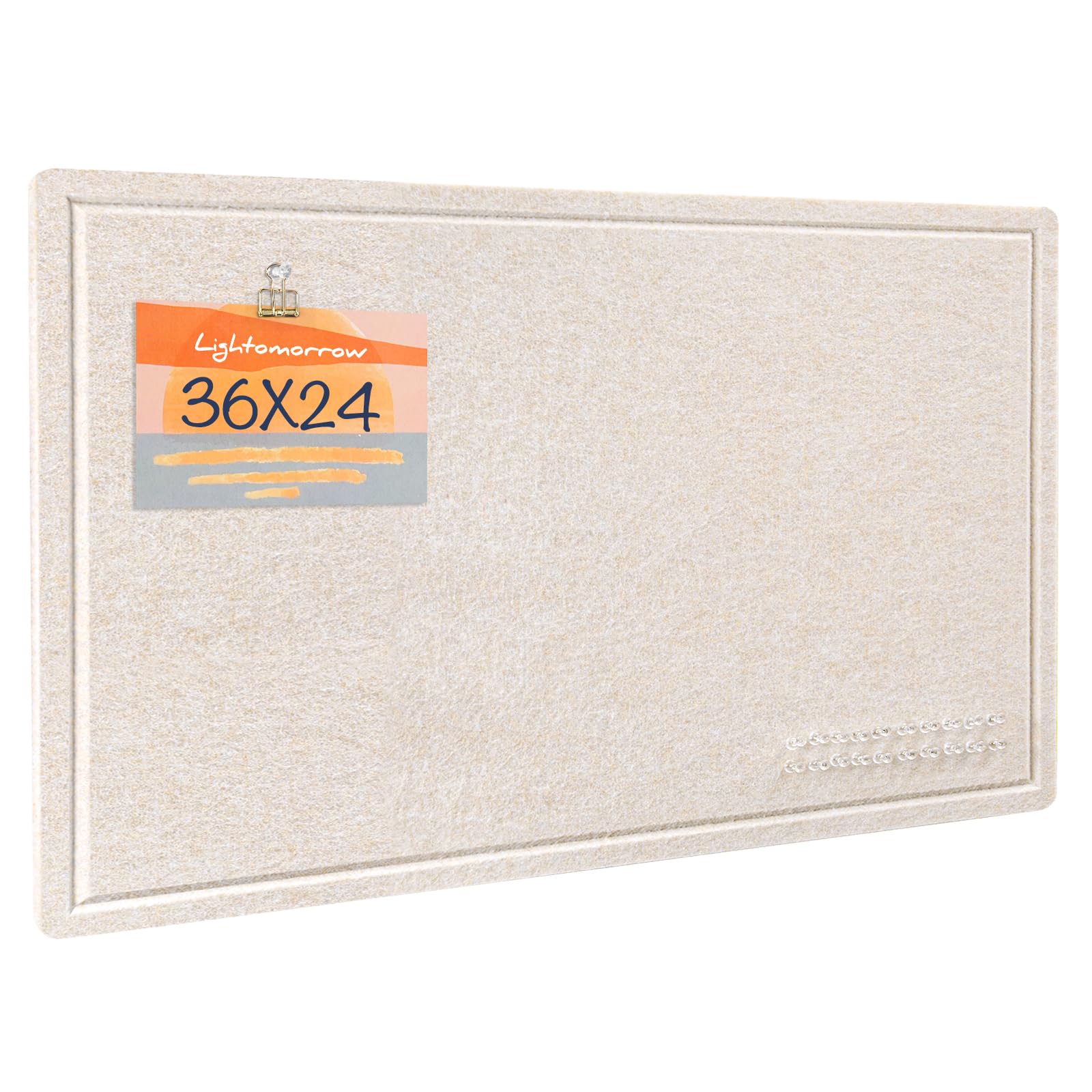
The ready-made felt board you mount without a single screw hole.
This one skips the roll-and-staple routine entirely. It arrives as a finished 36-inch by 24-inch felt board, 0.35 inches thick, made from premium polyester fiber — thick enough that push pins hold firmly. Because it uses hook-and-loop backing, it goes up and comes down without wall damage, which is the whole reason to pick a board over a roll. It also covers marks and imperfections on the wall behind it.
What owners rave about is the look — a soft, dense felt surface that reads as modern next to an old cork board. It comes in colors like oatmeal and a lavender mist that holds true to the photo. The self-healing surface takes repeated pinning without leaving the obvious holes cork does, and it is made without glue or chemicals, so it is odorless. A centre seam lets it fold for transport and is not obvious once it is up.
The catch is what you can pin. It holds push pins well, but staples will not grip the felt, so if you like to staple papers flat, this is the wrong surface. A few people also mount it with Command strips and binder clips instead of the included hook-and-loop, which works where permanent adhesive is banned. As one familiar frustration goes, “a staple won’t hold” — plan on pins, not staples.
Why renters and teachers grab it
- Hook-and-loop backing mounts and removes without wall damage
- 0.35-inch felt is thick enough for push pins to hold
- Self-healing surface resists visible pin holes
- Frameless design covers wall marks and folds for storage
The one surface limit
- Staples will not hold — this is a push-pin surface only
- The centre fold seam exists, though it is subtle once mounted
The verdict: a finished felt board for people who cannot drill or staple and want a clean, modern pin surface in a home office or classroom.
The caveat to weigh: if your display habit is stapling papers flat, this board will fight you — pins only.
Know the Specs
Roll size and coverage
Roll size is given as width by length, and it tells you how many boards one roll covers. The Teacher Created Resources rolls run 48 inches wide by 144 inches long, which drapes a full-sized board with spare. The Smart-Fab bolt is narrower at 24 inches but far longer at 216 inches, so it reaches across more boards but needs doubling on a wide wall. Always measure your board first, and remember a long board can take more than one roll.
Surface and staple resistance
The Better Than Paper rolls use a plastic surface that is write-on, wipe-off, and resistant to tearing and showing staple holes — so pins and staples come out without leaving pockmarks, and a damp cloth refreshes the color. Felt boards take a different path: the 0.35-inch felt self-heals around push pins but will not grip staples. Match the surface to how you display — staples for trim and posters, pins for photos and notes.
Common Questions
How much board will one roll of bulletin board fabric cover?
Will staples leave visible holes in a Better Than Paper roll?
Can I write on these bulletin board surfaces with a marker?
How do I hang a felt bulletin board without drilling holes?
Is felt better than a printed Better Than Paper roll for a classroom?
Can Smart-Fab fabric be used outdoors or in humidity?
Why does my bulletin board roll look creased when I unroll it?
What is the thickness of the felt bulletin board?
How long does a Better Than Paper roll last before it needs replacing?
The Bottom Line
For most buyers, the strongest of the fabric for bulletin boards is the Teacher Created Resources White Shiplap roll — 4 feet by 12 feet of thick, write-on/wipe-off sheet that covers a full board and hides staple holes, at 4.5+ stars across 1,000+ owners. If you want a saturated color that survives years of classroom abuse, go with the Royal Blue roll. For cutting, painting, and outdoor use on one long bolt, the Smart-Fab fabric roll is the flexible workhorse, and the felt board is the one to reach for when you cannot put a single hole in the wall. One honest nudge: a wood or shiplap roll hides pin holes and wipes clean, so pick the finish you can live with for several school years rather than the cheapest sheet you will replace next term.
How we choose
We do not accept paid placement. Every pick is matched to a real buyer and a real use-case; we do not hands-on test units.
Sources
Specifications: manufacturer listings and product documentation. Review insights: verified customer reviews, as of October 2026. Pricing: not shown on this page (it changes often); check the current price via the retailer link.
As an Amazon Associate, Aappliancez earns from qualifying purchases. This does not affect which products we feature.