Disclosure: Some links in this post are affiliate links. As an Amazon Associate I earn from qualifying purchases, at no extra cost to you. Learn more
Specs are compiled from manufacturer listings and verified buyer reviews and can change over time — please confirm the key details on the product page before buying.
An ash blonde dye works by pushing blue and violet tones into your hair to cancel out warm orange and yellow. If your starting color is more than two shades away from the shade you pick, the warm undertones win and you get brass instead. That is why the same box can turn one person platinum honey and another person copper. Below, the picks are ranked by how reliably they land on a true ash, how well they cover gray, and how the formulas treat your hair while the color sets in.
This guide is built by comparing the manufacturers’ published specifications and the patterns across verified customer reviews, so you get each pick’s real strengths and trade-offs instead of marketing spin.
A permanent ash blonde dye only reads ashy when your starting shade sits close to the target, so shade matching is the whole game here. This breakdown of the ash blonde dye options covers gray coverage and how each formula actually behaves.
Top Picks
How To Choose The Best Ash Blonde Dye
Choosing an ash blonde is not the same as choosing any other blonde. You are not just adding color. You are actively neutralizing the warm pigment already in your hair, and how much of that pigment you have decides which box works on you. Three things drive the outcome: how far your starting shade sits from your target, how much lift the developer delivers, and how long the tone holds before it fades back to warm.
Match within two shades or fight the orange
The single most useful rule in this category is the two-shade limit. A permanent color does its best work when your starting hair is within two shades of the target, because the dye has enough neutralizing power left to kill the warmth. Step further out and the lift reveals undertones the ash pigment cannot fully cover, which is where the copper and orange reports come from. Read the shade back of the box and be honest about where your hair actually sits, not where you wish it sat. If you are two or more shades darker, plan on a pre-lightening step before any ash goes on.
Read the number and the letter, not the model name
Once you understand the shade code, you can shop any brand. The number is the depth, and the letter is the tone family — so an 8A is a level-eight depth in an ash tone, while a 7A is a touch deeper. Two boxes with similar names can sit at different depths and leave different undertones behind. Choose the depth that is one level lighter than the result you want, since dye reads darker on the head than on the swatch. And always run a small strand test before the full head, because the same shade behaves differently over gray, over previously colored hair, and over virgin roots.
Weigh coverage against care for your hair type
Full gray coverage and gentle treatment pull in opposite directions, so decide which matters more to you. Formulas built to cover stubborn salt-and-pepper gray use stronger chemistry and can leave hair stiffer, which is fine if you mainly need coverage. Formulas built for bonding and conditioning are easier on the hair but may lift less aggressively. If your scalp runs sensitive, look for an ammonia-free base and keep the processing time to the stated window instead of leaving it on longer for stubborn grays — over-processing is what causes most of the breakage reports in this category.
Side-by-Side Comparison
| Model | Best For | Shade | Gray Coverage | Ammonia | Amazon |
|---|---|---|---|---|---|
| Garnier Nutrisse Ultra Crème, 111★ Best Overall | All-round pick, first-time gray coverage | Extra-Light Ash Blonde | 100% | — | Amazon |
| L’Oreal Paris Superior Preference, 7ATop Performer | Long-lasting tone, full-head refresh | Dark Ash Blonde | Gray coverage | — | Amazon |
| Bondbar 9A Lightest Ash Blonde | Toning out brass, sensitive scalps | 9A Lightest Ash Blonde | 100% | — | Amazon |
| Revlon Colorsilk, 60 Dark Ash Blonde | Monthly root touch-ups, gray coverage | 60 Dark Ash Blonde | 100% | Ammonia-free | Amazon |
| Naturtint 8A Ash Blonde | Ammonia-free, plant-based formulas | 8A Ash Blonde | Up to 100% | Ammonia-free | Amazon |
Detailed Reviews
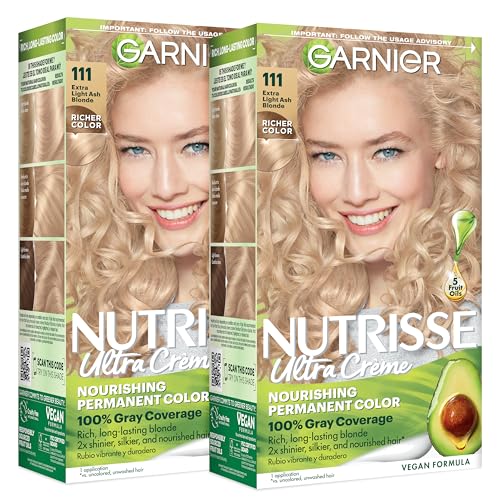
1. Garnier Nutrisse Ultra Crème 111 Extra-Light Ash Blonde
Our pick — over 4.5★ from 1,000+ verified ratings; the strongest balance of quality and price.
Two boxes, five fruit oils, and the ash that rescues brassy hair from the orange zone
The pitch here is simple: the color holds up to 8 weeks while the oil ampoule conditions as you process, and the kit snaps and pours a blend of avocado, olive, coconut, argan, and shea oils straight into the mix. That oil blend is why hair comes out of the rinse 2X shinier and silkier than uncolored hair — a difference that matters more in an ash blonde than in almost any other shade. Ash dyes are the least forgiving on dryness, because the blue and violet pigments sit right where the light hits. Keep the after-color conditioner in the routine and the tone stays cooler-looking.
On the practical side, 100% gray coverage is the headline, and the salt-and-pepper crowd is the part of this audience the formula was clearly built for. The application is a non-drip cream that spreads evenly, and the timeline is generous: mix colorant, developer, and the oil ampoule, work it through dry hair, process 30 minutes, rinse, then condition. Shade over 60 options means you are not boxed into one depth, and the whole line is made without animal-derived ingredients. One real constraint: the manufacturer notes that results land best when your starting color sits within two shades of the target, so a deep brunette should not expect a straight lift to extra-light ash.
What wins people over here is the color itself, which is also the thing this buyer crowd talks about more than anything else by a wide margin. The color shifts brassy lengths into platinum honey blonde, and reviewers report the result blends with root color cleanly enough that home color stops reading like home color. One more convenience that is easy to overlook: the two-count pack is a real advantage for touch-ups, since the same shade is on hand when roots come back. The recurring gripe is the applicator — the customer-say read finds people split between finding it easy and struggling with the bottle, so budget a few extra minutes on application. Damage is the other split topic in the reviews, with some reporting none at all and others seeing breakage. Adhere to the 30-minute window and give a light, long-haired crown a little more care, and you are unlikely to hit that end of the range.
What delivers
- Color holds up to 8 weeks with 100% gray coverage
- Five fruit oils — avocado, olive, coconut, argan, shea — snap into the mix
- Hair comes out 2X shinier and silkier than uncolored hair
- Two-count kit means a spare box for root touch-ups
- Over 60 cruelty-free, vegan shades to choose from
What to weigh
- The applicator splits opinion, so allow extra application time
- Best results only when your starting shade is within 2 shades of the target
Top of the stack: pick this if you are covering grays or refreshing a full head and want the strongest overall balance of tone, care, and spare product in the box.
Hold off if: your starting color is more than two shades off extra-light ash — this kit cannot bridge that gap on its own.
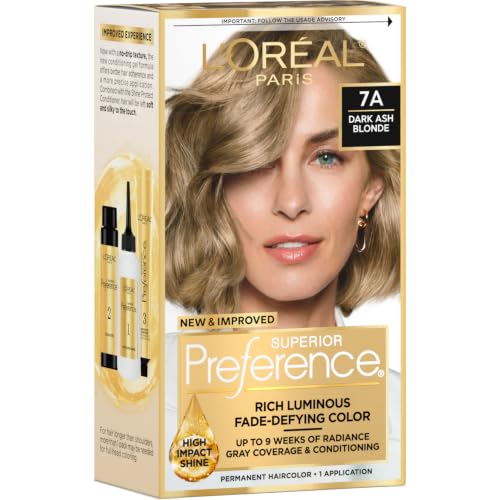
2. L’Oreal Paris Superior Preference Dark Ash Blonde 7A
Nine weeks of fade-defying tone in the smallest kit on this list — and the lightest by far
If you want the tone to stay put, this is the pick that stretches. The stated claim is color, radiance, gray coverage, and conditioning for up to 9 weeks — the longest window on this page — and it is a real difference, since ash tends to drift warm as the weeks pass. The fade-defying angle lives in the UV Filter and Vitamin E-infused Shine Protect conditioner in the box, which is meant to hold first-day vibrancy and keep hair silky. Alongside the conditioner you get the color gel, the developer crème, a pair of gloves, and the instruction leaflet, so nothing extra is needed. It is the slimmest kit here by a wide margin: the Garnier Nutrisse box measures 2.46 x 6.5 x 6.25 inches against this one’s 6.3 x 3.55 x 2.25 inches, and the Garnier carton is also the heavier package at 15.43 ounces versus the 0.35 ounces listed here, so a smaller bathroom shelf is genuinely a fit for this kit.
The formula itself is a no-drip gel, which is the difference between a tidy application and a runny one, and the gel texture is built to adhere better and coat the hair fiber more precisely with a concentration of long-lasting dyes. Dark Ash Blonde 7A suits you if extra-light feels too pale and you want depth with a cool cast rather than a golden one. The trade-off to know before you buy is the coverage story — ash has a reputation for fading or reading silvery on hair with stubborn gray, and this line’s customer feedback is genuinely split on whether the shade matches what was there before. It is a fit issue rather than a flaw: on hair close to 7A already, the match reads true, and on hair that is many shades off, the tone is harder to hit.
What earns this pick its own slot is the longevity — this is the only kit on the page stating up to 9 weeks, and that claim is doing the heaviest lifting in the lineup’s longevity debate. It also sits in the mid-range band, which makes it the sensible step up if you want a longer-lasting shade without going premium. Best for all hair types and available in permanent, semi-permanent, and temporary formats across the wider L’Oreal Paris range if you later want a gentler refresh. Think of it as the pick for someone who wants to color less often and would rather the tone hold than chase a specific lift.
The fade argument: up to 9 weeks of stated radiance plus a UV-filtered Shine Protect conditioner make this the longest-lasting pick here.
Before you commit: the shade is a true 7A, so expect it to match closely rather than lighten dramatically, and strand-test if your gray is resistant.
Reach for this if: you are refreshing toward Dark Ash Blonde and want the longest stretch between color days.
Look elsewhere if: you need a dramatic lift from a much darker base, since a 7A is a match shade, not a lifting shade.
3. Bondbar 9A Lightest Ash Blonde Hair Color
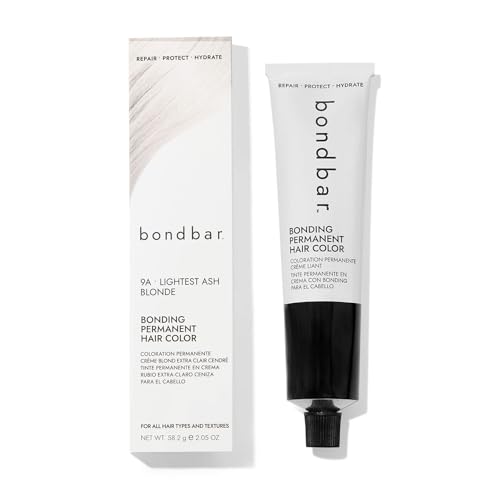
The lightest ash tone here, and the only one with bonding built into the tube
This is the pick for hair that has already gone warm and needs a cooler cast without a separate toner. At 9A, it is the lightest ash shade in this lineup, and reviewers report gentle lifting that tones out brassy color better than liquid toners while staying kind to a sensitive scalp. Use it as a standalone in-salon-style service or as a touch-up and you are adding coolness without stripping the hair down first. If your ends have drifted toward yellow, this is the formula whose whole job is to meet that problem head-on.
The bonding angle is what makes it stand out. Strengthening and conditioning are built into the creme itself rather than bolted on at the end, so the color and the repair work happen in the same 1:1 pass with the developer. The formula is fully loaded for the sensitive-hair crowd: vegan, gluten-free, paraben-free, and it skips mineral oil, petrolatum, and phthalates. It also lists 100% gray coverage, so the cool cast reaches the roots too. One practical note — a developer is required to activate the color, and the maker recommends mixing at a 1:1 ratio; a few reviewers have used it with a different brand of developer with good results, but the brand’s own developer remains the recommended partner.
You get a smaller tube than the two-count kits, which is the honest trade-off of a single creme color, and you buy the developer separately. The upside is a shade range aimed squarely at people who do not want to pre-lighten, so if a double bleach is off the table for you, this is the box to read first. The tube and cap are made from 100% recycled aluminum, which is a nice detail for a home color product. The other thing to know is that a 9A is the lightest tone in this lineup, so it reads cool and pale — great over a warm base, less useful if you want depth.
Why it earns its place
- The repurposing of the tube itself — gently lifts and tones out brass better than liquid toners
- Bonding and conditioning built into the color, not added afterward
- Vegan, gluten-free, paraben-free, and skip-the-mineral-oil formula
- 100% recycled aluminum tube and cap
Keep in mind
- Developer is sold separately and required for activation
- A single 2.05 oz tube covers less than the multi-count kits here
Best for: warm, brassy lengths and anyone who wants to add cool tone on a sensitive scalp without pre-lightening.
skip it if: you want a full-head grey coverage kit in one box — you will need to add a developer and may want a backup tube.
4. Revlon Colorsilk 60 Dark Ash Blonde

Three ammonia-free kits of Dark Ash Blonde built for the monthly root touch-up habit
The 3-pack is the point here. If you color your roots on a schedule, three boxes of Dark Ash Blonde 60 in one order means you are not ordering a fresh kit every time the grays come back, and the shade stays consistent from box to box. The formula is the familiar Revlon no-mess, non-drip type, so the application stays tidy and the coverage is built for the salt-and-pepper gray crowd in particular. It delivers 100% gray coverage with multidimensional color and lasting shine.
What earns the Revlon its place is the combination of value and coverage the reviews keep circling back to. Buyers report using this exact shade for years to cover greys and describing it as cheap, effective, and spot on for color — a phrase that has traveled with this line for a long time. Other reviewers describe the shade as fast to apply for quick touch-ups and vivid enough to make hair shine. The formula is ammonia-free, which is the reason the sensitive-scalp end of this audience tends to like it. The application method is straightforward — mix, apply, develop, rinse — and the no-drip gel texture keeps the process clean.
The honest limit here is availability — this is the discontinued version of ColorSilk, and the manufacturer notes it cannot guarantee the quality of older stock. That is worth knowing before you commit, though the 3-pack is a good hedge against the next time a box is hard to find. The other thing to plan for is tone drift on stubborn gray: the reviews are mixed on color coverage, with some saying gray covers well and others saying the shade fades over time, and one buyer’s gray pulled red until an ash blonde was mixed in to calm it down. If your gray is stubborn or your base is warm, do a strand test first. For consistent root touch-ups where the shade you want is already in range, this is the low-effort, low-cost routine pick in the lineup.
Why the 3-pack wins: a straightforward ammonia-free kit that covers gray and stays consistent across three boxes, at a value several verified owners mention is the reason they have repurchased for years.
The honest caveat: it is the discontinued version of a long-running line, so quality can vary with older stock, and buyers should strand-test this one before a full head.
Pick this one if: monthly root touch-ups are your routine and you want three kits of a proven ammonia-free shade on hand.
Think twice if: you need a heavily lifted cool result — this is a matching shade, not a dramatic lightener.
5. Naturtint 8A Ash Blonde Permanent Hair Color (Pack of 1)
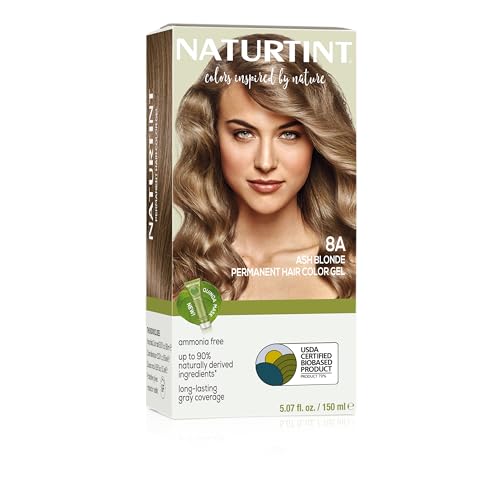
Plant-based, ammonia-free, and certified — the gentle-chemistry route to ash blonde
You come to Naturtint for the formula, not the speed. It is enriched with plant-based ingredients for visibly healthier hair, and it is built without ammonia, parabens, or heavy metals, which is the reason it draws the sensitive-scalp crowd. The credentials are unusually specific for a home dye: USDA BioPreferred Certified and ISO 16128 compliant, with a forever cruelty-free and vegan statement. If your scalp reacts to standard permanent color, this is the box to read first. The claim is up to 100% gray coverage and long-lasting results, and the application is designed to be easy and mess-free for home use, though the packaging may vary.
What the reviews approve of most is how gentle it feels — the positive note that shows up most often is exactly that, on top of the coverage several describe as reaching the gray areas and a color that reads natural. Buyers also describe it as worth recommending for the tones and the way it feels on hair. It is the shade among this lineup that best fits someone who wants a softening ash cast rather than a lifted one, since a plant-based, ammonia-free base does its work more gradually.
And here is the part that matters most before you buy: this is the most mixed-evidence pick on the page, and its tone is the variable. Reviewers are split on the color itself, with a recurring theme among the skeptical side being a warm, reddish-orange tint — particularly at the roots — and some warn against the product on that basis. On the other side, plenty of buyers cover gray well and call the color natural-looking. That spread points to starting shade as the deciding factor: an 8A works best when your own base is close to it, and it is less reliable on hair that still carries warmth underneath. It also has the strongest warning flag in the set — a reviewer reports the mix getting very warm and, after being left on longer than directed for stubborn grays, significant breakage. That is one experience in a large review pool, not the norm, but the lesson holds: do not extend the processing time past the instruction window, for any brand. If you are chasing a dramatic lift out of very dark or very warm hair, this gentle formula is the one that will fight you hardest.
Its case: USDA BioPreferred Certified and ISO 16128 compliant, ammonia-free, vegan, and paraben-free, with several reviewers saying the coverage and the feel on hair are what keep them coming back.
Its trade-off: the shade behaves differently on different starting hair — reddish-orange tones at the roots come up more often here than on any other pick, and stubborn-gray over-processing is where the worst reports cluster. Read the shade chart carefully and stay inside the processing window.
Suits: the buyer who reads every ingredient line and wants a certified, ammonia-free formula they can use at home without harsh chemistry.
Not for: the buyer chasing a dramatic lift out of dark or warm hair, or anyone tempted to leave the dye on past the stated time — that is the single most common misstep this formula punishes.
Know the Specs
Understanding the shade code (letter + number)
A shade like 8A or 7A is genuinely two pieces of information. The number is the depth, running light to dark. The letter is the tone family — A is ash, which means the dye is pushing cool blue in while suppressing orange and yellow. When you compare a 7A Dark Ash Blonde against a 9A Lightest Ash Blonde, you are looking at two different depths in the same tone family, so they will land on two different starting shades. The general practice of picking a shade one level lighter than your goal still holds here, because permanent dye reads darker on the head than it does on the swatch. If your starting shade is more than about two shades from the target, plan on pre-lightening before you add the ash — otherwise the warmth underneath wins.
Developer, mixing ratio, and coverage
The developer is what actually lightens hair and opens the cuticle for the color to set in, which is why two people using the same ash box can get different results — the same shade with a stronger developer lifts further and often throws warmer. Some kits come with the developer already inside the box, while creme-style colors like the Bondbar 9A are sold as the color only and recommend mixing at a 1:1 ratio with a developer you add yourself. That ratio matters: it controls how much lift and how much tone reach where the gray lives. Gray hair resists color because it lacks the melanin that helps pigment grab, which is why formulas list coverage as a percentage and why stubborn gray is the first place warmth or fading shows up. Ammonia-free formulas tend to be gentler on the scalp and lift more gradually, so the coverage and coolness tend to build rather than arrive all at once.
Common Questions
Why does ash blonde dye turn my hair orange or brassy?
Does ash blonde dye cover gray hair?
What is the difference between 9A and 8A ash blonde shade codes?
Do I need a developer for a permanent creme hair color?
Is ammonia-free hair color less damaging than regular permanent dye?
How long does ash blonde dye actually last?
Can I use ash blonde dye on previously colored or bleached hair?
Should I leave ash dye on longer for stubborn gray hair?
Will a dark ash blonde look too cool or grey on my hair?
Do I need a certain developer strength to lift dark hair to an ash blonde?
The Bottom Line
The strongest all-round pick in this lineup is the Garnier Nutrisse Ultra Crème in 111 Extra-Light Ash Blonde, because it pairs up to 8 weeks of color and 100% gray coverage with a five-fruit-oil ampoule that keeps ash blonde from reading dry and washed out, and the two-count pack means you already have the matching shade on hand for touch-ups. If you want the longest stretch between color days, the L’Oreal Paris Superior Preference in 7A is the only kit here stating up to 9 weeks, and if brass in your lengths is the problem you are actually solving, the bonding formula in the Bondbar 9A Lightest Ash Blonde tones it out in the same pass — it just needs a developer you add yourself.
How we choose
We do not accept paid placement. Every pick is matched to a real buyer and a real use-case; we do not hands-on test units.
Sources
Specifications: manufacturer listings and product documentation. Review insights: verified customer reviews, as of October 2026. Pricing: not shown on this page (it changes often); check the current price via the retailer link.
As an Amazon Associate, Aappliancez earns from qualifying purchases. This does not affect which products we feature.