Disclosure: Some links in this post are affiliate links. As an Amazon Associate I earn from qualifying purchases, at no extra cost to you. Learn more
Specs are compiled from manufacturer listings and verified buyer reviews and can change over time — please confirm the key details on the product page before buying.
If you have ever sat hooked to a pump for 40 minutes and still felt full, you already know the real question: does it empty you comfortably and reliably, every single session? The app, the lights, and the carry bag are just extras. The nine pumps below cover every real pumping situation — the rechargeable double-electric workhorse most mothers end up buying, wearable cups you can tuck under a shirt while you cook, a heated option built to loosen stubborn clogs, and hospital-grade power for exclusive pumpers who need every last ounce. Read on to see which one fits your body, your schedule, and your bra.
This guide is built by comparing the manufacturers’ published specifications and the patterns across verified customer reviews, so you get each pick’s real strengths and trade-offs instead of marketing spin.
Pumping is a daily routine measured in minutes and ounces, so the machine you choose matters more than most baby gear. Below, every pick is broken down by suction, fit, noise, and how long it runs on a charge so you can find the right Milk Pump for your own pumping schedule without guessing.
Top Picks
How To Choose The Best Milk Pump
Most pumping frustration traces back to two things: a flange that rubs, and a pump that cannot keep up with how often you need to sit down. Fix those two and the rest is preference. Here is what actually matters before you buy.
Flange size beats everything else
The flange is the funnel-shaped shield your nipple sits inside. If it is the wrong diameter, you get pinching, rubbing, and less milk — no motor can fix that. Standard kits ship with a 24 mm shield, and many pumps also include a 21 mm option. Measure before your first session and buy inserts if you fall between sizes.
Wearable cups versus a standard pump
A standard double-electric pump uses tubing and bottles, and it is usually the stronger, more efficient choice for building supply. A wearable pump hides inside your bra with no cord at all, so you can move around the house or answer a call. Many mothers keep one of each: the wall-style pump for morning sessions and a wearable for work.
Suction, modes, and comfort
Suction is measured in mmHg, a unit of pressure. Most pumps here run from roughly 270 to 300 mmHg, and higher is not automatically better — comfort comes from cycling between a fast stimulation phase and a slower expression phase. Look for adjustable levels so you can find the setting that triggers letdown without pain.
Battery, noise, and cleaning
Runtime is listed in minutes or cycles, and noise in decibels (dB — a measure of loudness where a quiet room sits around 30). Fewer parts means faster washing, and a closed system keeps milk out of the tubing so there is less to sanitize.
Side-by-Side Comparison
| Model | Best For | Type | Suction | Power | Amazon |
|---|---|---|---|---|---|
| Spectra Baby S1 Plus Premier★ Best Overall | Everyday pumping at home and away | Double electric, portable | Comfortable adjustable suction | Rechargeable battery | Amazon |
| eufy Heated Wearable E20Best Heated Pick | Working moms who want warmth and freedom | Heated wearable cups | Up to 300 mmHg | Rechargeable | Amazon |
| eufy Heated Wearable S1Most Reviewed | Clog-prone pumpers wanting HeatFlow | Heated wearable cups | Up to 300 mmHg | Rechargeable, lithium polymer | Amazon |
| Zomee Z2 Double Electric | Faster sessions with alternate-mode tech | Double electric, portable | 9 suction levels | 2+ hour rechargeable battery | Amazon |
| Lansinoh Discreet Duo | Discreet in-bra pumping | Wearable cups | 9 hospital-strength levels | Up to 100 minutes per charge | Amazon |
| Momcozy M6 Wearable | In-bra pumping with a stand-up milk bowl | Wearable cups | 295 mmHg | Rechargeable | Amazon |
| Medela Swing Maxi Hands-Free | Budget-friendly compact hands-free pumping | Wearable cups | Patented 105° angled cups | Rechargeable, app-connected | Amazon |
| Philips Avent Double Electric | Gentle hospital-strength sessions at a desk | Double electric, corded | Up to 270 mmHg | Corded, must stay plugged in | Amazon |
| Medela Symphony Plus | Exclusive pumpers needing hospital power | Hospital-grade double electric | Initiation Technology program | Corded | Amazon |
Detailed Reviews
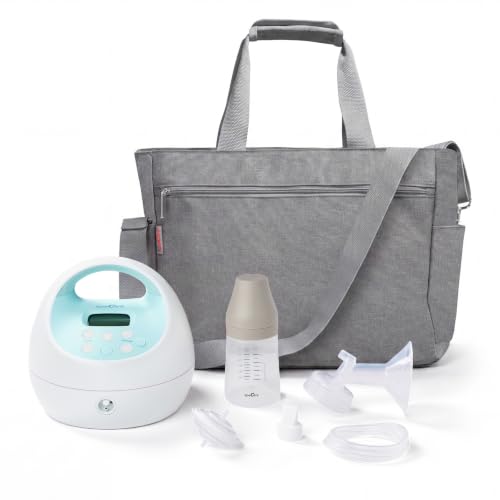
1. Spectra Baby S1 Plus Premier Rechargeable Breast Pump, 24 mm
Our pick — over 4.5★ from 350+ verified ratings; the strongest balance of quality and price.
A rechargeable double-electric pump that runs on battery for home, work, and travel sessions.
If you want one pump to carry you from a 2 a.m. session at the bedside to a lunch break at the office, start here. The S1 Plus runs on an internal rechargeable battery (meaning you can pump anywhere without hunting for an outlet) and can be used either as a single or a double electric pump. Its suction is designed to mimic the rhythm of natural breastfeeding rather than simply pulling hard, and there is a small night light built in for dark feeds. The grey tote that comes with it holds your bottles, your pumping essentials, and even a laptop.
What wins people over is performance — owners describe it as a pump that keeps producing well beyond what they expected, and the cordless design means they can pump several times before charging again. One mother put it plainly: “I have gotten more out of this pump than any I have tried.” Another found that sessions she used to dread became a chance to sit still, and reported her output climbing steadily over the first week. If you are building supply after a slow start, this is the kind of machine that changes the math.
There are two things to know before you commit. First, Spectra recommends using authentic Spectra Baby accessories for best results — third-party bottles and flanges can affect performance. Second, the tubing that comes with the kit is short, which owners flag as the one real annoyance because you cannot easily move around the room mid-session. And the honest caveat: a handful of buyers report suction fading over time, which is worth weighing if you plan to pump exclusively for many months.
What earns it the top spot
- Runs on a rechargeable battery, so you can pump in any room or on a trip
- Works as both a single and a double pump depending on the session
- Suction designed to feel like natural nursing rather than a mechanical pull
- A dedicated night light makes overnight pumping easier on everyone
- Tote carries the pump, bottles, and a laptop in one bag
Where it asks you to compromise
- Short tubing limits how far you can move while connected
- Best results come from Spectra’s own accessories
- A small number of owners mention suction weakening over time
Buy this if: you want one general-purpose pump for home, work, and travel, and you value not being tied to a socket.
Think twice if: you need to stand up and walk around mid-session — the short tubing is the trade-off for a long cord-free runtime.
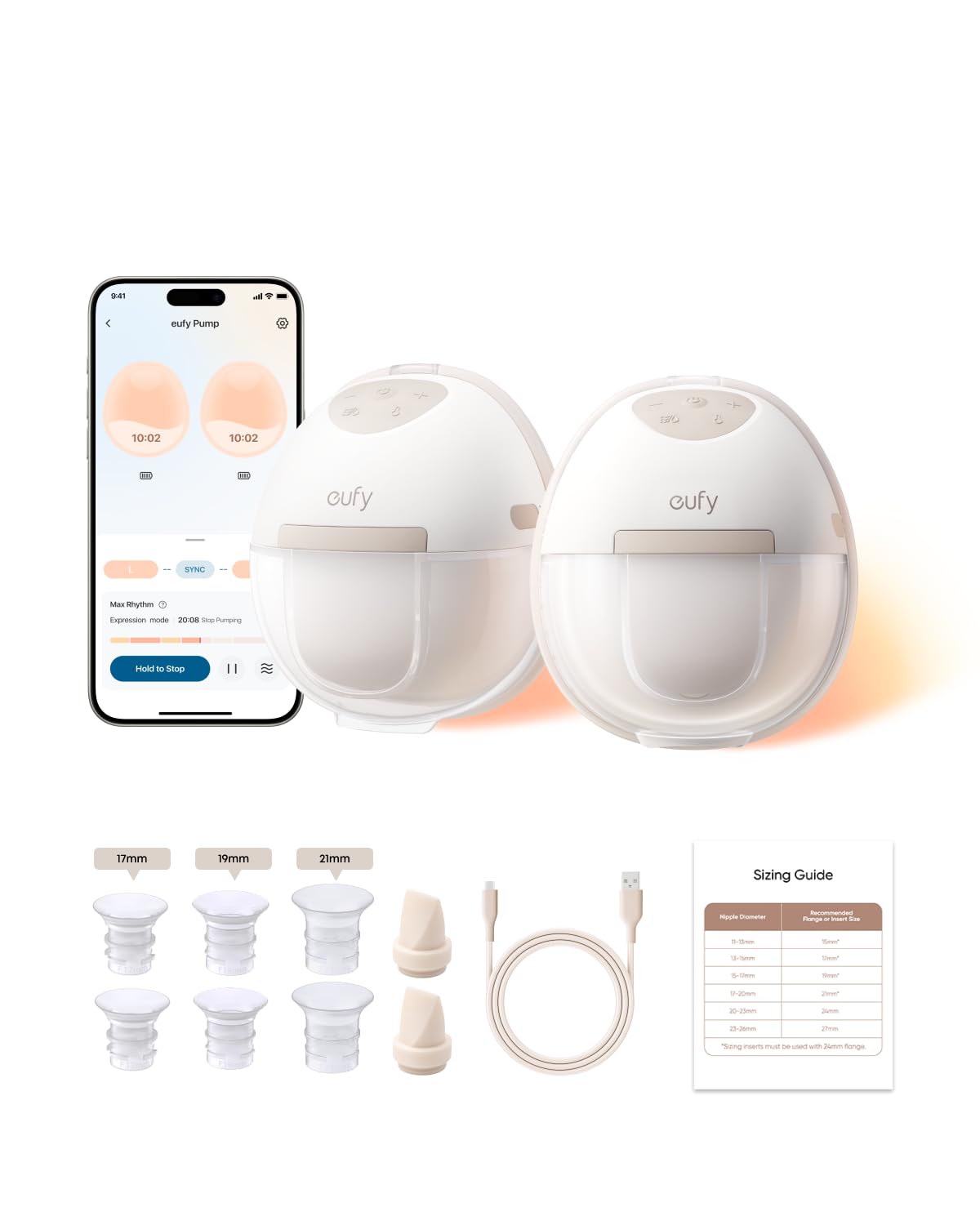
2. eufy Heated Wearable Breast Pump E20
A hands-free wearable cup that warms to 95°F in about 30 seconds and runs at 46 dB.
The E20 is the pump for the mother who is tired of sitting still. It slips inside your bra with no hose, warms up to 95°F to encourage letdown, and runs at a whisper-quiet 46 dB — quiet enough that a call will not hear it. Suction reaches up to 300 mmHg, and there are four presets plus the option to build your own rhythm through the app. Everything that touches your skin is BPA-free food-grade material, and the flange curvature is set at 105° so it hugs the breast instead of digging in.
The heating is the real story here, and it is what carries the most weight with buyers — the warmth softens the breast and primes the flow before you even start. A mother who switched from a wall pump to the E20 as her daily driver said she stopped losing an hour to each session, with one session time cut from over an hour to about 40 to 45 minutes. Another ran it for roughly a year at six pumping cycles per charge. If mornings are your bottleneck, that is the difference between pumping twice and pumping four times.
Two practical notes. First, on the E20 itself you can expect to recharge more frequently as the months go on — owners say the battery does not hold as long after consistent daily use, though it charges fast. Second, this is a wearable, so it needs a snug bra to hold suction and it will not empty you quite the way a heavy corded machine can. For most working schedules that is a fair trade, and the E20 pairs especially well with a stronger pump for your first session of the day.
Why it leads on warmth: the HeatFlow design warms the breast in about 30 seconds and works at 46 dB, so you can pump at a desk or in a nursery without announcing it to the room.
Where it falls short: it is a wearable cup, so it needs a snug bra to seal, and daily charging becomes more frequent over time as the battery ages.
Pick this one if: you have a full schedule and want hands-free sessions that let you keep moving without losing output.
Look elsewhere if: you need a machine that can run all day on one charge — plan for a daily top-up or keep a second pump for morning sessions.
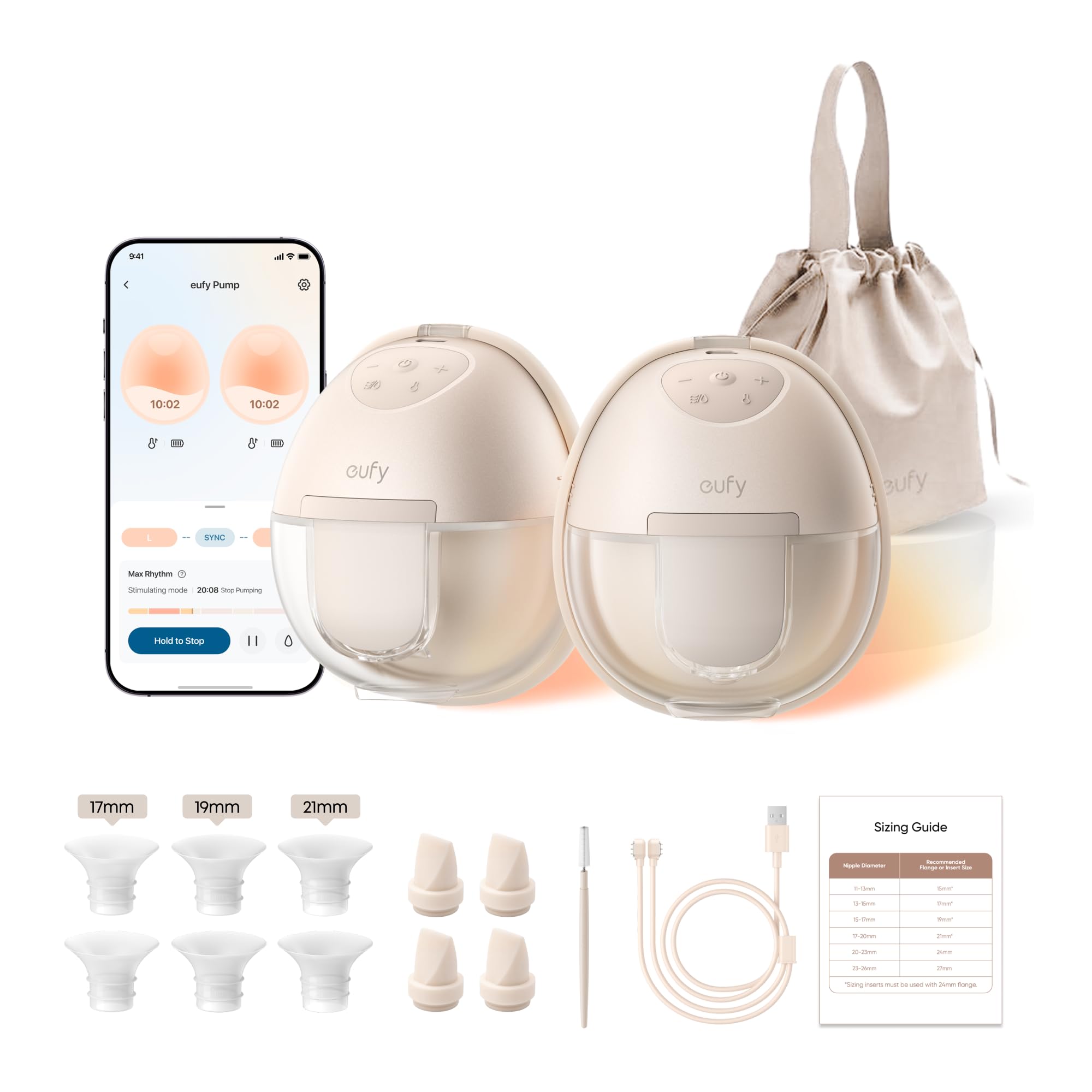
3. eufy Heated Wearable Breast Pump S1, HeatFlow, Hands-Free
A heated wearable with 17–24 mm flanges, built to loosen clogs while you pump.
The S1 is the same family as the E20 above but built around fit and clearing stubborn ducts. It runs at 46 dB (about the volume of a quiet conversation) with suction up to 300 mmHg (a measure of how hard it pulls), and — the part that matters if you have struggled with clogs — the HeatFlow system warms the breast while you pump, which is why it is the one wearable so many clog-prone mothers reach for first. It also comes with flanges (the funnel-shaped cup that sits over your nipple) spanning 17 to 24 mm, so most nipple sizes fit straight from the start without buying extra inserts. All skin-contact parts are BPA-free food-grade.
The heating feature is what drives the loyalty here, and it is mentioned far more often than anything else in the reviews. Owners describe going from a slow, pinchy start to a comfortable letdown, and several report output comparable to a full-size wall pump. One buyer put it simply: “It’s so quiet and effective.” Others note the pump keeps a firm seal even while they move around, which is exactly what a wearable needs to do during a busy afternoon.
The honest trade-offs are real but manageable. It cannot be used while charging, and a full charge takes about two hours, so you will want a backup for your heaviest pumping days. Some owners find nearby parts of the design — especially where the cup meets the duckbill valve (the small one-way flap that lets milk through) — harder to clean than a flanged setup, and the silicone can feel a little firm on the first few sessions until you dial in the right insert. There is also a fit variable: some mothers find they need an insert to make it truly comfortable, so order your size before your first week.
What the fit options open up: the flange range of 17 to 24 mm covers the vast majority of nipple sizes, and the 105° ergonomic angle keeps the cup from digging into the ribcage during longer sessions.
What to plan around: two hours to a full charge and no pumping while plugged in means this works best alongside a corded pump rather than as your only machine.
A strong fit for: pumpers who deal with recurring clogs or hardened ducts and want warmth built into every session.
Pass if: you need a pump you can run continuously — this one is built for comfortable cycles, not all-day runtime.
4. Zomee Z2 Double Electric Breast Pump

A double-electric pump that switches expression between breasts on its own to cut session time.
Zomee’s headline trick is an approach called Alternate-Mode Technology — the pump rhythmically switches expression from one breast to the other on its own, which keeps stimulation going and means you spend less time sitting still. It offers three pumping styles (Stimulation, Expression, and 2-Phase) across nine suction levels, so you can fine-tune from a gentle trigger to a full expression pull. The internal battery lasts 2+ hours per charge, and there is a USB-C cable and AC adapter in the box. Each bottle holds 140 ml (4.7 oz), and the whole pump is backed by a 2 year warranty.
Owners consistently call out performance as the reason they stay — several compare it favorably to larger-name pumps still sitting in a drawer. One long-time exclusive pumper noted that the Z2 emptied her in about 20 minutes where her older wall pump took 30 to 45, with no manual massage needed to get the milk moving. The LCD screen includes a nightlight so you can pump in the dark without turning on a lamp, and one owner mentioned being able to move around the room while still connected.
Two caveats worth planning for. The battery does start to drain more quickly after months of daily use, and the flanges only go down to 19 mm — if your size needs something smaller, look elsewhere or plan to add inserts. The diaphragm touches the milk, so it has to be washed every session, which adds a few minutes to the cleaning routine. If you are an occasional pumper or someone who needs a pump that empties you quickly, the faster cycle technology more than earns that extra washing time.
Where the design pays off: the automatic alternation between breasts means you spend less time manually repositioning, and the 2 year warranty gives you a much longer safety net than most pumps in this class.
What to expect long term: battery life dips as the months go on, and the diaphragm-in-milk design means a full wash after every single session.
Best fit for: pumpers who want hospital-grade suction and faster sessions without taking up the space of a larger machine.
Skip if: you need flanges below 19 mm or you want a pump you can leave assembled between sessions — the diaphragm has to be washed every time.
5. Lansinoh Discreet Duo Wearable Breast Pump

A wearable cup that fits inside a regular bra and runs up to 100 minutes per charge.
The Discreet Duo is designed for the mother who wants to pump without anyone noticing. It runs under 45 dB, which means it is quiet enough that nearby coworkers usually will not hear it, and it delivers up to 100 minutes of pumping on a full charge. There are four customizable modes with 9 levels of hospital-strength suction, and the kit includes both 24 mm and 21 mm flanges so you have two starting points for fit. The silicone flanges and inserts are made without BPS and BPA, and a closed system prevents milk from backing up into the pump.
Discretion is where this pump earns its reputation — it is what owners point to more than anything else. It fits inside a normal bra under a shirt, it is easy to assemble and clean with only four parts per cup, and several customers note output that holds up against larger wall pumps. One mother who used it as a travel pump described it as her best decision for pumping convenience — comfortable enough to wear on a call, quiet enough to stay on the line, and small enough to fit in a diaper bag. A cup size B or C will usually get a workable fit with a strap extender.
Plan for two practical realities. The motor does produce an audible hum, especially in the auto and expression modes, and a few owners note that the cups are a touch bulky under a fitted shirt. Leaks can occur if the seals are not fully seated before a session, and milk can pool behind the silicone if you do not check it after each pump. The unit also starts charging after a 20-minute automatic shut-off, which is helpful for overshoot but means a long session needs to be restarted once. Used the way it is designed — brief, frequent, discreet sessions — it holds up well.
The case for the Duo
- Quiet enough to wear on a call at under 45 dB
- Four customizable modes with 9 levels of hospital-strength suction
- Ships with both 24 mm and 21 mm flanges for easier fit
- Only four parts to clean per cup
- Closed system keeps milk out of the pump body
Fine print to know
- Use a 5V/1A adapter — fast-charging adapters are not supported
- Sessions auto shut off at 20 minutes and must be restarted
- The motor is audible in auto and expression modes
Made for: anyone whose priority is pumping quietly in public, at work, or in a house full of sleeping family.
Not the pick for: hands-off all-day pumping or overshoot sessions beyond 20 minutes without a restart.
6. Momcozy Breast Pump M6 24mm

A 295 mmHg wearable cup with a stand-up milk collector that will not spill when you set it down.
The M6 is Momcozy’s mid-range wearable, and its focus is on suction strength and fit. Its second-generation motor delivers 295 mmHg with three modes — Stimulation, Expression, and Mixed — across nine adjustable levels. Momcozy’s pumping rhythm was refined through over 1,000 trials as a way to make sessions more comfortable, and the flange uses a dual-seal design with a soft silicone inner layer plus a harder outer rim. The pump comes as a 2-piece set in Cozy Red, so you can pump both sides at once or use one as a spare.
One feature that stands out in daily use is the stand-up milk collector — a bowl-shaped base that lets you set the cup down without spilling while you transfer milk into bags or bottles. The cup shape is based on a best-selling mold designed to contour to the breast, so it sits discreetly under a shirt and moves with you while pumping.
Two things to be honest about. The dual-seal flange is comfortable for most users, but it is a specific fit — if your flange size falls outside the standard 24 mm, plan to add an insert. And with any wearable cup, output can vary from day to day compared to a full-size mach
ine, so if you are exclusively pumping for supply, this pairs best as your mobile pump rather than your only one. Weighed against the 295 mmHg motor and the anti-spill bowl, it is a strong in-bra choice for a working mother.
Reach for this if: you want strong in-bra suction and an anti-spill bowl that makes pouring milk at 5 a.m. far less wasteful.
Look elsewhere if: you need a machine that pulls like a hospital pump or you do not want to use inserts for a custom fit.
7. Medela Swing Maxi Hands-Free Electric Breast Pump | 1Ct

A hands-free pump with 76 g cups and a three-part, dishwasher-safe design.
This is the entry point for anyone who wants the Medela name and a genuine hands-free experience without the higher price of a premium wearable. Each cup weighs just 76 g (about the weight of a small bar of soap), which is light enough to sit comfortably in a nursing bra without pulling on your shoulders, and the anatomically angled 105° collection cup is designed to give you more milk with less discomfort. Assembly is deliberately simple — three parts per cup, all dishwasher-safe — and the transparent cup lets you watch the milk flow without disassembling anything.
The Medela Family app connects over Bluetooth so you can track sessions in real time and set reminders, which is handy if you are juggling pumping alongside a job. Owners who compare it to earlier Medela models say the motor here is noticeably stronger — enough that one reported pumping a full session in roughly a third of the time she used to spend. It is easy to toss into a bag and light enough to slip into a pocket, which makes it a practical second pump for workdays.
Two real limitations to weigh. The motor on this model does not last as long as premium pumps — a small number of reviewers point out issues within the first few months, including a cup that stopped holding a charge after extended use. Battery drain is also inconsistent: owners have measured roughly 20 to 40 percent used per session, which means you may need to plug in mid-day. And the buttons are sensitive enough that setting changes can happen accidentally if you carry the pump in a pocket. For a backup wearable, those are acceptable trade-offs; for a primary pump running eight sessions a day, they add up.
Where it earns its keep: at 76 g per cup with a dishwasher-safe three-part design, it is one of the lightest and easiest wearable setups to live with day to day.
What to watch: battery drain runs roughly 20 to 40 percent per session, so most users will want to bring a charger along for anything longer than a workday.
The pick for: a backup or secondary wearable for a mother who already runs a wall pump at home and wants something light to carry.
Skip if: you need one pump to handle eight sessions a day for a year — the motor is not built for that workload.
8. Philips Avent Double Electric Breast Pump

A corded hospital-strength pump with 8 stimulation and 16 expression levels and a closed system.
Philips Avent’s approach is gentleness first. It reaches up to 270 mmHg and pairs that with Natural Motion technology — a suction pattern built to combine nipple stimulation with gentle pull, like the way a baby nurses. There are 8 stimulation and 16 expression levels to dial in, and the soft silicone flange shield adapts to your breast shape instead of forcing you to fit a fixed angle. It is a closed system, so no milk travels into the tubing, and there are few parts to assemble and clean. A travel bag is included.
The upright design is what makes it work for long sessions: you can pump in a comfortable seated position without having to lean forward, which is the saving grace for anyone who ends up attached for 20 minutes or more at a time. The flexible flange shield is also a real gift for pumpers whose breast shape changes over the course of a feed. Buyers who have used it side by side with an insurance-covered pump often note that it extracts more milk and the bottle attachment is easy to work with.
The one thing to know before you commit: this unit is corded. It cannot be charged, and it must stay plugged in the entire time you use it, so it is tied to a wall outlet and is not a travel pump despite the bag. Some owners also find the flanges need the right insert size to avoid rubbing, especially for smaller nipple sizes, and a handful report that the flexible shield can pinch if it is not seated well. If your pumping happens at a desk or a couch and you want a gentler hospital-style feel, that trade-off is well worth it.
What it does beautifully: 8 stimulation and 16 expression levels give you more tuning range than almost anything else here, and the upright position means no leaning forward mid-session.
The one compromise: it is a corded unit — no battery, so it stays plugged in and works best sitting in one place rather than traveling with you.
Right for you if: you pump mostly at home or at a desk and want the gentle, adjustable feel of a hospital-style pump.
Not the one for: someone who needs to pump on the move — the corded design keeps it tethered to a wall.
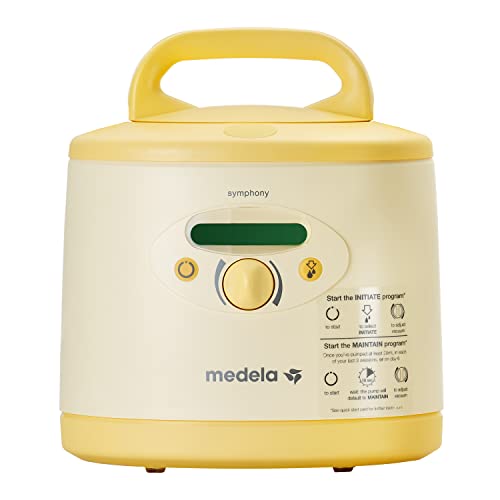
9. Medela Symphony Plus Electric Breast Pump
The pump hospitals actually use, now in a home version.
The Symphony Plus is the pump you will recognize from a hospital room. Its Initiation Technology uses a program that cycles through stimulation, expression, and pause phases to help establish supply early, and it can be used as either a single or a double pump. You also get a container stand, a quick start card, and a card protector in the box. It is the same model most hospitals use, which makes the transition home less jarring for mothers who started pumping in a hospital setting.
The reason it belongs on a list like this is for mothers whose supply needs every bit of help. Buyers who use it as a daily pump describe fully emptying even large or dense breasts, which is the defining task for an exclusive pumper. Others have used it to build a stash while feeding twins. It is quiet, it is comfortable for long sessions, and it is the standard of reliability in a category full of compromises. For those who need it, there is no real substitute.
Two costs to understand going in. First, this pump is not sold with a pumping kit — you must buy the Medela Symphony Double Pumping Kit (model #67099) separately to actually use it. Second, its price point puts it out of reach for most casual pumpers, and it is corded. A small number of buyers have reported motor failures within the first weeks. For the right user — an exclusive pumper, a mother with latching difficulties, or someone pumping for twins — those costs are justified by the outcome.
For you if: you are exclusively pumping, managing latching difficulty, or feeding multiples and need a pump that matches what the NICU uses.
Rule it out if: you are a casual pumper or budget-conscious — it requires a separate pumping kit and is a corded, single-location machine.
Know the Specs
Suction strength in mmHg
mmHg is a unit of pressure — the higher the number, the stronger the pull. Pumps on this list range from around 270 up to 300 mmHg. Higher suction is not automatically better: comfort comes from finding the setting that triggers letdown without pain. Most pumps pair strong suction with a fast stimulation phase and a slower expression phase, which is what mimics a baby’s nursing rhythm.
Flange size and fit
The flange is the funnel your nipple sits inside. Kits typically ship with a 24 mm shield, and many include a 21 mm option. If the shield is too big, milk pools behind it; if too small, the sides rub. Inserts let you step down in small increments. Getting this right matters more for output than the motor itself.
Battery runtime and charging
Rechargeable pumps list runtime in minutes, hours, or cycles. Corded pumps run indefinitely but stay tethered to a wall. Battery-heavy pumps like the E20 and Z2 need regular top-ups, especially as the cells age. If you plan to pump for over an hour a day, consider if you want a rechargeable pump or a corded one.
Noise in decibels and cleaning design
Decibels — dB — measure loudness, and about 45 to 46 dB is roughly the volume of a quiet conversation, which is quiet enough to pump during a call. Cleaning depends on parts count: fewer parts means a shorter wash cycle, and a closed system keeps milk out of the tubing so there is less to sanitize between sessions.
Common Questions
What suction strength do I actually need in a milk pump?
How do I know which flange size to buy?
Are wearable breast pumps as strong as a standard pump?
How long does a rechargeable breast pump battery last?
Do heated breast pumps actually help with letdown?
How often should I wash the pump parts?
Can I use any charger with my wearable pump?
What does closed system mean on a breast pump?
Should I buy a pump with an app or one with physical controls?
Is it worth buying a hospital-grade pump for home use?
The Bottom Line
For most mothers, the milk pump worth buying first is the Spectra S1 Plus Premier, because it runs on a rechargeable battery, uses authentic Spectra accessories for consistent suction, and works as either a single or double pump. If your priority is speed and heat — especially if you are pumping through a busy workday — the eufy E20 warms the breast to 95°F and gets you in and out faster. And for exclusively pumping mothers who need hospital-level power, the Medela Symphony Plus is the machine the NICU uses for a reason. If you want a strong in-bra wearable with the widest flange range from the start, the eufy S1 is worth a long look — the heating feature and 17–24 mm range make it the easiest wearable to fit before you commit to buying inserts.
How we choose
We do not accept paid placement. Every pick is matched to a real buyer and a real use-case; we do not hands-on test units.
Sources
Specifications: manufacturer listings and product documentation. Review insights: verified customer reviews, as of October 2026. Pricing: not shown on this page (it changes often); check the current price via the retailer link.
As an Amazon Associate, Aappliancez earns from qualifying purchases. This does not affect which products we feature.