Disclosure: Some links in this post are affiliate links. As an Amazon Associate I earn from qualifying purchases, at no extra cost to you. Learn more
Specs are compiled from manufacturer listings and verified buyer reviews and can change over time — please confirm the key details on the product page before buying.
If your bread keeps coming out flat, dense, or tasting like nothing, the flour on your shelf is usually the reason. This guide covers five bags that actually behave in a home oven, and it tells you plainly which one suits sourdough, which one suits biscuits and cakes, and which one belongs in a gluten-free kitchen.
This guide is built by comparing the manufacturers’ published specifications and the patterns across verified customer reviews, so you get each pick’s real strengths and trade-offs instead of marketing spin.
The difference between a loaf that soars and one that slumps usually sits in the protein level and how the grain was milled. Below you will find the honest ranking of the best flour for real home baking, sorted by what each bag actually does well.
Top Picks
How To Choose The Best Flour
The bag that ruins your bread is rarely a bad bag — it is the wrong flour for the bake you gave it. A soft, low-protein flour built for biscuits will collapse under a wet sourdough dough. A high-protein bread flour will make a cake chewy. Match the flour to the bake and most of your problems disappear.
Protein level tells you what the flour can carry
Protein is what forms gluten, and gluten is the scaffolding that traps gas and lifts your loaf. Higher-protein flour holds more structure, so it suits bread, pizza, and anything you want to rise tall. Lower-protein flour stays tender, which is exactly what you want in cakes, biscuits, and pastries. If a bag lists itself as high protein, treat it as a bread-first flour.
Heritage and ancient grains change more than flavor
Heritage wheat means older varieties grown before modern intensive breeding, and bags built on them are often described as easier to digest with a nuttier taste. Spelt is a separate ancient grain, related to wheat but with its own character. These grains behave differently in the bowl — expect a softer dough, a shorter gluten chain, and sometimes a need for extra liquid.
Gluten-free baking needs a different starting point
Rice flour carries no gluten at all, so it cannot lift a loaf on its own. It works as a base blended with other gluten-free flours, or as a thickener and coating. It also tends to clump, so sift it or shake it into cold water before it hits anything hot. If you bake gluten-free regularly, rice flour is a pantry staple rather than a substitute for wheat.
Side-by-Side Comparison
| Model | Best For | Grain | Bag Size | Certification | Amazon |
|---|---|---|---|---|---|
| Sunrise Flour Mill Heritage Organic Bread Flour Blend★ Best Overall | Sourdough and bread machines | Turkey Red and White Sonora heritage wheat | 5 pounds (80 ounces) | 100% USDA Organic | Amazon |
| White Lily All Purpose FlourBiscuit Standard | Biscuits, cakes, pound cake | All-purpose wheat | 5 pounds (80 ounces) | Non-GMO, Kosher | Amazon |
| Pure Original Ingredients Rice Flour | Gluten-free blends and thickeners | White rice | 5 pounds (80 ounces) | — | Amazon |
| Grain Brain Organic White Spelt Flour | Wheat-sensitive bakers | White spelt | 5 pounds (80 ounces) | USDA Organic, Kosher parve | Amazon |
| Sunrise Flour Mill Heritage Organic White Flour | Everyday all-purpose baking | Turkey Red heritage wheat | 5 pounds (80 ounces) | USDA Organic, Kosher, Non-GMO | Amazon |
Detailed Reviews
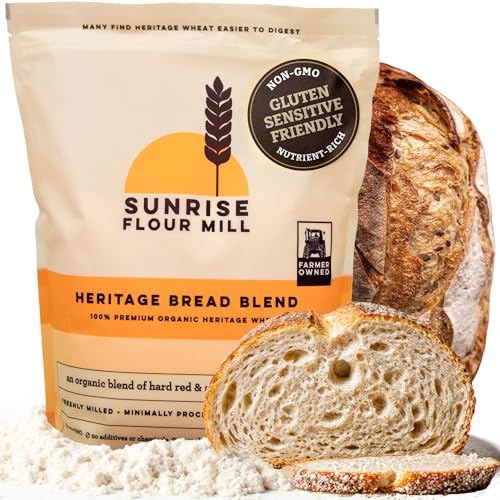
1. Sunrise Flour Mill Heritage Organic Bread Flour Blend
Our pick — 4.5+★ from 1,000+ verified ratings; the strongest balance of quality and price.
Two heritage wheats in one bag, built for loaves that rise soft and taste of something.
This is the bag for anyone whose sourdough has been rising flat and tasting like paste. It blends Turkey Red and White Sonora heritage wheat, milled by a single-pass unifine method — a 1930s technique that grinds the whole grain to a super-fine, fluffy powder in one go — so you get a creamy-gold flour that hydrates evenly and builds a soft, airy crumb.
What wins people over is how it behaves in real kitchens. Bakers run it through a Zojirushi bread machine at 66% hydration for sandwich bread and French toast, and the loaves disappear the same day. Sourdough starters perk up on it. Dinner rolls and artisan loaves come out with a golden crust, and the flavor leans nutty rather than bitter.
The honest catch is cost — this is a premium heritage bag, and buyers describe it as pricy. The other thing to plan for is thirst: users report the dough can feel sticky, so hold back a little water on the first bake and add it in slowly. The 5-pound bag also measures 10 x 3 x 13 inches, so it stands taller on a pantry shelf than a compact all-purpose box.
Who it is for: Home bakers who want a bakery-style rise from a heritage wheat milled from pre-hybridized grain, which bakers describe as easier to digest than a modern supermarket bag.
Where it asks more of you: You will pay heritage-grain money for it and you will likely need to dial in your water. Go in expecting to adjust and the bag rewards you.
Reach for this if: you bake sourdough or use a bread machine and want a blend that rises tall with a nutty finish.
Look elsewhere if: you want a cheap all-purpose bag for biscuits — the lower-protein White Lily suits that job better.
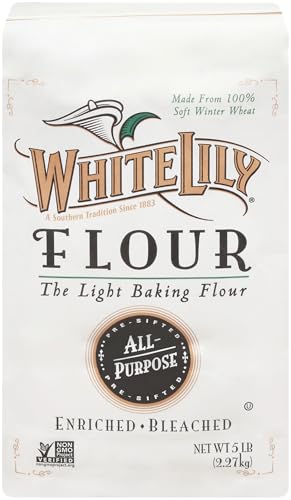
2. White Lily All Purpose Flour, 5 Pound Bag – Non-GMO, Kosher
The soft, fine-milled bag that makes Southern biscuits and pound cake behave.
Cakes that climb higher and biscuits that pull apart in layers — that is the White Lily reputation, and it comes from how finely the flour is milled. The texture is the praise magnet here: what bakers keep coming back to is how soft and light the finished bake feels, especially in pound cake and biscuits. “I always use White Lily flour for baking, the cakes rise higher and are delicious,” as the review pages sum it up.
It is a true all-purpose bag, so it handles cookies, pastries, breads, and family meals without complaint. The 5-pound size is a pantry staple rather than a bulk buy, and it is Non-GMO and Kosher. Beginners get dependable results without learning a new grain.
Two things to weigh before you commit. First, this flour is built for tenderness, not for a crusty high-rising sourdough — if artisan bread is your goal, the Sunrise bread blend is the better tool. Second, value is the most-debated point among buyers: some call it good value, others find it expensive for a bag this size. It also measures just 3.94 x 3.94 x 3.94 inches, so it tucks into a cupboard far more easily than the tall heritage bags.
What it does beautifully
- Fine, soft mill that produces light, flaky biscuits and tender cakes
- Versatile enough for cookies, pastries, and everyday cooking
- Non-GMO and Kosher, so it suits most household pantries
- Compact footprint on a crowded shelf
What to keep in mind
- Lower protein makes it a poor match for crusty artisan sourdough
- Buyers are split on whether the bag is good value
Best for: biscuit, cake, and pound-cake bakers who want a soft crumb without fuss.
Skip if: your bake list is 90% high-hydration sourdough.
3. Sunrise Flour Mill Heritage Organic White Flour (80 Ounce)
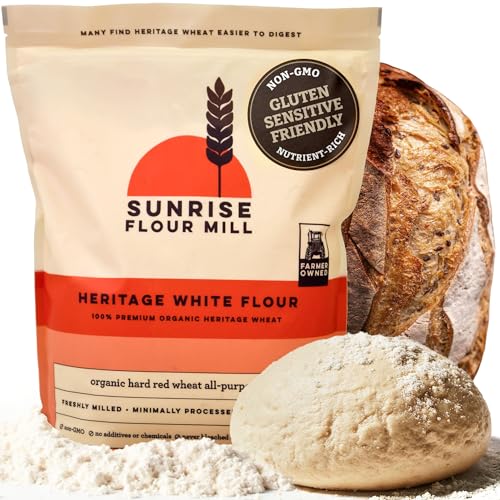
An all-purpose bag milled from pre-1950s wheat, for bakers who want flavor and easy digestion in one scoop.
Where the Sunrise bread blend leans on two wheats for structure, this bag keeps it simpler: Turkey Red Heritage Wheat, unbleached, grown without glyphosate, and milled fresh with no additives or chemicals. It is USDA Organic, Kosher, and Non-GMO. That combination is why it earns the most praise of any bag here — quality is the quality that keeps coming up, and the flavor runs second, with bakers describing a nutty, wheat-forward taste that supermarket flour cannot match.
Real bakers treat it as a workhorse. It makes blueberry muffins and cookies with a sturdy but tender crumb, and the same bag turns out tortillas and cake. One baker recreated her grandmother’s cat head buttermilk biscuits — perfect non-sticky dough with real texture and chew. It also brings a soft, velvety feel that incorporates easily, which is a gift for anyone who has wrestled a stiff dough.
Now the honest part. This is a low-gluten heritage flour, so pastries and cakes shine while a crusty artisan loaf benefits from blending or extra care. Bakers also report needing a touch more liquid than they expected. And while value is the most-discussed point — buyers lean toward good value but some do flag the cost — the everyday result justifies the heritage grain.
The everyday verdict: if you bake muffins on Saturday and bread on Sunday, this bag handles both with a flavor lift you notice immediately.
Plan for it: keep extra water on hand and expect a softer dough than a high-gluten bread flour gives you.
Suits you when: you want one organic all-purpose bag that bakes muffins, cookies, and tortillas with real wheat flavor.
Not your bag if: your main bake is a tall, chewy sourdough loaf — the bread blend does that better.
4. Grain Brain Organic White Spelt Flour

Spelt is the ancient grain for people who love wheat bread but stop feeling good after it.
If regular wheat leaves you bloated but you are not ready to give up bread, spelt is the middle path. Spelt is an ancient grain related to modern wheat but cultivated in Europe for centuries, and wheat-sensitive bakers often report tolerating it better than standard wheat. This bag is USDA certified Organic, unbleached, Kosher parve, and milled with a cool process that keeps minerals, vitamins, and protein intact.
What wins people over here is quality and flavor, and the flavor is the praise magnet. Bakers describe it as light and fluffy right out of the bag with a fresh smell, well-packed and undamaged on arrival. The baking performance follows — sourdough, breads, cookies, and tortillas all turn out well, and it substitutes for modern wheat flour in most recipes without drama. It is a white spelt, meaning just the flour without the bran and germ, which keeps the texture soft.
The honest note is texture and handling. White spelt carries less gluten than bread wheat, so a loaf comes out softer and less chewy than a standard wheat loaf — which is a preference, not a flaw. One recurring detail is that the reusable white closure can arrive broken off in shipping; the flour inside is unaffected. If you need a sturdy, elastic dough for a crusty boule, the Sunrise bread blend is the firmer tool.
Why it earns a place
- Ancient spelt that many wheat-sensitive bakers can tolerate
- Cool milling keeps minerals and protein in the bag
- Swaps into most wheat recipes without reformulating
- USDA Organic, unbleached, and Kosher parve
Where it differs from wheat
- Softer gluten makes a less chewy loaf
- The reusable bag closure can arrive broken
Your move if: wheat makes you uncomfortable but you still want a sandwich loaf with a fresh, soft crumb.
Think twice if: you need a strong, stretchy dough that holds a tall oven spring.
5. Pure Original Ingredients, Rice Flour, 5 Lb
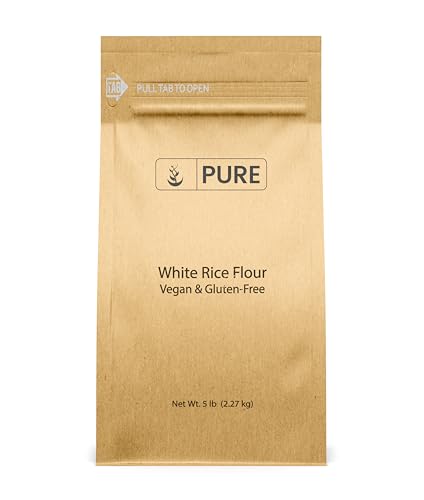
A fine-ground rice flour that anchors gluten-free baking without leaving grit in your cake.
For a gluten-free kitchen, this is the bag you keep in constant rotation. It is pure white rice flour — unbleached, untreated, vegan, and resealable — with no additives. It works as a substitute for oat flour and as the base of gluten-free baking mixes. The grind quality is the thing everyone raves about: bakers report a smooth texture with no grittiness in their baked goods, and one baker describes it as smooth and “not gritty” at all.
In practice, this is the workhorse for savory and sweet gluten-free recipes alike. It gets used in Korean cooking — two tablespoons for kimchi rice paste — and bakers use it daily in gluten-free mixes alongside other flours. It also handles thickener duty and takes the place of wheat in roux-style work.
The honest limits are real. Rice flour clumps, so sift it first or shake it into cold water before adding it to anything simmering — that is the fix and it takes seconds. It carries no gluten, so it will not lift a loaf alone; treat it as one component in a blend. And the organic labeling is the most-debated point, with some buyers confirming it and others finding no certification mark on the bag, so buy it for the pure white rice itself rather than the organic claim. Its 4.5+ star rating reflects a solid bag, with rare reports of a leaking package on arrival.
The value read: buyers lean toward good value for the quantity, and the fine grind is the reason it earns repeat buying in gluten-free homes.
Buy it when: you bake gluten-free daily and need a smooth rice flour base for mixes, coating, and thickening.
Pass it up if: you expect a rice flour to bake a loaf by itself — it needs a blend partner.
Know the Specs
Protein content and gluten development
Protein is the engine of your bread. When you mix flour with water, protein strands link into gluten, which traps the gas yeast produces and lets the dough rise. Higher-protein flour like a bread blend holds more structure and gives you a tall, chewy loaf. Lower-protein flour stays slack, which is the whole point for biscuits and cakes. When you see a bag labeled high protein, expect it to want the bread bowl rather than the cake tin. If your loaf spreads flat, the protein level is usually the culprit — mix in a higher-protein flour or switch bags.
Milling methods and heritage grain
How the grain is milled changes the texture of your dough as much as the grain itself. Single-pass unifine milling grinds the whole kernel to a fine, fluffy powder in one run, so the flour hydrates smoothly and bakes light. Heritage wheat means older varieties grown before modern intensive breeding, which bakers describe as a nuttier flavor and a gentler ride on digestion. The practical result is a flour that behaves differently from a supermarket all-purpose bag — expect a softer dough that may need more liquid and less kneading time.
Gluten-free flour and blending
Rice flour carries no gluten, which is exactly why it matters in a gluten-free kitchen and exactly why it cannot bake alone. Gluten is what traps gas and lifts a loaf, so a gluten-free blend usually combines rice flour with other starches and binders. On its own, rice flour works as a thickener, a coating, and a component in mixes. It also clumps, so sift it or shake it into cold water before heating to avoid lumps in your sauce or batter.
Common Questions
Is bread flour or all-purpose flour better for sourdough?
Can I use spelt flour as a straight swap for regular wheat flour?
Why does rice flour clump in hot liquid?
Is rice flour a good substitute for oat flour?
Does heritage wheat flour really digest more easily?
How long does a 5-pound bag of flour stay fresh?
Can I use White Lily all-purpose flour for bread?
What does single-pass milling mean for baking?
Is USDA Organic flour worth choosing over a standard bag?
The Bottom Line
For most bakers, the winner is the Sunrise Flour Mill Heritage Organic Bread Flour Blend because its blend of Turkey Red and White Sonora heritage wheat gives sourdough and bread-machine loaves a soft, airy rise with a nutty finish. If you bake biscuits and pound cake more than bread, grab the White Lily All Purpose Flour — its fine, soft mill produces the light, tender crumb that biscuits want. And for a kitchen that skips gluten entirely, the Pure Original Ingredients Rice Flour is the one to reach for, with a smooth grind that leaves no grit behind.
The crowd favorite across this list is the Sunrise heritage all-purpose bag — 4.5+ stars across 900+ ratings — the safest single bag to build a pantry around if you want one flour that does almost everything.
How we choose
We do not accept paid placement. Every pick is matched to a real buyer and a real use-case; we do not hands-on test units.
Sources
Specifications: manufacturer listings and product documentation. Review insights: verified customer reviews, as of October 2026. Pricing: not shown on this page (it changes often); check the current price via the retailer link.
As an Amazon Associate, Aappliancez earns from qualifying purchases. This does not affect which products we feature.